Refugee Week event


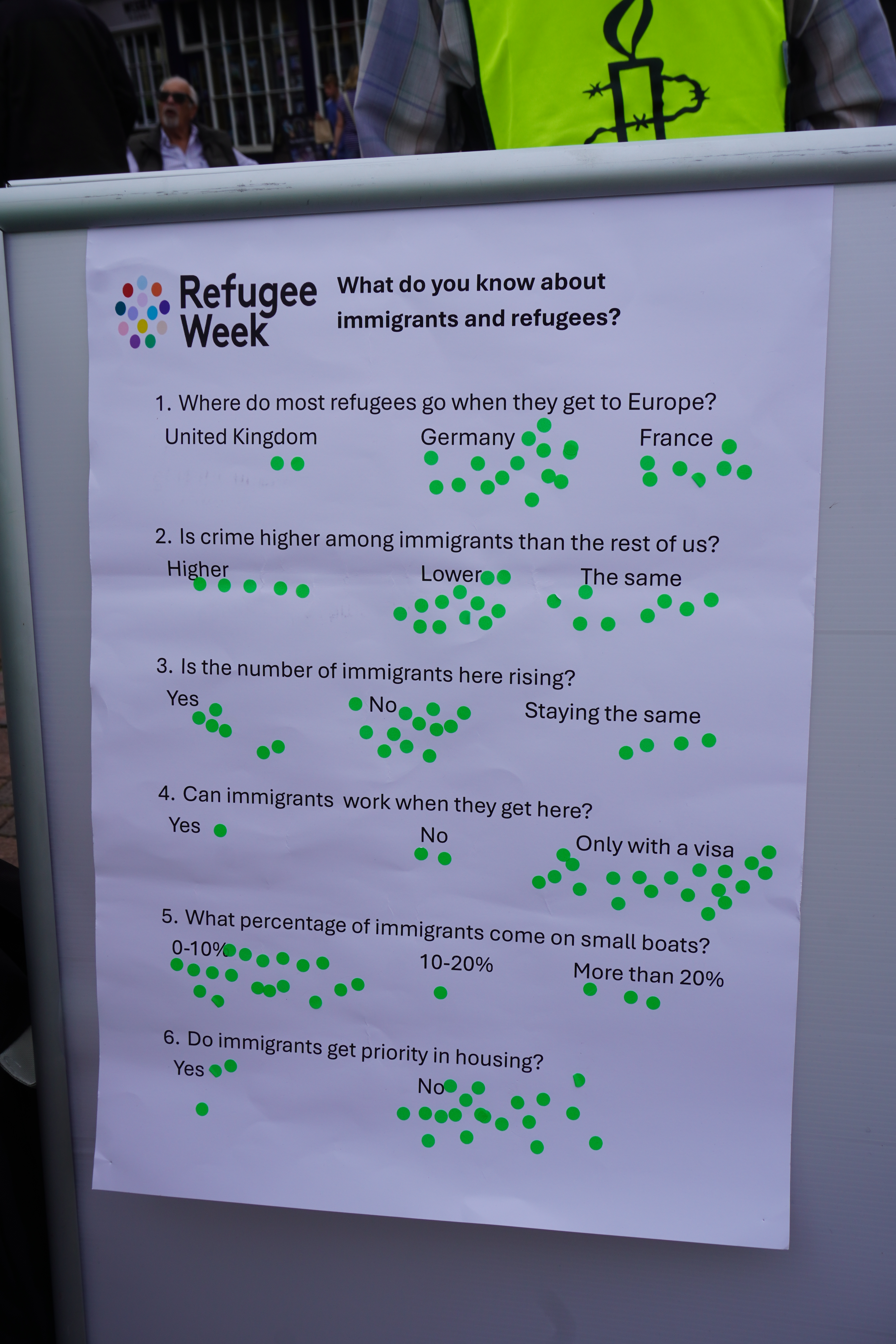
Group conduct quiz in the Market Square

June 2026

If there is one thing which is guaranteed to excite tensions and rouse passions at the moment is the whole question of refugees, immigrants and asylum seekers. Election campaigns seem to revolve around this topic and only recently, mobs attacked homes in Belfast and Southampton to burn out such people with fire bombs. Parties vie with one another to demonstrate their toughness against them and Andy Burnham – decisively voted into parliament again two days ago – is quoted as being supportive of the home secretary Shabana Mahmood in her desire to introduce yet more controls.

Alongside these passions is a degree of mis and disinformation. For example, there is a degree of fixation over the Channel crossings which loom large in the tabloid and right wing media universe. They loom much larger in the imagination than the actual numbers justify. They are seen as remorselessly increasing when the opposite is the case. Which is why the group decided to mount a short quiz in Salisbury market.

The results were modest. Around 23 people stopped to engage. The majority walked by. We can never know of course but it may be because the whole topic of refugees is so distasteful they do not wish to spend their precious time on it. They may feel that their knowledge of the subject is pretty sound. We cannot know.

Those that did stop did pretty well (as you can see from the photo on the left) with most getting the answers right. They knew that numbers were falling; they knew that the numbers coming by boat were a small proportion of the whole and they were aware that they could not work without a visa.

Recent posts:

Refugee event this Saturday


The group will be in the Market Square on Saturday as part of Refugee Week

June 2026

Immigration, refugees and asylum seekers are top of the political agenda and generate huge anger in many communities. Some is understandable with a firm called Serco buying up properties and converting them into HMOs* filling them with among others, immigrants.

The debate around this topic has fuelled more heat than light. As we have noted in our reports, the general impression is of an ever rising trend of immigration, mostly by boat, and all of them being housed in ‘luxury’ hotels. They are taking our jobs and are responsible for a great deal of crime it is claimed. Some politicians and their parties have responded to these ideas, with great success. A key element of the forthcoming Makerfield by-election will be the immigration issue.

QUIZ

So how true is all this stuff? How sure are you of your knowledge around this issue? You can find out on Saturday 20th starting at 9 am and finishing at noon in the Cheesemarket (outside HSBC). There we will be hosting a quiz.

This is important in the sense that massive amounts of misinformation and false beliefs are determining policy. The value that immigrants bring to the economy is largely overlooked. The reaction to the Channel crossings verges on the hysterical. There is not denying there are problems to do with immigration but the scale of them is much exaggerated. So come and find out!

*house in multiple occupation


Immigration a hot potato again


Immigration has shot to the top of the political agenda again with a vengence

June 2026

Riots in Belfast with houses lived in by immigrant families burned out, a massive police presence with water canons being used and civil disturbances in Southampton, have filled out screens in the past few days. A fierce debate in parliament and what some might term inflammatory statements by politicians have added to a sense that there is a crisis at the centre of which is immigration.

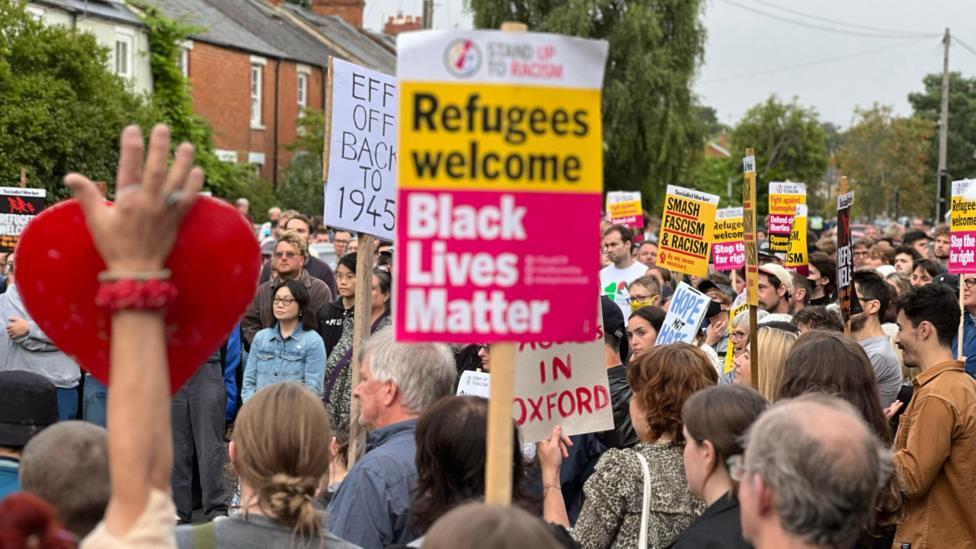
The violent knife attack by a Sudanese man who had entered Northern Ireland via the Republic, and before that France, has inflamed tensions with mobs directing their ire at all immigrants even those who have lived here for years and are a key part of the NHS for example. Posters in Southampton said things like ‘Enough is Enough’ and ‘Illegal migration is destroying our civilisation’. They claimed solidarity with those in Belfast. There were also counter protests (see image).

As with so many things to do with immigration, there is a great deal of misinformation fuelled by social media in particular although print media is not too far behind. Elon Musk has been widely criticised for his remarks on X and the promotion of comments by Tommy Robinson and Rupert Lowe (Restore Party).

Immigration: some of the facts

To get a global perspective on the trends in migration, a recent article in the Journal of Refugee Studies has found that most “forced migration”(its preferred term) in recent years has taken place in the Global South (76%), most of that being into neighbouring countries (in Africa and Asia primarily).  Turkey and Iran have been the biggest recipients.  At the same time, the UNHCR say that 10% of global refugees (some 11 million) have lost funding from the Commission in the last year.

In Europe, the Chisinau conference on dealing with the immigration issue ended without a decisive result.  Last year 7 Council of Europe countries declared that the ECHR had “gone too far” and “protects the wrong people.” The Secretary-General convened this meeting of European justice ministers, which issued a joint statement (not including France, Germany, Spain or Turkey, who take 60% of refugees to the continent), reaffirming their commitment to the ECHR, but allowing some movement in removing claimants and using offshore hubs.  The declaration is not legally binding, so local laws override it.  It is worth pointing out that only 0.7% of foreign offenders have won appeals against the UK at the Court (and a recent case at the UK Court of Appeal has shown how hard it is to use the infamous Article 3 argument).

Are the figures up or down?

Latest (2025) figures on irregular immigration to Europe showed Spain as the main host, followed by Italy and France (UK was 5th, but only 9th on a per head basis).  It is worth noting, though, that the number of arrivals on the European borders is down this year (by 40%), as it is in Britain.

In Britain, the latest British Future survey of public opinion noted that 49% of respondents believed that immigration is rising, when it is falling rapidly.  They also believed that asylum seekers make up 33% of immigrants (the actual figure is 9%). The latest figures on small boats (to late May) indicate that, at 8,565, they are down by 37% on 2025.  Pending asylum applications in Q1 were at 93,000, 12,000 down on last year.

Down, but you would not know it from the media or from politicians.

The House of Commons Public Accounts Committee has published a very critical report on the workings of the asylum system, which it says lacks direction and is given to short-term fixes.  Particular criticism was directed at the failings of the system of monitoring failed asylum seekers and the lack of a clear strategy for the move away from hotel accommodation for new claimants. One aspect of the failing system is that research has shown that, of persons held in immigration detention, only 27% had a lawyer and half were having to do their own legal representation.

The ongoing debate about indefinite leave to remain rumbles on.  Plans have been mooted to make the 5-year time requirement retrospective, which would affect 2 million people, including 300,000 children.  The Institute of Government has declared against such a scheme.  There is also an ongoing issue about classifying children as adults (with the Home Office attempting to use AI to help decide.)  The Helen Bamber Foundation claim that 755 children were classified as adults in the last year.  They have also a report out, interviewing some children on the stress of the proposed new restrictions.

The Migration Observatory report that the share of asylum seekers in hotel accommodation has halved since 2023 to 21%.  The North West has the highest incidence.  They also report the 3 in 10asylum seekers with active claims were not receiving any government support at the end of 2025.

The Rwanda deportation plan, now abandoned, cost the UK £270 million, to remove 4 people.  The Rwandan government’s claim for compensation was turned down this month by the International Court at The Hague.

Refugee Week

The Salisbury Group will have a presence in the Cheese Market in the City centre on Saturday 20th June from 09:00 till noon. Details in a later post.

AH


Recent posts:

Why not become a subscriber?

Global Trends in Refugees and Asylum Seekers 2024


Refugees and asylum seekers still generate a lot of political heat

May 2026

The International Organisation for Migration has produced its latest World Migration Report, covering 2024/5.  It assesses the number of internally displaced people worldwide at 83 million, mostly due to environmental disaster, but about 20 million due to conflict.  In 2025 there were 94 million migrants in Europe (i.e. people living in a different country from their starting residence).  Of course, these figures include people who move for reasons of work or family, as well as refugees and asylum seekers.  

At the end of 2024, there were 36.9 million refugees globally, with 31 million under the UNHCR mandate, and 5.9 million refugees registered by the United Nations Relief and Works Agency for Palestine Refugees (UNRWA).  A further 5.9 million other people in need of international protection – largely from Venezuela – were reported at the end of 2024.  The number of refugees under the UNHCR mandate has decreased slightly since 2023, when it stood at 31.6 million.

Increase in asylum claims

There were also approximately 8.4 million people seeking asylum status.  This is a 22 per cent increase from the end of 2023.  Despite partial reporting from the United States (only until mid-2024), the country still had – by far – the largest number of pending asylum claims (3.2 million) by end of 2024.  Other countries with large asylum applications included Egypt (631,100), Peru (540,000), Germany (348,900) and Canada (292,100).

In 2024 alone, 3.1 million new individual asylum applications were registered globally, with half of these received in only four countries: the United States (729,100), Egypt (433,900), Germany (229,800) and Canada (174,000). Nationals of the Sudan, Venezuela, Syria, Colombia and Afghanistan comprised most new individual asylum applications in 2024.  Obviously the situation will be somewhat different post-2024, particularly with regard to the USA.

At the end of 2024, children (that is, people under 18 years of age) made up around 41 per cent of refugees, people in a refugee-like situation and other people in need of international protection.

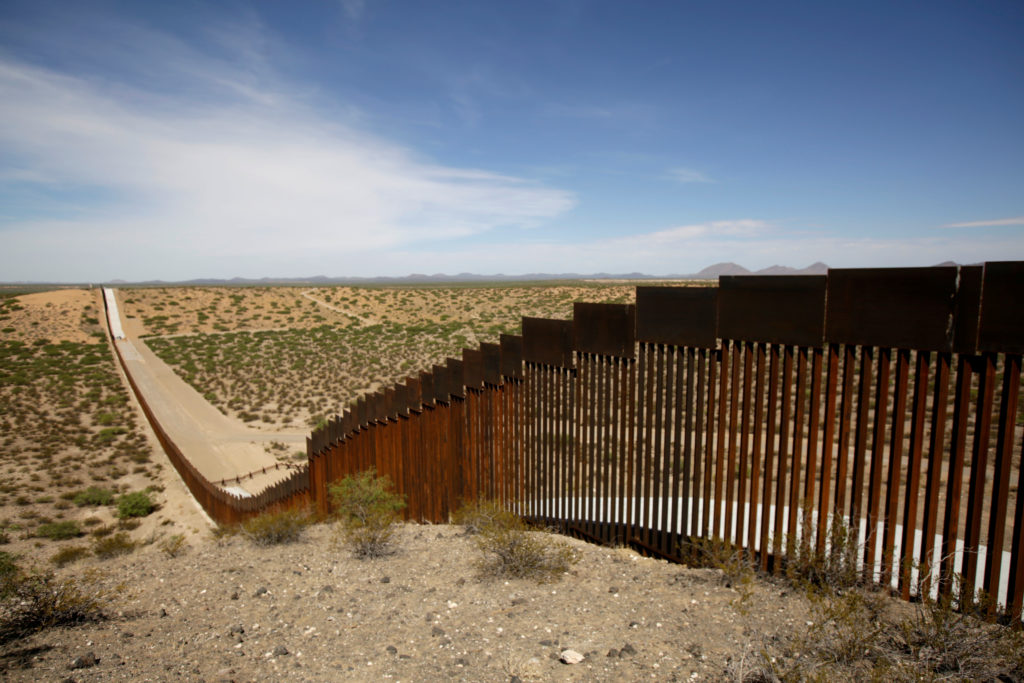
The (American) Migration Policy Institute have researched the question of anti-immigrant borders.  They reckon that in 1989 there were 12 border walls, and there are now 74.  The EU has increased its fenced length between 2014 and 2022 from 315km to 2,048 km.  One of the results of this sort of growth has been the number of drownings at the US/Mexico border, up by 3,200% between 2020 and 2023.  It was observed that tougher border policy has resulted in more seasonal migrants deciding to stay. Picture shows the wall between the US and Mexico.

UK situation

In the UK, the amount of legislation on immigration has now seen 6000 changes to the rules since 2010.  The latest areas of conflict concern the 1 in 1 out arrangements with France, the prevention of family reunion, and the replacement of hotel accommodation for asylum seekers by use of military establishments.  On the latter, the Institute for Public Policy Research has reported on the relations between claimants and the local community, and concludes that the main problem is the lack of transparency from government bodies, the absence of consultation and the lack of any obvious benefit from the newcomers’ arrival to the community.  The IPPR support a community-based long-term social housing project that would be of benefit to all groups.

The Refugee Council has a briefing on how to respond to the government consultation on asylum support and family returns, which runs out on 28th May.

Other unhappy organisations include the Law Society (the new independent appeals body is not satisfactory) and 150 children’s’ social and legal organisations, who believe the latest changes in immigration rules amount to an attack on children’s rights.

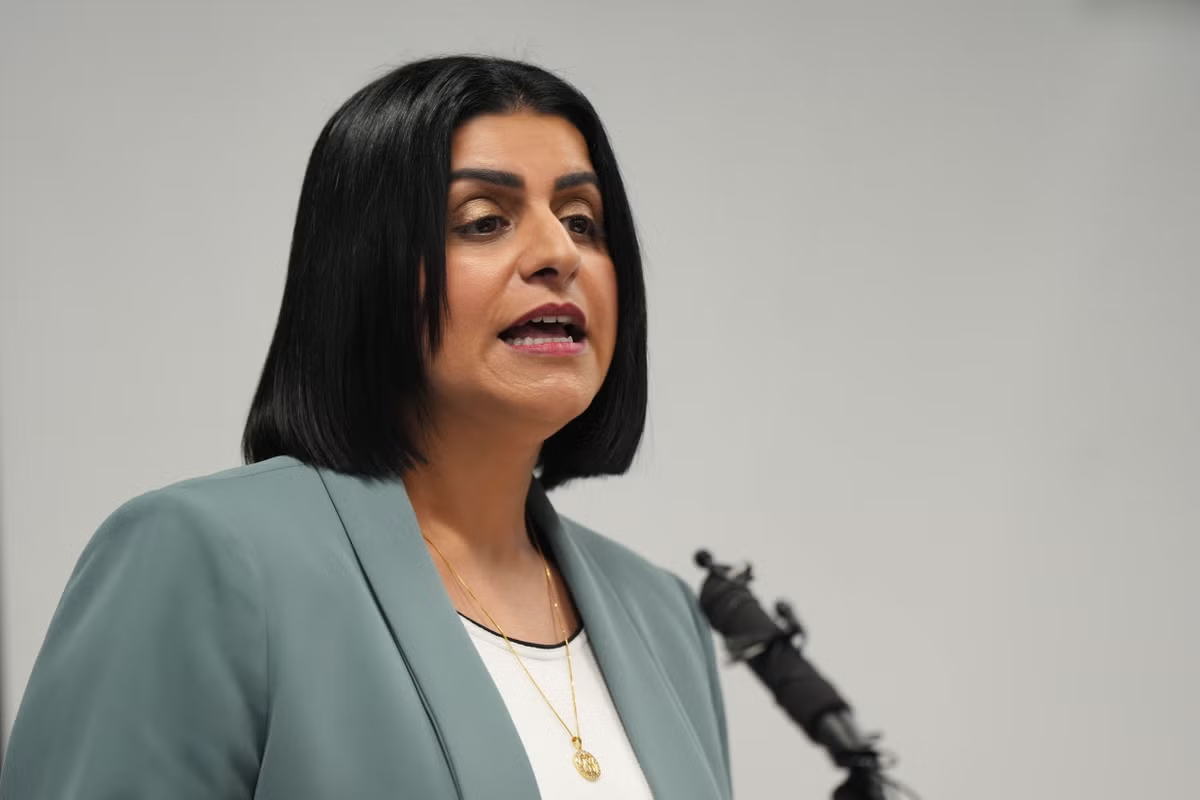
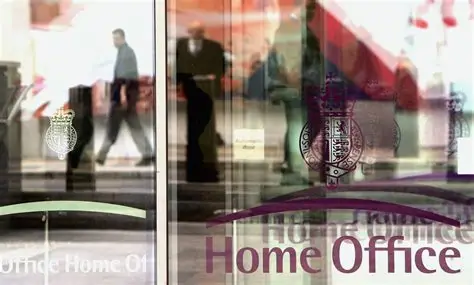
The government is withdrawing travel support for Afghans seeking to come to the UK, of which there are believed to be about 9,000.  They will now have to make their own way vie third countries.  The Home Secretary (pictured) has made a new agreement with France worth £662 million to provide more enforcement on the Channel coast beaches and better intelligence.  The Home office say that 480 people smugglers were arrested in 2025.  The Telegraph have quoted Ms Mahmood with saying that the crackdown on irregular migrants will give her room to allow more legitimate routes, but there is no detail on this as yet.

Reform’s claims

Other proposals in the air include Reform UK’s intention to deport migrants who have settled status if they arrived by non-legal means.  This would amount to some 400,000 (and they claim would save £14.3 billion through 2029-34 (when they would presumably be in power).  The (Reform) Lancashire County Council are withdrawing from the government’s resettlement scheme for accepted asylum seekers.

Nevertheless, the numbers of arrivals are down this year (by a third in the first quarter); the number of small boat arrivals in April 2025 was 11,000 against 7,000 this April.  The net inflow (of all types of immigration) over the last three years has gone from 900,000 in 2023 to 400,000 in 2024 to 200,000 in 2025; obviously much of this is due to restrictions of work and student visas, but it remains striking.  Next stats available 21st May

The Council of Europe are meeting on Friday in Moldova to discuss the issue of return hubs for refused asylum seekers.  Various European countries have made bilateral arrangements and up to 12 countries have been named as possible recipients.  The COE is the governing body for the European Convention of Human Rights, and possible changes to the ECHR will also be discussed.

The people behind Refugee Week (15th -21st June) are urging us to carry out a million acts of hope between 13th and 20th May.  Details at A Million Acts of Hope – Together With Refugees

Global Refugee Crisis: Current Statistics and Trends


Round up of the refugee situation around the world

April 2026

With the focus on the Channel crossings and refugees in hotels, there is a danger of overlooking the massive refugee issues around the world which are on a scale far larger than we experience in the UK. There are 117 million people who have been displaced due to violence, conflict, persecution or violation of human rights. There are over 42 million refugees according to the UNHCR. These people are often in countries unable to afford to look after them. The Middle East conflict continues to increase the number of refugees, notably from Southern Lebanon.  It is reckoned that in 4 weeks a million Lebanese have been displaced, around one in 5 of the population.

A migration summit in Cairo to review trends prior to a global review to take place in New York has been overshadowed by the war; Egypt is home to a large number of refugees. The meeting, held in Egypt’s New Administrative Capital, brought together African ministers and stakeholders under the framework of the International Organization for Migration and the Global Compact for Migration, ahead of a global review forum in New York.

Small boats

Small boats continue to be in the news.  In the Mediterranean 180 migrants were lost in the last week, mostly coming

from Libya.  The UNHCR’s Institute of Migration estimate that nearly 1,000 lives have been lost in the Mediterranean since the beginning of the year.

The EU continues to struggle with new arrivals.  The border between Croatia (in EU) and Bosnia (outside) has seen particularly violent clashes.

Backlash in UK

In the UK the backlash against the Government’s tightening of regulations on refugee status, asylum seekers support and family reunions continues.  The Home Secretary, Shabana Mahmood, is under attack from her backbenchers, who may have enough support to raise their protest in the Commons.  The House of Lords Secondary Legislation Scrutiny Committee has said of the Home Office that it ‘has not fully thought through the implications of the changes.’  Other bodies have pointed to crises in the system; Migrants Organise have noted a growing problem of access to justice for claimants, citing a collapse in legal aid provision and an increasing number of unrepresented claimants.  The use of AI by the Home Office in its assessments may be unlawful.

With the local elections in view, the Scottish Greens are proposing to allow asylum seekers the right to work, the first party in the UK to do so.

The 1 in 1 out arrangement with France is said to be on the point of ending; many migrants, after being returned to France, have taken to lorries, as they did in the pre-small boats era.

The Congo has joined those countries prepared to take on asylum seekers deported from the UK.  Details are not yet known.

In the United States the Supreme Court is likely to allow the administration to resume blocking asylum seekers physically from entering the country; much discussion has ensued on the meaning of ‘to arrive at/in’.  The process (‘metering’) was stopped by Biden.

On the campaigning front, the Refugee Week organisers are planning a week of ‘A Million Acts of Hope’ from 13th to 20th May.  Details to follow.

As a footnote, the first of the Afrikaner ‘refugees’ to be welcomed into the USA has now returned home.

AH


Impact of Middle East Conflicts on Refugees in Turkey


War in Middle East and its effects

March 2026

Although war reporting generates a lot of commentary on the deaths of those caught up in the conflicts, the effects on refugees and those displaced receives much less attention. With the new war(s) in the Middle East, refugees are again in the news. So far, most displaced people have been moved within the countries of Iran and Lebanon, but Turkey in particular is being readied for an influx of refugees.  The European Union Agency for Asylum thinks here will possibly be large numbers of displaced persons as a result of the conflict, many of them heading for Turkey. The Institute for Migration estimates that as of now there are 19 million internally displaced in the region; the UNHCR have calculated in the last few days that 667,000 Lebanese have registered as displaced.

Home Secretary’s refugee plans

At home, the big story is the Home Secretary, Shabana Mahmood’s plan to reduce the length of protected stay of refugees from 5 years to half of that, during which time they will only have temporary refugee status.  This will be subject to review every 30 months for up to 20 years. During this period claimants may be deported if, in the opinion of the Home Office, their country of origin has become deemed “safe”.  A large number of Labour backbenchers are opposing the move, and the Law Society has observed that it might not comply with international law. Other objections have been that the plan will be costly (£872 million over a decade, according to the Refugee Council) and impractical. On 5th March, the Home Secretary revoked the legal duty to provide destitute asylum seekers with support and accommodation while their claims are processed, often for months or years.  The Home Office have been influenced by the so-called “Danish model”, which takes a hard line on immigration.

Among the latest statistics to be released, the Home Office received up to 23,000 referrals of alleged human trafficking in 2025 (the main sources were Eritrea and Vietnam).  The backlog of cases has reduced, but there has been an increase in the number of reconsiderations.  In 2025 about 100,000 claims for asylum were made in the UK. Of these, 41% were from small boat arrivals, 11% other irregular means, while 40% already had some form of leave before claiming.  The level of grants continues to drop, at 42% in 2025 (it used to be over 80%).  Syria has suffered particularly with levels of asylum grants down year-on-year from 88% to 9%.  Claims from Eritrea and Somalia are mostly accepted.

The ban on family reunions instigated last autumn is being challenged in the courts by Safe Passage International.  A High Court ruling is expected later this year.

Small boats in the Channel are now starting from further north, in Belgium, according to a BBC report.

The UN Missing Migrants Project, which records the number of deaths among attempted migrants globally, has designated three routes as particularly dangerous: from North Africa to the Central Mediterranean (esp. Libya); from Afghanistan to Iran (this was before the current conflict), and from West Africa to the Canaries (they note that migrants are coming from further south than they used to, with more risks attached).

Those politicians who seem keen on war and wanted the UK to adopt a more interventionist stance with the Israeli and US actions, seem not to be quite so aware of the knock-on effects. Many of those same politicians are to be heard railing against refugees. Wars generate refugees. A proportion end up at Calais.

AH


Recent posts:

EU Strategies on Immigration: A Shift in Focus


Refugees and immigration have dropped down the political agenda. Irregular arrivals to EU fall

February 2026

With nearly all the political attention focused on the future of the Labour government and Sir Keir’s likely survival together with the steady stream of resignations from No. 10 (soon be time for the old joke ‘will the last person to leave remember …’ etc) attention has shifted from the near constant focus on immigration and in particular the boat crossings.

This month the focus has been on Europe, specifically the EU, who are developing a 5-year strategy prioritising deterrence, deportation and cooperation with non-EU countries.  In the words of Ursula von der Leyen, ‘Europe decides who comes to the EU’.  The view of Amnesty International is that the EU risks demonstrating complicity in rights violations by its proposed dependency on third countries.  So far deals have been made with Tunisia, Mauritania, Egypt and Morocco, none of which has blameless human rights records.  It is worth noting that irregular arrivals in the EU are down by 25% in 2025.  While many European countries are making conditions harder for irregular arrivals, Spain has decided to regularise the status of 500,000 undocumented migrants, emphasising their value to the country.

Deportation is also looming large in the UK.  Under threat of shutting down their visas, Angola, Namibia and the DRC have agreed to take back migrants claiming asylum in the UK.  Numbers of removals have been made, especially to Albania, Brazil and India. In 2024, 32% of enforced removals were asylum-related, 25% of voluntary removals.  The voluntary return numbers are not only people agreeing to go back home, but include anyone not going through the application process properly for whatever reason (the number of these who actually leave the country is unknown, of course).

The ‘One in, one out’ arrangement with France has so far resulted in 281 people going to France and 350 coming the other way.  The journal ‘Medical Justice’ says that a high proportion of those involved are survivors of trafficking and/or torture.

Reduced backlog

In Britain, the backlog of asylum cases is going down although, as notes before, the number of refusals has gone up (probably due to less care being taken in the interviewing) so that there is a bigger backlog of tribunal appeals (and fewer qualified staff to deal with them).  Barrister Colin Yeo has observed, “The only group to benefit from these long waiting times are those whose cases will ultimately fail; by the time that happens they will have been living here for years and it will be even harder for the Government to remove them than would otherwise have been the case”.  As of last September, 17,000 claimants had been waiting more than a year for a decision.

The UK Government has been publicising its plans for new ways of dealing with the immigrant issue.  Among them is a plan for ‘Named Community Sponsorship’ whereby local communities take the responsibility for inviting and incorporating migrants into the community.  This would create safe and legal routes into the UK, but leaves the onus on local private projects and may result in cherry picking. The Ukrainian process would be the template, but no timeline has been given.

The Home Office is also talking of trialling new ways of housing irregular migrants to replace hotels following Refugee Action’s suggestion that authority for asylum seekers’ accommodation should go to local councils, not the Home Office.  Local councils are resisting for fear of hostile public reaction.

The BBC have reported that there has been a surge in the number of refugee households that are now homeless, up from 3,520 in 2021/2 to 19,310  in 2024/5.  The increase in waiting times and shortening of time available to find accommodation post-assessment are blamed.

In the wider world, the Sudan conflict has had a profound effect on its neighbour countries with 14 million displaced persons. 1.2 million have moved to Chad, a country where 42% of the population live below the poverty line.

March for Refugees

Finally, for anyone eager for exercise, Refugee Action are organising a March for Refugees, sponsored walking 30, 60 or l00 miles through the month. Details at Sign up to March for Refugees.

AH

Become a subscriber?

Analysing the Shift in UK Migration Figures: What It Means


Net migration figures halved

December 2025

In a week where the focus has been on European discussions about the European Convention on Human Rights, actual migration has taken a back seat behind probable ever-tougher measures against those arriving here (the expected next French president Jordan Bardella is talking of letting UK Border Force push small boats back to France). At the same time, the National Audit Office has surveyed the workings of the existing UK asylum processing system and found it failing in a number of areas – not to mention its view that current government proposals will have unintended consequences.

On the legislative front, the Border Security, Asylum and Immigration Act has received the Royal Assent. During its passage through Parliament, some changes were made, including a partial lifting of the ban on anyone arriving “illegally” being allowed to stay and some reduction in the power to keep electronic data of applicants.

Net migration figure halved

From a UK point of view the most dramatic news has been the more than halving of the net migration figures year-on-year. This has mostly been achieved by reducing visas for prospective workers, but the ending of help for refugees from Ukraine, Afghanistan and Hong Kong has made a substantial difference. To June 2025, the yearly excess of immigration over emigration was 204,000 (down from 649,000).

The new Home Secretary has declared her policy, including making intending settlers take more stringent tests and wait 20 years to get residency. “Earned settlement” is to be subjected to consultation up until February, with new rules  expected around April. It has been observed that Mahmood’s ideas were tried in Australia in the 90s, with little success ; they were abandoned in 2023.

Some useful reports have come out in the last month. Probably the most interesting is from the Mixed Migration Centre of the Danish Refugee Council on people smugglers. Interviews with migrants and smugglers have revealed that stricter law enforcement has tended to fuel demand and increase fees. Only 6% of interviewed migrants said they had been recruited by smugglers, most taking the decision to move on their own or with family members. Alarmingly, almost half the smugglers admitted being in contact with border officers or police.

The PCS union and Together With Refugees have a new report entitled “Welcoming Growth,” looking at the economic consequences of a possible change to the current system. If the immigration rules were to:

  • Make all asylum claims proceed within 6 months
  • legal assistance at all stages
  • Give English language support from day 1
  • Give employment support from day one.

They calculate that a total contribution from refugees could amount to £260,000 per refugee over 12 ½ years, giving a net benefit to the public purse of £53,000 per person, after costs. 16 MPs have signed a motion welcoming the report.

Other notes:

Following the pause, the UK is now accepting asylum claims from Syrians again.

European organisations (notably Eurodac) are concerned that AI usage is resulting in misreadings of migrants’ personal data.

Thousands of Ukrainians have been ejected from Israel as the offer of asylum has ended. Their future is unclear.

Total number displaced in Sudan is now 13 million.

200,000 have fled homes in Eastern Congo amid ongoing fighting.

Finally, the Refugee Week people are moving ahead. They have updated what they call their Theory of Change (by which they mean their mission statement, essentially), which is a good summary of an arts-led campaign. They are offering to make available the film The Light That Remains (a documentary of life in Gaza under stress).

AH

Controversial UK Immigration Policies: Public Reaction


Public reactions to immigration not straighforward

November 2025

The main news topic in the UK this month has been accommodation for asylum seekers, and the public reaction to the Government’s move to place claimants in military establishments following the furore over the use of hotels. Although such sites are expensive to run, the Home Office’s view is that ”quelling public disquiet was worth any extra cost.” Current plans include places for 900 claimants near Inverness, and 600 at Crowborough, East Sussex. Needless to say protests are already taking place. The Home Affairs Select Committee has expressed disapproval of the plans as unsuitable and requiring vast expenditure making the sites liveable. Figures for the numbers in hotel accommodation have fallen from 50,000 in June 20203 to 31,000 in June 2025.

A YouGov poll in 2022 revealed that the British public were split on whether or not immigration was good

for the country 29% for, 29% against. By 2025 the equivalent figures were 20% and 43%, and three quarters of responders thought immigration too high. The change in view has been put down to “imagined immigration”, whereby the population has acquired an incorrect understanding of the reality. For example, 47% of respondents believe that there is more illegal than legal immigration (small boat arrivals are actually 4% of the total).

The Government’s decision to end the family reunion process continues to cause concern. It has been suggested that this was an idea taken up from Denmark’s current hardline policy on immigration, and that the Home Secretary is minded to follow more Danish policies, such as allowing in only claimants who are known targets of their home government. The Home Secretary’s plan for a “major shake-up of the immigration and asylum system later this month” will probably take account of other aspects of the Danish system, possibly including its policy of “parallel societies” (removing people from integrated areas to encourage homogeneous neighbourhoods in a two-tier system: catch Iain Watson’s Radio 4 programme “Immigration: the Danish Way” for the story.) [limited time].

In Parliament, the Border Safety, Asylum and Immigration Bill is still in the Lords, where Lord Dubs has an amendment to counter the removal of family reunion by allowing the entry of children lost on the way to this country. This may pass.

Another controversial area of  policy has been Afghanistan, where people who worked for the previous government are being refused asylum as the Home Office claims they are not vulnerable to the Taliban. The organisation Asylos has a paper that has a different view, based on information from on the ground.

On the small boats front, there were 14 consecutive days in late October/early November when no boats crossed the Channel, since when a 1200 arrivals came in two days with better weather. The “one-in, one-out” arrangement with France continues in existence as a pilot scheme, but no assessment has yet been offered.

An interesting view of the prospects for migration comes from Britain in a Changing Europe’s James Bowes, who thinks that migration levels to the UK will fall dramatically. Most of this will be among legal migrants being denied visas, but lower numbers from Ukraine and Hong Kong will also have an effect; total net migration, he predicts, will fall to 70-170,000 in 2026 (the figure was 431,000 in 2024).

The journal Border Criminologies has noted that European governments have been using migrants’ mobile phone data to criminalise them rather than doing proper assessments. This story may get bigger.

There are numerous ongoing campaigns around. Next year’s Refugee Week (15th – 21st June) has as its theme “Courage”; Safe Passage are running a campaign against the family reunion policy under the title “Together Not Torn” “and Refugee Action are encouraging fundraising activities in the pre-Christmas period. Details can be found at https://www.refugee-action.org.uk/campaigns/

AH

Stories from the Small Boats Crisis


Notes from a talk at the Cheltenham Literature Festival

October 2025

This was the title of an extremely interesting talk given by three different speakers at the Festival on the the vexed subject of the small boats crossing the Channel. You would have to be living in a cave in the UK not to know that the boats crossing the Channel is causing huge political waves in the UK. Politicians are scrambling to come up with solutions to stop the crossings. The tabloid and right-wing newspapers keep up a seemingly never ending series of stories on the subject. Some communities are sufficiently angry to stand outside hotels where asylum seekers are housed. The nation as a whole seems very angry.

It was interesting therefore to go to a talk where there was a different take on the subject give by the three speakers. They were:

  • Nicola Kelly, an investigative journalist but had worked for the Home and Foreign offices before leaving
  • Horatio Clare an author and
  • Mir Rahami who at 13, had to flee Afghanistan.

There were a number of points made as you would expect. The ‘crisis’ as it has come to be called was presented as a crisis for us rather than a crisis for those on the boats. The sufferings of such people and the privations they have experienced has got lost in all the invective hurled at them by a number of politicians and journalists. The rights of the people arriving seem to have got lost.

If there were no wars there would probably be no refugees, or least fewer of them, it was claimed. We have noted in previous posts that the UK has been happy to sell arms and issue open licences for such arms with only weak controls on where they end up. There is a kind of irony in this activity which causes deep distress and mayhem in the countries involved while the same politicians complain about those escaping arriving on our shores.

The similarity to Brexit was discussed. Misinformation promoted by some of the same individuals making much noise over the crossings. A balanced view never seems to emerge either from them or those elements of the media which support them. Another aspect of Brexit was mentioned. It is often a complaint that we do not know who the immigrants are and that some may be people with criminal pasts. This is made worse because we no longer have access to the databases having left the EU. Brexit in other words has made the problem worse.

One interesting point – a point you seldom hear discussed – is that money and investment can go where it wishes. Goods can be traded internationally largely without let or hindrance. But people cannot. So the forces which cause economic imbalances are unfettered but those affected are not permitted to respond by leaving.

A major part of the government’s response is to ‘smash the gangs’. There is a lot of talk on this topic but always with the assumption that the gangs are in the Continent. What about the gangs operating here about which there seems to be silence? Might it be part of the UK being a victim in some way of the lawless gangs? That gangs which operate here don’t fit that narrative.

A major point made – a lament really – was the lack of politicians willing to speak out in favour of immigration and the benefits they bring. There are problems but there just seems to be a constant flow of one way talk about the ‘crisis’. It became self-fulfilling. The ex-Home Office speaker said the department were obsessed with the media and tried to come up with sensationalist material to show they were on top of the subject.

The presentation was well received.

(Image, BBC)

Blog at WordPress.com.

Up ↑