Mass death in Sudan


Terrible events continue to unfold in Sudan. Britain’s role in the supply of weapons

April 2026

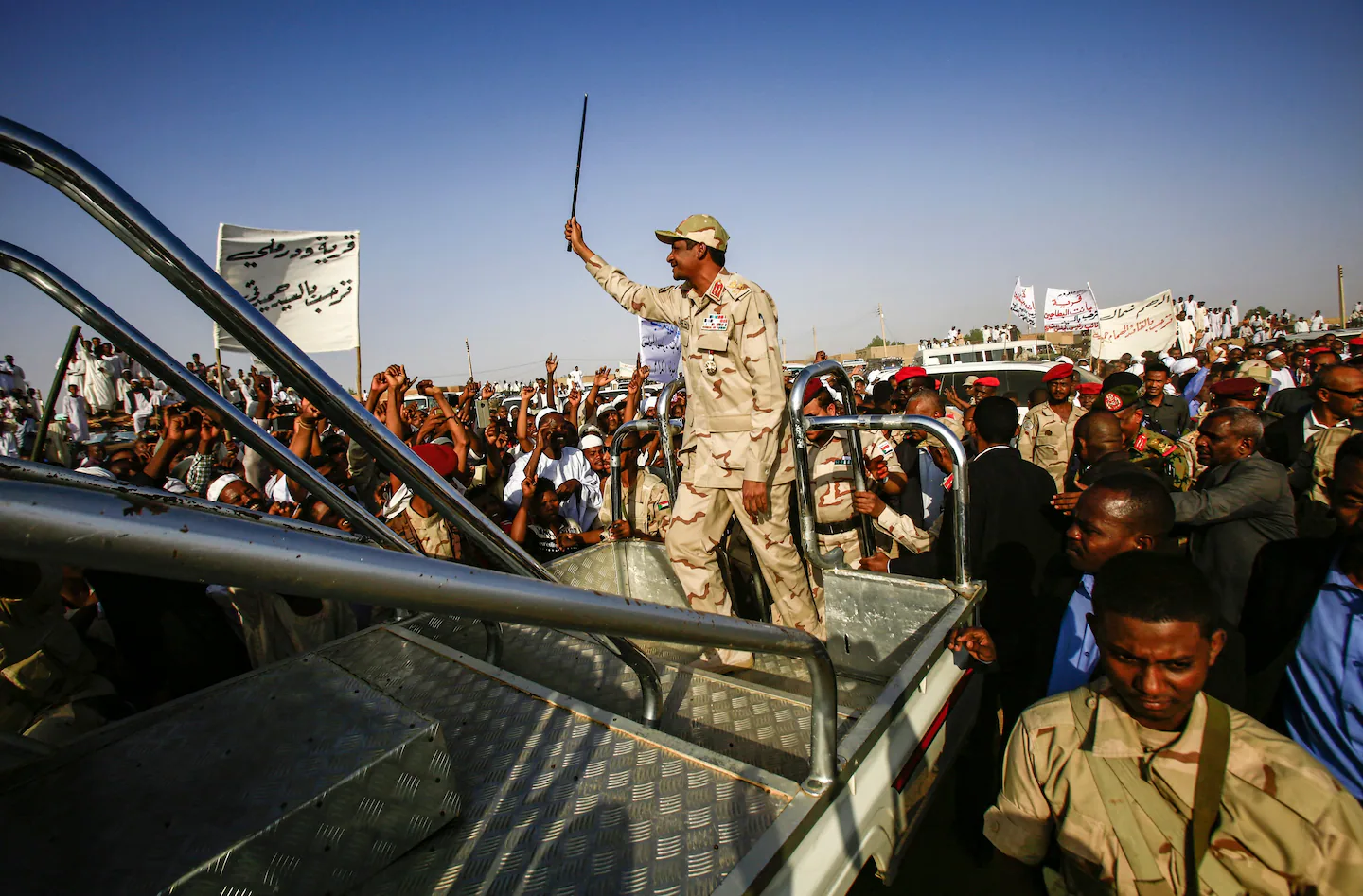
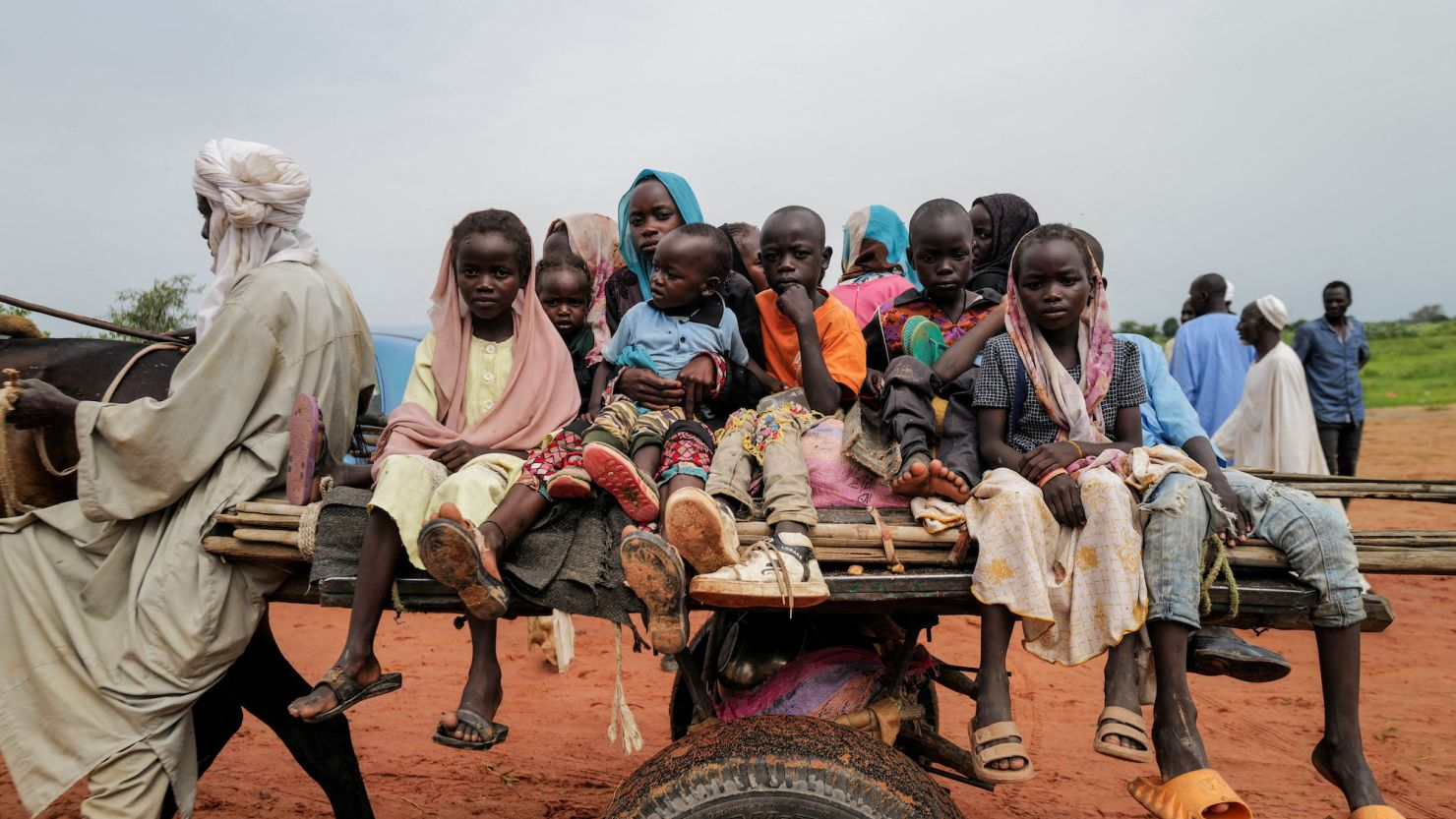
While the world is transfixed by the events in the Middle East following the bombing campaign initiated by the US and Israel, terrible misery is inflicted on millions caught up in a long-running war in Sudan. The numbers are huge: tens of thousands killed with mounds of bodies reported in some locations, 8 million displaced in a country with little infrastructure to cope, and an almost uncountable number of women and girts raped. Tens of millions are in need of humanitarian assistance.

The UN reports a tripling of gender based violence much of it unreported because of the stigma and shame attached to the victims. This disaster follows a 2 year siege of Al Fasher by Rapid Support Forces, a rebel group who are successors to the Janjaweed. There are many reports of men executed on the spot by RSF men.

Weapons

The question is how are the RSF getting these weapons to enable them to take on the Sudanese Armed Forces? The story is complex but considerable evidence points to the key supply hub of the UAE being the principle source. Weapons are then filtered through other countries and states including Libya and Uganda. The weapons themselves come from Russia, China, Yemen, Serbia and Türkiye. The supply route is described as ‘unimpeded’ by some observers.

The UK? As is usual with these conflicts, the UK is busy supplying weapons to the UAE despite knowing that some are destined for the RSF to be used for slaughter in the Sudan. CAAT reports that £825m was supplied in the period 2020 – 2024. £421m was suppled since the Sudan war began. They report that the UK government were well aware of the diversions taking place. The British government has been urged to suspend further arms sales to the UAE. This follows a report in the Telegraph.

A Channel 4 report supplies further details – or such details as can be found as the industry is shrouded in secrecy – and they do note that weapons sales to the UAE have diminished. The report ends with the familiar refrain from ministers:

“The UK government told us it has a very strong arms export licensing system in place, and it takes any allegations of diversion of exported weapons to another country very seriously. It said it had reviewed a large number of export licences, and found no evidence of diverted items being linked to existing licences.

“Speaking to Channel 4 News today [25 November 2025], Foreign Secretary Yvette Cooper said: “I have deliberately made the issues around Sudan one of the top priorities here in the Foreign Office because this is the worst humanitarian crisis of the twenty-first century.””

Open licences

The problem with Foreign Office statements is the issue of open licences. A rather less sanguine view of the question is provided in a Daily Telegraph article. The FCO is accused of failing to check the onward movement of weapons once they have landed in the UAE: a kind of out of sight out of mind.

The situation in Sudan is dreadful and there is a flow of refugees from the country some of whom end up at Calais. The UK is urged to limit arms sales to UAE and to ensure that such arms as are sold do not find their way to the RSF.

Sources: Amnesty, Guardian, Telegraph, Middle East Eye, CAAT, The Parliament Politics, Channel 4.


Recent posts:

Photo CNN

Sudan: world’s worst crisis


Two years of war has left 20 million suffering food insecurity

April 2025

Wars in Ukraine and in Gaza have drawn much attention from the world’s media and the events in Washington are also a major distraction. Meanwhile, in Sudan a less well reported conflict is causing immense suffering, death and destruction on an heroic scale. Commendably, Channel 4’s Unreported World devoted a programme to the conflict in March this year [registration needed].

The conflict is now 2 years old and is between the Sudanese Army and the Rapid Support Forces known as the RSF. By August 2023 around 1 million had fled the country. Currently, around 20 million are suffering acute food insecurity. Another million have fled to neighbouring Chad a country not equipped to handle such a large influx.

The RSF is accused of a range of war crimes including killings – sometimes in people’s homes and including small children – looting, sexual violence and arson. It has no regard for human rights.

The war could not last this long and at such an intensity without outside support and the major players are Egypt supporting the Army and the UAE who are alleged to be supporting the RSF. The reason according to Middle East Eye is to protect its investments in the country and to gain access to its mineral and agricultural resources. UAE imports 90% of its food and has little land suitable for agriculture itself.

UK seeks to suppress criticism

Weapons and arms are another key factor and suppliers include China, Russia, Serbia, Türkiye, UAE and Yemen. Amnesty suggests technology from France has been found. UAE appear to be the main player and the UK is alleged to be active in preventing criticism of the country. The United Kingdom has reportedly tried to suppress scrutiny of the UAE’s role in Sudan. In June, a report from the Guardian reported that the Foreign, Commonwealth and Development Office (FCDO) pressured African diplomats not to criticise the UAE. There is considerable trade and commercial interests between the two countries and the UAE invests in the UK including part ownership of Gatwick airport. Clearly, the government, with its focus on growth, does not want the role of the UAE in fomenting conflict in Sudan with devastating results, to stand in the way of commercial interests.

This seems to be yet another example of how outside interests result in fearful consequences for the people who’s properties have been burnt and who have had to flee to neighbouring countries to escape violence.

Sources: Amnesty; Human Rights Watch, Middle East Eye; Crisis Group; Guardian

Good news! Sudan


Release of prisoner on death row

You might remember Magai Matiop Ngong, who was only 15-years-old when he was sentenced to death in South Sudan. After two years and eight months on death row, we are thrilled to share that Magai has been released.

More than 765,000 people around the world took action for Magai, which resulted in his death sentence being sent back to the High Court for a review. This week, we are celebrating his release.

This is just one example of the change we can be part of when we come together, and the incredible difference campaigning can make in the lives of people facing injustice like Magai. 

Execution is the ultimate punishment and we will always stand against it. Every human being on this planet has the right to life, and we need to ensure that right is protected no matter what. 

Sudan: teenager’s death sentence quashed


Good news from Sudan
Amnesty’s Urgent Action successful

Following the South Sudan Court of Appeal’s decision on 14 July to quash the death sentence imposed on Magai Matiop Ngong because he was a child at the time of the crime, and to send his case back to the High Court to rule on an appropriate sentence, and his removal from death row on 29 July, Amnesty International’s Director for East and Southern Africa, Deprose Muchena said:

We welcome the Court of Appeal’s decision to quash Magai Matiop Ngong’s death sentence because under South Sudan and international law a child cannot be sentenced to death. Magai is one of the lucky ones.

At least two other people, who were children at the time of the crime, have been executed in the country since May 2018; their lives extinguished as well as all the hopes their families had for them.

The South Sudanese government must fully comply with national and international laws which prohibit the use of the death penalty against anyone below 18 years of age at the time the crime was committed. The authorities must abolish this cruel, inhuman and degrading punishment.

Background
In its annual letter writing campaign, Write for Rights, Amnesty International prioritized the case of Magai mobilizing its global membership to write to President Salva Kiir to commute the death sentence. More than 765,000 people around the world took action, calling on President Salva Kiir to commute Magai’s death sentence, and expressing their solidarity with Magai.

South Sudan is one of four countries in Sub-Saharan Africa that carried out executions in 2018 and 2019.

Amnesty International opposes the death penalty in all cases without exception regardless of the nature of the crime, the characteristics of the offender, or the method used by the state to carry out the execution.

Amnesty International post 27 July 2020.  Thanks to all those who wrote letters or sent emails for this action.  See our monthly death penalty update.

Urgent action: Sudan


This is a current urgent action concerning a boy in Sudan.  Magai was trying to stop his cousin fighting with another boy in the neighbourhood. He took his dad’s gun and fired it at the ground to scare the boy away. But the bullet ricocheted and hit his cousin, who later died in hospital.

In his trial Magai was not allowed a lawyer.  He told the judge he was just 15, but he was sentenced to death regardless. This is illegal by both international and South Sudan law.

This is just to let you know that yesterday’s Guardian featured an AI ad with a text Action for Magai.

If you would like to do this, you just need to text 70505 with SAVE1, followed by your first and last name.

If you are able to do this, many thanks.

Sudan – teenager sentenced to death


This is an urgent action from Amnesty.

Magai was trying to stop his cousin fighting with another boy in the neighbourhood. He took his dad’s gun and fired it at the ground to scare the boy away. But the bullet ricocheted and hit his cousin, who later died in hospital.

In his trial Magai was not allowed a lawyer.  He told the judge he was just 15, but he was sentenced to death regardless. This is illegal by both international and South Sudan law.

If you are able to spare a moment to add your name to the petition that would be appreciated.

Blog at WordPress.com.

Up ↑