British involvement in bombing Yemen


British military advisors involved in bombing in Yemen

yemen bombing

News has emerged over the past few days that British and American advisors and service personnel have been involved in advising the Saudi Arabians in their attacks on Yemen.  Our involvement might not have come to light had it not been for the Saudis themselves and a briefing by their foreign minister Adel al-Jubeir.  The Minister of Defence, Michael Fallon, issued a statement to the House of Commons on 17 December which simply referred to 94 personnel embedded with ‘Coalition HQ’s’ without being at all specific about what that meant.  It now appears our people are actively involved in targeting strikes.  MoD say that our personnel are “not directly involved in Saudi-led Coalition operations” but the Saudi briefing confirms that we are in the command centre.

The problem is that a range of non-military targets are being hit including schools and medical facilities.  A total of around 3,000 have been killed since hostilities began.  Médécins san Frontières have reported missile hits on one of their medical facilities although they are uncertain of the origin of the weapons concerned.

Campaign Against the Arms Trade are stepping up their legal campaign and have issued a ‘letter before action’ for judicial review, challenging decisions to continue to export arms to Saudi Arabia despite increasing evidence that they are violating international humanitarian law.  (11 January 2016)

Amnesty have pointed out that provisions of the Arms Trade Treaty – which the UK is party to – prohibit us from exporting arms transfers if they have knowledge that the arms would be used to commit attacks against civilians, civilian objects or other violations of international humanitarian law.  It said there was “a pattern of appalling disregard for civilian lives displayed by the Saudi Arabia-led military coalition”.  There is also a risk of famine because of the blockade on Yemeni ports.

That our government and service personnel are somehow involved in this is shocking.

Sources: Daily Telegraph; Daily Mail; the Guardian; CAAT; Reprieve; Amnesty International

Why not follow us on Twitter or on Facebook?   If you would like to join us look at the ‘join’ tab at the top of the page for details.


Ex Ambassador to Saudi Arabia speaks


On the occasion of Saudi National Day, I am reminded of the great history of Saudi Arabia. Today, the Saudi people can be rightly proud of their nation, of their history and their developments. Saudi Arabia is a strong nation, an important player in the world and a key partner of the UK. The development of this nation began with unification.

Sir John Jenkins, September 2014

Sir John Jenkins was the Ambassador to Saudi Arabia and has been in the news recently following the mass execution of 47 people in that country.  He was interviewed on the Today programme on the BBC and was asked if he wished to condemn the executions.  This question seemed to vex him and prompted him to write a three page piece in the New Statesman (8 – 14 January 2016) in which he attempted to explain the quandary he found himself in.  He wrote:

I understand the point of the question.  But I have been wondering since then what exactly it is that I and others hare being invited to condemn.  The fact of the execution its nature, the Shia identity of the victim [Sheikh Nimr al-Nimr] his status as a cleric, that the Saudis still practise capital punishment, the nature of their judicial system, the timing of the act, the suspicion that it might undermine the peace process in Syria or infuriate Iran – or perhaps all of this and more?

 He then goes into a long explanation of the history of the country and its tortuous relationship with Iran and other neighbours.  At the heart of the article is the assumption is that most of those executed along with al Nimr were terrorists.  He then goes on to say that one might still think it is an act of state brutality and should be condemned as such but that this position is not a policy.  The signal the Saudis sought to send out was that they will enforce the judgement of the courts on those who seek to undermine the stability of the kingdom.

The article begs a number of questions not least of which is the fact that most of those executed were not terrorists but people who are protesting at the iniquities of the state itself.  Nothing like fair trials took place which is not unusual.  Torture is routine and prisoners are denied access to lawyers.

His response and the subsequent article attracted some interest and a biting piece in Private Eye (No 1409).  They pointed out that Sir John was now executive director of the International Institute of Strategic Studies.  A quick look at their web site reveals who it is who funds the charity.  It is an interesting list and includes Lockheed Martin; BAE Systems; HSBC; British American Tobacco; Exxon; Raytheon; Ministry of Defence; Ministry of defense (Saudi Arabia) and so on, all organisations with a vested interest and substantial business interests in Saudi.  It also receives substantial funding from FCO. Once again we see the interests of arms and other companies exercising undue influence over the opinion makers.  Private Eye makes the point that it is a pity the BBC did not mention to its listeners the funding behind the institute when interviewing people like Sir John.  Many might have been misled into thinking that they were hearing the wisdom of a former Ambassador not someone speaking for a range of arms firms and other business interests.  No wonder Sir John was in such a quandary.  He wants us to believe that Saudi is a strong nation.  It is a long way from that.  It is deeply corrupt and far from progressing seems by its recent actions, to be regressing.

Death penalty report


No to the death penaltyThe latest death penalty report is now available and thanks to group member Lesley for assembling it.  The full year summary has already been posted.  It has been a particularly difficult month with a rash of executions in Saudi Arabia and Pakistan has been active as well.  In earlier posts we have discussed the feeble response by the Foreign and Commonwealth Office to the execution of 47 individuals in Saudi recently and we have argued that the government is more concerned with arms sales than with the human rights in that country.

We have a small team which responds to urgent actions many of which are connected to the death penalty.  You are welcome to join us and we will forward you details and cases from time to time.

Follow us on Twitter and on Facebook

Report


Urgent action: Iran


Juvenile at risk of execution

No to the death penaltyWith all the current focus on Saudi Arabia and their barbaric activities, we forget that across the water is Iran which is the second highest executioner of its people after China.  This urgent action concerns a Hamid Ahmadi who was 17 when arrested for allegedly stabbing another person.  He was not allowed access to a lawyer or to his family and was allegedly tortured into confessing.  He is now 24 and is being tried for a second time.  Attached is a document which gives all the details and background.

If you have time we would be grateful if you could write.

Factsheet: Hamid Ahmadi

Follow us on twitter

2015 in review (statistics)


The WordPress.com stats helper monkeys prepared a 2015 annual report for this blog.

Here’s an excerpt:

A San Francisco cable car holds 60 people. This blog was viewed about 2,800 times in 2015. If it were a cable car, it would take about 47 trips to carry that many people.

Click here to see the complete report.

Tapestry: detailed pictures, final set


The last set of pictures of the panels on the tapestry currently in the entrance to the Chapter House at Salisbury Cathedral.  Each panel represents an article from the Universal Declaration of Human RightsVideo

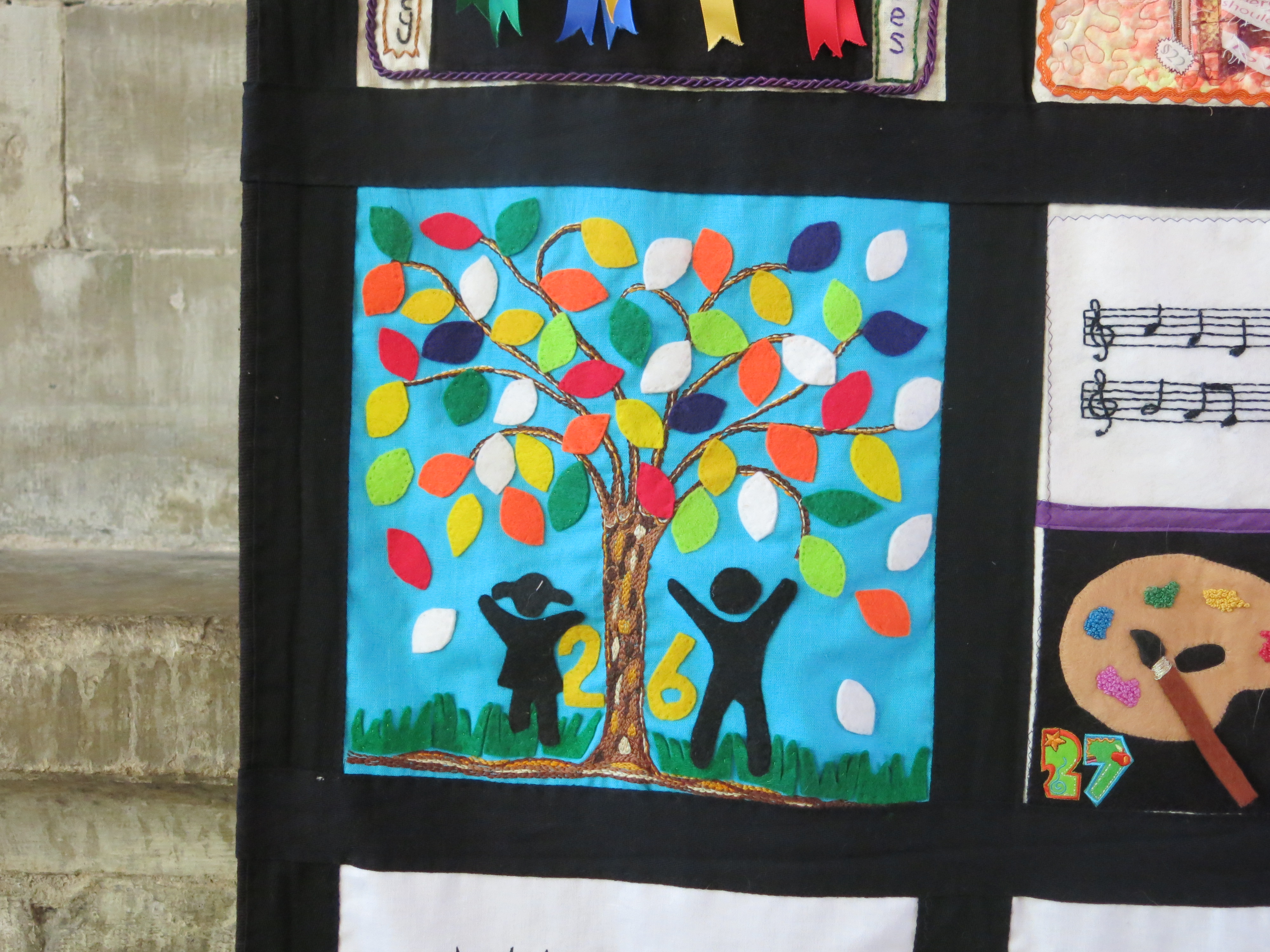
Art 26

Article 26: Everyone has the right to an education, elementary schools should be free and compulsory.  Contributed from the Southampton City group.


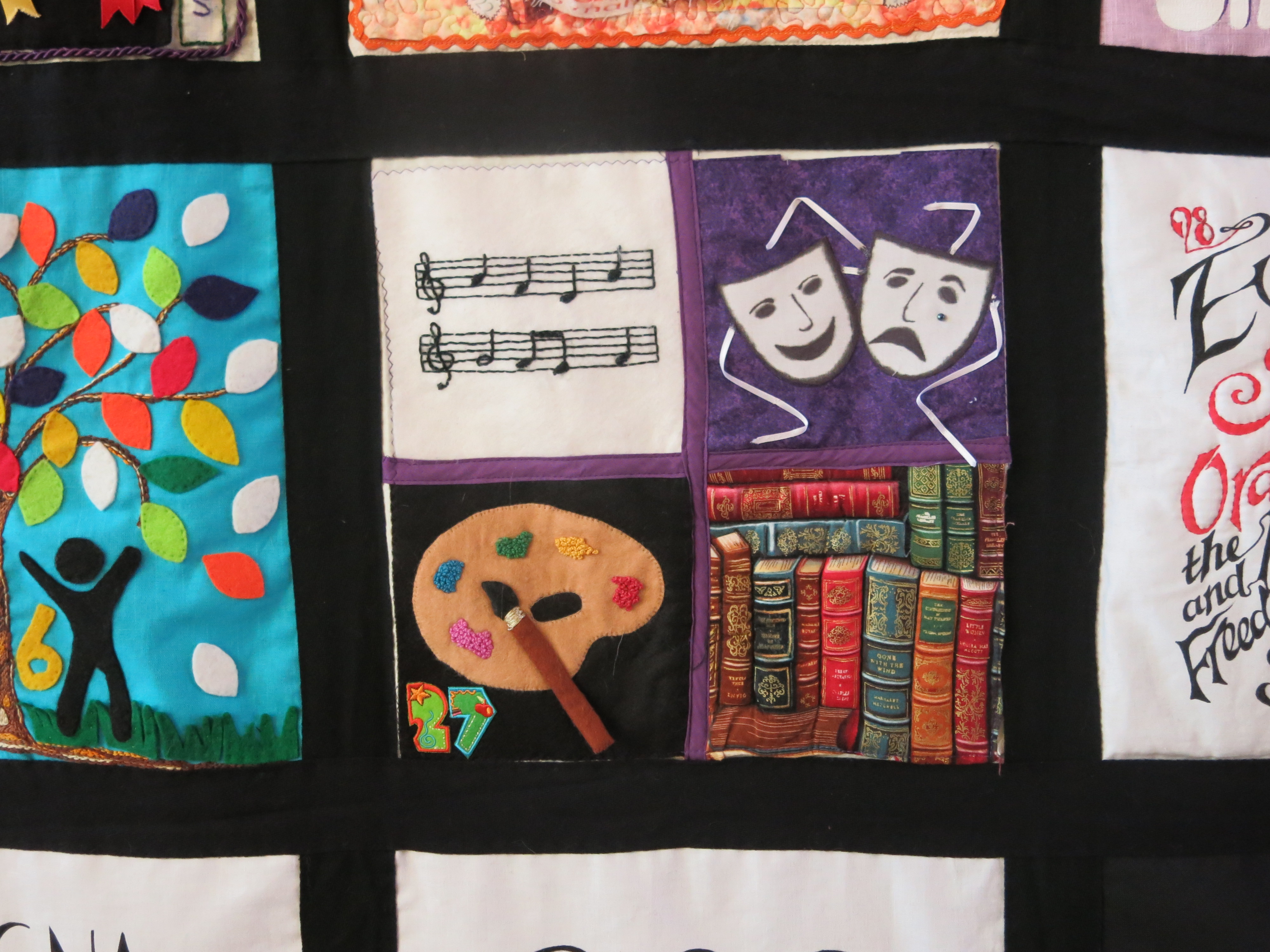
Art 27Article 27: Everyone has the right to freely participate in the cultural life of the community.  Team effort this by Fay, Janet, Sharon, Sue and Gretel, members of the Romsey group.


Art 28Article 28Everyone is entitled to a social and international order in which the rights and freedoms set out here can be fully respected.  The third panel by our Regional Representative, Caroline Butler.


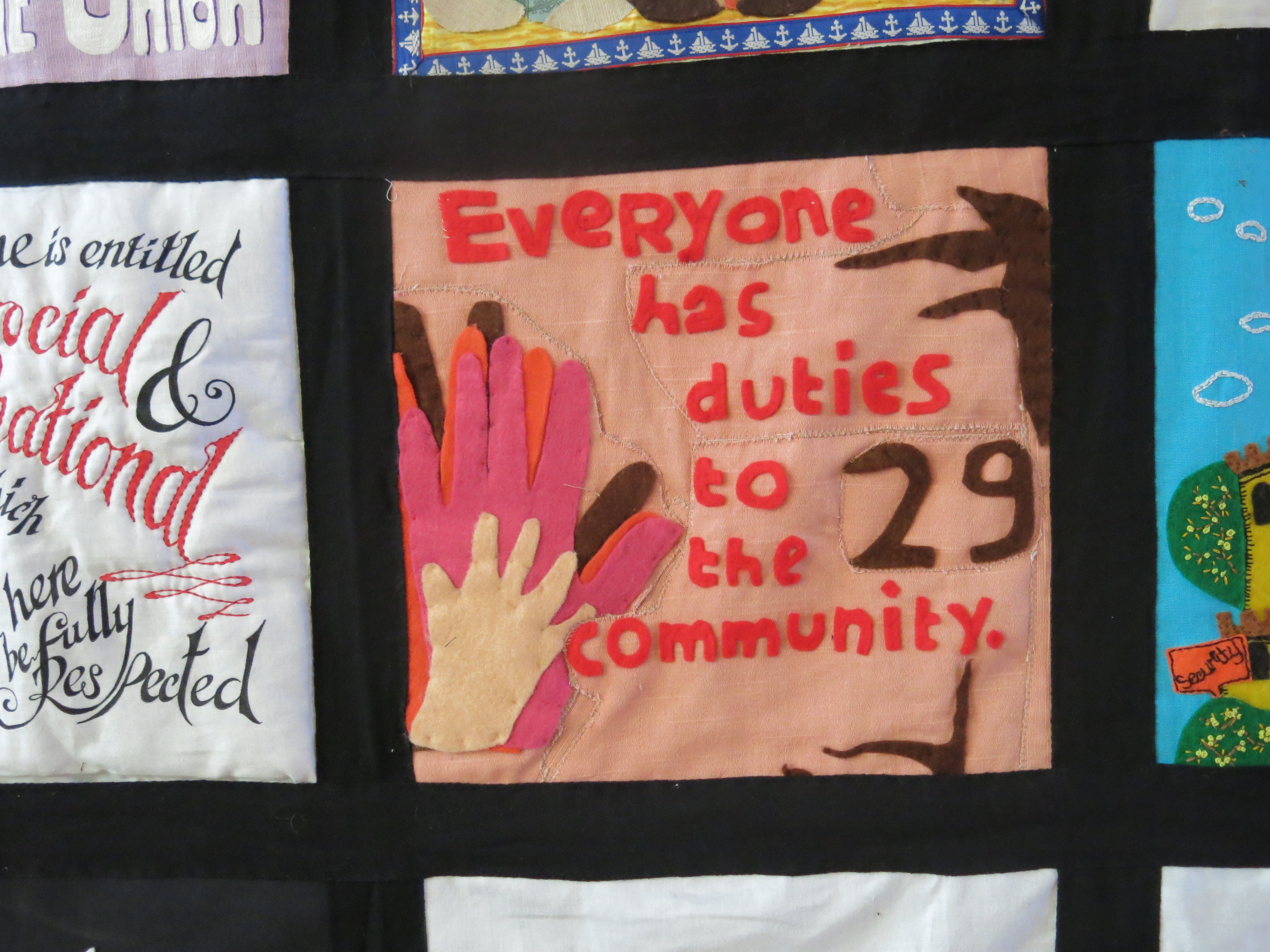
Art 29Article 29: Everyone has duties to the community.  This is the second panel in the tapestry contributed by a refugee group, this time GARAS, the Gloucester Action for Refugees and Asylum Seekers.  GARAS offers support to those seeking asylum in Gloucestershire; welcoming them when they arrive; advocating for them in their daily struggles; supporting them if they face being sent back, as well as helping them adjust to their long term future if they are recognised as refugees.


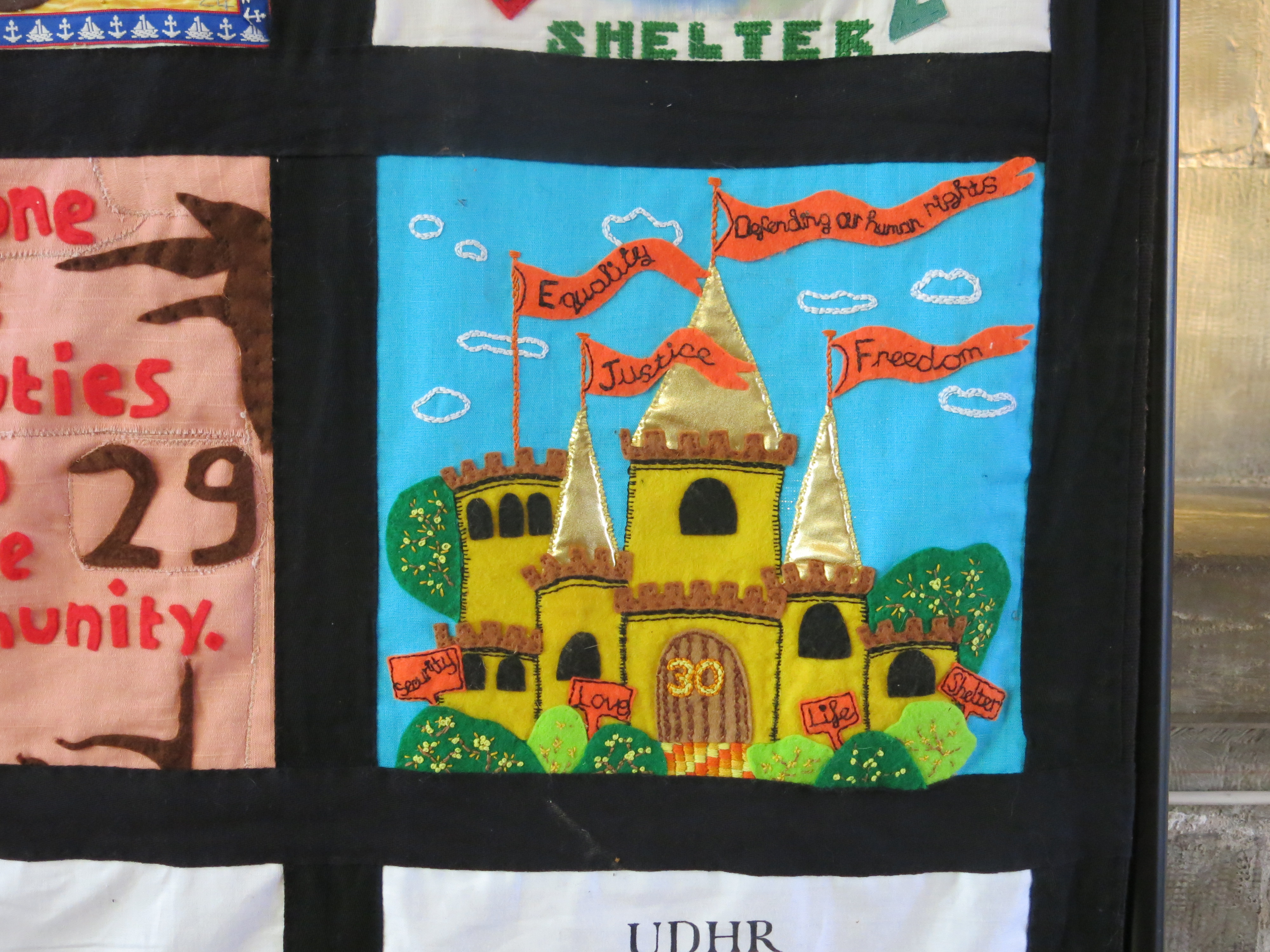
Art 30Article 30: No one has the right to act in such a way as to destroy the rights and freedoms set in in this declaration.  The fourth panel from the Southampton City group.


End


Tapestry: detailed pictures 5


Nearly there: this is the fifth batch of detailed pictures of the tapestry now in the entrance to the Chapter House at Salisbury Cathedral.  Previous blogs have shown the first twenty panels.  Any errors of if you want to add some detail, please get in touch and we shall be happy to oblige.

Art 21Article 21: Everyone has the right to take part in the government off their country.  Voting should be regular and secret, and all votes should have equal value.  Another panel from the Bournemouth, Poole and Christchurch group.


Art 22Article 22: Everyone as a member of society, has the right to social security and is entitled to realisation of economic, social and cultural rights.  This panel made by the West Wilts group.


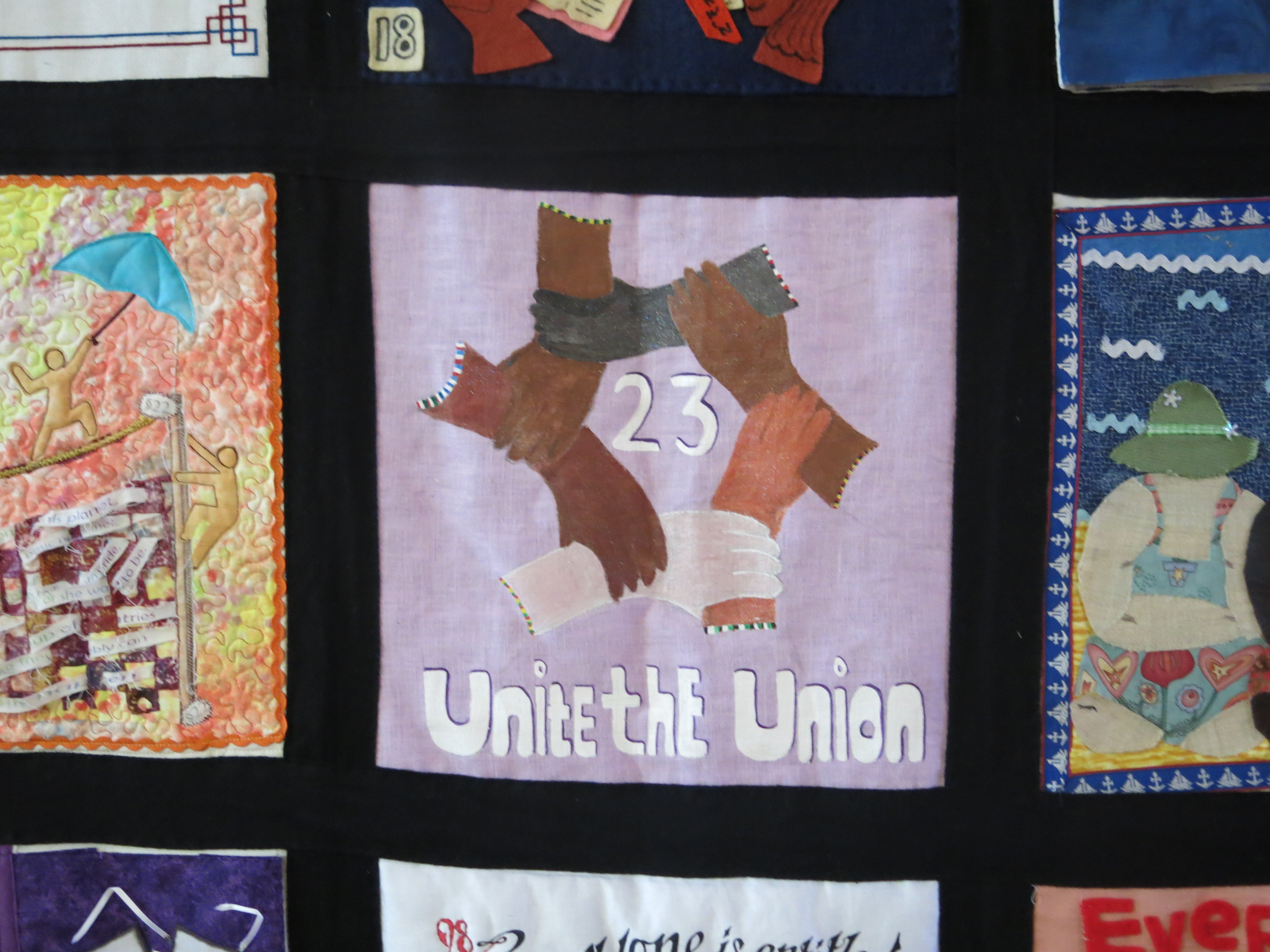
Art 23Article 23: Everyone has the right to work and those doing the same work should get equal pay.  Everyone has the right to form and join a trade union.  A second panel from the West Wilts group.


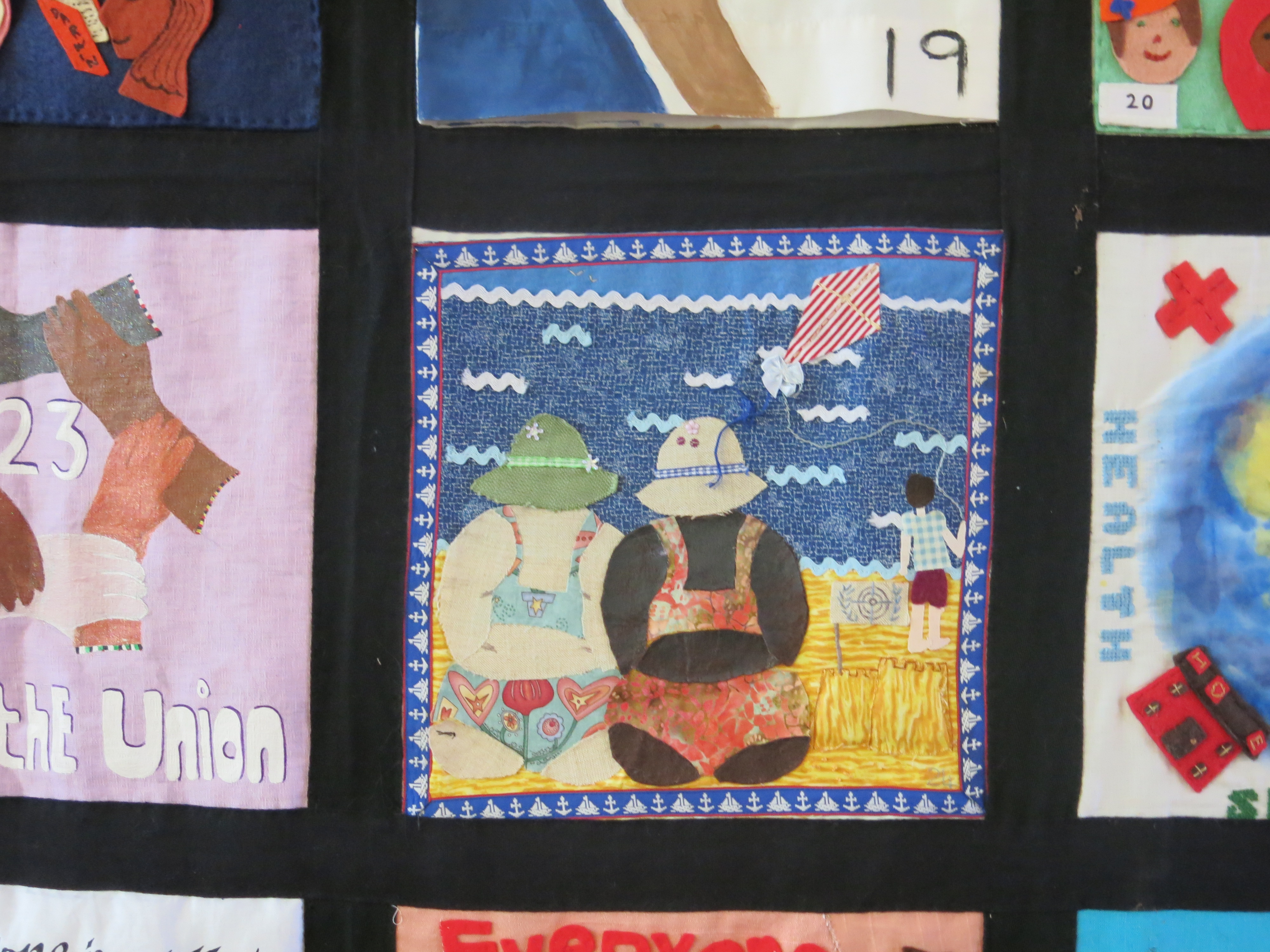
Art 24Article 24: Everyone has the right to rest and leisure including reasonable working hours and paid holiday.  A third panel from the Frome group, this time by Fiona and Jeanne.


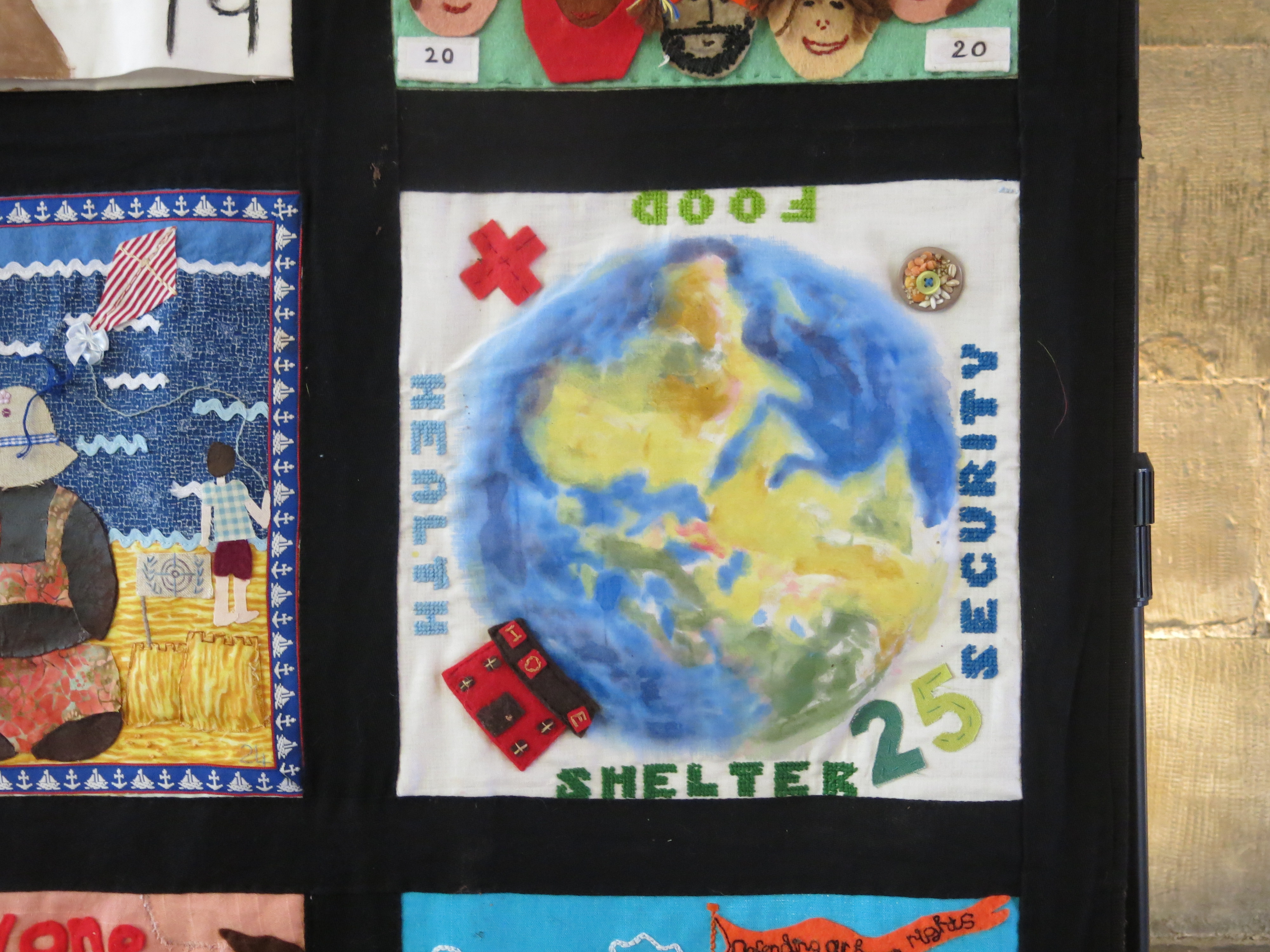
Art 25Article 25: Everyone has the right to a standard of living adequate for health and wellbeing.  People should be helped if they cannot earn a living.  A third panel from the Bristol group.


The arming of the Islamic State


Amnesty publishes a report on arming of IS

Last week we had the debate in Parliament about bombing the Islamic State IS or Da’esh as some call it.  This was occasioned by the outrage in Paris and the massacre of ordinary people in that city.  Parliament voted in favour of bombing and since then we have had recriminations in the Labour party between those who voted for and those against.

It is timely therefore that a report has been published by Amnesty International called Taking Stock: the Arming of the Islamic State.  All politicians should read it.  As we have noted several times on this blog, one cannot but help notice that when pictures are shown of IS fighters, they are well equipped and armed to the teeth.  So where do all these arms come from?  The report explains where and how in great detail.

The major source is Iraq supplemented by materiel taken from the Syrian army.  The Iraq weapons were supplied by the coalition forces but because they were irresponsibly guarded, it was easy for them to be stolen or looted.  As the report puts it, ‘there were decades of irresponsible arms transfers to Iraq principally by Russia, France and China.’

The supply and transfer of weapons was governed by a global treaty adopted by the UN in 2013.  It places international human rights law, humanitarian law and criminal law standards alongside other international benchmarks for assessing the authorisation of exports and other transfers of conventional arms.

The report documents the astonishing amount of weaponry possessed by IS (the range and types are listed at the end).  Although a total of 25 countries have been identified as suppliers – including some from the former Soviet Union – it is the Security Council members P5 who are the main culprits.

The Iraq invasion cast a long shadow over the region.  Arms were poured in and in the chaos, thousands of weapons were lost to the militants.  The Arms Trade Treaty was designed to put a stop to irresponsible activity and it will take a long time to take effect.  We noted in an earlier blog that the UK and the US continues to supply Saudi Arabia which is bombing Yemen creating fertile ground for the next wave of insurrection.

It is much to be regretted that the House of Commons would not be packed or buzzing with excitement if the question of arms supplies was being debated.  Yet unless and until arms supplies are curtailed to regions such as the middle east, organisations like IS will prosper in the chaos.  Bombing the result seems a little pointless.  


IS arms report

Urgent Action: Saudi Arabia


Two Saudi Arabian Shi’a activists, arrested when they were under 18 years old, risk being executed as soon as the King ratifies their death sentences.  They were moved to solitary confinement on 5 October and have been held incommunicado since then.  

We attach this month’s urgent action which highlights the case of two men (boys) arrested when they were under the age of 18, tortured into signing a confession and now risk execution.

If you are new to Amnesty urgent actions, they highlight injustices around the world.  You are invited to read the case notes below and write to the addresses provided.  Even if you only write to one, it can help.

Does it work?  Sometimes it does and we have recently celebrated the release of another young man held in Nigeria for the alleged theft of three mobile phones, tortured and was due to be executed.  So it can work …

Urgent action: Saudi Arabia

North Korea


Meeting held last night to discuss possible campaign actions on North Korea.

New website added to our list at the bottom of the page: European Alliance for Human Rights in North Korea

Blog at WordPress.com.

Up ↑