This milestone vigil well attended October 2026 It almost doesn’t seem possible that a group of people in Salisbury have turned out each Saturday for 150 weeks to stand, sometimes in the cold and rain, to support the principle of peace and justice in the Middle East. Yesterday (17th) there were 40 of us and…
October 2026 Today, 17th October, is the 150th vigil in Salisbury. If you are able to come that would be wonderful. You may wonder why you haven’t heard of this and we are disappointed to report that the Salisbury Journal declined to publish the press notice. We cannot know why. 5 o’clock outside the Library…
NAZA was shown in cinemas around the country October 2026 The film NAZA was shown in cinemas around the country yesterday and following the showing there was an interview with the makers and others involved. NAZA is the word used by the IDF to assess collateral deaths in pursuit of one Hamas operative. It is…
The 149th vigil held on Saturday. Big row about the Green party motion on Zionism October 2026 A tense week on the Israel front with a major row erupting at the Green party conference arising from a motion to defining Zionism as “a political ideology which called for the creation – and, now it exists,…
October meeting minutes October 2026 We are pleased to attach the minutes of the last meeting thanks to group member Lesley for preparing them and thanks to group members for their contributions. Rather longer than ordinary minutes, they contain reports on the death penalty, the situation with refugees and immigrants, statistics and a report on…
The treatment of asylum claimants takes centre stage
May 2025
The question of immigration and boat people continues to make political waves although survey results recently suggest it has dropped down the list of people’s concerns. ONS surveys show that the NHS and the cost of living are of most concern and were the issues which came up in last weeks elections. Only among the over 70s did immigration and such matters have high salience.
There has been much debate in recent weeks about Article 8 of the Human Rights Act, the one that concedes a right to a family life to irregular migrants under threat of deportation. Some political parties wish to remove this right, and the government say it is “under review”. The issue is whether or not this right has been exploited by people whose claim is questionable. Baroness Kennedy has taken up the issue on behalf of claimants.
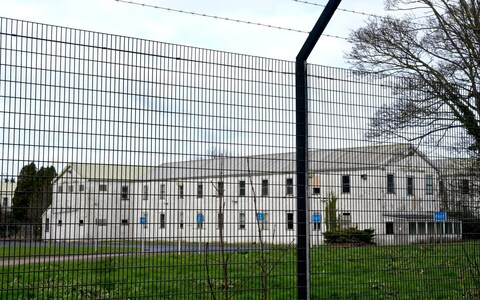
Indeed, the treatment of asylum claimants after their arrival has taken centre stage lately. Some who were held at the notorious Manston camp have sued the government over the associated health issues. The unfortunate camp is now under attack over the level of drug abuse by staff working there.
The Home Office is eager to reduce the waiting time for appeals from its current 50 weeks to 24. This is not made easier by the downward trend in initial refusals. A further government action has been to declare that proven sex offenders will be denied asylum. It is not known how many applicants may fall into this category. Also on the Government’s mind (as part of the ongoing Border Security Asylum and Immigration Bill) is that lawyers should not be allowed to advise claimants unless properly qualified. The Bill will reach its Report stage in the Commons on Monday and more changes have been promised.
Profits
While much noise has been generated by the possible big profits obtained by the small boat providers, a research team from four UK universities has been looking at the profits made by companies in the border security business. Their report concludes that worldwide the business is worth $377 billion, and in the UK £3.77 billion in contracts with the government, for a wide range of activities (e.g. boat repair, sniffer dogs, marquees). The information is not easy to come by and may well be an underestimate.
The European Commission has proposed setting up a Common European System for Returns (though it is not in the 2024 Migration and Asylum Pact), with processing hubs in third countries (as Italy has tried to do with Albania, but hit legal obstacles). Perhaps surprisingly, the UNHCR has endorsed the idea. It is said that only 20% of people with a deportation order are effectively removed from the EU.
Elsewhere
Much is happening in Greece, notably sentences of 25 years for smuggling (most of which have landed on the pilot). Crete has had 2,500 migrants from Africa in the last year.
Syrian refugees are still in limbo as the government waits to see developments post-Assad. 100,000 are in Europe awaiting recognition as claimants, while the in-power HTS is still listed as a “terrorist organisation”.
Reports that the US sent an Iraqi asylum seeker to Rwanda seem to be supported by news that the White House is in talks with the Rwanda government about sending deportees there, probably to facilities built by the UK.
Notes from elsewhere – 12,000 central African (or Central African?) refugees want to go home from Chad and Cameroon, but there is no support structure to enable this; the UNHCR, on its 75th birthday is warning of a funding crisis; 250,000 exiles have been sent back to Afghanistan from Iran and Pakistan (96,000 forcibly) and are expected to head for Europe.
‘Backlogs have recurred in the asylum system for decades because successive administrations have pursued bad policies. They have tried to avoid responsibilities rather than take them. Their efforts at deterring and preventing people seeking asylum have broken the system and had other bad effects. This has generally been because they have set aims for the system that are impractical, even illegitimate. Asylum responsibilities cannot be avoided. They can, however, be managed badly or managed well. Fair and efficient decision-making is critical to managing well and avoiding backlogs’.
And a new Urgent Action asking people to write to the Belgian authorities about their refusal to supply accommodation or assistance to 2,500 asylum seekers.
Recommended reading: Nicola Kelly: Anywhere But Here; How Britain’s broken asylum system fails us all (Elliott & Thompson, 2025)
This vigil took place against the backdrop of increasing stress in Gaza as the blockage of supplies begins
to bite. Over 60 days have passed without food, fuel or aid being allowed in. There are distressing pictures of Palestinians arriving with empty food pots and utensils in the hope of acquiring meagre rations. It is part of the plan by Israel to force Hamas to release the remaining hostages they took on October 7th. Several nations have condemned Israel for using food supplies as a weapon of war. People attending the vigil held empty pans to show support for the lack of food available to those living in Gaza.
Israel disputes the claims and they say that aid is being stolen by Hamas for sale on the black market, a claim disputed by aid agencies. Journalists are not allowed into Gaza so establishing truth is difficult in these circumstances.
Over 52,000 have now died in Gaza the majority being women and children. The International Committee of the Red Cross warned that the humanitarian response was on the verge of collapse.
Sources: The Independent; ICRC; Aljazeera; Guardian; Haaretz
Bizarre example of ‘slut shaming’ in a death penalty decision
April 2025
This is an extraordinary case of ‘slut shaming’ where what a woman was wearing featured as a key part in the evidence against her. The prosecutors even produced into the court proceedings a suitcase of provocative clothing as part of their case. We are asking you to write to the state governor to protest at her sentence.
Please express your delight at the good news that her case has been referred back to the Tenth Circuit Court of Appeals, but raise your concerns that she has spent time on death row following a conviction following prejudicial evidence which clearly violated her rights under the 14th Amendment, and which has been and continues to be only too common in the trials of women accused of capital crimes in the United States. Stress your hope that she will be granted a new trial which meets the requisite standards of fairness. Please write to Governor J Kevin Stitt about the case of Brenda Andrew, the only woman on death row in Oklahoma:
Background Information
Brenda Andrew (pictured, the Oklahoman), the only woman on death row in Oklahoma, was sentenced to death in 2004 following her conviction for the murder of her husband. Ms Andrew did not kill her husband – she was said to have lured her husband into the garage under the pretence of starting the pilot light of the furnace – where he was shot by her boyfriend, James Pavatt, who admitted his guilt but said he had acted alone. The Jury, however, concluded that the couple had conspired to collect on a life insurance policy, and both were found guilty.
On 21st January 2025, the US Supreme Court referred Ms Andrew’s case back to the Appellate Court, requesting it to take another look at how the evidence of the Prosecution might have prevented a Jury from giving proper consideration to her arguments of innocence.
Her Defence Lawyers, who did not argue against the evidence presented at her trial, said at the time they were too stunned to do so. This evidence took the form of an attack with accusations of immoral conduct – what has been termed ‘sex’ or ‘slut shaming’. Not only did they call witnesses to give evidence of Ms Andrew’s sexual relationships over the past 20 years, but they also spoke of her ‘provocative clothing’, called her a ‘hoochie*’ and a ‘slut puppy’, and – in his closing evidence, the Prosecutor opened a suitcase and showed the Jury Ms Andrew’s underwear – a thong and a lace bra – saying, ‘The grieving widow packs this in her appropriate act of grief? … a grieving widow doesn’t pack her thong underwear and run off with her boyfriend!’
Elizabeth Bruenig of The Atlantic says attacking women on trial for criminal offences with accusations of immoral conduct has been, and continues to be, common. As recent examples, she cites the cases of Mary Ellen Samuels who was convicted of murder in California in 1994 following the introduction of pornographic letters and a nude photograph, and of Amanda Knox whose demeanour and behaviour were deemed inappropriate following the murder of her fellow student. Men are rarely sentenced to death based on deviation from masculine gender norms, but many female defendants facing capital trials are derided by prosecutors for failures of femininity.
In their ruling, the Supreme Court held that Ms Andrew had properly relied on an earlier Supreme Court case, (Payne v Tennessee – 1991) arguing that the State’s evidence was so prejudicial that it violated her rights under the Due Process Clause of the Fourteenth Amendment.
The Tenth Circuit Court of Appeals now has to determine whether the Prosecutor’s evidence about Ms Andrew’s sexual behaviour and clothing was so prejudicial that it warrants a new trial. They are to re-examine her prosecution to determine if Judges ‘reviewing this record could disagree with Andrew that the trial court’s mistaken admission of irrelevant evidence was so ‘unduly prejudicial’ as to render her trial ‘fundamentally unfair’.
Statement by Jessica Sutton, Attorney for MS Andrew:
“The prosecution invited the jury to convict and condemn Ms. Andrew to death because she was not a ‘stereotypical’ woman — her clothing was not modest enough, her demeanour was not emotional enough, and she was not chaste enough,”
Statement by Sandra Babcock, Cornell Law Professor and member of the Defence Team:
‘Wielding these gendered tropes to justify a conviction and punishment of death is intolerable and poses a threat to everyone who does not follow rigid gender norms…. With this decision, the U.S. Supreme Court has for the first time signalled that prosecutors may not use, and courts may not admit, prejudicial evidence attacking women’s abilities as mothers and their private sex lives without violating women’s constitutional rights.”
Oklahoma Court of Criminal Appeals Judge Arlene Johnson said the trial was “rife with error” which, “at its most egregious, includes a pattern of introducing evidence that has no purpose other than to hammer home that Brenda Andrew is a bad wife, a bad mother, and a bad woman.”
Judge Robert Bacharach of the Tenth Circuit wrote the prosecution focused “from start to finish on Ms. Andrew’s sex life” and “portrayed Ms. Andrew as a scarlet woman, a modern Jezebel, sparking distrust based on her loose morals…plucking away any realistic chance that the jury would seriously consider her version of events.”
Note: Ms Andrew’s Attorney, Jessica Sutton, has also argued that – as the only woman on Oklahoma’s death row, she may be experiencing disparate negative treatment compared to men and even ‘functional solitary confinement.’
Fewer numbers this week partly because the events in Washington dominating the news and a number of our regulars away or ill. This week we had three sets of people variously upset with our presence. It would be difficult to summarise their arguments some of which were around the boat people, which is not an issue with Gaza at present, and another claiming we were ‘wasting our time’. Strange to relate how a peaceful protest seems to generate animosity. The government has introduced legislation to limit noisy demonstrations in certain circumstances yet here was a peaceful protest – peaceful as in silent – which upset several people.
The situation is Gaza goes from bad to worse. Over 50,000 are now dead. The Israelis have widened the buffer zone around the strip and turned it into a killing zone. The ceasefire has ended. Netanyahu was welcomed in Washington. All aid has been cut off. A UN study (11 April) has shown that the last 36 Israeli air strikes killed 1,500 all of whom were women and children.
The apparent murder of Red Crescent medical staff has continued to make waves as the false story put out by the IDF has unwound with video and other evidence emerging. A shocking feature was the attempt at cover up and hastily digging a grave and burying the 15 people.
There seems no end in sight. The UK government continues to give support to Israel openly and covertly. The RAF is flying almost daily over the region ostensibly to try and track hostages. About 250 flights have happened in the last 6 months. The question is, if they are carrying out this surveillance (officially called Intelligence, Surveillance and Reconnaissance, ISR) are they not witnessing war crimes? Clearly, to spot a hostage would require sophisticated kit and it is reasonable to assume it would be capable of witnessing other events. Is this being logged and reported? As the Canadian researcher who is tracking these flights has said:
“They’re [RAF] in a warzone apparently rife with atrocities, and I think it’s very reasonable to ask if they’ve been witness to any war crimes, if they’ve incidentally collected intelligence that could reasonably believed to involve a war crime, and if so, what is their process to deal with that? If they don’t yet want to talk about what they’ve been doing for the past six months for truly operational security reasons, they already told us they would be operating there 6 months ago, they should be able to assure us their process is sound vis-a-vis unintentional intelligence collection involving/witnessing atrocities.”
These are serious questions for the UK government to answer.
We are pleased to attach our minutes of the group’s meeting in April thanks to group member Lesley for preparing them and for various group members submitting reports for inclusion. They are a kind of ‘hybrid’ style of minutes as they contain narrative material which we hope readers will find of interest. At the end you will find a short list of upcoming events the group will be running or participating in.
The report highlights a sharp increase in numbers executed – the highest level since 2015 – but the number of countries holds steady. Amnesty has recorded 1,518 executions in 2024 a 32% increase over the previous year. A problem with producing statistics of this nature is that countries who are major users of the penalty, keep their figures a secret. China for example, believed to be the world’s largest executioner with thousands of its citizens executed each year – does not publish figures regarding them as a state secret. Another secretive nation is Vietnam where, similarly, the numbers are a state secret, and Belarus and Laos who release limited information. The figures are accordingly a minimum estimate of the actual numbers executed. The full report can be accessed here (pdf).
The penalty is not solely used to put to death people who have committed serious crime, but is used as a repressive tool. Saudi Arabia (image), and Iran, for example use the penalty to stifle dissent, targeting human rights defenders, protestors, dissidents and political opponents. There is also a disproportionate use of the penalty against minorities particularly religious minorities. Iran, which executed no less than 972 individuals last year, uses the penalty to execute those who challenge, or who are perceived to challenge, the Islamic Republic. It is also noted that these regimes have poor levels of justice. Defendants are often tortured to secure confessions and are denied access to lawyers. It is highly likely, not to say probable, that many wholly innocent people lose their lives.
Another trend is the use of the penalty as part of drugs programmes against dealers and users.
There is little sign, and very little evidence, that the penalty is some kind of deterrent, an argument frequently put forward for its retention or return. The leader of UK’s Reform party for example recently called for its reintroduction following the dreadful murder of three little girls which took place in Southport*. YouGov surveys show mixed views among Britons about the penalty. Generally, people are opposed but there is more support for its use among Conservative voters. The strongest support comes from the 65+ age group. Attitudes do change however, following a particularly unpleasant murder of a child, a policeman or as a result of terrorist activity. It was last used in 1964, suspended in 1965, abolished in 1969 and completely abolished in 1998 when treason was removed (different dates in Northern Ireland).
Terrible abuses take place in Somalia with little attention paid by the media
March 2025
The news is filled with the terrible events in Gaza and the resumption of bombing there, the war in Ukraine which, following President Trump’s activities and support for Russia, shows no sign of an equitable or fair resolution, and a possible resumption of hostilities in Lebanon means other conflicts receive little attention. This is true of Somalia on the horn of Africa where corruption and lawlessness are rife.
At South West conference in Exeter of Amnesty groups organised by the City’s Amnesty group, we heard first hand from a Somalian human rights defender Abdalle Mumin (pictured). Entitled Human Rights in Somalia: the Struggle of Defenders in a Dangerous Environment, he gave a detailed description of the severe problems being experienced in that country but which remain largely unreported. His descriptions of being held in an underground cell was chilling.
He explained the power set up in the country which provides valuable background to understanding the politics of repression. There are three centres of power: 1. Al-Shebaab a terrorist organisation with close links to Al-Qaeda 2. the government and 3. the clans of which there seem to be three. All are male dominated and the role of women in the political process is much reduced he said.
Corruption is rife and there is no independent judiciary. Women who are not wanted for some reason or complain too much can be murdered with impunity as there are no investigations carried out. Femicide is frequently practised. There is considerable sexual and gender based violence. The corruption starts with the business of getting into government for which a bribe of around $1m dollars is required. This has to be paid back of course which is done by purloining food aid and selling it off, accepting bribes for favours, money laundering and rewarding friends and family.
‘Terrorism and corruption are like brother and sister‘
This corrupt state of affairs can be kept going because attempts to publish stories is difficult. Many journalists are murdered: 85 in the period 1991 – 2024. There is also straightforward intimidation of news outlets by all the parties with many being closed. There are heavy restriction on human rights groups. This has now become the standard playbook for authoritarian and dictatorial regimes.
Foreign interventions he described as ‘confused’. Much aid in recent times is tied to resource extraction and there is an emphasis on security over human rights. Different agencies have different agendas making offering concerted help difficult.
There has been a huge displacement of population with around 2.9m affected. 80% of children do not receive an education and girls none at all in the rural areas because of the influence of Al-Shabaab.
Altogether a grim tale and finding hope is difficult. The problem in Somalia and in much of sub-Saharan Africa is the battle for resources. Countries desperate for minerals, oil and rare earth metals are concerned only to extract what they can and they show little regard for human rights. Their activities fuel the corruption since mining is impossible without the say so and bribes of one or all the various powers in the country. Abdalle Mumin himself was some kind of inspiration however. Despite the difficulties and the risks he faces – which include death from people unconstrained by law or justice – he was both inspiring and uplifting not to say humbling. Amnesty members present in Exeter were grateful for his talk.
One of the issues with the death penalty is that mistakes cannot be rectified. Once someone has been executed, they cannot be brought back to life. The case of Richard Glossip has shown that flaws in the legal process can deliver poor justice. The Supreme Court’s decision to vacate his death sentence is welcome news and the change of heart of some of the people involved is welcome.
Mr Glossip was convicted and sentenced to death in the 1997 killing in Oklahoma City of his former boss, motel owner Barry Van Treese, in what prosecutors have alleged was a murder-for-hire scheme.
The prosecution’s star witness was Glossip’s co-defendant, Justin Sneed, who admitted to robbing and killing Van Treese but testified he only did so after Glossip promised to pay him $10,000. Mr Sneed was given a life sentence in exchange for testifying against Mr Glossip. He had been diagnosed with bipolar disorder, and had been taking medication, but denied it during the trial. Mr Glossip’s prosecutors knew the truth but did not correct the false evidence in the course of the trial. Mr Sneed later recanted his claim, Mr Glossip has always maintained his innocence and there was no physical evidence.
The US Supreme Court Ruling
On 25th February, in a 5:3 decision, the US Supreme Court ordered a new trial for Mr Glossip because errors committed by prosecutors violated his constitutional rights, invoking the 14th Amendment’s right to due process.
Response of Attorney General Gentner Drummond to US Supreme Court’s overturning of Richard Glossip’s Conviction
In the wake of the U.S. Supreme Court’s decision to vacate Richard Glossip’s 2004 death sentence, public officials and advocates have expressed strong reactions. Oklahoma Attorney General Gentner Drummond acknowledged the significance of the ruling, stating, “Our justice system is greatly diminished when an individual is convicted without a fair trial, but today we can celebrate that a great injustice has been swept away.”
While maintaining his belief that Mr. Glossip is not innocent, AG Drummond emphasized that “it is now an undeniable fact that he did not receive a fair trial.” He committed to reviewing the high court’s ruling and determining “the most appropriate course of action to ensure justice is secured for all involved” and that he would work with Oklahoma County District Attorney Vicki Behenna to determine the next steps in Mr. Glossip’s case. “She and I will collaborate together with our staffs and will review the evidence with fresh eyes and interview those witnesses that would be available to us to make a determination whether we should proceed seeking again the death penalty, whether we should proceed seeking life without the opportunity for parole, or if we should proceed with a lesser charged crime.”
“Our justice system is greatly diminished when an individual is convicted without a fair trial, but today we can celebrate that a great injustice has been swept away.” (Source: Death Penalty Information Center)
Response of Don Knight, Mr Glossip’s Attorney
“We are thankful that a clear majority of the Court supports long-standing precedent that prosecutors cannot hide critical evidence from defense lawyers and cannot stand by while their witnesses knowingly lie to the jury. Today was a victory for justice and fairness in our judicial system. Rich Glossip, who has maintained his innocence for 27 years, will now be given the chance to have the fair trial that he has always been denied”.
Chair of Pardon & Parole Board speaking out against death penalty and the system in Oklahoma
Adam Luck, the former Chairman of Oklahoma’s Board of Pardons and Parole and former member of the Oklahoma Board of Corrections, is now speaking out against the death penalty in Oklahoma. Explaining his change of heart, Mr. Luck cites to his first-hand experience with flaws in Oklahoma’s capital punishment system, including botched executions, and his deep Christian faith. “Having the unique experience of voting on the life of another human being forced me to consider the implications of my faith in ways I never had before,” Mr. Luck said.
During his time as Chairman, Mr. Luck presided over clemency hearings for five death row prisoners, including Julius Jones and Bigler Stouffer, and supported clemency in each case. He also points to the alarming number of death row exonerations — at least 200 nationally, with 11 in Oklahoma alone — as evidence that the justice system condemns innocent people to death. “For a place that has more churches per capita than almost any other place in the world, to also have a greater percentage of its population behind prison walls than almost any place in the world inherently holds some contradictions.”
“I am convinced that the death penalty is deeply flawed, I am committed to working towards ending it wherever it is still practiced, and I believe conversations within the Christian faith practice will be critical in making progress towards that end.”
Action
Please write to Governor J Kevin Stitt expressing your delight at the good news that the US Supreme Court has ordered a new trial for Richard Glossip, and the hope that he will now receive justice.
Please also express concern at the miscarriage of justice which has resulted in his spending over 20 years on death row, highlighting in addition the recent statement by the former Chair of the Pardon & Parole Board regarding the death penalty itself and the serious problems with its use in Oklahoma.
You may like to include the hope that the investigations that will now be conducted might result in the conclusion that Richard Glossip is innocent and should be exonerated, with no further trial necessary.
Please send a copy of your letter to Attorney General Gentner Drummond.
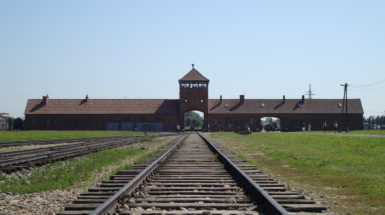
The 27 January, was Holocaust Memorial Day. We remember the millions of Jews, Romanies, Sinti and others who were murdered in a variety of camps in Germany and occupied Poland. Around 6 million Jews were murdered by the Nazis.