Uyghurs part of repression of all minorities in China


The China Unity law is an act of cultural genocide

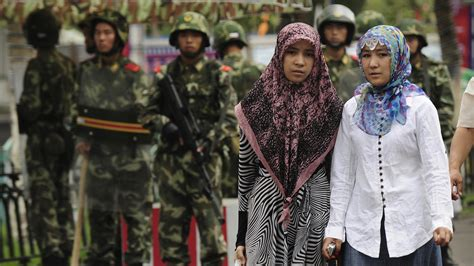
The China Unity Law came into force in July and is intended to establish Chinese dominance over all its ethnic minorities. Mandarin will become the dominant language and all 51 of China’s minorities will be affected, around 9% of the total population. We are focusing on the Uyghurs who are being persecuted as part of Amnesty’s Uyghur Awareness Month. The law will be used to justify ever more repression and discrimination over its minorities.

We have to be aware of the wider context however and the threat to human rights inside and outside China. An article By Simon Tisdall in the Guardian (8th August) discusses these wider issues. The new law has been condemned but not too loudly by western governments but more loudly by Amnesty. We must not forget the repression which went on Tibet and also Mongolia: the Uyghurs are just the latest in a line of minorities persecuted by an increasingly authoritarian Xi Jinping.

Tisdall argues that a kind of ‘debilitating fatalism’ has taken hold of the western powers who just watch the ever increasing exercise of power by China. They are threatening Taiwan and with US military stocks reported to be much reduced by the Iran excursion, is now the time when an assault is right for them? They also threaten Japan.

Hong Kong is another example and thousands left the former colony to come to the UK. Free speech is no longer possible. The publisher Jimmy Lai was sentenced in December to 20 years in prison and is in solitary confinement and in poor health. His family say he is denied medical attention which is denied by the Chinese but they do not allow independent verification.

The sad fact is that the cause of human rights in that country and those of its minority populations in particular is bleak. As China becomes more economically and politically powerful and western countries more divided, China is able to pursue its plans with ever greater vigour. Its desire to build the biggest embassy in the west in London seems unstoppable. It is almost certainly to be used for espionage and to exert control over Chinese people living in the UK. Donald Trump’s divisive policies against US allies plays into China (and Russia’s) hands.


Thought of subscribing?

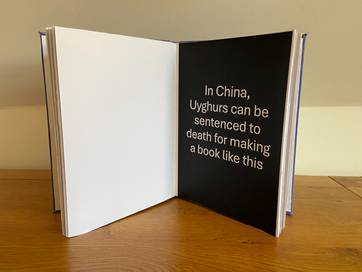
Reading books can get you killed


Reading a Uyghur book can lead to serious punishment

August 2026

This is not the Middle Ages. This is the 21st Century. But the desire of the Chinese to extinguish Uyghur culture can lead to draconian consequences. This short piece and the book, were created by the Amnesty Death Penalty project.

So often, we take our books for granted.ย But if you are Uyghur, reading, promoting or writing books in the Uyghur language – even childrenโ€™s text books – can land you in serious trouble.ย In fact it can and has on a number of occasions, resulted in a death sentence.ย This is all part of the Chinese governmentโ€™s attempts to suppress the Uyghur language, culture and identity.ย Too many governments around the world use the death penalty as a means of intimidating ordinary people into compliance.ย ย Books, things that we take for granted in the West, can be very dangerous for Uyghurs which is why the Anti-Death Penalty Project has created a book (ูƒู‰ุชุงุจ) to show our solidarity. ‘Thank you so much Death Penalty Network for such a beautiful and thoughtful project!ย ย 

The Salisbury group publishes a report each month on the use of the penalty around the world. It does not include China as executions are a state secret. The country is believed to execute more of its citizens than the rest of the world put together.


Uyghur solidarity month


Salisbury MP’s activity on this topic is poor

August 2026

It is often suggested we write to MPs on matters of concern and this can achieve something but too often it doesn’t. An MP receives a lot of messages from constituents most of which concern local matters. Indeed, it is a criticism of the system that much of their postbag are issues more properly the concern of local councillors. MPs feel obliged to engage in these matters however, because it is clearly the expectation of their constituents that they should.

Salisbury has two MPs, Mr Danny Kruger (Reform) who represents East Wiltshire which runs down to the northern part of the City, and Mr John Glen (Conservative) who represents the City itself and most of south Wiltshire. Their involvement in Chinese human rights issues is slight.

Mr Kruger asked the prime minister (then Sir Keir Starmer) the following question in February:

“The Prime Minister is very full of the abstract virtue of engaging with China and getting in the room with them. He used to say that Britain should not even sign a trade deal with China because of the persecution of the Uyghur people. Having now got into the room with the Chinese leader, can he tell the House a single thing that he achieved on behalf of the Uyghurs, or indeed on behalf of the security of this country?

“[Starmer] Yes. Engaging is really important for the security of this country. Just for clarity, we did not sign a trade deal on the visit; we simply looked at the ways in which we can open the opportunities for businesses. There were 60 big businesses with us on the visit, and they are absolutely clear about the advantages to them. I would much rather take their view on the advantages than the nonsense that is being spouted on the other side of this House”.

A good question receiving a complete non answer. The prime minister talks vaguely about engagement and then on to talk about the trade talks. He does not answer the Uyghur point at all. In the same session, Jim Shannon (DUP) also asks about, inter alia, the Uyghurs:

[…] what steps forward remain in terms of the Chinese treatment of Christians, Uyghur Muslims, Falun Gong and other religious minorities? Was the Prime Minister able to use diplomatic soft power to bring about the changes required to provide human rights protection, to stop religious persecution and to enable successful trade between the two nations?

“[Starmer] The hon. Gentleman is right to raise these really important issues. I raised them myself during the course of the visit, and I thank him”.

With what result we do not know. Danny Kruger asked again about the Uyghurs in March and a junior minister simply replied that “[the government] continues to engage with the Chinese on human rights and religious freedom”. The results do not look to be that impressive. At least it can be said that Mr. Kruger has tried to raise the matter.

There is one speech by Mr John Glen which mentions the Uyghurs in part of a long speech much of which was devoted to the treatment of Christians. A mention of Uyghurs is as follows:

“[…] It is not a binary question; it is not that we cannot talk about what is happening with the Uyghur Muslims in China while recognising that China is an important economic actor in the world that needs to be respected. We need to find ways of interacting well together and respecting, as far as we can, what common ground exists. It troubles me sometimes that when we have statements in the House, we revert to a binary: โ€œItโ€™s all good or itโ€™s all the opposite.โ€ The hon. Member for North Northumberland [David Smith, Labour] grasps the right way to approach this”.

The full speech can be accessed on the They Work for You website. It is not clear what ‘common ground’ exists with repression, torture and cultural genocide or where we could find it. On the subject of China generally, Mr Kruger has mentioned it 14 times and Mr Glen on no less than 41 occasions. We can conclude that the issue of persecution of Uyghurs is not high on either MP’s concerns. Both are Christians and seem more concerned about how they are treated rather than Muslims. According to They Work for You, Mr Glen ‘generally votes against laws to promote human rights’ and Mr Kruger ‘consistently votes against equality and human rights’.

Overall, both MPs do not seem to concern themselves with human rights issues. They are concerned about problems experienced by Christians and about political issues to do with China with little recognition of the plight of Uyghurs although Mr. Kruger has tried. We were unable to find anything relevant on their websites.


Uyghur solidarity – a love story


A love story illustrates the tragedy of the Uyghur people

August 2026

This is a love story which appeared in today’s Guardian (5th August) which highlights the effects on innocent lives arising from the repression and cultural genocide being committed in Xinjiang by the Chinese. The relationship blossomed around a discovered novel entitled Leyighan Bulaq (The Muddy Spring) written by the Uyghur novelist Jalalidin Bฤƒhram. It is a book about the brutalities of the Cultural Revolution.

The boy who uncovered the book wanted to share it with a female friend which in a Moslem environment was difficult to do. He smuggled a copy of the book to her. He left to study abroad. She was unable to sit a university entrance exam as she wore a headscarf. She was unable to obtain a passport either which the Chinese are reluctant to permit Uyghurs to have. She eventually made it out and they married in Istanbul. No family members were present. Messages from abroad can result in punishment which meant they could not convey messages to their families back home including the sad death of their 2 year old daughter.

The story illustrates very well the effects on ordinary lives by the campaign of repression. How people cannot leave the area, how messages from abroad can result in punishment. How indignities are heaped on the people for wearing a scarf. Unspoken in the story is the use of CCTV cameras which control lives not just in Xinjiang but throughout China. They make ordinary contact and movement almost impossible.

A message …

โ€œTo all Amnesty activists and supporters,

Thank you for standing with the Uyghur people at a time when our language, culture, faith, and very identity are under systematic attack. The recent testimony of former Chinese police officer Zhangโ€ฏYaboโ€ฏhas once again confirmed what Uyghurs have long tried to tell the world: in todayโ€™s Uyghur homeland, almost anyone can become a target โ€” writers, poets, musicians, artists, intellectuals, religious figures, and ordinary people simply trying to preserve who they are. Songs are banned, the Uyghur language is criminalised, faith is weaponised against believers, and even memory itself is treated as a threat.

Beyond the camps and prisons, the repression follows Uyghurs across borders through intimidation, surveillance, disinformation, and relentless transnational repression designed to silence us and isolate us from the world. Many Uyghurs are afraid even to speak publicly, fearing consequences for loved ones back home.

That is why your solidarity matters so deeply. Every voice raised, every campaign organised, every act of compassion tells Uyghurs that we have not been abandoned or forgotten. In the face of fear and erasure, solidarity becomes a form of protection, dignity, and hope.

Please continue to stand with us, support the work of Stop Uyghur Genocide, and help amplify Uyghur voices by following and sharing our work on social media. Your support truly makes a difference.

With heartfelt gratitude,

Rahimaโ€ฏMahmut
Executive Director
Stop Uyghur Genocide”

Responses

We are delighted to report that the response to our earlier posts on the Uyghur Solidarity Month have been good. Our post made top ranking on Startpage’s search engine today. Most pleasing is the number of views from China and Hong Kong which together were second and third in the rankings. Amnesty is banned in China so this is encouraging.

Listen to our podcast!


Recent posts:

Thought of subscribing?

Podcast Episode: Uyghur Solidarity And Advocacy


Short podcast of our last two posts on this campaign

Pip: August 2026, and a cultural genocide that’s largely dropped out of the news โ€” which is exactly when a local Amnesty group decides to make some noise.

Mara: The Salisbury has been writing about Uyghur Solidarity Month, and that’s the territory we’re covering today โ€” the scale of what’s happening in Xinjiang, and what people in Salisbury can actually do about it.

Pip: Let’s start with the oppression itself, and who’s trying to break through the silence.

Uyghur Solidarity Month: Oppression and the Fight for Awareness

Mara: The framing here is stark: this is described as “the largest campaign of cultural genocide in the modern era,” and Amnesty’s declaration of August as Uyghur Solidarity Month is a direct response to the crisis slipping from public view.

Pip: The post points to one outlet trying to hold that ground โ€” Kashgar Times, founded in April 2025. Here’s how they describe their mission: “At Kashgar Times, our mission is to break through that silence. We aim to bridge the information gap. We provide a platform where Uyghur voices can be heard, and their stories told โ€” free from propaganda.”

Mara: What that means in practice is that independent, on-the-ground reporting from Xinjiang is nearly impossible to obtain. China’s censorship has closed off the region to journalists and foreign observers entirely, so an outlet run by Uyghurs, for a global audience, is filling a gap that mainstream media simply cannot.

Pip: The scale is worth sitting with. Around a million individuals detained. Children separated from parents. Arbitrary detention, torture, forced labour, persecution on grounds of religion and ethnicity. And a proposed Chinese embassy in London โ€” potentially the largest in Europe โ€” raising fears about expanded surveillance of dissidents on British soil.

Mara: The second post, “Uyghur solidarity month,” pulls the crisis closer to home in a way that’s hard to dismiss. It includes a draft letter to local newspapers, drawing on findings from the UN High Commissioner for Human Rights and the 2021 Uyghur Tribunal, chaired by Sir Geoffrey Nice KC, which concluded the Chinese government had committed genocide.

Pip: And then there’s the wardrobe argument โ€” which is either uncomfortable or very effective, depending on your tolerance for being implicated personally. A quarter of the world’s cotton comes from Xinjiang.

Mara: The post puts it directly: “You will have in your wardrobe, or be wearing, many items made of cotton. It is highly likely that some of them have been made with cotton from this region using virtual slave labour.” The ask is simple โ€” write to your local paper.

Pip: Silence, as the post notes, makes it easier to ignore. And writing a letter is not nothing.


Mara: A genocide that’s fallen out of the news cycle, and a local group working to put it back โ€” that’s the thread running through everything here.

Pip: More to come through the month, apparently. We’ll be watching.


Thought of subscribing?

Uyghur solidarity month


Bringing the plight of Uyghurs to a wider audience

August 2026

We noted in our last post on the Uyghurs that their plight had slipped out of the news in the last year or so. With war in Iran and the closure of the Straight of Hormuz, and continuing conflict in the Middle East including Gaza, giving attention to a far off land where contact with its people is almost impossible is not altogether surprising.

But we need to do our best to bring people’s attention to what is going on there. We should always remember desperate governments do desperate things. The UK is up against it politically and economically. This leads it to pursue arrangements with overseas powers with highly dubious human rights records such as Saudi and UAE, to promote arms sales with almost any country while claiming to have a ‘robust policy’ not to, supporting Israel overtly and covertly despite its destruction of Gaza and mounting violence in the West Bank. Economic needs trump concerns about human rights. Jobs in the UK count for more than rights half way across the world.

Write a letter

We are asking that people write to their local newspaper to highlight the dreadful way the Chinese are treating these people. The campaign organisers have provided a sample letter which unfortunately exceeds the word limit of local papers. We have amended the letter which could be the basis of your own contribution:

I want to draw the attention to people in Salisbury of the dire human rights situation facing the Uyghur people in Xinxiang province, China.

the UN High Commissioner for Human Rights concluded there were credible allegations that the Chinese government had carried out arbitrary detention, torture, forced labour, family separation, and severe restrictions on religious and cultural freedoms on a vast scale on the Uyghur people. They stated that these violations may constitute crimes against humanity. In 2021, the independent Uyghur Tribunal, chaired by Sir Geoffrey Nice KC in London, concluded that the Chinese government had committed genocide against the Uyghurs through measures intended to prevent births, and had also committed crimes against humanity.

Despite these findings, the suffering of the Uyghur people continues while the world looks away. More than a million Uyghurs are reported to have been detained, and countless families have been torn apart. Survivors have described detention camps, torture, rape, forced labour, coercive birth-control measures, and the removal of children from their families. Behind every statistic are innocent individuals whose lives have been destroyed for ever.

This month, Amnesty International’s Uyghur Solidarity Month is trying to raise awareness of the continuing crisis but also to celebrate the rich culture, language, and heritage now under such severe threat.

Whether one views this issue through the lens of international law, freedom of religion, cultural preservation, or basic human dignity, the plight of the Uyghur people deserves continued public attention and informed discussion. Uyghur Solidarity Month reminds us that protecting a people’s culture is inseparable from protecting their human rights.

Public awareness alone will not end this crisis, but silence only makes it easier to ignore. We all have a responsibility to ensure that the voices of the Uyghur people continue to be heard.

[NAME]

Provide name and address.

You might be tempted to think that what has this to do with me? It’s sad that a people are being persecuted in a far off land but there are so many other problems nearer to hand, why there? But you are involved. You will have in your wardrobe, or be wearing, many items made of cotton. It is highly likely that some of them have been made with cotton from this region using virtual slave labour – the Uyghurs. A quarter of cotton comes from there. You may have bought these garments from a well known and reputable store in the high street or online. Despite their fine words and protestations about the integrity of their supply chains, they still use this cotton. So you are wearing the evidence. You are involved.

Please write.


Thought of subscribing?

Uyghur Solidarity Month: A Call to Action


Oppression of the Uyghurs continues

August 2026

The oppression and cultural genocide of the Uyghurs continues and has largely dropped out of the news. Such news as there is concerns the desire for China to establish the largest embassy in London and possibly Europe which is still being considered. The fears, the very real fears, is that it will become an espionage hub and also enable the Chinese Communist Party to expand its intimidation of Chines ‘dissidents’ i.e. anyone who disagrees with the CCP. It will be an interesting test of the government’s wil to see if it agrees with this proposal.

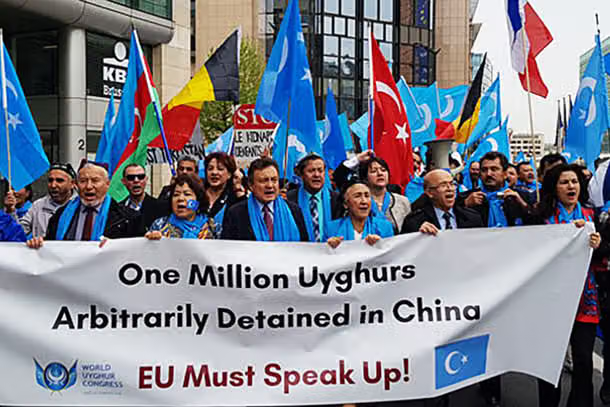
Amnesty has declared this month to be Uyghur Solidarity Month and you can sign up using this link. The treatment of Uyghurs and Kazakhs is deplorable and consists of arbitrary detention, torture, forced cultural intimidation and persecution based on religion and ethnicity. Children are separated from their parents. Around 1 million individuals are involved. There is evidence of forced labour that Uyghurs are used to pick cotton which finds its way into clothes sold in high street stores in the UK. No journalists or foreign observers are allowed into the region.

It represents the largest campaign of cultural genocide in the modern era.

One beacon of light is the Kashgar Times which tries to bring news from the area. We include an extract from them below.

“Kashgar Times is an independent news media outlet dedicated to reporting on the Uyghur people and the injustices they face under the oppressive regime of the People’s Republic of China. Kashgar Times was founded on April 30, 2025, by prominent Uyghur advocate Arslan Hidayat and seasoned journalist Nuriman Abdureshid. The outlet aims to serve as a vital source of accurate, on-the-ground news from East Turkistan, also known as the Xinjiang Uyghur Autonomous Region.

“The Uyghur people have long suffered under systemic oppression. They face cultural erasure and widespread human rights violationsโ€”amounting to genocideโ€”by the Chinese government. Yet, despite the urgency of these issues, getting unfiltered news from this region is increasingly difficult. China’s strict censorship and crackdown on free journalism have silenced many voices.

“At Kashgar Times, our mission is to break through that silence. We aim to bridge the information gap. We provide a platform where Uyghur voices can be heard, and their stories toldโ€”free from propaganda.

“Kashgar Times fills an urgent gap in todayโ€™s media landscape. Our founders bring with them a wealth of experience and passion. Arslan has tirelessly advocated for Uyghur rights on international platforms. Nuriman has sharpened her journalistic skills while reporting for the Uyghur Service at Radio Free Asia. Together, they embody the spirit of resilience and commitment that Kashgar Times stands for.

“At Kashgar Times, we are dedicated to upholding the highest journalistic standards. We aim to present stories that highlight the struggles and triumphs of the Uyghur community, offering insights that are often overlooked or misrepresented in mainstream narratives and especially on Chinese state-run media. By sharing first hand accounts, investigative reports, and expert analyses, we hope to shed light on the reality of life in Chinese-occupied East Turkistan, pushing back against the extensive campaign of disinformation funded by the Chinese Communist Party.

As a Uyghur-run media outlet, we are committed to reporting on Uyghurs, by Uyghurs, for a global audience. We believe in the power of storytelling to awaken empathy and understandingโ€”allowing the world to grasp the gravity of the situation faced by the Uyghur people.

“We invite you to support our mission by subscribing to Kashgar Times. Your contributions will enable us to continue our crucial work and help us expand our reach and resources. Together, we can create a robust platform that not only informs readers but also amplifies the voices of those fighting for justice and preservation of our people.

For U.S. Donors Zelle to โ€œkashgartimes.news@gmail.comโ€ (if you donโ€™t use Zelle then donate via DonorBox)”

We hope to bring further posts through the month.


Why not become a subscriber?

AI used to create title. No AI used otherwise.

China successfully threatens university


China forces a British university to stop Uyghur research

November 2025

There is considerable evidence that around one million Uyghurs in China are subject to forced labour and people trafficking on a massive scale. It is thought that around one fifth of all textiles are now the product of coercive practices. Garment firms show little inclination to check sources beyond what is called the ‘first tier’ even though they could do so easily. Australian research shows that approximately 100 major consumer brands are sourcing their materials from this region. There are some 380 camps surrounded by razor wire and armed guards. The treatment of such large numbers of people in ways almost amounting to slavery is a matter of major concern. The complicity of many Western garment firms in these crimes is a disgrace.

One of the centres producing the research is based in Sheffield Hallam under prof. Laura Murphy. She has produced many reports and her work has been widely cited. The University congratulated her on this work and her research. Until that is the Chinese complained when everything changed. Her website was taken down and it decided not to publish her latest research. It amounted to a flagrant example of a breach of academic freedom. University staff based in China received threatening visits from security services.

The university said they stopped publication because they could not gain the indemnity insurance for her work mindful of possible lawsuits. Documents released under freedom of information laws showed that the University ‘had negotiated directly with a foreign intelligence service to trade [her] academic freedom for access to the Chinese student market‘. The point being that universities are so cash-strapped these days they have to recruit foreign students to balance their books. In other words, we (China) will not allow our students to come to your University unless you stop publishing material about the Uyghurs. China denies all claims but will not allow foreign observers into the region.

Clearly embarrassed the University has apologised and restored her work.

The story reveals how easy it is for China to intimidate those it dislikes or who comment negatively on their various activities. It also reveals how quickly and tamely a British University agreed to censor an academic’s work. Troubling is that this is an example of something which has come to light. Which other universities are quietly agreeing not to rock the boat and not even allow researches to get underway for fear of losing a contingent of Chinese students? The last two weeks have seen the government tie itself in knots over two alleged Chinese spies and whether or not to prosecute them. China’s increasing power is more and more troubling. Meanwhile, a million or so Uyghurs are virtual slaves.

Detailed work produced by Prof Murphy can be accessed here. It will be interesting to see if China’s heavy-handed efforts to threaten a British University will backfire.

Sources: BBC, China Star, Guardian, Sheffield Hallam University.

Photo: satellite picture of one of the Uyghur camps.

Exeter event


Film being hosted by the Exeter Amnesty group subject: China

On Saturday 18th January at 1pm, Exeter Amnesty group hosts the film, All Static and Noise, at Exeter Phoenix, followed by a Q&A session with Nabila Hanson, AIUK China Coordinator. The plight of Uyghurs in China does not receive the attention it deserves. Governments are keen to forge relationships with the country for commercial reasons. Little attention is paid for example to the scandal of cotton produced using forced or slave labour in the region which finds its way into clothes sold on our high streets.

In the film, All Static & Noise, by David Novack, survivors and their families risk everything to expose the truth of China’s Uyghur detention and ‘re-education’ camps. Jewher, a Uyghur teen from China, lands in the US after she is violently separated from her father at the Beijing airport. Abduweli, a linguist and poet imprisoned and tortured for teaching Uyghur language, leaves for Istanbul upon his release. Together, they join survivors of Chinaโ€™s “re-education camps” and their families, in Turkey, Kazakhstan, Europe and the United States to expose atrocities with the hope that global awareness brings change.

Saturday 18th January 2025 1pm Tickets ยฃ7 www.exeterphoenix.org.uk 01392 667080 https://exeterphoenix.org.uk/events/all-static-and-noise/

Image from the film site.

Taking the shine off Shein


Test for new Labour government over listing of Shein on LSE

July 2024

The new government – likely to be Labour after the election tomorrow – will have an early test in connection with the Chinese clothing firm Shein which wishes to list on the London Stock Exchange. Both Conservative and Labour politicians have been keen to support the bid whereas Wall Street declined for a variety of reasons and doubts about the firm.

Shein has grown at a phenomenal pace but there are many doubts about its finances. LSE is keen to list the firm and there are a range of banks including Goldman Sachs and JP Morgan ready and willing to assist. Today, it was announced the EU is changing the rules which enabled the firm to import millions of pounds of clothing yet avoid duties because each was individually packed thus taking them under the ยฃ135 rule.

But the main problem is how the raw material is sourced and the use of sweat shops via sub-contractors in Bangladesh and Vietnam. As we have noted before, about three quarters of the cotton produced by China comes from Xinjiang where there are credible reports of the use of forced labour. In addition is the appalling treatment of Uyghurs where nearly a million are being persecuted and whose culture is being systematically destroyed. It has been described as a crime against humanity and genocide. Shein rejects these allegations and says it is committed to good governance.

Another problem is that the firm is likely to be audited by one of the big four accountancy firms who have a dismal record when it comes to Chinese firms and have been fined on several occasions for accounting scandals.

The Labour party has been keen to court the City as part of its business friendly policy. Three shadow ministers have met Shein’s chairman. Will they play their part in welcoming Shein to the LSE to keep the city bankers happy or will they look closely at their labour practices, lack of transparency and the probable use of cotton from Xinjiang? Amnesty have said to allow them to list will be a ‘badge of shame’. It will be an early test for the new government: money v. morals.

Sources: Private Eye #1626; Guardian; Amnesty International; Stop Uyghur Genocide

Blog at WordPress.com.

Up ↑