Death penalty report: December


DEATH PENALTY SUMMARYNo to the death penalty

DECEMBER 2014

This is the summary for the group’s December meeting pulling together various news items about the use of the death penalty around the world.  We would like to draw your attention to a web site Penal Reform International, with useful information on the death penalty.  It is now in the list of links at the bottom of this site.

General

  • Ethiopia – Andrew Tsage, a political refugee in the UK since 1979, has been placed in solitary confinement and is under threat of execution.  He had been arrested at an Airport in Yemen, and sent on to Ethiopia.  International concern has been expressed at the deterioration of human rights and freedom of expression in Ethiopia.  David Cameron has written personally to the Ethiopian Prime Minister, but the Foreign Office say Tsage is not being held illegally.
  • USA –
  • Missouri – 19.11.14.  Leon Taylor was executed, despite disagreement over the type of sentence which should have been imposed.  This was the ninth execution in Missouri this year.
  • Texas – 4.12.14 – a US Federal Court issued a stay of execution hours before Scott Panetti was due to die, following representations from his lawyers regarding his mental health.
  • Saudi Arabia – 20.11.14 – the family of Simon Cumbera, an Irish national murdered while filming a news item, have expressed regret at the death sentence passed on Adil Sa’ad Al-Dubayti Al Mutayri.
  • Pakistan
  • Mohammad Asghar – David Cameron has commented in Parliament on the ‘appalling treatment’ received in prison by this Scottish man accused of blasphemy and shot while in prison.  Reprieve is trying to prevent his return from hospital to prison
  • 25.11.14 – Asia Bibi, the Christian woman sentenced to death following a conviction of ‘insulting the Prophet Muhammad, has filed her final appeal against execution
  • China – 25.11.14 – According to his lawyer, Nian Bin, a former death row prisoner acquitted of the charge of poisoning two children, is now being investigated again by the police.  They have refused to accept the Court’s decision and are restricting his movements.  Acquittals are rare in China, but this one prompted renewed calls for the abolition of the death penalty.
  • Thailand – 26.11.14 – Death sentences were passed by Pattani Provincial Court on five suspected militants convicted of killing four soldiers.  Human Rights Watch have accused Thailand of double standards, saying the Army was also responsible for rights violations.
  • Egypt – 2.12.14 following the dropping of murder charges against ex-President Hosni Mubarak, a Court sentenced 188 of his supporters to death in connection with the killing of 13 policemen in August 2013.
  • Cameroon – 3.12.14 – it was reported that Lawmakers are to vote on whether to implement the death penalty for people convicted of acts of terrorism.  This is in response to the activities of the Islamist militant group, Boko Haram, on its border.
  • Indonesia – AI have called on the Indonesian Government to halt its plans to execute 5 people by the end of the year.

Urgent Actions

  • Bangladesh – UA283/14 – Mohammad Kamaruzzaman, a leading member of an opposition party, is at imminent risk of execution before being able to lodge an appeal.  Circulated to DPLWG 17.11.14
  • Iraq – UA300/14 – Ahmed Al-Alwani, a former member of Iraq’s Parliament, has been sentenced to death for killing two soldiers, following a trial marred with irregularities.  He has only a month to appeal.  Circulated to DPLWG 28.11.14. (This month’s Group DP Urgent Action)
  • Saudi Arabia – UA 309/09 – Ali Agirdas, convicted of drug trafficking after an unfair trial, was executed on 20th November.  His family learned of this through the media, and the authorities are refusing to release his body to them.  Circulated to DPLWG 28.11.14.
  • USA – Florida – UA 162/14 – the execution of Shane Kormondy has been scheduled for 15th January.  Kormondy was found guilty of the murder of Gary McAdams in 1993.  This would be the 21st execution under the governorship of Rick Scott.

Campaigning

  • Reggie Clemons – there has been no further news.  The Justice for Reggie website has not been updated since August.
Moses Akatugba
Moses Akatugba
  • Moses Akatugba – further cards were signed for Moses at the Amnesty Film Night at the Arts Centre

Urgent action: Indonesia


No to the death penaltyThis months urgent action concerns the likely execution of five men in #Indonesia and if you have time to write or email that would be appreciated.

Indonesia

Urgent action – #Florida


It may be the sunshine state but it is also a bloodthirsty one.  This will be the 21st execution under the Governorship of Rick No to the death penaltyScott.  In 2012, a quarter of all executions in the USA were in Florida.  This year, there have been 33 executions, 8 of which have been in Florida.  The USA is the only country in the Americas still to use the death penalty.

Urgent action: Florida USA

If you are able to write, that would be appreciated.

The case against human rights


December 2014

This was the title of a piece in the Journal section of the Guardian newspaper on 4 December by Eric Posner who is a professor at the University of Chicago Law School.  This is a thoughtful piece, not written by some demagogue, but by someone with a background in the subject and who has made significant contributions to the debate on the issue of human rights.  The points he makes are cogent and need addressing seriously.  The arguments he puts forward seem to come from his book The Twilight of International Human Rights Law (Oxford University Press, 2014).

His article starts with a review of the history of the subject, especially since 1948, with the adoption of the Universal Declaration of Human Rights by the UN which he correctly points out is not a treaty in the usual sense.  He might have added the European Convention of Human Rights came into being at about the same time and for broadly the same reasons.

The essential problem from the beginning he says was the different outlook by the key players when writing the UNDHR.  America had in mind their constitution which was largely based on ‘political’ rights which have developed under their constitution.  Even so, they did not want racial equality to be included: the effects we see today with the recent shooting in the USA of two black people by police and the lack of a legal follow through.  The then Soviet Union wanted more social rights and the need to provide jobs – hence a right to work.  The colonial powers – chiefly Britain and France – did not want the emancipation of their colonies to be included within it.  Hence the result was a partial framework not a coherent, legally binding treaty.

His argument is based on the following main points:

  • Human rights campaigning has failed to achieve its fundamental objectives.  Despite countries signing up to various agreements, torture is still widely practised, almost routinely, around the world; women’s rights are widely neglected especially in the middle east, and children are still working in mines and sweatshops
  • The notion of human rights is hopelessly ambiguous with over 400 listed, which can provide no guidance to governments on how to incorporate them.  For example, eliminating torture would require major changes to the police forces and reform of corrupt judiciaries.  It is still practised he argues, because the police have no other way in the light of crime and corrupt courts.  Governments would prefer to build schools and hospitals rather than spend on the police and reforming the court system
  • Things like free speech have little practical value where religious issues prevail.  Many western countries limit it, for example for defamation or obscenity
  • But his main argument centres around the ‘top down’ nature of human rights.  It is reminiscent of old colonial ways where primitive cultures had reforms foisted upon them by white occupiers who thought themselves superior.
  • Another factor is the post 9/11 use of torture by the United States.  This seriously undermined their moral standing and since they were the country most active in pursuing human rights, this was a serious blow to the cause.

This is only a flavour of his arguments but the essential point remains that six human rights treaties have been signed by over 150 countries around the world yet torture is still widespread, free speech is absent from many parts of the world (for example Russia where many journalists have been murdered), and democracy is a tenuous concept in countries like China – witness the recent events in Hong Kong where the communists only want their people to be on the ballot list.  Western countries are guilty of hubris and ‘forcing other countries to adopt western institutions, modes of governance, dispute resolutions systems and rights.’

It is indeed a gloomy picture.  His proposal is for human rights practitioners to follow the example of development economists who he says are changing from their top-down, coercive approaches and adopting more pragmatic ones better aligned to the countries own ways of doing things.  These arguments appear weak however since the west still imposes western style conditions on its funding and support for developing countries.  They are required to open up their markets and to privatise their industries, usually to their financial detriment.  Elsewhere from the Guardian article he has argued for open borders as far as migration is concerned – not something likely to make him popular for a European audience or even some US states.

So we must look at the failings he spells out and examine how true they are.

Firstly, the ambiguity he speaks of seems a weak reason why some rights are so cavalierly ignored.  One is tempted to ask ‘what is there not to understand?’ about such issues as torture or lack of due legal process.  These are not sophisticated or complex issues that countries are wrestling with.  Inflicting violence on individuals, in all its various forms, is abhorrent and since nearly all the countries of the world have signed up not to use it, it is odd to argue that there is some conceptual blockage to its continued use.

On the subject of torture, the suggestion that it is used by police forces because they are frustrated by the judicial process is also shaky.  Torture is never effective since people say anything to get it to stop.  It brutalises both the torturer and the tortured.  People are unlikely to wish to engage with police forces if they fear what might happen to them.

The ‘top down’ argument and that western governments seek to impose their morals on the west has merit.  On the other hand, this thinking has evolved from over a thousand years of strife, wars, revolutions and upheaval and, however imperfectly, has resulted in prosperity for these countries.  As a way of doing things they seem worth sharing with less well developed countries.  Doing it sensitively is of course desirable.

He discusses how China is admired today and the fact that they have opted for economic development in return for a lack of political freedom.  There is a kind of Faustian pact: we will provide the shopping malls if you allow us to carry on as a one-party state.  But for how long will this last?  Events in Hong Kong seem to demonstrate that for some Chinese, the ‘human right’ of being able to chose one’s leaders is quite strong.  It is that which worries the leaders in Beijing.  It is not that there is a lack of understanding of the human rights issues involved, it is a straightforward desire to hold on to power.  It is not a struggle to understand the concepts or the treaties.

Finally, professor Posner seems to overlook the influence of social media and travel.  Individuals are now able to exchange information in all sorts of forms at the press of a button.  Even in China, which works hard to shut out the web, information gets through and of course millions of Chinese travel the world.  So the diffusion of these ideas and aspirations are not just through treaties and international agreements.  There is pressure from the ground up for better standards.  People are aware of poor treatment and corruption and recognise it to be wrong, not necessarily because of a clause in a UN treaty but because they know it to be so.  This ‘bottom-up’ pressure is a significant force and the article does not give it sufficient credence.

On the one hand it is possible to be pessimistic about the lack of progress over the last six or seven decades, but there have been improvements.  Imperfect though it has proved to be, the Arab Spring for example, sent a shockwave through a range of undemocratic nations in north Africa and a key issue was human rights.  At base it is an issue about power and who has it.  However imperfectly, human rights express that power and give more of it to ordinary people.  It is that aspect which those who hold power do not like, not some puzzlement over the precise meaning of the UN Declaration or European Convention of Human Rights.

Film, Omar


Last night the Salisbury Arts centre hosted the film #Omar in the fourth of our collaborations with the Centre.  The film is a gripping story of love and betrayal in the occupied territories of Palestine and shows the grim realities of life for Palestinians living there.  Many people signed our cards at the end of the showing which concerned five individuals at risk of, or who have been, tortured (but not in Palestine).  A total of 103 were signed.

Several people expressed interest in the group and may come here to find out about us.  Details are to be found in the ‘About Us’ tab and we look forward to seeing you again.  ‘Every little helps’ is true and if you are able to help now and again at our events that is always appreciated.  From time to time we post urgent actions and if you can find time to write that is also a help.

We are possibly entering a difficult time as far as human rights are concerned with a concerted attack on the Human Rights Act by sections of the media.  It is fuelled often by misreporting of cases and the almost complete absence of reporting of the benefits the act has brought for ordinary people.  Hence the myth has become established that it helps terrorists, mass murderers and the like and it is all to do with the European Union imposing their beliefs on us.  The Conservative government have said they would like to abolish the act and replace it with a new version.

#stoptorture


On Saturday 15 November the group carried out a signing for the #stoptorture campaign.  Cards for five

Preparing for the signing

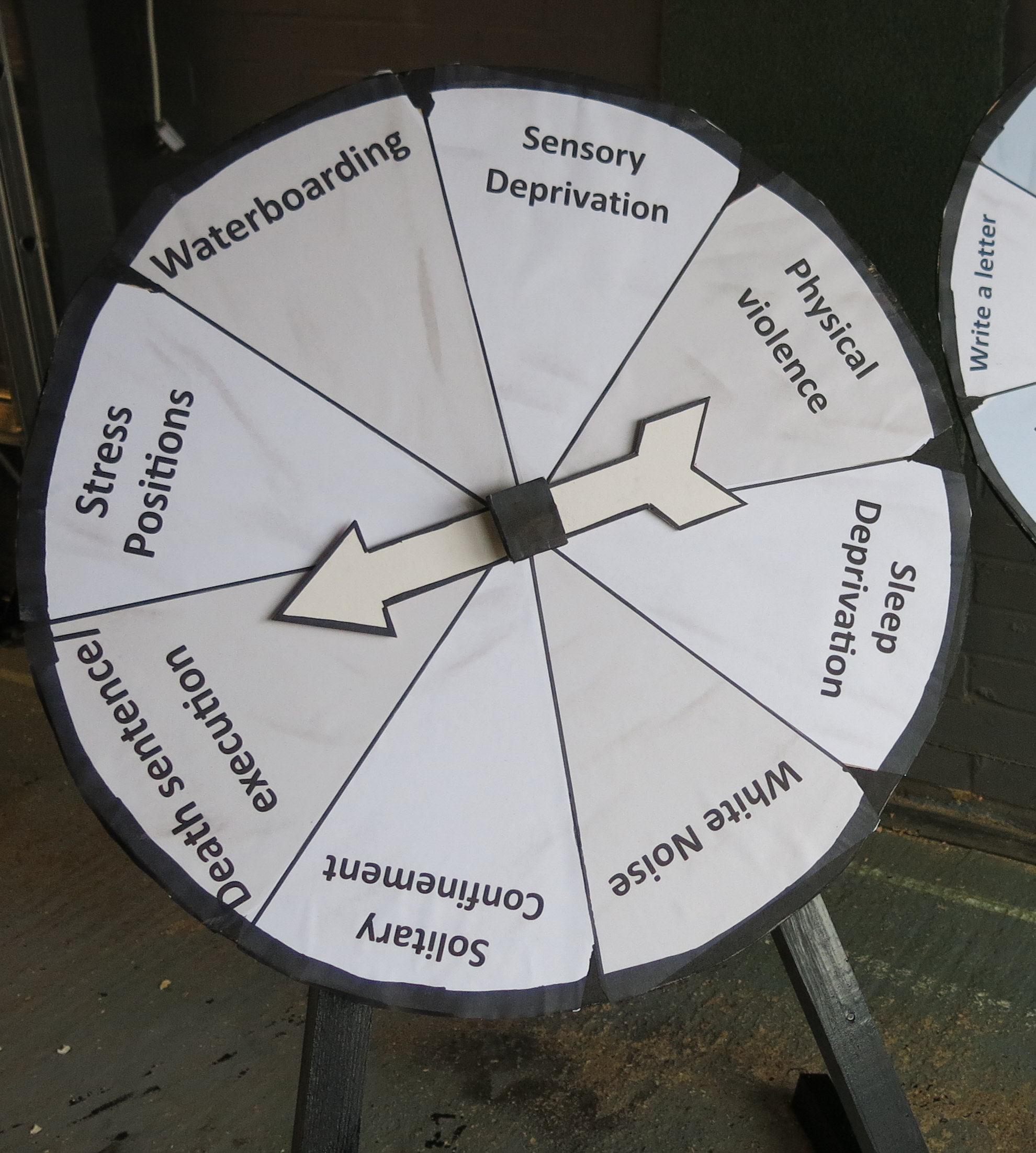
individuals who have allegedly been tortured were available for people to sign and we secured the magnificent total of 267.  It was the first time out for the torture wheel which is modelled on the infamous wheel used by the Philippine police.  Various forms of abuse are put on a wheel which they spin to decide on what method to use on a victim.

Although we achieved a good response, many refuse to sign and one person ventured the opinion that ‘they must have deserved it.’  Torture is widely used around the world and is practised in 141 countries despite nearly every nation having signed the UN protocol against its use.

The cards will be posted over the net few days to the relevant authority where the victims are held.

Torture wheel
Torture wheel


Don’t forget the Salisbury Arts Centre film on 4 December.


Death penalty


#stoptorture #deathpenalty.  The November report on the death penalty is attached thanks to groupNo to the death penalty member Lesley for compiling this.

Death Penalty Report


Don’t forget you can access other sites with a human rights theme from the blog roll at the bottom of this page.

Korean speaker


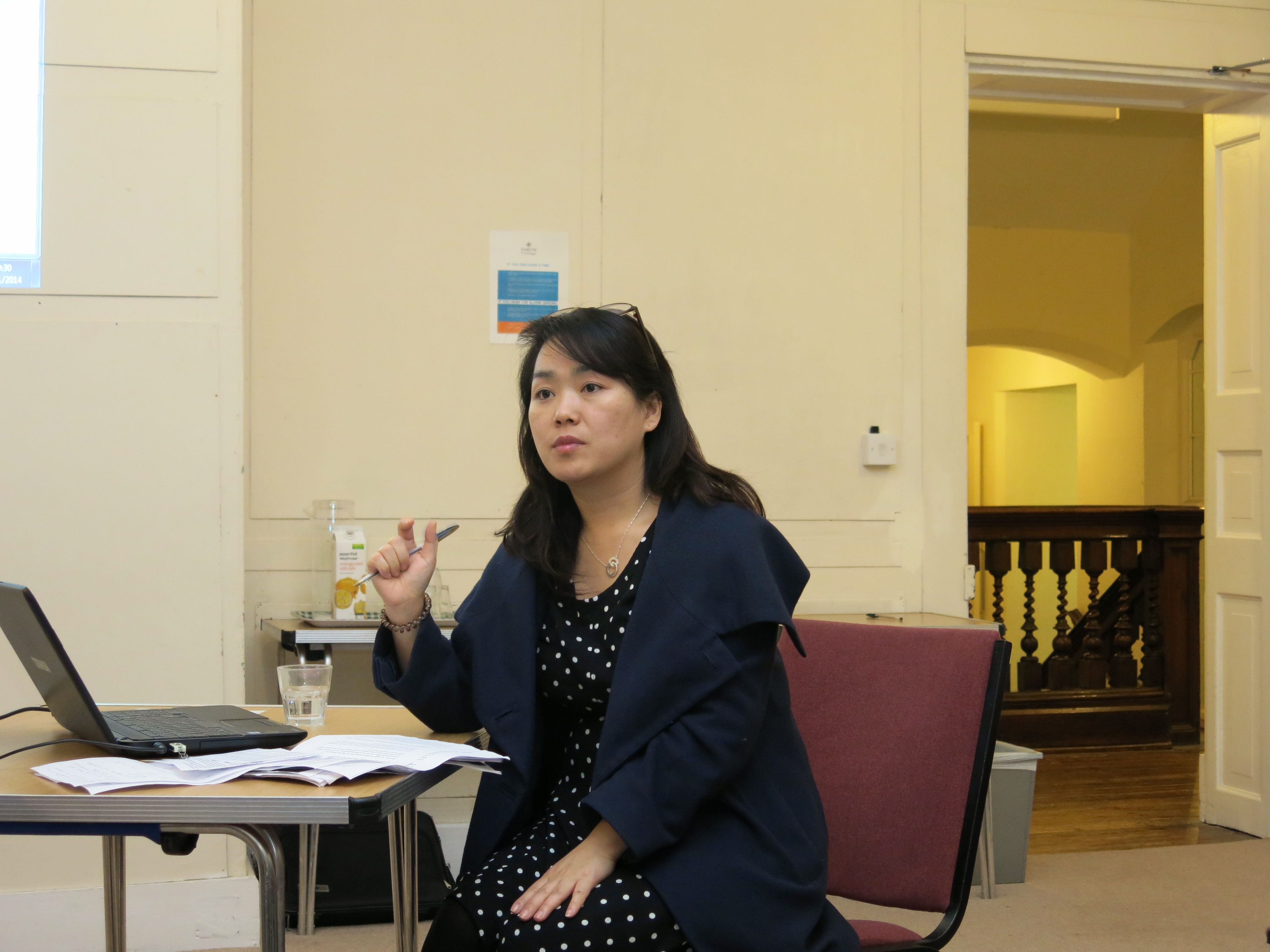
Group welcomes speaker on #Korea.  On Thursday 13 November, the group was pleased to welcome a Korean speaker as part of our activities to keep the problems in North Korea in the limelight.  Bona Shin is a member of a large community of Koreans who live in London, the largest such community in Europe.  There are thought to be around 32,000 living in the UK and 691 of whom from North Korea.

Bona Shin
Bona Shin

Other speakers have mentioned the difference between Pyongyang and the rest of the country.  People who live in Pyongyang are the elite and they are reasonably well fed by North Korean standards.  It is the rural areas which are impoverished and where people struggle to survive.  She said there are no disabled people in the capital either: they are all moved out to the rural areas.

She mentioned the propaganda initiative recently where the North Korean embassy hosted an art exhibition.  Developments in the last week or so at the UN where there are attempts to get the regime and Kim Jong un indicted for crimes against humanity.

There are reports of the infamous Yodok camp being closed and prisoners being moved to Camp 14 or Camp 16 as part of the propaganda by the North but this cannot be confirmed at the time of writing.  Bilateral talks may begin with the EU on the question of human rights.

There are still survivors from the Korean war which Britain contributed large troop numbers second only to the USA.  There is a British Korean Veteran Association

Landmark


This morning, 14 November, we had our 1000th hit since the site was launched earlier this year!

Group meeting


The meeting took place tonight with a speaker from South Korea.  A full report will appear soon.

#stoptorture  And a reminder that we are running a stall on Saturday 15th in the Market Place to highlight the issue of torture around the world.  If you can come along and sign or better still, help for an hour that would be great.  It will be the first outing of the torture wheel based on the Philippine’s security services wheel used to decide on how they are going to torture a suspect.

Group campaign event, Saturday 8 November

Blog at WordPress.com.

Up ↑