Vigil 71


71st vigil in Salisbury

April 2025

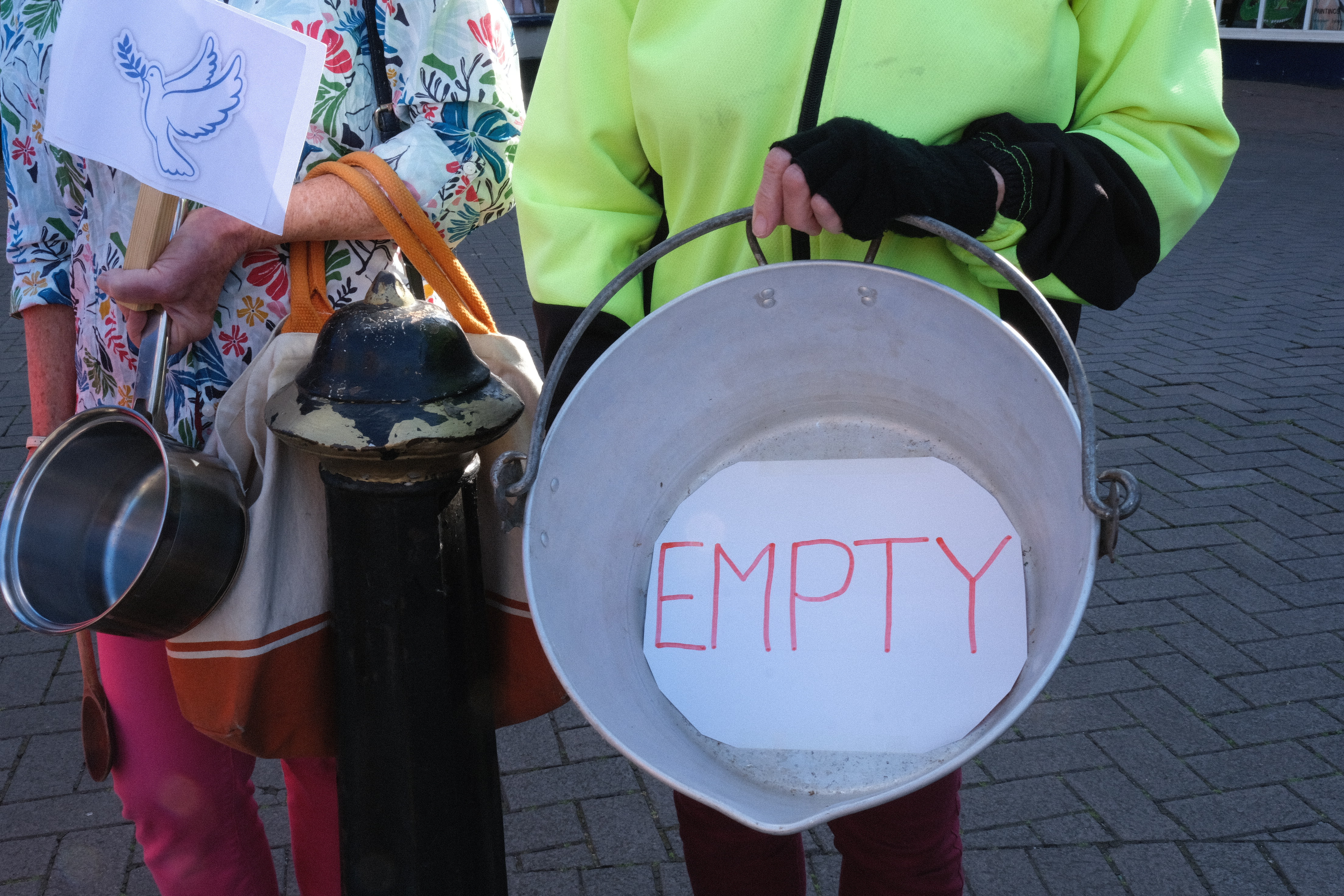
Fewer numbers this week partly because the events in Washington dominating the news and a number of our regulars away or ill. This week we had three sets of people variously upset with our presence. It would be difficult to summarise their arguments some of which were around the boat people, which is not an issue with Gaza at present, and another claiming we were ‘wasting our time’. Strange to relate how a peaceful protest seems to generate animosity. The government has introduced legislation to limit noisy demonstrations in certain circumstances yet here was a peaceful protest – peaceful as in silent – which upset several people.

The situation is Gaza goes from bad to worse. Over 50,000 are now dead. The Israelis have widened the buffer zone around the strip and turned it into a killing zone. The ceasefire has ended. Netanyahu was welcomed in Washington. All aid has been cut off. A UN study (11 April) has shown that the last 36 Israeli air strikes killed 1,500 all of whom were women and children.

The apparent murder of Red Crescent medical staff has continued to make waves as the false story put out by the IDF has unwound with video and other evidence emerging. A shocking feature was the attempt at cover up and hastily digging a grave and burying the 15 people.

There seems no end in sight. The UK government continues to give support to Israel openly and covertly. The RAF is flying almost daily over the region ostensibly to try and track hostages. About 250 flights have happened in the last 6 months. The question is, if they are carrying out this surveillance (officially called Intelligence, Surveillance and Reconnaissance, ISR) are they not witnessing war crimes? Clearly, to spot a hostage would require sophisticated kit and it is reasonable to assume it would be capable of witnessing other events. Is this being logged and reported? As the Canadian researcher who is tracking these flights has said:

They’re [RAF] in a warzone apparently rife with atrocities, and I think it’s very reasonable to ask if they’ve been witness to any war crimes, if they’ve incidentally collected intelligence that could reasonably believed to involve a war crime, and if so, what is their process to deal with that? If they don’t yet want to talk about what they’ve been doing for the past six months for truly operational security reasons, they already told us they would be operating there 6 months ago, they should be able to assure us their process is sound vis-a-vis unintentional intelligence collection involving/witnessing atrocities.”

These are serious questions for the UK government to answer.

Salisbury Concern for Israel Palestine

April minutes


April minutes and group news

April 2025

We are pleased to attach our minutes of the group’s meeting in April thanks to group member Lesley for preparing them and for various group members submitting reports for inclusion. They are a kind of ‘hybrid’ style of minutes as they contain narrative material which we hope readers will find of interest. At the end you will find a short list of upcoming events the group will be running or participating in.

This is the link to our Bluesky page:

https://bsky.app/profile/salisburyai.bsky.social

Latest posts:

Forthcoming group activities


These are the activities planned for the coming months

April 2025

This is a list of forthcoming events the Salisbury group will be engaged in over the coming months. Each of them would be a good opportunity to approach us if you were thinking of joining. To join us is free but to become a member of Amnesty International UK there is a membership fee. The group, as well as campaigning for prisoners of conscience, is increasingly concerned with the erosion of rights in the UK. Britain has a proud history of protest and such activity has led to a number of reforms: a look at this list will give you a taste of the numbers that have taken place over the centuries. The essential truth is that those who have power do not like relinquishing it. Recent governments have introduced legislation making it harder to protest and have given the Police even more powers to arrest or interrupt demonstrations. It is more than ever important to be part of organisations like ours to stand firm against governments and their paymasters who want to clamp down on opposition.

Several of our local MPs are reported in They Work for You website as ‘generally voting against’ human rights matters. Danny Kruger, the MP for the newly created East Wiltshire constituency (which starts about a mile north of Salisbury), would like to see the Human Right Act abolished. Protecting our rights is therefore truly important as we cannot rely on our elected representatives to do it for us.

Events

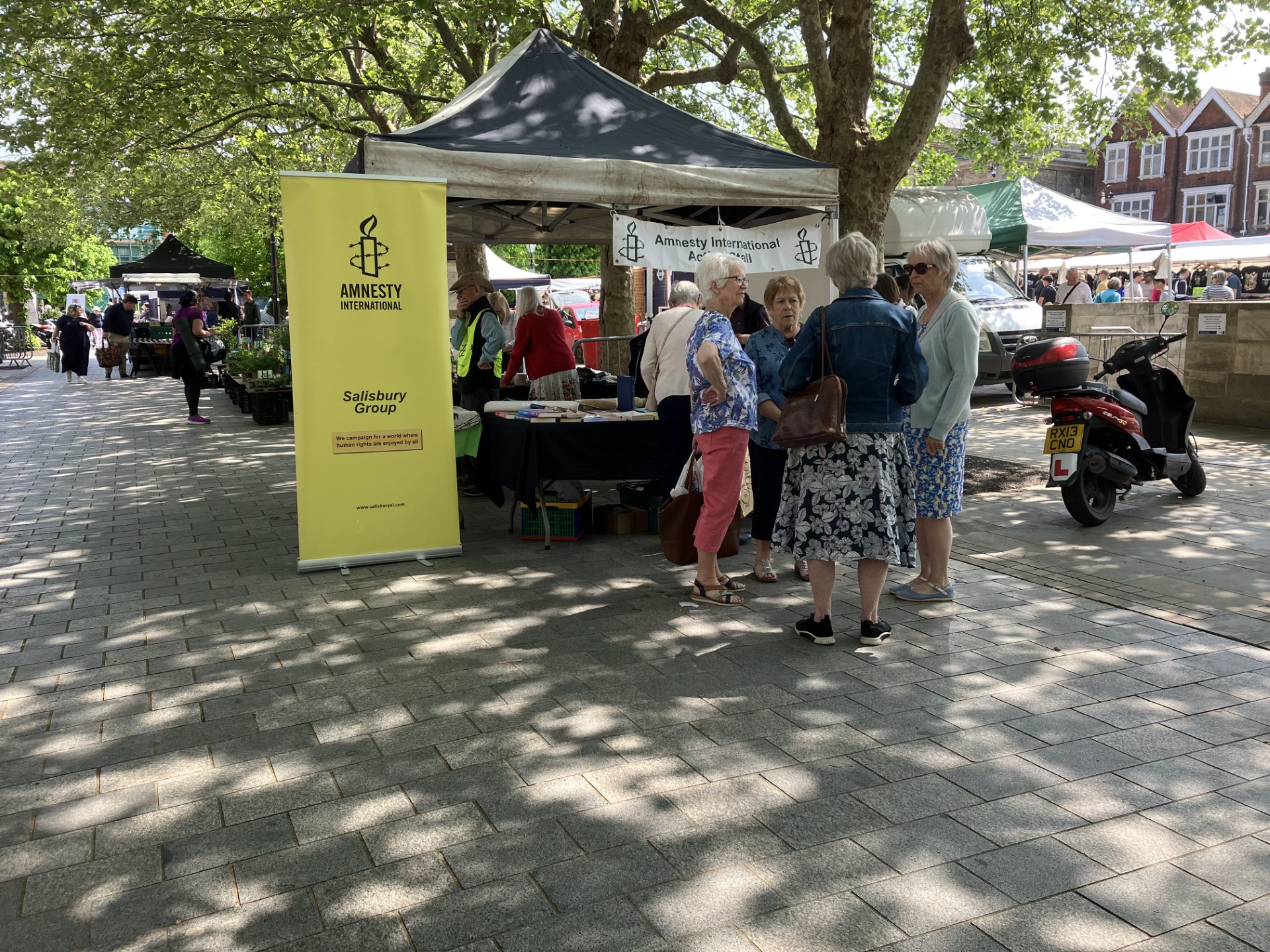
  • Market stall in the Market place, Salisbury on 3 May starting at 9am and finishing at 1pm. If you have any items for the stall, please bring them along on the day.
  • People in the Park where we will have a stand on 17 May for most of the day. This would be an ideal opportunity to make contact.
  • We are continuing with our school visits (this won’t be an opportunity to drop by of course) and something we see as important*. The last one of the current programme is in June.
  • A presence on the EcoHub stall in the Market place on a Tuesday. Dates to be confirmed but likely to be late summer/autumn. Dates will be posted on here, on Facebook (@Salisburyai) and on Bluesky once agreed .
  • A coffee morning at St Thomas’s Church Salisbury on 5 July from around 10am. Home made cakes available and in the centre of the City.
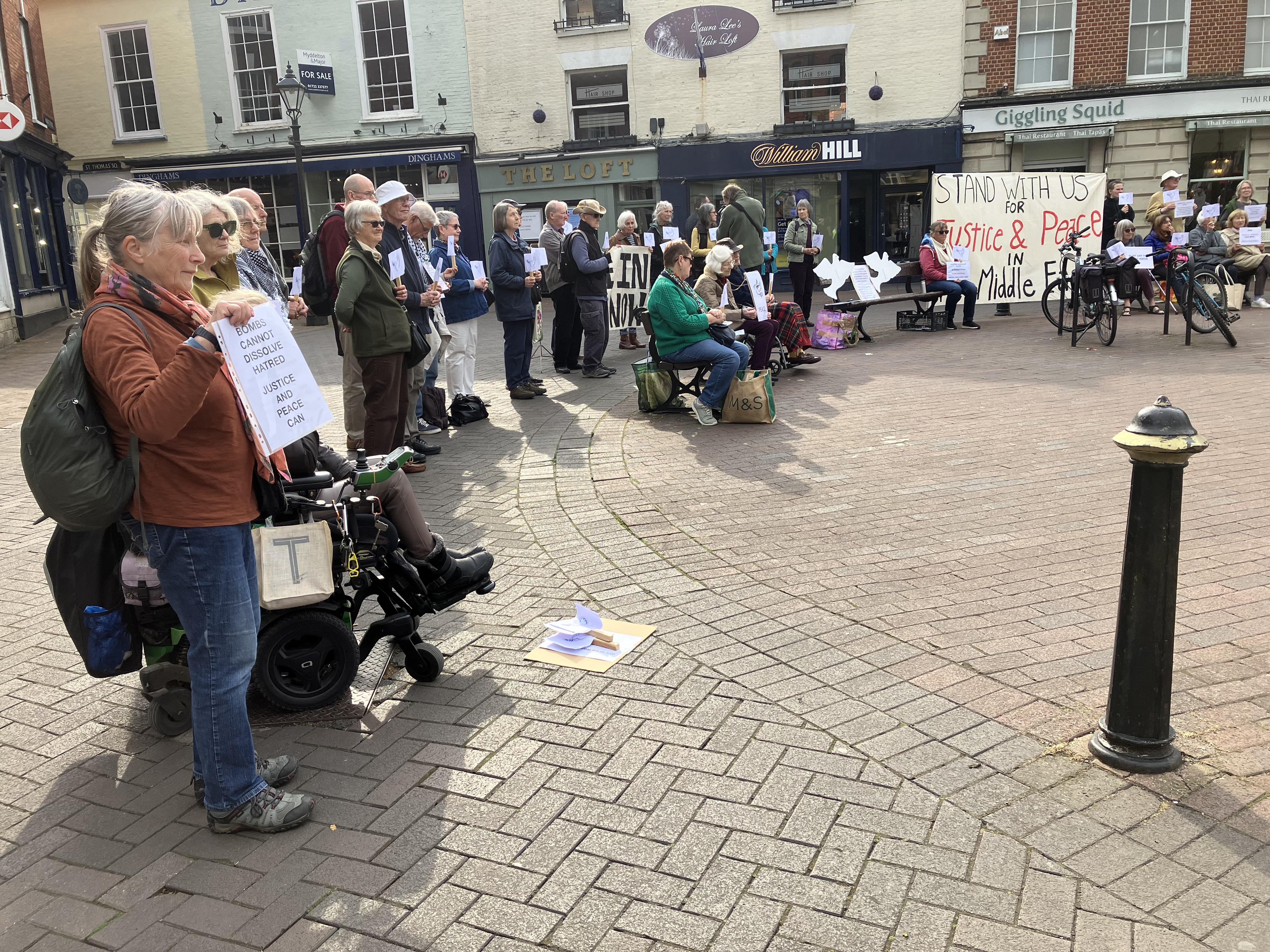
  • Don’t forget that we take place – with other groups in Salisbury – in the vigils which take place in the Market place by the Library every Saturday. They are for peace in the Middle East and in particular Gaza where over 50,000 have now died, the majority of whom were women and children. Thousands more are unaccounted for under the rubble. We have just held our 70th such event. They start at 5pm for half an hour.

Later in the year we will be holding:

  • Death penalty action on the World Day Against the Death Penalty – see Amnesty’s recently published report for 2024 – on 10 October. See also our monthly reports on the death penalty the latest of which has just been posted.
  • Write for Rights will be on 30 November.

Other events which are not yet settled are:

  • Evensong at the Cathedral. The Cathedral has the Prisoner of Conscience window and the Amnesty candle on display. Agreed date under discussion.
  • Refugee Week. Details not known yet. See our latest Refugee report.
The current image has no alternative text. The file name is: human-rights-uk.png

*If by chance you are a teacher reading this at a school in South Wiltshire and would like to discuss a visit as part of your school’s citizenship programme, please get in touch.

Group’s reports


Minutes and Newsletter


March minutes and Newsletter March 2026 We are pleased to attach this month’s minutes and Newsletter for the group thanks to group member Lesley for preparing them. We do not publish a Newsletter as such but they contain a lot of material on the death penalty around the world, the state of UK politics as…

Middle East ‘forever’ wars


Iran, Lebanon join victims in the forever war. Vigils continue March 2026 The 119th vigil took place in Salisbury with over 25 in attendance, as the war intensified in the Middle East. We are in the third week of attacks on Iran as Israel and the US are bombing large areas of the country. Israel…

Ex Iranian prisoner to tell his story


Anoosheh Ashoori will speak in Romsey March 2026 The story of Nazanin Zaghari-Ratcliffe has been widely told and she has become a household name. A BBC film was made of her ordeal and she came to Salisbury to speak. Iran is in the news at present with the bombing campaign being carried out by Israel…

Refugee report


Monthly report on this politically toxic topic

April 2025

The Government’s Border Security Asylum and Immigration Bill has now completed its report stage and will next go to the Lords.  While this is going on, an update on the numbers shows that the number of small boat arrivals this year so far has exceeded 6000, the highest yet.  Meanwhile the backlog of pending asylum cases has increased to 41,000 in December.

The PM has drawn together 40 nations for his Organised Immigration Crime summit last week.  A press release went without much comment, containing the usual statements about agreeing to enhance border security and dismantle the criminal networks.  One item which did emerge was an agreement with Serbia to exchange intelligence about what is now known as the Western Balkans route into Europe.

Following this event, some 136 organisations under the umbrella of Together with Refugees wrote to the Government, unhappy about the language used by the Prime Minister, which they described as “demonising.”  The PM had claimed: “There is little that strikes working people as more unfair than watching illegal migration drive down their wages, their terms and their conditions through illegal work in their community.”

New research from the European University has suggested that attitudes in Europe to irregular migration are more nuanced and varied than previously supposed.  This was from a survey which covered 20,000 people across Austria, Italy, Poland, Sweden, and the UK designed to understand their preferences on policies regarding access to healthcare, social welfare and labour protections, as well as the obtainment of regular legal status or “regularisation” for irregular migrants. The results challenge the idea that public attitudes toward irregular migrants’ rights are simply “for” or “against”.  Instead, they found that variations in policy design matter – and when policies include both migration controls and protections for migrants, public support often increases.

Unusually, there is some emphasis this month about campaigning.  Refugee Week (third week in June) is this year under the theme of Community as a Superpower with its customary emphasis on small actions. The group might consider an action (s) which might include:

Following our action against denying asylum seekers the right to work pushing for a change in the law. Refugee Action have a petition to sign here and, for more information, you can Read the coalition’s report here. We could arrange our own petition using the Lift the Ban coalition’s resources.

  • Pressing for Salisbury to be a City of Sanctuary (Winchester and Swindon are)
  • A letter writing workshop for supporting asylum seekers (maybe using the Salisbury Ecohub)
  • A vigil for small boat arrivals (as we did a few years ago)
  • Safe Passage want us to write to our MPs about government  policy and the new bill

(They have a standard email, but this could be enhanced).

Also Refugee Action are offering speakers for local groups – they admit they would mostly be online, but they can make visits.

Finally, a recommended read is Labour’s Immigration Policy by Daniel Trilling (who many will remember gave a talk to us some years ago) in the London Review of Books for March.

Andrew Hemming

Death Penalty report


Death penalty report for mid March – April

April 2025

We are pleased to attach the group’s death penalty report thanks to group member Lesley for the work in compiling it. In a previous post (see below) we refer to the Amnesty annual report for 2024 which shows that while the number of countries using the report has held steady, the number of executions has risen markedly. We do not know of the huge number executed in China since the statistics are a state secret.

Human Rights report


New report the group is launching

April 2025

Amnesty began by focusing on human rights in other countries. This was probably based on the belief that rights in the UK were secure, we had after all, the Magna Carta, a justice system and things like torture ended several centuries ago. The UK was a key player in introducing the Universal Declaration in 1948. With the arrival of the European Court, it soon became clear that not everything in the UK human rights garden was rosy. The Birmingham Six case was a classic example of a failure to treat the six defendants fairly. The police fabricated evidence, the six were badly beaten in custody, the courts and judges manifestly failed, the forensic evidence was a nonsense. Eventually they were released – not because the justice system worked to correct its mistakes – but because of the dogged work of Chris Mullins, an MP and journalist.

In the recent decade and a half, there has been a long-lasting campaign, largely led by some newspaper groups, to denigrate the Human Rights Act and to claim that it is a ‘terrorist’s charter’ and allows serious criminals to escape justice because of allegedly spurious arguments provided by their human rights. This has been echoed by the Conservative party who have variously claimed to want to abolish or reform the act. We can remember the nonsense claim by Theresa May that a Chilean man could not be deported because of his cat.

Human rights therefore are by no means secure in the UK. Legislation introduced by the last Conservative government limiting the right to protest and increasing police powers, together with the remorseless increase in the use of surveillance technology, shows no sign of being annulled by the current Labour government.

Hence we feel the need to focus on our rights here in the UK and the slow but steady attempts to limit or curtail them.


Funding for victims of trafficking

The High Court has declared that denial of Exceptional Case Funding to four victims of trafficking to access legal advice to prepare an application for criminal injuries compensation breached their rights under Article 6 ECHR.

Military Misogyny 

A coroner has concluded that the UK government may have breached a young soldier’s right to life by failing to protect Jaysley Beck from a sexual assault by a more senior colleague and from sustained unwelcome sexual attention from her line manager.

Deaths in custody

More than 100 relatives of people who have died after contact with the police in the UK since 1971 have joined plans for a class action lawsuit in pursuit of compensation and justice.  At the People’s Tribunal on Police Killings, bereaved families presented evidence to a panel of international experts on how their relatives died and the long-term impact this has had on them.  The findings and conclusions of the event will form the basis of a first-of-its-kind legal action directed at police officers, police chiefs and government departments involved in the deaths.         

Economic, Social, Cultural Rights

Claims by Amnesty and Human Rights Watch state that the UK faces a cost-of-living crisis which has yet to be addressed by policies that safeguard the economic, social and cultural rights of people from low-income households, particularly their rights to food, housing and social security.

Freedom of Expression 

Following last year’s criticism of the UK by the UN special rapporteur on environmental defenders, the High Court concluded that anti-protest measures introduced in 2023 – allowing authorities to clamp down on any protests deemed ‘more than minor’ disruptions – unlawfully restricted protest.  The Labour Government has yet to repeal these repressive laws and is choosing to continue the legal challenge against the High Court ruling brought by the previous government.

Environmental Protest Sentencing 

Gaie Delap (pictured), retired teacher, Quaker and climate protester has finally finished her sentence. 

Her detention was notoriously extended when prison authorities could not equip her with a curfew tag bracelet.  She said: “I think around 80% of the women I met should not have been in prison.  Help with problems such as mental health, addiction and housing would have been more useful.” 

This week the Court announced its ruling to uphold most of the harsh sentences of the ‘Walney 16’, jailing the group for a combined total of 35 years (originally 41) for peaceful protest.  Global Witness say that the UK is at risk of becoming one of the world’s most repressive governments when it comes to policing climate protest, arresting campaigners at three times the global average. Lawyers for the protesters, backed by campaign groups Greenpeace and Friends of the Earth, argued that the sentences were disproportionate and violate the UK’s obligations under human rights law, including articles 10 and 11 of the European Convention on Human Rights and article 3(8) of the Aarhus Convention.

On 25 March prescriptive policing led to the arrest of six Youth Demand members as they met in a London Quaker House.  The civil disobedience group has protested new oil expansion and UK arms to Israel.  Quakers (not allied with the group) have protested at the police raid on their premises. 

Open Justice 

Apple is taking the unprecedented step of removing its highest level data security tool from customers in the UK, after the government demanded access to user data, citing powers given to it under the Investigatory Powers Act.  After reluctantly pulling ADP from the UK, Apple has now launched legal proceedings against the government who argued it would damage national security if the nature of the legal action and the parties to it were made public.  However a judge has sided with a coalition of civil liberties groups and news organisations – including the BBC – and ruled a legal row between the UK government and Apple over data privacy cannot be held in secret. 

Sources: BBC News; The Guardian; Global Witness News; Doughty Street Chambers; Human Rights Watch; Amnesty.

Amnesty publishes Death Penalty report


Report for 2024 published

April 2025

The report highlights a sharp increase in numbers executed – the highest level since 2015 – but the number of countries holds steady. Amnesty has recorded 1,518 executions in 2024 a 32% increase over the previous year. A problem with producing statistics of this nature is that countries who are major users of the penalty, keep their figures a secret. China for example, believed to be the world’s largest executioner with thousands of its citizens executed each year – does not publish figures regarding them as a state secret. Another secretive nation is Vietnam where, similarly, the numbers are a state secret, and Belarus and Laos who release limited information. The figures are accordingly a minimum estimate of the actual numbers executed. The full report can be accessed here (pdf).

The penalty is not solely used to put to death people who have committed serious crime, but is used as a repressive tool. Saudi Arabia (image), and Iran, for example use the penalty to stifle dissent, targeting human rights defenders, protestors, dissidents and political opponents. There is also a disproportionate use of the penalty against minorities particularly religious minorities. Iran, which executed no less than 972 individuals last year, uses the penalty to execute those who challenge, or who are perceived to challenge, the Islamic Republic. It is also noted that these regimes have poor levels of justice. Defendants are often tortured to secure confessions and are denied access to lawyers. It is highly likely, not to say probable, that many wholly innocent people lose their lives.

Another trend is the use of the penalty as part of drugs programmes against dealers and users.

There is little sign, and very little evidence, that the penalty is some kind of deterrent, an argument frequently put forward for its retention or return. The leader of UK’s Reform party for example recently called for its reintroduction following the dreadful murder of three little girls which took place in Southport*. YouGov surveys show mixed views among Britons about the penalty. Generally, people are opposed but there is more support for its use among Conservative voters. The strongest support comes from the 65+ age group. Attitudes do change however, following a particularly unpleasant murder of a child, a policeman or as a result of terrorist activity. It was last used in 1964, suspended in 1965, abolished in 1969 and completely abolished in 1998 when treason was removed (different dates in Northern Ireland).

The group publishes a report on its use each month and last month’s report is available here.

*Town in northern England

70th Vigil


Gaza: ‘These atrocities were committed in our name’ Haaretz

April 2025

It seems almost unbelievable that a group of people come together every Saturday to stand in a vigil for half an hour on behalf of peace in the Middle East. The horror of October 7th 2023 brought us together but this has been superseded by Israel’s response involving around 50,000 deaths – including many women and children – and the massive destruction of large parts of Gaza. However, things may have changed this week.

There was initially, a large measure of sympathy for Israel and the death of around 1,200 of its people and the taking of 251 hostages. Retaliation was expected but the scale of it has exceeded anything imaginable and is now regarded as a war crime.

Deliberate destruction?

The bombing seemed indiscriminate which is probably a mistaken description. There seems to have been a deliberate attempt to destroy community facilities of one sort or another: schools, hospitals, clinics, water plants and places of worship were all targeted. The reason given in each case was that they were places where Hamas were operating and were often said to be ‘control centres’. Since independent journalists are not allowed in, Israeli claims could not be verified. All aid and electricity has been cut off.

Western media has solemnly reported after a bombing of a hospital say, that Israel had targeted the building because Hamas was using it as a human shield or that it was a control centre. Little or no evidence was ever produced. Thus media have been complicit in their quest for ‘balance’ by reporting the reason for the death of women and children was because of Hamas were somehow involved or were hidden in the hospital.

This week has seen the discovery of a grave in which the decaying bodies of 15 Palestinian medical staff from Red Crescent, and one UN member, were discovered. They were all shot one by one, one man had his hands tied. It looked like an execution in other words. We initially had the usual story that the vehicles were approaching ‘suspiciously’ and without lights. Footage has now appeared to show the vehicles did have lights on and flashing lights. One man was led away blindfolded and his whereabouts is unknown. No weapons were found so claims that they were Hamas were untrue. This incident has shown the standard response by the IDF to killings is unreliable and untrustworthy. It is probable that without independent verification of claims made by IDF, which are reported as fact by western media, it has led to a degree of cavalier carelessness with the truth. Such is the accumulation of evidence about this incident, that Israel has said it will mount an investigation.

Haaretz reports (April 6th) that the 15 dead join around a thousand other medical and aid workers killed in the conflict. It says that the IDF is ignoring both its own and international rules of conflict in the area. The other worrying trend – the undisciplined behaviour of Israeli forces – has spilled over into the West Bank the paper reports where violence against Palestinians has increased markedly. In an editorial they say: “Even though this government would like the war to continue forever, it will end someday. And on that day, the IDF and Israeli society as a whole will be forced to look in the mirror and deal with the knowledge that these atrocities were committed in our name”.


A video of the 70th vigil is available here.

Link to the website of Salisbury Concern for Israel Palestine (SCIP)

Jagtar Singh Johal in solitary


British subject Jagtar is now confined to solitary despite being innocent

April 2025

Some of you will remember we have campaigned for Jagtar, and he was the subject of our World Day Against the Death Penalty action in 2021, when we wrote to Liz Truss, who was then the Home Secretary. He has now been confined to solitary confinement in India subject to 24 hour guard despite being found innocent of concocted terrorism charges. No evidence was produced and it is alleged he was tortured. He has spent 7 years in gaol already. This new action is double jeopardy.

Jagtar is a British subject and the response of the British government has been weak to say the least. His brother is due to have a meeting with the Foreign Secretary, David Lammy, but will have to wait 7 weeks for the privilege.

His brother said: “I fear for his physical and mental welfare since he is being excluded from contact with all other prisoners. He has been in jail for seven years, acquitted and now he is being further punished. He is being mentally tortured and I am concerned something is going to happen to him. The aim is to break him.”

Recent posts:

Blog at WordPress.com.

Up ↑