Important victory for Palestine


Supreme Court victory enables pension funds to divest from companies involved in the illegal occupation by Israel

May 2020

The Palestine Solidarity Campaign won an important victory in the Supreme Court last week when it was ruled that pension funds such as the Local Government Pension Scheme, can divest from companies which are complicit in Israel’s illegal occupation of Palestine lands.  It is seen as a major victory for the Boycott, Divest and Sanctions movement which is fiercely opposed by the prime minister Boris Johnson and the Conservative government.

The ruling will also enable divestment from the arms industry which is a major exporter to the region and whose products cause such mayhem in countries like Yemen.  In a previous post we discussed the activities of TripAdvisor and their role in the occupied lands.

Attendees at the Sarum Campaign for Israel Palestine SCIP, will have watched several films of what life is like in Palestine which is almost a prison.  We have seen footage of the hours spent at checkpoints, uprooting of olive groves and of course the enormous wall which carves the country in two.

Sources: CAAT; Middle East Eye

Amnesty’s annual report on the death penalty


The report by Amnesty on the use of the death penalty around the world in 2019 is now available

Update: 10 May  A report from India commenting on Amnesty’s report can be read here

There was a small decrease in executions in 2019 Amnesty International reports amounting to 657 executions in 20 countries, a decrease of 5% compared to 2018 (at least 690). This is the lowest number of executions that Amnesty International has recorded in at least a decade. At the end of 2019, 106 countries (a majority of the world’s states) had abolished the death penalty in law for all crimes, and 142 countries (more than two-thirds) had abolished the death penalty in law or practice.  The following are some of the key points taken from the full Amnesty report.  Looking at the picture overall, there has been slight progress around the world if we exclude China.

Most executions took place in China, Iran, Saudi Arabia, Iraq and Egypt – in that order.
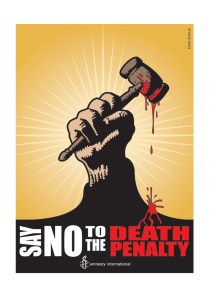
China remained the world’s leading executioner – but the true extent of the use of the death penalty in China is unknown as this data is classified as a state secret.  The global figure of at least 657 excludes the thousands of executions believed to have been carried out in China.

Excluding China, 86% of all reported executions took place in just four countries – Iran, Saudi Arabia, Iraq and Egypt.

Bangladesh and Bahrain resumed executions last year, after a hiatus in 2018.  Amnesty International did not report any executions in Afghanistan, Taiwan and Thailand, despite having done so in 2018.

Executions in Iran fell slightly from at least 253 in 2018 to at least 251 in 2019.  Executions in Iraq almost doubled from at least 52 in 2018 to at least 100 in 2019, while Saudi Arabia executed a record number of people from 149 in 2018 to 184 in 2019.

Central African Republic, Equatorial Guinea, Gambia, Kazakhstan, Kenya and Zimbabwe either took positive steps or made pronouncements in 2019 which may lead to the abolition of the death penalty.

Barbados also removed the mandatory death penalty from its Constitution.   In the United States, the Governor of California established an official moratorium on executions in the US state with biggest death row population, and New Hampshire became the 21st US state to abolish the death penalty for all crimes.

Gambia, Kazakhstan, Malaysia, the Russian Federation and Tajikistan continued to observe official moratoriums on executions.

At least 26,604 people were known to be under sentence of death globally at the end of 2019.

The following methods of execution were used across the world in 2019: beheading, electrocution, hanging, lethal injection and shooting.

At least 13 public executions were recorded in Iran. At least six people – four in Iran, one in Saudi Arabia and one in South Sudan – were executed for crimes that occurred when they were below 18 years of age.  People with mental or intellectual disabilities were under sentence of death in several countries, including Japan, Maldives, Pakistan and USA.

Death sentences were known to have been imposed after proceedings that did not meet international fair trial standards in countries including Bahrain, Bangladesh, China, Egypt, Iran, Iraq, Malaysia, Pakistan, Saudi Arabia, Singapore, Viet Nam and Yemen.

Amnesty International 2019 Death Penalty report  (pdf)


The group cannot meet at present of course but if you would like to join then we hope to be back in action as soon as restrictions are lifted and it is safe to do so.  Keep and eye out on this page or on Twitter and Facebook for notice of our events.  Comments here are always welcome.

Newcastle and Saudi money


UPDATE 22 JUNE

WTO ruling puts sale of the club to a Saudi backed investment vehicle in doubt.

Strong local support for the Saudi investment

In a previous post we discussed the possible purchase of Newcastle United Football club by a consortium using Saudi funds.  The consortium wishing to purchase the Newcastle Football club using Saudi money from their sovereign wealth fund is receiving strong local support.  The local newspaper the Newcastle Chronicle has run several pieces discussing the various moves and bidding in the saga.  A poll shows overwhelming support for the purchase:

The Newcastle United Supporters Trust has thrown its weight behind the potential takeover of the club after publishing a survey of members which showed overwhelming support for the buy out.

A Trust survey has found 96.7% of their members are in favour of the proposed takeover by Amanda Staveley’s PCP Capital Partners, along with the Reuben Brothers and the Saudi Arabian PiF.   Mark Douglas, Chronicle, 25 April 2020

It is the comments pieces which are most revealing however.  Supporters are passionate about their club and want it to do well, understandably so.  They do not take kindly to doubts expressed by Amnesty or others about the wisdom of the take over.  One writer sums up the situation well;

It would be hugely hypocritical and financially damaging if the government (which deals in billions of pound worth of arms with the Saudi’s) were to step in and put a stop to this deal going through. Why should NUFC be forced to act as a deterrent to the Saudi human rights. Organisations such as amnesty international (sic) and the UN have been unable to enforce any legal obligation on the Saudi’s so why should a football club be expected to do so.  Both Amnesty and the UN should be able to enforce a political solution, and not try to use NUFC as leverage. We won’t be the first Premiership club to be owned by Saudi’s or another middle eastern domain, non (sic) of whom have good Human Rights reputations. I cannot believe for one minute that the government would have any legal right to block this deal and the FA have allowed other clubs to be purchased by Saudi’s previously so they have already set a precedence.  NEWCASTLE500

He or she has a point.  Saudi is the largest purchaser of arms from the UK.  Royalty and a succession of ministers and prime ministers have paid court to the Saudis so why should NUFC forego a huge injection of cash when the government is obviously keen to do so?  On 26 April 2020 it was revealed that the UK government has increased arms sales to regimes with a poor human rights record.  Two wrongs do not make a right however. The British government is so ensnared in arms sales to Saudi that to stop would cause enormous damage to our arms industry and to our balance of payments.  Small wonder the minister, Oliver Dowden, wants to keep well away from the problem.  They Work for You reveals he generally votes against human rights and has voted for the abolition of the Human Rights Act.

If the Chronicle’s survey results reflect what people in Newcastle think, it is truly depressing.  Is the only consideration the success or otherwise of their football club?  The coverage also sought the opinions of past players who were also said to be enthusiastic.

Reading the Newcastle Chronicle pieces one would gain only small hints of the human rights situation in Saudi or what they are doing in Yemen.  The pieces discuss the ins and outs of the deal largely to the exclusion of all else.  If supporters read more of the nature of the money they are so keen to get their hands on, would they react differently?

Football has become enmeshed in money.  Without huge budgets, no team can hope to win titles or afford to buy the best players.  Has the desire for success and prestige corrupted the game?  As Kate Allen, director of Amnesty put it:

The Premier League is putting itself at risk of becoming a patsy of those who want to use the Premier League to cover up actions that are deeply immoral, in breach of international law and at odds with the values of the global footballing community.

A classic example of sports wash.

Group helps refugees


Salisbury group makes donation to refugee groups

The group is occasionally able to make contributions to other human rights organisations, and, in the last month, we have been able to donate to two refugee charities which are having a particularly difficult time under COVID-19.  One of them, Care4Calais, works with refugees stranded in Calais and this is from their latest report:-

Our emphasis in the last few months at Care4Calais has been on getting the refugees through the winter, distributing warm clothing and decent footwear, as well as blankets and sleeping bags.  In the last few weeks this has completely changed, of course.   We have been focusing on how to deal with concerns around the Covid19 virus and now with the situation of lockdown in France.

Obviously, keeping the refugees healthy, with little in the way of washing facilities, and in close proximity, is extremely hard, and also jeopardises the charity workers.  Many charities have ceased operating there. The French government wants to move the refugees to confinement centres, which would be healthier, but more coercive. Shortage of money has hindered food supplies and added to transport problems, so donations are of the utmost importance.

We have also made a contribution to Safe Passage, a charity devoted to helping unaccompanied child refugees across Europe get to a place of safety, as they are legally entitled to do.


Kris Maharaj


Kris Maharaj in mortal danger

Kris is the 81-year-old British man unjustly locked up in a Florida prison. Originally sentenced to death, he’s been there for 33 years.  He is separated from his loving wife Marita and he is in poor health without access to vital care.  He is now at risk of contracting Covid-19 because others in his vicinity are infected.  Reprieve is asking people to write to the governor of Florida and the appeal can be accessed off their site.

If you spare a few moments to help this man, it would be appreciated.

Newcastle United and sports wash


Plans by a consortium funded by Saudi Arabia to purchase Newcastle United come under attack

Anyone who has followed the Yemen conflict or is the least bit aware of human rights around the world, will know of Saudi Arabia’s dismal record on this front.  For five years they have waged a brutal war in Yemen leaving the country a wreck and many thousands dead.  We have frequently described their activities in previous blogs on this site. Their bombing of civilian targets is a disgrace as is the process of what is called ‘double tapping’ that is, circulating round after an attack on a hospital, school or wedding, and returning for a second round of bombing to kill the rescue workers.  That the RAF is involved in this activity – supposedly ‘advising’ the Saudis – is a stain on the UK’s international reputation.

Their human rights record is appalling.  Torture is common and confessions extracted using the process used to justify executions.  Death by beheading in public displays are the norm.  Women’s rights are severely restricted despite the promised reforms.  Human rights activists are regularly targeted and of course there is the murder of Adnam Kashoggi who was almost certainly dismembered after his death by Saudi personnel.

Now they want to purchase Newcastle United football club via the Public Investment Fund chaired by Crown Prince Mohammed bin Salman and the sum of £500m is mentioned in a deal.

Kate Allen, Amnesty’s Director said:

Amnesty UK director Kate Allen said in a separate letter to Masters [chief executive of the Premier League]: “So long as these questions [about Saudi Arabia’s human rights record] remain unaddressed, the Premier League is putting itself at risk of becoming a patsy of those who want to use the glamour and prestige of Premier League football to cover up actions that are deeply immoral, in breach of international law and at odds with the values of the Premier League and the global footballing community”.

She suggests that Newcastle fans to familiarise themselves with the human rights situation in Saudi Arabia before the deal goes ahead.  For many fans, their chief desire is to see a new owner to replace Mike Ashley, the current one.

Saudi Arabia has been trying, unsuccessfully so far, to improve its image and using ‘sports wash’ is part of that plan.  The sums of money are huge and it appears that sports people are unconcerned at the source of the money or how tainted it is before accepting and cashing in the cheques.

The country is the major overseas purchaser of our arms exports.  Royalty have been frequently pressed into service as part of the charm offensive.  Unsurprisingly, the culture secretary, Oliver Dowden MP said it was a ‘matter for the Premier League’ and the government is unlikely to intervene.

Football is big business and the sums paid to players and their transfer fees can be stratospheric.  Players are hugely influential and many young people see them as heroes.  Although players are not involved in this transaction directly, they will ultimately benefit from it financially.

To quote Jonathan Lieu writing in the Guardian:

And so, welcome to the new orthodoxies of English football.  Saudi Arabia is good.  Amnesty International is bad.  New signings are more important than murder, broadcast rights more important than women’s rights, and a basic sense of humanity is ultimately expendable if you can scrape into next season’s Europa League.  It’s a manifesto, to be sure.  Just don’t expect anyone with a scintilla of decency to feel warmly about it.  (23 April 2020)

Sources: Guardian, BBC, CNN


Anniversary of Saudi execution


Zakia’s husband was one of the 37 people killed in a mass execution in Saudi Arabia on April 23, 2019

Saudi Arabia has taken my husband, and now won’t let us grieve. My children and I want to bury him and pay our respects. We deserve that much. Zakia Albakheet

These executions happened without warning, so Zakia and other families never had the chance to say goodbye.  Now, Zakia is fighting for the right to bury her husband, Abbas al-Hassan, whose body was never returned. Together, we can help.

Will you share Zakia and Abbas’s story from Newsweek with your friends and family, marking the anniversary of Saudi Arabia’s 37 illegal executions one year ago today

The Saudi government beheaded Zakia’s husband despite multiple protests from the United Nations.  It was an injustice – and it continues so long as the Saudi authorities prevent her from burying her husband, and mourning his death.  Abbas deserved a fair trial and a fair chance at justice. He didn’t get it. Now, a year after his execution, his wife Zakia deserves the chance to say goodbye. With your help, we can make sure her story is known and that Saudi authorities are held to account.

The Reprieve community has shown that the Saudi government is sensitive to its image on the international stage.  Together, we have kept the stories of Ali al-Nimr, Dawood al-Marhoon and Abdullah al-Zaher in the public eye and continue to push British politicians to speak up for them.

Together, we can fight for Zakia to have the chance to say goodbye to Abbas.  Please share their story in Newsweek with your friends and family.

Source: Reprieve

Kim Jong-Un


Speculation over health of Kim Jong-Un and his Nation
Kim Yong-Un

The unprecedented absence of North Korea’s leader from its most important state celebration, the Day of the Sun on 15 April, has fuelled speculation as to the health of Kim Jong-Un.   Suggestions from Daily NK – news supplied largely from defectors – is that the leader has recently received heart surgery.  No confirmation of this has been made to date however.  Another theory is that the leader is being protected from Covid-19, since Kim Jong-Un is often seen in close physical contact with people, offering handshakes and hugs, which make him vulnerable to the virus.

This secrecy surrounding his health inevitably extends to the health of the entire ‘hermit kingdom’.  While thousands have been quarantined, borders closed and tourists and foreign diplomats seen off, the government still insists there are ‘no cases in the country’.

Kim is however eager to be seen as pro-active in protecting the nation from the virus.  He recently chaired a public health meeting and has issued hygiene advice nationwide.  Pyongyang has received test kits from Russia and from China while various items of protective equipment have been donated by UNICEF and Doctors Without Borders.

The ‘great leader’ would be reluctant in any case to admit to the arrival of the virus since any weakness might invite criticism of his regime.  It was fear of reporting the disease to central government that allowed it initially to spread in China but whether North Korea will learn from this lesson seems unlikely.  A defector who recalls practising medicine during the SARS outbreak of 2002/03 said that not only was medical equipment seriously lacking then, but deaths were going unrecorded.

Certainly the sheer length of the border between North Korea and China, and its regular use by smugglers and traffickers, would suggest that the virus might enter relatively easily. If it did, that would be a tragedy for the 40% of North Koreans reportedly undernourished. And while new hospitals have been built under Kim’s rule, experts say they mostly benefit the elite in this two-tier nation.

This month the defector Thae Yong-Ho made history by winning a constituency seat in South Korea’s government. Once deputy ambassador to the UK, he says he is determined to work for the freedom of his compatriots who live in virtual ‘slavery’.  The high price defectors pay (and there are on average 1000 per year) is the knowledge that their extended families will be detained, or worse, in one of the country’s many detention centres and labour camps.

Human rights, and the health care that these insist on, are sadly in very short supply in North Korea.


Sources: The Guardian, ABC News, TPM Seoul.


Ali al-Nimr: Saudi Arabia


Reprieve have highlighted again the plight of Ali al-Nimr in Saudi Arabia
Arrested as a minor and confession achieved through torture

Ali al-Nimr was 17 years old – a minor – when he was arrested on 14 February 2012 in Qatif, a town in Saudi Arabia known to be a centre for pro-democracy demonstrations.  After his arrest, officers of Saudi Arabia’s General Intelligence Directorate interrogated and tortured him.  Ali signed a confession that one of his interrogators wrote for him, even though he did not understand what he was signing. Throughout his interrogation and prior to his trial Saudi authorities denied Ali the right to speak with a lawyer.

Reprieve, in a recent communication say:

Ali has spent the last 6 years on death row with the threat of execution hanging over him.  A threat made worse by coronavirus.  Our investigators, lawyers and campaigners are working hard to free Ali and others who were sentenced to death as children in Saudi Arabia.

With your help, we’ve made sure Ali’s life has been protected so far by making sure British politicians speak up for him. But this is not an easy campaign – and it’s not one we can pause for a moment, even during this pandemic.  20 April 2020

Amnesty has campaigned on his behalf and a post with the mother’s story can be read here.

When Ali’s story first surfaced, the UK’s shameful role in promoting Saudi Arabia’s membership of the UN’s human rights council was revealed via Wikileaks.

Reprieve notes that Saudi has executed its 800th individual in 5 years.   Since King Salman bin Abdulaziz came to power five years ago, the execution rate has doubled from the previous 5 years.

We urge you to take action and this can simply done via the Reprieve site the link for which is below:

https://reprieve.org.uk/take-action/

Picture: Amnesty

Sources: Reprieve; Amnesty International; American for Democracy and Human Rights in Bahrain; Independent

[update 22 April with different picture]


Rohingya and Covid-19


Hundreds of Rohingya refugees left stranded at sea

The British media is understandably filled with the effects of the pandemic on people’s lives in the UK at present and there are many who are suffering from its effects.  Being in lockdown whilst living in cramped flat with no garden is extremely difficult and distressing.  Those who are in insecure employement in the gig economy are also suffering financial stress.  Care home and medical staff with insufficient or no PPE are daily risking their lives.  Recession is inevitable the effects of which will hurt the poorest the hardest.

While there are many in the country who are suffering these things, there are those in other countries who are suffering more.  In particular the Rohingya.  They suffered cruelly under the Burmese military regime and had their villages burned down and were subjected to mass rape and murder at the hands of the Burmese.  Hundreds of thousands fled to neighbouring Bangladesh and live in one of the largest refugee camps in the world.

There are now reports of boatloads of refugees refused entry into Burma because the Covid-19.   Amnesty has received information concerning up to five boats thought to be carrying Rohingya refugees seen off the coasts of Malaysia and southern Thailand in recent days, with hundreds of people believed to be on board the vessels.  Those in the boats are likely to be fleeing persecution in Myanmar or from overcrowded refugee camps in Bangladesh.

An Amnesty press release said:

On Wednesday, the Bangladesh Coast Guard rescued 396 Rohingya people from a large boat which had been turned back by the Malaysian authorities and is believed to have been at sea for two months.  According to early reports, 32 people on the boat died at sea, but the figure is now thought to be almost double that. UNHCR – the UN refugee agency – has said that the survivors are severely malnourished and dehydrated.

On 5 April, another boat carrying 202 Rohingya people was intercepted by the Malaysian Maritime Enforcement Agency.  Its passengers were brought to safety and are now in COVID-19 quarantine.  18 April 2020

Human Rights Watch noted:

Over 800,000 Rohingya Muslims are currently living in overcrowded camps in Bangladesh, the bulk of whom were driven out of Myanmar by a military campaign of ethnic cleansing and crimes against humanity that began in August 2017.  As a result of that campaign, the Myanmar government and military now face accusations of genocide before the International Court of Justice (ICJ).  The estimated 600,000 Rohingya who remain in Rakhine State in Myanmar are subject to government persecution and violence, confined to camps and villages without freedom of movement, and cut off from access to adequate food, health care, education, and livelihoods.  18 April 2020

The genocidal policies by the Burmese have already inflicted misery on these people.  Added to that, they are now subjected to further stress and misery as a result of the pandemic.

Sources: Amnesty; Human Rights Watch; The Burma Campaign; Arakan Project; Guardian


Blog at WordPress.com.

Up ↑