Sportswash – again


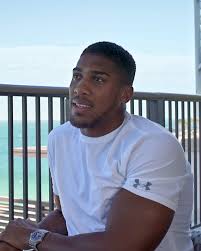
In a previous post we mentioned the case of Anthony Joshua, the boxer and the fight which took place in Saudi Arabia for which he received a multi-million pound purse.

Human rights groups were critical of his decision to fight there and said it was an example of Sportswash: using sport to try and sanitise a dubious regime. In the case of Saudi this involves executions by beheading; floggings; imprisoning opposition people, lawyers and human rights workers as well as their appalling bombing activities in Yemen.

Lo and behold, within days of this happening and the criticism which it produced, Joshua turns up on the Graham Norton Show on the BBC. This is a show which features actors and celebrities of various kinds who come on to promote their activities and seemingly have a good time. Joshua came on to great acclaim and was variously embraced and fawned over by the other guests. Joshua himself said at the time of the fight that he did not know about Amnesty as he was too busy training but one suspects that Graham Norton, his producers and production team know and must have been aware of the furore surrounding his fight in Saudi. Not a word was said about this.

So what do we call this? Is it Sportswash? The BBC has come in for an increasing amount of criticism for bias and to some extent this is understandable during an election. This is not bias however, it is simply not wanting to see. No doubt his promoters or PR people want to rehabilitate Joshua’s reputation – which took a knock – and what better than to parade him on a lightweight entertainment show like Graham Norton where no awkward questions were asked. But why did the BBC agree to this? Did the other guests know he was coming on and were they not concerned? If they were they did not show it with lots of kisses, backslapping and embracing – typical activity when celebs come together. We do not know of course if other potential guests were sickened by his presence and declined the gig.

So have the BBC been used as part of a plan to rehabilitate Anthony Joshua’s reputation?  Is what is happening in Yemen and Saudi of so little interest to the BBC that inviting this man on for our entertainment matters more than the suffering of people in those two countries?


Happy New Year!


Happy New Year to our followers and supporters. This is likely to be an interesting year on the human rights front and we shall be keeping an eye on the new Conservative government’s wish to repeal or do something with the Human Rights Act which they dislike so. We do not know what is proposed – indeed it has been under threat for some years now but details of what is proposed are scarce – but with a large majority, they will be able to do more or less as they will.

Arsenal and human rights


Arsenal football club embroiled in an embarrassing human rights dispute

The UK’s Arsenal football club became embroiled in an embarrassing and potentially expensive dispute with the Chinese authorities this week concerning the statement made by one of its footballers, Mesut Özil. The problem arose because Mesut, a Muslim, said on Instagram, concerning the plight of the Uighurs in China:

East Turkestan, the bleeding wound of the Ummah, resisting against the persecutors trying to separate them from their religion. They burn their Qurans. They shut down their mosques. They ban their schools. They kill their holy men. The men are forced into camps and their families are forced to live with Chinese men. The women are forced to marry Chinese men. But Muslims are silent. They won’t make a noise. They have abandoned them. Don’t they know that giving consent for persecution is persecution itself?

Sport, money, human rights, politics brought together in one place

50th anniversary of the abolition of the death penalty


December 16th is the 50th anniversary of the abolition of the death penalty in the UK

At 8am on 13 August 1964, the last execution took place in the United Kingdom.  Two men: Gwynne Evans and Peter Allen were separately executed in Manchester and Liverpool.  The death penalty for murder was abolished in the following year 1965 and made permanent on 16 December 1969.  Northern Ireland followed in 1973 and the last hanging offence – treason – was abolished in 1998.  In the current climate however, the question has to be asked, how secure is this decision and will it last another 50 years without being repealed?

Many will remember some of the impassioned debates which took place at the time with concerns it would lead to a rise in the murder rate.  Indeed, the vicar of All Saints, Clapton in London, said at the time it would be a ‘wholesale license to kill’.  The police wanted to be armed if the bill was passed.  Despite its abolition, the homicide rate in the UK has remained reasonable static over many years.  The figures for the last 3 years for example are 721 (2016/17); 728 (2017/18) and 701 (2018/19).  (Source: Statistica).  

Amnesty is opposed the use of the death penalty for six reasons:

  1.  It is the ultimate denial of human rights and is contrary to the articles 3 and 5 of the Universal Declaration of Human Rights – the right to life and the right not to be tortured or subject to cruel, inhuman or degrading punishment.
  2.  It is irreversible.  Mistakes are made and cannot be rectified.
  3.  It does not deter.  This perhaps is the strongest case made for its continued use yet many studies show it simply is not true.  Violent crime rates are not significantly worse in US states which use the penalty compared to those who do not.
  4.  It is often used with unfair justice systems.  Confessions sometimes forcibly extracted are a feature.  Clive Stafford Smith’s book on a particular case in Florida is instructive.
  5.  It is often used in a discriminatory way and you are more likely to be executed if you are a member of a minority group or if you suffer from mental health problems.  It is also racially biased.
  6.  It is used as a political tool to execute people who are seen as a threat to the authorities.

World wide

There has been a decrease in the number of countries using the death penalty according the 2018 Amnesty Report on the subject.  690 people were executed in 2018 in 20 countries representing a 31% decrease on the previous year.  However, these statistics exclude China – the world’s largest executioner – but where the number of executions, which is known to be vast, is a state secret.  Belarus is the only country in Europe still to have the penalty and executed at least 4 people in 2018.

The five biggest countries which still execute its citizens are: China; Iran; Saudi Arabia; Viet Nam and Iraq.  78% of all executions take place in the last four countries in this list (with the caveat that the China figure is unknown).  It is possible China executes more of its citizens than the rest of the world put together.

The Salisbury group monitors cases around the world and produces a monthly report.

United Kingdom

There has been a noticeable increase in rhetoric around harsher prison sentences and a desire to lock more people up for longer.  The current UK Home Secretary, Priti Patel has made a number of speeches and wants to see longer sentences, more prisoners kept in prisons for longer and generally supports a tougher approach to criminal justice.  She has seemed to support the death penalty although she denies that this is so.  Nevertheless, she is a powerful and insistent supporter of tougher sentencing.

A Parliamentary Enquiry has warned that UK citizens are at risk of the death penalty in the US – or of being sent to Guantanamo Bay – under a fast-track data sharing deal signed by the Home Secretary, as the result of an agreement reached with Washington last month, when the details were kept secret. It is said that the deal will give police and intelligence agencies speedy access to electronic communications sent by terrorists, serious crime gangs and white-collar criminals.   The House of Lords Committee has criticised the ‘asymmetric’ nature of the arrangement, which gives the US far greater powers to target UK citizens than vice-versa, and claims have been made that the UK will not be able to obtain ‘credible assurances’ that extradited suspects will not face execution. (Source: The Independent.)

Among the public YouGov polls reveal a mixed desire for restoring the penalty which depends a lot on what type of murder is involved.  So for multiple murders for example, 57% are in favour and 33% against.  Murder of a child shows 53% for and 31% against.  The ‘all cases of murder’ figure is 45% against and 34% for.

For crime generally in the words of YouGov ‘Voters are united: criminals should be more harshly punished.’  In the general population, 70% believe that sentences are not harsh enough which rises to 87% for Conservative supporters.  Further analysis for gender, age, location and social grade reveals only small differences.  The major difference is between Remain and Leave voters in the Referendum to leave the European Union (Brexit).  The statistic for all cases of murder shows that 64% of Remain supporters oppose the death penalty in contrast to 30% of Leave supporters – around double.  The support figures are even more marked with 51% of Leave supporters in favour of the death penalty and only 19% of Remainers.

It seems therefore that in the UK population, vengeful policies for dealing with criminality and for reintroducing the death penalty for some types of murder are still quite strong.  A conservative MP and former minister, John Hayes, asked the government last year to reintroduce the penalty.

Government policy has long been that we will not grant extradition to foreign countries if there is a risk of the individual being executed.  This policy appeared to be weakened last year by the then Home Secretary Sajid Javid:

Sajid Javid, […] has caused controversy in September by indicating that the British government is prepared to waive its long-standing opposition to the use of capital punishment by foreign governments, in the case of two alleged jihadi terrorists originally from Britain.   He has agreed to provide the authorities in the United States with intelligence evidence to assist in the trials of the two men without asking for the usual assurances that any convictions would not lead to the death penalty being imposed.  Human rights champions have widely condemned this decision as compromising Britain’s principled opposition to capital punishment and as setting a dangerous precedent.  Others, however, claim the two men involved deserve whatever they get.  So was the Home Secretary’s decision right or wrong?  YouGov 24 July 2018

Taken together, with members of the public wanting the return of the death penalty for several types of murder and an increase in harsher sentences; a weakening in the policy of not supporting the extradition to countries which execute people, and a desire to abolish the Human Rights Act, the reintroduction of the death penalty – although unlikely – may not be impossible in this country.  With the Conservative government returned last week with an increased majority, things are by no means certain. That it survives as a wish in many people’s minds is a worrying fact.

Sources: YouGov; Statistica; The Independent; Guardian, Parliament.co.uk, Amnesty International


We always welcome new members and the best thing is to keep an eye on this site or on Facebook – Salisburyai – and make yourself known at an event we are organising.

December minutes


The minutes of the December meeting are available thanks to group member Lesley for preparing them.  We discussed the recent activities we have been engaged in together with future events such as carol singing on Tuesday night.

December minutes (Word)

Death penalty report: Nov – Dec


We are pleased to attach our latest monthly death penalty report compiled by group member Lesley.  In addition to matters around the world, we mention worries about the Conservative government, if, as expected, they assume power on Friday after the election.  The present Home Secretary, Priti Patel is committed to toughening sentencing and has said she wishes to see the reintroduction of the penalty in the UK.  She denies that this is the case.  We quote survey statistics to show that it is still a desired outcome for many people, especially for those who voted leave in the EU Referendum.

Note as ever that China is the world’s largest executioner of its citizens but the data is a state secret.

November – December Report (Word)

Monthly meeting


December meeting of the group takes place tonight, Thursday 12th as usual in Victoria road at 7:30.  Supporters and new members welcome but it is a working meeting.

We have the carol singing next week.

Write for Rights


Write for Rights in the Cathedral a success

We have been holding our card signing for many years now in the centre of Salisbury but the numbers willing to sign – even at Christmas – have dwindled.  So this year we took up the offer by the Cathedral to hold it there which we did this afternoon (8 December 2019) with great success.  Well over a hundred signed our cards and we were back to the days of a crowd of people signing.

Interestingly, and perhaps appositely, many were at the Cathedral to see the Magna Carta which of course is where the human rights story started just over 700 years ago.

Sportswash


Use of sport to promote interests of unsavoury regimes on the rise

The latest example is the heavyweight fight in Saudi Arabia involving Anthony Joshua.  The fight was approved by the WBA, the World Boxing Organisation and International Boxing Federation.

Readers of this site need no introduction into the unpleasantness of the Saudi Regime.  Its activities in Yemen we have featured many times on these pages.  With British and American support

Anthony Joshua (Wikipedia)

and armaments, it has carried out a bombing campaign in that country with little regard to international human rights law.  Schools, hospitals, wedding ceremonies and civilian areas generally have been bombed sometimes using what is called ‘double tap’ that is, going in for a second time when the aid workers arrive causing extra mayhem.

Human rights are low on the agenda with floggings, torture, amputations and executions the norm.  There have been 148 executions so far this year.  Women’s rights activists, lawyers and members of the Shia minority have all been targeted.  But never mind, there’s money to be made in them there dunes so lets go for it.

There has been a wide range of criticism of the boxer himself and the promoters, Matchroom Sport for taking the Saudi shilling for this event thus taking part in an attempt to sanitise the regime.  They denied the charge that they were sportswashing.

Never mind the stonings, public executions, or human rights, Eddie Hearn is more than happy to follow the money

Daily Telegraph, 16 August (Eddie Hearn is Joshua’s promoter)

What does Anthony Joshua himself say?  He is reported not to have known who Amnesty International was saying in a BBC interview that he spent most of his time in Finchley training.

I appreciate them [Amnesty] voicing an opinion.  And it’s good to talk about issues in the world.  But I’m there to fight.  If I want to put on my cape where I’m going to save the world, we all have to do it together.  The questions and the things that are happening in the world in general can’t be left to one man to solve.  We all have to make a difference.”

I’ve actually been to Saudi Arabia and I’m building a relationship,  Some of the questions that the world has to ask, maybe I could be a spokesman?  It’s a blessing and they can speak back.  And that’s relationship building, rather than just accusing, pointing fingers and shouting from Great Britain.  In order to ask questions, and people that may want to make change, you have to go and get involved.  Daily Telegraph 6 September 2019

Matchroom’s site makes only scant mention of the human rights aspect.  “We are an independent company of passionate individuals” it tells us on its site: presumably the passion is confined to sport.

Of course, Joshua is not the first and certainly not the last to be involved in the process of sportwashing regimes such as Saudi Arabia.  His ‘crime’ of agreeing to fight in the kingdom does not compare with the UK government’s support and agreeing to the supply of arms to this regime over many years.  Members of the Royal Family have been happy to get engaged with a fellow royal family.

The difference is that this fight will have been seen by millions hence the purse of £40 million that Joshua will earn (there are other higher figures).  Those millions of viewers are likely to be left with an impression that it is all right to engage with such a regime.  But they have been willing stooges in the process of trying to sanitise them and its attempts to make a comeback after the murder of Khashoggi.

Sport has had its fair share of scandals.  Doping, cheating, bribery: a seemingly endless stream of less than salubrious behaviour.  FIFA and the Olympics are replete with corruption.  To many, Joshua is a hero and on the sporting front he no doubt is.  But as a hero he has a responsibility, as do those behind him, to recognise the influence he has on followers.  Some day, the sporting fraternity are going to have to recognise the role they play in shaping people’s – particularly young people’s – minds and the influence they have.  And that may mean saying ‘no’ to performing in a country where women have few rights and are imprisoned for seeking them, where torture is a way of life, and hacking off heads and limbs part of the legal system.  Good way to earn £40 million.

Last word to Matchroom:

We got criticized for coming here but these people have been amazing. The vision they have for boxing in this region is incredible and they delivered.  [Accessed 8 December]

Sources: Guardian, Daily Telegraph, Amnesty

Blog at WordPress.com.

Up ↑