It’s not just cotton from Xinjiang …


The Uyghurs are exploited across several different sectors

August 2026

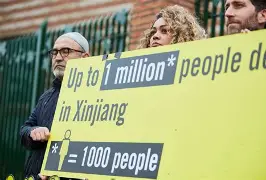
We have focused on cotton in previous posts with estimates of around 20% of the cotton clothes we wear has been produced using forced labour. But it’s not only cotton, a large amount of raw materials, and products, are manufactured in Xinjiang also using Uyghur forced labour. This production includes 35% of polysilicon – the raw material used to make solar panels – is created in Xinjiang, along with 10% of global PVC production. 

Although the UK is trying to combat modern slavery through the Modern Slavery Act 2015, this act has no enforceable legislation to prevent those products from entering the UK. As the EU and the US have stronger legislation in place, the UK risks being the dumping ground for products issued from Uyghur forced labour. 

One way to tackle this issue is to contact your local council to urge them to adopt more stringent practices in their procurement contract to ensure the goods and services used by public bodies are not a result of Uyghur forced labour. 

To shine some light on this issue, we are encouraging you to submit a question to Wiltshire Council to ask about processes and safeguards currently in place to prevent public bodies from procuring goods or services that are issued from forced labour. Some local councils have already adopted measures to address Uyghur forced labour, but you can still ask what is done practically to ensure the motion is respected.  The address is:

Wiltshire Council, Bythesea Road, TROWBRIDGE, BA14 8JN. We could find no general point of contact and searches of their site revealed no relevant policies.

Some local councils give the chance to submit questions to be addressed by the mayor and councillors during meetings. For other councils, you may need to ask them directly how to submit a question, or contact a local councillor directly to engage with them. 

Image: Amnesty USA


Uyghurs part of repression of all minorities in China


The China Unity law is an act of cultural genocide

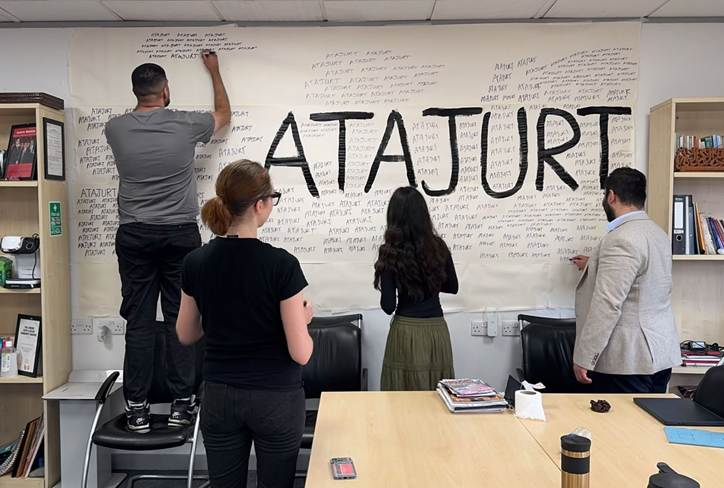
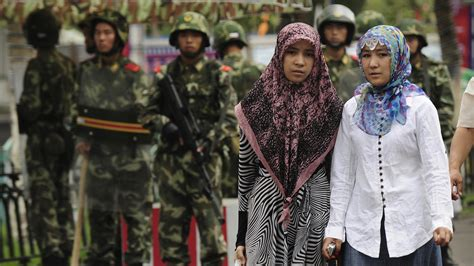
The China Unity Law came into force in July and is intended to establish Chinese dominance over all its ethnic minorities. Mandarin will become the dominant language and all 51 of China’s minorities will be affected, around 9% of the total population. We are focusing on the Uyghurs who are being persecuted as part of Amnesty’s Uyghur Awareness Month. The law will be used to justify ever more repression and discrimination over its minorities.

We have to be aware of the wider context however and the threat to human rights inside and outside China. An article By Simon Tisdall in the Guardian (8th August) discusses these wider issues. The new law has been condemned but not too loudly by western governments but more loudly by Amnesty. We must not forget the repression which went on Tibet and also Mongolia: the Uyghurs are just the latest in a line of minorities persecuted by an increasingly authoritarian Xi Jinping.

Tisdall argues that a kind of ‘debilitating fatalism’ has taken hold of the western powers who just watch the ever increasing exercise of power by China. They are threatening Taiwan and with US military stocks reported to be much reduced by the Iran excursion, is now the time when an assault is right for them? They also threaten Japan.

Hong Kong is another example and thousands left the former colony to come to the UK. Free speech is no longer possible. The publisher Jimmy Lai was sentenced in December to 20 years in prison and is in solitary confinement and in poor health. His family say he is denied medical attention which is denied by the Chinese but they do not allow independent verification.

The sad fact is that the cause of human rights in that country and those of its minority populations in particular is bleak. As China becomes more economically and politically powerful and western countries more divided, China is able to pursue its plans with ever greater vigour. Its desire to build the biggest embassy in the west in London seems unstoppable. It is almost certainly to be used for espionage and to exert control over Chinese people living in the UK. Donald Trump’s divisive policies against US allies plays into China (and Russia’s) hands.


Thought of subscribing?

Reading books can get you killed


Reading a Uyghur book can lead to serious punishment

August 2026

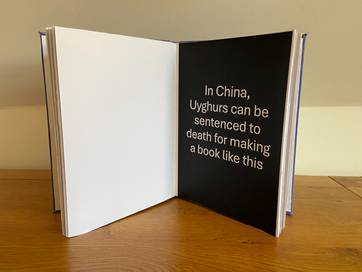
This is not the Middle Ages. This is the 21st Century. But the desire of the Chinese to extinguish Uyghur culture can lead to draconian consequences. This short piece and the book, were created by the Amnesty Death Penalty project.

So often, we take our books for granted. But if you are Uyghur, reading, promoting or writing books in the Uyghur language – even children’s text books – can land you in serious trouble. In fact it can and has on a number of occasions, resulted in a death sentence. This is all part of the Chinese government’s attempts to suppress the Uyghur language, culture and identity. Too many governments around the world use the death penalty as a means of intimidating ordinary people into compliance.  Books, things that we take for granted in the West, can be very dangerous for Uyghurs which is why the Anti-Death Penalty Project has created a book (كىتاب) to show our solidarity. ‘Thank you so much Death Penalty Network for such a beautiful and thoughtful project!  

The Salisbury group publishes a report each month on the use of the penalty around the world. It does not include China as executions are a state secret. The country is believed to execute more of its citizens than the rest of the world put together.


Uyghur solidarity month


Salisbury MP’s activity on this topic is poor

August 2026

It is often suggested we write to MPs on matters of concern and this can achieve something but too often it doesn’t. An MP receives a lot of messages from constituents most of which concern local matters. Indeed, it is a criticism of the system that much of their postbag are issues more properly the concern of local councillors. MPs feel obliged to engage in these matters however, because it is clearly the expectation of their constituents that they should.

Salisbury has two MPs, Mr Danny Kruger (Reform) who represents East Wiltshire which runs down to the northern part of the City, and Mr John Glen (Conservative) who represents the City itself and most of south Wiltshire. Their involvement in Chinese human rights issues is slight.

Mr Kruger asked the prime minister (then Sir Keir Starmer) the following question in February:

“The Prime Minister is very full of the abstract virtue of engaging with China and getting in the room with them. He used to say that Britain should not even sign a trade deal with China because of the persecution of the Uyghur people. Having now got into the room with the Chinese leader, can he tell the House a single thing that he achieved on behalf of the Uyghurs, or indeed on behalf of the security of this country?

“[Starmer] Yes. Engaging is really important for the security of this country. Just for clarity, we did not sign a trade deal on the visit; we simply looked at the ways in which we can open the opportunities for businesses. There were 60 big businesses with us on the visit, and they are absolutely clear about the advantages to them. I would much rather take their view on the advantages than the nonsense that is being spouted on the other side of this House”.

A good question receiving a complete non answer. The prime minister talks vaguely about engagement and then on to talk about the trade talks. He does not answer the Uyghur point at all. In the same session, Jim Shannon (DUP) also asks about, inter alia, the Uyghurs:

[…] what steps forward remain in terms of the Chinese treatment of Christians, Uyghur Muslims, Falun Gong and other religious minorities? Was the Prime Minister able to use diplomatic soft power to bring about the changes required to provide human rights protection, to stop religious persecution and to enable successful trade between the two nations?

“[Starmer] The hon. Gentleman is right to raise these really important issues. I raised them myself during the course of the visit, and I thank him”.

With what result we do not know. Danny Kruger asked again about the Uyghurs in March and a junior minister simply replied that “[the government] continues to engage with the Chinese on human rights and religious freedom”. The results do not look to be that impressive. At least it can be said that Mr. Kruger has tried to raise the matter.

There is one speech by Mr John Glen which mentions the Uyghurs in part of a long speech much of which was devoted to the treatment of Christians. A mention of Uyghurs is as follows:

“[…] It is not a binary question; it is not that we cannot talk about what is happening with the Uyghur Muslims in China while recognising that China is an important economic actor in the world that needs to be respected. We need to find ways of interacting well together and respecting, as far as we can, what common ground exists. It troubles me sometimes that when we have statements in the House, we revert to a binary: “It’s all good or it’s all the opposite.” The hon. Member for North Northumberland [David Smith, Labour] grasps the right way to approach this”.

The full speech can be accessed on the They Work for You website. It is not clear what ‘common ground’ exists with repression, torture and cultural genocide or where we could find it. On the subject of China generally, Mr Kruger has mentioned it 14 times and Mr Glen on no less than 41 occasions. We can conclude that the issue of persecution of Uyghurs is not high on either MP’s concerns. Both are Christians and seem more concerned about how they are treated rather than Muslims. According to They Work for You, Mr Glen ‘generally votes against laws to promote human rights’ and Mr Kruger ‘consistently votes against equality and human rights’.

Overall, both MPs do not seem to concern themselves with human rights issues. They are concerned about problems experienced by Christians and about political issues to do with China with little recognition of the plight of Uyghurs although Mr. Kruger has tried. We were unable to find anything relevant on their websites.


Blog at WordPress.com.

Up ↑