Uyghur Solidarity Month: A Call to Action


Oppression of the Uyghurs continues

August 2026

The oppression and cultural genocide of the Uyghurs continues and has largely dropped out of the news. Such news as there is concerns the desire for China to establish the largest embassy in London and possibly Europe which is still being considered. The fears, the very real fears, that it will become an espionage hub and also enable the Chinese Communist Party to expand its intimidation of Chines ‘dissidents’ i.e. anyone who disagrees with the CCP. It will be an interesting test of the government’s wil to see if it agrees with this proposal.

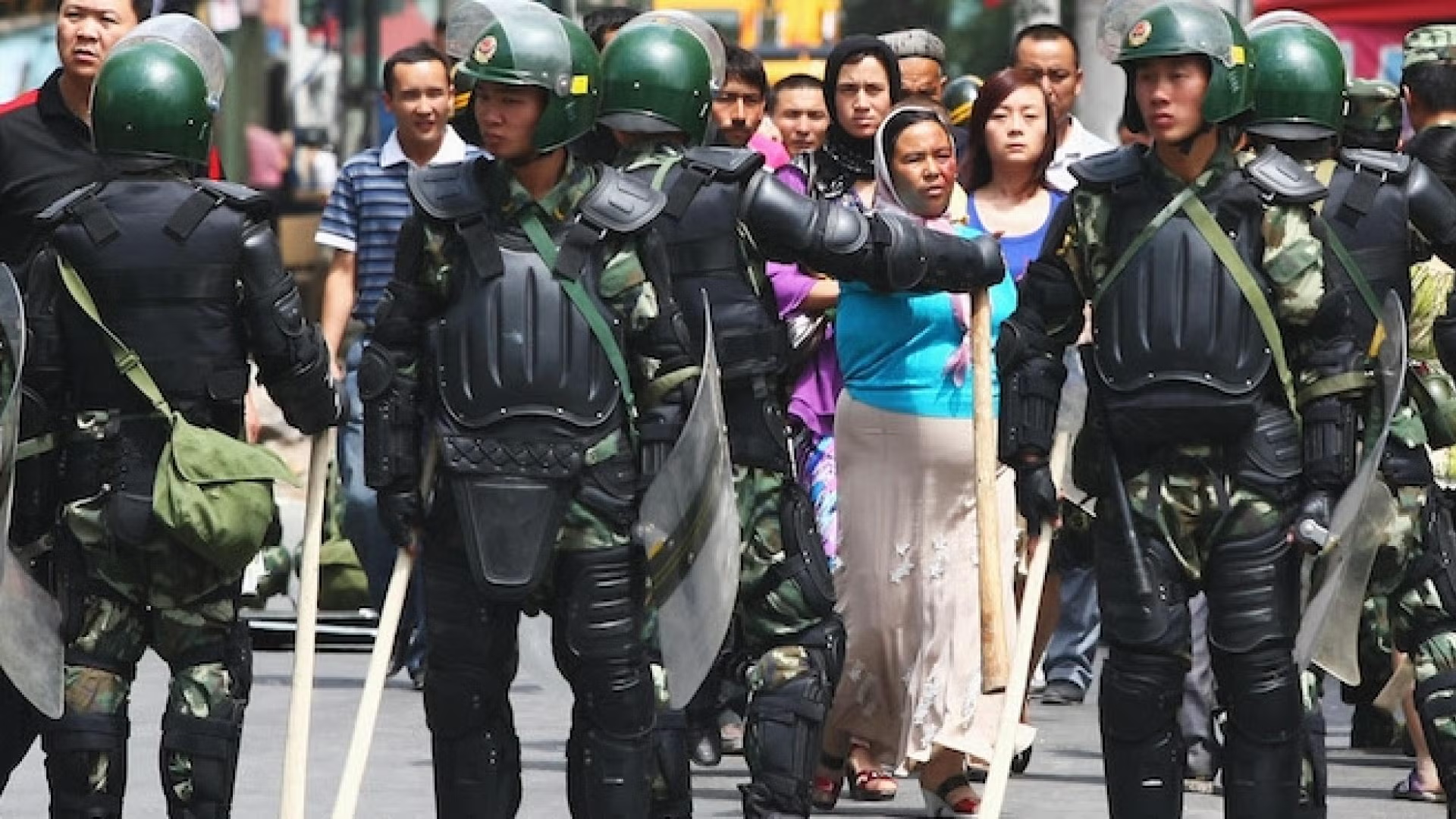
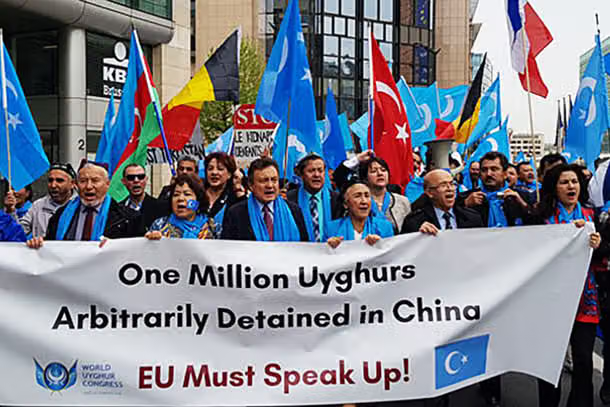
Amnesty has declared this month to be Uyghur Solidarity Month and you can sign up using this link. The treatment of Uyghurs and Kazakhs is deplorable and consists of arbitrary detention, torture, forced cultural intimidation and persecution based on religion and ethnicity. Children are separated from their parents. Around 1 million individuals are involved. There is evidence of forced labour that Uyghurs are used to pick cotton which finds its way into clothes sold in high street stores in the UK. No journalists or foreign observers are allowed into the region.

It represents the largest campaign of cultural genocide in the modern era.

One beacon of light is the Kashgar Times which tries to bring news from the area. We include an extract from them below.

“Kashgar Times is an independent news media outlet dedicated to reporting on the Uyghur people and the injustices they face under the oppressive regime of the People’s Republic of China. Kashgar Times was founded on April 30, 2025, by prominent Uyghur advocate Arslan Hidayat and seasoned journalist Nuriman Abdureshid. The outlet aims to serve as a vital source of accurate, on-the-ground news from East Turkistan, also known as the Xinjiang Uyghur Autonomous Region.

“The Uyghur people have long suffered under systemic oppression. They face cultural erasure and widespread human rights violations—amounting to genocide—by the Chinese government. Yet, despite the urgency of these issues, getting unfiltered news from this region is increasingly difficult. China’s strict censorship and crackdown on free journalism have silenced many voices.

“At Kashgar Times, our mission is to break through that silence. We aim to bridge the information gap. We provide a platform where Uyghur voices can be heard, and their stories told—free from propaganda.

“Kashgar Times fills an urgent gap in today’s media landscape. Our founders bring with them a wealth of experience and passion. Arslan has tirelessly advocated for Uyghur rights on international platforms. Nuriman has sharpened her journalistic skills while reporting for the Uyghur Service at Radio Free Asia. Together, they embody the spirit of resilience and commitment that Kashgar Times stands for.

“At Kashgar Times, we are dedicated to upholding the highest journalistic standards. We aim to present stories that highlight the struggles and triumphs of the Uyghur community, offering insights that are often overlooked or misrepresented in mainstream narratives and especially on Chinese state-run media. By sharing first hand accounts, investigative reports, and expert analyses, we hope to shed light on the reality of life in Chinese-occupied East Turkistan, pushing back against the extensive campaign of disinformation funded by the Chinese Communist Party.

As a Uyghur-run media outlet, we are committed to reporting on Uyghurs, by Uyghurs, for a global audience. We believe in the power of storytelling to awaken empathy and understanding—allowing the world to grasp the gravity of the situation faced by the Uyghur people.

“We invite you to support our mission by subscribing to Kashgar Times. Your contributions will enable us to continue our crucial work and help us expand our reach and resources. Together, we can create a robust platform that not only informs readers but also amplifies the voices of those fighting for justice and preservation of our people.

For U.S. Donors Zelle to “kashgartimes.news@gmail.com” (if you don’t use Zelle then donate via DonorBox)”

We hope to bring further posts through the month.


Why not become a subscriber?

AI used to create title. No AI used otherwise.

Trade Talks with China: Ethical Dilemmas Ahead


Government has to decide: rights or trade?

June 2025

It is reported today that the government is engaged in a range of talks with Chinese officials to improve trade and political relations. The Chinese Embassy is quoted as saying that relations have ‘positive momentum’. Elsewhere, relations are described as ‘warming’. Of course both countries are suffering from the Trump tariff war and so a degree of mutual comfort is to be expected.

The fact remains that human rights in China are dire across a very wide spectrum, almost too long to describe in fact. They include no freedom of expression; atrocious and genocidal behaviour towards the Uyghurs and other Turkic peoples; Human Rights defenders who face long prison terms and torture; continuing repression in Tibet; the crackdown in Hong Kong and the execution of large numbers of its citizens – possibly equal to all the rest of the world put together. It is also aggressively pursuing overseas Chinese who criticise the country and persecutes any of their family members in China. Restrictions are getting steadily worse over time.

Azeem Ibrahim, speaking at the Humanist Convention this month, described the multi-pronged approach

adopted by the Chinese. It was a talk about the rising threat of autocracies which included Russia and Turkey. He pointed out that the country leads the world in surveillance and it has a massive programme using facial recognition technology. It is also working hard to gain access and control to international agencies in the UN for example. The Warsaw Institute describes how they use their commercial power and investments to shut down any Security Council criticisms of their human rights infringements. His basic message was that China in particular has an organised and well-funded programme to attack western values by any and all means available. He added that the West has been complacent in thinking that western values are a settled state of affairs.

So where does that leave the Labour government? It is reported to be softening its position now it is in government. Nine individuals have travel restrictions placed on them including 5 Conservatives: Ian Duncan Smith being one and Tom Tugendhat another. All because they criticised the treatment of Uyghurs. These restrictions might be lifted. The concern is that the government is desperate to achieve growth and seems willing to abandon all principles to achieve it although a trade deal is not on the cards. This site is concerned with human rights but the wider issue is western governments – like the UK – who seem very slow to wake up to the organised threat posed by autocracies like China who are determined to pursue their view of the world by all means possible.

Sources include: Human Rights Watch, Amnesty, Guardian, US Department of State, New China Human Rights.

Genocide in China


Report finds that China’s treatment of the Uyghurs is genocide

The word ‘genocide’ has entered the language and we use it today to describe attacks by governments on entire communities usually for reasons of race or religion. It is sometimes surprising to some to discover that it is in fact quite a new word invented in 1944 by Rafael Lemkin. He used it to describe the Nazi’s programme of seeking to exterminate the Jews. Further background to the tussles to get the word accepted is described in Phillippe Sands’ book East West Street (Weidenfeld and Nicolson, 2016). The victors after the war were keen to set up a system to try and prevent those terrible events from happening again including the Genocide Convention of 1948 agreed only four years after Lemkin first coined the word.

Genocide has not disappeared in the world today and the worst example currently is the programme being carried out by the Chinese against the Uyghur people. A report has recently been published which – although having no official standing – has looked thoroughly into the treatment of the Uyghurs and concludes that ‘efforts to prevent births amounted to genocidal intent.’ Uyghur women are having their wombs removed and babies are often killed after being born.

The Chinese treatment of the has been horrific and that it should be taking place in the modern age is deeply depressing. China can use its veto power to prevent action by the International Criminal Court. In addition to the suppression of births the report describes ‘unconscionable crimes’ against the Uyghur people. These include physical violence, sexual abuse including penetration by electric shock rods or iron bars, holding people up to their necks in cold water for prolonged periods of time and the use of heavy shackles sometimes for months at a time. Face recognition technology is used on an extensive scale making communities effectively open prisons.

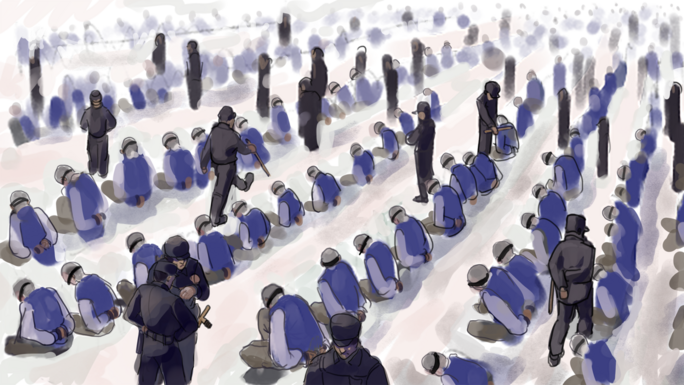
As many as a million are in held re-education establishments where they are forced to learn Chinese. If caught speaking their own language they are severely beaten. Hundreds of thousands of Uyghur children have been removed from their families and placed in Han speaking homes. Mosques have been destroyed and graves bulldozed. Travel to the region is tightly restricted.

It is a catalogue of depravity of truly shocking extent. The Chinese deny any of this is taking place but the weight of evidence is too great to dismiss. The scale and extent of the persecution must have received authority at the highest level. Although, unlike the Nazis, there is no programme of mass killing, the programme does represent a deliberate programme to eliminate the culture, history and language of these people.

The UK government has so far declined to call the programme genocide.

China’s oppression of Uighurs spreads overseas


China reported to be using its financial muscle to secure the arrest of ex-patriot Uighurs in foreign countries

This is an extract from the Uyghur* Human Rights Project. China is much in the news recently and the arrest of journalists and the closure of a popular newspaper in Hong Kong has featured strongly in the west. The systematic repression of Uighurs continues unabated however, both within the country and as this report discusses, overseas.

The report is the product of an effort to understand the means by which China targets Uighurs beyond its borders to silence dissent. In partnership with the Uyghur Human Rights Project, the Oxus Society for Central Asian Affairs gathered cases of China’s transnational repression of Uyghurs from public sources, including government documents, human rights reports, and reporting by credible news agencies to establish a detailed analysis of how the scale and scope of China’s global repression are expanding.

Since 1997, the People’s Republic of China (PRC) has engaged in an unprecedented scale of transnational repression that has reached 28 countries worldwide. The China’s Transnational Repression of Uyghurs Dataset examines 1,546 cases of detention and deportation from 1997 until March 2021 and offers critical insight into the scope and evolution of the Chinese government’s efforts to control and repress Uyghurs across sovereign boundaries. Our data finds instances of at least 28 countries across the world complicit in China’s harassment and intimidation of Uyghurs, most notably in much of the Middle East and North Africa with 647 cases, and in South Asia with 665 cases. The dataset contains 1,151 cases of Uyghurs being detained in their host country and 395 cases of Uyghurs being deported, extradited, or rendered back to China.

China’s transnational repression of Uyghurs has been consistently on the rise and has accelerated dramatically with the onset of its system of mass surveillance in the Xinjiang Uyghur Autonomous Region (XUAR) from 2017, showing a correlation between repression at home and abroad. In the first stage of China’s evolving system of transnational repression, from 1997 to 2007, a total of 89 Uyghurs from 9 countries, mostly in South and Central Asia, were detained or sent to China. In the second phase (2008–2013), 130 individuals from 15 countries were repressed. In the ongoing third phase (2014 to the end of our data collection in March 2021), a total of 1,327 individuals were detained or rendered from 20 countries. Unreported cases would likely raise these figures substantially, with our database presenting just the tip of the iceberg due to our reliance on publicly reported instances of repression.

International organizations and host governments, particularly those with close political and economic ties to the PRC, can often be complicit in China’s use of transnational repression against Uyghurs, many of whom have sought refuge abroad. China’s transnational repression exists as part of a wider trend of global authoritarianism that threatens to erode democratic norms worldwide. Stopping China’s transnational repression is a moral imperative and crucial to maintaining state sovereignty and the integrity of international organizations like Interpol and the UN High Commissioner for Refugees (UNHCR).

States that host Uyghur diaspora communities can take concrete steps to combat China’s transnational repression and protect Uyghurs and other vulnerable populations. Governments can refuse to extradite Uyghurs, increase refugee and emigration quotas, and restrict networks of enablers, including tech companies, as well as diaspora groups and organizations acting as fronts for the Chinese government.

This report describes transnational repression and the key actors and methods used by the Chinese government. It then traces the evolution of China’s campaign of repression, showing how that campaign has shifted in emphasis from Central and South Asia, to Southeast Asia, to the Middle East, following the launch of the Belt and Road Initiative. The full report can be read by following the link above.

*There are different spellings

Blog at WordPress.com.

Up ↑