Coercion by the Chinese of the Uyghur diaspora


Chinese government seeks to coerce Uyghurs living overseas

August 20206

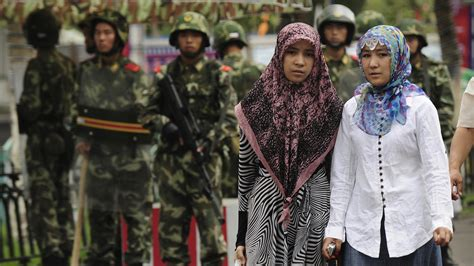
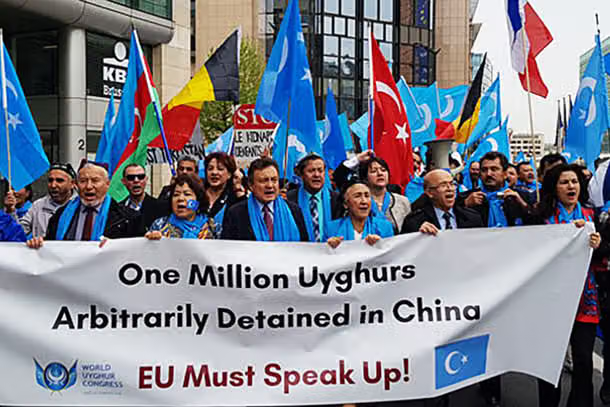
Not content with seeking to extinguish a people and a culture in its own backyard, the Chinese are engaged in a variety of coercive tactics overseas. In Australia the Chinese government is interrogating Uyghur Australians visiting Xinjiang, pressing them to collect information on Uyghurs in Australia, Human Rights Watch said today as its executive director, Philippe Bolopion, visited Australia. 
Chinese authorities have long engaged in transnational repression—human rights abuses committed beyond a country’s borders to curtail dissent—against Uyghurs living abroad and their relatives in Xinjiang, by targeting activists critical of the Chinese government. By pressing visitors to provide information about Uyghur activists, organizations, and language schools in Australia, the authorities are repressing the rights of Uyghurs in Australia to freedom of expression, association, culture, and family life.

“The Chinese government exploits the vulnerability of separated Uyghur families as an opportunity for surveillance and disruption of communities abroad,” said Philippe Bolopion, executive director at Human Rights Watch. “Interrogating Uyghurs visiting Xinjiang and strict monitoring of diaspora activities have a chilling effect emblematic of Beijing’s transnational repression in Australia.”

Transnational repression

Visitors to Xinjiang can only do so under very strict conditions and are required to report to the authorities every day. Another Uyghur Australian said authorities interrogated him more than a dozen times, once for more than seven hours: “They asked for addresses and phone numbers of several prominent Uyghur activists in Australia.” When he said he did not have that information, the police pressed him to monitor the activists’ activities upon returning to Australia and photograph them during events. 

Beijing’s transnational repression derives its impact abroad from these crimes. Chinese authorities use the vulnerability of relatives in Xinjiang, restrictions on travel and communication, and fear of retaliation to pressure Uyghurs abroad.

Since the start of Chinese leader Xi Jinping’s Strike Hard Campaign in Xinjiang in late 2016, the authorities have arbitrarily confiscated Uyghurs’ passports in the region, and punished Uyghurs for contacting family members and others abroad. While the authorities are now permitting select Uyghurs to travel internationally or to visit family members in Xinjiang, they continue to exert tight control over those who travel.

Although this is a description of the CCP’s actions in Australia, it will be replicated around the world including the UK.

Massive destruction of mosques

We have concentrated in these posts on people aspects which of course is extremely important. But the UK government also discusses actions by the Chinese against culture including mosques. Satellite imagery and witness reports indicate that around 16,000 mosques, approximately 65% of the total in Xinjiang, have been destroyed or damaged by the government, with about 8,500 demolished entirely and much of the land left vacant. Additionally, 30% of key Islamic sacred sites, including shrines and cemeteries, have been demolished, and 28% of altered mosques have been repurposed (see State treatment of Muslims in Xinjiang province – Mosques and Islamic spaces). The full analysis by the UK government of the tragedy taking place there can be read here.

These actions represent a crime against humanity and are receiving too little attention in the West as we have noted previously.

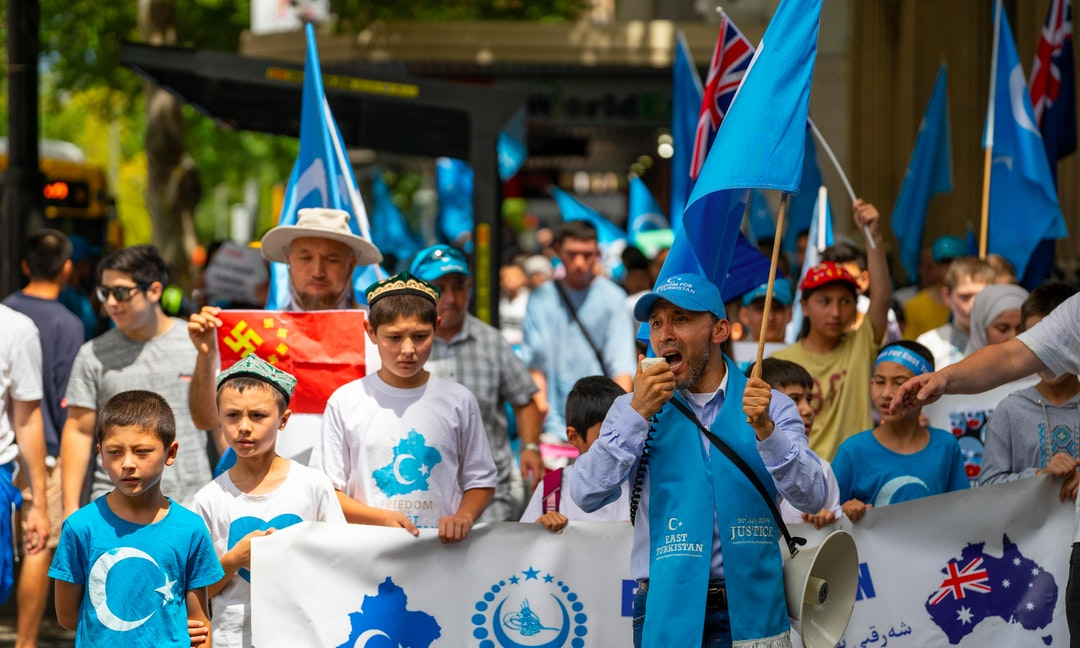
We are grateful to Human Rights Watch for much of the material in this post. Image: protestors in Australia.

Reading books can get you killed


Reading a Uyghur book can lead to serious punishment

August 2026

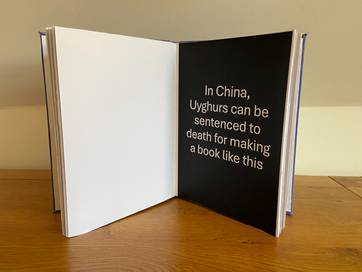
This is not the Middle Ages. This is the 21st Century. But the desire of the Chinese to extinguish Uyghur culture can lead to draconian consequences. This short piece and the book, were created by the Amnesty Death Penalty project.

So often, we take our books for granted. But if you are Uyghur, reading, promoting or writing books in the Uyghur language – even children’s text books – can land you in serious trouble. In fact it can and has on a number of occasions, resulted in a death sentence. This is all part of the Chinese government’s attempts to suppress the Uyghur language, culture and identity. Too many governments around the world use the death penalty as a means of intimidating ordinary people into compliance.  Books, things that we take for granted in the West, can be very dangerous for Uyghurs which is why the Anti-Death Penalty Project has created a book (كىتاب) to show our solidarity. ‘Thank you so much Death Penalty Network for such a beautiful and thoughtful project!  

The Salisbury group publishes a report each month on the use of the penalty around the world. It does not include China as executions are a state secret. The country is believed to execute more of its citizens than the rest of the world put together.


Uyghur solidarity month


Salisbury MP’s activity on this topic is poor

August 2026

It is often suggested we write to MPs on matters of concern and this can achieve something but too often it doesn’t. An MP receives a lot of messages from constituents most of which concern local matters. Indeed, it is a criticism of the system that much of their postbag are issues more properly the concern of local councillors. MPs feel obliged to engage in these matters however, because it is clearly the expectation of their constituents that they should.

Salisbury has two MPs, Mr Danny Kruger (Reform) who represents East Wiltshire which runs down to the northern part of the City, and Mr John Glen (Conservative) who represents the City itself and most of south Wiltshire. Their involvement in Chinese human rights issues is slight.

Mr Kruger asked the prime minister (then Sir Keir Starmer) the following question in February:

“The Prime Minister is very full of the abstract virtue of engaging with China and getting in the room with them. He used to say that Britain should not even sign a trade deal with China because of the persecution of the Uyghur people. Having now got into the room with the Chinese leader, can he tell the House a single thing that he achieved on behalf of the Uyghurs, or indeed on behalf of the security of this country?

“[Starmer] Yes. Engaging is really important for the security of this country. Just for clarity, we did not sign a trade deal on the visit; we simply looked at the ways in which we can open the opportunities for businesses. There were 60 big businesses with us on the visit, and they are absolutely clear about the advantages to them. I would much rather take their view on the advantages than the nonsense that is being spouted on the other side of this House”.

A good question receiving a complete non answer. The prime minister talks vaguely about engagement and then on to talk about the trade talks. He does not answer the Uyghur point at all. In the same session, Jim Shannon (DUP) also asks about, inter alia, the Uyghurs:

[…] what steps forward remain in terms of the Chinese treatment of Christians, Uyghur Muslims, Falun Gong and other religious minorities? Was the Prime Minister able to use diplomatic soft power to bring about the changes required to provide human rights protection, to stop religious persecution and to enable successful trade between the two nations?

“[Starmer] The hon. Gentleman is right to raise these really important issues. I raised them myself during the course of the visit, and I thank him”.

With what result we do not know. Danny Kruger asked again about the Uyghurs in March and a junior minister simply replied that “[the government] continues to engage with the Chinese on human rights and religious freedom”. The results do not look to be that impressive. At least it can be said that Mr. Kruger has tried to raise the matter.

There is one speech by Mr John Glen which mentions the Uyghurs in part of a long speech much of which was devoted to the treatment of Christians. A mention of Uyghurs is as follows:

“[…] It is not a binary question; it is not that we cannot talk about what is happening with the Uyghur Muslims in China while recognising that China is an important economic actor in the world that needs to be respected. We need to find ways of interacting well together and respecting, as far as we can, what common ground exists. It troubles me sometimes that when we have statements in the House, we revert to a binary: “It’s all good or it’s all the opposite.” The hon. Member for North Northumberland [David Smith, Labour] grasps the right way to approach this”.

The full speech can be accessed on the They Work for You website. It is not clear what ‘common ground’ exists with repression, torture and cultural genocide or where we could find it. On the subject of China generally, Mr Kruger has mentioned it 14 times and Mr Glen on no less than 41 occasions. We can conclude that the issue of persecution of Uyghurs is not high on either MP’s concerns. Both are Christians and seem more concerned about how they are treated rather than Muslims. According to They Work for You, Mr Glen ‘generally votes against laws to promote human rights’ and Mr Kruger ‘consistently votes against equality and human rights’.

Overall, both MPs do not seem to concern themselves with human rights issues. They are concerned about problems experienced by Christians and about political issues to do with China with little recognition of the plight of Uyghurs although Mr. Kruger has tried. We were unable to find anything relevant on their websites.


Uyghur solidarity month


Bringing the plight of Uyghurs to a wider audience

August 2026

We noted in our last post on the Uyghurs that their plight had slipped out of the news in the last year or so. With war in Iran and the closure of the Straight of Hormuz, and continuing conflict in the Middle East including Gaza, giving attention to a far off land where contact with its people is almost impossible is not altogether surprising.

But we need to do our best to bring people’s attention to what is going on there. We should always remember desperate governments do desperate things. The UK is up against it politically and economically. This leads it to pursue arrangements with overseas powers with highly dubious human rights records such as Saudi and UAE, to promote arms sales with almost any country while claiming to have a ‘robust policy’ not to, supporting Israel overtly and covertly despite its destruction of Gaza and mounting violence in the West Bank. Economic needs trump concerns about human rights. Jobs in the UK count for more than rights half way across the world.

Write a letter

We are asking that people write to their local newspaper to highlight the dreadful way the Chinese are treating these people. The campaign organisers have provided a sample letter which unfortunately exceeds the word limit of local papers. We have amended the letter which could be the basis of your own contribution:

I want to draw the attention to people in Salisbury of the dire human rights situation facing the Uyghur people in Xinxiang province, China.

the UN High Commissioner for Human Rights concluded there were credible allegations that the Chinese government had carried out arbitrary detention, torture, forced labour, family separation, and severe restrictions on religious and cultural freedoms on a vast scale on the Uyghur people. They stated that these violations may constitute crimes against humanity. In 2021, the independent Uyghur Tribunal, chaired by Sir Geoffrey Nice KC in London, concluded that the Chinese government had committed genocide against the Uyghurs through measures intended to prevent births, and had also committed crimes against humanity.

Despite these findings, the suffering of the Uyghur people continues while the world looks away. More than a million Uyghurs are reported to have been detained, and countless families have been torn apart. Survivors have described detention camps, torture, rape, forced labour, coercive birth-control measures, and the removal of children from their families. Behind every statistic are innocent individuals whose lives have been destroyed for ever.

This month, Amnesty International’s Uyghur Solidarity Month is trying to raise awareness of the continuing crisis but also to celebrate the rich culture, language, and heritage now under such severe threat.

Whether one views this issue through the lens of international law, freedom of religion, cultural preservation, or basic human dignity, the plight of the Uyghur people deserves continued public attention and informed discussion. Uyghur Solidarity Month reminds us that protecting a people’s culture is inseparable from protecting their human rights.

Public awareness alone will not end this crisis, but silence only makes it easier to ignore. We all have a responsibility to ensure that the voices of the Uyghur people continue to be heard.

[NAME]

Provide name and address.

You might be tempted to think that what has this to do with me? It’s sad that a people are being persecuted in a far off land but there are so many other problems nearer to hand, why there? But you are involved. You will have in your wardrobe, or be wearing, many items made of cotton. It is highly likely that some of them have been made with cotton from this region using virtual slave labour – the Uyghurs. A quarter of cotton comes from there. You may have bought these garments from a well known and reputable store in the high street or online. Despite their fine words and protestations about the integrity of their supply chains, they still use this cotton. So you are wearing the evidence. You are involved.

Please write.


Thought of subscribing?

Uyghur Solidarity Month: A Call to Action


Oppression of the Uyghurs continues

August 2026

The oppression and cultural genocide of the Uyghurs continues and has largely dropped out of the news. Such news as there is concerns the desire for China to establish the largest embassy in London and possibly Europe which is still being considered. The fears, the very real fears, is that it will become an espionage hub and also enable the Chinese Communist Party to expand its intimidation of Chines ‘dissidents’ i.e. anyone who disagrees with the CCP. It will be an interesting test of the government’s wil to see if it agrees with this proposal.

Amnesty has declared this month to be Uyghur Solidarity Month and you can sign up using this link. The treatment of Uyghurs and Kazakhs is deplorable and consists of arbitrary detention, torture, forced cultural intimidation and persecution based on religion and ethnicity. Children are separated from their parents. Around 1 million individuals are involved. There is evidence of forced labour that Uyghurs are used to pick cotton which finds its way into clothes sold in high street stores in the UK. No journalists or foreign observers are allowed into the region.

It represents the largest campaign of cultural genocide in the modern era.

One beacon of light is the Kashgar Times which tries to bring news from the area. We include an extract from them below.

“Kashgar Times is an independent news media outlet dedicated to reporting on the Uyghur people and the injustices they face under the oppressive regime of the People’s Republic of China. Kashgar Times was founded on April 30, 2025, by prominent Uyghur advocate Arslan Hidayat and seasoned journalist Nuriman Abdureshid. The outlet aims to serve as a vital source of accurate, on-the-ground news from East Turkistan, also known as the Xinjiang Uyghur Autonomous Region.

“The Uyghur people have long suffered under systemic oppression. They face cultural erasure and widespread human rights violations—amounting to genocide—by the Chinese government. Yet, despite the urgency of these issues, getting unfiltered news from this region is increasingly difficult. China’s strict censorship and crackdown on free journalism have silenced many voices.

“At Kashgar Times, our mission is to break through that silence. We aim to bridge the information gap. We provide a platform where Uyghur voices can be heard, and their stories told—free from propaganda.

“Kashgar Times fills an urgent gap in today’s media landscape. Our founders bring with them a wealth of experience and passion. Arslan has tirelessly advocated for Uyghur rights on international platforms. Nuriman has sharpened her journalistic skills while reporting for the Uyghur Service at Radio Free Asia. Together, they embody the spirit of resilience and commitment that Kashgar Times stands for.

“At Kashgar Times, we are dedicated to upholding the highest journalistic standards. We aim to present stories that highlight the struggles and triumphs of the Uyghur community, offering insights that are often overlooked or misrepresented in mainstream narratives and especially on Chinese state-run media. By sharing first hand accounts, investigative reports, and expert analyses, we hope to shed light on the reality of life in Chinese-occupied East Turkistan, pushing back against the extensive campaign of disinformation funded by the Chinese Communist Party.

As a Uyghur-run media outlet, we are committed to reporting on Uyghurs, by Uyghurs, for a global audience. We believe in the power of storytelling to awaken empathy and understanding—allowing the world to grasp the gravity of the situation faced by the Uyghur people.

“We invite you to support our mission by subscribing to Kashgar Times. Your contributions will enable us to continue our crucial work and help us expand our reach and resources. Together, we can create a robust platform that not only informs readers but also amplifies the voices of those fighting for justice and preservation of our people.

For U.S. Donors Zelle to “kashgartimes.news@gmail.com” (if you don’t use Zelle then donate via DonorBox)”

We hope to bring further posts through the month.


Why not become a subscriber?

AI used to create title. No AI used otherwise.

Blog at WordPress.com.

Up ↑