Raif Badawi is still in peril in SaudiArabia as sentence is renewed. #backlash


UPDATE: 11 June  Sentence upheld and flogging could start tomorrow (Friday 12th)

The blogger Raif Badawi’s life is still in peril after the court in Saudi Arabia upheld the sentence of 1000 saudi flogginglashes.  This case has received enormous publicity worldwide with calls for Raif to be pardoned and released.  There is now a suggestion that he may face a retrial with the possible sentence of being executed.

This case brings into focus the role of the British government and arms sales to the Saudis.  The Coalition government authorised £3.8bn in arms sales (Source: Campaign Against the Arms Trade) and previous governments have done the same.  These arms are now being used in the Yemen where the latest death toll estimate has passed 2 000.  CAAT say the human rights situation is ‘dire’ and Amnesty International has described in many reports the high rate of executions, routine torture and ill-treatment of prisoners and discrimination which is rife.

When the Badawi case came into the limelight earlier this year the British government was stirred into some kind of action.  The Deputy crown prince Muhammad bin Nayef had dinner with the Foreign Secretary, Philip Hammond and met the Defence Secretary, Michael Fallon on his visit here in February.  Prince Charles was said to have raised the case with the Saudi Royal family on his visit to the country.  The British Ambassador was quoted as saying that ‘Royal to Royal links have a particular value…  These kinds of visits are capable of having a significant value.’

The government has long taken the approach that discrete and ‘behind the scenes’ contacts are better than what they might term mega-phone diplomacy.

The problem is that absolutely nothing has changed

It is interesting to contrast our government’s quietly, quietly approach – which is clearly ineffective – with Sweden which has cancelled its arms treaties with Saudi.  They were worth £900m which compared to its size is worth more than Britain’s.  France has a high level of sales to Saudi yet Francois Hollande felt able to speak out in public about their human rights record.

It is clear that the Saudi government is deaf to all approaches either from our ministers or from the Royal family.  It is very hard to pursue an ethical foreign policy when what underpins everything is the sale of arms.

The local group has written to our local MP John Glen to ask him to lobby for a more vigorous response to the Saudis and we await his reply.

Magna Carta Now – panel discusssion with readings by Edward Fox OBE


A PANEL DISCUSSION WITH READINGS BY EDWARD FOX, OBE

MAIN HOUSE

Monday 15 June at 2pm

MAGNA CARTA

Magna Carta’s importance meant that it was traditionally read out at the opening sessions of Parliament and in English cathedrals. This panel discussion about its relevance today will include Kate Allen, Director of Amnesty International UK, Professor Guy Standing, author of The Precariat: The Dangerous New Class and Ben Rawlence, formerly of Human Rights Watch. Excerpts from the charter will be read by one of our most celebrated actors, Edward Fox OBE.

Chaired by Peter Curbishley.

Presented in partnership with the Playhouse and Amnesty International.  Tickets from Salisbury Playhouse http://www.salisburyplayhouse.com or 01722 320333

Deathpenalty report for May now available


No to the death penaltyThe monthly death penalty report is available here thanks to Lesley for compiling it.  A great deal of interest in the subject in the past month especially the executions in Indonesia.  The use of hair evidence by the FBI in America – which has led to a number of people being executed or dying on death row – has now been discredited.  Another interesting development is the criticism by the French President Francois Hollande of the use of the death penalty in Saudi Arabia.  Like the UK, France has big arms sales contracts with the kingdom but unlike the UK, feels free to criticise them for their barbaric public beheadings.  The Willie Manning case is also featured.

May death penalty report

Display goes up today in the Cathedral


We today erected the display in the cloister at Salisbury Cathedral to celebrate the signing of Magna Carta and to illustrate the #StopTorture campaign.

Display in the cloister

It will remain in place for many weeks.  There is also a panel on the Human Rights Act.

Keep the Human Rights Act


UPDATE: 28 APRIL

Human rights myths  Thanks to http://www.RightsInfo.org – see link at the bottom of this site.

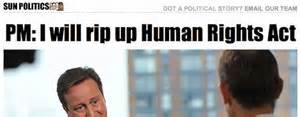
As we pointed out in our previous blog, the Conservatives, if they form an administration after the election, want to abolish the Human Rights Act #HRA.  Amnesty has launched a campaign with a link to KeeptheAct spelling out the benefits of the act for everyone in the UK.  For example:

  • An elderly couple faced separation after 65 years of marriage – until their local authority finally allowed the wife to move in into her husband’s care home to be with him.  Thanks to the HRA
  • When a woman had to flee a violent husband, social services said she’d made herself ‘intentionally homeless’, refused to house her and tried to put her children into foster care.  But she was able to keep her family together – thanks to the Human Rights Act
  • Families of British soldiers killed in Iraq were able to call the government to account for failing to protect them properly – thanks to the human rights Act
  • A woman with multiple sclerosis got her local council to increase the amount of care she receives – thanks to, well you know the story.

These are some of the day to day stories of the HRA and how it helps ordinary people in their daily lives.  But it is a story a lot of our newspapers do not tell, preferring to peddle disinformation and myths.  The act protects ordinary people and means that public bodies like the police and local authorities must respect our basic human rights. abolish hraIt does seem strange that we are celebrating 800 years since the signing of Magna Carta with politicians waxing lyrical over that document whereas its modern version is derided and is under threat, often for quite spurious reasons.  Go to KeeptheAct and add your voice.

Conservatives plan to scrap the Human Rights Act


UPDATE: 5 May  … still no sign of a draft of what the British Bill of Rights will contain.  People go to the polls in a couple of days time without knowing what is planned.  Since the election campaign has been based largely on the deficit and who is going to spend the most on the NHS, oh and being run by Scotland: what is, or is not, in the BBoR may seem trivial.  But it touches on all our rights and on our relationship with Europe so it is important. 

The #Conservative party #manifesto was published today 14 April and as promised, there is a plan to scrap the Human rights Act #HRA.  The manifesto says on p73:

We will scrap Labour’s Human Rights Act and introduce a British Bill of Rights which will restore common sense to the application of human rights in the UK.  The Bill will remain faithful to the basic principles of human rights, which we signed up to in the original European Convention on Human Rights.  It will protect basic rights, like the right to a fair trial, and the right to life, which are an essential part of a modern democratic society.  But it will reverse the mission creep that has meant human rights law being used for more and more purposes, and often with little regard for the rights of a wider society.  Among other things the Bill will stop terrorists and other serious criminals who pose a threat to our society from using spurious human rights arguments to prevent deportation.

This will have profound implications in our relations with Europe and we still do not know what the new bill will look like even after many years of discussion about the abolition of the HRA.  Incidentally, although the Act was introduced under the Labour administration, it was voted for by many Conservatives as well.

A draft of the BBoR has been a long time a coming and the latest we heard was that it was to be published before Christmas.  One assumes a draft will now appear before polling so that voters can see in more detail how it differs from the existing HRA.

The Conservatives seem to have got themselves into something of a bind with this Act.  They were happy to go along with the anti-European sentiment expressed by most of our newspapers and were obviously spooked by the Ukip surge over the last few years.  There has been a torrent of misinformation and disinformation about the workings of the HRA which, apart from the honourable exception of Dominic Grieve MP, they have made little or no attempt to counter with facts.

What got them steamed up most of all – and got our tabloids into a fearsome lather – was the case of Abu Qatada or the ‘preacher of hate’ as he was called.  Many attempts were made to deport him but the problem was not just the HRA but the fact that he might be tortured when he was returned to Jordan, or the Jordanians would convict him using evidence obtained from torturing others.  Is this an example of ‘spurious human rights arguments’?  Since, quite apart from the ECHR, we are signatories to treaties banning the use of torture, there was a problem in getting him out of the country in any event.  We might note in passing that the Jordanians had to clean up their judicial act as part of the agreement to send him back.

A puzzle though is that the other area which gets politicians steamed up is the issue of a right to life yet this is quoted as being ‘an essential part of a modern democratic society.’  Something about a cat.

The fact remains that many ordinary people are beneficiaries of the Act.  Lawyers can use it in their day to day work with individuals and their dealings with authorities of one kind or another.  Little of this gets published in the media and most are unaware of it unless by chance they know of someone who has benefited.

As far as the Strasbourg court is concerned, the UK are the ‘good guys’ since we still have a largely uncorrupted police and judiciary and people can appeal decisions in cases of injustice.  Our police operate under PACE and suspects have a right to a lawyer.  Very few of the cases which go to Strasbourg get overturned – we believe there were only eight last year.

As one of the original countries, along with France, who prepared the ECHR after the war at the behest of Winston Churchill – a Conservative – if we leave the Convention it will have significant repercussions in places like Belarus, Turkey and Russia.  Belarus is the last country in Europe with the death penalty and human rights are largely ignored.

It will be interesting to see how our local Conservative candidate John Glen reacts to this.  When he came to see the local group to discuss this topic he did agree to be more balanced in his comments which we welcomed.  This followed an article in the Salisbury Journal saying he wanted it abolished.  But now it is part of the manifesto for his party we shall have to see…

Amnesty award


It was announced in the Salisbury Journal this week that a group of students at Burgate School in Fordingbridge, Hampshire has won the Amnesty International Youth award for the ‘most committed’ category.  Every congratulations from the Salisbury Group.


New link added to the list: Globalconsilium

Security


A significant step forward was made today against the excessive and arguably illegal interception of messages by the secret services and in particular, GCHQ. The hoovering of email, Skype, Facebook and other electronic messaging services was indiscriminate and is likely to have been illegal. Assurances that this surveillance is tightly controlled have been shown to be untrue.

wire tap imageThe ruling by the Investigatory Powers Tribunal (IPT) – a secretive legal body responsible for monitoring the shadowy world of the UK secret services – said that GCHQ’s access to (and use of) private communications swept up in bulk by the National Security Agency (NSA) breached human rights laws. This is the first time in its 15-year history that the IPT has ruled against an intelligence agency. The landmark verdict proves that mass surveillance sharing on such an industrial scale was unlawful, and a violation of our rights to privacy and to free expression.

Liberty, Privacy International and Amnesty, brought the case against the agencies, following the disclosures about mass surveillance made by whistleblower Edward Snowden in 2013. Thanks to Snowden’s revelations, the world is now aware of the extraordinary scale on which US and UK security services intercept and store our digital communications, including emails, messages on social networks and internet histories.

That includes not just the UK getting hold of what the US has picked up in its ‘Upstream’ and ‘PRISM’ programmes (which can cover Google, Facebook and other US-based internet platforms), but the UK’s very own ‘full-take’ Tempora system, which scoops up every single communication that passes through the UK. It’s very possible that highly sensitive communications between activists around the world have been monitored as part of these programmes. It also seems that journalists have been monitored as well as lawyers’ communications with their clients.

The IPT’s ruling acknowledged that the sharing of these communications between the US and UK governments violated human rights law until the end of last year. But even now the UK government will not publicly accept that these mass surveillance programs even exist.

The government has been playing a cat and mouse game over surveillance – talking about ‘national security’ while trying to cover up unlawful behaviour in its use of private data.

Secret rules about secret practices

Before this case was brought, there was simply no public information whatsoever about how and when the UK thought it could handle the data which the US had obtained. We had to force them to disclose what turned out to be a puny two-paragraph public summary of those rules during the case.  Due to that disclosure, the IPT ruled in December that the sharing of surveillance date between the UK and US is now lawful because there is supposedly enough ‘signposting’ in public about what is going on ‘below the waterline’.

So, that means up until that disclosure, the spying programme broke the law – but because they revealed a few vague details of how they gather and store that information – it’s now legal for them to continue doing so.

 Amnesty International strongly disagree with this decision.

Those forced disclosures made by the government are insufficient and fall far short of making its activities lawful.  We won’t stop here – we are planning to challenge the earlier ruling at the European Court of Human Rights.  But until then, while we’re pleased to see it acknowledged the programme has been unlawful up until very recently, the ruling means that the two spy agencies will retain unrestricted access to global communications with minimal safeguards in place.

We have argued before on this site that we accept that intelligence agencies have to intercept messages in their fight against terrorists and others bent on doing us harm. This interception must be under political control and scrutiny and done on a needs must basis. We also expect the media to keep a close eye on the politicians not least because trust in them is so low.

But what seems to have happened is that scrutiny consists of chats between the Security Commission and the security agencies and that there is a failure by the parliamentary committee to ask searching questions. The press have been largely silent and ineffective. It is no surprise therefore that the general public remain unconcerned about the activities of the security services. ‘I’ve got nothing to hide’ is a popular response. People seemed relaxed to see a reduction in their privacy to secure an imaginary increase in their security. Stories are frequently told of terrorist plots being uncovered by the use of such methods.

The bizarre thing is that if one asks the question of someone ‘do you trust politicians?’ you are likely to receive a ribald answer (or a black eye). Yet we seem to.

North Korean film


#northkorea

Kim Yong-Un
Kim Yong-Un

Sony Picture’s film The Interview, which was not screened due to the alleged hacking attack by North Korea, attracted considerable publicity at the end of last year.  It represented a flagrant attempt by North Korea – if indeed they are the culprits – to silence the screening of a film about the fictional attempt to assassinate the leader of that country, Kim Jong-un.

Amnesty International has released The Other Interview which features the story of Park Ji-hyu who fled starvation in North Korea and was then trafficked into China and sold as a slave to a farmer.  She was reported to the Chinese authorities as a defector and was forcibly returned to North Korea.  She was sent to one of their hellish prison camps where she faced starvation and torture.  She eventually managed to escape.

Amnesty International’s UK Director Kate Allen said ‘Sony has every right to make a comedy about North Korea.  We should all be worried when blackmail, threats to cinemas, and the hacking of private data are being used to censor and silence.

‘In reality, many people in North Korea are subjected to an existence beyond nightmares.  The population is ruled by fear with a network of prison camps a constant spectre for those who dare step out of line.

‘Thousands of people in the camps are worked to death, starved to death [or] beaten to death.  Some are sent there just for knowing someone who has fallen out of favour.

‘Amnesty is releasing The Other Interview so that people all over the world can hear first-hand how people in North Korea are suffering appallingly at the hands of Kim Jong-un and his officials.

‘They don’t want you to see it which is precisely why you should.’

preview can be seen on YouTube.  We do not know if this film will be shown in Salisbury but we will see if we can arrange a viewing somewhere.

This is being written while the dreadful events are playing out in France following the assassination of journalists and cartoonists in the offices of Charlie Hebdo magazine in Paris.  This is another attempt – this time by violent means – to silence criticism and the particular kind of satire that this magazine goes in for.

The Salisbury group’s North Korean YouTube video clip can be see here.

Essay competition


We have re-launched the #essay competition this year and invited members of the 6th forms in the #Salisbury area to contribute.  A pdf of the full entry details is here:

Essay competition

The competition details have been sent to the following schools with around 50 copies of the entry leaflet:

Bishops Wordsworth

Burgate School

Godolphin School

South Wilts Grammar School

Sarum Academy

6th Form College

St Mary’s School, Shaftesbury.


The title of the essay is either:

   Discuss the relevance of Magna Carta today or

   Should the Human Rights Act be abolished?

Closing date is 30 November.  There are three money prizes: £60; £30 and £15.  We look forward to receiving the essays.

Blog at WordPress.com.

Up ↑