Arms sales destabilise many parts of the world


The arms trade is deadly corrupt business.  It supports conflict and human rights abusing regimes while squandering vital resources.  It does this with the full support of governments around the world.’  Campaign Against the Arms Trade [see link at the bottom of the home page]

A fuss broke out today in the UK election campaign about who said what and who did what concerning the invasion of Libya.  The argument is that by attacking Libya and not sorting out a stable regime after the fall of Gadhafi, we laid the foundations for the thousands of refugees who attempt to reach Italy from its shores.

Not for the first time in this election, the arguments seems to swirl around everything other than the real one.  We have commented before in the role arms have to play in the Middle East and elsewhere.  Figures from Janes reveal that the trade is now worth $64bn up from $54bn in 2013.  Total Global military expenditure is said to worth around $1,776bn (SIPRI).

UPDATE: May 2015.  Transparency International has produced a new anti-corruption index for defence companies.  Local companies like Chemring and QinetiQ feature in it.

Articles about the defence industry tend to discuss sales of helicopters, aircraft, ships, tanks and the like – that is big items of military hardware.  While these weapons can be deadly, in fact most people suffer from the sale of small arms.  It is guns and grenades that are the biggest killers of ordinary people.

The plain fact is that the biggest sellers of arms are 1. USA, 2. Russian Federation; 3. France; 4. UK; 5. Germany (2014).  The first four are permanent members of the UN security council.  The arms trade supplies the arms which fuels the many wars and conflicts in the Middle East and elsewhere.  When thousands are displaced from these wars and attempt to flee to somewhere where they can lead a peaceful life, we then refuse to deal with the problem.  There is a kind of disconnect between the causes of these conflicts and the inevitable results.  We get excited and argue over images of laden vessels in the Mediterranean, and we get upset when one capsizes and hundreds die, but we do not seem to get at all upset over the role of arms companies, dealers and brokers who provide the means for the conflict in the first place.

Arms trade support for a college


SCHOOL NOW CLOSED

The new South Wilts University Technical College in Salisbury is to be part-funded by arms companies and a number of people are concerned that young people will be corrupted by such firms.  The Salisbury group has campaigned in the past on the issue of arms as Salisbury is surprisingly rich in arms companies.  It is likely that because we are near to Salisbury Plain – where a number of regiments are based – and the garrison towns of Bulford and Tidworth, it is attractive to such firms to set up here.  We are also near Porton Down and to Boscombe Down.
Some years ago, we discovered that a firm based in Salisbury was supplying the Indonesians with armoured land rovers being used in the oppression of the East Timorese.  Chemring, which has a factory at a place called High Post near Salisbury, was also the subject of press interest recently for allegedly supplying CS gas to the Hong Kong police to help suppress demonstrations, and to Israel.  Chemring supplied CS gas which was used in Egypt.

So the activities of arms companies are a matter of interest to us.  It has to be said straight away that, unless you are a complete pacifist, there are aspects of the arms trade which are perfectly legitimate.  We need to defend ourselves and therefore have a need to make armaments.  We can also sell such arms to countries we trust or to whom we are allied.  The difficulty is when arms are supplied to regimes who have little interest in human rights.  This is why Amnesty among others has been promoting an arms trade treaty.  Another problem is the shadowy world of dealers and brokers who go on to supply anyone willing to pay.

Anyone interested in the arms trade, then a book to read is The Shadow World: inside the global arms trade by Andrew Feinstein (Hamish Hamilton, 2011).  This remorselessly describes the trade and the high degree of corruption involved in its activities.  The industry is over £1tn in size and money flows via tax havens and brokers around the world.

Look at almost any news broadcast and it doesn’t matter who is fighting whom, what is noticeable is that they all seem to be remarkably well armed.  The various belligerents drive around in military vehicles, and they seem to be guns and rocket launchers aplenty.  These arms don’t appear out of nowhere, they are supplied by the shadowy world of the arms dealer and are financed via various tax havens, many of which are Crown dependencies.

Feinstein expresses it well in his introduction:

In our twenty-first-century world the lethal combination of technological advances, terrorism, global crime, state sponsored violence and socio-economic inequality has raised instability and insecurity to alarming levels.  At the same time, the engine that has driven this escalation, the global arms trade, grows ever more sophisticated, complex and toxic in its effects.

It might therefore be thought essential that the world’s democratic nations should address this trade effectively and urgently.  If it must exist, then surely it should be coherently regulated, legitimately financed, effectively policed and transparent in its workings, and meet people’s need for safety and security?

Instead the trade in weapons is a parallel world of money, corruption, deceit and death.  It operates to its own rules, largely unscrutinized, bringing enormous benefits to the chosen few, and suffering and immiseration to millions.  The trade corrodes our democracies, weakens already fragile states and often undermines the very national security it porports to strengthen.  (p xxii, ibid)

Arms sales are promoted by the British government by the Defence Export Services Organisation (DESO).  There has been a lot of publicity recently as various ministers – including the Prime Minister – visiting the Gulf states to sign arms deals.  Some of these countries arrest or harass oppositions, use torture regularly, execute people in public, mistreat their women and have corrupt judicial systems.  No matter it seems, there’s trade to be had.  The Campaign Against the Arms Trade CAAT held a meeting in Salisbury recently to publicise the financing of this college by four arms firms.  The firms involved include Chemring, QinetiQ, Esterline and Dstl.  Serco is also involved which has a dubious record.

Some of the questions to ask of this college are: will their young people be free to discuss the activities of this trade?  If it transpires that munitions supplied by one of these firms are used to suppress demonstrations or are used to kill unarmed people for example, will students be free to debate this?  Will the effects and practices of the arms trade be a topic of discussion in Citizenship activities?  Interesting questions …  CAAT allege that the firms will use the college as a means to promote their image.  It will be interesting to see how this UTC deals with the ethical and moral issues of the arms trade and adopts an appropriately impartial position when and if allegations of wrongdoing emerge.

The college is part of the Baker Dearing Educational Trust and none of its trustees has any local links.

Article in Salisbury JournalCAAT item discussing the college is here.

UPDATE

The College has now closed (2019)

CAAT Newsletter item (p6)

#stoptorture Bahrain


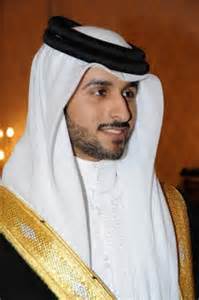
stop_tortureAn interesting decision was made by the courts this week that Prince Nassser bin Hammed Al-Khalifa (pictured) is liable for prosecution for his alleged role in the torture of FF a torture survivor from the kingdom.  Up to now the prince has claimed immunity.  The case is important because several of the gulf states regularly use torture yet prosecutions never happen because of claimed immunity.

This is an embarrassment to the UK government as it has welcomed members of the ruling family toprince nasser bin hasam Downing St and is keen to promote greater ties with the kingdom.  Indeed the New Statesman remarked that ‘the more desperate the situation in Bahrain becomes, the closer Britain ties itself to the ruling family.’

Behind it all is an arms deal of £1bn for the sale of Tornado jets.

The full story is on the Center for Constitutional and Human Rights (sic)

Gaza


The world has been horrified by the films, reports and photographs coming out of #Gaza since the latest violence started.  Amnesty teams – along with other organisations – have been in Gaza to assess the damage and have found evidence of war crimes by both sides in the conflict.  There have been serious violations by both parties but since the Israel Defence Force is the best equipped army and air force in the region by far, the damage and destruction has been predominantly on the Palestinian side.

Hamas continues to fire rockets into Israel but with the protection of Iron Dome, few have resulted in casualties.  The casualties on the Palestinian side have now passed 2000 (12 August, Sky News) with 67 Israeli deaths.  Many of the Palestinian casualties are women and children, killed in strikes on schools, mosques and hospitals.

Israel is able to carry on its attacks secure in the knowledge that it has, and continues to have, the support of the United States.  Indeed, the USA has continued to supply weapons to replace those lost in the latest fighting.  The United Kingdom supplied £6.3m in weapons to Israel last year.

It seems clear to most outside observers that whatever the provocation Israel has suffered, the scale of destruction in Gaza has been disproportionate.  This latest incursion follows hard on operation Cast Lead which also wrought terrible destruction in the territory.

Nor is the suffering imposed limited to the fighting but comes on top of the relentless expansion of settlements and the blockade of Gaza which has now lasted over seven years.  Gaza is in effect a prison surrounded by a stifling regime of checkpoints, barriers and walls.  They are not allowed to catch fish in the sea.  Inhabitants also have to endure power and water cuts for no apparent reason.

Protest in the south of France

Is there any hope in all this?  Surprisingly, there may be.  It will not come from the ceasefires and feeble political statements wishing peace while at the same time continuing to sell arms.  The key difference this time is that Israel is losing the propaganda war.  Such is the volume of evidence emerging from Gaza, the harrowing footage of injured children and pictures of the scale of destruction, that people around the world have been moved to protest (see picture).

British Ministers are forbidden to use the word ‘disproportionate’ in their various statements.  But the public can see that it is.  Nick Clegg described the attacks on schools as ‘outrageous’.  Israel is desperate to avoid its actions going to the International Criminal Court and will no doubt succeed with US help in so doing.

With Cast Lead, the Israelis were able to keep journalists out of Gaza so that very little was seen on our TV screens.  This time, with a range of devices, images are coming through loud and clear.  This is another example of the public seeing things for what they are and politicians being behind the curve.  Support for Israel is still strong in the United States certainly among Senators and Congressmen, but younger people are not so supportive.  This is likely to be the key difference this time.

Visit the South Region site of Amnesty

Amnesty International comments on Gaza

Stop arming Israel

Blog at WordPress.com.

Up ↑