Death penalty report


December 2024

We are pleased to attach our latest death penalty report covering the period mid November to mid December 2024 with thanks to group member Lesley for the work in compiling this. As ever we must note that China is believed to execute more of its citizens than the rest of the world combined but the details are a state secret. This month saw the toppling of the Assad regime in Syria. People were able to gain access to the prisons where thousands were tortured and executed.

Recent posts:

We are now on Bluesky and Mastodon

North Korea


North Korea admits to using the death penalty

November 2024

North Korea is back in the news recently having sent thousands of troops to aid the Russians in their invasion of Ukraine. They are also supplying munitions in return for, it is thought, technological help from Russia. They are also engaged in using the death penalty and we are reproducing a post from Amnesty on this.

North Korea has admitted carrying out public executions in a rare admission about its treatment of prisoners, ironically made during an effort to defend and justify its human rights record. Rights organisations have long accused Pyongyang of shooting dead convicts in public, and defectors from the isolated country have given gruesome accounts of North Korean executioners tormenting condemned prisoners, burning and mutilating them after death and forcing others to look at their corpses.

On one occasion, an estimated crowd of 25,000 in the northern city of Hyesan was forced to watch as nine people were executed by firing squad for having slaughtered government-owned cattle and distributing the meat to businesses.
“I kept thinking of the horrific scene of yesterday’s shooting, so I couldn’t sleep all night and trembled with fear,” one resident said.

North Korea defended its controversial law dictating harsh penalties for consuming foreign media on Thursday, while admitting that it carries out public executions and imprisons perpetrators of “anti-state” crimes. The DPRK government made the rare acknowledgement during the U.N.’s Universal Periodic Review (UPR) of the country in Geneva, which examines the human rights record of member states every four to five years.

At a session on 14 November, a North Korea official offered striking admissions of human rights abuses in the country, even as he sought to justify them under state policies.
On the death penalty, Park said the DPRK executes individuals “who committed extremely serious crimes,” including publicly. 

Until now, North Korea has denied staging public executions and has sought to promote the idea that there is a legal framework with safeguards for treatment of prisoners.

Public executions are considered to be a way to keep the population in line. According to witness testimonies from the DPRK, public executions for watching or distributing South Korean films and drug smuggling have increased in recent years, as well sentences for “crimes against the regime”.

Public executions of young North Koreans are on the rise, Seoul says, as Pyongyang seeks to stamp out South Korea’s cultural influence. One North Korean defector to the South recounted witnessing the public execution of a 22-year-old in South Hwanghae province in 2022. The young man’s crimes were listening to 70 South Korean songs and watching and sharing three South Korean films.

The death penalty has always been available in North Korea’s legal system but a commentary on the North Korean Criminal Law 3, published by the North Korean authorities in 1957, suggests that the death penalty will eventually be abolished in North Korea and is presently utilised as a last resort.

The revised Criminal Code of 1987 mentions the death penalty as one of two kinds of “basic penalties” to be imposed on criminal offenders. The minimum age for imposition was lowered from 18 to 17 and the prohibition against the lowering of human dignity was scrapped. Under the 1987 Criminal Code, the death penalty is mandatory for activities “in collusion with imperialists” aimed at “suppressing the national-liberation struggle” and the revolutionary struggle for reunification and independence” or for “acts of betraying the Nation to imperialists”

Urgent action: Oklahoma


We attach an urgent action concerning the death penalty in Oklahoma

November 2024

DEATH PENALTY ACTION FOR NOVEMBER, 2024

This  action is part of our continuing campaign calling on the Governor of Oklahoma to issue a moratorium on all executions, and ultimately to move towards the permanent abolition of the death penalty in the state.  Letters (preferably) or emails should be sent to Governor Stitt, focusing in particular on the history of racial discrimination within the State and how this has impacted on Oklahoma’s application of the death penalty.

Contact details:

The Honorable J Kevin Stitt

Governor of the State of Oklahoma

Oklahoma State Capitol

2300 N. Lincoln Blvd; Suite212

Oklahoma City

OK 73105

USA.

Emails can be tried at:   https://oklahoma.gov/governor/contact/general-information/contact-the-governor.html which gives access to a form.

Please take this action before the end of November.

Racial Discrimination/Bias in the Application of the Death Penalty in the State of Oklahoma

In 2017 the Death Penalty Review Commission concluded the system in Oklahoma was ‘broken’ and unanimously recommended a moratorium on executions ‘until significant reforms were accomplished’.  They also questioned ‘whether the death penalty could be administered in a way that ensured no innocent person was put to death.  They made 47 recommendations but it is understood – over 6 years later – none have been implemented.

In 2022 the report Deeply Rooted: How Racial History informs Oklahoma’s Death Penalty’ by Dr Crutcher, Founder and Executive Director of the Terence Crutcher Foundation, was issued – and updated in  September 2024.

The report places Oklahoma’s death penalty in its historical context of lynchings and mass violence against Black Oklahomans and the forced migration of Native Americans. It documents the historical role that race has played in the State’s death penalty and details the pervasive impact that racial discrimination continues to have in the administration of capital punishment.

The report ties Oklahoma’s use of the death penalty to its troubled history of racial violence and segregation. It observed that Oklahoma was at an inflection point in its administration of the death penalty and argued that, if the State was to establish a fair and humane system of justice, it was crucial to acknowledge and redress the effects of the Jim Crow laws and racial violence that persist into the present day.

Racial discrimination, especially the race of the victim, continues to infect all aspects of the death penalty in Oklahoma.  A study of homicides in the state between 1990 and 2012 found that the odds a person charged with killing a white female victim would be sentenced to death were 10 times greater than if the victim was a minority male. Of the 25 executions scheduled between August 2022 and December 2024, 68% involve white victims. Data throughout the report suggest that valuing white victims more than others has resulted in disproportionate punishment for Black defendants who murder white people.

An examination of the age and race of the men scheduled for execution reflects the bias that Black youth are perceived as older and less innocent than white youth. Seven of the 10 Black men set for execution were 25 years old or younger at the time of the crime. By contrast, only one of the 13 white men set for execution was 25 or younger at the time of his crime. Three of the Black men were 20 or younger and one of them, Alfred Mitchell, was only two weeks past his 18th birthday.

Of the 142 people in the U.S. who have been removed from death row because of intellectual disability (following the U.S. Supreme Court’s ruling that their executions are barred), the majority (83%) have been people of colour. This suggests that people of colour, especially Black people, with intellectual disability are at a greater risk of being subjected to capital punishment. Oklahoma has limited the ability for people on death row to seek relief based on intellectual disability. As the report notes, Michael Smith, a Black man, had a documented, lifelong intellectual disability[i]. Despite his medical diagnosis, Oklahoma denied Mr. Smith a hearing on his intellectual disability.

At least five cases of those scheduled for execution in Oklahoma may have involved official misconduct, including Clarence Goode, a Black and Muscogee man set to be executed on August 8, 2024, (but see below) who was convicted after the testimony of a detective who later served time in federal prison for misconduct in other cases. Nationwide, nearly 80% of wrongful capital convictions of Black people involve official misconduct by police, prosecutors, or other government officials.

Native American Sovereignty

The report states that Oklahoma has a history of defying U.S. Supreme Court decisions that would provide some measure of racial justice. For example, the Oklahoma Court of Criminal Appeals refused to apply McGirt v. Oklahoma (holding that the State lacked jurisdiction to prosecute crimes committed by or against Native American people on tribal lands)

In 2020 the US Supreme Court recognised that Oklahoma has continually prosecuted criminal cases in violation of long-standing treaties with Native American tribes.  At least 3 Native Americans have been executed in violation of tribal sovereignty, and at least 4 people remain on death row despite these violations.

Thirty-seven Native American men and women have been sentenced to death in Oklahoma, more than in any other state. Two people currently scheduled for execution –  Clarence Goode, Jr[ii]  and Alfred Mitchell[iii] are Native American.

Sources:  Death Penalty Information Centre


[i] my update: executed on 4th April 2024 – despite a 4 to 1 recommendation for clemency from the Pardon and Parole Board

[ii] my update: execution stayed 8th August 2024 pending new date

[iii] my Update: execution stayed 3rd October 2024 pending new date

Death penalty report – November


November 2024

We are pleased to attach the bi-monthly report on the death penalty around the world prepared by group member Lesley. A lot on the US this month as there is a lot of activity, certainly in the southern states, at present. In view of the recent presidential election, it is worth noting that although there is a lot of ‘noise’ about President elect Donald Trump’s desire to ramp up the use of the penalty, what frequently matters is what happens at state level. Who the governor is and his or her attitude to executions matters more than federal attitudes.

Note as ever that China does not feature although it is the world’s biggest executioner, details and statistics are a state secret.

The Controversy of Executions in Oklahoma


Oklahoma executes more of its citizens per capita than any other state in the US.

October 2024

The State of Oklahoma has executed the second largest number of prisoners in the US (after Texas) since the re-legalisation of the death penalty in 1976. It has carried out the highest number of executions per capita in the country.  It was the first jurisdiction in the world to adopt lethal injection as a method of execution.

The Salisbury group has decided to focus on the state and is writing to Governor Stitt in an effort to persuade him to stop this practice in his state.

There is a wide number of offences which can lead to a sentence of death in the state. First-degree murder is punishable by death in the following circumstances:

  1. The defendant was previously convicted of a felony involving the use or threat of violence to the person;
  2. The defendant knowingly created a great risk of death to more than one person;
  3. The person committed the murder for remuneration or the promise of remuneration or employed another to commit the murder for remuneration or the promise of remuneration;
  4. The murder was especially heinous, atrocious, or cruel;
  5. The murder was committed for the purpose of avoiding or preventing a lawful arrest or prosecution;
  6. The murder was committed by a person while serving a sentence of imprisonment on conviction of a felony;
  7. The existence of a probability that the defendant would commit criminal acts of violence that would constitute a continuing threat to society; or
  8. The victim of the murder was a peace (police?) officer, or correctional employee of an institution under the control of the Department of Corrections, and such person was killed while in performance of official duty.

In addition, the statute books carry the death penalty for first degree rape, extortionate kidnapping and rape or forcible sodomy of a victim under 14 where the defendant has a prior conviction of a person under 14, although since 2008 capital punishment is no longer constitutional for these crimes.

As of 27th September 2024 there are 33 prisoners on death row in Oklahoma, only one of whom (Brenda Andrew) is female.

Background facts

Oklahoma is one of two States allowing more than three methods of execution – lethal injection (the primary method), nitrogen hypoxia, electrocution and a firing squad.  They are to be applied in that order if earlier methods are unavailable or found to be unconstitutional.  Nitrogen hypoxia became available as an option in 2015 but to date has never been used in the State.  When the prosecution seeks the death penalty, the sentence is decided by the jury and must be unanimous.  In the case of a hung jury during the penalty phase of the trial, a life sentence is imposed, even if a single juror opposed the death penalty, and there is no re-trial.

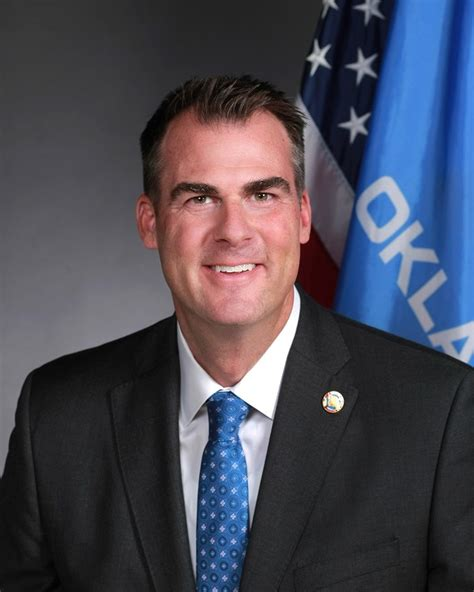
Under the constitution of the State, the Governor of Oklahoma may commute a death sentence, but only following the advice and consent of the five-member Pardon and Parole Board. During Governor Lee Cruce’s administration (1911-1915), he commuted every death sentence. Governor Kevin Stitt (pictured) has granted clemency only once (to Julius Jones) during his tenure (2019 – present). This occurred despite 5 (possibly 6) recommendations from the Board. These have included the very recent case of Emmanuel Littlejohn, executed on 26th September 2024.

From 1915 to March 2024, 156 executions took place, three of them of women.  Executions were halted for six years. This followed the botched execution in 2014 of Clayton Lockett. There was also a drug mix-up that led to the ‘incorrect’ lethal injection of Charles Warner in 2015.

14 executions have been carried out under the governorship of Kevin Stitt.   In the most recent case – that of Emmanuel Littlejohn – there has been a great deal of controversy.  The execution took place

despite conflicting evidence regarding his guilt, mitigating evidence regarding his troubled childhood and undeveloped brain at the time of the crime, the admission of some jurors of misunderstanding the implications of a life without parole sentence, and the fact that the Parole Board had voted 3-2 to spare his life.  He had always maintained his innocence of the actual killing.

In 2022 a series of 25 executions were scheduled over a 2-year period, with one execution set for nearly every month through 2024.  A report was issued by the Death Penalty Information Center tying the State’s use of the death penalty to its troubled history of racial violence and segregation. 

The Death Penalty Information Center advises that current research shows that for every 8.2 prisoners on death row in the US in the modern era of the death penalty, one person has been exonerated.

The Reason Foundation Criminal Justice Policy Explainer – Abolishing the Death Penalty gives the following information:

  • Since 1981 ten people in Oklahoma have been exonerated while on death row
  • 6 cases involved perjury or false executions
  • 7 cases involved official misconduct
  • Oklahoma County, Oklahoma, has had the 4th highest no of death row exonerations among all counties in the US.  4 of the 5 death row exonerations in Oklahoma County involved misconduct by officials.
  • The longest sentence served by a death row exoneree was 21 years.

The Foundation also provides evidence of the high costs in the State of the death penalty as opposed to life imprisonment:

  • A study prepared for the Oklahoma Death Penalty Review Commission found that Oklahoma spends $110,000 more on capital cases than on comparable non-capital cases.  The study authors noted that this is a very conservative estimate because many prosecution and court costs were excluded.
  • Even at that conservative rate, with 42 (Note: figure differs from the 33 quoted earlier) individuals currently on death row, Oklahoma could have saved $4.64 million by trying the cases as life without parole rather than seeking the death penalty.
  • Using estimates from other studies suggests Oklahoma could have saved between $33.6 million and $42 million by pursuing life without the possibility of parole rather than the death penalty.
  • Moreover, the 117 (?) executions conducted in Oklahoma since 1990 are estimated to have cost the state between $12.9 million and $117 million.

Letters may be sent to:       

Honorable J Kevin Stitt

Governor of the State of Oklahoma

Oklahoma State Capitol

2300 N. Lincoln Blvd, Suite 212

OKLAHOMA CITY

OK 73105

Emails can be tried at:   https://oklahoma.gov/governor/contact/general-information/contact-the-governor.html which gives access to a form.

Sources: Wikipedia; Death Penalty Information Center; Amnesty International; World Coalition Against the Death Penalty; The Reason Foundation – Criminal Justice Policy 

Bi-Monthly Death Penalty Report – October 2024


October 2024

We are pleased to attach the latest bi-monthly report on the death penalty thanks to group member Lesley for the work in preparing this. It is worth remembering that the 10 October was the World Day Against the Death Penalty. As usual we note that China is believed to execute more of its citizens than the rest of the world combined but details are a state secret.

The Death Penalty Debate: Kamala Harris and Executions


Five executed in one week. Kamala Harris silent

September 2024

After spending one and a half hours unsuccessfully trying to find a vein, sticking the needle into various parts of his body including arms, neck and feet, they suspended the prisoner upside down for 20 minutes in the hope of finding one but failed to execute him and returned him to his cell. Two years later they used nitrogen hypoxia after which he shook for 2 minutes and after six minutes of gulping, he died. Thus ended the life of Allan Eugene Miller on Thursday last week (26th September).

This is not a description of an execution from some barely civilised country but in USA in the state of Alabama. It was one of 5 executions last week the others being Emmanuel Littlejohn; Travis Mullis; Marcel Williams and Freddie Owens.

The case of Marcel Williams, 55, is particularly troubling since he was almost certainly innocent. Despite copious blood at the scene, none matched his DNA. Key evidence was either lost or destroyed. Witnesses had an incentive to give false evidence to receive a $10,000 reward.

Republican prosecutors seemed to have become more aggressive in pushing for the ultimate penalty. This may be linked to current politics and ‘Make America Great Again‘ rhetoric from Donald Trump. During his time as president, he altered the composition of the Supreme Court which now has an ultra-right super-majority.

Anyone who has followed Clive Stafford-Smith or read his books will know the process is far from perfect in many states in the Union. Poor trial procedures, withheld evidence, packed juries and defendants represented by inexperienced lawyers are not at all unusual. Many states have abandoned the death penalty but a number still keep it of which Alabama is one. It is no accident that despite only representing 13% of the population, 34% of black people are on death row.

There are many who believe the penalty is a deterrent. The problem of course is that mistakes cannot be put right. As the Death Penalty Information Center points out, since 1973, 200 former death row prisoners have been found innocent of all charges.

The issue has become a political one. It has been noted that Kamala Harris, the deputy president standing for election to become the president this November, makes no mention of abolition in her speeches or literature. She opposed the penalty in 2019. However, the promise to do so has not survived. This shift partly results from a change of mood following some high profile police murders. Trump is solidly in favour as part of his ‘tough on crime’ policy. There is a lot of discussion in the American press and there are suggestions that such a principled stand was not popular even with fellow Democrats.

Sources: Death Penalty Information Center; Washington Post; The Guardian; NBC; Amnesty International; Mother Jones.

Celebration – of sorts


Hakamada Iwao acquitted after 56 years in prison

September 2024

We tend to think of Japan as a modern democracy and a sophisticated society having cast off the problems of its warlike past. It is a G7 nation and enjoyed a post war boom leading to considerable commercial success. But there are elements of the society which have not changed one of which is the legal system.

Japan still has the death penalty a particular cruel feature of which is that prisoners do not know of their execution until a few hours before it takes place.

The news that the Appeal court in Japan has declared Hakamada Iwao as innocent has been a long time in coming – 56 years in fact. Hakamada was convicted of murdering his boss in 1966. He spent a staggering 46 years on death row. Much of it was in solitary. The only problem was that he is almost certainly innocent. Key evidence was fabricated. He was forced to sign a confession after 20 days of intense interrogation and beatings by the police. He was not allowed a lawyer.

Bloodstained clothing – a key element in the prosecution’s case – turned out not to be Hakamada’s blood. It may have been planted. There are many things wrong with the whole process and further details can be found on the background provided by Amnesty. The role of the police was a key part of the miscarriage of justice. This led to probably the longest death sentence ever. Historically, this was a familiar story in the UK with forced confessions after long hours of interrogation. It led to the introduction of PACE which has led to improvements in police practice here.

One of the problems is the attitude of the Japanese public. It is reported that 80% of the Japanese are in support of the penalty. It is unlikely therefore that change will happen quickly.

Although it is encouraging to see Hakamada exonerated from this crime, the case raises several concerns. The use of the death penalty which, had he been executed, would have resulted in the state killing an innocent man. As in all these cases of police coercion, the real killer(s) have never been found or prosecuted. It also reveals a legal system which seems amazingly slow both to act and ultimately acquit. It also seems reluctant to admit mistakes. Finally, his treatment in prison with years spent in solitary confinement are unreasonably cruel. Altogether, this does not reflect well on the Japanese state.

The local group has campaigned for many years and it is gratifying to see some kind of justice at last for this man.

Sources: Amnesty, Guardian, BBC

Group minutes: September


September 2024

We are pleased to attach the minutes of our group meeting in September 2024 – thanks to group member Lesley for preparing them. The minutes contain a lot of interest including future group actions (see the last page). We are celebrating our formation 50 years ago and we shall be holding a brief photo op in Salisbury market square on 3 October near the Guildhall. All supporters and those with an interest in human rights are welcome to come.

We are 50 this year!

Note that we are no longer on X due to its recent history but we do have a presence on Mastodon with the handle @SalisburyAmnesty

Death penalty report


September 2024

We are pleased to attach the latest death penalty report covering the period mid-August to mid-September thanks to group member Lesley for the work in preparing it. Note as ever that China does not appear in the report despite being the world’s largest executioner as details of executions are a state secret.

Blog at WordPress.com.

Up ↑