Minutes and Newsletter, December


Minutes of our December meeting

December 2025

We are pleased to attach our minutes and newsletter for the December group meeting thanks to group member Lesley for compiling them. They include several reports some of which appear elsewhere on this site with links to other sites of interest.

Item 12 refers to upcoming events which if you are interested in joining us are a good opportunity to make contact.

Previous posts:

UK Human Rights Report: Current Threats and Government Actions


Monthly report on human rights in the UK

December 2025

Amnesty has for many years, focused its efforts on human rights issues overseas. Recent actions by governments of both persuasions have meant a greater focus on the threats to rights here in the UK. Only this very week, the prime minister and other ministers are in Europe trying to seek agreement to a ‘modernisation’ of the ECHR arguing it is necessary to tackle the immigration ‘crisis’. In this post, we review aspects of our rights which are current or under threat.

Freedom of Expression

The outcome of November’s High Court hearing of the legal challenge mounted by Liberty and Amnesty to the ban on Palestine Action is still pending.  Amnesty’s Director of Communications claims that ‘the Government’s ban is a disproportionate misuse of the UK’s terrorism powers and breaches articles 10 and 11 of the European Convention on Human Rights – which protect freedom of expression and freedom of assembly and association.

We have seen the chilling consequences of this decision across the country – with thousands of arrests in recent months.  These mass arrests, and the silencing that organisations and individuals have felt, is a clear and frightening example of how the UK is misusing overly-broad terrorism laws to suppress free speech. Terrorism powers have never been used against what was previously direct-action protest and if this precedent is allowed to stand, it opens up a bleak future for protest rights in the UK.” 

Amnesty is seriously concerned at reports of the worsening condition of members of the Filton 24 who are on hunger strike after the damage to two aircraft at Brize Norton last year as protest against the Israeli Elbit Systems’ involvement in Gaza. None of the prisoners have been charged under the Terrorism Act but prosecutors have said both offences had a “terrorism connection”.  Amnesty has consistently opposed the use of anti-terrorism powers in these cases claiming they have been used to justify excessively lengthy pre-trial detention and draconian prison conditions.   

Arrest of Britons overseas

Amnesty International is urging the UK Government to develop a clear and consistent approach to the unjust imprisonment of British people overseas, including a new strategy that should include as a minimum:

  • the Government calling for an arbitrarily-detained person’s immediate release (including publicity where requested by the family)
  • pressing for access to a lawyer, a fair trial and medical care where relevant
  • demanding consular access insisting that UK officials be able to attend trials
  • regularly meeting with family members to outline the Government’s overall approach in the case.

The UK Government’s failures on this issue, highlighted in a recent BBC drama and documentary on the case of Nazanin Zaghari Ratcliffe, continue today.  British nationals, including Ahmed al-Doush, are not receiving the level of diplomatic support required to secure their release.  Ahmed was arrested while on a family holiday in Saudi Arabia in 2024 for social media posts.  The Manchester-based father of four was convicted under terrorism legislation and sentenced to 10 years in prison, later reduced to eight.

The UK Government has failed to advocate for Ahmed, not taking a position on his case, despite being provided by information indicating that his detention is a freedom of expression case.  Amnesty International continue to campaign so that Ahmed can be reunited with his family and urges the UK Government to advocate for his release if he is being held solely for exercising his right to freedom of expression.

Use of Facial Recognition by police

A Government consultation into police use of facial recognition is set to launch imminently.

Liberty has been calling on the Government to follow the example of other countries which have introduced laws around police use of facial recognition technology – and has urged Ministers and police forces to stop expanding its use until those laws are in place.  Alarm has been raised at the finding that faces of children are included on the records of some police forces.

Liberty wants the inclusion of the following safeguards:

  • The independent sign off before facial recognition is used
  • Police to only use facial recognition technology to search for missing persons or victims of abduction, human trafficking and sexual exploitation; to prevent an imminent threat to life or people’s safety; to search for people suspected of committing a serious criminal offence;
  • Watchlists to contain only images strictly relevant to the purposes above;
  • However, Amnesty International wants a global ban on this technology on the grounds that it violates the human right to privacy, it inaccurately targets minorities, especially people of colour and women; it intimidates people from free expression of views;
  • It cites racist bias in examples of the use of mass surveillance technology by US policing of black communities, and also Israeli policing of Palestinians.

Change declared to European Convention on Human Rights

After the UK recently joined Denmark and Italy in pressing for a rethink of aspects of the European Convention on Human Rights (ECHR), especially in relation to migration law, the Council have now taken the first steps to reshape how European courts interpret human rights.  Amid fierce debate over the balance between ECHR and national migration controls, ministers made a joint declaration which will now task 46 foreign ministers with drafting a political declaration to be adopted at the next meeting in May 2026.

The Council oversees the ECHR while its court enforces those rights across 46 member states including all 27 EC countries.  Greater national flexibility is demanded in response to human smuggling, border security and the expulsion of offenders.

Sir Keir Starmer and other heads of state have restated that, while wishing to see some ‘modernisation’ of the Convention, there is no intention of abolishing it.  The move is seen as a response to protest from far-right groups across Europe and ‘uncontrolled’ immigration and the perception that the right to family life inhibits states from deporting convicted foreign criminals.

Human rights groups are raising concerns at the dilution of the original Declaration of Human Rights as non-negotiable, universal and inclusive of all minorities. 

Importance of Human Rights: UK Support for the ECHR


November 2025

Nigel Farage’s proposal for the UK to leave the European Convention on Human Rights was defeated on 29 October by 154 votes to 96, a majority of 58. The vote was largely symbolic: a ten-minute bill without government backing is often used simply to air an issue. The Liberal Democrats led the opposition to the bill, a number of Conservatives joined Reform UK in supporting it and many Labour backbenchers chose not to abstain but voted against it, fearing that were it to pass even symbolically, it would send a negative message to European allies.

The position of the Government remains that while it may pursue some changes to the interpretation of the Convention it would under no circumstances seek to abolish it.

75th  Anniversary 

A statement of support for the ECHR was signed by almost 300 organisations to mark the 75th anniversary of the Convention. Organised by Liberty, the statement highlighted the many ways the Convention has helped ordinary people from victims of sexual violence to LGBT+ service personnel, public interest journalists to mental health patients and victims of grave miscarriages of justice, as with the Hillsborough and Windrush cases.

It calls on the government to make the positive case for the UK’s human rights protections and claims that the way the Convention has been scapegoated in recent years has had devastating real world consequences. 

Meanwhile a survey for Amnesty by the widely respected agency Savanta concluded that more than 8 in 10 UK adults say that human rights protections are as important – or more important – today than when the ECHR was created after the Second World War. When asked which rights matter most to them, UK adults chose: the right to a fair trial (42%); the right to life (41%); the right to privacy, family life and respect for your home (40%).   

Support for staying in the ECHR is almost twice as high as support for leaving.  48% want the UK to remain part of the ECHR.  Only 26% want to leave.  

People believe rights should be universal, permanent, and protected from political interference:   87% agree that rights and laws must apply equally to everyone, 85% agree we need a legal safety net to hold the Government accountable in cases like the infected blood scandal and Grenfell and 78% agree rights should be permanent, not something the Government of the day can reduce. 

Respondents were shown a list of major UK scandals or institutional failings and asked which made them feel the importance of strong legal protections and accountability. The top five were: 

Grenfell Tower – 46%; Hillsborough disaster and cover up – 42%;   Infected blood scandal & the COVID inquiry – 37%; The murder of Sarah Everard – 36%;   Windrush scandal – 29%.   

ECHR and Immigration

In response to critics attributing the real problems of the UK’s immigration system to the ECHR, the Good Law Project set out some basic facts about the Convention, namely that it does not provide a right for people to enter or remain in a country of which they are not a national; that the Court rarely rules against the UK on immigration issues at all  – since 1980 only on 13 of the 29 cases concerning either deportation or extradition. And while the Human Rights Act of 1998 incorporating ECHR rights into UK law makes it unnecessary to go to Strasbourg, successful claims to stay in the UK are rare. Last year out of a total inward immigration of 948,000 only 3,790 cases related to the Human Rights Act were won at immigration tribunals.

Protect the Protest: Palestine Action and Judicial Review

Amnesty and Liberty will be making the case to lift the ban on the proscribed activist group Palestine Action in the Judicial Review scheduled for 25 – 27 November.

Defend Our Juries are urging the police not to bow to pressure from the Government but to allow the

peaceful protests organised throughout November at the continuing crisis in Gaza, the West Bank and Israel. They say that police are struggling to enforce the law in the face of peaceful protesters, many of them elderly. Some police forces are refusing outright to make arrests. International and national human rights groups, politicians and United Nations representatives have condemned both the ban and the subsequent attacks on civil liberties. Unions are declaring that they will not recognise the ban, with over 2,100 now arrested under ‘terror charges’ related to this peaceful sign-holding campaign.

Sacha Deshmukh, Amnesty’s Director, criticised the Home Secretary for statements “that create a chilling effect by dissuading people from exercising their fundamental right to peaceful protest. At any time, any interference with freedom of expression must be strictly necessary, proportionate and in full accordance with the law.” 

In a further incident of Transnational repression Sheffield Hallam University terminated a staff member’s project about Uyghur forced labour after Chinese security officers interrogated a staff member in Beijing and a Chinese company named in the report filed a defamation lawsuit in the UK. The university retracted the ban but only after  Professor Laura Murphy, specialising in human rights and modern slavery, began legal action against it for violating her academic freedom.

Latest posts:

All our posts are free to use by other Amnesty or human rights sites.

Farage loses vote to leave the ECHR


Reform leader loses Commons vote

November 2025

Edited, 5 November

Last week, Nigel Farage, the leader of the Reform party, lost his Commons vote to leave the ECHR. Reform, along with many Conservatives, are pushing the idea of leaving the European Convention as means to solve the immigration crisis and in particular the Channel crossings. In a vote, 154 were against and 96 for leaving.

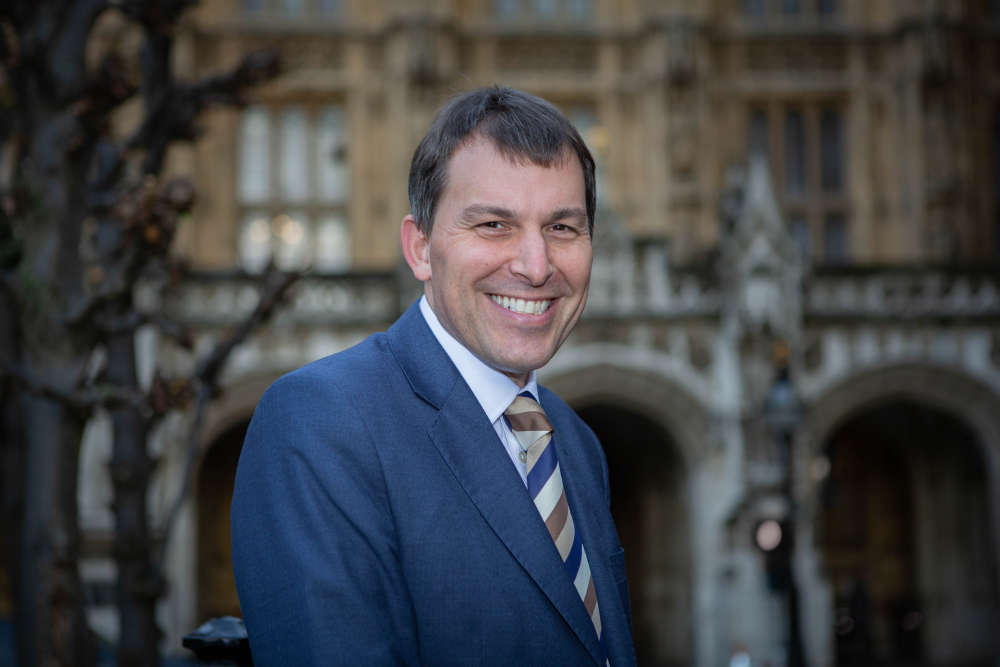
Farage is not alone and in the Guardian link to this story, local readers will see the East Wiltshire MP Danny Kruger sat beside him. The Salisbury MP Mr John Glen (pictured) has also joined the chorus, no doubt following his leader Kemi Badenoch, who made an abrupt U-turn on the subject at their conference in September. It appeared in the ‘View from the Commons‘ piece in the Salisbury Journal (16 October). Entitled ‘Exiting ECHR not about watering down our rights‘ it seeks to justify the U-turn by Kemi Badencoch.

‘We do not need it’ ‘Mr Glen told us claiming that Common Law is all you need because ‘we are perfectly capable of upholding our rights and freedoms‘. Why then did scores of people have to go to Strasbourg to get justice? Why did the Hillsborough families have to wait years to get their justice? And the Birmingham Six were finally exonerated when judge after judge failed in their duty? And all those who spent years in prison for crimes they didn’t commit. A list of other cases where people sought justice from Strasbourg can be found here. The Post Office scandal?

The Conservatives have hated the Human Rights Act and it’s noteworthy that both Glen and Kruger ‘generally vote against laws to protect equality and human rights’ according to They Work for You. They are happy with a legal system that largely protects the rights of the powerful and the property owners but are somewhat less concerned with the rights of the powerless even assuming they could contemplate using the law at all.

Mr Farage argues that we will not have true sovereignty until we leave the Convention, a similar argument to that put forward at the time of Brexit. The threat to our sovereignty is more likely to come from the Trump administration in the US. Trade sanctions and threats to NATO are much more serious than anything coming from Europe.

The Guardian piece above was written by Daniel Trilling who came to Salisbury to speak on immigration matters.

Image: Salisbury Radio noting that Mr Glen voted to leave the ECHR.

Impact of ECHR on Asylum Seekers in 2025


Immigration and asylum seekers still making waves in UK.

October 2025

This month has been dominated by arguments around the European Convention on Human Rights and the rights of protesters to express their views. Neither of these are directly about refugees, but do have a bearing on the treatment of asylum seekers and dealing with the effects of conflicts. Boat crossings and asylum seekers do feature in the desire to leave the ECHR however.

The government has taken two more actions affecting migrants: making the “leave to remain” decision more difficult by extending the time taken to achieve it, adding more requirements, and blocking family reunions which would previously have been regarded as acceptable. Nando Sigona commented that this “allows policymakers to set shifting and arbitrary standards of belonging.”

One of the areas of complaint by the government has been the “last-minute” stay on deportation of unsuccessful claimants. It has now become clear that this is not gaming the system but the result of the short time available for appeals to be made against the Home Office’s “notice of intent” and the lack of emergency legal aid.

Still in the UK, the “one in, one out” agreement with France has started, but obviously the numbers involved are pretty small. Nevertheless, some commentators, such as Sunder Katwala of British Future take a positive view. At present, the scheme aims to return about 50 people a week; were it to be expanded tenfold, it would make returns “more likely than not”, and at 20 times, “it could operationalise a returns guarantee”. This would effectively destroy the business model of small-boats traffickers, says Katwala. “If you got to the point where there was a guarantee that the irregular route, where you paid a trafficker, wasn’t going to work, and there was a legal scheme to apply to as well, then you would see a three-quarters drop [in numbers arriving by boat].” Eventually, “you could actually eliminate it entirely”. British Future’s polling suggests an intake of 50,000 refugees a year would be supported by 48% of Britons, and opposed by just 18%.

Katwala notes that the US did actually get on top of immigration at the Mexican border in the final year of Joe Biden’s presidency, with a similar “routes and returns” approach by closing off illegal routes to immigration and creating legal ones. The numbers crossing the US border were far greater than those crossing the Channel – 2 million a year – and Biden’s approach reduced them by 77% between December 2023 and August 2024, an achievement that was barely reported at the time.

Also domestically, the government is still planning to phase out hotel accommodation for claimants and is

looking at redundant sites (mostly military) away from inhabited areas – the chief problem is that most of these require major repair work before being acceptable. Also noteworthy is the rumour that the imminent budget will take money away from spending in this area to reduce the deficit. Finally, back to the ECHR; the Supreme Court has taken to using the concept of “margin of appreciation” (in the ECHR but not the HRA) which is a bias towards accepting government cases rather than those of the lawyers – this will likely loom large.

Immigrant numbers falling in Europe

In Europe as a whole, the number of migrants has fallen sharply this year, according to Frontex. In 2025 so far, 112,000 have arrived in the continent, 21% down on last year. Similarly, the number of asylum claims is down by 23% to around 400,000 in the first half of the year. One of the main reasons for this is the EU’s policy of paying “transition countries” to cooperate by not allowing potential migrants through. These countries are chiefly Tunisia and Libya. There have been reports of Libyan security staff throwing people off boats into the sea (Libya is, of course, in the midst of civil war so is not likely to be particularly fastidious).

Frontex say that the number of arrivals by the western route through Algeria have, however, gone up. France and Spain have overtaken Germany as the most favoured final destination – the largest group of national arrivals have been from Venezuela, using Spain as a destination for language reasons. Ursula Van der Leyen has noted that only 20% of those with rejected claims have actually left Europe, and this will be on the agenda for the introduction next year of the new migration pact that has been said to “harden border procedures and envisages accelerated deportation.” Talks are continuing especially about the financial aspects. Interestingly, Hungary is being fined 1 million Euros a day for breeching its responsibilities towards asylum seekers – the government is unmoved.

Fergal Keane at the BBC has been touring the border areas and observed that in Greece, Poland and Latvia migrants were being physically pushed back across the border. The hazardous nature of the whole scenario is reflected in the fact that, over the last 10 years 32,000 migrants have died en route.

For the record, the number of arrivals on small boats this year so far is 34,000, up 36% on the same period last year. The weather is probably the main factor.

Compulsory reading!: The truth about the small-boats crisis – New Statesman.

AH

Conservative Party’s Plan to Repeal Human Rights Laws


Speech by the leader of the Conservative party in Manchester

October 2025

These are some extracts from the speech Kemi Badenoch MP gave to the Conservative party conference in Manchester this week. We have selected those parts which focus on human rights issues and in particular the plan to leave the European Convention and to repeal the Human Rights Act.

“[…] It is fundamental, why can’t we control our borders and remove those who need to go? All these

questions boil down to who should make the laws that govern the United Kingdom? Conservatives, believe it should be our sovereign Parliament, accountable to the British people. The reality today, is that this is simply not the case.

“This use of litigation as a political weapon is what I call lawfare. Well-meaning treaties and statutes – like the European Convention on Human Rights and the European Convention on Action against Trafficking drafted with the best of intentions in generations gone by, and more recent additions like the Modern Slavery Act, are now being used in ways never intended by their original authors.

“What should be shields to protect the vulnerable, have instead become swords to attack democratic decisions and frustrate common sense. It is that whole system which we need to reform. And the place to start is the European Convention on Human Rights.

Five tests that a country has to pass to be truly sovereign.

First, can we deport foreign criminals and those who are here illegally?

Second, can we stop our veterans being harassed through the courts?

Third, can we put British citizens first for social housing and public services?

Fourth, can we make sure protests do not intimidate people or stop them living their lives?

And fifth, can we stop endless red tape and legal challenges choking off economic growth?

[Lord Wolfson was commissioned to study the ECHR and our membership of it and produced a report the key conclusion was]

When it comes to control of our sovereign borders, preventing our military veterans from being pursued indefinitely, ensuring prison sentences are applied rigorously for serious crimes, stopping disruptive protests, or placing blanket restrictions on foreign nationals in terms of social housing and benefits, the only way such positions are feasible would be to leave the ECHR.’

Commitment to leave

[Badenoch] “We must leave the ECHR and repeal the Human Rights Act. Conference, I want you to know that the next Conservative manifesto will contain our commitment to leave (our emphasis). Leaving the Convention is a necessary step, but not enough on its own to achieve our goals. If there are other treaties and laws, we need to revise or revisit then we will do so. And we will do so in the same calm and responsible way, working out the detail before we rush to announce.

“The rights we enjoy did not come from the ECHR. They were there for hundreds of years in our common law. Parliament has legislated over centuries to reflect and protect our freedoms. Human Rights in the United Kingdom did not start in 1998 with the Human Rights Act, and will not end with it. As we work through our detailed plan, we are clear that leaving the ECHR and repealing the Human Rights Act will not mean that we lose any of the rights we cherish”. […]

Comment

The statement by the Conservative leader is clear and unequivocal. Even allowing that it is a speech a long way from an election and designed to encourage a party currently scoring badly in the polls, it is part of a worrying trend with more and more voices calling for us to leave the ECHR.

The big claim towards the end of her speech quoted above that ‘Human Rights in the United Kingdom did not start in 1998 with the Human Rights Act, and will not end with it‘.’ Many did start, and some will end if it is repealed. If there will be no difference, then why the desire to end it? She seems to have forgotten that the HRA was introduced because people had to go to Strasbourg to get the justice denied them in the British courts. It is nonsense to claim that the HRA has added nothing of benefit to the rights of the ordinary person.

There are likely to be many who will disagree with Lord Wolfson’s benign conclusion that the proposed departure from the ECHR would be fully compliant with the Belfast Agreement.

Leaving the ECHR will be a retrograde step and have repercussions for our international relations. It is likely to make trade between us and Europe more difficult. We will join Russia and Belarus as the only nations outside its remit. Repealing the HRA – which has been promised several times before by Conservative leaders but never carried out – will seriously damage our rights as citizens. Combined with recent legislation to limit protests for example, it will be a retrograde step.

An Amnesty petition can be accessed here.

Speech accessed from the Conservative website [8 October]

Will we withdraw from the European Convention?


Increasing number of politicians wanting the UK to leave the human rights convention

October 2025

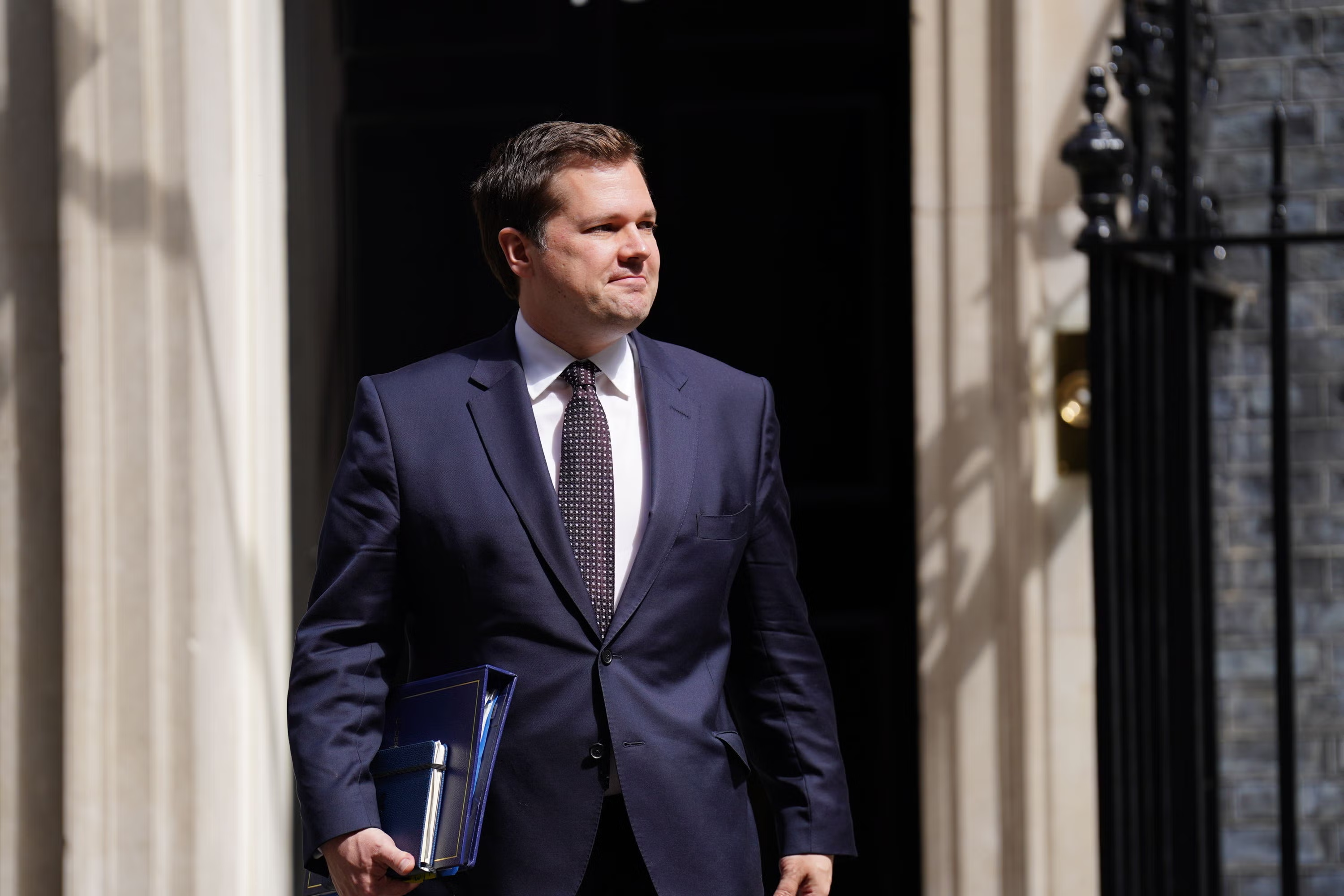
There is almost a chorus now of politicians saying we must leave the European Convention of Human Rights. The latest politician is Robert Jenrick MP (pictured) who in a speech ahead of the Conservative party conference next week, is proposing that all prospective candidates must promise to support leaving the ECHR as a condition of their candidacy. He claims ‘the party will die’ if they do not leave. He claims that the Convention has ‘stymied the removal of dozens of terrorists’. The party leader, Kemi Badenoch does not agree with this policy. However, while preparing this post Kemi Badenoch announced that her party will aim to leave.

Policy Exchange a prominent think tank claims that ‘ECHR distorts parliamentary democracy, disables good government, and departs from the ideal of the rule of law’. PX is regarded as the least transparent of the think tanks and its funding is obscure. It has pursued a programme over many years to weaken the judiciary.

The desire to leave the ECHR has come to the fore recently because of the small boats crossings which still represent a crisis for the government with record crossings. The former justice minister Lord Faulkner is quoted as saying it is ‘inhibiting government’s freedom to what is regarded by many as the emergency of illegal migration’.

Recently, Nigel Farage the leader of Reform has said we must leave ‘no ifs, not buts’.

So leaving the ECHR is essential according to these politicians if we want to solve the small boats ’emergency’. The questions are therefore will it, and what will be its effects on our rights more generally?

The debate around the European Convention is replete with exaggerations and misinformation. The chicken nugget story – widely repeated by many politicians and elements of the press is the latest. A boy could not be deported because of his aversion to chicken nuggets it was claimed. Except it never happened. There was no ruling that the foreign offender should be allowed to stay in Britain because his child could not eat these nuggets. An immigration tribunal did initially decide that it would be “unduly harsh” for the boy to be sent to Albania because of his special educational needs, but this judgment was later overturned. A more senior judge rejected the man’s appeal and made absolutely clear that an aversion to chicken nuggets should never be enough to prevent deportation.

Implications
  1. We would not just be able to leave as it would require a decision in parliament. This could take some months and the House of Lords would object to many of the details.
  2. The ECHR is not the only relevant piece of legislation: the Refugee convention also has implications for the UK.
  3. It will create problems with international relations. Since the UK was a prime mover under Sir Winston Churchill and the UK drafted a lot of the text, if we left it could lead to others deciding to do the same. We would join Belarus and Russia outside the Convention – hardly a good advertisement for the UK. It would seriously weaken the ‘voice’ the nation has on the subject of human rights.
  4. The Trade and Cooperation Agreement with the EU could be threatened.
  5. There would be immense problems with the Good Friday agreement in Northern Ireland.

The focus of the current debate has been on immigration and the boat crossings. This is a side show and a distraction. The ECHR is much more than that and involves fundamental issues concerning our rights as citizens and our relationships with state power. It is no accident that right-wing tanks like the Policy Exchange, and others based in Tufton Street, want us to leave because it inhibits the power and influence of their corporate backers. Human rights are nuisance for them and using the boat crossings is a useful cover to get us to leave. It is small wonder that they do not reveal who funds them.

Our parliament is little better. Recent legislation introduced by the Conservatives has seriously impeded the right to protest and there is little sign of the Labour government repealing those acts. Sir Keir Starmer drew a distinction between someone being deported where there was a risk of execution and sending them to a country with a different level of healthcare or prison conditions. Although he did not mention in his speech the ECHR it was clear that was what he was referring to. It was a less than full throated support.

We thus have sections of the media and political parties, the first pushing exaggerated or even made up stories about the harm the HRA does and second, an increasing number of politicians falling over themselves – in a kind of game of leapfrog – claiming they will leave or amend the ECHR. They claim or infer that by leaving the ECHR, it will enable them to solve the problem of the crossings. They dishonestly do not explain to the public the problems, risks and harms to UK’s interests with their proposed actions.

The HRA, which celebrates its 25th anniversary today, has brought immense benefits to many people in this country. Yet few politicians seem willing or brave enough sing its praises. Courting popularity, they have joined the siren voices of the secretive think tanks and oligarchs who own most of our media, in calling for its abolition (or review without ever spelling out what that means exactly).

Sources: Daily Express, Sky News, The Guardian, BBC, Euro news

Human rights under threat


Many politicians lining up to weaken rights

September 2025

We have posted over the years of this site’s existence the near constant attacks on human rights, the act itself and more recently, the European Convention (ECHR) which is generating a lot of anger at present. Many of the attacks came from news outlets who were concerned about privacy issues in the light of their various hacking* activities. The attacks have morphed in recent years with greater emphasis on the ECHR and a widespread desire among politicians to leave it. The impetus for this latest surge follows the attempt to deport immigrants to Rwanda which was stopped at the last minute by the European Court from flying from an airfield a mile or two from where this is being typed. The policy was abandoned by Labour when it came into power.

This post draws heavily on an article in the Observer (14 September) by Rachel Sylvester entitled: Misinformation and myth: the UK’s phoney war on human rights. The article begins with the well worn disinformation stories the latest being the chicken nugget debacle. Immigration, asylum seekers, hotels and the boat crossings are making the political waves at present and a wide range of politicians are seizing on the unrest to make political hay. They include Nigel Farage (Reform), Robert Jenrick and Kemi Badenoch (Conservative). Locally, Danny Kruger MP for East Wiltshire, is a vocal opponent [Kruger switched from Conservative to Reform while this post was being written].

Chicken nuggets debacle

Chicken nuggets? The story was that an Albanian criminal could not be deported because his son disliked eating chicken nuggets. There was no such ruling. A senior judge made it abundantly clear that an aversion to chicken nuggets could never be enough to avoid deportation. The false story was latched onto by the politicians mentioned above. Since two are members of their political parties and one wants to become one, it is disappointing to observe that they keen to perpetuate myths.

The fury over the boat crossings has led to many politicians wanting to leave the ECHR despite the fact, the article notes, Strasbourg has only ruled against the UK three times in 45 years. In all the invective against the ECHR, its positive effects are seldom reported: Hillsborough being a prime example [Correction: 20 September. It was the HRA which was significant with this inquiry]. But in areas of the country where immigration is a particular problem, leaving the ECHR is a ‘test of ideological purity’ (ibid). It is also part of the Brexit story since many believed that when we left the EU we would leave the European Court as well.

Few friends

The court seems to have few friends however. Politicians who should know better, such as Richard Hermer the Attorney General, are talking in terms of ‘reform’. Reform might be all right but when reform = weaken it’s not all right. There seems to be a lack of stout defence of the act by politicians. Such is the ascendancy of Nigel Farage that it appears politicians of all stripes are desperate to ape his remarks or even try and outdo him. The Human Rights Act has made a significant difference to people’s lives in way many may not be aware of. It would be a huge loss to the country if as a result of hysteria over immigration, we were to lose some important rights.

*There is an ITV drama on this to air shortly.

Previous posts

Nigel Farage and immigration


The leader of the Reform party sets out his policy for handling immigrants and asylum seekers

August 2025

Nigel Farage made a speech yesterday (26th) setting out his ideas for handling the rising numbers of immigrants and asylum seekers many of whom arrived in boats across the Channel. Often termed ‘illegal’ immigrants although it is not illegal to come via this method if asylum is claimed. The whole issue of asylum seekers, boat crossings and hotels has become headline news in recent months and there have been protests outside some of them most notably in Epping. A case started today (26 August) concerning an Ethiopian man alleged to have sexually assaulted a 14 year old girl and this has added to the widespread sense of outrage.

Mr Farage in his speech promised to fix the problem in quick order if he became prime minister. His speech has made headlines because of his poll lead which if maintained, could conceivably mean he will be a prime minister after the next election. Some polls show a 15 point lead over Labour. He promised to launch ‘Operation Restoring Justice‘ which would involve leaving the European Convention on Human Rights (joining Russia and Belarus), repealing the Human Rights Act and disapplying the Refugee Convention. This is to enable the UK to detain every migrant arriving illegally. Countries will be persuaded by a mixture of ‘carrot and stick’ to take them back. These will include countries with poor human rights records such as Iran, Afghanistan and Sudan where the risk of torture or death is extremely likely. The detentions will include women and children he made clear. They ‘will never be allowed to stay’ he said.

Critical issues arose in the press conference and included the cost and where they will be housed while deportations are arranged. He was not able to answer these questions. By amending or abolishing the legislations and coming out of the ECHR etc, it will frustrate the ability of lawyers to prevent deportations largely because the majority do have asylum claims which are legitimate. Over the coming days, other criticisms will appear. For example, existing English law, upon which the ECHR was largely founded after the war, provides protections despite membership of the Convention. Will foreign countries be willing to accept the large numbers involved?

Human rights

The concern here though is the desire to rid us of the ECHR and to repeal the Human Rights Act. This has popped up as a policy in several Conservative manifestos but has never actually come to pass. Local MP Danny Kruger is an advocate of this policy. Mr Farage’s ideas gained favourable coverage in some of the newspapers with the Daily Mail saying in a headline ‘Finally a politician who gets it’ [26 August, accessed 27 August]. His indifference to those he proposes returning to countries where torture is routine was particularly noteworthy. It is interesting however, looking at the comments from readers many of which were not supportive of his comments despite the uncritical nature of the article. The extent to which Mr Farage and Reform are making the waves was clear from the responses from the two main parties. Kemi Badenoch complaining that Reform had stolen their policies and a No 10 statement merely saying that Labour could not rule out leaving the ECHR. There was strong condemnation from the Liberal Democrats.

Mr Farage couched his speech in terms of a public mood of ‘total despair and rising anger’. It is disappointing to note the feeble and pusillanimous nature of the responses in particular from No 10. Britain was in the lead in promoting a new world order after the war following the Atlantic Conference. The ECHR was based a lot on British principles of justice. We would join only Russia and Belarus if we left – neither country a ringing endorsement of rights and human dignity. It is also disappointing to see newspapers like the Daily Mail, the Daily Express and the Daily Telegraph (How Farage would kick 600,000 migrants out of Britain) seemingly to endorse Mr Farage with little sign of critical analysis. The Telegraph even had a story headed ‘We’re ready to work with Farage on migration says Taliban‘. The human rights situation in Afghanistan is abysmal.

How have we come to a situation where prejudice and a lack of critical reporting about the almost unworkable and hugely expensive proposals put forward by Reform are treated in this way? Instead of a robust response and clear statements of how to tackle problems, the two main parties seem to be falling over themselves to ape Reform policies. Partly it is because they confuse some newspaper reporting as reflective of the wider public’s feelings about immigration which are a lot less black and white. It may also be a reflection of years of negative articles by some newspapers about human rights – and by extension the Human Rights Act – claiming it is a criminal’s charter. It is perhaps not surprising that part of Mr Farage’s speech was about the HRA and he spoke of ‘removing the tools from our judiciary’ to prevent successful asylum claims.

A point he referred to several times was around ‘whose side are you on?’ This was in answer to a question from the BBC concerning the risk of returnees being tortured. His answer was ‘are you on the side of the safety of our women and children on our streets, or on the side of outdated treaties backed up by dubious courts’. Another quote was defending our borders and keeping our people safe. There is no evidence of women and children rendered unsafe on our streets disproportionately by immigrants (illegal or otherwise). The torture question was asked more than once.

The tone of the presentation was that immigrants are a threat to our society. That women and girls are unsafe despite the fact that many asylum seekers and others are in secured accommodation. By extension, many of our problems would be removed in short order if he became prime minister. The HRA and other laws and treaties are part of the problem he claims.

Reflections

Mr Farage, despite being a member of a party with only 4 MPs, is able to command a big audience from a speech and to be the lead item on many news channels.

He enjoys wide and largely uncritical support in chunks of the media.

Mr Farage himself (!) noted an interesting point, namely most of the press questions were about process. There was little of a moral or principled point of view.

A large part of his speech was based on dubious claims and unsubstantiated facts. There are problems surrounding immigration and he is correct that both parties have been ham-fisted in trying to deal with them and failing. But solutions are complex and the nation cannot simply step away from international treaties and agreements.

He does not discuss the reactions from other nations from his set of unilateral proposals to deport all illegal migrants. The question is – what if all countries decided to do the same? He spoke of return agreements and an expert from the Migration Observatory said in an interview that such agreements had a mixed history.

He speaks as though the UK is uniquely affected by these problems. The reality is that the scale of displaced people around the world is massive. There are 36.8m refugees worldwide and 123m displaced people according to UNHCR. The UK’s problems in comparison are miniscule. We are also a rich country better able than most to tackle the problem with capable leadership. Many of the millions are in, or adjacent to, countries which are among the world’s poorest. No part of his speech discussed what could be done to tackle the worldwide problem.

So whose side are we on to pose Mr Farage’s question? Not his.


Why Labour Leaders Are Pushing for ECHR Revisions: A Political Analysis


Alarming stories that Labour leaders are wanting to reform the European Convention

June 2025

Alarming reports have emerged over the past few days that the current government is considering some kind of revision to the European Convention of Human Rights (ECHR). Figures such as the prime minister Sir Keir Starmer, the Justice Secretary Shabana Mahmood and the Attorney General Lord Hermer have made speeches suggesting disquiet concerning aspects of the Convention. In particular it is article 3: No one shall be subjected to torture or to inhuman or degrading treatment or punishment and article 8: Everyone has the right to respect for his private and family life, his home and his correspondence.

This story has history and the statements by politicians are more than usually disingenuous. To understand the story and the reasons for this recent slew of statements it is necessary to look at causes and why there is a clamour among politicians, some of the public and the media for change.

Stage 1the media

Much of the pressure has come from sections of the media so it is necessary to look at what is going on there. Newspaper readership has declined precipitately. Between 2000 and 2010, the decline was 65% and in the following decade up to 2020 a further 55%. Add in rising costs and declining advertising, and there is something of a crisis in the newsrooms. In this climate, it is cheaper to break into the emails, phones, bank accounts and even houses of the rich and famous, politicians and footballers to achieve a juicy front page, than to carry on the normal business of journalism.

Then came the hacking exposures and the Leveson enquiry which exposed the depth and extent of the hacking and criminal activity. It included senior police officers in the Metropolitan police in particular who sold information to the newspapers. This changed the dynamic of the industry and the notion of privacy was an anathema to their business models.

Over the last two decades there have been hundreds of stories alleging that criminals were not getting their just deserts because of their human rights either because of the ECHR or the domestic Human Rights Act. It was a ‘criminal’s charter’ they alleged. Photos of wanted criminals could not be circulated because of their human rights (they can), police could not evict an armed man until they provided him with a McDonalds hamburger because of his human rights (they could but it was normal practice to accede to requests to cool the situation). Abu Qatada was seriously misreported in the tussle over his deportation to Jordan.

Sadly, positive stories about the acts were almost entirely missing. The Daily Mail used the act to defend its journalist’s rights to protects their sources but strangely forgot to mention this to its readers.

Stage 2the politicians

Then the politicians began to join in perhaps sensing from the newspaper coverage that they were onto a popular winner. After all, if the voters were reading a never ending litany of stories about the evils of the human rights laws and Europe meddling in our affairs, it was a gift. It soon became part of the Conservative manifestos to abolish the act or later reform it. It became tangled up with the Brexit crusade and it is possible that many thought that coming out of Europe would mean that the ECHR would also be history. There was the famous cat story by Theresa May which was almost complete nonsense.

There was meant to be a Leveson part II to look at the unlawful conduct between the media and police but there were allegations that in return for a softer ride from the press, Keir Starmer agreed not to set it up. These allegations are denied. There are no plans for a part II.

Stage 3 – the boat people

As the means to arrive into the UK as a refugee or an asylum seeker diminished so the numbers who took to the boats to cross the Channel rose. This became a matter of massive political importance and the Reform party made huge progress with its promises to stop it. Media stories of asylum seekers being installed in hotels are constant. Despite boat crossings being only a small part of those coming to the UK, they loom large in the public imagination and politicians on the right have taken note of this.

The problem is that the government has obligations under the ECHR and other agreements, to treat asylum seekers in a proper way. Demands to simply ‘send them back’ are difficult to do particularly as ‘back’ can mean a county riven by war or where they can face dire consequences. But in simplistic terms human rights are standing in the way, as Mahmood says: ‘voters say international law stop them achieving the changes they want to see.

Stage 4 – the Reform party

Along came Reform and quickly began to made inroads into the political landscape. The overturning of a massive Labour majority of 14,700 in Runcorn and Helsby by Reform has shaken them badly. Reform has simple answers to matters like immigration which appeal to many and which has defeated both the Conservatives and now Labour. They would pick up boats in the Channel and return them to France. Asylum seekers would be processed off shore. These and other policies quick fix policies appeal to many and saying that they are difficult or impossible to do because of our international obligations carry little weight with many voters. They are even inflammatory particularly with those who have a deep distaste for anything European.

Stage 5 – today

So the Labour government is feeling under pressure. It has not ‘solved’ the Channel crossings problem. It has lost popularity for a variety of reasons quite apart from the discussion here. Reform is making great strides and even ahead in some polls with suggestions that Nigel Farage becoming a future prime minister was not the joke it might once have been. The Home Office remains dysfunctional and would take years to reform even under competent leadership. The party is becoming desperate to be able to counter the tide of dissatisfaction present in large parts of the kingdom particularly in the red wall seats.

So this brings into where we started and speeches about trying to reform elements of ECHR. The sadness is that they cannot. It would take years to carry through any reform in Strasbourg with little likelihood of success. If the government were to resile from either or both articles 3 and 8 would it solve its problems? Again sadly, no. The opposition to human rights laws and agreements have little to do with the people at the bottom of society so to speak. Almost no part of their speeches are about the victims of injustice which human rights are about.

As we have argued, it is sections of the media who have over decades created myths and disinformation about the workings of the laws. It is their business models which are under threat not the fate of asylum seekers. Why else would the Murdoch press spend over £1 billion in keeping the facts of its intrusion and criminality out of the courts? It is an irony – almost a supreme irony – that the much prized sovereignty that people apparently so desperately want is not in fact available to them. The Judiciary are all too happy to allow these hugely expensive legal actions to go ahead and thus subvert justice and free speech. There is no justice in any meaningful sense of the word. The rich and powerful can ‘buy’ silence by paying large sums into court that no one can afford to match.

These speeches appear to be preparing the ground at present in an attempt to match the rhetoric of Reform politicians. Instead of a proper concern for justice, establishing a Leveson II enquiry into the criminality of some of the media and their friends in the police, or tackling the rampant injustice of the defamation laws which serve to protect the rich from proper enquiry, our politicians seek to curry favour and favourable headlines in those very media outlets which have distorted the public’s attitudes to the laws which in truth protect them. The sadness is that the three politicians saying this stuff are experienced human rights lawyers who know it to be a distortion of the truth. A truly bizarre state of affairs.

Blog at WordPress.com.

Up ↑