Another vigil and is the mood changing in the US?


Latest vigil – No 141 – is well attended

August 2026

Around 35 attended the latest vigil held in Salisbury’s market place and it is remarkable that they continue week after week. As we have said before, there is a mixture of people who come every week and those who turn up occasionally. Recognition is high and news of the terrible events in the region continue to appear on our screens and in the media.

The rising tide of settler violence achieved significant coverage last week even from the BBC which is extremely nervous of covering news from the area for familiar reasons. We noted a shift in attitudes in America in our last post and a forthright criticism by Mike Huckabee, the American ambassador, calling the settlers ‘Israeli terrorists’. This from a Zionist and Israeli apologist. What was important was not just the comment itself but that he felt able to make them.

Once again we note the absence of the Salisbury MP Mr John Glen who has never attended a vigil or ever mentioned them in his weekly column in the Salisbury Journal. 141 weeks of silence is a powerful message. He is a member of Conservative Friends of Israel along with around 140 other MPs.

Israeli support for violence and the lack of healthcare for Palestinians claimed

A distressing report in Haaretz discusses the attitude of many Israelis towards Palestinians and particularly their health care or rather lack of it. They report:

“The majority of Israel’s Jewish public supports the worsening conditions of Palestinian patients, caused by their inability to receive necessary treatments. This isn’t the finding of any pollster โ€“ no one includes in their surveys a question like, “Do you support the elimination of Palestinian public healthcare?

“Yet this conclusion is inevitable, considering the fact that Israel’s Ministry of Finance continues unimpeded to steal the Palestinian Authority’s income from taxes and customs. Those revenues are meant for medical treatments, medications, medical staff salaries and the maintenance and development of hospitals and clinics”.

The article describes the lack of condemnation by a wide range of Israeli organisations and the writer concludes:

“[…] With great pain, you have to conclude that, in the eyes of too many Jews in Israel, also the slow killing of Palestinians, simply because they are Palestinians, is a legitimate policy.”

Public opinion in Israel is important especially with elections imminent. The hard right politicians who support the destruction of Gaza, the increasing West Bank settler violence and the prevention of health care described in the article, are in the ascendant. If the article is right, it does not look as though there will be much in the way of pressure to change the political climate.


Photo: Courtesy of Peter Gloyns

Thought of becoming a supporter?

Reactions from an IDF soldier


Many IDF soldiers are troubled by what they see

August 2026

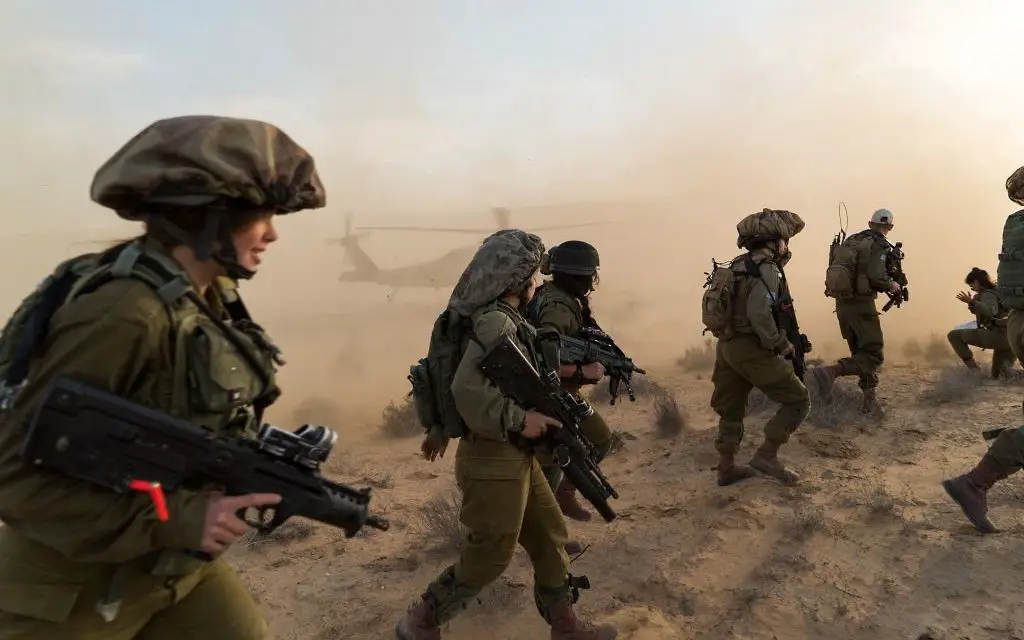
There is a danger when we see film of IDF soldiers who are all kitted up such that we cannot see their faces, in assuming they are unaffected by the carnage, death and destruction they witness. There is film of IDF soldiers gleefully smashing up Palestinian homes and no doubt filled with the propaganda of Arab malevolence, who are only too keen on their work. But not all are and our attention has been drawn to an article in Haaretz which describes the trauma of one Israeli soldier.

HAARETZ, August 06 2026


After helping direct artillery fire that claimed civilian lives in Gaza, former Israeli combat medic Yael is struggling with debilitating trauma and remorse. Her long wait for treatment highlights the military’s failure to care for soldiers scarred by warโ€ฆ.
Yael, who asked not to use her real name, is 22 years old. She enlisted in the Israel Defense Forces in August 2022. She says she was highly motivated. She wanted to contribute, to do meaningful combat service.

The army listened and granted her wish.. “I left the army and saw the number of children killed, and I was shocked. I started searching obsessively for information online. I looked for the neighborhoods we attacked, the villages,” she recounts. “I saw that many innocent people were killed in these places, I saw pictures of dead children. In the army, they told us we only kill terrorists, but that’s a lie. Artillery fire is imprecise; the army considers a hit within a 50-meter radius to be a good hit.”..
“I have nightmares. I see inside my head dead children, crying mothers. I imagine how the bodies are removed. The guilt doesn’t leave me. How can it? I killed an innocent child, I was the one who fed the targets, it’s on me.”.. She was discharged from the IDF a year and a half agoโ€ฆ..


Since October 7, Haaretz has spoken with more than 300 people suffering from mental injuries caused by the war. Some of them reported suffering from PTSD due to exposure to intense combat experiences. Others described extreme guilt due to the deaths of their comrades in combat or of civilians on October 7. Recently, the barrier of shame has broken. More and more soldiers talk about moral injuries they suffer, often related to exposure to or participation in war crimes prevalent in the Gaza Strip.


The army prevented me from getting treatment,” she says. Only after her mother contacted the battalion commander did he meet with her for a conversation. “I told him I was harming myself and that I had suicidal thoughts,” she says. “I wasn’t exaggerating. I didn’t want to live this suffering anymore, this reality where 18-year-old children are killed, and I hear their last moments. I don’t agree with it. I don’t support it.” The mental health officer ordered her removed from combat duty. About two months later, in December 2024, the IDF discharged herโ€ฆ.


When she returned home, the symptoms struck with intensity. She felt she was withering. “I became a shadow of a person. I didn’t see the beauty in life. I saw everything in gray,” she recalls. “Every day I had to cope with such severe panic attacks that I’d scratch myself, hit myself. I was depressed. ..
She felt not only pain in her heart but also anger towards her battery commander (“he’s a scumbag”), and, in fact, towards the entire system. “The state ruined my life, and after it ruined my life, it didn’t bother to give me the treatment I needed. It forced me to prove I was injured, to fight for recognition.” Today, she is in ongoing treatment, taking psychiatric medications, trying to alleviate the pain.


She finds a ray of light in the change in her values, in her moral compass. “Before the army, I was an extreme right-winger, one who would say ‘Death to Arabs.’ That was the myth in school that influenced me,” she explains. “But after the war, I understood that there’s a difference between Hamas terrorists and Palestinian civilians who want peace, who want life. I saw the conditions in which Gazans live. I realized there must be a change, that we must strive for equality, for peace. This is the only way to save the children, to save us all.”


Blog at WordPress.com.

Up ↑