Review of 2025


… and things do not look much better for 2026

December 2025

We have published 192 posts so far this year on a wide variety of subjects concerned with human rights. A key feature of the year has been the continuation of our vigils. We have held over 190 since the current conflict started and although there is some kind of cessation of hostilities, peaceful reconciliation between Israel and the Palestinians seems a far away dream. Some food aid is getting in but Israel has seized almost all the cultivable land leaving those in Gaza hemmed into an even smaller part of their territory. We have commented on the poor reporting of events there and the unsatisfactory nature of so many interviews.

Arms sales

A feature of this conflict and other conflicts around the world is the role of the arms trade. It appears that this trade seems to determine British policy: truly the tail wagging the dog. The government frequently trots out that it has a ‘robust policy’ whilst granting licences – and in particular open licenses – to almost all who come. The effects on people at the receiving end of these weapons sales does not seem to worry the Foreign Office or government ministers. Recent government’s policies have focused on growth and if growth means selling arms to Israel and to the UAE so be it. There is considerable evidence that the latter are supplying the RSF in Sudan who are alleged to commit many atrocities.

At the height of the Yemen war we highlighted the role of British arms firms and their weapons sales to the Saudis. RAF personnel were involved just short of being labelled ‘mercenaries’.

Sport

Sport has featured in several of our posts and the ever increasing use by states with abysmal human rights records to use sport to burnish their images. Virtually all sports are involved, but especially football, boxing, motor sport, golf, tennis and cycling. The driver is money. China and the Gulf states are among those with almost unlimited resources to pour into sporting events with seemingly no difficulty in attracting sportsmen and women to compete in their countries with no moral qualms. They also invest in our football clubs again with no concerns about how tainted the money is.

It has become so part of the furniture now that it engenders little comment. Whereas some years ago a nation which executes significant numbers of its citizens – often after confessions extracted under torture – which imprisons or ‘disappears’ human rights defenders and journalists and treats its women as second class citizens denying them many rights, would raise eyebrows when seeking to sponsor or host a sporting event. Not today.

Refugees

And it is not just sport where issues of human rights have seemed to take a back seat. People entering this country by various means have generated a massive amount of political controversy here in the UK. It is probably true to say that immigration in one form or another is one of the dominant political forces at work. It is deciding elections. A number of politicians are using the ‘crisis’ to their political advantage (they hope). Egged on by sections of our media, they have created the impression that there is a crisis particularly around the numbers arriving in small boats across the Channel. Any concern for those in the boats and why they are risking their lives to get here does not seem to feature. The impression is sometimes created that if we could deport the migrants (however defined) our problems would be over. The connection between our arms sales and the instability of the countries they have fled from does not seem to enter their thinking.

The contribution by immigrants (again however defined) is scarcely recognised. That large sections of our economy (horticulture and the food industry for example), the health service, hospitality and transport, would cease to function without them seldom seems to enter the consciousness of our senior politicians. We have commented on the strange fact that many of our senior politicians, including Rishi Sunak, Suella Braverman, Priti Patel, Shabana Mahmood, Kwasi Kwarteng and Danny Kruger are all descended from recent immigrants but are among the most aggressive about deporting those coming after them. We can offer no explanation.

Rights at home

Which brings us to another theme concerning the government and its own attachment to UK human rights. It was once hoped that the arrival of Sir Keir Starmer – an ex human rights lawyer and past Director of Public Prosecutions – would see an improvement in the human rights climate. Sadly, it has not come to pass. Laws against protests introduced by the Conservatives to clamp down on protestors, have not been modified or repealed and have even been added to. A more humane policy towards immigrants and refugees has not happened. Arrests have continued and as this is being written, those arrested on pro-Palestine marches are close to death on hunger strike. His continuing support for Israel has been shaming. He has issued critical comments but they have not been backed up by action, cutting arms supplies for example. No believable explanation for the hundreds of RAF flights over Gaza has been forthcoming. His most disgraceful comment that ‘Israel was right to withhold power and water from Gaza’ was widely condemned.

This year we have introduced a new regular feature reviewing the human right situation in the UK itself. This is probably something we would never have contemplated doing say, twenty years ago but a combination of poor leadership, aggressive home secretaries and many MPs with little interest in protecting human rights, has led to this move. Both Danny Kruger (MP for East Wiltshire) and John Glen (MP for Salisbury) are listed on They Work For You as generally voting against human rights is another factor. Mr Glen, who is listed as a member of the well-funded lobby group Conservative Friends of Israel has never once visited the Saturday peace vigil nor mentioned it in his weekly column in the Salisbury Journal.

Ukraine, Sudan, China, Palestine …

The world situation does not seem to get any better. The situation in Ukraine is critical and not just for the Ukrainians. We have one member of the Security Council, Russia gratuitously attacking an independent nation while another member, the US seems indifferent to their plight. The warm greeting by President Trump of President Putin on the tarmac in Alaska must be one of the more grizzly images of the past year. European nations have become almost powerless, in part because of their collective failure to invest in defence (defense) but also because they have become kind of vassal states to the US.

We must not forget that human rights in Russia are poor. There is no opposition and a leader who was a threat to Putin, Navalny, was probably murdered in Siberia. Others have been arrested or murdered along with many journalists. Children have been abducted from Ukraine. Ukrainian prisoners have been tortured.

We could devote a who page to China. A million Uyghurs are persecuted and are forced to work while their culture is systematically destroyed by the Communist Party. Some call it genocide. Tibet has had a similar treatment and its culture largely eliminated. They are believed to execute more of its citizens than all the rest of the world combined. Freedom has been snuffed out in Hong Kong. Chinese nationals are intimidated overseas.

The future

The future is unpromising. The ‘New World Order’ created after the war is well and truly dead. Powerful interests act at will. Despotic leaders act in their own interests not in the interests of ordinary people. Europe is too feeble to act. It looks as though things will continue as they are. There is no hint that the current conflicts will end equitably but based on the whims of a handful of profoundly flawed men.

A large number of MPs of all parties are members of the Friends of Israel group and many also receive money from them. How can they be expected to act honestly, with integrity and in the best interests of the country (to be clear, the UK whose residents voted them in not a foreign state) if they are members of a powerful and well funded lobby group? Arms companies continue to sell their wares with few controls so desperate is the government for growth. The BBC has been cowed into silence on important topics.

In June of last year, the Institute for Government, recognising the serious loss of trust in the government, published its 7 steps to restore trust. One was the publication of an independent ministerial code. Another was to ensure lobbying was built on a clear coherent and transparent system. It has not happened. There is no rigorous or proper system of controlling the ‘revolving door’ which is a passport for corruption by ministers, ex-civil servants and military people retiring into lucrative appointments with arms companies.

Hope

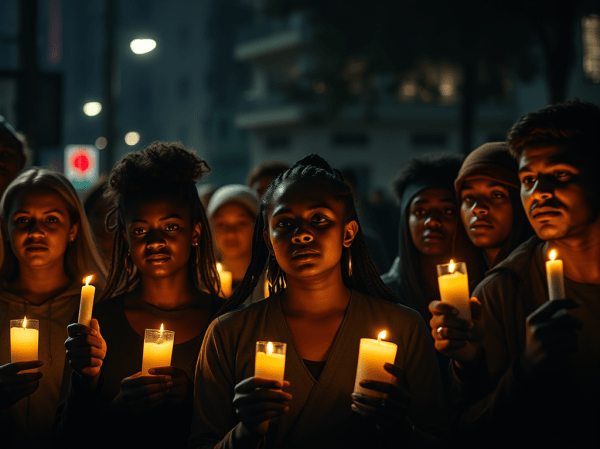
The weekly vigils and the many hundreds of protests around the country for an end to the killing and genocide in Gaza is a heartening sign. It shows a significant number of people who care about what is happening, care that is not reflected by the government nor by chunks of the media. Despite their numbers, reporting is thin with a media all too keen gleefully to report flag waving disturbances outside hotels or army camps. If hope is to be found it lies with ordinary people who simply say ‘this isn’t right, this is not what I believe in’. Rutger Bregman in his Reith Lectures (2025) argues just this: that small committed groups can make a difference. However, whether they can achieve this at the international level is debatable. We can cite climate which will be having harmful effects on more and more of the world’s population and where progress if anything is going backwards.

We shall continue to campaign and we always welcome new members to the team.


Best wishes for the New Year to our small band of readers!
UK Human Rights Report: Current Threats and Government Actions


Monthly report on human rights in the UK

December 2025

Amnesty has for many years, focused its efforts on human rights issues overseas. Recent actions by governments of both persuasions have meant a greater focus on the threats to rights here in the UK. Only this very week, the prime minister and other ministers are in Europe trying to seek agreement to a ‘modernisation’ of the ECHR arguing it is necessary to tackle the immigration ‘crisis’. In this post, we review aspects of our rights which are current or under threat.

Freedom of Expression

The outcome of November’s High Court hearing of the legal challenge mounted by Liberty and Amnesty to the ban on Palestine Action is still pending.  Amnesty’s Director of Communications claims that ‘the Government’s ban is a disproportionate misuse of the UK’s terrorism powers and breaches articles 10 and 11 of the European Convention on Human Rights – which protect freedom of expression and freedom of assembly and association.

We have seen the chilling consequences of this decision across the country – with thousands of arrests in recent months.  These mass arrests, and the silencing that organisations and individuals have felt, is a clear and frightening example of how the UK is misusing overly-broad terrorism laws to suppress free speech. Terrorism powers have never been used against what was previously direct-action protest and if this precedent is allowed to stand, it opens up a bleak future for protest rights in the UK.” 

Amnesty is seriously concerned at reports of the worsening condition of members of the Filton 24 who are on hunger strike after the damage to two aircraft at Brize Norton last year as protest against the Israeli Elbit Systems’ involvement in Gaza. None of the prisoners have been charged under the Terrorism Act but prosecutors have said both offences had a “terrorism connection”.  Amnesty has consistently opposed the use of anti-terrorism powers in these cases claiming they have been used to justify excessively lengthy pre-trial detention and draconian prison conditions.   

Arrest of Britons overseas

Amnesty International is urging the UK Government to develop a clear and consistent approach to the unjust imprisonment of British people overseas, including a new strategy that should include as a minimum:

  • the Government calling for an arbitrarily-detained person’s immediate release (including publicity where requested by the family)
  • pressing for access to a lawyer, a fair trial and medical care where relevant
  • demanding consular access insisting that UK officials be able to attend trials
  • regularly meeting with family members to outline the Government’s overall approach in the case.

The UK Government’s failures on this issue, highlighted in a recent BBC drama and documentary on the case of Nazanin Zaghari Ratcliffe, continue today.  British nationals, including Ahmed al-Doush, are not receiving the level of diplomatic support required to secure their release.  Ahmed was arrested while on a family holiday in Saudi Arabia in 2024 for social media posts.  The Manchester-based father of four was convicted under terrorism legislation and sentenced to 10 years in prison, later reduced to eight.

The UK Government has failed to advocate for Ahmed, not taking a position on his case, despite being provided by information indicating that his detention is a freedom of expression case.  Amnesty International continue to campaign so that Ahmed can be reunited with his family and urges the UK Government to advocate for his release if he is being held solely for exercising his right to freedom of expression.

Use of Facial Recognition by police

A Government consultation into police use of facial recognition is set to launch imminently.

Liberty has been calling on the Government to follow the example of other countries which have introduced laws around police use of facial recognition technology – and has urged Ministers and police forces to stop expanding its use until those laws are in place.  Alarm has been raised at the finding that faces of children are included on the records of some police forces.

Liberty wants the inclusion of the following safeguards:

  • The independent sign off before facial recognition is used
  • Police to only use facial recognition technology to search for missing persons or victims of abduction, human trafficking and sexual exploitation; to prevent an imminent threat to life or people’s safety; to search for people suspected of committing a serious criminal offence;
  • Watchlists to contain only images strictly relevant to the purposes above;
  • However, Amnesty International wants a global ban on this technology on the grounds that it violates the human right to privacy, it inaccurately targets minorities, especially people of colour and women; it intimidates people from free expression of views;
  • It cites racist bias in examples of the use of mass surveillance technology by US policing of black communities, and also Israeli policing of Palestinians.

Change declared to European Convention on Human Rights

After the UK recently joined Denmark and Italy in pressing for a rethink of aspects of the European Convention on Human Rights (ECHR), especially in relation to migration law, the Council have now taken the first steps to reshape how European courts interpret human rights.  Amid fierce debate over the balance between ECHR and national migration controls, ministers made a joint declaration which will now task 46 foreign ministers with drafting a political declaration to be adopted at the next meeting in May 2026.

The Council oversees the ECHR while its court enforces those rights across 46 member states including all 27 EC countries.  Greater national flexibility is demanded in response to human smuggling, border security and the expulsion of offenders.

Sir Keir Starmer and other heads of state have restated that, while wishing to see some ‘modernisation’ of the Convention, there is no intention of abolishing it.  The move is seen as a response to protest from far-right groups across Europe and ‘uncontrolled’ immigration and the perception that the right to family life inhibits states from deporting convicted foreign criminals.

Human rights groups are raising concerns at the dilution of the original Declaration of Human Rights as non-negotiable, universal and inclusive of all minorities. 

Write for Rights


Cathedral signing this Sunday

November 2025

The group will be hosting a signing in the Cathedral cloister on Sunday 30 between 12 noon and 3 pm. We aim to do this every year and it is an opportunity for people visiting the Cathedral – for a service or other reason – to stop for a few moments to sign. There are many, many people who are imprisoned or under house arrest for their beliefs or because they are human rights defenders.

Farage loses vote to leave the ECHR


Reform leader loses Commons vote

November 2025

Edited, 5 November

Last week, Nigel Farage, the leader of the Reform party, lost his Commons vote to leave the ECHR. Reform, along with many Conservatives, are pushing the idea of leaving the European Convention as means to solve the immigration crisis and in particular the Channel crossings. In a vote, 154 were against and 96 for leaving.

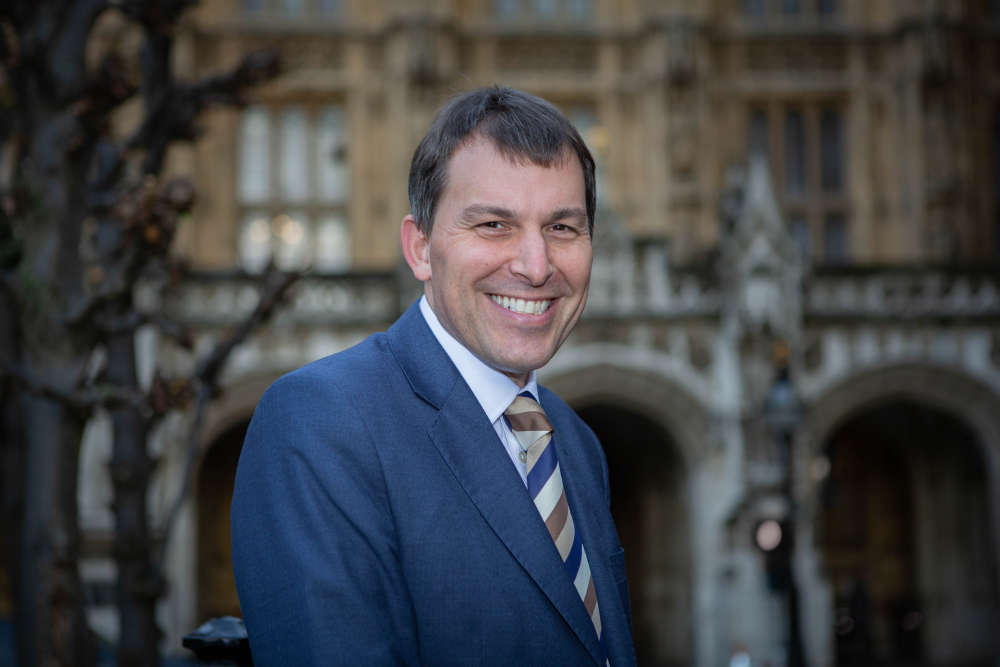
Farage is not alone and in the Guardian link to this story, local readers will see the East Wiltshire MP Danny Kruger sat beside him. The Salisbury MP Mr John Glen (pictured) has also joined the chorus, no doubt following his leader Kemi Badenoch, who made an abrupt U-turn on the subject at their conference in September. It appeared in the ‘View from the Commons‘ piece in the Salisbury Journal (16 October). Entitled ‘Exiting ECHR not about watering down our rights‘ it seeks to justify the U-turn by Kemi Badencoch.

‘We do not need it’ ‘Mr Glen told us claiming that Common Law is all you need because ‘we are perfectly capable of upholding our rights and freedoms‘. Why then did scores of people have to go to Strasbourg to get justice? Why did the Hillsborough families have to wait years to get their justice? And the Birmingham Six were finally exonerated when judge after judge failed in their duty? And all those who spent years in prison for crimes they didn’t commit. A list of other cases where people sought justice from Strasbourg can be found here. The Post Office scandal?

The Conservatives have hated the Human Rights Act and it’s noteworthy that both Glen and Kruger ‘generally vote against laws to protect equality and human rights’ according to They Work for You. They are happy with a legal system that largely protects the rights of the powerful and the property owners but are somewhat less concerned with the rights of the powerless even assuming they could contemplate using the law at all.

Mr Farage argues that we will not have true sovereignty until we leave the Convention, a similar argument to that put forward at the time of Brexit. The threat to our sovereignty is more likely to come from the Trump administration in the US. Trade sanctions and threats to NATO are much more serious than anything coming from Europe.

The Guardian piece above was written by Daniel Trilling who came to Salisbury to speak on immigration matters.

Image: Salisbury Radio noting that Mr Glen voted to leave the ECHR.

25th Anniversary of HRA


Today marks the 25th Anniversary of the Human Rights Act

October 2025

Twenty five years ago this act was signed and ended the need to go to Strasbourg to get justice. It fundamentally changed the law by giving fundamental rights to citizens. It is currently under threat and it, and the European Convention which predates it, are disliked by many of the political and media class. In the next post we shall discuss this in more detail.

But today (2nd) we celebrate.

Recent posts:

Human rights under threat


Many politicians lining up to weaken rights

September 2025

We have posted over the years of this site’s existence the near constant attacks on human rights, the act itself and more recently, the European Convention (ECHR) which is generating a lot of anger at present. Many of the attacks came from news outlets who were concerned about privacy issues in the light of their various hacking* activities. The attacks have morphed in recent years with greater emphasis on the ECHR and a widespread desire among politicians to leave it. The impetus for this latest surge follows the attempt to deport immigrants to Rwanda which was stopped at the last minute by the European Court from flying from an airfield a mile or two from where this is being typed. The policy was abandoned by Labour when it came into power.

This post draws heavily on an article in the Observer (14 September) by Rachel Sylvester entitled: Misinformation and myth: the UK’s phoney war on human rights. The article begins with the well worn disinformation stories the latest being the chicken nugget debacle. Immigration, asylum seekers, hotels and the boat crossings are making the political waves at present and a wide range of politicians are seizing on the unrest to make political hay. They include Nigel Farage (Reform), Robert Jenrick and Kemi Badenoch (Conservative). Locally, Danny Kruger MP for East Wiltshire, is a vocal opponent [Kruger switched from Conservative to Reform while this post was being written].

Chicken nuggets debacle

Chicken nuggets? The story was that an Albanian criminal could not be deported because his son disliked eating chicken nuggets. There was no such ruling. A senior judge made it abundantly clear that an aversion to chicken nuggets could never be enough to avoid deportation. The false story was latched onto by the politicians mentioned above. Since two are members of their political parties and one wants to become one, it is disappointing to observe that they keen to perpetuate myths.

The fury over the boat crossings has led to many politicians wanting to leave the ECHR despite the fact, the article notes, Strasbourg has only ruled against the UK three times in 45 years. In all the invective against the ECHR, its positive effects are seldom reported: Hillsborough being a prime example [Correction: 20 September. It was the HRA which was significant with this inquiry]. But in areas of the country where immigration is a particular problem, leaving the ECHR is a ‘test of ideological purity’ (ibid). It is also part of the Brexit story since many believed that when we left the EU we would leave the European Court as well.

Few friends

The court seems to have few friends however. Politicians who should know better, such as Richard Hermer the Attorney General, are talking in terms of ‘reform’. Reform might be all right but when reform = weaken it’s not all right. There seems to be a lack of stout defence of the act by politicians. Such is the ascendancy of Nigel Farage that it appears politicians of all stripes are desperate to ape his remarks or even try and outdo him. The Human Rights Act has made a significant difference to people’s lives in way many may not be aware of. It would be a huge loss to the country if as a result of hysteria over immigration, we were to lose some important rights.

*There is an ITV drama on this to air shortly.

Previous posts

Press Freedom Threats in Northern Ireland: Urgent Response Needed


Second of our reports points to failings in the UK

June 2025

A Threat to press freedom in Northern Ireland

Since 2019, Amnesty has documented over 70 death threats, bomb threats, and violent attacks against journalists. Most threats came from armed paramilitary gangs.  Not one has been prosecuted to date. Some reporters now live behind bullet-proof windows, reinforced doors and CCTV. Many people assume Northern Ireland’s conflict is over.  Yet some journalists are receiving more threats of serious violence from paramilitaries than ever before.

Amnesty calls for two urgent steps: a Media Safety Group – to coordinate an effective response to threats against journalists and A Home Protection Scheme – so journalists at risk can secure their homes without paying the price for doing their jobs.

Right to protest 

The EHRC was set up to “encourage good practice in relation to human rights” and “promote… protection of human rights” but it appears to be seeking to ban protests outside its offices.

“Article 11 protects your right to protest by holding meetings and demonstrations with other people”, says its website but the landlord of the Vauxhall office of the Equality and Human Rights Commission is seeking an injunction against protests outside its offices for the entire period for which the EHRC has a licence to occupy, that is until 31 January 2026.  

It would prohibit anyone (without the consent of the EHRC’s landlords) “entering, occupying or remaining upon all or any part of the commercial premises known as Tintagel House”, including on the forecourt outside its offices.  Protest may be possible on the public pavement or road outside its office – although with a risk of criminal conviction – but anyone entering the forecourt would risk imprisonment.  The application was sparked by an entirely peaceful encampment by Trans Kids Deserve Better outside Tintagel House on 30 May 2025.  Good Law Project considers this unlawful and is intervening to resist the injunction application.

Vagrancy Act Scrapped

The “cruel and outdated” Vagrancy Act is finally set to be scrapped in 2026 after making rough sleeping a

criminal offence for more than 200 years, the Labour government has announced. The 1824 law has criminalised rough sleeping and begging in England and Wales since the days of the Napoleonic Wars.  

Frontline homelessness charities have campaigned for years for the Vagrancy Act to be axed, warning that punishments, including fines, drive rough sleepers away from support.  Labour has promised it will finally be removed from law next spring and replaced with increased financial support for people experiencing homelessness and new legislation targeting “real crimes” such as organised begging by gangs.

British support for foreign security and intelligence services  

NGOs and senior MPs  have expressed concern in a joint letter to David Lammy that the Labour government’s ‘light touch’ review of policies regulating British support for foreign security and intelligence services will not remove ministers’ ability to approve UK cooperation in situations where there is a real risk of torture or the death penalty.  The policies were blamed for facilitating injustices in cases such as those of Jagtar Singh Johal and Ali Kololo.  Johal, a British human rights activist, was allegedly tortured in India, where he remains in jail, after a tip-off from UK intelligence services.  Kololo was wrongly convicted and sentenced to death over an attack on British tourists after the Met police provided assistance to Kenyan authorities.

The Mental Health Bill

This has now had its second reading in the Commons and aims to modernise the treatment of mental health. Among other things it will allow greater choice of treatment to patients, will reduce the use of detention especially in the case of autistic patients or those with learning difficulties and will address the disproportionate outcomes for black patients and those from minority groups.

UK’s legal obligations in Israel/Gaza conflict

The UK must impose sanctions on the Israeli government and its ministers and also consider suspending it from the UN to meet its “fundamental international legal obligations”, more than 800 lawyers, academics and retired senior judges, including former Supreme Court justices, have said.

In a letter to the prime minister, they welcome Keir Starmer’s joint statement last week with the leaders of France and Canada warning that they were prepared to take ‘concrete actions’ against Israel.  But they urge him to act without delay as “urgent and decisive action is required to avert the destruction of the Palestinian people of Gaza”.  The signatories, including the former Supreme Court justices Lords Sumption and Wilson, court of appeal judges and more than 70 KCs, say that war crimes, crimes against humanity and serious violations of international humanitarian law are being committed in Palestine.

More than 300 Foreign Office staff have been told to consider resigning if they cannot support the government’s policy on Israel, after they repeatedly expressed concern that the UK could be viewed as complicit in war crimes.

The UK government has now sanctioned Israeli government ministers Itamar Ben-Gvir and Benzalel Smotrich in response to their repeated incitements to violence against Palestinian communities and, in partner with Australia, Canada, New Zealand and Norway, calls for immediate action against extremist settlers.   

British man held in Egyptian prison


Abd El-Fattah remains in prison despite being unlawfully detained

June 2025

The case of the British citizen Abd El-Fattah is gaining more publicity and his mother, who has been on hunger strike for 245 days, has just been admitted to a London hospital as her medical condition is now critical. The Egyptian government has behaved atrociously throughout and has denied consular access to him in breach of the Vienna Convention. Appeals by the current and previous prime ministers and the Foreign Secretary have been ignored.

Mr Fattah’s ‘crime’ was to mention that someone was tortured in an Egyptian prison and his campaigning

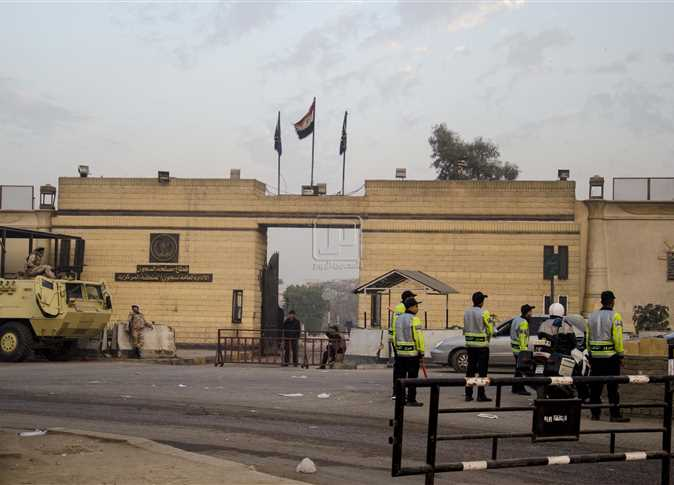
for human rights in the country more generally. He established the Adalah Center for Rights and Freedoms. He is held in very poor conditions in Tora Maximum Security 2 Prison in Cairo (pictured). He is in an airless cell, denied a bed or mattress, not allowed to exercise and is not allowed books or other reading material.

Egypt continues to crush dissent and stifle civil society, arbitrarily arrests thousands including journalists, opposition politicians and peaceful protestors.

His case was debated in parliament in December last year initiated by John McDonnell MP. The Parliamentary Under Secretary John Falconer said:

I re-emphasise, both to Alaa’s family and to the House, that his release remains a priority for the UK Government. I recognise the profound impact that his imprisonment has had on him and his family. The Government, and I as the Minister responsible, are doing all we can to find a resolution. Our priority remains to reunite him with his family, and until that happens, we are working to ensure that he is allowed consular access and support. As I said earlier, supporting British nationals overseas is at the heart of our work at the Foreign Office. That includes dual nationals and more recent British nationals such as Alaa.

Amnesty and two dozen human rights groups have campaigned on his behalf but to no avail. There seems no likelihood of his release since sentences in Egypt are simply rotated. He has been incarcerated for 10 years now. Alaa is part of the Middle East problem more generally and Egypt is seen as important in the issues surrounding Gaza (on its border) and with Iran. The government has been urged to consider sanctions or tougher action but is clearly reluctant to do so. The current Labour government, with its emphasis on growth, is unlikely to take actions which would limit that. The result is that he remains in prison for the foreseeable future. We hope his 69 year old mother, Laila Soueif, survives her ordeal.

Recent posts:

Forthcoming group activities


These are the activities planned for the coming months

April 2025

This is a list of forthcoming events the Salisbury group will be engaged in over the coming months. Each of them would be a good opportunity to approach us if you were thinking of joining. To join us is free but to become a member of Amnesty International UK there is a membership fee. The group, as well as campaigning for prisoners of conscience, is increasingly concerned with the erosion of rights in the UK. Britain has a proud history of protest and such activity has led to a number of reforms: a look at this list will give you a taste of the numbers that have taken place over the centuries. The essential truth is that those who have power do not like relinquishing it. Recent governments have introduced legislation making it harder to protest and have given the Police even more powers to arrest or interrupt demonstrations. It is more than ever important to be part of organisations like ours to stand firm against governments and their paymasters who want to clamp down on opposition.

Several of our local MPs are reported in They Work for You website as ‘generally voting against’ human rights matters. Danny Kruger, the MP for the newly created East Wiltshire constituency (which starts about a mile north of Salisbury), would like to see the Human Right Act abolished. Protecting our rights is therefore truly important as we cannot rely on our elected representatives to do it for us.

Events

  • Market stall in the Market place, Salisbury on 3 May starting at 9am and finishing at 1pm. If you have any items for the stall, please bring them along on the day.
  • People in the Park where we will have a stand on 17 May for most of the day. This would be an ideal opportunity to make contact.
  • We are continuing with our school visits (this won’t be an opportunity to drop by of course) and something we see as important*. The last one of the current programme is in June.
  • A presence on the EcoHub stall in the Market place on a Tuesday. Dates to be confirmed but likely to be late summer/autumn. Dates will be posted on here, on Facebook (@Salisburyai) and on Bluesky once agreed .
  • A coffee morning at St Thomas’s Church Salisbury on 5 July from around 10am. Home made cakes available and in the centre of the City.
  • Don’t forget that we take place – with other groups in Salisbury – in the vigils which take place in the Market place by the Library every Saturday. They are for peace in the Middle East and in particular Gaza where over 50,000 have now died, the majority of whom were women and children. Thousands more are unaccounted for under the rubble. We have just held our 70th such event. They start at 5pm for half an hour.

Later in the year we will be holding:

  • Death penalty action on the World Day Against the Death Penalty – see Amnesty’s recently published report for 2024 – on 10 October. See also our monthly reports on the death penalty the latest of which has just been posted.
  • Write for Rights will be on 30 November.

Other events which are not yet settled are:

  • Evensong at the Cathedral. The Cathedral has the Prisoner of Conscience window and the Amnesty candle on display. Agreed date under discussion.
  • Refugee Week. Details not known yet. See our latest Refugee report.
The current image has no alternative text. The file name is: human-rights-uk.png

*If by chance you are a teacher reading this at a school in South Wiltshire and would like to discuss a visit as part of your school’s citizenship programme, please get in touch.

Human Rights report


New report the group is launching

April 2025

Amnesty began by focusing on human rights in other countries. This was probably based on the belief that rights in the UK were secure, we had after all, the Magna Carta, a justice system and things like torture ended several centuries ago. The UK was a key player in introducing the Universal Declaration in 1948. With the arrival of the European Court, it soon became clear that not everything in the UK human rights garden was rosy. The Birmingham Six case was a classic example of a failure to treat the six defendants fairly. The police fabricated evidence, the six were badly beaten in custody, the courts and judges manifestly failed, the forensic evidence was a nonsense. Eventually they were released – not because the justice system worked to correct its mistakes – but because of the dogged work of Chris Mullins, an MP and journalist.

In the recent decade and a half, there has been a long-lasting campaign, largely led by some newspaper groups, to denigrate the Human Rights Act and to claim that it is a ‘terrorist’s charter’ and allows serious criminals to escape justice because of allegedly spurious arguments provided by their human rights. This has been echoed by the Conservative party who have variously claimed to want to abolish or reform the act. We can remember the nonsense claim by Theresa May that a Chilean man could not be deported because of his cat.

Human rights therefore are by no means secure in the UK. Legislation introduced by the last Conservative government limiting the right to protest and increasing police powers, together with the remorseless increase in the use of surveillance technology, shows no sign of being annulled by the current Labour government.

Hence we feel the need to focus on our rights here in the UK and the slow but steady attempts to limit or curtail them.


Funding for victims of trafficking

The High Court has declared that denial of Exceptional Case Funding to four victims of trafficking to access legal advice to prepare an application for criminal injuries compensation breached their rights under Article 6 ECHR.

Military Misogyny 

A coroner has concluded that the UK government may have breached a young soldier’s right to life by failing to protect Jaysley Beck from a sexual assault by a more senior colleague and from sustained unwelcome sexual attention from her line manager.

Deaths in custody

More than 100 relatives of people who have died after contact with the police in the UK since 1971 have joined plans for a class action lawsuit in pursuit of compensation and justice.  At the People’s Tribunal on Police Killings, bereaved families presented evidence to a panel of international experts on how their relatives died and the long-term impact this has had on them.  The findings and conclusions of the event will form the basis of a first-of-its-kind legal action directed at police officers, police chiefs and government departments involved in the deaths.         

Economic, Social, Cultural Rights

Claims by Amnesty and Human Rights Watch state that the UK faces a cost-of-living crisis which has yet to be addressed by policies that safeguard the economic, social and cultural rights of people from low-income households, particularly their rights to food, housing and social security.

Freedom of Expression 

Following last year’s criticism of the UK by the UN special rapporteur on environmental defenders, the High Court concluded that anti-protest measures introduced in 2023 – allowing authorities to clamp down on any protests deemed ‘more than minor’ disruptions – unlawfully restricted protest.  The Labour Government has yet to repeal these repressive laws and is choosing to continue the legal challenge against the High Court ruling brought by the previous government.

Environmental Protest Sentencing 

Gaie Delap (pictured), retired teacher, Quaker and climate protester has finally finished her sentence. 

Her detention was notoriously extended when prison authorities could not equip her with a curfew tag bracelet.  She said: “I think around 80% of the women I met should not have been in prison.  Help with problems such as mental health, addiction and housing would have been more useful.” 

This week the Court announced its ruling to uphold most of the harsh sentences of the ‘Walney 16’, jailing the group for a combined total of 35 years (originally 41) for peaceful protest.  Global Witness say that the UK is at risk of becoming one of the world’s most repressive governments when it comes to policing climate protest, arresting campaigners at three times the global average. Lawyers for the protesters, backed by campaign groups Greenpeace and Friends of the Earth, argued that the sentences were disproportionate and violate the UK’s obligations under human rights law, including articles 10 and 11 of the European Convention on Human Rights and article 3(8) of the Aarhus Convention.

On 25 March prescriptive policing led to the arrest of six Youth Demand members as they met in a London Quaker House.  The civil disobedience group has protested new oil expansion and UK arms to Israel.  Quakers (not allied with the group) have protested at the police raid on their premises. 

Open Justice 

Apple is taking the unprecedented step of removing its highest level data security tool from customers in the UK, after the government demanded access to user data, citing powers given to it under the Investigatory Powers Act.  After reluctantly pulling ADP from the UK, Apple has now launched legal proceedings against the government who argued it would damage national security if the nature of the legal action and the parties to it were made public.  However a judge has sided with a coalition of civil liberties groups and news organisations – including the BBC – and ruled a legal row between the UK government and Apple over data privacy cannot be held in secret. 

Sources: BBC News; The Guardian; Global Witness News; Doughty Street Chambers; Human Rights Watch; Amnesty.

Blog at WordPress.com.

Up ↑