Absolving the military from human rights laws


Conservatives and right wing press exult over plans to remove the services from the Human Rights Act

The plan by the government to enable the armed forces to derogate from the Human Rights Act have been greeted with great glee by newspapers like the Mail and the Telegraph.  The Conservatives at their annual conference in Birmingham have also been delighted by the announcement by the Defence Minister Michael Fallon.

The media has presented it in a lurid fashion.  Lawyers are described as ‘parasitic’ and ‘money grubbing’; the claims are ‘vexatious’ and that there is an ‘industry’ of people pursuing our soldiers.  The overall impression created by various generals, politicians and elements of the media is of service men struggling to do their best in extremely difficult and dangerous conditions only to find a lawyer presenting them with a summons for entirely spurious reasons (that is, to make money for themselves).  Here is former head of the Army General Dannatt for example in the Daily Mail:

It also frees up soldiers from limitations under the act on their ability to hold detainees, so they can get on with their job. [he] said: ‘I very warmly applaud this imaginative and bold move by the present Government.  It will go some way to reassuring our armed forces personnel that they can operate in future without looking out for lawyers over their shoulder.  Daily Mail [accessed 4 October 2016]

Theresa May said at the conference:

And what we’ve seen is human rights legislation being used to generate all these vexatious claims and troops finding themselves in some difficultly in worrying and concerned about the future as a result of that.

‘So I think it’s absolutely right that the Government should say to our troops: “We are on your side”. (ibid)

The only problem with it is that it is largely untrue.  We have to start by asking why are we at war in the various theatres?  The answer is because we are seeking to put in place civilised values.  We went to Iraq, not just on the spurious grounds that there were weapons of mass destruction, but because Sadam Hussein was a tyrant and abused the rights of many of his subjects.  There were similar reasons in Afghanistan.  Behind our military activities is this belief in a better world and that countries run by despots are not stable or fair on their citizens.  We believe that the democratic process is superior and countries should be run by the rule of law.  The very same people who were cheering in Liverpool are the same folk who talk about ‘British values.’

So if our soldiers are engaged in torture or abusive actions against prisoners, this is contrary to the reason why they are there in the first place and is also contrary to our values.   It is these abusive actions which are the cause of a great deal of the claims made against the MoD.

It is also presented in terms of claims against our service people by foreigners.  In fact, many of the claims are by service people against the MoD.  These claims arise because of poor treatment of soldiers by their commanders on training exercises which can lead to their deaths, for example in the Brecon Beacons.  Or they arise because of inadequate equipment which means service people are needlessly at risk and are injured or lose their lives.  The ill-equipped land rovers in Afghanistan are an example.   These actions are seldom mentioned by the right wing media.

There is something depressing in the glee of the conference goers and sections of the media about the decision.  There seems not an inkling of pride in the fact that we fought a war to defeat tyranny and that afterwards, we were the key players in setting up the Convention of Human Rights in Europe led by a conservative prime minister.  That just seems to have been forgotten.  If there were solid reasons for doing so that would be fine.  But the arguments are selective and ignore the fact that the MoD has paid out something like £20m in compensation, not because the claims were spurious, but because they were genuine.

Will it in fact happen?  The court in Strasbourg may well see things differently as Conor Gearty argues in the Guardian and we may not be successful in the derogation as we hope and as has been promised (The Tories are using the army to take a shot at human rights, 5 Oct 2016).

Also forgotten is the effect this will have overseas.  We are currently watching the horror of Syria with either the Syrians or the Russians deliberately bombing hospitals and civilian targets generally.  If one of the leading architects of the European Convention and one of the members of the Security Council, decides to ignore the actions of some of our soldiers with prisoners, what influence do we have left?

And not a word about our activities in the Yemen where we are supplying weapons to the Saudis to enable them to carry on a terrible war there.

The last word goes to Liberty:

The Convention on Human Rights isn’t just a document whose origins lie in the brutal lessons of 20th century wars.  It is directly relevant today. Our Government has a duty not only to implement it during its own military operations, but to uphold its standards as an example to others – both friends and foes. 

To save the Ministry of Defence from the shame of having to admit that civilians suffered abuse on its watch, ministers are prepared to rob our soldiers of this sensible legal framework that both clarifies their use of force and offers them redress when their own rights are breached.  For a supposedly civilised nation, this is a pernicious and retrograde step that will embolden our enemies and alienate our allies.


Conor Gearty’s book On Fantasy Island, published by OUP has just been published

Follow us on Twitter and Facebook

Three year report


Three year report on the group’s activities is published

The three year report, prepared by our chair, is published and shows what we have achieved over this time.  It is always interesting to look back and review progress and for a small group, we have done a lot in the last 3 years.

Annual Report 2016 (pdf)

Tapestry in the Playhouse
Dominic Grieve QC MP
Carols pic 1
Carol signing
Group campaign event, Saturday 8 November
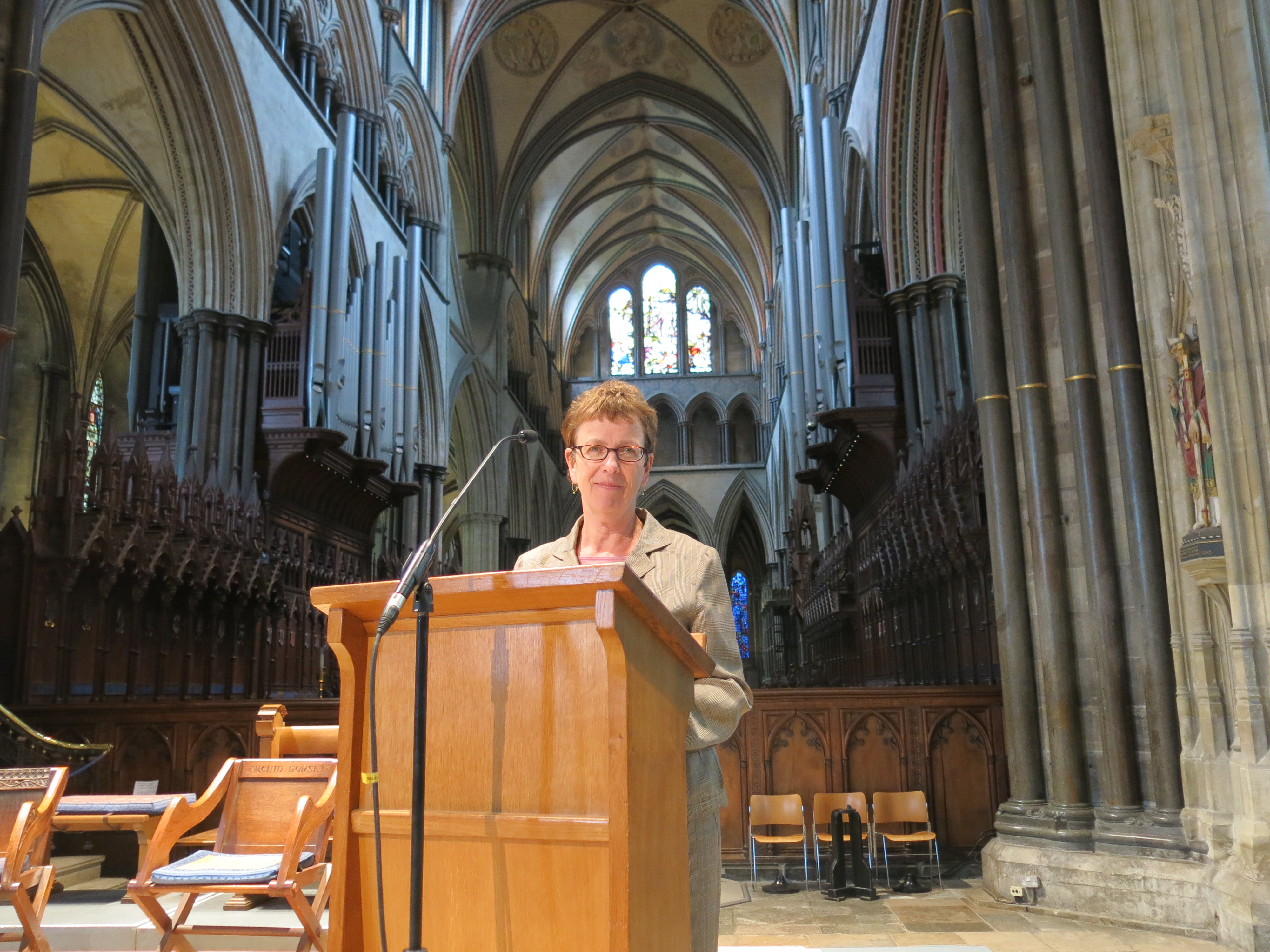
Kate Allen at the Cathedral


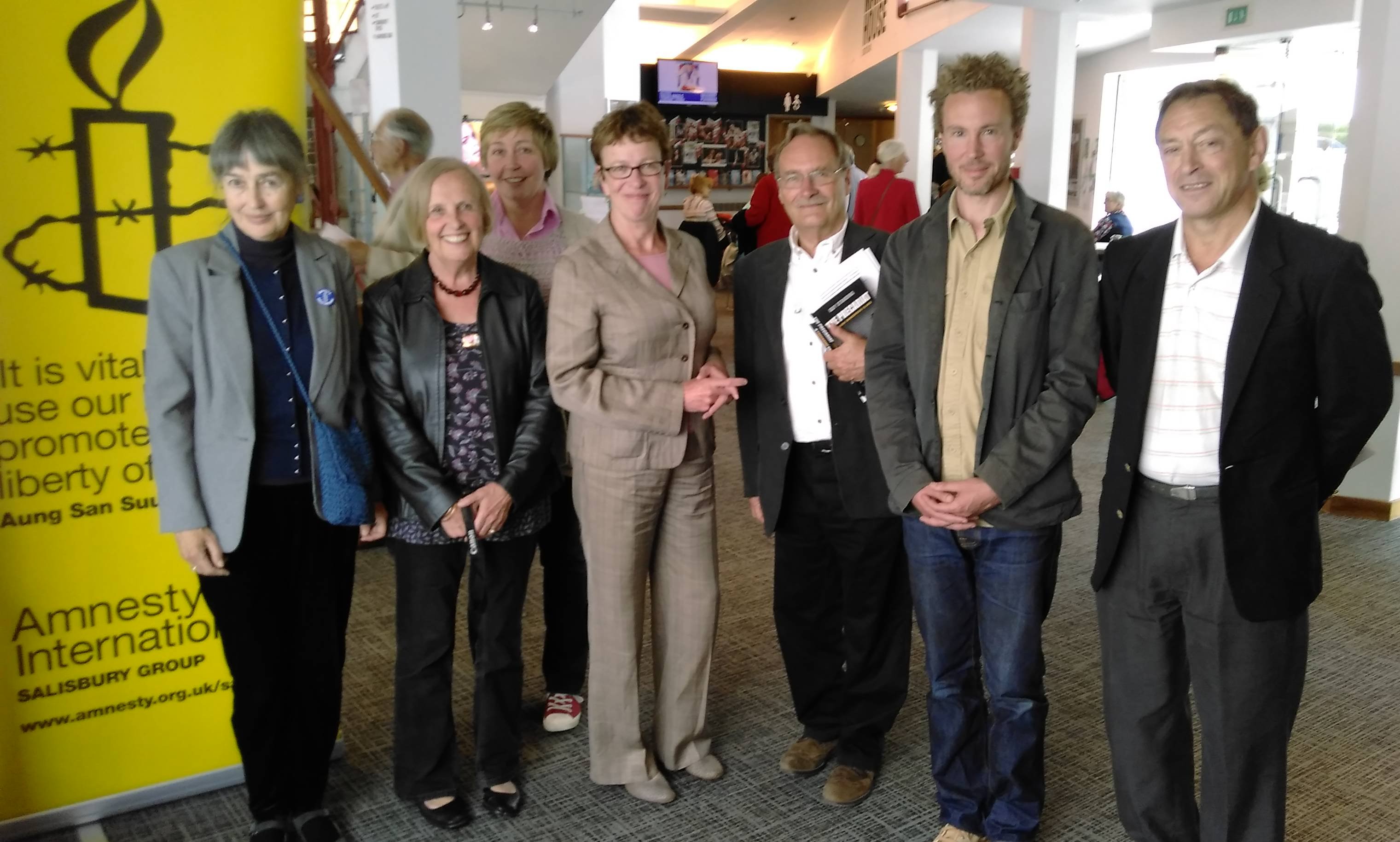
Group members and speakers at the Playhouse


David Davis MP with Kate Allen, Salisbury Cathedral
Speakers at the Cathedral including Kate Allen


Follow us on Twitter @saliburyai


British Bill of Rights


Liz Truss announces that the British Bill of Rights is back on the agenda

The new Lord Chancellor, Liz Truss, said in an interview that the abolition of the Human rights Act and its replacement with the British Bill of Rights is back on the agenda.  On the 10 August, The Times had suggested that it was not going forward.  As we speculated on this blog a while ago, the sheer amount of work needed to negotiate new trade agreements with the world and our exit from the EU, is going to consume parliamentary effort and ministerial time on an enormous scale.  Will they have time and energy to spend time haggling with the Lords over a new bill with all the rest that is going on?  Then there are the complex relations with Scotland and Northern Ireland to consider.  This pledge has been around for 10 years now yet Liz Truss gives no timetable.

We are committed to [abolishing the Human Rights Act]. It is a manifesto pledge. We are looking very closely at the details but we have a manifesto pledge to deliver that   Liz Truss

Liz Truss – picture gov.uk

The result will at best be a modest change in the law unless we are going to withdraw from the European Court itself.  This will have widespread effects especially in eastern Europe where the Court’s activities has had a positive effect on human rights.

The shame of it is that the public anger about the ‘terrorist’s charter’ and other nonsenses are fostered by the media and few of our MPs and Ministers seem to have the courage to stand up to them.  The Daily Mail, the Sun and the Daily Express are often loud in their criticisms but connection to actual facts is often weak.  But even periodicals like the Spectator – a venerable political weekly – is not above publishing tendentious material.  The hostility to the act is in part we argue, due to the privacy clauses which give some protection to those who have suffered press intrusion for no good reason other than boosting newspaper sales.

Abu Qatada is frequently produced as evidence that the act doesn’t work and meant, allegedly, that we were not able to deport him.  Firstly, if he was such a terrible man, why was he not arrested and prosecuted here?  Secondly, the failure of the Home Office and the then Home Secretary Theresa May to deport him was not the HRA but treaties we have which prevent us returning people to countries where torture is routine (as well as the HRA).  Qatada would not have had a fair trial in Jordan because, at the time torture, was common there.

We often read that duties and responsibilities are to be added as there are many – not just on the Conservative back benches – who are unhappy with ‘rights’ and feel that such rights should only be available to those who act responsibility.  How this would work is not explained.  Who’s to judge what ‘responsible’ means?  A police officer at the time of arrest feels that the person behaved irresponsibly and therefore decides not to allow the person access to a lawyer – a provision in the HRA?  Some rights are absolute and do not depend on good behaviour.  Other rights are qualified anyway.

It is hard not to see a parallel with the Brexit debate.  Years were spend denigrating the EU and then when it mattered, those like the previous prime minister, David Cameron, wanted to persuade country to Remain, he lacked conviction.  He was hoist by his own petard, or more colloquially, ‘stuffed’.

A concerted campaign has been waged by the media against the act and stories produced which only occasionally have any relation to the truth.  We have suggested before to refer to Rights Info to get the background and a sober assessment of some of the fictions.

Whether the BBoR ever sees the light of day remains to be seen.  It is likely that this is a rash statement by the new Lord Chancellor which may quietly drift into the background when the difficulties and disadvantages are explained.  But it will continue to lurk until a sufficient number of MPs – like those in the Runnymede group – stand up and speak positively about the act and the benefits it has brought to thousands of ordinary citizens who have used it to secure basic rights, stories that rarely find their way into print.

Salisbury MP, John Glen is among those who have publicly called for the act to be abolished.


Follow us on Twitter

Sources: The National; The Times; http://www.parliament.co.uk; Spectator; Daily Express

Why do they hate the Human Rights Act?


Act is likely to be doomed whoever is Prime Minister

June, 2016

Both the leading contenders to become the new Prime Minister, Boris Johnson [UPDATE: 30/06 Johnson rules himself out.  Michael Gove is standing]  and Theresa May, are committed to getting rid of the Human Rights Act [HRA] and want to introduce a British Bill of Rights [BBoR].  It is also true of Salisbury’s MP, John Glen who has written to that effect in the Salisbury Journal.  The commitment was in the Conservative party’s manifesto in last years general election.  This is yet to see the light of day and how it will differ from the existing act has still to be made clear.  We have suggested that the only thing which may stop this happening is that considerable time will now be needed to negotiate our exit from the EU; negotiate new trading arrangements with the EU and the rest of the world, together with a mass of budgetary issues once we no longer are in receipt of EU regional, sectoral and other funds.  Whether there will be time for a long battle with the Lords over the HRA is in doubt.

Perhaps now is timely to ask why is it that the HRA has become almost a dirty word and why the media in particular has waged a relentless campaign against the act and against the EU itself, culminating in the Brexit vote last week.  Part of the answer is in that last sentence: the HRA is the embodiment in British law of the European Convention on Human Rights and as such is tainted by its association with Europe generally.  But that is not the whole answer because it would be possible to be against the EU for economic reasons – slow growth, high unemployment and low investment for example – but still be in favour of the act.

RightsInfo in a recent post has argued that we need to learn 5 lessons from all this and argues for a changed approach to countering the inbuilt media bias against the EU project and the ECHR.  While this is true it is nevertheless important to understand where this bias comes from.  Why is a large section of the media (roughly 70%) so viscerally against the act and dedicated to writing misleading or plain wrong stories about Brussels and Strasbourg?  Unless we can gain an understanding of this then efforts to counter it and change minds are probably doomed.

Loss of Britishness

The first reason may be the sense that we have lost a sense of Britishness acquired over the last eight hundred years, especially as far as the law is concerned.  This was very evident during the Magna Carta celebrations last year.  There was this sense of 800 years of seamless progress culminating in the corpus of law we now have.  Then along came Europe and imposed a new law upon us which had wide ranging implications for all our law in the UK.  It said that human rights had to be respected and for some this came hard.  Despite the fact it was Churchill who pushed for the European Convention and our support for the UN Declaration of Human Rights in which we played – at times reluctant – part, the ECHR was seen as an intrusion into our affairs.  We simply did not need it and there was resistance to its application in the UK.

Magna Carta was about the release of power by the king to his barons.  Much of subsequent legal history has been about the steady release of power by those elites who hold it to the ordinary people.  As industrialisation gradually took hold in the nineteenth century for example, there were prolonged battles to obstruct and delay public health reforms; improved safety in factories; better housing, and for ordinary people to be educated.  The HRA turns this approach on its head and says that there are basic rights that everyone should have.  It also gives people the chance to challenge, using the legal process, those in power.  It comes as no surprise therefore that those who have the power are miffed at its loss or at least diminution.

One can also detect a kind of arrogance.  We won the war and helped put in place a set of rules for them (the Europeans) to live by.  We didn’t need them because we have this ancient and trusted system.  When we started allowing appeals to Strasbourg it came as something of a shock when rulings started to go against us.  Suddenly, this superb system didn’t seem so wonderful after all.  Ordinary people spoke and something of a shiver went through the political elite.

Gift to the world

Linked to this is that the British system is now used around the world principally by countries that used to be colonies.  From the USA to New Zealand,  much of Africa and the subcontinent, the system of justice is based on what was developed here.  Europe on the other hand has a different legal system and does not (with a few exceptions) have a corpus of common law.  It is difficult in these circumstances for some people not to feel that Europe is a ‘Johnny come lately’ to the legal scene so why should they tell us what to do?  After all, fascism was rife in Europe so who are they to lecture us on human rights?

The media and neo-liberalism

One of the strangest paradoxes of the EU debate and the passions the referendum unleashed is that our close links to the USA are almost never mentioned.  Yet the effect of the USA and its major corporations have arguably as equal an effect on life in the UK as do the machinations of Brussels.  We have witnessed major tax dodging by US corporations such as Google, Amazon, Starbucks et al amounting almost to plunder.  Starbucks graciously agreed to pay a voluntary amount and Google a trifling sum.  Europe has shown itself to be keener and tougher in its approach to taxing these behemoths.

Throughout the whole debate following the Snowden revelations, it was the linkage between the American spy agency NSA and GCHQ which was a significant fact.  NSA used GCHQ to hoover up information on US citizens which, under their Constitution, they were not allowed to do.  Both were engaged in mass surveillance largely uncontrolled by our politicians who were – on this side of the pond at least – asleep at the wheel.

A large chunk of our media is owned by Americans, most particularly the Murdoch family.  This was allowed to happen to help Mrs Thatcher gain power.  The important point however is that these proprietors are keen believers in the Neocon agenda.  For them good government is small government.  They still believe in the merits of unfettered free markets.  The emphasis on the social chapter in Europe is not something they are at all keen on.  Power is also important and as we saw during the Leveson hearings, they were used to slipping in and out of the back door of Downing Street for surreptitious and unminuted meetings with the Prime Minister of the day.  Europe makes all this harder.  Instead of a ‘quiet word’ with the PM, there are 27 other countries to deal with.

American power is therefore widely felt and in many areas has greater influence than anything coming out of Brussels.  Yet it is Europe and Europe alone which fills the media and the airwaves.  There is thus an inbuilt bias in the reporting of Europe and American power almost never gets a mention.  It wasn’t Europe which took us into the Iraq or Afghan wars.

Media and privacy

Still on the media but taking in the tabloids in particular, is the issue of privacy.  The phone hacking story revealed many parts of the British media to be acting outside the law.  People’s phones and emails were hacked, bank accounts blagged and for some celebrities and politicians, they were almost unable to communicate with anyone without the risk of their message being intercepted.  The full story can be read in Nick Davies’s book Hack Attack [1].  Aspects of this was illegal but recourse to the police was largely a waste of time since the police themselves were selling information to the tabloids or were afraid to tackle the media with whom they had an unsavoury relationship.  It has been argued that the phone hacking scandal only saw the light of day because of the HRA [2].  Regulation into interception was introduced because the UK fell foul of the ECHR.

The print media were feeling the pinch however with falling advertising revenues, fewer people buying newspapers, preferring the internet to gain access to stories, and increasing costs.  Much easier therefore to hack into celebrities’ phones to get a juicy front page.  They were free to do this because there was no law of privacy.  The HRA does provide some privacy protection and this poses a threat to their business models.  So parts of the media have a problem, both ideologically with its adherence to free market ideas and, its business model based on intrusion.  Europe is a threat to both these aspects, especially the latter from the HRA.

Thirdly is the concept of freedom and responsibility.  To be able to reach millions of people either in print or online is a huge responsibility, a responsibility to give as balanced a view as possible to impart the key facts.  Freedom of speech is a precious thing but it does also come with some responsibilities.

To end this section it would be unfair to blame all the media’s woes on the media themselves.  They are there to sell papers and, as with all forms of marketing, it is based on the principal of giving people what they want.  Clearly, they have picked up a mood or anti-Europeanism and they have provided the stories to match.  One can argue that they have failed to provide a balanced view.  They, however, might argue that the Independent newspaper was balanced, but is now only available on-line and the only other paper trying to give an even handed view is the Guardian which sells only a derisory number of copies.  If the public were interested in balance and wanted to read the benefits of EU membership they can do so.  They don’t.  The tabloids can fairly argue that they reflect the public’s view.  People buy their papers by the million, not the ones with balanced views. The Daily Mail has the world’s biggest on-line readership.

Politicians

Which brings us to the final point.  Against the tide of misinformation and negative stories about the HRA and Europe generally most of our politicians have either joined in or remained silent.  A few Lib Dems were proponents but they were reduced to a rump at the last election and are now scarcely a political force.  Whereas Ukip and Nigel Farage are rarely out of the news, the Lib Dems have all but disappeared off it.  Saying positive things about Europe to try and keep Britain within the EU came late to many of our politicians during the Referendum campaign and resulted in them not being believed anyway.  Anthony Lester refers to the ‘love-hate relationship’ between politicians and journalists in his book Five Ideas to Fight For  [3].

They are mutually dependent and yet proclaim their independence, each side claiming to represent the public interest better than the other.  (p159)

The media and politicians are both part of what has been termed the ‘Establishment’.  In his book The Establishment and how they get away with it [4] Owen Jones attempts a definition:

Today’s Establishment is made up – as it always has been – of powerful groups that need to protect their position in a democracy in which almost the entire adult population has the right to vote.  The Establishment represents an attempt on behalf of these groups to ‘manage’ democracy, to make sure it does not threaten their own interests.  (p4)

In a chapter entitled ‘Mediaocracy’ he describes how the media plays a role within this Establishment by focusing people’s ire on those at the bottom of society.  The success (if success be the right word) of this blame game could be seen in spades with the Brexit campaign and its focus on immigrants and Europe as the cause of many of our woes.  That immigrants contribute at least £2bn to the UK’s economy and are a mainstay of hospitals, the food industry, transport and much else is something you would not be aware of from much of the media.

It can be seen that the dislike of the HRA is the result of several forces.  The shift in power away from the elites and the provision ordinary people with rights is resented especially by those who have sense of being born to rule.  A right to privacy threatens those parts of the media whose business model depends on the wholesale intrusion into the lives of celebrities, sportsmen and women, and politicians (but never you notice other media folk).  An arrogance concerning the age of our legal system and its alleged superiority to the continental one makes us reluctant to accept correction or a different perspective from across the channel.  A loss of power and influence by media proprietors of the political establishment is also a factor where Europe more generally is concerned.  All these forces come together to result in an assault on the act.   Very little good is allowed to be said of it but plenty which is bad – whether true or not – can.  The HRA enabled a light to be shone into the Establishment and what was revealed was murky.  Is it any wonder they are so keen to see it gone?

This is the backdrop to the likely demise of the HRA.  And it seems little can be done to halt the process.  Good news stories rarely get into the media and are unlikely to be believed anyway.

Sources:

[1] Hack Attack, How the Truth Caught up with Rupert Murdoch, 2014, Nick Davies, Chatto & Windus

[2] A Magna Carta for all Humanity, 2015, Frances Klug, Routledge

[3] Five Ideas to Fight For, 2016, Anthony Lester, Oneworld

[4] The Establishment, and how the get away with it, 2014, Owen Jones, Allen Lane

On Liberty, 2015, Shami Chakrabarti, Penguin


Follow us on Twitter and Facebook

What happens now?


The country (UK) has decided to leave the EU: so what next?

In the early hours of yesterday morning, the referendum was concluded and the country decided to leave the EU on a high turnout.  The Prime Minister is to resign and there may be an election by Christmas.

One of the key issues that decided the referendum was the question of immigration and the other was sovereignty.  While those politicians who were in favour of remaining in the EU, went on about the economy, security, jobs and so forth, it was obvious from interviews in the street (vox pops) that very many people were concerned about more basic matters.  As far as many of them were concerned, they were suffering from the effects of austerity and the people who were making matters worse were the immigrants.  They were ‘flooding’ into the country and were putting a strain on public services and bidding down wages (it was claimed) thus making their own lives a misery.  Membership of the EU made matters worse as we were unable to stem the tide because of their rules.  Coming out was clearly a solution to their woes.

Sovereignty also reared its head from time to time and a familiar line was taking back our sovereignty so that we can make our own laws and run our own affairs, free from interference by Brussels bureaucrats and unelected judges in Strasbourg.  The election of our own judges is something that must have passed us all by.

So what of the Human Rights Act?  The Conservative’s manifesto made clear their desire to scrap it and replace it with a British Bill of Rights.  Months have gone by since the election and no sign has been seen of this document.

But if anything is clear from yesterday’s events, it is that hatred of the EU and its alleged interference in our affairs – including our legal affairs – is very strong and was one of the deciding factors which enabled the Brexiters to win the referendum.  This has been whipped up by a right-wing press and not a little xenophobia.

The problem now for the new government – expected at the time of writing to be formed by Boris Johnson – is that they just cannot leave the BBoR to one side in view of the fervour generated and promises they have made to the electorate.  But, the EU will be wanting a speedy departure by the UK from the EU, and not on painless terms either, to prevent contagion spreading to other disaffected countries.  So considerable time will need to be spent by thousands of civil servants negotiating new terms, agreements and treaties to enable our new relationship with the EU to continue.  Enormous parliamentary time will be needed as well.  The question is therefore – will there be the time or energy for this battle?  Getting a diminished set of rules through the Lords will not be easy.

It is a great pity that so many politicians have allowed the untruths and exaggerations by the right-wing media to gain such traction and to go unanswered.  Many believe that all red tape and rulings from Brussels are automatically bad news and diminish our lives.  We would be so much better off without them they say.  The word ‘free’ is used a lot: free of such rules, free to trade where we will, free to rule our lives and free of encumbrances generally.   The HRA has been a lifeline for many, many people in the UK.  They have used it to secure redress against arbitrary decisions which affect their lives.  Public authorities have to be cognisant of the act in their policy making.  Is all this to go?

We may ask the question ‘free for whom?’  Axing the HRA will not provide ordinary people with more freedom, but less.

So whether we will see the end of the HRA remains to be seen.


Meeting


Monthly Meeting

The group  meets this Thursday 9 June at 7.30 at 4, Victoria Road as usual.  The agenda is below:

1             Apologies

2             Minutes of last meeting

3             Treasurer’s report

4             Update on Campaigns

  • Death Penalty  (inc World Day v DP 10/10)
  • North Korea (inc video)

5             Social Media

6             Market Stall  (Saturday)

7             Monthly Action

8             Arts Centre Film (15/12)

9             School Citizenship day (October)

10           Other forthcoming events (inc possible venue for coffee morning, barbecue)

11            AOB


Follow us on Twitter and Facebook


Unpublished letter


Text of letter sent to Salisbury Journal

The following letter was sent to the Journal in Salisbury but regrettably for space or other reasons it was not published (14th April).  We do not know at present what the current situation is with the promised bill to abolish the Human rights Act and replace it with a British Bill of Rights (or whatever it is to be called).  It is a manifesto promise and a draft was to be published in the Autumn but has not yet appeared.  It is possible that the arrival of Michael Gove into the Justice Dept. had something to do with it.

Now that we are in full swing with the debate about leaving the European Union, it is possible that this has been shelved for the moment.  Mr Gove is a leading proponent for the Brexit camp who – if current polls are to be believed – are doing well at the moment.  The calculation may therefore be that if they win then the scene is set to dump the HRA as well.

On the other hand, there will be a heavy workload in managing our exit and carrying out the negotiations to secure access to the European market once we leave, so there will be limited civil service and parliamentary time to spend on a new Bill of Rights.

But back to the letter and our local MP John Glen is keen to abolish the HRA and it would be a pity if he is given space in the Journal again to put forward his views and the opportunity is not given to those who disagree with him.  The unpublished letter:

Britain has had a proud history of leading the charge on human rights progress from the aftermath of the Second World War when we were key drafters of the European Convention of Human Rights, to the suffragette movement, to gay rights and other equality legislation. We have often been champions of progress.
What a shame, then, that this year the UK was singled out for criticism in Amnesty International’s annual report on the state of the world’s human rights.  Amnesty is warning that the government’s plan to tear up the Human Rights Act is a gift to dictators all over the world.  Russia recently drafted legislation which allows it to ignore human rights rulings it doesn’t agree with. Far from being able to condemn that action and call on Putin to uphold basic human rights, the UK is actually talking about following suit.  Music to the Kremlin’s ears, no doubt.
Here in Salisbury, the local Amnesty group is campaigning to save the Human Rights Act.  Britain should be a world leader on human rights.  The Human Rights Act protects ordinary people – from the elderly to hospital patients, to domestic violence victims – and we want to see those protections spoken about with pride by our politicians.  We should be redoubling our commitment to enduring human rights principles in these troubling times, not undermining them.
Let’s hope next year’s annual report on the UK reads: “much improved”.

Follow us on Twitter and Facebook
Excellent debate on the HRA


A debate on the Human Rights Act was held in Southampton

UPDATE: 12 March

A fuller version of the talk is now to hand and can be accessed here:

soton talk (pdf)

On Friday 19 February, the Southampton and Romsey groups of Amnesty hosted a debate on the HRA.  The speakers were Dr Clare Lougarre of Southampton University and Dr Alan Whitehead, the MP for Southampton Test.  A representative from the Conservatives was invited but did not take up the invitation.

Clare began by placing the HRA in its context as a natural consequence of the Euroean Convention on Human Rights [1950].  In the context of the debate on the current government’s manifesto commitment to annul the HRA, articles 2, 3 and 4 were significant.

  • art 2 says that court’s decisions must take into account the decisions, declarations or advisory opinion of the European Court
  • art 3 UK laws are compatible with the European Convention
  • art 4 says that if our laws are not in accordance with the convention they may issue a declaration of incompatibility.

She said there were two options for the government: they repealed the act but we stayed within the convention or, it withdraws its signature from the convention altogether.  In the first case, there would be little difference as we would ultimately be bound by the European Court.  In the second instance however there would be no recourse to the EC and the most likely affected by this are the vulnerable in society.

Dr Whitehead said he was puzzled by what the government wanted to do.  The animus against the HRA was based on myth, semi-truths and half truths he said.  One myth was that it was ‘Labour’s Human Rights Act.’  This was a frequent phrase used by conservative critics.   It simply wasn’t true he said, it was a cross party bill supported by many conservatives.  He was moved to ask ‘what part of the act don’t you like?’  He reminded the audience that it was a conservative – Winston Churchill – who was one of the prime movers in creating the ECHR in 1950.

One of the charges against it was that the court had ruled on areas which were never intended by the original convention, in other words there was ‘mission creep.’  This was inevitable since the articles were widely drawn and also, attitudes had changed over time with, for example, our approach to abortion.

The case that is frequently brought up is Abu Qatada.  This was presented as a failing of the HRA.  It was not.  The Home Office had made mistakes in its original paperwork and the reason he could not be sent back [to Jordan] was because either he, or the witnesses, would be subject to torture.  [He might have added that abolition of torture was subject to another treaty altogether.]

A further point made by Dr Whitehead was that it should not be for a single government to make law on something as important as this.  He did not think we would see anything before the end of the parliament and what would emerge would be a ‘mouse’ of a bill.

It was a lively and informed debate and all credit to the two Amnesty groups for organising it.  For further information on the HRA go to (among other sites) British Institute for Human Rights and Rights Info.  Now that the movement to come out of the EU is getting underway, the HRA will be a whipping boy for those that want us to leave the union.  Both these sites help counter the frequent flow of misinformation by some sections of the media and some politicians.


twitter imageFollow us on Twitter and Facebook

February meeting minutes


The minutes of the meeting held on Thursday 11th February are available thanks to Lesley.

February (pdf)

twitter image Follow us on Twitter and Facebook


Human Rights Act guide published


A useful guide to the Act has just been published by the British Institute of Human Rights and can be accessed here either in e-book form or as a video.

Blog at WordPress.com.

Up ↑