
Significant number of things happened this month
May 2025
There were a number of interesting events on the human rights front in the UK this month including the Court of Appeal judgement discussed below. There has been a steady ‘nibbling away’ of rights by successive governments which is why we have started this series of reports of which this is the second and why the judgement is good news.
Right to Protest
This month the Court of Appeal has upheld an earlier ruling of the High Court from May 2024 that then Home Secretary Suella Braverman did not have the power to create a new law that lowered the threshold of when the police can impose conditions on protests from anything that caused ‘serious disruption’ to anything that was deemed as causing ‘more than minor’ disruption. They said that “the term “serious” inherently connotes a high threshold … (and) cannot reasonably encompass anything that is merely ‘more than minor’”.
This was the first time a government had sought to make changes through so-called ‘Henry VIII powers’ of secondary legislation to a law which had been democratically rejected by Parliament when introduced in primary legislation.
Hundreds of protesters have been arrested under these measures since they were created, including the

climate activist Greta Thunberg (pictured: MusikExpress) who was acquitted of all charges in a hearing in February 2024.
Liberty has called for the regulations to be quashed immediately (as per the initial ruling from the High Court, whose decision to scrap them was put on hold until the conclusion of the appeal) and has called for all arrests and prosecutions under the legislation to now be urgently reviewed, alongside a comprehensive review into all protest laws that have been passed in recent years.
The Court will decide in the coming weeks if the legislation is to be quashed.
Gender Recognition Ruling
Five judges from the UK Supreme Court ruled unanimously that the legal definition of a woman in the Equality Act 2010 dealt with biological sex at birth and did not include transgender women who hold gender recognition certificates.
In a significant defeat for the Scottish government, their decision will mean that transgender women can no longer sit on public boards in places set aside for women and it will have far reaching implications for access to protected spaces and services such as the armed service, hospitals, women-only charities and changing rooms and access to sport.
Lord Hodge told the court the Equality Act (EA) was very clear that its provisions dealt with biological sex at birth, and not with a person’s acquired gender, regardless of whether they held a gender recognition certificate. In a verbal summary of the decision, he said: “Interpreting sex as certificated sex would cut across the definitions of man and woman in the EA and thus the protected characteristic of sex in an incoherent way.” He stressed that the ruling does not change the protection trans people are afforded under the protected characteristic of ‘gender reassignment’ under the Equality Act. Amnesty has called the decision ‘disappointing’.
Humanist Rights
Two couples are taking the government to court over its failure to legalise humanist marriage in Wales and England, five years after a ruling that the lack of recognition was discriminatory. Humanist marriages are legal in Scotland and Northern Ireland, and elsewhere in the world including New Zealand, Canada and Australia. In Scotland in 2022 there were 9,140 humanist wedding ceremonies compared with 8,072 based on faiths or other beliefs.
Activists Detained
Non-violent activists Roger Hallam and Dr Patrick Hart are being refused their right to a Home Detention Curfew. Days before their scheduled release from prison in March Dr Hart was told that there was ‘no suitable accommodation’ and Hallam that the media’s interest in his case meant that he was deemed unsuitable for HDC (which actually states that non-violent prisoners can only be denied release ‘in exceptional circumstances’). New release dates are respectively June and possibly August. There will be an appeal.
The Counter Terrorism and Border Security Act of 2019
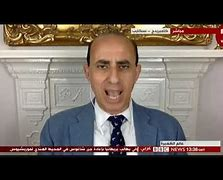
This was invoked by police at St Pancras rail station for detaining a Palestinian-British Christian academic and his 8-year-old son on their return from Paris on Good Friday. Professor Makram Khoury-Machool (pictured: BBC Arabic Service) is a Palestinian-British Christian academic who has lived in the UK since 1999 and taught in Cambridge since 2004. He is the founder of the Cambridge Centre for Palestine Studies whose board members and patrons include Dr Rowan Williams, Baroness Helena Kennedy, Baroness Sally Morgan, Lord Chris Smith, HE Clare Short, Baroness Warsi and Lord David Steel.
He and his son were held over 4 hours until after midnight, were given no food while the police took his fingerprints, DNA samples, searched his personal belongings and confiscated his laptop and mobile phone using the threat of force. Seven days later, the devices were returned but without his SIM card. He was subjected to an intimate body search, and his son was left traumatised by the experience. This is perhaps the first time a child as young as eight has been detained in the UK under the 2019 Act; his treatment may breach the UN Convention on the Rights of the Child to which the UK is a signatory.
Economic, Social Cultural Rights
Amnesty reports that in the UK there is no legislatively defined universal social protection floor such as the one recommended by the UN’s International Labour Organisation: this is left to the discretion of the state and is inconsistent across Great Britain and Northern Ireland. The changes proposed by the Pathways to Work Green Paper 2025 will require new legislation allowing the secretary of state to implement proposed cuts to social security rates for disability and incapacity schemes, and removing some of the legislative protections which are in place to protect against political whims.
If implemented, Amnesty considers the extensive reforms proposed would be a deliberately discriminatory, disproportionate and retrogressive violation of human rights; The UK’s social security system does not legally guarantee essential social security payments that ensure access to basic needs such as healthcare, housing, food and education and that social security freezes, caps, and deductions, removal of the spare room subsidy (bedroom tax) and two-child limit have deepened poverty and disproportionately harmed children, the disabled and low-income families. Despite increased social security spending, poverty rates remain unacceptably high.
Recent posts:





 Amnesty in Salisbury & South Wiltshire