Burma: the misery continues


Six decades of attacks and airstrikes continue

February 2026

Burma, or Myanmar, has slipped out of the news in recent months but the brutal activities of the military Junta continue. Violence has lasted for 6 decades now during which massacres have been carried out and around 800,000 have been forced to flee. Elections are promised which will be sham. There is considerable resistance, both peaceful and armed to the regime. As part of the election process some of the 20,000 political prisoners will be released according to the latest edition of the Burma Campaign News (Issue 49, 2026). Political prisoners are subject to horrific treatment, held in appalling conditions, subjected to torture and denied medical care. Children as young as 2 years old are held as proxies for their parents.

Amnesty reports that the military Junta has committed widespread repression and abuse in every facet of life in the country since seizing power on February 1, 2021, Amnesty International, Fortify Rights, and Human Rights Watch said last month. The military’s atrocities since the coup, which include war crimes and crimes against humanity, escalated over the past year as the Junta sought to entrench its rule through abusive military operations and stage-managed elections.

The UN Special Rapporteur said in London in December:

“The people of Myanmar have shown extraordinary courage. They deserve an international response that matches their determination the United Kingdom can play a decisive role and now is the moment to act”.

Following a submission by Gambia, the International Court of Justice has in January, commenced hearing evidence of genocide against the Rohingya people many of whom fled the country. The ICJ issued provisional measures to protect the Rohingya which have been ignored by the Junta.

The UK government is criticized for not having made any new, targeted sanctions since 2024 and there is also a concern that the Junta is allowed to host a military attaché in London.

China’s role

The role of the Chinese is significant in the future of the country. Currently, it is reported by Foreign Affairs that China is ‘supporting both sides but with the hope that the Junta will win through in the end’ despite its appalling record of human rights abuses. It can tolerate a divided Myanmar as long the the main power holders remain dependant on China for trade and energy. It is also reported that China has provided $3bn of aid to the Junta.

Although it is true that the UK can play a role, the resource rich country is attractive to China which exhibits little interest in human rights within its borders or in foreign countries. It is their role which is probably crucial and as long as it continues to support the military then the current path of violence will likely continue.

As well as the Burma Campaign, another organisation of note is Advance Myanmar.
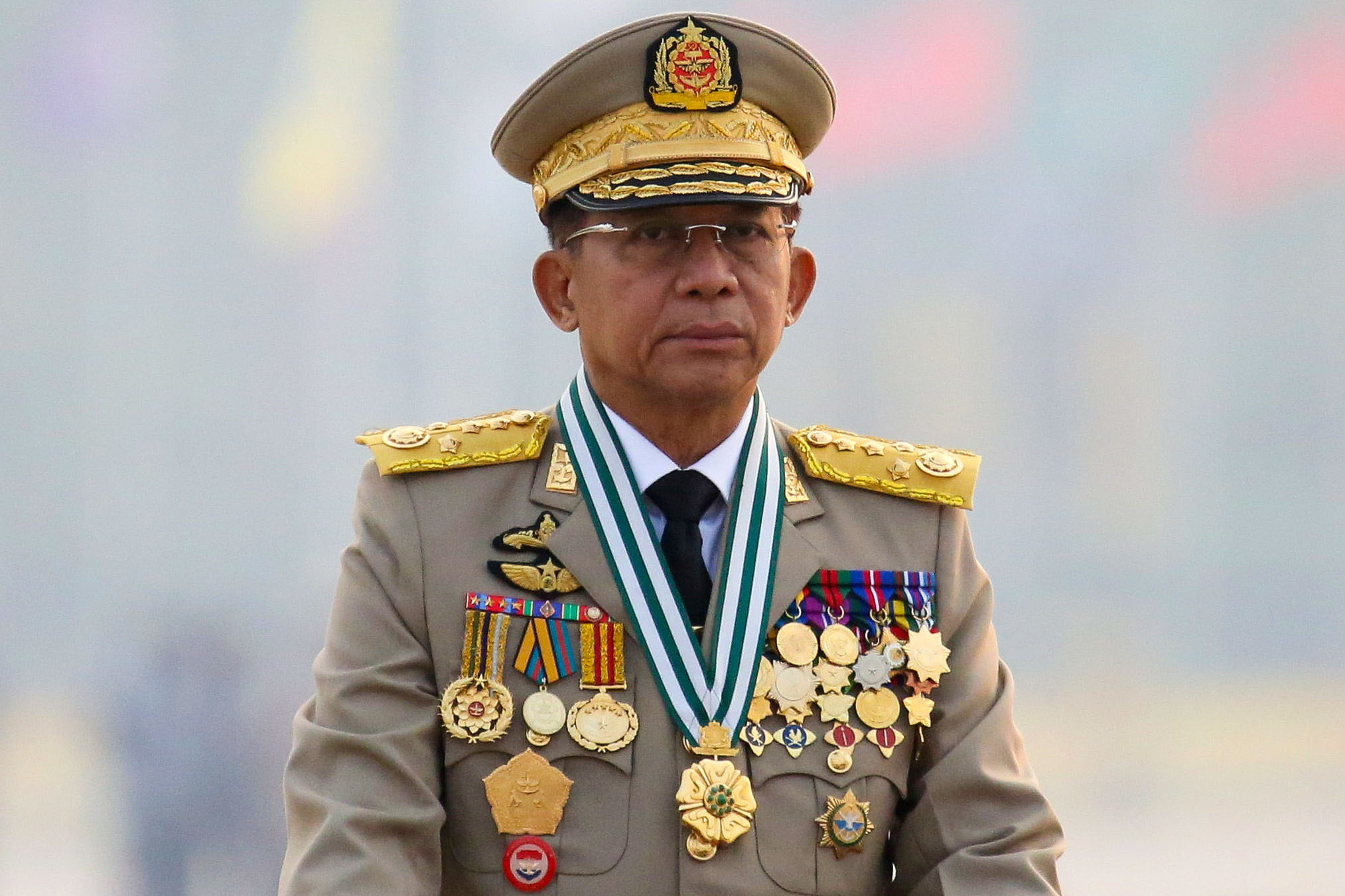
Ming Aung Hlaing, leader of the Junta


Previous posts

UK Government’s Inaction on Palestinian Rights Criticized


Bishop’s letter “incredulous” at lack of government action over Gaza and West Bank

February 2026

Three Anglican bishops have today (2nd February) written a letter published in the Guardian in which they express dismay at government inaction over Gaza and events on the West Bank.

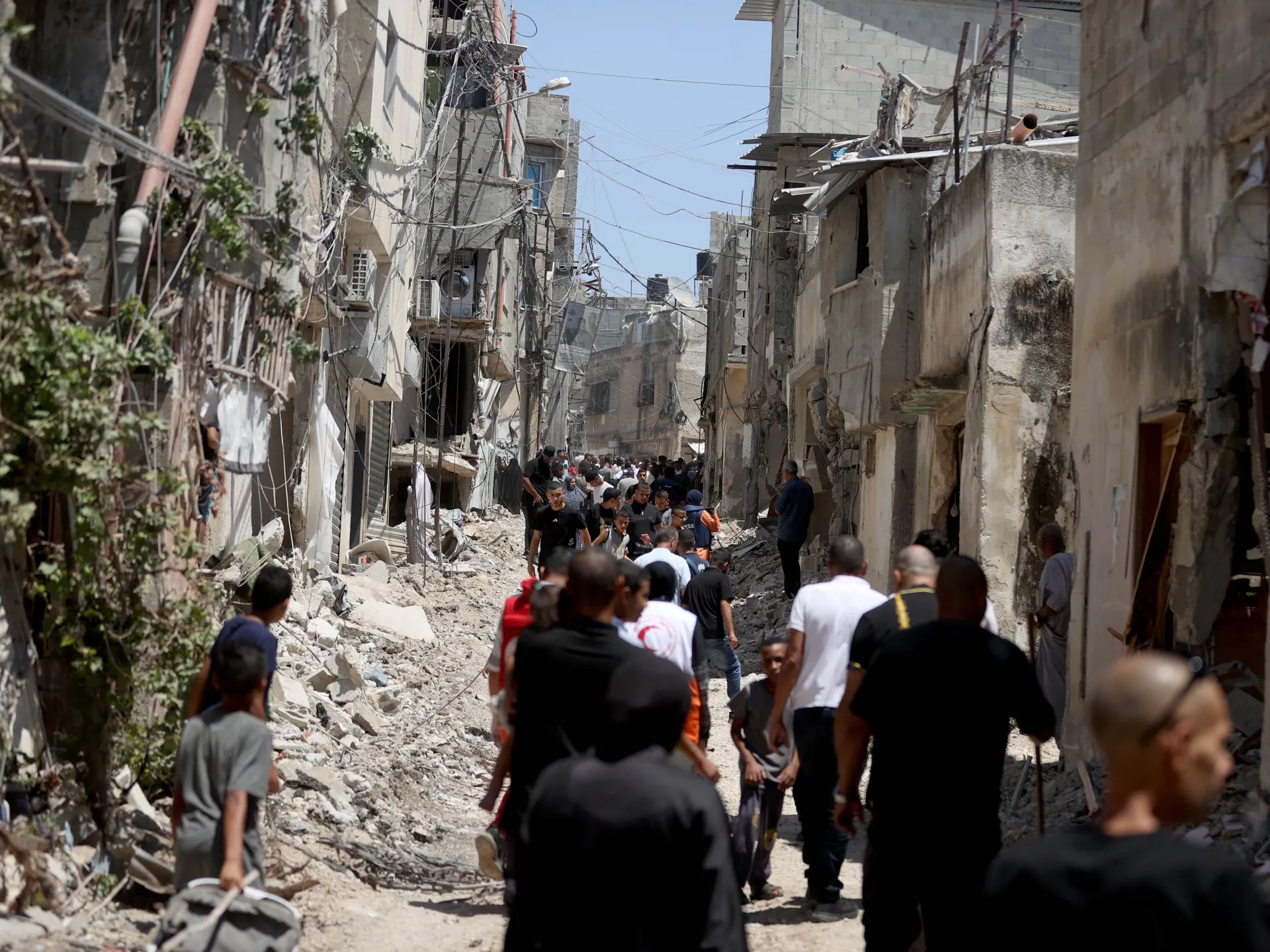
“Having returned from another visit to Palestine, we are incredulous that the UK government has still not published its legal response to the international court of justice’s advisory opinion in July 2024. This inaction has contributed to a culture of impunity that the Israeli government has used to accelerate its de facto annexation of the West Bank.

“Its instruments are administrative changes, continuous settlement expansion and growth, intensifying violence by Israeli troops and settler militia, the localised system of road closures, house demolitions, tightening access to water and electricity, deepening legal segregation and an unequal system of governance.

“While world leaders met in Davos to debate futuristic plans for the reconstruction of Gaza, which are largely disconnected from reality, we visited and listened to Palestinian Christian communities across the West Bank on their lived experience. Once more, we have heard from families living in fear and torment – an unending nightmare where they are denied even minimal dignity. The violence has robbed them of the ability to earn a living and provide for their families.

“Terrorised to the point of fearing for their lives, there is no one to protect them. Faced with such abandonment, and denied any agency as to their future, many now feel they have no choice but to leave or to die standing. This seems to be the Israeli government’s intentional strategy.

“The international community must uphold its obligations under international law to protect Palestinians. The only way is to uphold the ICJ advisory opinion. Having formally recognised the state of Palestine, the British government must publish its response and take all necessary measures “not to render aid or assistance in maintaining the situation created by Israel’s illegal presence in the Occupied Palestinian Territory”, as the court stipulated.

“The situation in the West Bank is a tragedy foretold. We must stand up and do the right thing before it’s too late”.


The Rt Rev Dr Guli Francis-Dehqani Bishop of Chelmsford; The Rt Rev Rachel Treweek Bishop of Gloucester; The Rt Rev Graham Usher Bishop of Norwich

Readers of our earlier posts about British government’s complicity in the violence and its continued political, military and diplomatic support will be aware of the shameful role our government has and is playing in the genocide taking place there.

Image: Al Jazeera.

The UK and Israel


UK trying to frustrate the International Court of Justice in the Israel/Palestine conflict

August 2023

The UK, in common with some other western countries such as Germany and the US, is trying to block the ICJ from considering international humanitarian law matters in relation to the Israeli government’s treatment of the Palestinians.  A legal opinion has been leaked enabling us to see the reasoning behind the government’s position.  The opinion, if genuine, claims it is ‘inappropriate for [the UK] to insert itself into a bilateral dispute without Israel’s consent’.  The most obvious thing to say is that such consent is unlikely ever to be given. 

Another argument in the opinion is that it will hamper prospects for relaunching Israel/Palestine negotiations, prospects for which are vanishingly small.  The two state solution collapsed in 2014, nearly a decade ago.  The opinion does not seem to take into account recent developments in Israel and the statements by Itamar ben Gvir, leader of the ‘Jewish Power’ party and currently the National Security Minister, who said ‘his rights in the occupied West Bank are more important than those of Palestinians’.  This and similar remarks in interviews have led to condemnation by the US government.  Gvir has also fallen out with Bella Hadid, the super model who repeated his remarks in a blog.

Violence has increased in Israel and the process of seizing land and destroying Palestinian/Arab communities and land continues at a fast and increasing pace. 

The opinion also claims that this is a ‘bi-lateral dispute’ which may be true but it has not hindered the UK government and other members of NATO, from interfering in a ‘bilateral dispute’ which happens to be called Ukraine.  

The ICJ is the main UN judicial organisation and it played a key role in ending the apartheid system being run by the South African government in Namibia.  It also forced an unwilling UK government to open talks with Mauritius concerning the Chagos Islands and the forced removal of its people. 

Whether the ICJ will follow through on this and endorse the reports by a range of human rights organisations alleging Israel’s treatment of the Palestinians amounts to apartheid remains to be seen.  Both the government and the Labour party seem blind to the actions of the Israeli government in the occupied territories. Both steadfastly refuse the accept the considerable evidence of apartheid in the country. No reasons have been provided. For Labour, it is possibly a legacy of the bruising anti-semitism allegations the party received under the previous leader of the party.

Sources: BBC; Guardian; 972 Magazine

Blog at WordPress.com.

Up ↑