People in the Park


Salisbury group attends this event with its focus on sustainability

May 2026

This event, organised by Salisbury Transition City each year with 75 exhibitors present this year. The theme is sustainability and with this in mind the Salisbury group focused on the abuse behind the manufacture an everyday item such as a pair of jeans. Billions are made every year and millions are employed in making them. This followed the publication by Amnesty International of a report Stitched Up which details the multiple abuses of this massive industry. From health hazards, physical and sexual abuse of the mainly female workforce, wage theft and the denial of union and collective bargaining rights are all described. The failure of high street retailers to control adequately what is going on is also noted.
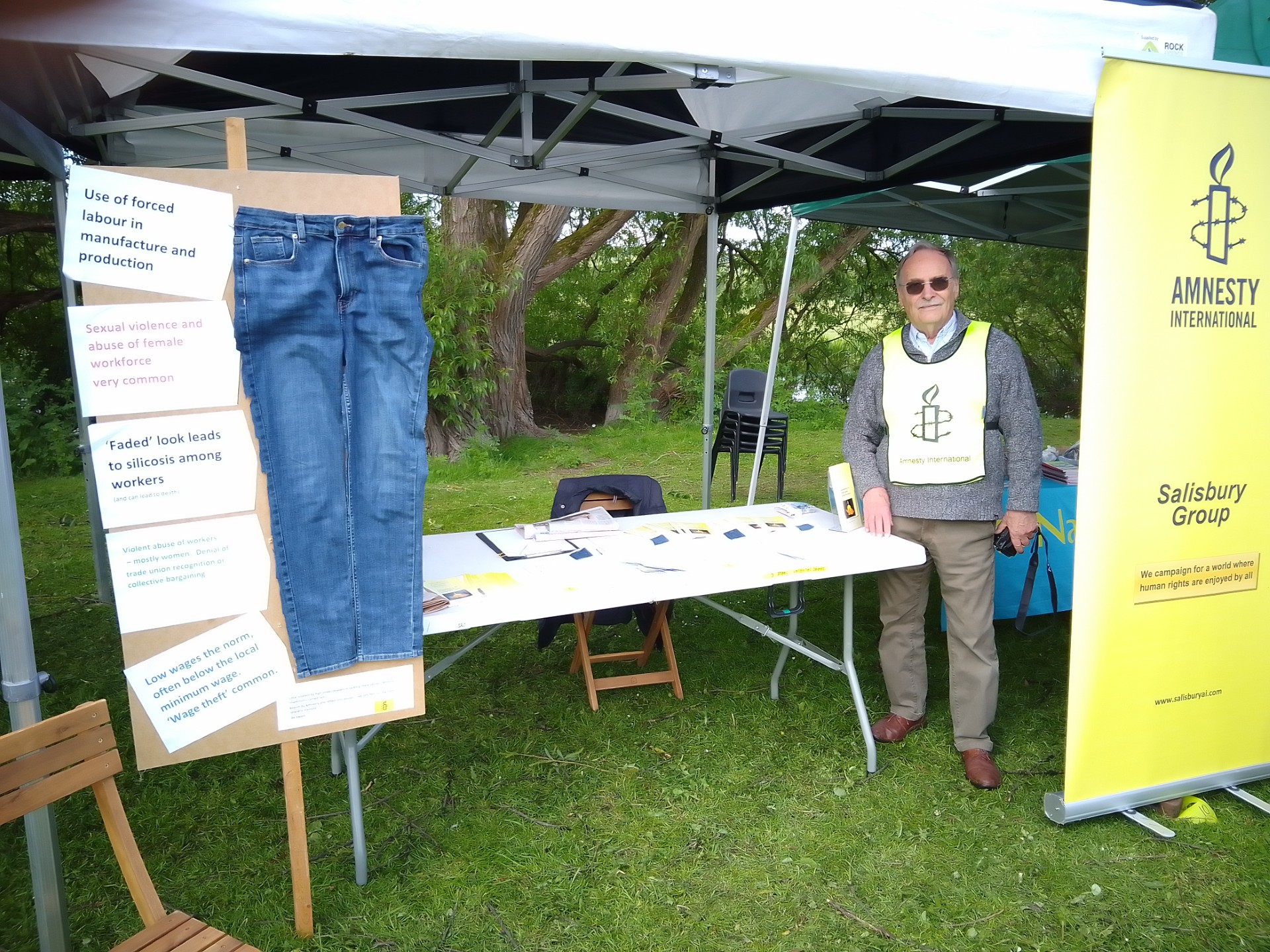
The results were muted and only a few of the handouts were taken (see below). It is disappointing to report the Mayor of Salisbury and her party quickly walked past our stall without stopping. Perhaps it was because people view sustainability mainly as an environmental problem. The idea that globalisation and the abuses that flow from it is perhaps not so well appreciated. Massive amounts of water are consumed in their production and of course the fuel needed to move the items from country to country during the course of their manufacture.

Clearly the idea that abuses taking place on the far side of the globe are both a human rights and a sustainable issue is not well recognised. Around a quarter of the cotton used comes from the Xinjiang region of China where the abuse of Uyghurs is taking place and their culture being systematically destroyed. Thousands are engaged in forced labour to produce the cotton. The region is closed to outsiders for obvious reasons.

There is work to do to convince people that sustainability is not just about trees – important though that is – but about the clothes we wear, where they come from and how they’re made. Retailers can continue to sell goods made with the exploitation of millions of mostly female workers, some in near slave like conditions, while claiming their humanitarian credentials on their web sites.

Clothing and the abuse of rights


We will be at the People in the Park event this Saturday to highlight this issue

Past event – report soon 16/05

At this event in Salisbury on Saturday 16th May, we shall be focusing on the human rights abuses involved in the manufacture of a pair of jeans. An everyday item of clothing, no less than 5 billion pairs are made every year mostly in factories in Far East countries. From the production of the cotton to the manufacture of the jeans themselves, millions of – mostly women – are subject to massive levels of abuse. Amnesty has produced a report called Stitched Up which provides background to this industry.

The numbers involved are quite staggering. There are something like 100 million garment workers worldwide the vast majority of whom suffer various kinds of abuse to enable us to buy cheap clothes (not just jeans).

The abuses

The abuses take place at every stage in the manufacture:

  • Around a quarter of the cotton comes from the Xinjiang region of China where the abuse of the Uyghurs is a massive issue. The treatment by the Chinese of these people is a story of itself and involves mass arbitrary detention and so-called ‘re-education’, unjust imprisonment, intrusive surveillance and forced labour. The treatment of the Uyghurs has been described as genocide.
  • To produce the faded look a dangerous process is used and the workers are in danger of contracting silicosis. Numbers die of this each year.
  • Low wages and levels below even minimum wage levels in their own country. This is linked to ‘wage theft‘. Workers are allegedly paid the minimum wage but do not if fact receive them. So inspectors carrying out cursory checks for the retailers see appropriate wages being paid.
  • Overwork. Overtime is compulsory if a big order arrives and workers may work very long shifts with no choice.
  • No collective bargaining and trade unions largely banned. It can involve working 99 hour weeks. Only 5 unions exist among Marks and Spencer’s 172 suppliers for example.
  • Abuses, physical and sexual, is widespread. With a mostly female workforce this is a serious problem.
The brands

The major brands on our high streets and on line are complicit in these abuses. It is important to stress the massive scale of the abuse involving millions of people. Virtually all the major brands are complicit in whole or in part, in these abuses largely due to inaction. If you read the Amnesty Stitched Up report linked above, you will see nearly all the familiar high street names mentioned. The supply chains are long so factories may be largely invisible to any inspection activity.

This post is to raise your awareness. It is almost certain that among the clothes you are wearing are garments produced which are the product of abuse, violence, forced labour about which the retailer you bought them from has likely done little to tackle. Cheap clothing comes at a cost. It is not costless because making clothes in the UK is extremely difficult if retailers are freely able to source from countries where regulations are ignored, wages are not always paid in full and there are no trade unions.

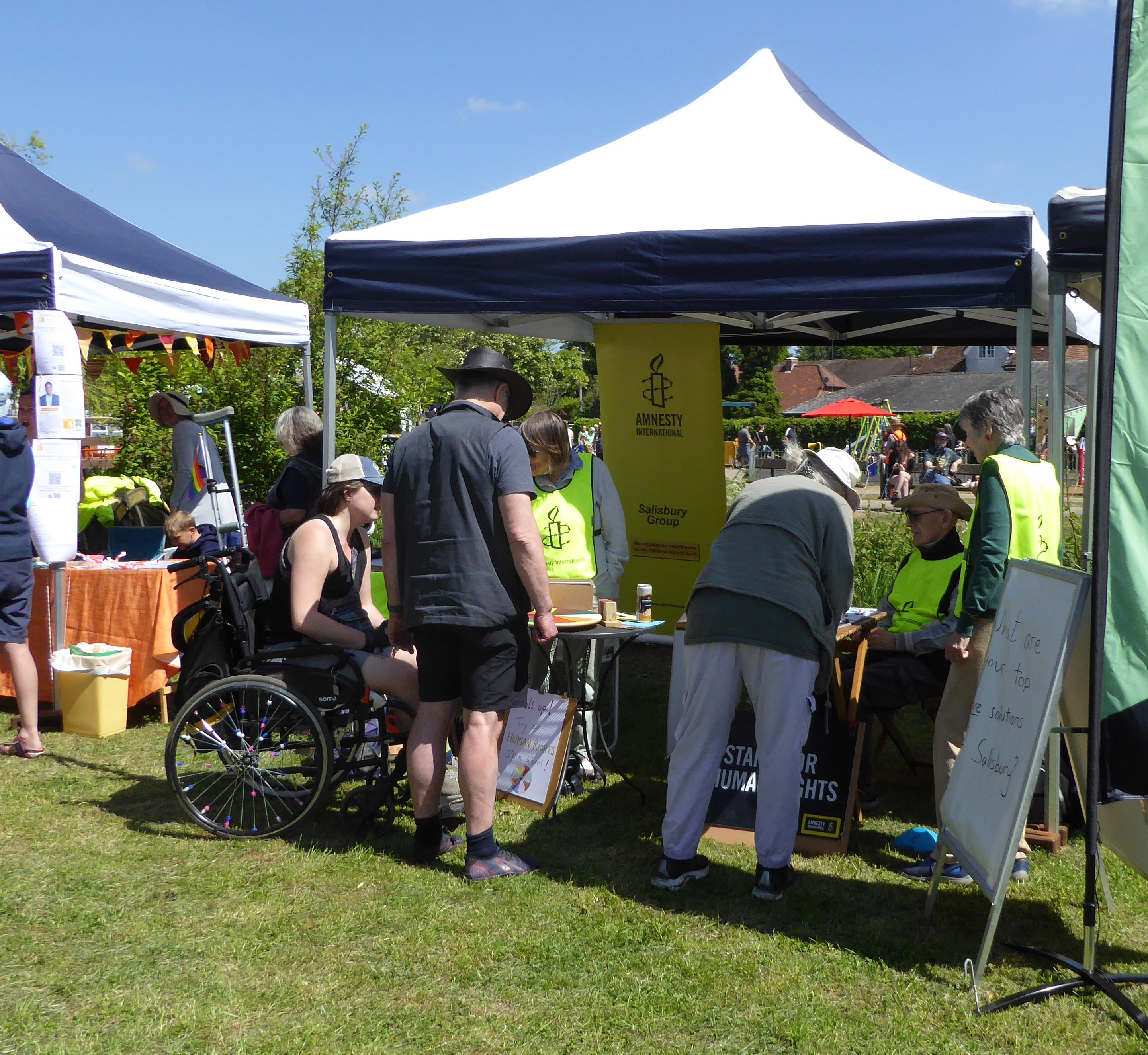
Previous year’s stall. Photo Salisbury Amnesty


Latest posts:

Blog at WordPress.com.

Up ↑