The tapestry – which has been put together by members of the southern region of Amnesty International – was erected today in the Playhouse.
Each panel illustrates one of the clauses of the UN Declaration of Human Rights. It will be on display in the theatre for the next two weeks or so and while a series of plays are being performed on the subject of Magna Carta.
We hope to move it to the Cathedral, subject to their agreement, at the end of the theatre run. The tapestry can be viewed on the first floor of the theatre.
The minutes of the September meeting are now available thanks to Lesley. We discussed North Korea, the death penalty (see separate post on this), the forthcoming vigil on 17 October and agreeing to write to John Glen concerning his failure to reply to our letter of 5 August.
A PANEL DISCUSSION WITH READINGS BY EDWARD FOX, OBE
MAIN HOUSE
Monday 15 June at 2pm
Magna Carta’s importance meant that it was traditionally read out at the opening sessions of Parliament and in English cathedrals. This panel discussion about its relevance today will include Kate Allen, Director of Amnesty International UK, Professor Guy Standing, author of The Precariat: The Dangerous New Class and Ben Rawlence, formerly of Human Rights Watch. Excerpts from the charter will be read by one of our most celebrated actors, Edward Fox OBE.
Chaired by Peter Curbishley.
Presented in partnership with the Playhouse and Amnesty International. Tickets from Salisbury Playhouse http://www.salisburyplayhouse.com or 01722 320333
We today erected the display in the cloister at Salisbury Cathedral to celebrate the signing of Magna Carta and to illustrate the #StopTorture campaign.
It will remain in place for many weeks. There is also a panel on the Human Rights Act.
Around 160 people attended the Cathedral this evening to hear Dominic Grieve QC MP give a brilliantly lucid lecture in support of the Human Rights Act. He traced some of the key clauses of the Magna Carta and showed how they had continuing relevance today. We hope to include a transcript of his lecture soon. His lecture followed the annual Amnesty evensong which also was very well attended with around 120 people.
UPDATE: Where to obtain tickets for 12 March now at the end of that item.
Our group is planning a number of events to mark the 800th anniversary of the signing of Magna Carta. We have been working with the Cathedral in Salisbury which has one of the surviving copies of the document. Our focus will be on its relevance to the present day and in particular, the Human Rights Act #HRA and its place in modern politics.
We have several projects planned and we will update these pages as time goes on. But for the moment, this is a brief introduction to what we have planned:
A standing display in the cloisters of the Cathedral outside the Chapter House where the Magna Carta is kept. This will
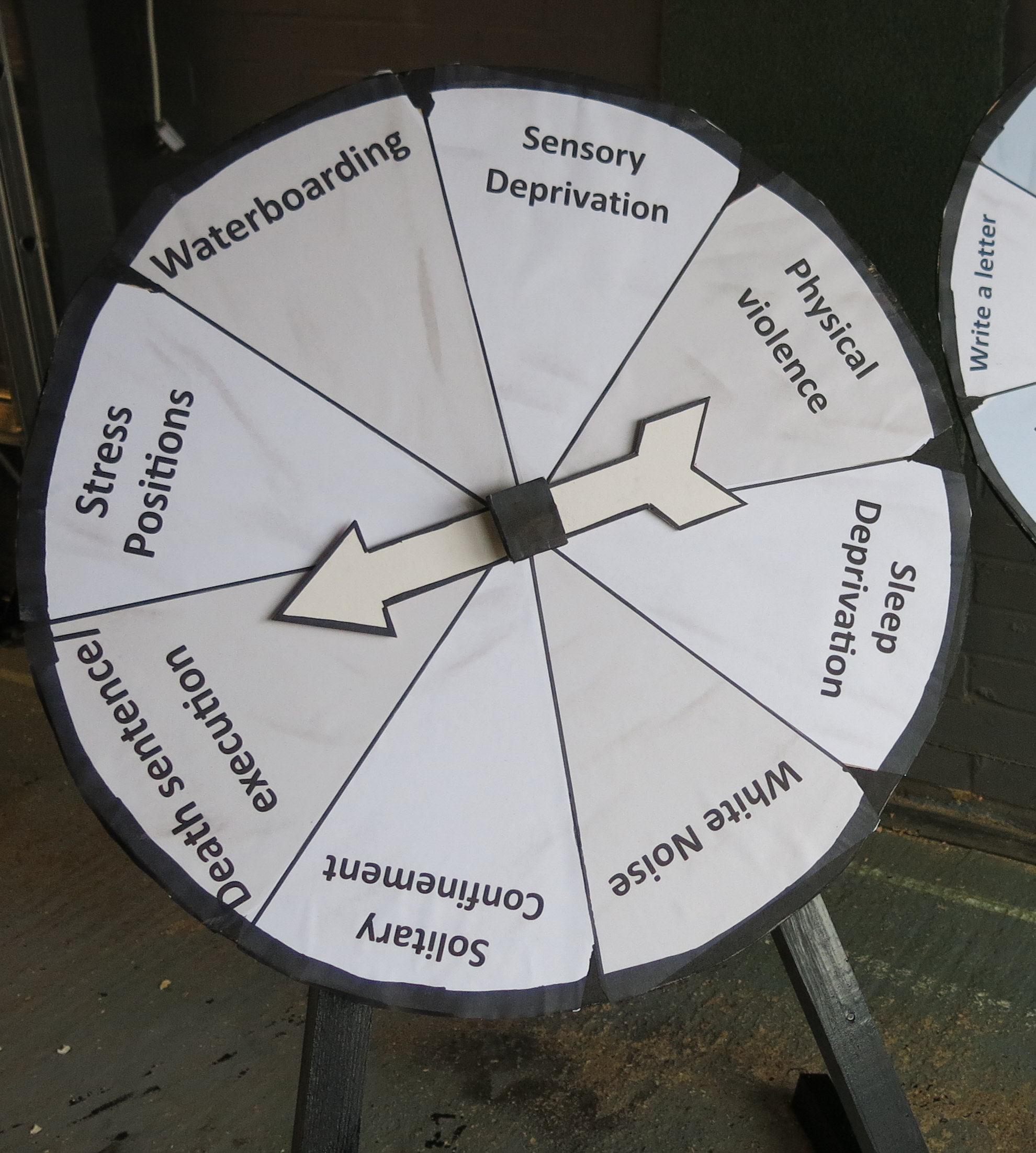
Torture wheel
feature images to illustrate the #StopTorture campaign and will have the torture wheel, based on the one used by the Philippine police. In case you have not come across this, it is a wheel on which the various methods to torture their victims are displayed. They then spin the wheel to decide on which one to use. This display will be set up in March and will run for at least a month. To read more about the torture wheel follow this link.
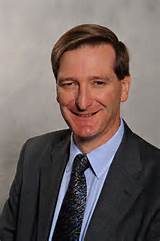
On 12th March at 7pm we will be delighted to welcome Dominic Grieve QC MP who will speak on the relevance of the Human Rights Act today. In June 1999 he was appointed Conservative spokesman for Scotland and in September 2001 the Conservative spokesman for criminal justice and community cohesion as part of the Shadow Home Affairs team. From 2003 to 2009 he was Shadow Attorney General.
Dominic Grieve QC MP
Under the coalition Government Dominic Grieve became a Privy Counsellor and appointed the Attorney General for England and Wales and the Advocate General for Northern Ireland and he held that post until July 2014.
He has spoken often on human rights matters arguing that despite the Conservative leadership’s recent announcement of fundamental change to both the HRA and the national relationship with the ECHR, there is much that remains undebated and misunderstood about both.
He will try therefore tonight try to lay out reasons why – while not free of imperfections – the ECHR and its direct application in our law through the HRA is of enormous benefit to our country and our collective wellbeing. He is determined that this argument can and must be made with some passion because he believes that it goes to the heart of our identity as a nation and of our national interest.
It will be an interesting talk and will follow the annual Choral Evensong in aid of Amnesty in the Cathedral. Tickets: apply to magnacartaevents@salcath.co.uk.
In the summer on 15 June, we are planning, with the Playhouse, an event where an actor will read selected passages from the Charter and then a panel of guests to discuss their significance. The guests are likely to be Kate Allen, the Director of Amnesty UK, Prof Guy Standing author of The Precariat andwriter and researcher, Ben Rawlence. This will be in the afternoon so it’s a date for the diary at present. Details will be both here and at http://www.salisburyplayhouse.com.
On the morning of the 15th, there will be a 6th form conference involving local schools and Kate Allen has been invited to that.
We have re-launched the #essay competition this year and invited members of the 6th forms in the #Salisbury area to contribute. A pdf of the full entry details is here:
In his speech to the Tory party conference today, the prime minister David Cameron pledged to get rid of the Human Rights Act #HRA and replace it with a British Bill of Rights. Problem? Where is it? A bit like Lewis Carroll’s snark, it is often spoken of but never actually seen. It has been talked about off and on for around 7 years now but it still hasn’t seen the light of day.
David Cameron Photo, BBC
Second problem: how will it be any different to the HRA it will replace? It will presumably contain many of the clauses about fair trials, no torture, knowing what one is accused of, no slavery, arbitrary arrest etc. etc. that are contained in the HRA.
It is likely that the ire is directed at some individual cases which get the tabloid press in a stew such as Abu Qatada. The issue here of course was that he could not be deported because it was likely that either, he would be tortured or, evidence gained by torture would be used against him.
The problem is the same as it always has been with the act. It is European and in the fevered atmosphere of anti-Europeanism stoked up by Ukip, anything from Europe is a bad thing. The second problem is the media – or sections of it – who dislike the act and print all manner of misinformation and disinformation about its rulings. They don’t like it because the question of privacy has a higher standing under the act than they would like. As we have seen with News International – and are beginning to see with the Mirror Group newspapers – newspapers are sold by penetrating the private lives of the famous by a variety of dubious and illegal means.
The benefits of the act, such as that reported today of people in Essex who were able to use it to take action against the police, are seldom reported.
Unless we pull out of the Council of Europe, we will still be subject to the rulings of the European Court. It is strange to report that with all the venom and anger directed against Strasbourg nearly 99% of cases applications against the UK are struckout. That is because we have good legal systems here. The HRA was brought in to stop the trail of people having to go to Europe to get justice.






 Amnesty in Salisbury & South Wiltshire