UK Asylum Seekers: Current Trends and Challenges


Refugees and asylum seekers still consuming political capital

September 2026

With the return of Parliament this month, the Immigration and Asylum Bill is back in action. ย The Bill has passed its second reading and is now in committee stage. ย The most contentious parts are the refusal of family reunions, the extended time frame for residence, and the modern slavery definitions. ย An August meeting of the Regulatory Policy Committee of the House considered the Home Officeโ€™s impact assessment to be โ€œnot fit for purposeโ€, and Article 8 on modern slavery to be โ€œinadequateโ€.

Boat crossings

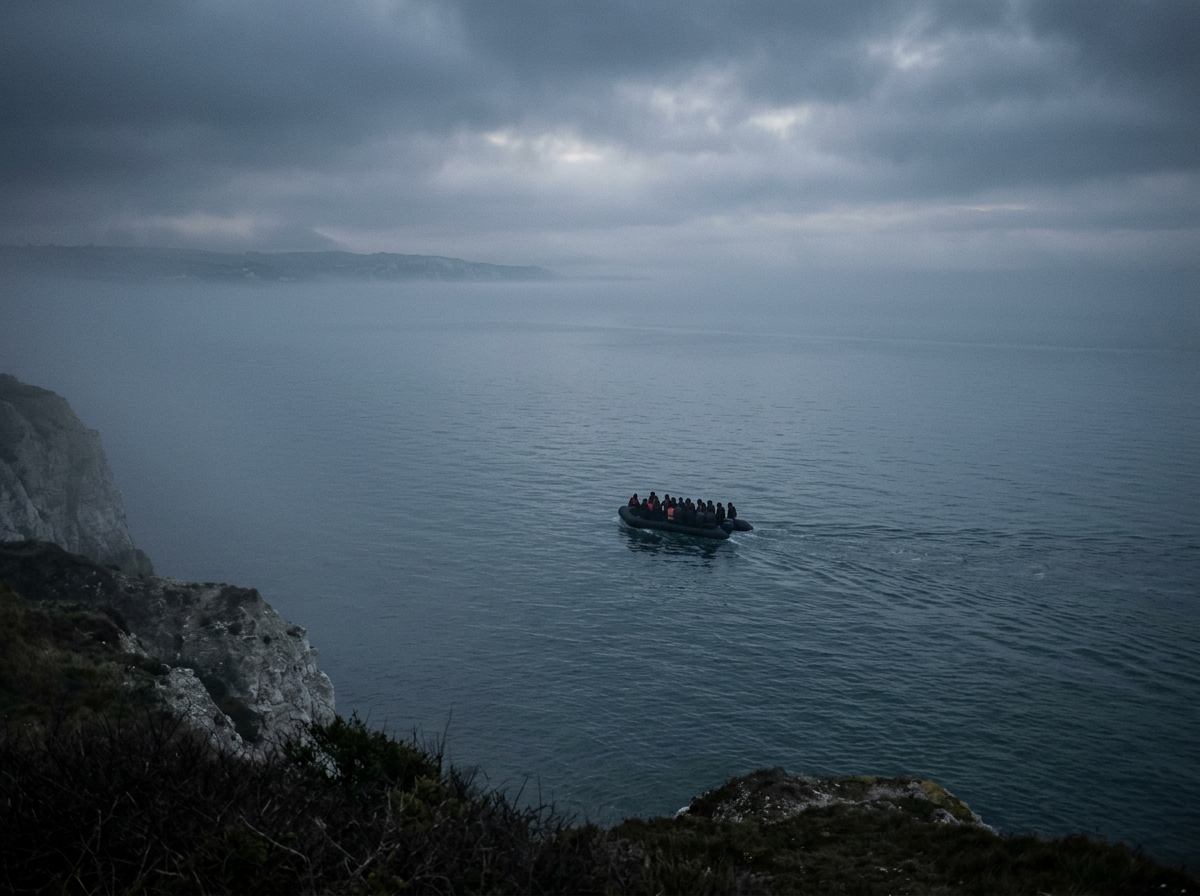
On the small boats front, numbers remain down (102 vessels between June and August, the lowest since 2019, but they are now much bigger boats, taking up to 230 people. Whereas in 2018, 7 was the average load, it is now 65). ย In 2026, 17,000 migrants have crossed the Channel so far. ย The backlog of pending cases continues to fall, down to 40,000, the lowest since June 2019, but the grant rate is falling as well, down to 38% acceptances (it had been up to 77%). ย 

With the resultant increase in appeals, the 24-week target for hearing appeals may be hard to achieve. ย Concern has been widely expressed that the new Independent Immigration Appeals Authority will be free to use non-qualified legal staff to adjudicate the appeals.

40,000 migrants were returned in the year to June, three quarters of them were โ€œvoluntaryโ€, mainly to Albania, Brazil, India and Poland.  The fine weather over the summer did not materially affect the numbers of crossings, which remain lower than recent years.  Other factors include more collaborative action with the French authorities, and seizure of 1100 boats, according to the National Crime Agency.

Migrants and asylum seekers who are already here continue to be the focus of interest.  By the end of June only 16,021 claimants were in hotels, but the 69,000 were in other temporary accommodation.

Beyond the statistics, public attitudes in the UK may not be reflected in the mainstream media.  A recent YouGov poll indicated that 75% of the public would distinguish between migrants and refugees and 59% thought that too much attention was paid to how migrants came rather than why.  Nevertheless, another poll revealed that 40% believed that more small boats were arriving this year than last, and only 22% (correctly) believing there were fewer.

Immigrants and crime

The OECD has observed that there has been little evidence of change in crime figures despite the amount of immigration. ย In the UK, convictions among non-UK citizens come out at about 12%, the same level as for the adult UK population. ย Higher levels of lawbreaking were observed among Afghansย (sexual offences) and Albanians (drugs) but not substantially. ย The Governmentโ€™s advisory guide for asylum seekers on British culture has not had any significant effect thus far. A feature of recent unrest at Portsmouth and Dover has been claims of high crime rates by immigrants.

Across Europe a similar trend is noticeable.  Despite the furore in Ceuta, numbers in the first quarter were down by 46% on 2025, but there were more deaths than previously.  Member countries of the EU nevertheless continue to be much engaged on the issue.  The European Parliament in June approved an overhaul of migration policy, expressly to speed up deportations.  EU interior ministers from 22 countries agreed to take โ€œany necessary measures to safeguard public order and address risks arising from secondary movementsโ€ (by which they mean migrants moving on from their first country of arrival).  The Schengen Agreement has already been suspended in certain places (notably in the spat between liberal Spain and hard-line Italy).  

The other big issue for the EU is the search for โ€œhubsโ€ outside the Union for removal of rejected migrants.  Five EU countries have agreed to sign deals. Rwanda and Uganda are said to be compliant, but the question remains as to who has the responsibility for such deportees.  The European Court of Human Rights is expected to adjudicate against the governments; the Council of Europe has already observed that the changes in policy pose โ€œconsiderable human rights risks.โ€

Climate

Finally, with ongoing climate change and a possible exceptional El Niรฑo, there has been much discussion of โ€œclimate mobilityโ€.  The UN Refugee Convention has nothing on the topic, and there is no legal category of โ€œclimate refugeeโ€, but the International Court of Justice has given advisory opinion recognising the issue.

AH


Recent posts:

Refugee Report – June


Refugee Summary

July 2022

Following the frenetic events of the last week, it is probably worth taking a moment to see where we stand on the refugee front, 60 years after the first Commonwealth Immigrants Act began the process of legislating against incomers. The Nationality and Borders Act has now brought into force more of its provisions, including a Home Office explanation of  โ€differentiationโ€ between different types of refugee (the proposed two-tier system).  The effect is that it will take longer for some arrivals to be granted residency and harder for them to bring family to join them, but the changes are not huge, according to human rights lawyer, Colin Yeo, who commented:

The policy exemplifies Priti Patelโ€™s modern Home Office.  It pretends to be tough as old boots but in reality it creates genuine but fairly minor problems for very vulnerable people with no likely policy outcomes achieved.  What it does do is make more work for officials, thereby worsening the backlogs in the asylum system.  It is not just pointless; it is actually counterproductive.

However, AI has commented in its monthly report to local groups the effect of the governmentโ€™s effective withdrawal from the UN Refugee Convention (See foot of page).

The Afghanistan Citizensโ€™ Resettlement Scheme (ACRS), which had opened in January, and is meant to take 20,000 refugees, has now added guidance on those seeking to come via Pathway 3 (mostly employees of UK organisations in Afghanistan).  Three groups have been established; those who had places allocated, but missed out (who will be assisted); those who came via the UNHCR (who can now begin to be referred) and those others at risk, such as women and girls (1500 places allocated).

In May, 2,871 migrants were apprehended crossing the Channel by small boat compared with 1,627 in May 2021, a 75% increase. Similarly, during the first three months of 2022, 4,540 people were detected arriving by small boats compared with 7,432 during the last half of April, May and June after the MoD took over.  The Navy is said to be keen to be let off enforcing control f the Channel, a policy on which they were not consulted.

By mid-June 77,000 Ukrainian refugees had entered the UK and 135,000 visas issued.  It may be noted that Germany has so far taken 700,000 refugees.

Although the courts have not yet decided whether offshoring asylum seekers to Rwanda is lawful, the Home Office plans further flights.  The HO said โ€œNo court has actually ruled that this partnership is unlawful and that includes the ECHR.โ€  Thanks are due to group members Peter and Lesley for protesting the planned flight from Boscombe Down and subsequent press appearances.

On the subject of tagging claimants, a 12-month pilot scheme is planned to test its value as a monitor and for collecting data โ€“ it is already in use for those on bail.

On the vexed issue of the actual ages of asylum seekers, the Home Office is recruiting 40 social workers to help assess claimantsโ€™ ages using โ€œscientificโ€ methods.

Statistics
  • Asylum claims Jan-Mar 2022 12,508 (for 2021 2,022)
  • Main countries of departure โ€“ Afghanistan, Iran, Iraq, Syria, Eritrea
  • Number waiting more than 6 months for a decision Q1 70,000 in 2017 the number was 14,000)
  • 75% of applicants receive grants of protection (Syrians are at 98%).
  • It is worth noting that the equivalent percentage in 2010 was 25% and in 1995 4% (with fewer applicants, iof course).
  • The number of enforced returns in 2020 was 3,000 (in 2010 15,000),
  • And voluntary returns 5,000 (against 30,000).

Clearly, asylum seekers are far more likely to be granted residence now than in earlier years, but are subject to far longer waits for the process to complete. Whether the new Act will alter this is open to debate.

Also: –

The Napier Barracks, which became notorious as an inadequate location for prospective arrivals, has been deemed to have improved since the original aim.  No immigrants now will spend more than 90 days there.

A Lords Committee looking into the document โ€œLife in the UKโ€, prepared for those seeking settlement or citizenship, have described it as a โ€œrandom election of obscure facts and subjective assertions.โ€

Refugee Week was held in late June this year, but passed with disappointingly little media coverage. AI supported a number of events under the umbrella.

Amnestyโ€™s comment on the new refugee legislation:

On 28th June, the UK’s interpretation of the definition of a refugee and the rights to which every person who is a refugee is entitled will significantly change from that required by the Refugee Convention. What does this mean? It means the government is unlawfully rewriting its shared obligations under international law. To the extent, it is dangerously undermining what our country, not only agreed to, but helped draft and negotiate in 1951. 

These changes are lawless and reckless.  Its consequences directly contradict our values of shared humanity and compassion and have been rightly rejected by the UN High Commissioner for Refugees, leading lawyers, and former senior judges in the UK.

Here are five things you need to know:

  1. The evidence refugees need to provide will become overly obstructive and wrongly prevent some refugees from proving their status and rights, making the lives of people that have fled war and persecution even harder.
  2. People who claim asylum based on their sexual identity or orientation being the cause of the persecution they face, will need to meet extra tests.  This will exclude thousands from the asylum they are entitled to and that they need to safeguard them from persecution.
  3. Refugees that arrive or enter the UK without prior permission will be penalised, both by criminal prosecution, imprisonment and by exclusion from their full rights to asylum in the UK, directly violating the Refugee Convention. 
  4. It will lead to the government refusing asylum to those who arrive or enter the UK without prior permission, presenting a grave risk that people are sent back to torture and other forms of persecution.
  5. It will discriminate between refugees in the UK by denying many of them their full and equal rights to asylum under the Refugee Convention. It will leave them:
  6. Insecure by periods of short-term permission to stay that must be constantly renewed by formal application
  7. Impoverished by exclusion from public funds
  8. Separated from family by denying or delaying family reunion rights.

Andrew Hemming

Blog at WordPress.com.

Up ↑