Meeting


Monthly Meeting

The group  meets this Thursday 9 June at 7.30 at 4, Victoria Road as usual.  The agenda is below:

1             Apologies

2             Minutes of last meeting

3             Treasurer’s report

4             Update on Campaigns

  • Death Penalty  (inc World Day v DP 10/10)
  • North Korea (inc video)

5             Social Media

6             Market Stall  (Saturday)

7             Monthly Action

8             Arts Centre Film (15/12)

9             School Citizenship day (October)

10           Other forthcoming events (inc possible venue for coffee morning, barbecue)

11            AOB


Follow us on Twitter and Facebook


Groups meet


Groups meet in Salisbury

Members of the Salisbury; Mid Glos and Ringwood groups met on Sunday 17 April to view the tapestry in the Cathedral and to take part in a video being put together by the Salisbury group, further details of which can be found in the minutes.  The group is grateful for the two groups taking the time to come all the way to Salisbury for this.

In front of the tapestry

Group 5
Queen Elizabeth Gardens


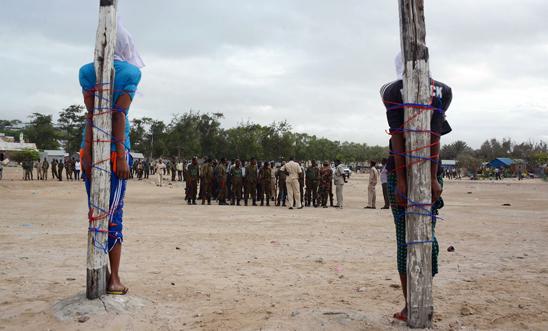
Death Penalty Report published


Dramatic rise in executions in 2015: the most in one year for a quarter of a century

To read the full report click here (pdf)


The past year has seen a horrific increase in executions around the world – the most we’ve recorded in a single year since 1989, and an increase of an astonishing 54% from the year before.

A few countries are executing prisoners by the hundreds, sometimes for crimes that aren’t serious, sometimes after trials and treatment that isn’t just or fair, and always violating the individual’s right to life and right to be free from torture.

From Australians Myuran Sukumaran and Andrew Chan shot by firing squad for drugs charges in Indonesia to Shafqat Hussein, hanged in Pakistan for a crime he confessed to after torture, aged just 14, over 1,634 individuals were put to death by state authorities last year.

Huge rise in executions

We recorded a huge increase in the death penalty, an increase of 54% compared with 2014. This is the largest number of state executions for a quarter of a century.

The number of countries that executed people rose – from 22 in 2014 to 25 in 2015. At least six countries resumed executions: Bangladesh, Chad, India, Indonesia, Oman and South Sudan.

Countries continued to flout other aspects of international law, putting to death people with mental or intellectual disabilities, as well as those charged with non-lethal crimes. Apart from drug-related offences, people were executed for crimes such as adultery, blasphemy, corruption, kidnapping and ‘questioning the leader’s policies’.

The death penalty is always a violation of human rights. We oppose it in every case.

The main executioners

A minority of countries are committing the majority of executions. 89% of executions in 2015 took place in just three countries: Iran, Pakistan and Saudi Arabia.

Iran

Iran continued to execute juvenile offenders like Shafqat – aged under 18 at the time of the alleged crime – in violation of international law. Authorities there sentencd juvenile offenders to death last year too.

Pakistan

Pakistan lifted its freeze on civilian executions in December 2014, and in the year that followed killed 326 people – the most we’ve ever recorded for that country in a single year.

An attack on a school in Peshawar prompted the government to start executing again, something it had not done since 2008. Initially, the freeze was lifted for those charged with terrorist-related offences, but in March 2015 the government resumed executions for all capital crimes, such as murder and blasphemy.

In a country where people are routinely denied the right to a fair trial, and evidence extracted through torture is used to seal convictions, hundreds of people are being sent to their deaths under the pretence of justice being served.

Saudi Arabia

Last year saw a huge surge in executions for an already prolific executioner. These figures don’t even include Saudi Arabia’s mass execution of 47 people at the start of this year.

The missing executioners

But these figures exclude China, where numbers remain a state secret, yet where we believe thousands of people are executed every year. We consider China to be the world’s top executioner, although the numbers are missing from this report.

We haven’t published figures for executions in China since 2008; we’re challenging the Chinese government to reveal their own figures and demonstrate that they really are limiting their use of the death penalty – something they have claimed to be doing since the country’s highest court began reviewing all death penalty cases back in 2007.

We also don’t publish figures for North Korea, a state shrouded in secrecy.

Execution sentences in 2015

At least 1,998 people were sentenced to death in 2015 and at least 20,292 prisoners remained on death row at the end of the year.

Some hope

Four countries abolished the death penalty for all crimes – the highest number to do so in the space of one year for almost a decade.

Madagascar, Fiji, Suriname and Congo all did away with the death penalty in the national laws once and for all.

Mongolia adopted a new Criminal Code outlawing the death penalty for all crimes in December which will enter fully into law in September 2016.

There is hope even in the USA, which continued to flout international law by executing people with mental disabilities.  Pennsylvania abolished the death penalty for all crimes in 2015 , bringing the total number of US states that have abolished the death penalty to 18.

We still hope for a world without the death penalty, and today half the world has abolished it for good. Add to this countries which have abolished this punishment in practice, as opposed to law, and the total comes to two-thirds of the world.

Violence against women in North Korea


We reproduce a piece written by Fiona Bruce MP on the subject of violence against women and the denial of human rights in North Korea [DPRK]

As we mark International Women’s Day, I am minded to reflect upon the recent conference in the House of Commons hosted by the All-Party Parliamentary Group on North Korea, of which I am Co-Chair.  Titled Addressing Violence against Women and Girls in the Democratic People’s Republic of Korea, the conference looked to a forgotten corner of Asia and a forgotten group of people: North Korea’s women and girls.

Notorious for its diplomatic belligerence, its disregard for international law and its nuclear programme, the DPRK (or North Korea) successfully concealed its widespread human rights violations from the world for decades.  An era of silence ended in 2014 when a United Nations Commission of Inquiry reported:

The gravity, scale and nature of [North Korea’s human rights] violations reveal a State that does not have any parallel in the contemporary world.

The severity of this UN statement is worth repeating: North Korea’s human rights situation has no parallel in the contemporary world.

Violence against women

As the international community slowly awakened from its slumber, it was no longer farfetched to recognise North Korea as the largest concentration camp the world had ever known or to rank the horrors of Yodok, Hoeryong, and Pukch’ang alongside Auschwitz, Belsen, and Dachau.  It became a fact that North Korean women have and continue to experience sexual violence, including rape, sexual assault and harassment in public and private spheres of life; human trafficking; forced abortions; slavery; sexual exploitation; psychological violence; religious and gender discrimination; and institutional and economic violence.

This violence in North Korea is neither occasional nor confined to certain quarters — it is endemic; it is state sanctioned; and it is perpetrated against women precisely because they are women.  In every sense of the term, North Korea’s abuses are ‘gendered’.

Why has the international community been silent on this issue?  We can look to many factors, but first and foremost is the discourse that surrounds North Korea.  Dominated by talk of nuclear weapons, regional security, engagement, unification, and humanitarian aid, there has been little room for North Korean women.  And, if truth be told, advocates have simply not been loud enough on this issue.

This year’s International Women’s Day marks an important phase for women’s rights.  Just months after the twentieth anniversary of the Beijing Conference on Women, and fifteen years since the pioneering UN Security Council Resolution 1325 on Women, Peace and Security, this is the year that the world is developing the Agenda for Sustainable Development looking to 2030.  The Sustainable Development Goals include a stand-alone goal to achieve gender equality and empowerment for women and girls.

North Korea’s female population should not be forgotten on March 8th.  Gendered violence and discrimination are destroying lives and ruining families in North Korea.  Women are enduring unimaginable suffering and the UK must use what engagement it has with the DPRK to push for real change.  The APPG’s conference on VAWG in North Korea brought together North Korean victims, exiled DPRK Government officials and experts on gender and the rights of women and girls.  Women’s and girls’ human rights is an area in which the UK exhibits international leadership. Let us draw from our knowledge and set out to challenge gendered violence in the DPRK just as we do in so many other countries in the world.

Fiona Bruce, MP for Congleton, is Co-Chair of the APPG on North Korea jointly with Geoffrey Clifton-Brown MP and Lord Alton of Liverpool.


Follow us on Twitter and Facebook

February meeting minutes


The minutes of the meeting held on Thursday 11th February are available thanks to Lesley.

February (pdf)

twitter image Follow us on Twitter and Facebook


Group minutes for January


The group met for a business meeting yesterday and the Minutes are now completed.

November group minutes


The November minutes of the Salisbury group are now available thanks to Lesley.

November minutes (pdf)

Correction: the Death Penalty vigil took place on 17 October and not November as stated in the minutes

Letter to the UN concerning North Korea


The situation in North Korea remains dire as far as human rights are concerned and a number of NGOs have written to the Security Council asking for action to be taken

North Korea letter.


North Korea


Group campaign event, Saturday 8 November

Yeonmi Park’s book A North Korean’s Girls Journey to Freedom starts today (Monday) on BBC Radio 4 at 09.45.  It is the book of the week.

September minutes


The minutes of the September meeting are now available thanks to Lesley.  We discussed North Korea, the death penalty (see separate post on this), the forthcoming vigil on 17 October and agreeing to write to John Glen concerning his failure to reply to our letter of 5 August.

September minutes

Blog at WordPress.com.

Up ↑