… and things do not look much better for 2026
December 2025
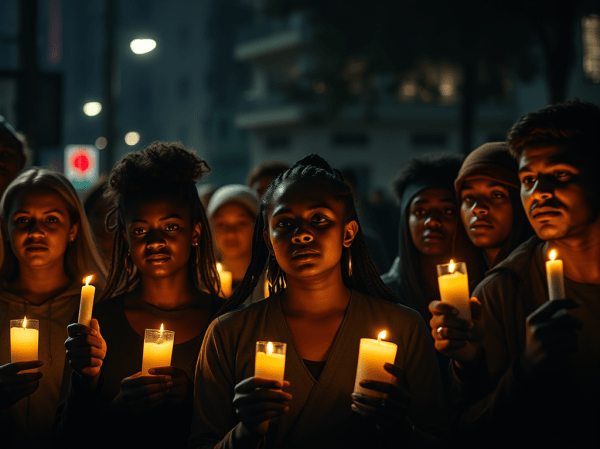
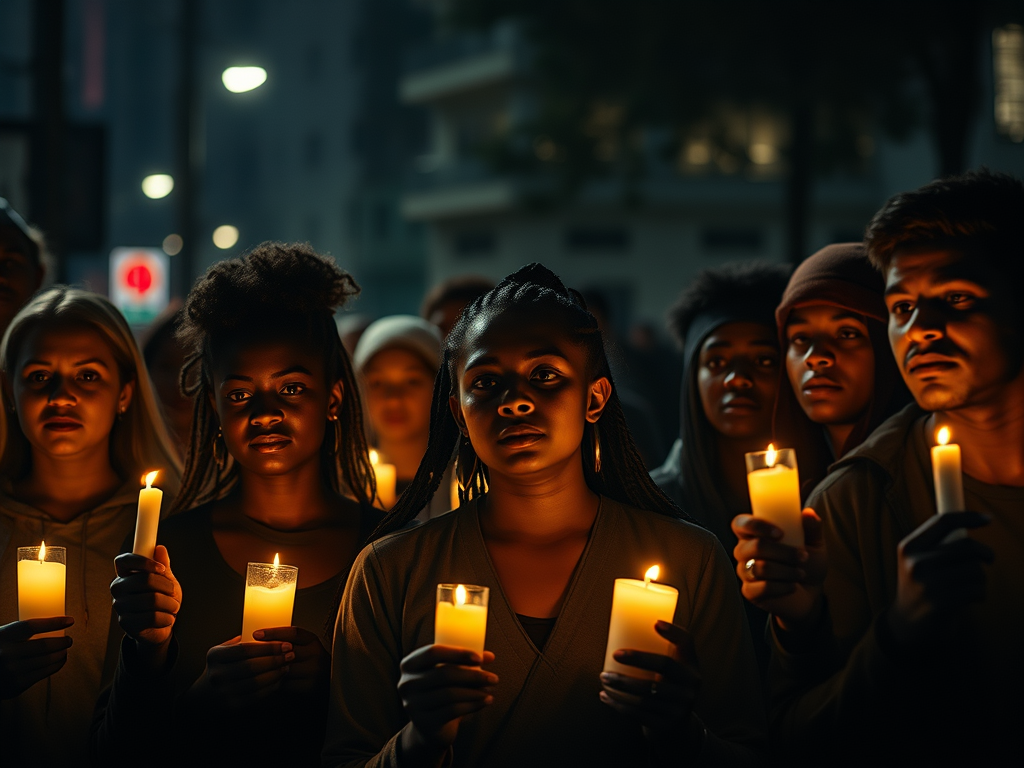
We have published 192 posts so far this year on a wide variety of subjects concerned with human rights. A key feature of the year has been the continuation of our vigils. We have held over 109 since the current conflict started and although there is some kind of cessation of hostilities, peaceful reconciliation between Israel and the Palestinians seems a far away dream. Some food aid is getting in but Israel has seized almost all the cultivable land leaving those in Gaza hemmed into an even smaller part of their territory. We have commented on the poor reporting of events there and the unsatisfactory nature of so many interviews.
Arms sales
A feature of this conflict and other conflicts around the world is the role of the arms trade. It appears that this trade seems to determine British policy: truly the tail wagging the dog. The government frequently trots out that it has a ‘robust policy’ whilst granting licences – and in particular open licenses – to almost all who come. The effects on people at the receiving end of these weapons sales does not seem to worry the Foreign Office or government ministers. Recent government’s policies have focused on growth and if growth means selling arms to Israel and to the UAE so be it. There is considerable evidence that the latter are supplying the RSF in Sudan who are alleged to commit many atrocities.
At the height of the Yemen war we highlighted the role of British arms firms and their weapons sales to the Saudis. RAF personnel were involved just short of being labelled ‘mercenaries’.
Sport
Sport has featured in several of our posts and the ever increasing use by states with abysmal human rights records to use sport to burnish their images. Virtually all sports are involved, but especially football, boxing, motor sport, golf, tennis and cycling. The driver is money. China and the Gulf states are among those with almost unlimited resources to pour into sporting events with seemingly no difficulty in attracting sportsmen and women to compete in their countries with no moral qualms. They also invest in our football clubs again with no concerns about how tainted the money is.
It has become so part of the furniture now that it engenders little comment. Whereas some years ago a nation which executes significant numbers of its citizens – often after confessions extracted under torture – which imprisons or ‘disappears’ human rights defenders and journalists and treats its women as second class citizens denying them many rights, would raise eyebrows when seeking to sponsor or host a sporting event. Not today.
Refugees
And it is not just sport where issues of human rights have seemed to take a back seat. People entering this country by various means have generated a massive amount of political controversy here in the UK. It is probably true to say that immigration in one form or another is one of the dominant political forces at work. It is deciding elections. A number of politicians are using the ‘crisis’ to their political advantage (they hope). Egged on by sections of our media, they have created the impression that there is a crisis particularly around the numbers arriving in small boats across the Channel. Any concern for those in the boats and why they are risking their lives to get here does not seem to feature. The impression is sometimes created that if we could deport the migrants (however defined) our problems would be over. The connection between our arms sales and the instability of the countries they have fled from does not seem to enter their thinking.
The contribution by immigrants (again however defined) is scarcely recognised. That large sections of our economy (horticulture and the food industry for example), the health service, hospitality and transport, would cease to function without them seldom seems to enter the consciousness of our senior politicians. We have commented on the strange fact that many of our senior politicians, including Rishi Sunak, Suella Braverman, Priti Patel, Shabana Mahmood, Kwasi Kwarteng and Danny Kruger are all descended from recent immigrants but are among the most aggressive about deporting those coming after them. We can offer no explanation.
Rights at home
Which brings us to another theme concerning the government and its own attachment to UK human rights. It was once hoped that the arrival of Sir Keir Starmer – an ex human rights lawyer and past Director of Public Prosecutions – would see an improvement in the human rights climate. Sadly, it has not come to pass. Laws against protests introduced by the Conservatives to clamp down on protestors, have not been modified or repealed and have even been added to. A more humane policy towards immigrants and refugees has not happened. Arrests have continued and as this is being written, those arrested on pro-Palestine marches are close to death on hunger strike. His continuing support for Israel has been shaming. He has issued critical comments but they have not been backed up by action, cutting arms supplies for example. No believable explanation for the hundreds of RAF flights over Gaza has been forthcoming. His most disgraceful comment that ‘Israel was right to withhold power and water from Gaza’ was widely condemned.
This year we have introduced a new regular feature reviewing the human right situation in the UK itself. This is probably something we would never have contemplated doing say, twenty years ago but a combination of poor leadership, aggressive home secretaries and many MPs with little interest in protecting human rights, has led to this move. Both Danny Kruger (MP for East Wiltshire) and John Glen (MP for Salisbury) are listed on They Work For You as generally voting against human rights is another factor. Mr Glen, who is listed as a member of the well-funded lobby group Conservative Friends of Israel has never once visited the Saturday peace vigil nor mentioned it in his weekly column in the Salisbury Journal.
Ukraine, Sudan, China, Palestine …
The world situation does not seem to get any better. The situation in Ukraine is critical and not just for the Ukrainians. We have one member of the Security Council, Russia gratuitously attacking an independent nation while another member, the US seems indifferent to their plight. The warm greeting by President Trump of President Putin on the tarmac in Alaska must be one of the more grizzly images of the past year. European nations have become almost powerless, in part because of their collective failure to invest in defence (defense) but also because they have become kind of vassal states to the US.
We must not forget that human rights in Russia are poor. There is no opposition and a leader who was a threat to Putin, Navalny, was probably murdered in Siberia. Others have been arrested or murdered along with many journalists. Children have been abducted from Ukraine. Ukrainian prisoners have been tortured.
We could devote a whole page to China. A million Uyghurs are persecuted and are forced to work while their culture is systematically destroyed by the Communist Party. Some call it genocide. Tibet has had a similar treatment and its culture largely eliminated. They are believed to execute more of its citizens than all the rest of the world combined. Freedom has been snuffed out in Hong Kong. Chinese nationals are intimidated overseas.
The future
The future is unpromising. The ‘New World Order’ created after the war is well and truly dead. Powerful interests act at will. Despotic leaders act in their own interests not in the interests of ordinary people. Europe is too feeble to act. It looks as though things will continue as they are. There is no hint that the current conflicts will end equitably but based on the whims of a handful of profoundly flawed men.
A large number of MPs of all parties are members of the Friends of Israel group and many also receive money from them. How can they be expected to act honestly, with integrity and in the best interests of the country (to be clear, the UK whose residents voted them in not a foreign state) if they are members of a powerful and well funded lobby group? Arms companies continue to sell their wares with few controls so desperate is the government for growth. The BBC has been cowed into silence on important topics.
In June of last year, the Institute for Government, recognising the serious loss of trust in the government, published its 7 steps to restore trust. One was the publication of an independent ministerial code. Another was to ensure lobbying was built on a clear coherent and transparent system. It has not happened. There is no rigorous or proper system of controlling the ‘revolving door’ which is a passport for corruption by ministers, ex-civil servants and military people retiring into lucrative appointments with arms companies.
Hope
The weekly vigils and the many hundreds of protests around the country for an end to the killing and genocide in Gaza is a heartening sign. It shows a significant number of people who care about what is happening, care that is not reflected by the government nor by chunks of the media. Despite their numbers, reporting is thin with a media all too keen gleefully to report flag waving disturbances outside hotels or army camps. If hope is to be found it lies with ordinary people who simply say ‘this isn’t right, this is not what I believe in’. Rutger Bregman in his Reith Lectures (2025) argues just this: that small committed groups can make a difference. However, whether they can achieve this at the international level is debatable. We can cite climate which will be having harmful effects on more and more of the world’s population and where progress if anything is going backwards.
We shall continue to campaign and we always welcome new members to the team.
Best wishes for the New Year to our small band of readers!



 Amnesty in Salisbury & South Wiltshire