Global Trends in Refugees and Asylum Seekers 2024


Refugees and asylum seekers still generate a lot of political heat

May 2026

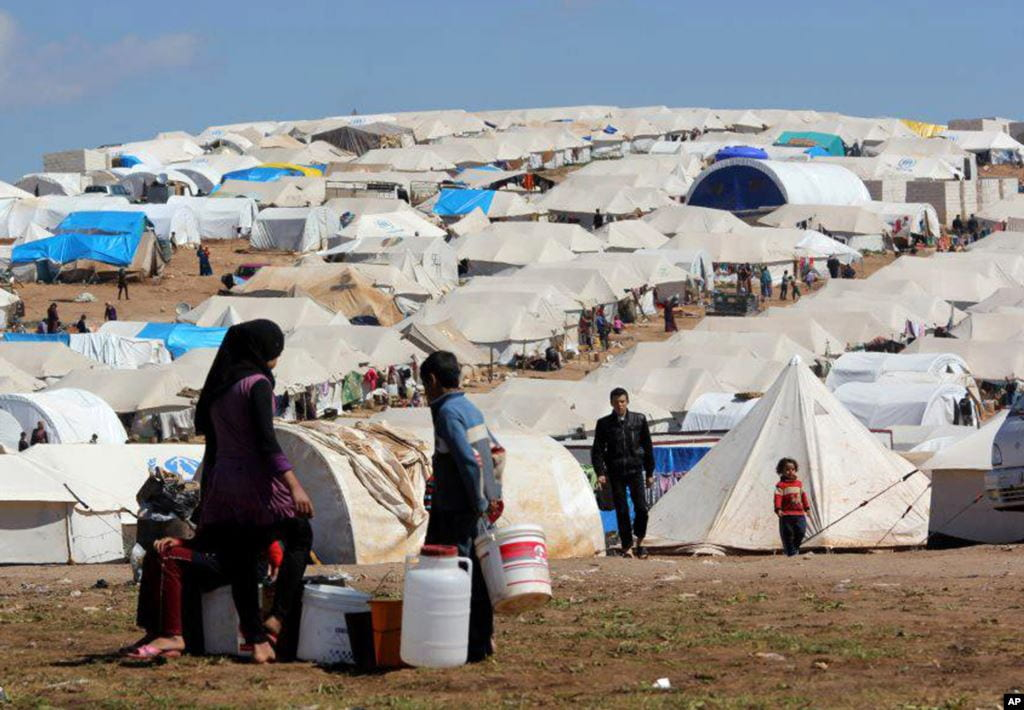
The International Organisation for Migration has produced its latest World Migration Report, covering 2024/5.  It assesses the number of internally displaced people worldwide at 83 million, mostly due to environmental disaster, but about 20 million due to conflict.  In 2025 there were 94 million migrants in Europe (i.e. people living in a different country from their starting residence).  Of course, these figures include people who move for reasons of work or family, as well as refugees and asylum seekers.  

At the end of 2024, there were 36.9 million refugees globally, with 31 million under the UNHCR mandate, and 5.9 million refugees registered by the United Nations Relief and Works Agency for Palestine Refugees (UNRWA).  A further 5.9 million other people in need of international protection – largely from Venezuela – were reported at the end of 2024.  The number of refugees under the UNHCR mandate has decreased slightly since 2023, when it stood at 31.6 million.

Increase in asylum claims

There were also approximately 8.4 million people seeking asylum status.  This is a 22 per cent increase from the end of 2023.  Despite partial reporting from the United States (only until mid-2024), the country still had – by far – the largest number of pending asylum claims (3.2 million) by end of 2024.  Other countries with large asylum applications included Egypt (631,100), Peru (540,000), Germany (348,900) and Canada (292,100).

In 2024 alone, 3.1 million new individual asylum applications were registered globally, with half of these received in only four countries: the United States (729,100), Egypt (433,900), Germany (229,800) and Canada (174,000). Nationals of the Sudan, Venezuela, Syria, Colombia and Afghanistan comprised most new individual asylum applications in 2024.  Obviously the situation will be somewhat different post-2024, particularly with regard to the USA.

At the end of 2024, children (that is, people under 18 years of age) made up around 41 per cent of refugees, people in a refugee-like situation and other people in need of international protection.
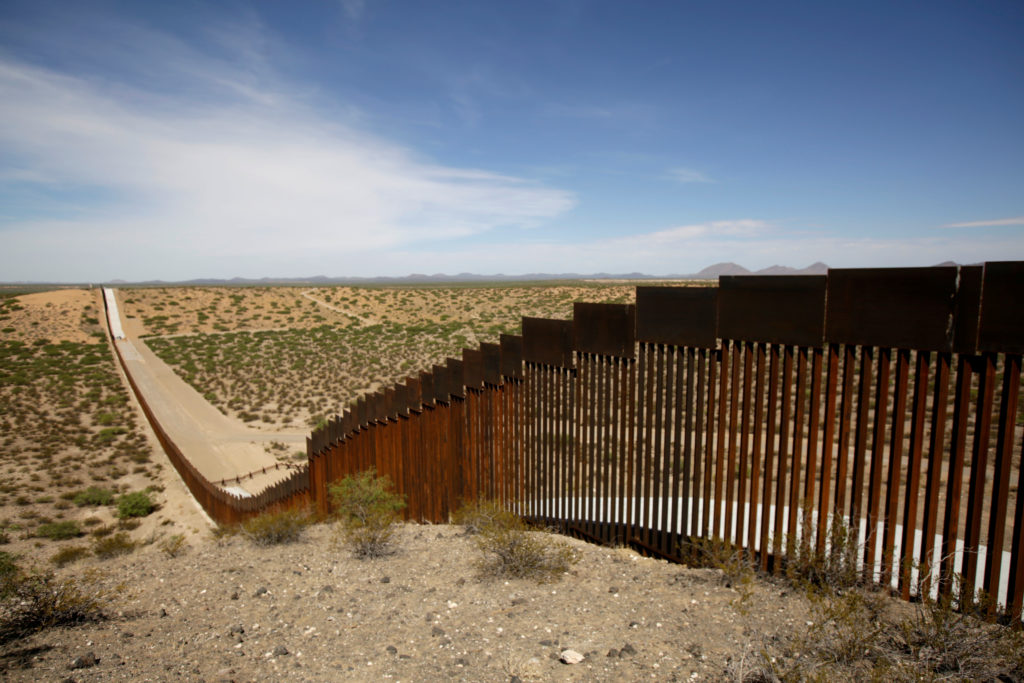
The (American) Migration Policy Institute have researched the question of anti-immigrant borders.  They reckon that in 1989 there were 12 border walls, and there are now 74.  The EU has increased its fenced length between 2014 and 2022 from 315km to 2,048 km.  One of the results of this sort of growth has been the number of drownings at the US/Mexico border, up by 3,200% between 2020 and 2023.  It was observed that tougher border policy has resulted in more seasonal migrants deciding to stay. Picture shows the wall between the US and Mexico.

UK situation

In the UK, the amount of legislation on immigration has now seen 6000 changes to the rules since 2010.  The latest areas of conflict concern the 1 in 1 out arrangements with France, the prevention of family reunion, and the replacement of hotel accommodation for asylum seekers by use of military establishments.  On the latter, the Institute for Public Policy Research has reported on the relations between claimants and the local community, and concludes that the main problem is the lack of transparency from government bodies, the absence of consultation and the lack of any obvious benefit from the newcomers’ arrival to the community.  The IPPR support a community-based long-term social housing project that would be of benefit to all groups.

The Refugee Council has a briefing on how to respond to the government consultation on asylum support and family returns, which runs out on 28th May.

Other unhappy organisations include the Law Society (the new independent appeals body is not satisfactory) and 150 children’s’ social and legal organisations, who believe the latest changes in immigration rules amount to an attack on children’s rights.
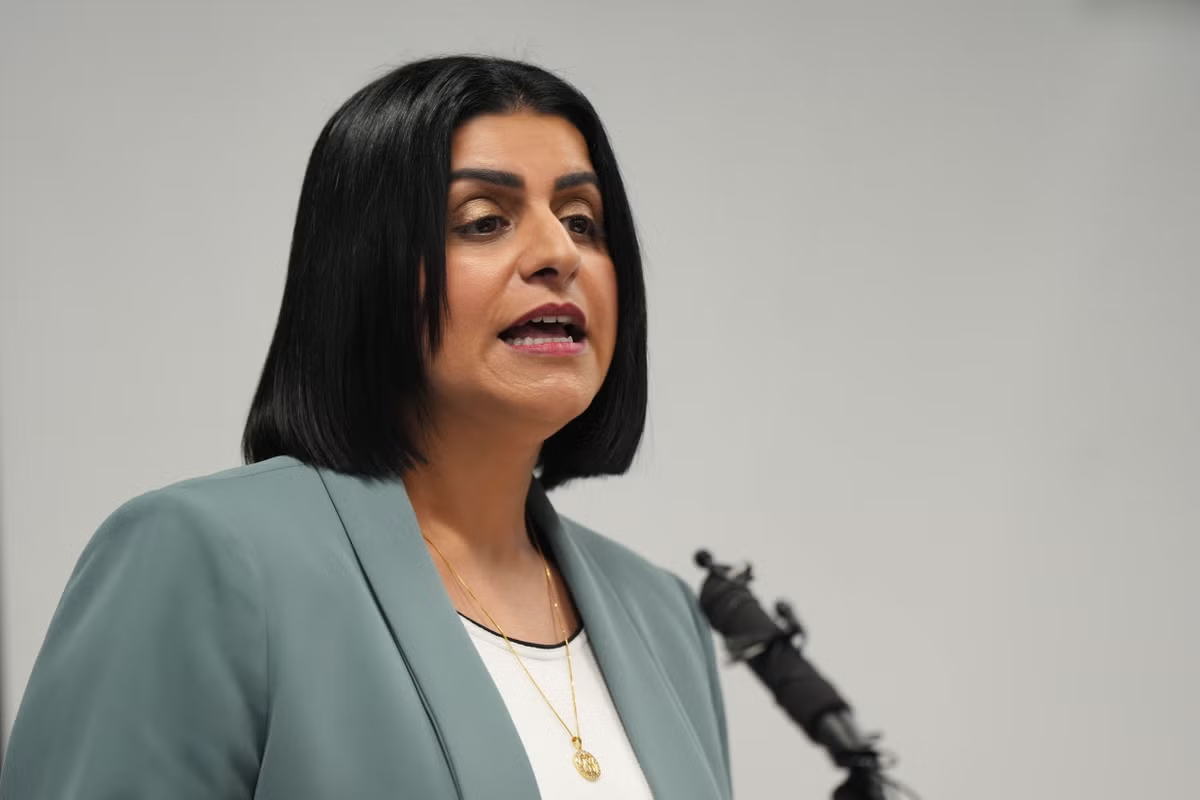
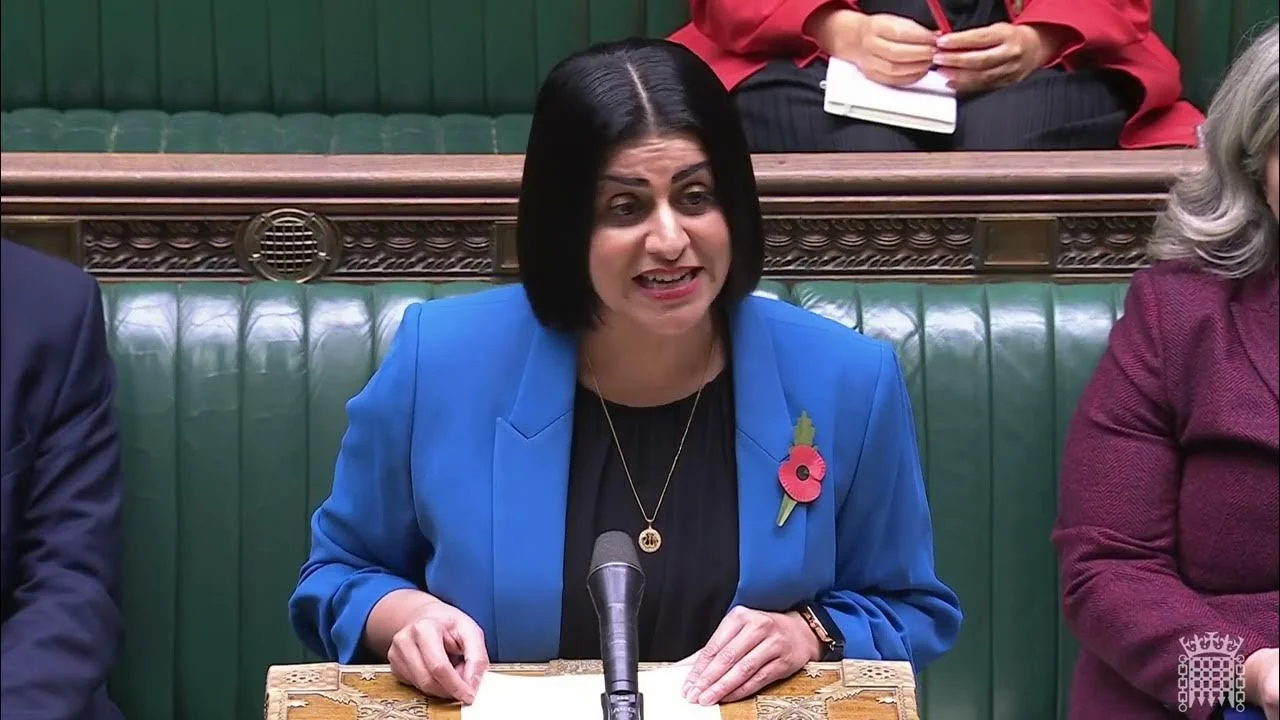
The government is withdrawing travel support for Afghans seeking to come to the UK, of which there are believed to be about 9,000.  They will now have to make their own way vie third countries.  The Home Secretary (pictured) has made a new agreement with France worth £662 million to provide more enforcement on the Channel coast beaches and better intelligence.  The Home office say that 480 people smugglers were arrested in 2025.  The Telegraph have quoted Ms Mahmood with saying that the crackdown on irregular migrants will give her room to allow more legitimate routes, but there is no detail on this as yet.

Reform’s claims

Other proposals in the air include Reform UK’s intention to deport migrants who have settled status if they arrived by non-legal means.  This would amount to some 400,000 (and they claim would save £14.3 billion through 2029-34 (when they would presumably be in power).  The (Reform) Lancashire County Council are withdrawing from the government’s resettlement scheme for accepted asylum seekers.

Nevertheless, the numbers of arrivals are down this year (by a third in the first quarter); the number of small boat arrivals in April 2025 was 11,000 against 7,000 this April.  The net inflow (of all types of immigration) over the last three years has gone from 900,000 in 2023 to 400,000 in 2024 to 200,000 in 2025; obviously much of this is due to restrictions of work and student visas, but it remains striking.  Next stats available 21st May

The Council of Europe are meeting on Friday in Moldova to discuss the issue of return hubs for refused asylum seekers.  Various European countries have made bilateral arrangements and up to 12 countries have been named as possible recipients.  The COE is the governing body for the European Convention of Human Rights, and possible changes to the ECHR will also be discussed.

The people behind Refugee Week (15th -21st June) are urging us to carry out a million acts of hope between 13th and 20th May.  Details at A Million Acts of Hope – Together With Refugees

Impact of Middle East Conflicts on Refugees in Turkey


War in Middle East and its effects

March 2026

Although war reporting generates a lot of commentary on the deaths of those caught up in the conflicts, the effects on refugees and those displaced receives much less attention. With the new war(s) in the Middle East, refugees are again in the news. So far, most displaced people have been moved within the countries of Iran and Lebanon, but Turkey in particular is being readied for an influx of refugees.  The European Union Agency for Asylum thinks here will possibly be large numbers of displaced persons as a result of the conflict, many of them heading for Turkey. The Institute for Migration estimates that as of now there are 19 million internally displaced in the region; the UNHCR have calculated in the last few days that 667,000 Lebanese have registered as displaced.

Home Secretary’s refugee plans

At home, the big story is the Home Secretary, Shabana Mahmood’s plan to reduce the length of protected stay of refugees from 5 years to half of that, during which time they will only have temporary refugee status.  This will be subject to review every 30 months for up to 20 years. During this period claimants may be deported if, in the opinion of the Home Office, their country of origin has become deemed “safe”.  A large number of Labour backbenchers are opposing the move, and the Law Society has observed that it might not comply with international law. Other objections have been that the plan will be costly (£872 million over a decade, according to the Refugee Council) and impractical. On 5th March, the Home Secretary revoked the legal duty to provide destitute asylum seekers with support and accommodation while their claims are processed, often for months or years.  The Home Office have been influenced by the so-called “Danish model”, which takes a hard line on immigration.

Among the latest statistics to be released, the Home Office received up to 23,000 referrals of alleged human trafficking in 2025 (the main sources were Eritrea and Vietnam).  The backlog of cases has reduced, but there has been an increase in the number of reconsiderations.  In 2025 about 100,000 claims for asylum were made in the UK. Of these, 41% were from small boat arrivals, 11% other irregular means, while 40% already had some form of leave before claiming.  The level of grants continues to drop, at 42% in 2025 (it used to be over 80%).  Syria has suffered particularly with levels of asylum grants down year-on-year from 88% to 9%.  Claims from Eritrea and Somalia are mostly accepted.

The ban on family reunions instigated last autumn is being challenged in the courts by Safe Passage International.  A High Court ruling is expected later this year.

Small boats in the Channel are now starting from further north, in Belgium, according to a BBC report.

The UN Missing Migrants Project, which records the number of deaths among attempted migrants globally, has designated three routes as particularly dangerous: from North Africa to the Central Mediterranean (esp. Libya); from Afghanistan to Iran (this was before the current conflict), and from West Africa to the Canaries (they note that migrants are coming from further south than they used to, with more risks attached).

Those politicians who seem keen on war and wanted the UK to adopt a more interventionist stance with the Israeli and US actions, seem not to be quite so aware of the knock-on effects. Many of those same politicians are to be heard railing against refugees. Wars generate refugees. A proportion end up at Calais.

AH


Recent posts:

Further restrictions planned on protests


Home Secretary will aim to increase curbs on repeated protests

October 2025

Governments throughout history have disliked protests and demonstrations. Thousands of people marching through the streets of London loudly, or even peacefully, stating their grievance or demanding a right denied to them, has long been part of our national life. Indeed, Sir Ian Gilmour in his book Riot, Risings and Revolution* describes the very many such events which took place in eighteenth-century Britain. Such was the violence that parliament was sometimes unable to sit for fear of MPs being dragged from their carriages. It is important to remind ourselves of this because the impression is sometimes created by present day politicians and some media commentators that this is some kind of new phenomenon. They are disliked because they disturb the current order. They give voice to injustice.

As we have noted before, the current home secretary, Shabana Mahmoud, is a woman as were previous home secretaries viz. Yvette Cooper, Suella Braverman, Amber Rudd, Theresa May and Priti Patel. All have the vote, all were/are MPs and are, or were, in parliament. That this is so is as a result of prolonged protest over many decades. They became violent as a (male) parliament refused to allow female enfranchisement. We could list other protests: to allow non property owners get the vote, for safety in the factories, to stop impressment and many other causes. All have the same or similar causes: people who feel that a government is more interested in satisfying or appeasing the powerful and are not listening to the powerless. Arms companies for example, have no need to spend a Saturday marching through London streets risking arrest and blistered feet, they – or their lobbyists – have direct access to ministers and senior civil servants all too happy to accommodate their wishes.

Frequency the problem

Mahmoud wants to get legislation passed to amend the Public Order Acts to clamp down on frequent protests. ‘Frequency of particular protests in particular places‘ she says ‘is in and of itself a reason for the police to be able to restrict and place conditions’. As a variety of civil rights organisations have pointed out, it is frequency which is the point. A single march or demonstration is unlikely to achieve anything much – the million or so who protested against the calamitous war in Iraq is an example.

She also claims, ludicrously, that they were ‘un-British’ and ‘dishonourable’. Clearly a minister who has only a slender grasp of British history.

There are a number of factors which seem to be at play here. The current ministerial statement came after the dreadful attack on a Synagogue in Greater Manchester. Marches were planned two days later on the Saturday in support of Palestine. There were many calls for the marches to be postponed. The organisers would not and went ahead with 488 arrested in Trafalgar Square. We can get a sense of the tensions at play in a Daily Telegraph article on 2 October Israel blames Starmer after synagogue terror attack which quoted without evidence, an Israeli source claiming the attack may have been ‘directed by Hamas’. Raphi Bloom is quoted in the Jewish Chronicle ‘that the community “will not forget the betrayal” over the UK recognising a Palestinian state, saying: “When you fail to act on constant calls to globalise the intifada, the results are that intifada came to our Manchester Jewish community with horrific consequences”.

It is clear that many people are upset and angry about the continued and wholly disproportionate killing and starvation which is taking place in Gaza. They are angry at the government continuing to allow Israel to be supplied with arms and the covert support by the RAF with their hundreds of overflights of Gaza. UK sales of arms to Israel reached a record high in June this year. They do not accept that there is a connection between the killing in Greater Manchester and Israel’s activities in Gaza and the West Bank. It can be argued that the Israeli government has perpetually conflated criticisms of its actions in Gaza and inaction in the West Bank as ‘anti-Semitic’ or ‘hatred of Israel’ and more recently as being ‘pro Hamas’.

The Home secretary’s plans to add to the legislation passed by the Conservatives is unnecessary and to quote an Amnesty director ‘ludicrous’. They may be part of a plan by government to look tough in the face of the increasing popularity of Reform and Nigel Farage. They represent a further step in increased authoritarian government and a desire to restrict protests generally.

*Pimlico (pub) 1992

Sources: Daily Telegraph, Jewish Chronicle, BBC (factcheck service), Sky News, Guardian, Wikipedia,

Blog at WordPress.com.

Up ↑