CAAT News


Summer edition of Campaign Against the Arms Trade news highlights many troubling issues around the this trade

June 2024

UPDATE: 20 June 2024. This post mentions the ‘revolving door’ where senior military personnel, civil servants and politicians go off to lucrative posts in the companies they were supposed to be controlling before retiring. Private Eye has done extensive work on this (see link below) and in the current edition No: 1624, there is an article about the Israeli arms firm Elbit who have recently taken on Sir Mark Poffley, formerly of the MoD. He had senior positions in logistics and hence would have had a lot to do with contracts. MoD have awarded Elbit with contracts worth £57m.

There is supposed to be a 2 year gap between leaving and taking up a role and lobbying previous colleagues. Private Eye questions whether this two years has indeed elapsed since although he is supposed to have left in 2018, documents show he remained as master general of logistics in 2022. ACOBA (see below) say these posts are ‘honorary’ and so do not infringe the two year rule.

Elbit, make the drones which are a feature of the Gaza campaign. Elbit say the drones used over Gaza are not made in Bristol.

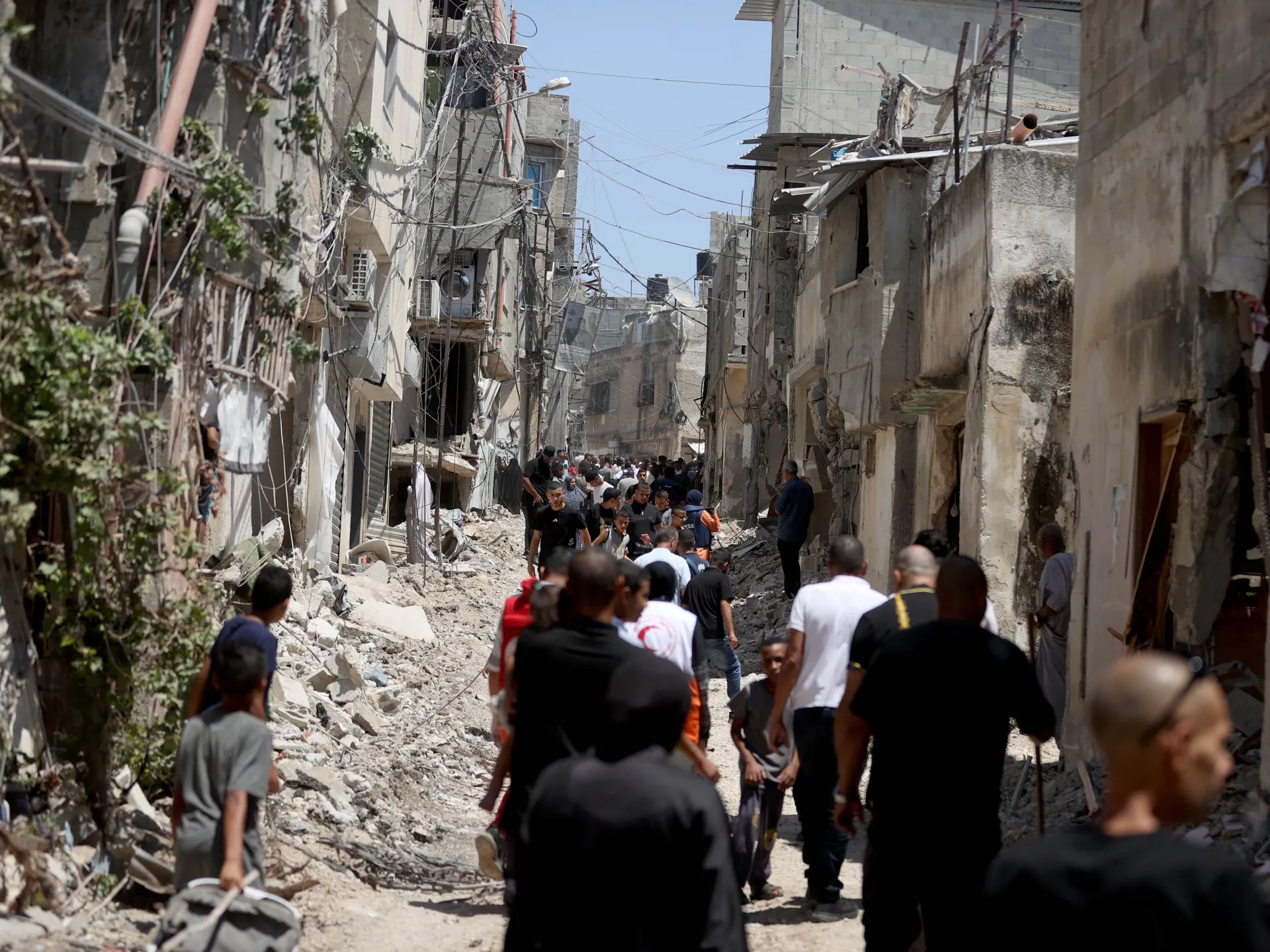
The arms trade has a severe impact on human rights in countries around the world. We have already highlighted the fact that the UK government is continuing to issue licences to the Israeli government despite the horrific death toll in Gaza.

A troubling development is the increase in the number of universities engaged in research programmes funded by, or in partnership with, arms companies. CAAT, in conjunction with Demilitarise Education has published a new report Weaponising Universities. The report describes the nature of the research projects and makes a number of recommendations for universities, faculties and students (p56ff). Protests by students have taken place at Bristol, Nottingham, Sheffield, Liverpool. Newcastle and Glasgow as awareness grows of what is happening.

Campaigners blocked access to the Bristol Arms Fair for a time. Among the exhibitors was Elbit, an Israeli arms company, which supplies weapons used in the Gaza conflict. The protest aimed to show that such firms were not welcome in the City.

There are two issues important in the arms industry: one is the lax control on what and to whom weapons are sold and two, the immense support offered by the UK government to the arms companies. The government claims it has robust controls in place yet weapons are sold to Turkey, Israel, Saudi, Qatar and other nations where abuses are taking place. There is a whole government department in place CAAT reports, called the UK Defence & Security Exports which uses public money to support the sale of arms around the world. The department’s title has a certain Orwellian feel to it with the use of ‘defence’ and ‘security’ to describe itself. Who could be opposed to defence or security? Unfortunately, what is sold is far from either of these things and are used to kill, or oppress.

Companies have almost limitless access to ministers and civil servants via extensive lobbying and countless meetings. Then there is the ‘revolving door’ which has been reported on in depth by Private Eye. This is the scandalous and cosy relationship between government and business, including the arms firms, whereby retiring military people, senior civil servants and ministers are offered lucrative positions or consultancies once they retire. It is an invitation for corruption. The Aerospace, Defence & Security Group (note those words again) hold lavish dinners for politicians and industry figureheads. Altogether, a multi-layered system of contacts enabling arms firms to exert considerable influence over politicians and civil servants. If any progress is ever to be made to put a stop to this deeply entrenched system of influence then at the very least, contacts should be reported on and there should be a considerably greater level of transparency. ACOBA, the toothless department which notionally controls the revolving door has to be radically strengthened. Essentially, instead of policing this system, the UK government is a willing participant and appears to have lost all objectivity. And remember, these are companies which sell weapons which kill.

CAAT News has much more on countries such as Saudi, Australia, Russia, China and more. There is also a piece on the Twickenham Arms Fair and is also a report on Barclays who are heavily involved in financing Elbit and BAE Systems with over £4bn in loans and financial services.

The UK and Israel


UK trying to frustrate the International Court of Justice in the Israel/Palestine conflict

August 2023

The UK, in common with some other western countries such as Germany and the US, is trying to block the ICJ from considering international humanitarian law matters in relation to the Israeli government’s treatment of the Palestinians.  A legal opinion has been leaked enabling us to see the reasoning behind the government’s position.  The opinion, if genuine, claims it is ‘inappropriate for [the UK] to insert itself into a bilateral dispute without Israel’s consent’.  The most obvious thing to say is that such consent is unlikely ever to be given. 

Another argument in the opinion is that it will hamper prospects for relaunching Israel/Palestine negotiations, prospects for which are vanishingly small.  The two state solution collapsed in 2014, nearly a decade ago.  The opinion does not seem to take into account recent developments in Israel and the statements by Itamar ben Gvir, leader of the ‘Jewish Power’ party and currently the National Security Minister, who said ‘his rights in the occupied West Bank are more important than those of Palestinians’.  This and similar remarks in interviews have led to condemnation by the US government.  Gvir has also fallen out with Bella Hadid, the super model who repeated his remarks in a blog.

Violence has increased in Israel and the process of seizing land and destroying Palestinian/Arab communities and land continues at a fast and increasing pace. 

The opinion also claims that this is a ‘bi-lateral dispute’ which may be true but it has not hindered the UK government and other members of NATO, from interfering in a ‘bilateral dispute’ which happens to be called Ukraine.  

The ICJ is the main UN judicial organisation and it played a key role in ending the apartheid system being run by the South African government in Namibia.  It also forced an unwilling UK government to open talks with Mauritius concerning the Chagos Islands and the forced removal of its people. 

Whether the ICJ will follow through on this and endorse the reports by a range of human rights organisations alleging Israel’s treatment of the Palestinians amounts to apartheid remains to be seen.  Both the government and the Labour party seem blind to the actions of the Israeli government in the occupied territories. Both steadfastly refuse the accept the considerable evidence of apartheid in the country. No reasons have been provided. For Labour, it is possibly a legacy of the bruising anti-semitism allegations the party received under the previous leader of the party.

Sources: BBC; Guardian; 972 Magazine

Bahrain action


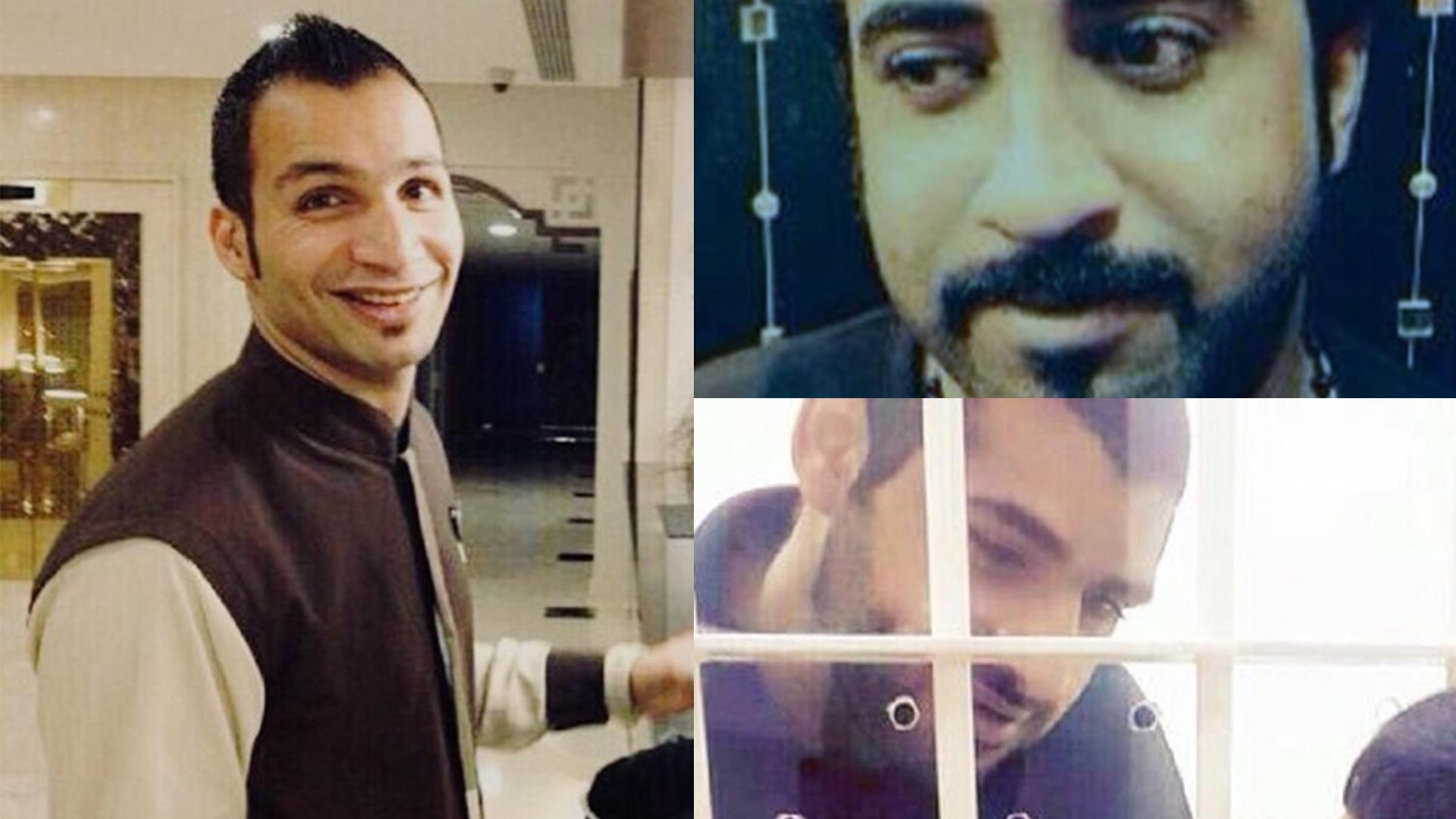
UK: Speak up for Maher, Mohammed and Husain in Bahrain

Maher Abbas al-Khabbaz. Mohammed Ramadhan. Husain Moosa. 

All three men are political prisoners in Bahrain. They were all sentenced to death based on ‘evidence’ and ‘confessions’ obtained under torture. They remain on death row today with only a Royal pardon capable of sparing their lives. All while the UK Government gets close to Bahrain over trade talks – prioritising trade over human rights abuses.

In July 2020, the UK Minister for Middle East and North Africa stated that if “the death penalties are upheld through the Court of Cassation process, the UK will publicly and loudly remind Bahrain of our opposition to the death penalty.” 

Bahrain did just that – upheld their sentences – and the UK government has been silent.

Will you add your name to speak up for Maher, Mohammed and Husain? Please visit the Reprieve website to find the petition. Thank you.

Syria action


This is an appeal from Reprieve

At a recent visit to a prison camp in North-East Syria a young British boy named Joey and his mum Salina were met.* Salina is very sick and could die if she doesn’t receive urgent medical treatment Joey would be left orphaned and alone in a detention camp in Syria. The UK government could bring Joey and his mother home, like they’ve brought other British children home from Syrian detention. But so far, they have refused to do so.

Salina’s condition is getting worse and doctors warn she will die if she does not get medical treatment. The Foreign, Commonwealth & Development Office were written to for a second time last week to ask that they repatriate Salina and Joey as a matter of urgency. The longer they delay, the closer Salina is to death and the closer Joey is to becoming an orphan.  Government officials told me that Ministers are currently “considering” the case.

The UK government has the power to save Salina’s life, and stop Joey from being orphaned and abandoned.

Salina is paralysed, which makes it impossible for her to do simple tasks like bathing or getting food unaided. She has started having seizures which terrify Joey. Not long ago, one of her seizures was so bad that Joey thought she had died.

Joey doesn’t play outside with the other kids anymore. He is afraid to leave his mother’s side in case something happens to her. He “sees fires” everywhere, following a terrifying tent fire which he and his mother narrowly escaped, in which all their possessions were burned. The Government’s refusal to act is robbing him of his childhood and forcing him to watch his mother become sicker and sicker. 

 We have a template email ready for you.

Nine problems with the asylum system that Priti Patel can’t blame on anyone else — Page Array – Free Movement


Priti Patel has Been Very Clear that the problems in the asylum system are other people’s fault (including me and my “activist lawyer” colleagues) and that her Package Of New Measures will sort them out. But what do the government’s own experts think? Well, yesterday the Independent Chief Inspector of Borders and Immigration released a…

Nine problems with the asylum system that Priti Patel can’t blame on anyone else — Page Array – Free Movement

This is a republished post.

Threat to our rights


Government bills represent a threat to our rights to protest and to hold the government to account

We are becoming accustomed to authoritarian regimes restricting the rights of their citizens by a variety of means. These include restrictions on the right of assembly, weakening judicial control and either ignoring or neutering human rights laws. The UK government has introduced three bills which seek to do similar things and this post is to highlight the dangers for everyone in the country.

Our human rights are our personal freedoms. You can’t see or touch them, but they should always have your back. Think of them as your invisible armour. If you don’t find yourself thinking about your rights much, that’s a good sign that they’re there for you and doing what they should be: making you feel safe, accepted and free to enjoy your life with dignity and without fear. But what if someone quietly took your armour away, bit by bit, and you didn’t realise until it was too late? How would you protect yourself?  

That’s what’s happening right now, right under our noses – and the UK government doesn’t want you to know about it. As we speak, they are trying to introduce new laws and make changes to existing ones that will result in less freedom for ordinary people, more power for people in authority, and even greater inequality in our society. These changes will also make it harder for you to stand up for yourself if your human rights are being abused. And on top of that, in many cases it will be society’s most vulnerable people who are the worst hit by the changes. Our freedoms are under attack from all angles: this is a raid on our rights.  

If you’re still not sure what all this means in practice, you’re not alone. That’s exactly what people in power want, as a lack of public understanding makes it easier for them to sneak through changes that will negatively affect people’s lives without them realising (until it’s too late). We’re here to shout about the changes and make sure as many people as possible are aware of them, as we need your help to fight them.  

 
The Police, Crime, Sentencing and Courts Bill   

The right to protest is fundamental to a free and fair society.  In its current form, the Police, Crime, Sentencing and Courts Bill for England and Wales, would be an enormous and unprecedented extension of policing powers which would put too much power in the hands of the state. It would give both police and Government ministers the powers to ban, limit or impose any condition on peaceful protests – on the grounds that they might be ‘noisy’ or cause ‘annoyance.’  
 
The Bill not only targets the organisers of any protest, but also anyone who takes part in them on the basis that they “ought to have been aware” of any restrictions, conditions or prohibitions placed on any given event, risking criminalising large numbers of people for activities that otherwise would be perfectly lawful.  

Our rights, enshrined in international and domestic law, can only be infringed in very limited circumstances considered to be both proportionate and necessary.  Measures in this Bill are neither. Police already have wide ranging powers to manage public order and prevent public assemblies from causing serious harm. This Bill sets out to crackdown on explicitly nonviolent dissent.  

This will likely disproportionately impact people who are in a minority and increase the racism and discrimination which is experienced by many.  The thresholds in the Bill that will be applied to any policing action are vague, undefined and open to such wide ranging and discretionary interpretation that they will give rise to even more inconsistent approaches to how protests and demonstrations will be managed in future.  

Communities who already face wide ranging racist and discriminatory over policing will likely be at even greater risk. Already, research by the UK Parliament’s Joint Committee on Human Rights shows that 85 % of Black people in the UK are not confident that they would be treated the same as a white person by the police.  

This is worsened by other parts of the Bill, including greater police powers to enhance stop & search and to collect and share information, all of which are likely to entrench institutional racism within the criminal justice system. These structural inequalities need to be dismantled not re-built.  
 
We are concerned by restrictions on the right to roam which would seriously affect Gypsy, Roma and Traveller communities who could see their entire way of life criminalised. These proposals risk further criminalising homelessness or protesters using nonviolent occupations, peace camps or sit-ins to challenge injustice.  

This Bill covers a huge number of things, many of which have been heavily criticised by different sectors and requires a serious rethink. In many ways, it is so problematic that it would better be that it was dropped. Any welcome provisions in it could be delivered through different legislation. If the Bill proceeds, we are calling, alongside over 250 civil society organisations and 700 legal academics and counting, for the removal of Parts 3 and 4 of the Bill that relate to protest and the right to roam. We are similarly calling for the removal of measures relating to enhanced stop and search powers and data gathering and sharing requirements, which if enacted would likely increase structural racism and discrimination in the criminal justice system. At an absolute minimum, the relevant parts of the Bill (Part 2 Chapter 1, Part 3, Part 4 and Part 10 Chapter 1) must be substantially amended. 
 
Disappointingly the Bill has passed through the Commons, but this is not the end. In autumn the Lords will now have the opportunity to amend the Bill, before it returns to the Commons. 

This Bill affects England and Wales directly, but people from Scotland and Northern Ireland will travel to London to protest.  As Amnesty activists we are concerned about restrictions to freedom of expression and rights to assembly wherever they happen in Bogota, Bangalore, Belfast or Bristol. 

The Salisbury group will be writing to our MP, Mr John Glen, to express our concerns about this and other proposed pieces of legislation.

UK’s involvement in torture


One of the fundamental components of the Human Rights Act is the freedom from torture. It was abandoned in the seventeenth century in the UK. It is rarely effective since the information derived is likely to be what the questioners want to hear rather than the truth. The UK government has long maintained that it does not use these practices overseas nor uses other countries as proxy torturers on our behalf. This has been shown to be untrue: Guantanamo prisoners have testified to UK personnel being present during torture sessions carried out by the Americans, and after the fall of Ghedaffi in Libya, documents revealing MI6’s involvement in torture were discovered. We were also complicit in the use of UK airfields used by the Americans to fly prisoners to ‘black sites’ in eastern Europe.

The Overseas Operations Bill is important therefore in this context. Yesterday, the House of Lords voted in favour of the amendment supported by several agencies.  When it was first introduced last year, the Bill risked effectively decriminalising torture committed by UK personnel. The amendment means prosecution for torture – as well as genocide and other serious international crimes – could go ahead without facing roadblocks originally included in the Bill.  It also seeks to apply a 5 year limitation on actions which is contrary to international law. There should be no time limit on actions regarding the use of torture.

The background to the Bill has been a campaign against so-called ‘vexatious’ legal claims against British soldiers overseas. Politicians and some sections of the media have painted a picture of innocent soldiers being pursued through the courts whilst doing their duty for their country and serving in conditions of great danger. If innocent soldiers are being pursued in this way it is very much to be regretted. But there is plentiful evidence of bad behaviour which should be investigated. Eight years ago Lt Col Mercer, who left the Army because of what he witnessed, spoke at an Amnesty service in the Cathedral. His was first hand testimony of the mistreatment and sometimes death suffered by some prisoners at the hands of Army interrogators.

Yesterday, 333 Lords voted in favour of the amendment to the Bill – a majority of 105. The amendment we fought for was tabled by former Defence Secretary and Secretary General to NATO Lord Robertson.  This is an important win: the UK helped build the ban on torture in the Geneva Conventions. This amendment ensures it doesn’t roll-back now. 

The battle is not over however and we still need to make sure the changes are kept in the final version of the Bill when it goes to the House of Commons and is voted into law. 

It is depressing to read of these and other retrograde plans by the government.

Sources: Reprieve; Amnesty International; Independent

Arms sales to Saudi – latest


Campaign Against the Arms Trade launches legal challenge

CAAT has launched a legal challenge after the UK government decided to resume arms sales to the Saudis for use in their bombing campaign in Yemen.  We discussed the flimsy grounds and shaky reasoning for this decision in a previous post.  The CAAT post can be accessed here.

Arms sales to Saudi resume


The UK has resumed arms sales to the Saudi regime

In 2019 the Court of Appeal ruled that the UK government had acted unlawfully by licensing weapons to the Saudi armed forces for use in the Yemen conflict without assessing whether incidents had occurred in breach of International Human Rights law.  Our weapons – along with those supplied by other countries principally the USA – have cause immense damage and suffering to the people of Yemen.  The UN has estimated around 7,700 dead since beginning of the conflict in 2015.  To that must be added the thousands of injured and the destruction of major parts of the country.  The effects on the civilian population have been devastating. 

Hospitals, schools, market places, residential areas, agricultural areas and production facilities have all been bombed using our planes and weapons.  Although mistakes do happen in war and the wrong thing is bombed, the extent of these ‘mistakes’ leads one to assume that there is a deliberate attempt to bomb civilian targets.  We must also note that UK personnel – including people from the RAF – are involved in advising the Saudis so something is going seriously wrong.

The British government maintains – against all the evidence – that there is no risk of IHL violations.  In a Commons statement on 7 July justifying setting aside the Court’s judgement, the minister, Liz Truss MP said:

[…] I have assessed that there is not a clear risk that the export of arms and military equipment to Saudi Arabia might be used in the commission of a serious violation of IHL.  (House of Commons written statement 7 July 2020)

It is worth reading the key passage in this statement which purports to give a justification for this decision:

This analysis has not revealed any such patterns, trends or systemic weaknesses.  It is noted, in particular, that the incidents which have been assessed to be possible violations of IHL occurred at different times, in different circumstances and for different reasons. The conclusion is that these are isolated incidents.

This reasoning is tenuous in the extreme.  Because violations ‘occurred at different times, in different circumstances and for different reasons’ the minister concluded that they are ‘isolated incidents’.  Surely a key factor is the frequency of these incidents especially if your argument is based on the numbers?  The sheer number of civilian targets is way beyond what anyone could describe as ‘isolated’.   The Oxford dictionary describes isolated to mean ‘untypical, unique’: these bombings are neither untypical nor unique.  Another curious aspect of this statement is the phrase ‘for different reasons’ implying knowledge of what the purpose of the raid was yet the statement is full of uncertainties and the difficulty of assessing the incidents.  

Kate Allen, director of Amnesty international said:

How the Government can seriously describe a five-year Saudi-led aerial assault on Yemen which has seen numerous examples of civilians killed in schools, hospitals, funeral halls and market places as a set of ‘isolated incidents’ is almost beyond comprehension.

This seems like an attempt to rewrite history and disregard international law. The UK is bypassing its obligations under the international arms control framework. Its approach to this decision has effectively rendered our own protections meaningless.  (New York Times, 7 July 2020)

It is small wonder that human rights organisations have reacted with horror at the decision and the speed with which the minister set about reinstating arms shipments to Saudi.  The Campaign Against the Arms Trade described the decision as ‘rank hypocrisy’.

The government is determined to sell arms to the Saudi and seems genuinely unconcerned at the fate of those on the receiving end.  Liz Truss’s argument about isolated incidents is almost insulting.  So great is the scale of the business that stopping it or seriously scaling it back is economically impossible.  Truly it is the tail which wags the dog.

Sources: BBC, CAAT; New York Times; Human Rights Watch; Independent; The Guardian


Resumption of arms sales to Saudi Arabia


Minister announces resumption of arms sales to Saudi Arabia used to cause so much misery in Yemen

It is sometimes difficult to keep up with government announcements.  On Monday 6 July, the Foreign Secretary Dominic Raab announced that a number of individuals would be subject to sanctions and banned entry to the UK.  Their assets would be frozen as well.  The UK is one of the major centres for money laundering and the City is the centre of a web of tax havens around the world.  City institutions are specialists in moving huge sums into secrecy jurisdictions thus enabling a range of criminal activities to go undetected.  Dominic Raab’s announcement was a welcome first step in clamping down on some of this activity therefore and has cross-party support.  In his statement he said:

He outlined human rights violations as those that contradict the right to life, the right not to be subject from torture and the right to be free from slavery, but said they were exploring adding other human rights and looking into including those guilty of corruption.

The Foreign Secretary outlined the individuals who will be sanctioned first.  These include those involved in the torture and murder of Russian lawyer, Sergei Magnitsky (who the Minister concluded his statement by paying tribute to), and Saudi Arabian journalist, Jamal Khashoggi, as well as those responsible for the genocide of the Rohingya population in Myanmar and for North Korea’s gulags.  Statement in the House of Commons Website (extract)

All those countries named have been subject of Amnesty and other human rights organisation’s campaigns.

THEN on the following day, we have an announcement by the Secretary of State for International Trade Liz Truss, (pictured) resuming arms sales to Saudi Arabia.  The contrast is astonishing as one of the countries included in the Foreign Secretary’s announcement was – Saudi Arabia for the murder of Khashoggi.  The announcement followed a legal case last year mounted by a number of human rights organisations, who claimed that the weapons – especially jets – were being used by the Saudis to bomb civilian targets in the war in Yemen.  The destruction there has been horrific with thousands of deaths.  Hospitals, schools, clinics and wedding ceremonies have all been attacked.  Saudi Arabia’s human rights record is dire with torture common, religious persecution rife and the dreadful treatment of women.

The Court of Appeal found against the government because it did not show, in the Court’s judgment, the question of whether there was an historic pattern of breaches of International Humanitarian Law was a question which required to be faced.  Even if it could not be answered with reasonable confidence for every incident, at least the attempt had to be made.  It was because the government had not reached findings on whether specific incidents constituted breaches of IHL as part of an assessment of clear risk, under Criterion 2c that the Court of Appeal concluded that their decision-making process was irrational and therefore unlawful.

Liz Truss’s argument is that they have sought to determine whether these “violations” are indicative of:

(i) any patterns of non-compliance;
(ii) a lack of commitment on the part of Saudi Arabia to comply with IHL; and/or
(iii) a lack of capacity or systemic weaknesses which might give rise to a clear risk of IHL breaches.

We have similarly looked for patterns and trends across the incidents which have been assessed as being unlikely to be breaches of IHL and those for which there is insufficient information to make an assessment.

This analysis has not revealed any such patterns, trends or systemic weaknesses. It is noted, in particular, that the incidents which have been assessed to be possible violations of IHL occurred at different times, in different circumstances and for different reasons. The conclusion is that these are isolated incidents

The decision to resume supplies has been roundly criticised.  Kate Allen of Amnesty said:

This is a deeply cynical move to restart business as usual when it comes to Saudi arms sales.  How the Government can seriously describe a five-year Saudi-led aerial assault on Yemen which has seen numerous examples of civilians killed in schools, hospitals, funeral halls and market places as a set of ‘isolated incidents’ is almost beyond comprehension.  This seems like an attempt to rewrite history and disregard international law.  The UK is bypassing its obligations under the international arms control framework. Its approach to this decision has effectively rendered our own protections meaningless.

Deeply cynical move – AIUK


Andrew Smith of the Campaign Against the Arms Trade in a statement said:

This is a disgraceful and morally bankrupt decision. The Saudi-led bombardment of Yemen has created the world’s worst humanitarian crisis, and the government itself admits that UK-made arms have played a central role on the bombing.  We will be considering this new decision with our lawyers, and will be exploring all options available to challenge it.

The evidence shows a clear pattern of heinous and appalling breaches of International humanitarian law by a coalition which has repeatedly targeted civilian gatherings such as weddings, funerals, and market places.  The government claims that these are isolated incidents, but how many hundreds of isolated incidents would it take for the Government to stop supplying the weaponry?

This exposes the rank hypocrisy at the heart of UK foreign policy.  Only yesterday the government was talking about the need to sanction human rights abusers, but now it has shown that it will do everything it can to continue arming and supporting one of the most brutal dictatorships in the world.


Criterion 2c.  Criterion 2c of the Consolidated EU and National Arms Export Licensing Criteria – which requires the Government to assess Saudi Arabia’s attitude towards relevant principles of international law and provides that the Government will not grant a licence if there is a clear risk that the items might be used in the commission of a serious violation of international humanitarian law.

Picture credit: Pink News


We are not meeting at present but hope to resume activities in the Autumn.

Blog at WordPress.com.

Up ↑