
Oklahoma executes more of its citizens per capita than any other state in the US.
October 2024
The State of Oklahoma has executed the second largest number of prisoners in the US (after Texas) since the re-legalisation of the death penalty in 1976. It has carried out the highest number of executions per capita in the country. It was the first jurisdiction in the world to adopt lethal injection as a method of execution.
The Salisbury group has decided to focus on the state and is writing to Governor Stitt in an effort to persuade him to stop this practice in his state.
There is a wide number of offences which can lead to a sentence of death in the state. First-degree murder is punishable by death in the following circumstances:
- The defendant was previously convicted of a felony involving the use or threat of violence to the person;
- The defendant knowingly created a great risk of death to more than one person;
- The person committed the murder for remuneration or the promise of remuneration or employed another to commit the murder for remuneration or the promise of remuneration;
- The murder was especially heinous, atrocious, or cruel;
- The murder was committed for the purpose of avoiding or preventing a lawful arrest or prosecution;
- The murder was committed by a person while serving a sentence of imprisonment on conviction of a felony;
- The existence of a probability that the defendant would commit criminal acts of violence that would constitute a continuing threat to society; or
- The victim of the murder was a peace (police?) officer, or correctional employee of an institution under the control of the Department of Corrections, and such person was killed while in performance of official duty.
In addition, the statute books carry the death penalty for first degree rape, extortionate kidnapping and rape or forcible sodomy of a victim under 14 where the defendant has a prior conviction of a person under 14, although since 2008 capital punishment is no longer constitutional for these crimes.
As of 27th September 2024 there are 33 prisoners on death row in Oklahoma, only one of whom (Brenda Andrew) is female.
Background facts
Oklahoma is one of two States allowing more than three methods of execution – lethal injection (the primary method), nitrogen hypoxia, electrocution and a firing squad. They are to be applied in that order if earlier methods are unavailable or found to be unconstitutional. Nitrogen hypoxia became available as an option in 2015 but to date has never been used in the State. When the prosecution seeks the death penalty, the sentence is decided by the jury and must be unanimous. In the case of a hung jury during the penalty phase of the trial, a life sentence is imposed, even if a single juror opposed the death penalty, and there is no re-trial.
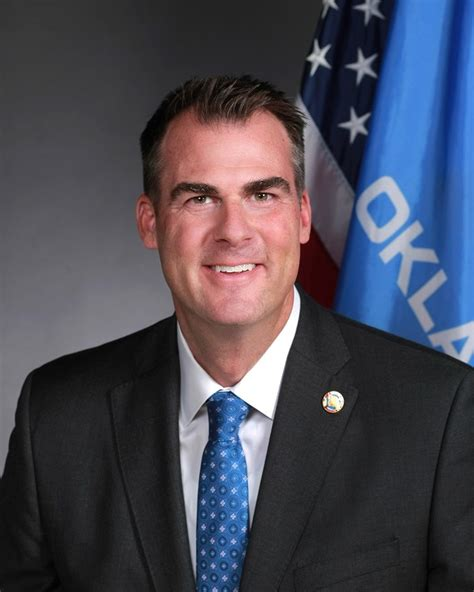
Under the constitution of the State, the Governor of Oklahoma may commute a death sentence, but only following the advice and consent of the five-member Pardon and Parole Board. During Governor Lee Cruce’s administration (1911-1915), he commuted every death sentence. Governor Kevin Stitt (pictured) has granted clemency only once (to Julius Jones) during his tenure (2019 – present). This occurred despite 5 (possibly 6) recommendations from the Board. These have included the very recent case of Emmanuel Littlejohn, executed on 26th September 2024.
From 1915 to March 2024, 156 executions took place, three of them of women. Executions were halted for six years. This followed the botched execution in 2014 of Clayton Lockett. There was also a drug mix-up that led to the ‘incorrect’ lethal injection of Charles Warner in 2015.
14 executions have been carried out under the governorship of Kevin Stitt. In the most recent case – that of Emmanuel Littlejohn – there has been a great deal of controversy. The execution took place

despite conflicting evidence regarding his guilt, mitigating evidence regarding his troubled childhood and undeveloped brain at the time of the crime, the admission of some jurors of misunderstanding the implications of a life without parole sentence, and the fact that the Parole Board had voted 3-2 to spare his life. He had always maintained his innocence of the actual killing.
In 2022 a series of 25 executions were scheduled over a 2-year period, with one execution set for nearly every month through 2024. A report was issued by the Death Penalty Information Center tying the State’s use of the death penalty to its troubled history of racial violence and segregation.
The Death Penalty Information Center advises that current research shows that for every 8.2 prisoners on death row in the US in the modern era of the death penalty, one person has been exonerated.
The Reason Foundation Criminal Justice Policy Explainer – Abolishing the Death Penalty gives the following information:
- Since 1981 ten people in Oklahoma have been exonerated while on death row
- 6 cases involved perjury or false executions
- 7 cases involved official misconduct
- Oklahoma County, Oklahoma, has had the 4th highest no of death row exonerations among all counties in the US. 4 of the 5 death row exonerations in Oklahoma County involved misconduct by officials.
- The longest sentence served by a death row exoneree was 21 years.
The Foundation also provides evidence of the high costs in the State of the death penalty as opposed to life imprisonment:
- A study prepared for the Oklahoma Death Penalty Review Commission found that Oklahoma spends $110,000 more on capital cases than on comparable non-capital cases. The study authors noted that this is a very conservative estimate because many prosecution and court costs were excluded.
- Even at that conservative rate, with 42 (Note: figure differs from the 33 quoted earlier) individuals currently on death row, Oklahoma could have saved $4.64 million by trying the cases as life without parole rather than seeking the death penalty.
- Using estimates from other studies suggests Oklahoma could have saved between $33.6 million and $42 million by pursuing life without the possibility of parole rather than the death penalty.
- Moreover, the 117 (?) executions conducted in Oklahoma since 1990 are estimated to have cost the state between $12.9 million and $117 million.
Letters may be sent to:
Honorable J Kevin Stitt
Governor of the State of Oklahoma
Oklahoma State Capitol
2300 N. Lincoln Blvd, Suite 212
OKLAHOMA CITY
OK 73105
Emails can be tried at: https://oklahoma.gov/governor/contact/general-information/contact-the-governor.html which gives access to a form.
Sources: Wikipedia; Death Penalty Information Center; Amnesty International; World Coalition Against the Death Penalty; The Reason Foundation – Criminal Justice Policy


 Amnesty in Salisbury & South Wiltshire