Impact of ECHR on Asylum Seekers in 2025


Immigration and asylum seekers still making waves in UK.

October 2025

This month has been dominated by arguments around the European Convention on Human Rights and the rights of protesters to express their views. Neither of these are directly about refugees, but do have a bearing on the treatment of asylum seekers and dealing with the effects of conflicts. Boat crossings and asylum seekers do feature in the desire to leave the ECHR however.

The government has taken two more actions affecting migrants: making the “leave to remain” decision more difficult by extending the time taken to achieve it, adding more requirements, and blocking family reunions which would previously have been regarded as acceptable. Nando Sigona commented that this “allows policymakers to set shifting and arbitrary standards of belonging.”

One of the areas of complaint by the government has been the “last-minute” stay on deportation of unsuccessful claimants. It has now become clear that this is not gaming the system but the result of the short time available for appeals to be made against the Home Office’s “notice of intent” and the lack of emergency legal aid.

Still in the UK, the “one in, one out” agreement with France has started, but obviously the numbers involved are pretty small. Nevertheless, some commentators, such as Sunder Katwala of British Future take a positive view. At present, the scheme aims to return about 50 people a week; were it to be expanded tenfold, it would make returns “more likely than not”, and at 20 times, “it could operationalise a returns guarantee”. This would effectively destroy the business model of small-boats traffickers, says Katwala. “If you got to the point where there was a guarantee that the irregular route, where you paid a trafficker, wasn’t going to work, and there was a legal scheme to apply to as well, then you would see a three-quarters drop [in numbers arriving by boat].” Eventually, “you could actually eliminate it entirely”. British Future’s polling suggests an intake of 50,000 refugees a year would be supported by 48% of Britons, and opposed by just 18%.

Katwala notes that the US did actually get on top of immigration at the Mexican border in the final year of Joe Biden’s presidency, with a similar “routes and returns” approach by closing off illegal routes to immigration and creating legal ones. The numbers crossing the US border were far greater than those crossing the Channel – 2 million a year – and Biden’s approach reduced them by 77% between December 2023 and August 2024, an achievement that was barely reported at the time.

Also domestically, the government is still planning to phase out hotel accommodation for claimants and is
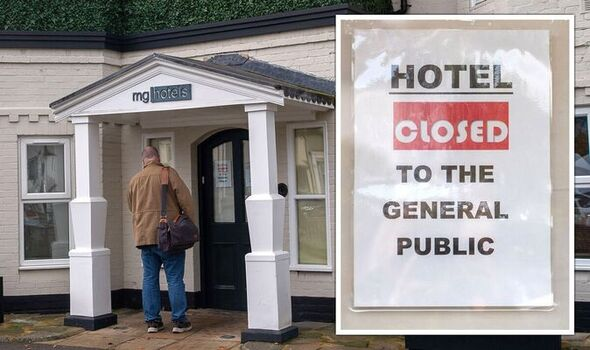
looking at redundant sites (mostly military) away from inhabited areas – the chief problem is that most of these require major repair work before being acceptable. Also noteworthy is the rumour that the imminent budget will take money away from spending in this area to reduce the deficit. Finally, back to the ECHR; the Supreme Court has taken to using the concept of “margin of appreciation” (in the ECHR but not the HRA) which is a bias towards accepting government cases rather than those of the lawyers – this will likely loom large.

Immigrant numbers falling in Europe

In Europe as a whole, the number of migrants has fallen sharply this year, according to Frontex. In 2025 so far, 112,000 have arrived in the continent, 21% down on last year. Similarly, the number of asylum claims is down by 23% to around 400,000 in the first half of the year. One of the main reasons for this is the EU’s policy of paying “transition countries” to cooperate by not allowing potential migrants through. These countries are chiefly Tunisia and Libya. There have been reports of Libyan security staff throwing people off boats into the sea (Libya is, of course, in the midst of civil war so is not likely to be particularly fastidious).

Frontex say that the number of arrivals by the western route through Algeria have, however, gone up. France and Spain have overtaken Germany as the most favoured final destination – the largest group of national arrivals have been from Venezuela, using Spain as a destination for language reasons. Ursula Van der Leyen has noted that only 20% of those with rejected claims have actually left Europe, and this will be on the agenda for the introduction next year of the new migration pact that has been said to “harden border procedures and envisages accelerated deportation.” Talks are continuing especially about the financial aspects. Interestingly, Hungary is being fined 1 million Euros a day for breeching its responsibilities towards asylum seekers – the government is unmoved.

Fergal Keane at the BBC has been touring the border areas and observed that in Greece, Poland and Latvia migrants were being physically pushed back across the border. The hazardous nature of the whole scenario is reflected in the fact that, over the last 10 years 32,000 migrants have died en route.

For the record, the number of arrivals on small boats this year so far is 34,000, up 36% on the same period last year. The weather is probably the main factor.

Compulsory reading!: The truth about the small-boats crisis – New Statesman.

AH

Write for Rights – webinar


Fascinating Webinar held on Write for Rights

Amnesty members around the world write millions of letters each year and it can sometimes feel a little dispiriting.  They seldom get replies and the results (if any) are often difficult to discover.  It can seem a fruitless exercise.  True, every now and then, there is a success (which we have highlighted on this site where group members have been involved) but they are infrequent.

Some Amnesty members in front of Exeter Cathedral (pic: Salisbury Amnesty)

So the webinar held yesterday (2 December 2020) was particularly uplifting.  It featured three speakers: Kate Allen, Director of Amnesty, Geraldine Chacón from Venezuela and the Sena Atici, the Individuals at Risk Coordinator at AIUK.  Members of the South West group (pictured outside the cathedral in Exeter) will be familiar with Geraldine who came to speak to us in that city in March, just before lockdown.

Geraldine, a lawyer and human rights defender, was arrested in 2018 by the Venezuelan authorities as part of an exercise against all critics of the government.  She was held in appalling conditions for 4 months and although eventually released, she was not permitted to leave the country.  In common with a host of regimes nowadays, she was accused of being a ‘terrorist,’ a kind of go-to accusation for anyone a government doesn’t like.

She described how being arrested changed everything and how she felt isolated and forgotten.  ‘Nothing was in your control’ she said.  Thousands wrote letters which in fact, she never received.  In prison, she was completely isolated.  Her mother did however, and the government also received many thousands.  ‘When you’re an activist, you’re not that sure that you are making a difference.  Being on the other side, I saw how it had an impact and made a difference’ she added.

‘I know [the letters] make a difference – I am the living proof of that’

In her talk in Exeter, she said ‘[the police] want you to stop – without the support, I might have done.’

There were several questions from the public at the webinar presentation around effectiveness and risk.  Can these

Geraldine Chacón (left).  Picture: Salisbury Amnesty

letters increase the risk to the prisoner?  The answer was that the International Secretariat look carefully at this before someone is included in a Write for Rights campaign.  If it is felt that there is risk, they are not included.

This was a most successful webinar.  For all those who occasionally ask themselves ‘is it worth it?’ – is it worth the price of a stamp to a regime where it is unlikely to be read or to make a difference? the answer would be a resounding ‘yes’.  As Geraldine’s case demonstrates, not only for her, but for family members as well, these letters show support and that the world is watching.  For people who are arrested for no real reason and languish in prison, knowing that they are not forgotten is a powerful message.

The next webinar is in January 2021.


Further details of Venezuelan government’s treatment of human rights activists and others is detailed in a UN report on the country.  The Amnesty International report can be accessed here.

The Salisbury group is not meeting at present but we hope to be back to some kind of normal in 2021.

South West Regional conference


The SW Regional conference was held in Exeter on Saturday 7 March 2020

Four members of the Salisbury group attended the regional conference in Exeter yesterday, a truly

Some members in front of Exeter Cathedral

uplifting event.  We had four excellent speakers and we had a photo opportunity in front of the cathedral.

With all the talk from the current government, echoed in large parts of the press, of getting rid of the Human Rights Act and their desire to pull away from the ECHR, it was good to be among people who believe in the importance of these rights.  They are not there to help terrorists go free and to help hardened criminals escape justice which is the common refrain now, but to protect all of us in our everyday lives.  This is especially so as we do not have a constitution.

But one of the high spots was a young woman, Geraldine Chacón (below right) from Venezuela who is a human rights defender who was arrested by around 10 armed men and spent 4 months in prison before being released.  She has not been tried however so can be arrested again if and when she goes back.  The rights we take for granted were denied her.  No warrant for her arrest; no access to a lawyer; constant interrogations; never brought before a judge; no access to her family, particularly her mother who came every day but was not allowed to see her; and no charges brought. She was labelled a terrorist and her release was used to present the government in a positive light ‘look, we’re releasing terrorists’.  Calling anyone a ‘terrorist’ is the standard claim by nearly all authoritarian regimes for people who campaign for democracy, the rule of law and respect for human rights.

The two speakers from south America

She became an Amnesty ‘prisoner of conscience’ POC case and thousands of letters were written.  She said they made a difference.  She was feeling vulnerable and abandoned she said and the letters made her realise ‘you are not alone’.  The letters ‘made me brave because I knew I had you with me’.  She only knew there were letters as news of them had to be smuggled in: she was allowed no correspondence directly.  It was a very uplifting talk.  In all this denigration of human rights by sections of our media and some of our politicians, it was good to know the basic business of Amnesty’s work, did and does make a difference.

One of the other speakers was Laíze Benevides Pinheiro from Brazil (left).  She spoke of her work in Brazil and the threat and risk from the most dangerous police in the world.  In 2019, they killed 1810 young men most of whom were black.  The murder of Mariella Franco has polarised opinion but she said a network had been created to help people who were the victims of violence.

There was another talk on climate and its link to human rights which may be the subject of a future post.  Kate Allen (Director of Amnesty) also spoke about the future direction of Amnesty and the worries about the attitudes towards human rights by some in the current government.  This is a worry expressed on this site in previous posts.

A really worthwhile day and congratulations to the Exeter Amnesty group for organising it so well.


There will be an Evensong this Thursday 12 March starting at 5:30 in the Cathedral.


Blog at WordPress.com.

Up ↑