Committee to look into Yemen arms sales


A back bench committee is to probe arms sales to Yemen

Readers of this blog, other human rights sites as well the Campaign Against the Arms Trade, will be familiar with the story of Yemen.  There is a war going on there and civilians are being killed.  Médécins sans Frontières facilities are being bombed.  The UK is busy supplying the Saudis with arms and British military personnel are present in the command centre.  £2.8bn of weapons have been supplied since the war began.

At long last the cross party committee on arms exports controls is to look into the matter.  We await their report with interest.

Follow us on Facebook

Group minutes


The minutes of the last meeting are here thanks to group member Lesley for writing them up.  We discussed North Korea and the forthcoming video planned with Clare Moody; the Death Penalty report which highlights the events in Saudi, Pakistan and elsewhere; plans for the Human Rights Act, forthcoming events such as the stall in the market, and social media statistics including the success of the post about the war in Yemen and our role in arming and supporting the carnage, and several other topics.  The next meeting is on 14 April.

March


We have just added a link to an organisation, based in the USA, which campaigns for human rights of those who work in sometimes appalling factories for a pittance to bring us cheap clothes.  Called The Institute for Global Labour (sic) and Human Rights, it came to light in an article on the German retailer Lidl and its latest offering of a pair of jeans called ‘jeggings’ for the princely sum of £5.99 ($8.62).  The article alleges that the factories that make them in Bangladesh do so by paying a pittance to their workforce.  Source: The Observer 13 March 16

It’s sometimes easy to forget that human rights can be infringed in clothing factories as well.

Follow us on Twitter

Britain’s role in the Yemen war


Britain’s involvement in Yemen war described in detail

February 2016

In this blog – our longest yet – we reproduce an article published in Dissident Voice which discussed in detail the role the British government is playing in supporting the Saudi government, by supplying arms and providing personnel, in its war in the Yemen.   Most of the material here will be familiar to readers but it is useful to have a separate voice.  Our local MP Mr John Glen has, so far, been silent on these matters. 

It is more than possible to speculate why Prime Minister David Cameron has declared it his mission to scrap the Human Rights Act – which is incorporated into the European Convention on Human Rights – it appears he simply does not believe in human rights.

For example, the fact that Saudi Arabia executed – including beheadings – forty seven people in one day last month, displaying their bodies from gibbets, failed to deter him from having British military experts to work with their Saudi counterparts, advising on which targets – and which people, it seems – to bomb in Yemen. Parliament has not been consulted, thus, without a chance to debate and vote, democracy too has been suspended.

The fact that in May 2013 Saudi also beheaded five Yemenis, then used cranes to display their headless bodies against the skyline (Al-Akhbar, May 21st, 2013) also did not trouble him.  Neither did that by November 10th, 2015, the year’s total executions had already reached one hundred and fifty one, the highest for twenty years, in what Amnesty International called “a bloody executions spree.”

But why care about human rights or outright savagery when there are arms to be sold?  As written previously, in one three month period last year UK arms sales to Saudi soared by 11,000%.  From a mere nine million pounds the preceding three months: “The exact figure for British arms export licences from July to September 2015 was £1,066,216,510 in so-called ‘ML4’ export licenses, which relate to bombs, missiles, rockets, and components of those items.”

Priority Countries

Cameron’s government treats such barbarism with astonishing sanguinity.  For instance, it has come to light that in 2011 the UK drew up a list of thirty: “‘priority countries’ where British diplomats would be ‘encouraged’ to ‘proactively drive forward’ and make progress towards abolishing the death penalty over five years.’ “

Saudi Arabia was not on the list, an omission which Amnesty International’s Head of Policy, Alan Hogarth called “astonishing.” (Independent, January 5th, 2016.)  However, a Foreign Office spokeswoman told the Independent that: “A full list of countries of concern was published in March 2015 in the (UK) Annual Human Rights Report and that includes Saudi Arabia and its use of the death penalty.”

Wrong.  In the Report under “Abolition of the Death Penalty”, there is much concentration on countries in the (UK) “Commonwealth Caribbean” and a casual, subservient nod at the US, but no mention of Saudi. Under “The Death Penalty”, Jordan and Pakistan, were mentioned, as was the “particular focus on two … regions, Asia and the Commonwealth Caribbean.”  Singapore, Malaysia, China and Taiwan, Japan (the latter, three executions in 2014) Suriname and Vietnam are cited. Saudi Arabia is nowhere to be found.

Under the heading Torture Prevention, there is a quote by David Cameron: “Torture is always wrong” (December 9th, 2014). Paragraph one includes: “The impact on victims, their families and their communities is devastating. It can never be justified in any circumstance.”  A number of countries are listed.  No prizes for guessing, in spite of medieval torture practices, which is not.

However, under “Criminal Justice and the Rule of Law” there is:

The Foreign & Commonwealth Office (FCO) issued revised guidance on the human rights aspects of OSJA (Overseas Security and Justice Guidance) in February 2014.  The guidance ensures that officials do their utmost to identify risks of UK actions causing unintended human rights consequences.

What an irony as David Cameron is currently moving heaven and earth to halt legal action against British soldiers accused of acts of extreme human rights abuses in Iraq.  As Lesley Docksey has written:

The said ‘brave servicemen’ are in danger of being taken to Court over their abusive treatment, and in some cases murder, of Iraqi detainees during the invasion of Iraq.  Hundreds of complaints have been lodged with the Iraq Historic Allegations Team (IHAT), which was investigating between 1,300 -1,500 cases.  Many are simple complaints of ill treatment during detention, but some are far more serious:

  • Death(s) while detained by the British Army
  • Deaths outside British Army base or after contact with British Army
  • Many deaths following ‘shooting incidents’.

Worse, the British government is considering taking action against one of the law firms dealing with some of the cases, Leigh Day, with another, Public Interest Lawyers, in their sights. When it comes to hypocrisy, David Cameron is hard to beat.

Arms sales

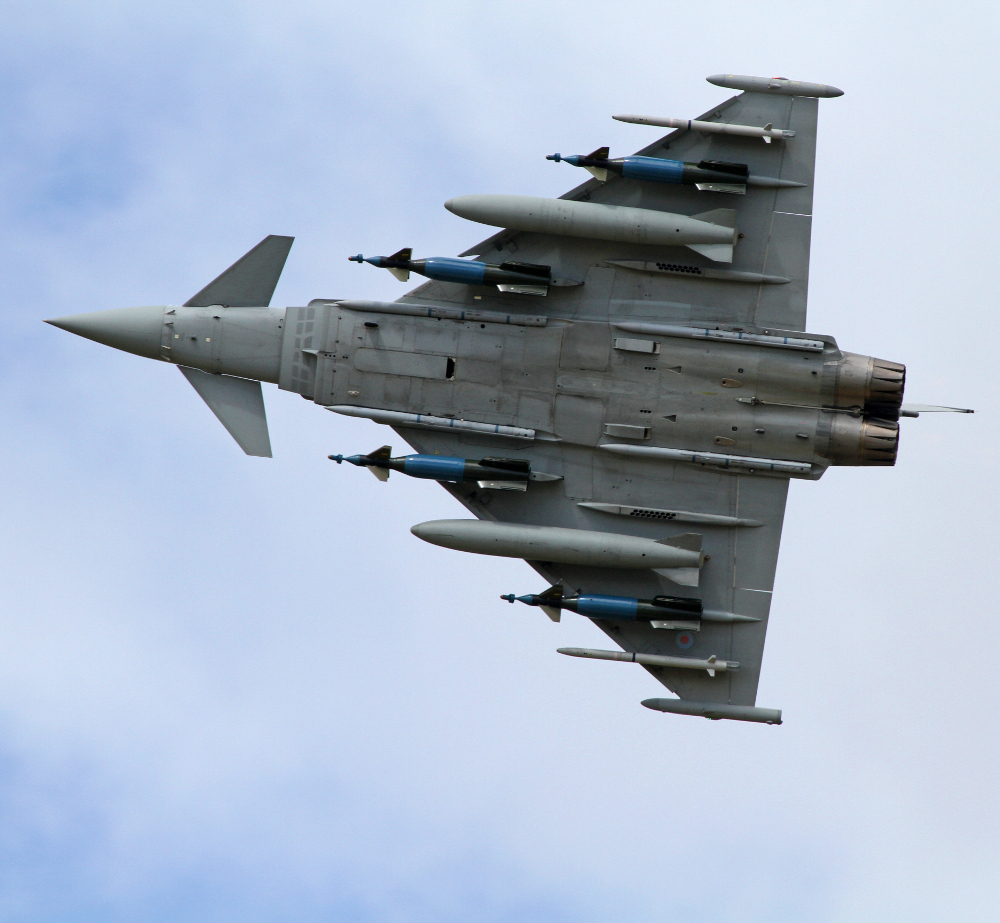
Worth noting is that in the UK government’s own list of “countries of humanitarian concern”, according to the Campaign Against the Arms Trade (CAAT), the UK has sold weapons to twenty four out of twenty seven of them, with Saudi Arabia in a deal to purchase seventy two Eurofighter Typhoon aircraft in a deal worth an eventual £4.5 Billion.

Aside from the purchase of the Typhoon jets, major deals between Saudi Arabia and British companies include a £1.6bn agreement for Hawk fighter jets and bulk sales of machine guns, bombs and tear gas.  [We can add here that Salisbury firm Chemring’s accounts show a high level of sales to Saudi sufficient to be separately identified under company law]

In fact, Saudi Arabia have access to twice as many British-made warplanes as the RAF does, while bombs originally stockpiled by Britain’s Armed Forces are being sent to Saudi Arabia” – to currently decimate Yemen.

The overriding message is that human rights are playing second fiddle to company profits,

said CAAT spokesperson Andrew Smith, adding:

The Government and local authorities up and down the country are profiting directly from the bombing of Yemen. Challenging them to divest from Saudi Arabia … is something people can do directly.

In the light of a fifty one page UN Report on the bombing of Yemen obtained by various parties on January 27th, Labour Leader Jeremy Corbyn called for an immediate suspension of arms sales to Saudi, pending the outcome of an independent Inquiry.  David Cameron stated, farcically, that: “Britain had the strictest rules governing arms sales of almost any country, anywhere in the world.”

However, in one of the key findings, the UN Report says:

The panel documented that the coalition had conducted airstrikes targeting civilians and civilian objects, in violation of international humanitarian law, including camps for internally displaced persons and refugees; civilian gatherings, including weddings; civilian vehicles, including buses; civilian residential areas; medical facilities; schools; mosques; markets, factories and food storage warehouses; and other essential civilian infrastructure, such as the airport in Sana’a, the port in Hudaydah and domestic transit routes.

It adds:

The panel documented 119 coalition sorties relating to violations of international humanitarian law.  It also reported cases of civilians fleeing and being chased and shot at by helicopters.  Moreover it stated that the humanitarian crisis was compounded by the Saudi blockade of ships carrying fuel, food and other essentials that are trying to reach Yemen.

The panel said that: “civilians are disproportionately affected” and deplored tactics that: “constitute the prohibited use of starvation as a method of warfare.” (Emphasis added.)

David Mepham, UK Director of Human Rights Watch commented:

For almost a year, Foreign Secretary Philip Hammond has made the false and misleading claim that there is no evidence of laws of war violations by the UK’s Saudi ally and other members of the coalition.

The UK Ministry of Defence, declining to say how many UK military advisers were in Saudi Command and Control Centres, said that the UK was: “… offering Saudi Arabia advice and training on best practice targeting techniques to help ensure continued compliance with International Humanitarian Law.” (Guardian, January 27th, 2016.)  Yet another quote from the “You could not make this up” files.

It has to be wondered whether the Ministry’s “best practice targeting techniques” includes the near one hundred attacks on medical facilities between March and October 2015, a practice which compelled the International Committee of the Red Cross, in November, to declare the organization: “appalled by the continuing attacks on health care facilities in Yemen …”

They issued their statement after:

Al-Thawra hospital, one of the main health care facilities in Taiz which is providing treatment for about fifty injured people every day was reportedly shelled several times …)

It is not the first time health facilities have been attacked … Close to a hundred similar incidents have been reported since March 2015. (Emphases added.)

Deliberate attacks on health facilities represent a flagrant violation of international humanitarian law (IHL).”

An earlier attempt to have the UN Human rights Council establish an Inquiry failed due to objections from Saudi Arabia, who, with help from Britain, currently Chairs an influential panel on the same Human Rights Council.  Farce is alive and well in the corridors of the UN.

Attacks on medical facilities

The repeated attacks on a targeted medical facility and other IHL protected buildings and places of sanctuary is a testimony to the total disregard for International Humanitarian Law, by the British, US and their allies and those they “advise”, from the Balkans to Afghanistan, Iraq, Syria, Libya and now Yemen.

However, in spite of the horrors under which Yemenis are suffering and dying, and Saudi’s appalling Tobias Ellwwod MPhuman rights deficit, UK Foreign Office Minister Tobias Ellwood, an American-born former soldier, in a visit to Saudi Arabia last month was quoted in the country’s Al Watan newspaper as revealing:

the ignorance of the British to the notable progress in Saudi Arabia in the field of human rights, confirming throughout the visit of a British FCO delegation… that he had expressed his opinion regarding the human rights situation in Saudi Arabia before the British Parliament, and that the notable progress in this area has been obscured.

The Foreign Office strongly denied that Ellwood had expressed such a view.

The Saudi led, British advised and US ”intelligence” provided coalition is reported to have formed “an independent team of experts” to assess “incidents” (which should be described as outrages and war crimes) in order to reach “conclusions, lessons learned …” etc. Thus, as ever, the arsonist is to investigate the cause of the fire.

Amnesty, Human rights Watch, Médecins Sans Frontières (who have had three medical facilities bombed) and The Campaign to Stop Bombing in Yemen have all called for an independent Inquiry with the power to hold those responsible for atrocities to account.  None of which, however, would bring back the dead, restore the disabled, disfigured, limbless, or beautiful, ruined, ancient Yemen – another historical Paradise lost.


Felicity Arbuthnot is a journalist with special knowledge of Iraq. Author, with Nikki van der Gaag, of Baghdad in the Great City series for World Almanac books, she has also been Senior Researcher for two Award winning documentaries on Iraq, John Pilger’s Paying the Price: Killing the Children of Iraq and Denis Halliday Returns for RTE (Ireland.) Read other articles by Felicity.

This article was posted on Wednesday, February 3rd, 2016 at 11:30am and is filed under Death Penalty, Human Rights, Militarism, Saudi Arabia, United Kingdom, United Nations, War Crimes, Weaponry, Yemen.

Follow us on Twitter and Facebook

Saudi Arabia and Yemen


Further extraordinary developments
Tobias Ellwwod MP
Tobias Ellwood MP

Last year we wrote to our local MP Mr John Glen to ask his government to be more assertive with the Saudi government in view of their appalling human rights record.  This was prompted by the death penalty group which was concerned by the mounting tide of executions in that country.  We received a bland reply from both Mr Glen and from Mr Tobias Ellwood of the Foreign Office (FCO) saying that behind the scenes, representations were being made.

No sooner had we posted details of the letters from the two politicians, when news was received of plans to drop the requirement of ministers to obey foreign treaties.  Also, explicit reference to the abolition of the death penalty was removed from government policy.  We have in previous blogs pointed to the continuing sale of arms to Saudi Arabia despite their role in the war in Yemen.  Then came the astonishing news that British and American service personnel were present in the control centre for Saudi military actions.

All the while, the human rights record in Saudi remains dire and the year started with the mass execution of 47 people.  When Mr Ellwood was asked in Parliament to condemn the mass execution he declined to do so.  Today, we learn from the Independent newspaper that Mr Ellwood is reported in various Saudi and middle eastern newspapers as having urged Saudi Arabia to ‘do a better job at trumpeting its human rights successes’.  He was addressing the Saudi Arabian National Society for Human Rights [an English version is available] in Riyadh and added that ‘British people were unaware of the notable progress being made.’  Many human rights groups have said that Mr Ellwood’s remarks are astonishing.  FCO has denied that such remarks were made by him and the matter could easily be cleared up by publishing his speech.

Today, the Guardian newspaper published extracts from a leaked UN report into the airstrikes carried out by the Saudis on Yemen.  The report said that:

…many of the attacks involved multiple civilian objects [and that] of the 119 sorties the panel identified 146 targeted objects. There were three alleged cases of civilians fleeing residential bombings and being chased and shot at by helicopters.

So far, 5,800 people have been killed in the conflict.  On Wednesday, the leader of the opposition Mr Jeremy Corbyn asked the Prime Minister for an independent inquiry into the policy on arms exports to Saudi Arabia in view of the UN report.  As the weeks have gone by, the drip, drip of revelations, the continued sale of arms to the Saudis, the presence of our military personnel in the control centre of the Saudi operations, our help in getting a Saudi to get onto the UN’s Human Rights Council, and speeches by a FCO minister, has painted a picture of complicity in a brutal conflict in Yemen and connivance in the politics of repression in Saudi itself.

From Mr Glen there has been silence.  His column in the Salisbury Journal this week refers to the Maldives [YouTube] and his involvement and concern about human rights abuses there is of course to be welcomed and applauded.  But when, we may ask, is he going to express concern about the much greater level of human rights violations and killings taking place in Saudi Arabia and Yemen?


Follow us on Twitter and Facebook.  If you would like to join us, go to the ‘Joining’ tab at the top of the home page.  twitter image

Sources: The Independent; Belfast Telegraph; Amnesty International; Guardian

Amnesty petition: Yemen


Over the past few weeks, we have been drawing attention to the situation in Yemen and in particular, the involvement of our government in supplying arms and personnel to the Saudis who are bombing that country.  There is now a petition by Amnesty International asking people to send a message to the UK government asking them to put a stop to this.  It is easy to sign and you can send a text message from your mobile phone to 70505 and the message is HALT1.

petition details

twitter imageFollow us on Twitter and Facebook.  If you would like to become more involved, read the ‘Joining’ tab.

British involvement in bombing Yemen


British military advisors involved in bombing in Yemen

yemen bombing

News has emerged over the past few days that British and American advisors and service personnel have been involved in advising the Saudi Arabians in their attacks on Yemen.  Our involvement might not have come to light had it not been for the Saudis themselves and a briefing by their foreign minister Adel al-Jubeir.  The Minister of Defence, Michael Fallon, issued a statement to the House of Commons on 17 December which simply referred to 94 personnel embedded with ‘Coalition HQ’s’ without being at all specific about what that meant.  It now appears our people are actively involved in targeting strikes.  MoD say that our personnel are “not directly involved in Saudi-led Coalition operations” but the Saudi briefing confirms that we are in the command centre.

The problem is that a range of non-military targets are being hit including schools and medical facilities.  A total of around 3,000 have been killed since hostilities began.  Médécins san Frontières have reported missile hits on one of their medical facilities although they are uncertain of the origin of the weapons concerned.

Campaign Against the Arms Trade are stepping up their legal campaign and have issued a ‘letter before action’ for judicial review, challenging decisions to continue to export arms to Saudi Arabia despite increasing evidence that they are violating international humanitarian law.  (11 January 2016)

Amnesty have pointed out that provisions of the Arms Trade Treaty – which the UK is party to – prohibit us from exporting arms transfers if they have knowledge that the arms would be used to commit attacks against civilians, civilian objects or other violations of international humanitarian law.  It said there was “a pattern of appalling disregard for civilian lives displayed by the Saudi Arabia-led military coalition”.  There is also a risk of famine because of the blockade on Yemeni ports.

That our government and service personnel are somehow involved in this is shocking.

Sources: Daily Telegraph; Daily Mail; the Guardian; CAAT; Reprieve; Amnesty International

Why not follow us on Twitter or on Facebook?   If you would like to join us look at the ‘join’ tab at the top of the page for details.


Arms sales and human rights


Arms sales dictating policy in Saudi Arabia

Readers of this blog will be familiar with our argument that oil and arms sales dictate our policy to the kingdom of Saudi Arabia.  The execution of 47 people last week has caused an international outrage but not, predictably from our government.  Philip Luther of Amnesty said:

It is a bloody day when the Saudi Arabian authorities execute 47 people, some of whom were clearly sentenced to death after grossly unfair trials. Carrying out a death sentence when there are serious questions about the fairness of the trial is a monstrous and irreversible injustice. The Saudi Arabian authorities must heed the growing chorus of international criticism and put an end to their execution spree

A policy document published by the Foreign and Commonwealth Office in 2011 curiously omits mention of Saudi Arabia in its list of countries where diplomats will be seeking to ‘positively drive forward’ the government’s ultimate goal of abolishing the death penalty.  Countries such as China, the US, Iran and Belarus are among those listed, but not Saudi Arabia.

Philip Hammond the Defence Secretary said HMG was ‘disappointed’ in the actions of the Saudi authorities.  Disappointment seems to be a rather limp response to make to such an appalling act.  It was Mr Ellwood who responded to our message to John Glen MP last year in which we asked for a more robust response to the Saudi government.  Both he and Mr Glen assured us that these matters were being pursued but as the revelations keep appearing – altering the Ministerial code; dropping the death penalty abolition as a specific policy, and now the omission of Saudi from the list of countries to be targeted – we see that it is devoid of real intent.

Many human rights organisations have criticised the executions and the craven stance taken by the UK government.  Maya Foa of Reprieve said:

Saudi Arabia has consistently ranked in the world’s top five executioners, and a large proportion of beheadings carried out in the country have been for non-violent offences, including protest.

It is shocking that the Kingdom was absent from the counties targeted by the UK’s death penalty strategy over the past five years, when every other major executioner in the world – China, Iran, Iraq, the US and Pakistan – was included.

Amnesty said the omission was ‘astonishing’.

Does it matter?

Why does this matter?  Firstly, the middle east is fraught with much violence and tension.  Ministers – including the Prime minister – fulminate about the terrible events in the area controlled by IS but are noticeably reticent oven similar violence in Saudi.  Imagine the Prime Minister commenting on the latest gruesome execution IS video and saying it was ‘disappointing’.  By continuing to supply arms we are both helping to support the violence in the area and also aiding the bombing of neighbouring Yemen where women and children are dying.  Our policy should primarily be about seeking peaceful resolutions to problems not trying to sell yet more arms.

Eurofighter of the type sold to Saudi ArabiaSecondly, by being so dependent on arms sales, this becomes the main driver of our policy.  Not what is best for the region, or the people of the Saudi regime, or human rights, but what effect will it have on the bottom line of BAE Systems.  Our actions also lend them credibility.  Instead of applying pressure to encourage a more civilised approach to the Shia minority, to the rights of women and to foreign workers, we arrange for a Saudi to be elected onto the UN’s Human Rights Council and express ‘disappointment’ at mass executions.

We also lay ourselves open to charges of hypocrisy.  In seeking to promote civilised conduct around the world, to end the death penalty and stamp out torture, our approach to Saudi is both inconsistent and craven.  It weakens our international voice.

Malcolm Rifkind was interviewed on the radio and his argument was that the Saudis provide us with valuable intelligence.  Is the argument that we tolerate shocking behaviour so that – it is claimed – we get some intelligence?  This seems rather thin since no doubt the Saudis receive comparable intelligence from us.

The arms sales tail seems to wag the policy dog and by our actions we are not helping the Kingdom to adapt to the modern world.

Continue reading “Arms sales and human rights”

Yemen: UK’s role in this hidden war


British weapons being used to bomb civilians

This week we have been treated to speeches in Parliament and a great deal of press interest on the question of bombing Isis.  The political temperature rose after the terrible events in Paris and the indiscriminate killing of people sitting in cafés and at a pop concert.

The government would now like the UK to join in the bombing campaign against Isis positions and David Cameron gave a lengthy speech in Parliament setting out his justifications for that course of action.

Meanwhile, in Yemen, another terrible conflict is in progress and yet this receives almost no coverage in the press.  Thousands have died (one estimate is 5,700) including an estimated 400 children, and airstrikes by Saudi Arabian forces are bombing the country on a daily basis.  Schools and hospitals are bombed and cluster bombs are being used in contravention of international treaties.

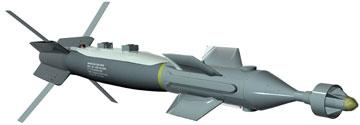
Paveway missile sold to the Saudis

The difference is that Saudi Arabia is a big buyer of our weapons – indeed an estimated half of all weapons sales by the UK go there – so they are an important customer.  Little is said to criticise them and readers of this blog will be aware of our attempts to get our government to take a more robust line in view of their multiple human rights abuses.

Amnesty and HRW have criticised the US government for agreeing to sell an unbelievable $1.3bn (£860m) of further ordinance to replenish stocks used in the campaign.  This is in breach of the Arms Trade Treaty since the weapons are being used against civilians.  Médecins sans Frontières report:

… ordinary people are bearing the brunt of an increasingly brutal conflict.  Severe water shortages combined with airstrikes, sniper attacks and a fuel blockade have rapidly turned this conflict into a humaniitarian crisis, with over one million people displaced from their homes.  The need for food, water, shelter, sanitation and medical care is growing daily.

Many clinics and hospitals have been destroyed, and those that are still functioning are in urgent need of more medical supplies.  Yemen: A country under siege

AI and Human Rights Watch are in no doubt that UK and US supplied munitions are being used to cause this mayhem in Yemen.  Up until now we have received nothing but bland assurances from the Foreign and Commonwealth Office and from our MP.  But recent events including changes to the Ministerial code and a downgrading of human rights in policy matters, seems to indicate that it is profit before humanity which is the key factor.

This might change because now that British made weaponry is turning up in Yemen thus causing some concern in the FCO.  They are beginning to question the wisdom of supplying the Saudis who then use the stuff to kill ordinary civilians.  We could just be indicted for war crimes.  They are also worried that we are helping create the conditions for an Isis type organisation to establish themselves in Yemen.

So while speeches are made about bombing Isis, we are busy supplying the weaponry to create another catastrophe on the Saudi peninsular…

Sources:

MSF;  The Independent;  Belfast Telegraph;  Business News;  HRW


Blog at WordPress.com.

Up ↑