Refugee report – October


October 2024

The problem of boat crossings has largely dropped out of the news recently with the conflict in the Middle East soaking up media attention. The Conservative party’s leadership election is also a focus of interest particularly as the two remaining candidates have hard line opinions on immigration.

As the new government prepares to reveal its Border Security, Asylum and Immigration Bill (largely designed to replace the jettisoned Illegal Migration Act), it is worth looking at the current situation with the small boats. Under the IMA, all applications are deemed inadmissible. This has left us with a backlog of 33,000 claimants in limbo (mainly Afghans and Syrians). Before the IMA, 90% of claims had been accepted. This might not be the case in the future as the Home Secretary also wants enhanced return procedures.

The high levels of pending cases has been exacerbated by the lower levels of acceptance (down to about 60% of cases) with a resulting big increase in the number of appeals. In passing, the Independent notes that the oldest asylum claim at the Home Office was made nearly 17 years ago. Also, Switzerland has improved its processing, which used to take up to 4 years, but is now about 100 days, which may be a pointer for a way forward.

The charity Safe Passage sees signs of improvement  (e.g. now allowing children to join relatives who are not parents) but meanwhile the total number of arrivals this year is over 25,000 – slightly more than last year but fewer than 2022. The government is keen to align with European procedures on irregular arrivals, but within Europe itself cracks are showing. This week 17 EU countries pushed for more effective return procedures for rejected applicants under the new Asylum and Migration Pact. At present the actual return rate for those to be sent back is only around 30%. An amended return process is presently stuck in the European Parliament.

Following the Ukraine war, the percentage of the world’s refugees in Europe has increased to over 20%. New research this week suggests that the numbers of irregular migrants in Europe is not increasing substantially (still at around 1% of the population for most countries). The MIrreM project calculate that between 2.6 and 3.2 million irregular migrants are living in the 12 countries they researched, with 594,000 to 745,000 in the UK. Figures are not completely reliable owing to many arrivals staying under the radar.

While we concern ourselves with the relatively small number of refugees arriving on the south coast, it is worth looking at the worldwide situation. With war zones in the Middle East, Sudan and Myanmar, not to mention Ukraine, the number of displaced persons has mushroomed in the last year. Ten million Sudanese have been displaced, 2 million to another country, 4.5 million Yemenis are internally displaced, while in Gaza 90% of the population and in Lebanon 1 million out of 5 ½ have had to move under Israeli attack, in some cases many times. In the larger Palestine, plus Jordan, Lebanon and Syria, there are 58 recognised camps housing 1.5 million refugees (1 in 3 of all Palestinians, some dating back to 1948. The UN authorities in the area (UNRWA and UNIFIL) have pointed out that many of the displaced inhabitants may well choose to head for Europe, adding to the pressure on countries there.

In Myanmar, not only  those under threat from the military, but also many Rohingya have left the country, about 1.3 million, mostly to Bangladesh.

AH

The Controversy of Executions in Oklahoma


Oklahoma executes more of its citizens per capita than any other state in the US.

October 2024

The State of Oklahoma has executed the second largest number of prisoners in the US (after Texas) since the re-legalisation of the death penalty in 1976. It has carried out the highest number of executions per capita in the country.  It was the first jurisdiction in the world to adopt lethal injection as a method of execution.

The Salisbury group has decided to focus on the state and is writing to Governor Stitt in an effort to persuade him to stop this practice in his state.

There is a wide number of offences which can lead to a sentence of death in the state. First-degree murder is punishable by death in the following circumstances:

  1. The defendant was previously convicted of a felony involving the use or threat of violence to the person;
  2. The defendant knowingly created a great risk of death to more than one person;
  3. The person committed the murder for remuneration or the promise of remuneration or employed another to commit the murder for remuneration or the promise of remuneration;
  4. The murder was especially heinous, atrocious, or cruel;
  5. The murder was committed for the purpose of avoiding or preventing a lawful arrest or prosecution;
  6. The murder was committed by a person while serving a sentence of imprisonment on conviction of a felony;
  7. The existence of a probability that the defendant would commit criminal acts of violence that would constitute a continuing threat to society; or
  8. The victim of the murder was a peace (police?) officer, or correctional employee of an institution under the control of the Department of Corrections, and such person was killed while in performance of official duty.

In addition, the statute books carry the death penalty for first degree rape, extortionate kidnapping and rape or forcible sodomy of a victim under 14 where the defendant has a prior conviction of a person under 14, although since 2008 capital punishment is no longer constitutional for these crimes.

As of 27th September 2024 there are 33 prisoners on death row in Oklahoma, only one of whom (Brenda Andrew) is female.

Background facts

Oklahoma is one of two States allowing more than three methods of execution – lethal injection (the primary method), nitrogen hypoxia, electrocution and a firing squad.  They are to be applied in that order if earlier methods are unavailable or found to be unconstitutional.  Nitrogen hypoxia became available as an option in 2015 but to date has never been used in the State.  When the prosecution seeks the death penalty, the sentence is decided by the jury and must be unanimous.  In the case of a hung jury during the penalty phase of the trial, a life sentence is imposed, even if a single juror opposed the death penalty, and there is no re-trial.

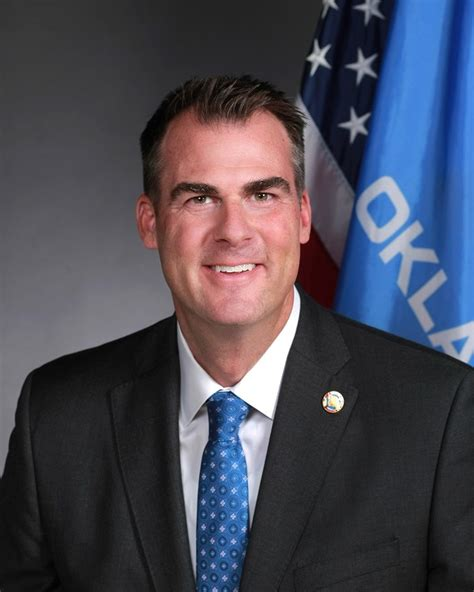
Under the constitution of the State, the Governor of Oklahoma may commute a death sentence, but only following the advice and consent of the five-member Pardon and Parole Board. During Governor Lee Cruce’s administration (1911-1915), he commuted every death sentence. Governor Kevin Stitt (pictured) has granted clemency only once (to Julius Jones) during his tenure (2019 – present). This occurred despite 5 (possibly 6) recommendations from the Board. These have included the very recent case of Emmanuel Littlejohn, executed on 26th September 2024.

From 1915 to March 2024, 156 executions took place, three of them of women.  Executions were halted for six years. This followed the botched execution in 2014 of Clayton Lockett. There was also a drug mix-up that led to the ‘incorrect’ lethal injection of Charles Warner in 2015.

14 executions have been carried out under the governorship of Kevin Stitt.   In the most recent case – that of Emmanuel Littlejohn – there has been a great deal of controversy.  The execution took place

despite conflicting evidence regarding his guilt, mitigating evidence regarding his troubled childhood and undeveloped brain at the time of the crime, the admission of some jurors of misunderstanding the implications of a life without parole sentence, and the fact that the Parole Board had voted 3-2 to spare his life.  He had always maintained his innocence of the actual killing.

In 2022 a series of 25 executions were scheduled over a 2-year period, with one execution set for nearly every month through 2024.  A report was issued by the Death Penalty Information Center tying the State’s use of the death penalty to its troubled history of racial violence and segregation. 

The Death Penalty Information Center advises that current research shows that for every 8.2 prisoners on death row in the US in the modern era of the death penalty, one person has been exonerated.

The Reason Foundation Criminal Justice Policy Explainer – Abolishing the Death Penalty gives the following information:

  • Since 1981 ten people in Oklahoma have been exonerated while on death row
  • 6 cases involved perjury or false executions
  • 7 cases involved official misconduct
  • Oklahoma County, Oklahoma, has had the 4th highest no of death row exonerations among all counties in the US.  4 of the 5 death row exonerations in Oklahoma County involved misconduct by officials.
  • The longest sentence served by a death row exoneree was 21 years.

The Foundation also provides evidence of the high costs in the State of the death penalty as opposed to life imprisonment:

  • A study prepared for the Oklahoma Death Penalty Review Commission found that Oklahoma spends $110,000 more on capital cases than on comparable non-capital cases.  The study authors noted that this is a very conservative estimate because many prosecution and court costs were excluded.
  • Even at that conservative rate, with 42 (Note: figure differs from the 33 quoted earlier) individuals currently on death row, Oklahoma could have saved $4.64 million by trying the cases as life without parole rather than seeking the death penalty.
  • Using estimates from other studies suggests Oklahoma could have saved between $33.6 million and $42 million by pursuing life without the possibility of parole rather than the death penalty.
  • Moreover, the 117 (?) executions conducted in Oklahoma since 1990 are estimated to have cost the state between $12.9 million and $117 million.

Letters may be sent to:       

Honorable J Kevin Stitt

Governor of the State of Oklahoma

Oklahoma State Capitol

2300 N. Lincoln Blvd, Suite 212

OKLAHOMA CITY

OK 73105

Emails can be tried at:   https://oklahoma.gov/governor/contact/general-information/contact-the-governor.html which gives access to a form.

Sources: Wikipedia; Death Penalty Information Center; Amnesty International; World Coalition Against the Death Penalty; The Reason Foundation – Criminal Justice Policy 

Bi-Monthly Death Penalty Report – October 2024


October 2024

We are pleased to attach the latest bi-monthly report on the death penalty thanks to group member Lesley for the work in preparing this. It is worth remembering that the 10 October was the World Day Against the Death Penalty. As usual we note that China is believed to execute more of its citizens than the rest of the world combined but details are a state secret.

Blog at WordPress.com.

Up ↑