Abuse of medical staff by Israel


Reports of torture, beatings, starvation and humiliation of Palestinian medical staff by Israeli authorities

February 2025

With the welcome release of hostages from Gaza as part of the peace process, there has been considerable coverage of the condition of those arriving back home in Israel. Some have died in custody either as a result of bombing by Israel or by other means. Since journalists are not allowed in Gaza, obtaining independent confirmation of which is difficult. Those released have looked thin and haggard and Hamas used the process to make propaganda points. There have been no reports of torture or mistreatment however. Further coverage has shown their reception in Israel with large crowds welcoming them home.

Credible reports are emerging of the treatment of Palestinian medical people in Israel prisons. Health Care Workers Watch in a report published in December last year (accessible on their site) paints an horrific picture of their treatment. Medical staff, including surgeons, have been seized in hospitals – sometimes in the midst of performing surgery – and subjected to sustained brutal treatment and torture in Israel. Similar reports are produced by the World Health Organisation.

Medical staff have been thrown into lorries and have suffered severe beatings leaving them incapable of standing, The range of mistreatment is horrific and the detailed descriptions disturbing. In brief the treatment has included: beatings, often using rifle butts; severe injuries to genitalia; anal rape – again often with rifles; use of dogs; electrocution, sometimes while suspended from the ceiling; people forced into stress positions; prolonged solitary confinement; extremely loud music to prevent sleep, and not allowing medical prisoners to wash or change clothes for sustained periods of time sometimes months. All were eventually released without charge. WHO suggests that 297 medical staff were held, HCWW claim it was 384.

The reports paint a picture that suggests these arrests, combined with the attacks and destruction of medical facilities in Gaza itself, are part of a plan to make the territory unliveable. The reports are supported by evidence from an Israeli organisation, Physicians for Human Rights in Israel. They have visited prisoners and carried out their own interviews supporting the above allegations. A CNN report provides further horrific details. The Israeli human rights organisation B’Tselem published a report Welcome to Hell describing the cruelties and torture inflicted in Israeli prisons more widely. There is also a report by Human Rights Watch on the torture of Palestinian medics. The Israeli government has denied all these allegations saying prisoners are held and treated according to law.

People reading this post may be surprised at the information above. This is because of the widespread failure of media to report it. There is considerable coverage of the homecomings and of the release of Hamas detainees whereas the treatment described here has received limited coverage.

The importance of language

Language is important no more so than during a time of conflict. Media reports describe those released by Hamas as ‘hostages’ in exchange for ‘prisoners’ being released by Israel. This is the language used by BBC, ITV, Channel 4 and print media to describe these events. It has become the standard way to describe them. It is thoroughly misleading. It demonstrates the capture of British media by the steady drip of Israeli misinformation combined with banning journalists access on the ground. It may also be an indication of the fear media groups have of being labelled ‘antisemitic’. Almost all criticism of Israel is labelled thus. Such criticism gives rise to accusations of the critic being ‘pro Hamas’. It is conveniently forgotten that Benyamin Netanyahu was a supporter of the organisation in an attempt to weaken the PLO.

Considerable evidence – from within the country and outside – shows that Israel has seized scores of medics (the subject of this post), threw them into lorries and subjected them to sustained periods of torture, abuse, did not allowed access to lawyers and with no charges made. How is this different from hostages? The word ‘prisoner’ implies some process of law. It also implies that said prisoners had committed some kind of crime. Yet no charges were made, none were taken before a magistrate, none were allowed legal representation and they were eventually released without charge after prolonged periods of mistreatment, solitary confinement and torture.

This has enabled Israel to occupy a kind of higher moral ground. The country suffered terribly on October 7th. Hamas killed 1,200*, seized hostages in their fearful raid on October 7th 2023 and held them for months and it still holds on to some. This is a war crime. Yet Israel’s subsequent behaviour, killing around 48,300 in Gaza with over 111,000 injured (WHO figures) and the vast destruction and mounting violence in the West Bank, has lost the nation much sympathy. It has not solved its central problem of long-term security and the prospects for a two state solution seem further away than ever.

Western media, by failing to report on these issues, is guilty of misleading the public.


Sources: WHO; CNN; Guardian; Health Care Workers Watch; Physicians for Human Rights in Israel; B’Tselem; Human Rights Watch. See also Health Workers for Palestine

*revised figure – Times of Israel 11 November 2023.

Türkiye: Acquittal of Taner Kılıç


Equited after eight-year ordeal comes amid new wave of repression of rights defenders 

February 2025

The dire human rights situation in Türkiye has largely dropped out of the news in recent years but repression of rights defenders, journalists and academics continues. The case of Taner Kılıç, who was finally acquitted today after a judicial process that has lasted almost 8 years, is a stark example of the Turkish authorities’ politically motivated attempts to criminalize human rights defenders, said Amnesty International. We first mentioned his arrest in a post on this site in 2019.

Taner Kılıç, a refugee rights lawyer and former Chair of Amnesty International’s Türkiye section, was arrested in June 2017 and detained in prison for more than 14 months. Despite a complete absence of any credible evidence, in July 2020, he was convicted of “membership of a terrorist organisation” and sentenced to more than six years in prison. The end of the almost eight year ordeal for Taner Kılıç comes amid a new wave of detentions in which rights defenders, journalists, political activists and others have been targeted. 

His acquittal follows the Court of Cassation’s rejection of the prosecution’s appeal against its previous decision to overturn Taner’s baseless conviction.  

“Today, as we mark the end of Taner’s agonizing ordeal, our feelings are bittersweet. The cruelty inflicted on Taner – the years stolen from him and his family – can never be forgotten. His tenacity and resilience, coupled with our determination to undo this injustice, demonstrates that when we come together, we can move mountains,” said Agnès Callamard, Amnesty International’s Secretary General who spoke with Taner by video call today. 

For me this nightmare that has gone on for almost eight years is finally over. My imprisonment for more than a year has caused great trauma to my family. This unfair trial was like a sword of Damocles hanging not just over me but over the head of the entire human rights community in Türkiye. While it was for the prosecution to prove my guilt, this case went on for years despite my repeatedly proving my innocence,” said Taner Kılıç. 

The ordeal has created huge uncertainty in my life. The only thing I was sure of throughout this process was that I was right and innocent, and the support from all over the world gave me strength. I thank each and every one who stood up for me.” 

In May 2022, the European Court of Human Rights reaffirmed that the authorities in Türkiye did not have “any reasonable suspicion that Taner Kılıç had committed an offence” when they remanded him in pre-trial detention for over 14 months in 2017/18. It found that his imprisonment on terrorism-related charges was “directly linked to his activity as a human rights defender”.  

In November 2022, the Court of Cassation in Turkey ruled to overturn the conviction of Taner Kılıç on the grounds that the investigation was “incomplete”. The trial court agreed with the Court of Cassation ruling in June 2023, but the prosecutor appealed the decision, insisting that Taner Kılıç’s conviction should stand. With this latest and final decision, the Court of Cassation rejected the prosecution’s appeal, ending the ordeal for the human rights defender.  

Courts used to silence critics

“Taner’s protracted prosecution is emblematic of how Turkish courts have been weaponized to silence critical voices and of the ongoing crackdown by Turkish authorities on rights and freedoms and those who defend them. The flagrant miscarriage of justice he was subjected to for so long is sadly just one of many. But we will take strength from Taner’s acquittal in our fight against the curtailing of human rights in Türkiye, and on behalf of those who refuse to be silenced by the authorities’ threats,” Agnès Callamard.

The acquittal comes amid a crackdown in which more than 1,600 people have reportedly been investigated for their alleged links to the Peoples’ Democratic Congress, a platform for civil society organizations and political parties. Last week, at least 50 people were detained in several provinces and 30 among them unlawfully remanded in prison on ‘terrorism’ related allegations after being questioned about their peaceful activities dating from more than a decade ago. 

Background 

Taner Kılıç is a founding member of Amnesty International Türkiye. Over the last 20 years, he has played a crucial role in defending human rights as part of the organization and the wider human rights community in Türkiye.  

We are grateful to Amnesty UK for the bulk of the text in this post.


Latest posts

Richard Glossip case: latest


US Supreme Court rules that prosecutors violated ethical responsibilities

February 2025

The case of Richard Glossip in Oklahoma raises a number of interesting issues concerning the death penalty in the USA and in this case, the state of Oklahoma. In a 5-3 decision in Glossip v. Oklahoma issued on 25 February, the Supreme Court judges ruled that the prosecutors had ‘violated their duty to correct false testimony’. The prosecutors had also ‘suppressed material evidence concerning their star witness, Justin Sneed’ who actually committed the murder.

The case involved the murder in 1997 of Barry van Treese the owner of a motel. Sneed confessed to the killing and agreed a plea bargain claiming that Glossip had instructed him to carry out the murder. This saved him from execution. There are a number of factors which has made this a case attracting international attention.

There was very little corroboration evidence apart from the testimony of Sneed. Sneed’s mental state was not revealed to the defence (defense) team, nor was his untrustworthiness or that he had lied to the police. Glossip’s legal team has discovered that Sneed had discussed recanting his testimony before the original trial and since. This had not been revealed to them. Another not unusual factor is the doubtful quality of his defence counsel.

There is not doubt that Glossip has suffered much in the 27 years. He has had no less than nine execution dates and has eaten three ‘last meals’.

It is being said that this case will not have wider effects because so many elements are unusual. But it does highlight the problem of the death penalty. Had any one of the nine actually taken place, there would have been no chance of an appeal. If the criminal system has people willing to withhold evidence, then any chance of a fair trial is unlikely. It is also unwise to convict someone of the ultimate legal penalty without certainty which must mean at the very least, corroborative and trustworthy evidence. A defendant must also have first class attorneys to defend him. The testimony of an unreliable witness should be treated with great caution.

A new trial has been ordered.

Sources:

World Campaign Against the Death Penalty; BBC, The Hill.

Perils of predictive policing


Amnesty publishes a report warning of the perils of predictive policing

February 2025

Many TV detective series have technology at their core as our heroes vigorously pursue the wrongdoers. CCTV cameras are scrutinised for movements of the criminals, DNA evidence is obtained and of course fingerprints are taken. The story lines of countless detective series feature forensic evidence as a key component of police detection. The series and stories are reassuring by displaying law enforcement officers using all the techniques – scientific and technological – to keep us all safe and lock up the bad guys. Using science and algorithms to enable police forces to predict crime must be a good idea surely?

It is not. The Amnesty report, and other research, explain in great detail the problems and what the risks are. One of the persistent biases in the justice system is racism and it would be worth reading the book The Science of Racism by Keon West (Picador, pub. 2025). The author takes the reader through copious peer reviewed research conducted over many years in different countries explaining the extent of racism. Examples include many cv studies (US: resume) where identical cv’s, but with different names which indicate the ethnicity of candidates, produces markedly different results. There are similar examples from the world of medicine and academia. Racism is endemic and persists. As Keon West acknowledges, a similar book could be written about how women are treated differently.

The Amnesty report notes that Black people are twice as likely to be arrested; three times as likely to be subject to force and 4 times as likely to be subject to stop and search as white people. With such bias in place, the risk is that predictive policing might simply perpetuate existing prejudice and bias. The concern partly centres around the use of skin colour, where people live and their socio-economic background all used as predictive tools.

People have a deep faith in technology. On a recent Any Answers? programme (on BBC Radio 4), a debate about the death penalty and the problem of mistakes, several people showed a touching faith in DNA in particular inferring that mistakes cannot happen. People are mesmerised by the white suited forensic officers on television giving a sense of science and certainly. Technology is only as good as the human systems which use it however. There have been many wrongful arrests and prison sentences of innocent people despite DNA, fingerprints, CCTV and all the rest. Mistakes are made. The worry is that predictive policing could enhance discrimination.

People who are profiled have no way of knowing that they have been. There is a need to publish details of what systems the police and others are using. The police are reluctant to do this the report notes. What is the legal basis for effectively labelling people because of their skin colour, where they live and their socio-economic status?

The police are keen on the idea and around 45 forces use it. The evidence for its effectiveness is doubtful. The risks are considerable.

63rd Vigil


Vigils continue

February 2025

The 63rd and latest vigil took place again on Saturday 15th with around 30 in attendance. The situation in Gaza remains tense. Three hostages were released last week in exchange for Palestinian prisoners. The condition of those released by Hamas shocked the nation.

The political situation is what might be termed ‘fluid’. The plan announced by Donald Trump to expel all Palestinians from Gaza and to create a Riviera of the Eastern Mediterranean has met with international alarm and would amount to ethnic cleansing. The plan has been warmly received by some in Israel especially members of the hard right. The US Secretary of State, Marco Rubio was in Israel to discuss the President’s idea with the Israelis. Arab states have rejected it and want to see a solution that involves the Palestinians.

While considerable uncertainty exists, the vigils will continue and the next is on Saturday 22nd at 5pm as usual. All are welcome.

Follow us on Bluesky

Harmful effects of the death penalty


The effects on those responsible for carrying out executions is often overlooked

February 2025

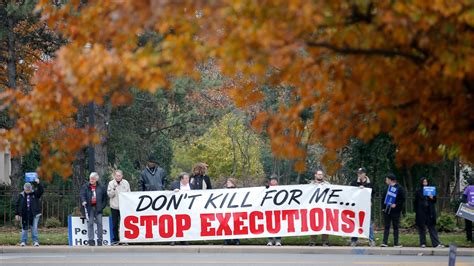
In discussions about executions the focus is, naturally enough, on the individual who is about to be put to death. We forget that there are many prison officers who are closely involved with those on death row, sometimes for many years, even decades. This post draws on material produced by the Death Penalty Information Center in the US for which we are grateful. The Salisbury group is focusing on the state of Oklahoma. We are grateful to group member Lesley for the work in compiling this.

Executions can cause prison staff to suf­fer psy­cho­log­i­cal dis­tress sim­i­lar to what vet­er­ans expe­ri­ence

after war. A 2022 NPR inves­ti­ga­tion found that cor­rec­tions offi­cers faced symp­toms such as insom­nia, night­mares, pan­ic attacks, sui­ci­dal thoughts, per­son­al­i­ty changes, and sub­stance abuse – all hall­marks or comor­bidi­ties of post-trau­mat­ic stress dis­or­der. Of the 16 peo­ple NPR inter­viewed who par­tic­i­pat­ed in exe­cu­tions, none sup­port­ed the death penal­ty in their wake. Psychologists use the term ​“moral injury” to describe how com­mit­ting an act that con­tra­dicts one’s deeply held beliefs, such as caus­ing anoth­er person’s death, cre­ates a severe psy­cho­log­i­cal dis­rup­tion. Robert Jay Lifton and Greg Mitchell coined the term ​“executioner stress” to describe the spe­cif­ic men­tal impact of car­ry­ing out the death penalty. 

The stress may also extend to guards who do not par­tic­i­pate in the exe­cu­tion itself, but devel­op close rela­tion­ships with death-sen­tenced pris­on­ers over the course of decades work­ing on death row. Some cor­rec­tions offi­cers have remarked that they spend more time with the peo­ple on death row than their own fam­i­lies. They may come to see the con­demned pris­on­ers as friends, or wit­ness the pris­on­ers’ men­tal or phys­i­cal vul­ner­a­bil­i­ties. In stud­ies, offi­cers have expressed con­cerns about the arbi­trari­ness of the death penal­ty, not­ing that they had worked with many peo­ple with life sen­tences who com­mit­ted equiv­a­lent or worse crimes than the peo­ple the offi­cers helped put to death. 

There is a part of the war­den that dies with his pris­on­er,”

The psy­cho­log­i­cal toll of per­form­ing exe­cu­tions is not a new phe­nom­e­non. Donald Cabana and Jerry Givens both con­duct­ed exe­cu­tions in the begin­ning of the mod­ern era, in the late 1970s and ear­ly 1980s, and went on to pub­licly oppose the death penal­ty. ​“There is a part of the war­den that dies with his pris­on­er,” Mr. Cabana often said.

Journalist Jennifer Gonnerman researched New York’s last four exe­cu­tion­ers, who over­saw the use of the elec­tric chair from 1913 through 1963, a peri­od dur­ing which hun­dreds of peo­ple were put to death. Several of the men expe­ri­enced med­ical issues around the time of exe­cu­tions, such as migraines or faint­ing spells. One, Robert Elliot, lat­er became a promi­nent death penal­ty abo­li­tion­ist. Two of the men, John Hulbert and Dow Hover, died by suicide. 

Yet prison staff have long faced a cul­ture of silence about exe­cu­tion-relat­ed trau­ma. ​“We don’t talk about it,” said Justin Jones, direc­tor of the Oklahoma Department of Corrections from 2005 to 2013, who joined the effort to increase the time between exe­cu­tions (see Oklahoma below.)  ​“Correctional offi­cers are pub­lic ser­vants on the low­est salaries in state gov­ern­ment, and they get home at the end of the day and just absorb it.” NPR’s inves­ti­ga­tion revealed that some exe­cu­tion team mem­bers had nev­er even told their fam­i­lies they par­tic­i­pat­ed. ​“We all knew to keep it silent,” said Catarino Escobar, who worked on the exe­cu­tion squad in Nevada. Mr. Escobar was strapped to the gur­ney when he played the pris­on­er dur­ing a prac­tice ses­sion, and he grew pan­icked and became con­vinced he was going to die. NPR found that only one of the offi­cers they inter­viewed had ever received men­tal health care relat­ed to their posi­tion, and even when care was offered, it was ​“over­whelm­ing­ly option­al” and ​“many of them avoid­ed ask­ing for it so as not to seem weak.” 

Oklahoma

In this con­text, uni­fied efforts by cor­rec­tions staff to address the psy­cho­log­i­cal effects of exe­cu­tions rep­re­sented a mile­stone. In March 2024 a group of nine for­mer Oklahoma cor­rec­tions offi­cials wrote a let­ter to Attorney General Gentner Drummond and, based on the detri­men­tal impact of the job and the lack of men­tal health sup­port, asked for an increase from a time of 60 to 90 days between executions. They not­ed that exe­cu­tion team mem­bers expe­ri­ence an increased risk of PTSD, sui­cide, and sub­stance abuse, and the gruelling prepa­ra­tion sched­ule puts staff mem­bers through­out the prison on edge due to ​“near-con­stant mock exe­cu­tions being con­duct­ed with­in earshot of pris­on­ers’ cells, staff offices, and vis­it­ing rooms.” With few state resources at their dis­pos­al, some employ­ees even resort­ed to talk­ing with defence men­tal health experts vis­it­ing the prison ​“about the dis­tress they are expe­ri­enc­ing due to the non­stop executions.” 

This com­pressed exe­cu­tion sched­ule also increas­es the risk of some­thing going wrong dur­ing the exe­cu­tion process because the stress cre­at­ed by each exe­cu­tion com­pounds the dif­fi­cul­ty of an already com­plex pro­ce­dure. If even a rou­tine exe­cu­tion can inflict last­ing harm on cor­rec­tions staff, the trau­mat­ic impact of a botched exe­cu­tion is expo­nen­tial­ly worse. Oklahoma has expe­ri­enced this harm on mul­ti­ple occa­sions and should not need­less­ly place its hard­work­ing cor­rec­tion­al staff at risk of anoth­er such mistake.

“Prison staff need to ‘man up'” Judge says

Judge Gary Lumpkin dismissed these concerns, telling officials that prison staff needed ‘to suck it up’ and ‘man up’.  Prison staff were report­ed­ly angered by Judge Lumpkin’s com­ments that they need­ed to ​“man up” and the sug­ges­tion that their con­cerns were not valid. ​“Anybody that thinks that exe­cut­ing some­body is no prob­lem has not been a part of the process,” said Justin ​“JJ” Humphrey, the state assem­bly chair of a crim­i­nal jus­tice and cor­rec­tions com­mit­tee and 20-year vet­er­an of the cor­rec­tions depart­ment. The Oklahoma Court of Criminal Appeals even­tu­al­ly grant­ed the exten­sion request in May. 

(Source: Death Penalty Information Centre – December 2024). Image: USA Today.

Follow us on Bluesky

Forthcoming group events


List of events planned

February 2025

NOTE CHANGE OF TIME FOR THE TREE CEREMONY

Although our minutes contain a list, it is still useful to highlight them in a specific post. Any of these are a useful opportunity to make yourself known if you would like to join us. Most join because they care about human rights both around the world and here in Britain. Indeed, we have become more concerned about our rights here with a number of pieces of legislation passed to inhibit protests and demonstrations. There seems to be no hurry by the Labour Government to repeal this legislation.

Forthcoming group events
  • Vigils continue every Saturday at 5pm in the Market Square by the Library. We had hoped to stop these in view of the ceasefire and exchange of prisoners and hostages, but the future looks uncertain.
  • Tree. We have a tree! To commemorate our 50 years since formation, there is a tree in Victoria Park and we are planning a group photo. We hope the last two surviving founder members will be able to attend and it will take place on 4th March at 11:00 am. We’d like as many supporters to be there as possible. The Salisbury group is the last remaining Amnesty group in Wiltshire.
  • A conversation with Nazanin Zaghari at the Cathedral on 8th March. The group took place in a number of signings and events to get her freed. It is free and details are on the Cathedral’s site. The group was not invited to have a role.
  • South West Conference in Exeter on 22nd March. An enjoyable event with speakers and a chance to meet other groups.
  • Evensong at the Cathedral. Date tbc.
  • Market Stall, probably in May. If you have any items for the stall please save them up. We can collect if need be. No electricals please.
  • People in the Park on 17th May for most of the day.
  • Coffee Morning, St Thomas’s on 5th July starting at 10:00 or so until noon.
  • Write for Rights on 4th November. Details idc.

These details will be updated in due course. Hope you can make one of them!

Follow us on Bluesky

February minutes and newsletter


February 2025

We have pleasure in attaching the minutes and newsletter of our last meeting thanks to group member Lesley for the work in preparing them. We say ‘newsletter’ because they are more than just minutes of the meeting as they contain reports on the refugee and immigration system, a report on the death penalty and a list of future activities.

Recent posts:

UK Refugee Report: Political Issues and Policy Changes


This month’s refugee report on this vexed problem focuses on political issues in the UK

February 2025                                                        

This month the concentration will be on the continuing situation in the UK, with legislation going through and much pressure from certain political parties on the issue.

The Government’s Border Security Asylum and Immigration Bill passed its second reading this month. This Bill repeals the previous government’s Safety of Rwanda Act and some of its Illegal Migration Act. As presented, the Bill has received a cautious response from refugee and asylum organisations, most taking the view that it could have been worse.  The new offence of “supplying or handling ‘articles for use in immigration crime’” is expected to only be rarely used, despite the draconian punishment.  The other main provision concerns applying anti-terrorist legislation to smuggling gang leaders when caught.  Most organisations in the field point out that gang leaders rarely have assets in the UK and the National Crime Agency have said that most crime gangs are based in France, Belgium, Germany or Turkey, the success of this initiative is therefore to be doubted.

Blanket denial of citizenship

As of this week, the Home Office has been accused of a policy of denying citizenship to anyone who arrived by irregular means, however long ago, and despite being given leave to remain.  This would appear to be in breach of Article 34 of the Refugee Convention.  The issue is continuing.

Among the boat arrivals, the number of deaths recorded in transit was 78 in 2024, three times higher than the previous year. Pressure on the boat suppliers has led to more overcrowding, among other causes.

Within the European Union, irregular migration figures are down by 38% from 2023 to 2024, according to Frontex.  Migration routes from Tunisia, Libya and the Western Balkans have been made more difficult, but the policy of the government of Belarus in pushing migrants to the west has added to the numbers from that source.  Frontex are developing the use of AI on the borders.

The UK government has been publicising its deportation programme for unsuccessful claimants. Between 5 July 2024 and 31 January 2025, a total of 18,987 returns were recorded – an increase of 24%, the Home Office said.  Removals of foreign national offenders were up by 21% and illegal working raids – on such places as nail bars and car washes – are up by 38% compared with the same period 12 months previously.  Videos of people being put on planes* (for unknown destinations) have been put in the public arena.  Of the total returns since 5 July 2024, 2,925 were of foreign national offenders – an increase of 21%.

The backlog of asylum cases continues to be a concern.  In the last year, the proportion of asylum claims that have been accepted has dropped from 75% to 52% with a resulting increase in the number of appeals.  So, although the initial backlog built up over years has fallen, it is constantly being topped up. The last available figure, for September, was 97,000, but the Home Office say it is reducing.

Criticism of language used

A report by the Runnymede Trust has noted the language of the immigration debate, particularly the widespread use of the word “illegal”, although governments have tended to avoid the word as immigration is not illegal, though it may be “irregular”.  It blames media reporting for encouraging hostility towards migrants. In parliamentary debates and media reporting, negative terms like “illegal”, “flood” and “influx” are persistently used in association with migrants, posing them as a threat, dangerous and outsiders. The word “illegal” is in the top five most strongly associated words with ‘migrant’.

The pause in accepting Syrian refugees since the revolution is continuing despite urging from Damascus to process ongoing claims.

The Migration Advisory Committee has called for a change in the rules on working, asking for claimants to have the right to work after six months in the country.

The All-Party Parliamentary Group on Refugees issued a report this month on the working of the immigration system, and made some recommendations for improvement. Overall, the inquiry found that the current processes for safe and legal routes are overly complex, restrictive, and slow, leading to prolonged family separations and increased irregular migration. The report says UK governments since 2019 have adopted a “scattergun” approach to safe and legal routes.

“They have failed to effectively utilise the UK Resettlement Scheme (UKRS) and cooperate with the UNHCR to provide quotas for arrivals on this scheme. Instead, nationality specific schemes, each conferring differing entitlements, have been adopted, meaning that access to family reunion, immigration status and integration prospects are dependent on the scheme you arrived on which is unfair and inefficient.

“The refugee family reunion route was also highlighted as not operating effectively. Despite the number of visas issued increasing significantly in 2024, two-thirds of cases are failing to meet the Home Office’s own service standard of processing within 60 days. A backlog of family reunion cases has risen to at least 11,000 cases. The UK also operates one of the most restrictive refugee family reunion policies in Europe.“

The APPG makes three main recommendations. Firstly, it calls for improvements to refugee family reunion by processing cases within 60 days, allowing refugee children to sponsor their family members, and removing financial restrictions on UK-based sponsors. Secondly, it recommends restoring the UK Resettlement Scheme as the primary resettlement route and reaffirming the commitment to resettle 20,000 Afghans under the Afghan Citizens Resettlement Scheme. Thirdly, the report proposes introducing a pilot refugee visa scheme targeted at high grant rate countries, with a cap of 10,000 visas during the pilot period.

Finally, Amnesty are offering small grants for actions during Refugee Week in June details are available on the Local Groups email (but the final date is Monday!)

*the video is embedded in this LBC post.

AH

Death penalty report


February 2025

Here is the death penalty report for mid January to mid February thanks to group member Lesley for the work in compiling it. It is quite long! That is partly due to a lot of activity in America where executions are proceeding apace and the various executive orders being issued by President Trump.

Another event is the call for the return of the death penalty in the UK particularly by the Reform party. This occurs after a particular murder or murders in this case the dreadful murders of three little girls in Southport last year. Amnesty’s position is that it is never right to inflict a death sentence on someone, it does not act as a deterrent and mistakes cannot be put right if there is a wrongful conviction.

Blog at WordPress.com.

Up ↑