Government response to the petition
April 2026
The government has responded to the thousands who signed a petition concerning the Israeli government’s bill to enable the use of the death penalty against Palestinians with no chance of appeal. The response:
The UK opposes the death penalty in all circumstances. The Government has raised concerns with the Government of Israel and will continue to do so. The Death Penalty for Terrorists bill introduces a mandatory death sentence for terrorism-related murders, with no right of appeal. The powers would in practice apply almost exclusively to military courts trying Palestinians in the West Bank.
The UK has expressed our deep concern about the bill, as it would significantly expand the possibilities to impose the death penalty in Israel. We have been clear, publicly and privately, that we oppose the death penalty in all circumstances. The death penalty has not been used in Israel for over 60 years, and this legislation risks being a regressive step enabling its use. Following its passage at second and third readings in the Knesset the bill is now law subject to legal challenge via Israel’s independent judicial system.
The Foreign Secretary spoke to the Israeli Foreign Minister and called for further plans to introduce this bill to be abandoned. On 29 March, the UK issued a joint statement with Foreign Ministers of Australia, Germany, France, Italy and New Zealand urging the Government of Israel to abandon plans for the death penalty bill. The statement can be found here: Joint statement on Israel’s Death Penalty Bill: 29 March 2026 –
GOV.UK (https://www.gov.uk/government/news/joint-statement-on-israels-death-penalty-bill-29-march-2026).
As set out in the statement, the UK and other signatories oppose the death penalty, reflecting a long-standing and shared commitment to abolition. The UK Government believes that the death penalty’s use undermines human dignity, that there is no conclusive evidence of its deterrent value, and that any miscarriage of justice leading to its imposition is irreversible and irreparable.
We particularly deplore any failure to observe the relevant international standards, defined by the International Covenant on Civil and Political Rights.More broadly, the UK Government continues to call on the Government of Israel to uphold international law and human rights. This includes respecting the fundamental rights of detainees and prisoners, ensuring due process, and refraining from actions that risk further exacerbating tensions or inflaming an already fragile situation.
The UK continues to support international efforts to reduce violence, protect civilians, and promote respect for the rule of law. We firmly believe that lasting security for Israelis and Palestinians can only be achieved through progress on the Gaza ceasefire and the 20-point plan, an end to the annexation threats and settler violence in the West Bank, and a realistic political horizon for the two-state solution. We will continue to work closely with international partners, including the United Nations and civil society, to promote human rights, accountability, and oppose the death penalty worldwide. We will keep developments under close review and continue to raise our concerns where legislation or policy risks undermining international legal norms.
The Government is grateful to those who have engaged through the petitions process. Public engagement on issues of human rights helps inform and strengthen the UK’s foreign policy, and we remain committed to advancing these values internationally.
Foreign, Commonwealth & Development Office
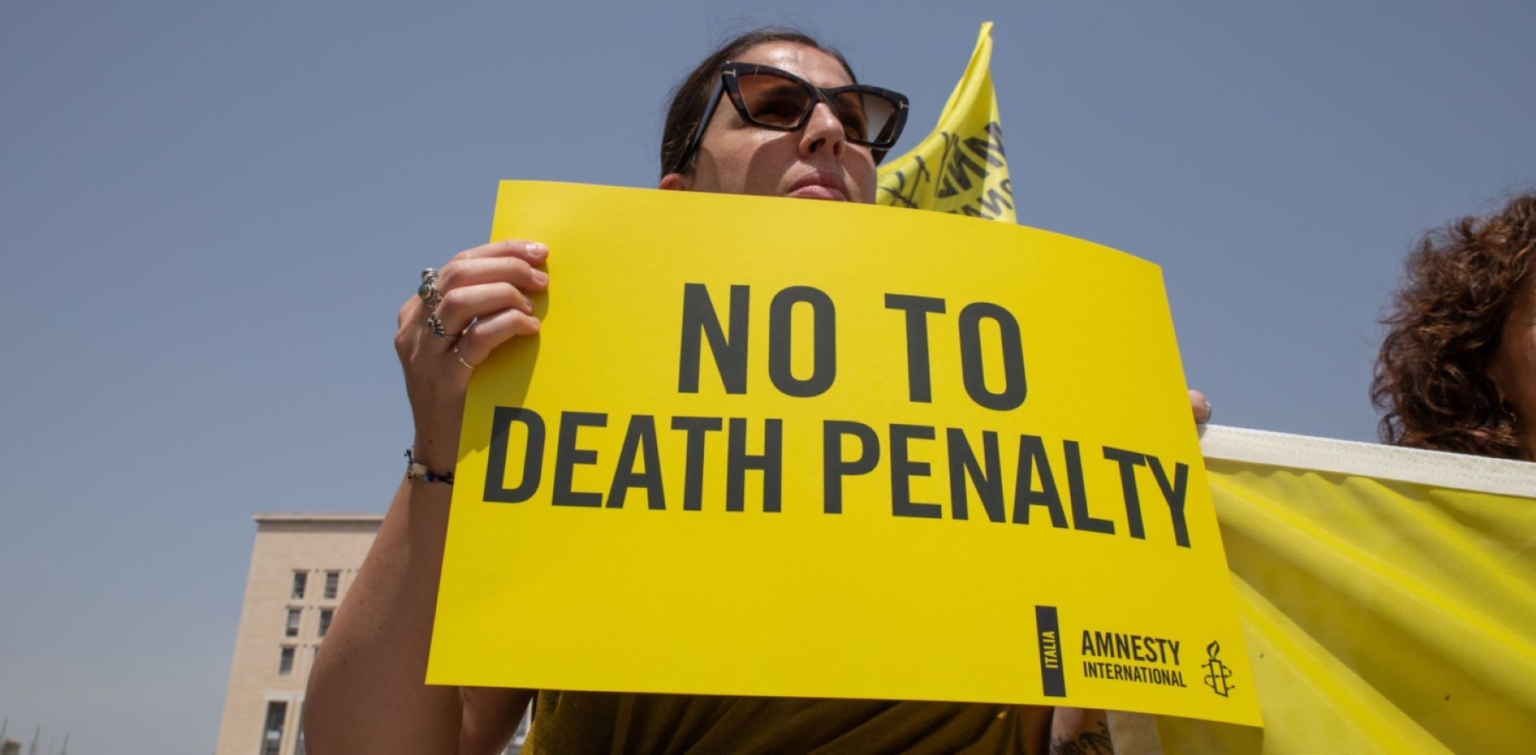
Amnesty is opposed to the penalty in all circumstances and publishes a report on its use each month.