UK Human Rights Report: key issues in June 2026


Our monthly report on human rights in the UK

June 2026

UK Political Prisoners

Research by Queen Mary University of London and the protest group Defend our Juries says that custodial sentences for acts of direct action or civil disobedience were once rare. They are now being imposed with increasing length and frequency in the UK, creating ‘a new breed of political prisoners’ through the systemic incarceration of people acting to prevent climate breakdown and the annihilation of Gaza.

Rules on Transgender

The ECHR has offered clarification on  the application of the law on transgender status, confirming that since the legal definition of sex is based on sex at birth, single sex toilets must exclude transgender people for whom the provision of separate facilities is recommended.

Palantir Challenge

The Mayor of London Sadiq Khan has blocked the use of Palantir platforms for the Metropolitan Police Force.  Despite its record for assisting anti-immigration police in the US and aiding Israeli surveillance in Gaza, it is alleged that the police failed seriously to consider any other company for the contract.  The lack of process is seriously concerning, since Palantir has been allowed to gain a foothold in public services to the extent that it has now amassed more than 30 contracts with the UK state.  Critics also dispute its superior performance.

A cross party group of MPs have now challenged the Government on this.  Amnesty and other concerned organisations such as the Good Law Project are coordinating local protests against the use of Palantir in NHS Trusts. see our previous post on this firm and the danger it poses.

Equality Act: Public Sector Equality Duty

Discussion around the murder of Henry Nowak has centred around whether the Public Sector Equality Duty section of the Equality Act 2010 led the police in question to mistakenly prioritise a false allegation of racism over an actual stabbing attack, as Tory leader Kemi Badenoch argued.  However, critics say the case was a failure of police procedure rather than a pointer to review the section on institutional guidance on racism. The murder has generated a great deal of political heat.

The Public Sector Equality Duty states that public authorities should ‘advance equality of opportunity between people who share and people who do not share a relevant protected characteristic’.  Protected characteristics include age, disability, pregnancy, sex and sexual orientation.  Government guidance says the duty should ‘always be applied in a proportionate way’ depending on the circumstances of the case.

The duty was introduced in 2010 as part of the Equality Act which merged previous anti-discrimination laws such as the Equal Pay Act and the Disability Discrimination Act.

Since its introduction, organisations and individuals have been able to take public bodies to court for failing to abide by the duty, for example when councils withdrew library funding, set unequal fees for council funding to private care homes, or when the Home Office had not complied with the duty in relation to how its ‘hostile environment ‘ policies would impact members of the Windrush generation.

While Reform would abolish the entire act, the Conservatives criticise only the public sector section.  The Labour Government, however, is promising further anti-discriminatory legislation, a new equality and diversity strategy, with a primary focus on getting working class people joining and progressing in the Civil Service.


Recent posts:

Vigil number 130


Vigil No. 130 held in the wet. High level of support

June 2026

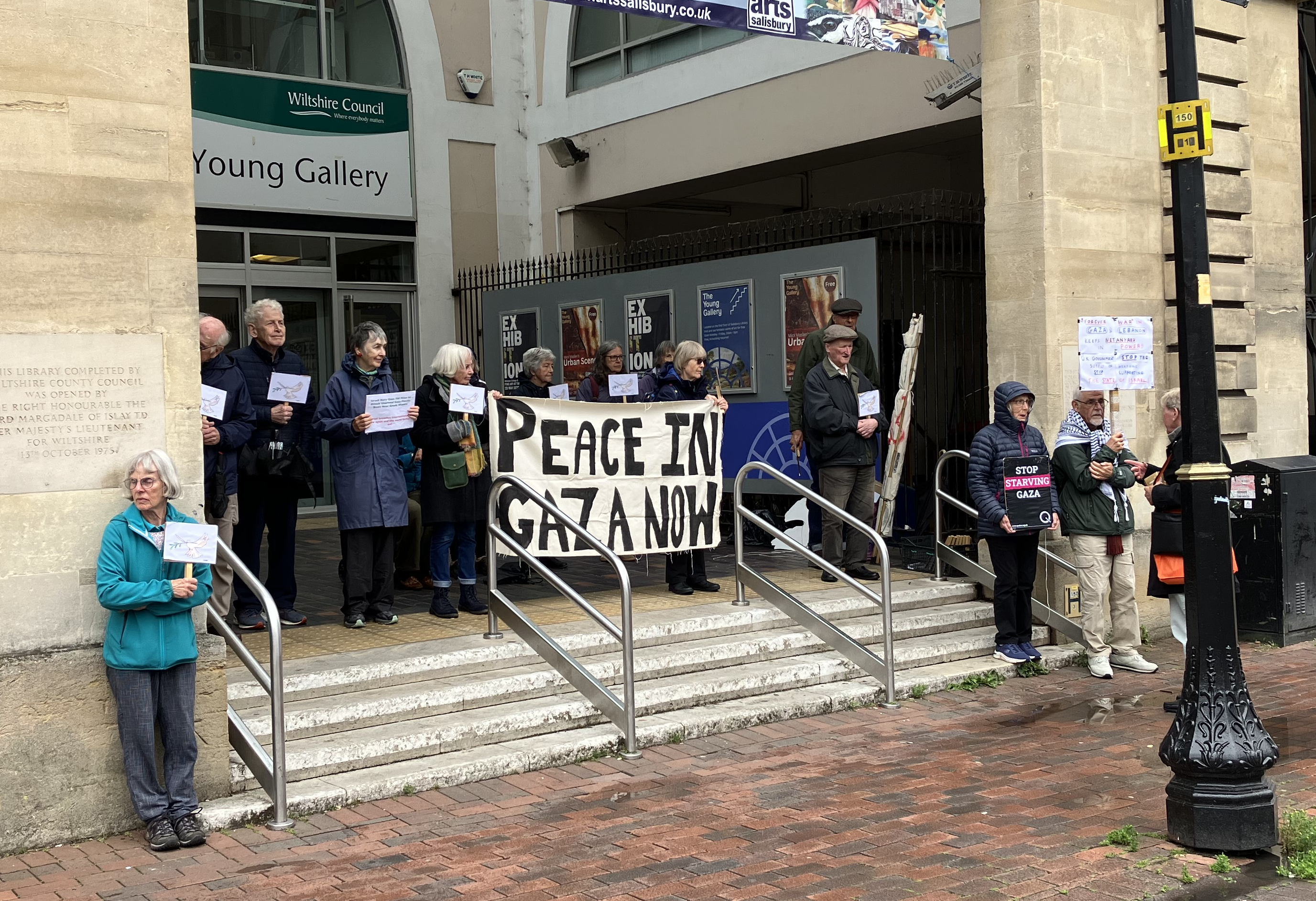
It was a damp and windy evening so we retreated to the steps of the Library for our vigil this week attended by around 25. Notable this time was the high level of support from passers by one even presenting us with a box of chocolates. Others gave us the thumbs up, took a photo on their phone or smiled in recognition of our efforts. It has been some weeks now since we have experienced a negative reaction.

It would be good to report progress with a ceasefire or some kind of improvement in the political climate. Of this there

is no sign. The situation in Gaza remains dire. The death toll (there are various estimates) is at over 73,107; of which 12,500 are women and there have been 173,000 injuries, some serious. A harrowing interview was aired on Channel 4 last week of a boy who was paralysed by shrapnel from the waist down from a tank shell. He is no longer able to play football with his friends. Harrowing footage was also aired on the BBC of an infant shot dead by Israeli soldiers in Hebron.

Wes Streeting, one of the possible contenders to become the new prime minister, has been forceful about the failure of the Labour party to call out what is happening in the region. He has been particularly critical of Sir Keir Starmer’s infamous interview on LBC in which he said Israel had the right to cut off water and power to Gaza. Attempts to deny this at the time were unconvincing.

The attacks on Lebanon are following a similar pattern with the demolition of villages and the destruction of entire blocks of flats in Tyre and elsewhere. The Times of Israel reports that over 3,000 have died in the current conflict. There is supposed to be a ‘ceasefire’. Hezbollah continue to fire rockets into Israel.

A difference with this conflict however is that there is coverage from outside media which contrasts with Gaza where they are banned. There is first hand footage and interviews with residents not possible in Gaza. This might make a difference as it enables images to be shown of the devastation which was not possible in Gaza.

A resolution to the conflict between Iran, the US and Israel is not yet in view.

Picture taken at start of the vigil – more came during the vigil.

Once again we note the continued absence of the local MP Mr John Glen from the vigils together with any mention of them in his weekly Salisbury Journal column. He along with – shamefully – a large number of MPs from all of the main parties, is a member of one of the Friends of Israel groups, believed to be the largest and best funded of all the Parliamentary lobby organisations.


Previous posts:

Podcasts


New feature on this site

June 2026

A new feature on the site which will appear from time to time, is podcasts. The first is below. Note they are produced by AI but from texts written and researched by us not using any AI. It is an amalgamation of more than one text post. Feedback is welcome. We hope you enjoy listening! If you are not used to these, click on the heading and you will see a sound bar with the text displayed below it.


Recent posts:

Podcast Episode: Prisons, Punishment, And Survival


Pip: Nearly three decades behind bars, nine execution dates, three last meals — and the first thing Richard Glossip does on the outside is go to an Italian restaurant. There's something both devastating and deeply human about that.

Mara: welland2 has been covering the territory where criminal justice, human rights, and detention conditions intersect — and this episode moves through wrongful conviction and release, then into what imprisonment can look like at its most extreme.

Pip: Let's start with Richard Glossip and what it means to walk out after all of that.

Richard Glossip: Nine Dates, One Release

Pip: The Glossip case sits at the intersection of wrongful conviction, prosecutorial misconduct, and the death penalty — and his release in May 2026 raises the question of what justice even looks like after nearly thirty years on death row.

Mara: The interview with The Intercept captures the disorientation of that transition directly. Glossip says: "I tried never to let myself become institutionalized… But I mean it's hard. You go through all these horrible things and all these different dates … and last meals and everything. And then it doesn't look like this day will ever get here. But you always hope that it will."

Pip: That's someone who kept himself psychologically intact across nine execution dates — which is an almost incomprehensible act of endurance — and is now readjusting to sleeping without prison noise and eating pasta in a neighborhood restaurant.

Mara: The Supreme Court vacated his conviction in February 2025, finding prosecutors allowed a key witness to lie in court and withheld crucial information from the defense. Oklahoma County District Judge Natalie Mai ordered his release on a five-hundred-thousand-dollar bond, stating the court hopes "a new trial, free of error, will provide all interested parties, and the citizens of Oklahoma, the closure they deserve."

Pip: The Attorney General who previously confessed error in the prosecution has now said his office won't seek the death penalty in any retrial. That's a significant shift in posture from the state.

Mara: Glossip himself seems to be holding that carefully. He says: "Once you're out here and you see all the things that was taken away from you — and all the times they almost took everything away from me, my life and everything — you see all of it now… And it kind of still makes me angry at times because none of this should have ever happened."

Pip: Anger seems like the precise and correct response.

Mara: He also describes being recognized in public — a barber refused payment, telling him it was "an honor" to cut his hair. And he's reunited with his wife Lea, whom he first corresponded with and later married while incarcerated.

Pip: His closing note in the interview is striking — he says he's going to trust the process and "just enjoy life." After everything, that reads less like naivety and more like a deliberate choice.

Mara: The retrial date hasn't been set. The case that put him on death row — alleged involvement in a 1997 murder-for-hire — still has to be resolved. The release is real, but it isn't the end.

Pip: Which raises a harder question about what systems produce these situations in the first place — and what happens when those systems operate without any oversight at all.

CECOT: When the Prison Is the Punishment

Mara: The post on CECOT — El Salvador's Centro de Confinamiento del Terrorismo — documents what Channel 5 filmed when Richard Madeley was granted access: cells of a hundred men, steel racks three tiers high, lights on twenty-four hours a day, no reading materials, no contact with family or lawyers.

Pip: Madeley's own summary lands the dilemma squarely: "It's obvious that CECOT breaches human rights as we currently understand. It's a shocking, extreme corner of humanity, but El Salvadorians were writhing under the thumb of psychotic, psychopathic sadists. I wonder if sacrificing civil liberties for the common good is something others would ever be prepared to embrace."

Mara: The post doesn't resolve that question — it holds it open. San Salvador's murder rate was around sixteen a day before President Bukele's crackdown. That rate has dropped dramatically. The post notes the prison has a capacity for forty thousand, and that trials happen on screen with up to a hundred defendants at a time.

Pip: The question of what detention is actually for doesn't get easier the closer you look.


Mara: From Glossip rebuilding a life outside to the conditions inside CECOT — both stories are really asking what accountability and punishment are supposed to achieve.

Pip: And whether the systems designed to deliver justice are capable of honest answers to that. More from Salisbury and South Wiltshire next time.

Richard Glossip interview


Glossip is interviewed after his release from prison

June 2026

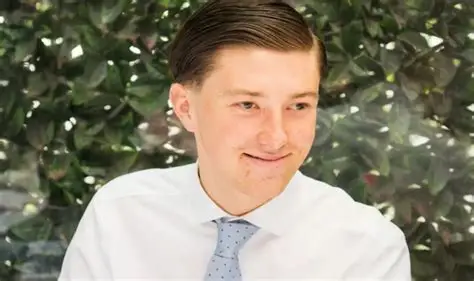
After fac­ing nine exe­cu­tion dates, and being giv­en three last meals, Richard Glossip was released on bail on May 14, 2026 and set foot out­side of prison walls for the first time in near­ly three decades. In an inter­view with The Intercept, Mr. Glossip dis­cuss­es adjust­ing phys­i­cal­ly and emo­tion­al­ly to his new life as he awaits a pos­si­ble retri­al for the 1997 crime that sent him to death row, despite his long­stand­ing claims of inno­cence. Oklahoma County District Judge Natalie Mai ordered his release on a $500,000 bond, stat­ing ​“The Court hopes that a new tri­al, free of error, will pro­vide all inter­est­ed par­ties, and the cit­i­zens of Oklahoma, the clo­sure they deserve.”

I tried nev­er to let myself become insti­tu­tion­al­ized… But I mean it’s hard. You go through all these hor­ri­ble things and all these dif­fer­ent dates … and last meals and every­thing. And then it doesn’t look like this day will ever get here. But you always hope that it will“.

Mr. Glossip said of the wide­spread atten­tion on his case, ​“It’s over­whelm­ing but it’s amaz­ing at the same time.” Since his release, he has been able to reunite with his wife Lea, with whom he first cor­re­spond­ed and lat­er mar­ried while in prison. In a con­ver­sa­tion with The Intercept, Mr. Glossip described ini­tial­ly hav­ing dif­fi­cul­ty sleep­ing with­out the con­stant noise of prison, eat­ing at a neigh­bor­hood Italian restau­rant with his wife, and going food shop­ping. He also dis­cussed feel­ing sup­port­ed by his com­mu­ni­ty in Oklahoma. He recount­ed sev­er­al sto­ries of being rec­og­nized, includ­ing by a bar­ber who refused pay­ment for his hair­cut, telling Mr. Glossip it was ​“an hon­or” to cut his hair.

Once you’re out here and you see all the things that was tak­en away from you — and all the times they almost took every­thing away from me, my life and every­thing — you see all of it now… And it kind of still makes me angry at times because none of this should have ever hap­pened. And this should have nev­er been tak­en from me in the first place”.

Mr. Glossip is now await­ing a pos­si­ble retri­al for his alleged involve­ment in the 1997 ​“mur­der-for-hire” of Barry Van Trees, his boss at an Oklahoma City Motel. Oklahoma Attorney General Gentner Drummond, who pre­vi­ous­ly con­fessed error in the pros­e­cu­tions that end­ed in Mr. Glossip’s death sen­tence, announced that his office will not seek the death penal­ty in his new tri­al. The Supreme Court vacat­ed Mr. Glossip’s con­vic­tion and death sen­tence in February 2025, find­ing that pros­e­cu­tors allowed a key wit­ness to lie in court and with­held cru­cial infor­ma­tion from the defense about the same wit­ness. AG Drummond, who sup­port­ed Mr. Glossip’s appeal to the United States Supreme Court, now says “…my office will make sure Mr. Glossip receives a fair tri­al based on hard facts, sol­id evi­dence and truthful testimony.” 

They’ll make the right deci­sions. I know they will. I wouldn’t be out here today if they wasn’t… So I’m just going to let them han­dle it. … I’m just gonna enjoy life.

This text is from the World Coalition Against the Death Penalty


Previous posts:

Why not become a subscriber?

A most terrible prison


Channel 5 is allowed into CECOT – a prison from hell

June 2026

Richard Madeley was allowed to film inside the most awful prison called CECOT – Centro de Confinamiento del Terrorismo – in San Salvador and the results were transmitted last week. Despite the restrictions placed on the programme makers, it showed a prison that might have come straight out of some dystopian horror film (movie). The prison is vast and to get about it, he had to travel on a shuttle bus. It has a capacity for 40,000.

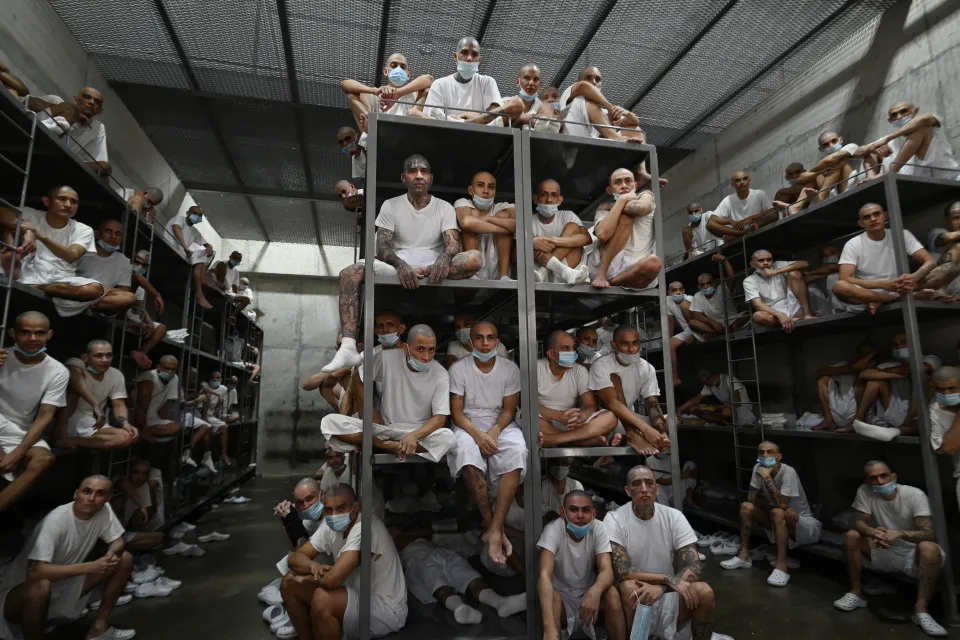
Words cannot fully describe the state in which the men are held. Think battery farm for chickens and you get close. Men are effectively warehoused in cells of 100 which contain steel racks three tiers high on which they spend their days. They are not allowed any reading materials and there is no TV. The lights stay on 24 hours a day every day. They have no contact with relatives or lawyers. Trials such as they are, take place on screen with up to 100 defendants at a time. The men will never leave the prison. Further insight is by Human Rights Watch who reported on American nationals held there. They eat the same food each day.

Madeley makes it clear that the men are members of various gangs and have committed a vast number of murders. Some inmates are alleged to have murdered 30 people. San Salvador had a high murder rate with around 16 a day. The drastic measures taken by the president Nayib Bukele has seen this rate drop dramatically. This poses a profound question: that in a state where gangs operate and murder is at a very high level, can the drastic measures and the methods used in CECOT be justified?

Madeley admitted feeling ‘shaken’ by the experience and film of some of the terrible murders could not be shown on British TV. He continued: “It’s obvious that CECOT breaches human rights as we currently understand. It’s a shocking, extreme corner of humanity, but El Salvadorians were writhing under the thumb of psychotic, psychopathic sadists. I wonder if sacrificing civil liberties for the common good is something others would ever be prepared to embrace”. The approach by the President is popular among many in El Salvador who are free of the threat posed by the murderous gang members.

The prison has proved to be controversial in the US and a CBS film was pulled before transmission because allegedly, political pressure was applied. President Trump is reported to be keen on the prison and USA Today revealed a financial deal in which prisoners were sent there.

It is a dilemma. Human rights groups condemn the regime but it has delivered a measure of normality for Salvadorians. Richard Madeley poses this question at the end of his programme. Can such inhumane methods ever be justified?

Sources: The Sun, Cornwall Live, Guardian, Independent, USA Today, CBS


Pic: AFP

Blog at WordPress.com.

Up ↑