China’s persecution of the Uighurs continues unabated
Two or so years ago, we had not heard of the Uighurs but since then, more and more evidence has emerged about what has become arguably the world’s worst example of attempted cultural genocide. In an editorial in the 17 October 2020 edition of the Economist, they suggest it is ‘the gravest example of a world-wide attack on human rights and a crime against humanity’.
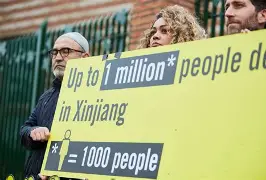
Since 1989, the fate of the Uighurs has deteriorated markedly. Around a million are incarcerated in what are claimed to be ‘vocational education and training centres.’ It is hard to think of other such centres around the world which feel the need to surround themselves with high concrete walls, coils of razor wire and watch towers. Inside, they are forced to learn Chinese and Xi Jinping thought. They are Sunni Muslims but if when asked ‘do you believe in God?’ they answer ‘yes’, they are beaten.
According to the Economist, new evidence suggests that thousands of their children have been separated from their parents. If they speak their own language they are punished. Women are urged to marry Han Chinese men and receive rewards if they do. Another tactic according to the BBC World Service, is placing a Chinese man inside their homes as ‘house guests’.
The persecution of the Uighurs is now widely known around the world. Initially, the Chinese denied the existence of the camps and then changed the story once some details became known. Outsiders are not allowed in and few images have emerged except posed photographs and films produced by the government. The lack of images has reduced the impact as people respond to images and footage – written reports and verbal testimony have much less impact. The wider issue of human rights is discussed by Amnesty and includes details of torture, attacks on human rights defenders, a legal system under control of the party and excessive use of surveillance.
Lack of protest
One of the curious features of this scandal however is the lack of protest from other Muslim nations. Why aren’t countries such as Indonesia, Gulf states such as Saudi Arabia, or Pakistan making more of a fuss? Turkey is closely related to the Uighurs ethnically and their Turkic languages are linked, but it too is silent.
Part of the reason is that China has used its enormous wealth to silence criticism. Countries such as Pakistan are dependent on the Belt and Road initiative and has received tens of billions in loans from China. It has just finalised a new loan of $11bn. Turkey is also part of the Belt and Road project and has just signed a $1bn loan. At one time it was a critic and then it changed its opinion. Saudi – hardly a country with clean hands itself – has aligned itself more closely with China following the Khashoggi murder. Mohammed bin Salman is quoted as saying:
China has the right to carry out anti-terrorism measures and act against extremists for its own security BBC World Service 20 July 2020
Other Muslim countries are also reluctant to speak up because of loans and economic dependence on China. Apparently, about the only exception is Malaysia because it is well developed and less reliant on China. The Economist article rightly argues that the West must speak up and expose this most egregious example of human rights abuse possibly since the Second World War when nations said ‘never again’ after the holocaust. It suggests China’s regime is not immune to shame – why else would it go to such lengths to hide its activities? Western companies should ensure for example that the goods they source from China are not made using forced Uighur labour.
The situation is bleak however. Last week, China, along with Russia and Saudi Arabia, was elected to the UN’s Human rights Council. Truly the fox is in the henhouse.
The UK government has supported an EU statement on the issue.
Why is there no concerted international action?
There are several reasons:
- The region of China, Xinjiang, is remote and largely unknown outside China and is therefore in a real sense, out of sight and out of mind
- The West’s increasing dependence economically on China is a factor. We rely on the country for much of our manufactures and for keeping inflation down. British and other politicians have been all too keen to put business and trade ahead of human rights
- China is highly resistant to listen to any criticism of what it regards as its internal affairs and western politicians are all to happy to go along with this and are reluctant to confront Chinese sensitivities
- There is no charismatic individual to champion their cause. It needs an individual who can speak for the nation and with whom, people in the West can identify
- The lack of film or video evidence other than snatched pictures of concrete walls
- Covid-19 is a huge distraction and consumes masses of time leaving little for other causes
- China has been careful not to commit crimes of actual genocide. It is not murdering millions by starvation or other means. The oppression is real but there is no extermination
- The oppressed are Muslims and anti-Muslim feeling is widespread in the West which results in low sympathy. As we have noted, other Muslim nations have failed to criticism China’s oppression of fellow Muslims (in fact some support it), so why should we?
This all adds up to a dangerous situation. China’s increasingly muscular approach to world affairs should be a lot more worrying than it appears to be. Their attempts to militarise the South China Sea by building whole islands; their increasing levels of threats and intimidation towards Taiwan; aggression along the border with India and clamping down on Hong Kong are some of the recent actions the Beijing has engaged in. Sooner or later, Western governments are going to have to face up to the Chinese threat to human rights and call its bluff.
The Economist does have a note of optimism however saying that ‘its propaganda has grown less effective’ as more evidence comes to light.
Sources: BBC World Service; HRW; The Economist; Amnesty International. Further background from China Human Rights Defenders
See also the Grant Liberty website for an item on the Uighurs