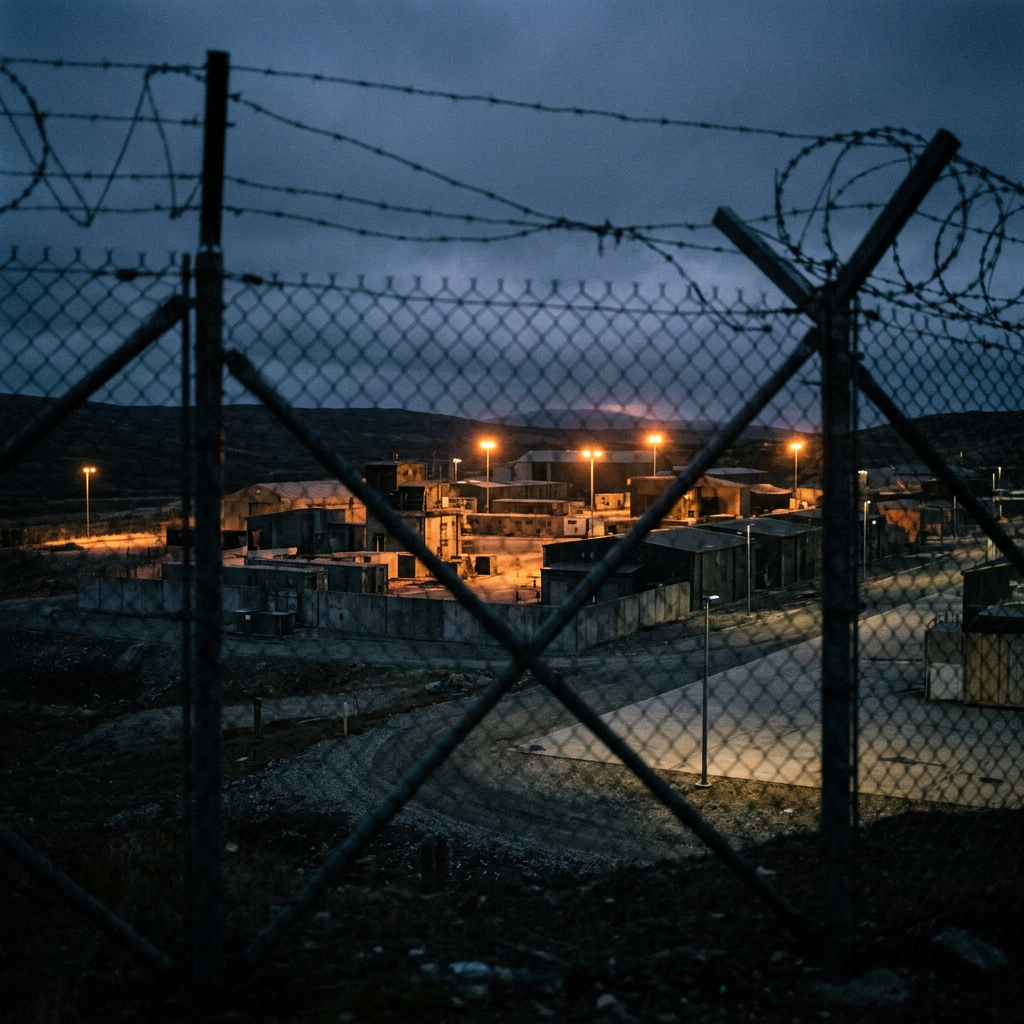
British woman tried on an American base


US force personnel being tried on their bases for crimes they committed off base and off duty

July 2026

The rape, drugging and strangulation of a British woman by a US pilot may have gone completely unnoticed. Sarah Steele, an academic, had a relationship with a US air force pilot during which violence was used and she alleged he had unprotected sex without her wishes. She had a drug etizolam in her blood stream. This is an increasingly popular date rape drug especially when combined with alcohol.

Those who followed the Brexit arguments a decade ago will recall that one of the arguments used by those wishing to leave the European Union was a desire to ‘take back control’ and the related issue of sovereignty. These arguments persist today with a desire for the UK to leave the European Convention. There an almost uncountable number of articles to this effect.

Yet here we have a serious and significant breach of UK sovereignty with a British woman having been savagely raped, being tried by American men on an American base in front of an American colonel with a stars and stripes flag behind him. Apart from the Guardian newspaper – the only journalists to be present – none of those same newspapers who relentlessly disparaged the EU were present. There is little sign of them having followed the story up either. Could it be possible that as many of them are American owned they have declined to soil their pages with the story?

Primitive treatment

The treatment of Ms Steele was primitive by UK legal standards. Apart from the whole thing being run by men and colleagues of the airman accused (who declined as was his right to give evidence) the Americans imported a particularly aggressive lawyer for cross-examination. His name is Tim Bilecki. He specialises in courts marshals and flies around the world defending servicemen. There are pages and pages of encomia on line (we gave up after 8 pages of them).

In court he accused her of being a ‘sex obsessed liar’. He said she was financially motivated and had fabricated the allegations as part of an elaborate scheme to win compensation. The cross-examination lasted hours and was distressing she reported. The gravity of the offence should have attracted a sentence of around 5 years maybe more. The jury decided on 6 months and he has been dismissed from the service. Another quirk is that at the time of this trial, juries could decide on sentencing in American court proceedings (in some states). That has now ended.

He can appeal but an added twist is that the appeal will take place in Maryland. Can we guess the result of that appeal?

The question has to be – who on earth in Cambridgeshire police agreed to cede jurisdiction to the Americans? The offence took place against a British woman off base. It is not the only such case. The government is looking into the circumstances of this case and others so we must hope for a more robust response in future. And where are our media when it comes to shining a spotlight on this behaviour? With threatened takeover of more of our TV networks by US companies, it is a warning that the lack of reporting of outrageous cases such as this is a real prospect. Justice must not only be done but must manifestly and undoubtedly be seen to be done. Not hidden away on a US base.

The whole question of these bases came into the spotlight with the attack on Iran. Sir Keir Starmer is said not to have allowed our bases to be used for American aggression. As President Trump is no longer interested in NATO, what future for their bases on British soil?

NOTE: We normally cross check stories to seek multiple sources and differing points of view. We have been unable to do this with this post because of a complete absence of coverage by British media apart from the Guardian to whom we are grateful.


Reforming the Human rights Act


Will the proposed ‘reforms’ lessen our rights?

April 2022

For some considerable time, the Conservatives have nagged at the Human Rights Act (HRA) and reforming it has been a standard feature of all recent election manifestos. Abolition has been promised but not delivered. Paradoxically, it was a Conservative government which played a key role in achieving the Universal Declaration and the HRA itself was a cross party bill (despite modern claims that it was ‘Labour’s Human Rights Act’).

Attitudes to the Act have in part been shaped by media stories particularly at the tabloid end of the market. There have many stories criticising the act and particular decisions. Some of the stories are just plain wrong and the HRA was not the crucial issue which decided a case. According to the UN rapporteur Prof. Philip Alston, visiting the country to look at poverty and human rights issues, tabloid news papers ‘fundamentally distorted and successfully stigmatised’ the act. The general theme is that the legislation allows criminals to go free, prevents foreign criminals from being deported and generally act against the best interests of the population at large. It is to be regretted that when these stories are published, the relevant minister does not point out the facts and correct the wilful errors or plainly tendentious reporting. Worse, some politicians know they can get favourable media coverage by joining in making erroneous or exaggerated claims.

To an extent therefore, the government is hoist by its own petard. There is also the link to Brexit and all things European such as the European Court of Human Rights. Having cast human rights as essentially negative in their impact, that they are contrary to common sense, and that we are subject to legal diktact from Strasbourg, it is only a short step to propose abolition or reform.

In the Spring 2022 addition of the Amnesty magazine (No: 212), the matter is discussed in an article entitled The Great Rights Robbery by Tom Southerden. One of the fundamental points – one which we have made here – is that the act applies to everyone, equally. Of course, the problem with this is that it undermines privilege. Those, through public schooling, inherited privilege, money or other means do not welcome challenges to their status and superiority. There is also the assumption that our rights are ancient and have evolved over centuries since the time of Magna Carta. So we do not need this act they argue. This ignores much of our history: slavery for example which was enthusiastically promoted for nearly two centuries and which we are only now slowly coming to terms with (although the crass royal visits to the Caribbean might argue against that assumption). Students of nineteenth century social history will know of the desperate struggles by workers and citizens to get safe working conditions, sanitation and any kind of justice or fairness.

It appears that the plan is to downgrade the act so that it is no longer more important than any other piece of legislation. The ability to challenge the ‘mighty state machinery’ as Southerden puts it will be weakened.

The last few months have seen the monstrous scandal of the Post Office unfurl. Honest postmasters were variously ruined, shamed or imprisoned not for anything they did but for failings in the IT system. Failings that were known. Some committed suicide. Yet achieving justice has been a very long and desperate struggle. Although the legal battle was won, the money lost has not been recovered. The point is that ordinary people need all the help they can get to stand a chance in fighting overweening state power. The comforting idea that evoking Magna Carta and chuntering on about ‘common sense’ will do the job is pie in the sky.

As we have discussed in an earlier post, the Justice Secretary, Dominic Raab, dislikes the act and we have his book discussing at length the reasons why. We must not allow prejudice, fantasy thinking and an aggressive tabloid media promoting misleading stories to reduce our basic rights.

Blog at WordPress.com.

Up ↑