Risks of University Partnerships with Arms Firms and Israel


Report by Southampton University into tensions and risks in dealing with Israel and Palestine

August 2026

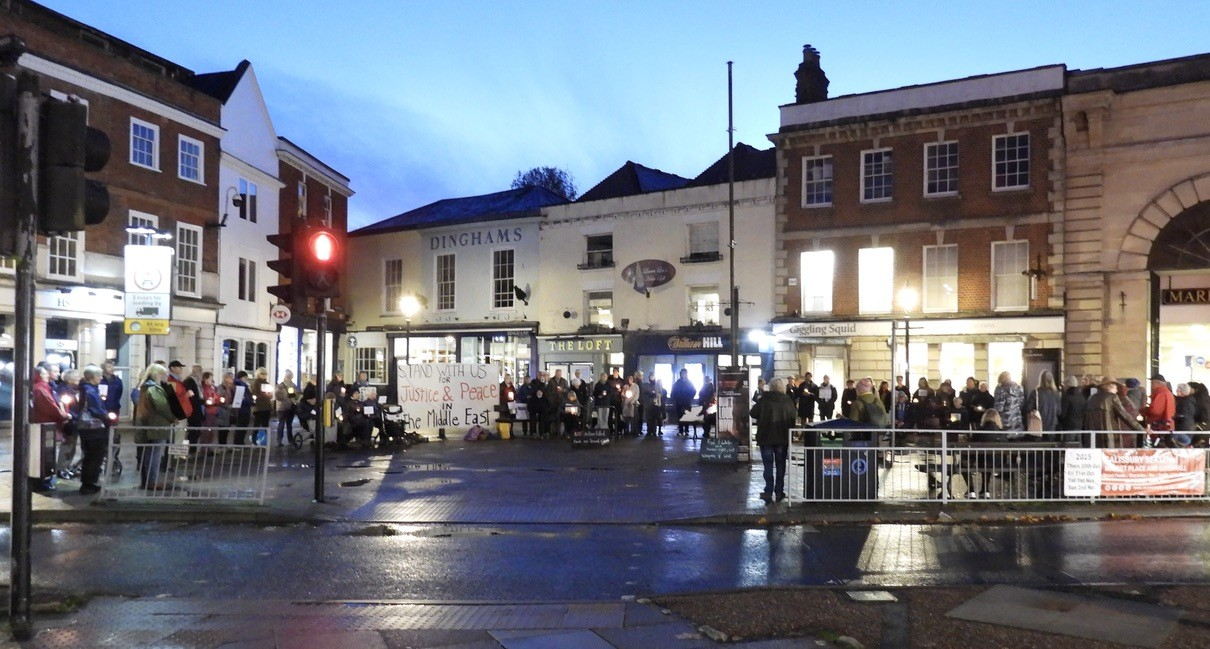
The latest edition of the Campaign Against the Arms Trade’s News (Issue 277, Summer 2026) contains an article discussing links with universities and arms companies in the context of relations with Israel and Palestine. The report Aligning Policy with Practice: Tensions and Risks in the Context of Israel and Palestine, February 2026 analyses these tensions in relation to Southampton but it is clear the issues apply to many universities in the UK. The full report can be accessed here. It is the product of work carried out by the Palestinian Solidarity Network in the University (pictured) and the lead author is Irene Ruiz Espejo.

Essentially, the report analyses the various principles which the University has concerning transparency, sustainability, ethics and EDI and matches that against what happens, the links they have with arms firms and their support for research, and also the links with Israeli universities. They suggest that sometimes matters of governance, partnerships and approaches to free speech can exert a chilling effect as has been seen at other academic institutions.

Risks

They identify several risks: legal, financial, reputational and wellbeing in the report. Official communications do not reference the historical and legal realities of military occupation in Gaza, settler colonialism on the West Bank, apartheid, or the longstanding siege of Gaza. They also do not engage with international legal developments and findings, including United Nations and international and Israeli civil society organisations, which have raised serious concerns that Israel’s conduct in Gaza may amount to grave breaches of international law, including acts that violate the Genocide Convention.

In addition, University statements do not situate events in Gaza within the wider regional context of Israeli military aggression, including the bombing of Lebanon, Syria, Yemen, Qatar, and Iran, which have resulted in additional civilian deaths and escalating regional and global instability. Instead, communications tend to frame events primarily as a bilateral conflict and to address Palestinian deaths, displacement, and civilian harm largely through the language of humanitarian crisis.

This framing obscures a central and well-documented reality: the “conflict” is characterised by profound asymmetries in power, control, and vulnerability, including Israel’s effective control over borders, airspace, and key conditions of civilian survival in Gaza, including access to humanitarian aid. In this context, large-scale civilian harm is not only the outcome war, but it is shaped by Israel’s political and military decisions that have driven mass displacement, civilian targeting, severe restrictions on essential supplies, the use of starvation as a method of war , bombardment, and the destruction of critical civilian infrastructure in Gaza, including all twelve universities.

Power of money

They maintain this bias is not accidental but managed, where money and and power repeatedly take precedence over stated values. Students and staff who raise concerns about arms partnerships, or who engage in Palestinian solidarity, face ‘scrutiny, marginalisation or silencing’ – a direct threat to freedom of speech.

Money has become an existential issue for universities and many are struggling. The drop in foreign students has been a severe blow. The suggestion, implicit in the report, that the desire to secure research funding from arms firms has led to threat to their core values. Links to Israeli universities are not inherently wrong but the nature of the research might be.

The CAAT piece ends “our report is an attempt to interrupt that silence resisting erasure – of lives, of knowledge and our ability to name what is happening requires more than critique. It requires cultivating the capacity to see clearly even when language obscures: to think critically even when institutions reward compliance and to remain connected to our sheared humanity, to people, to place and to the consequences of what is doe with our knowledge our research and our labour”.

Some content from the report.


Corruption and Arms Trade: The UK’s Enduring Dilemma


Will anything change in the government’s approach to weapons sales?

August 2026

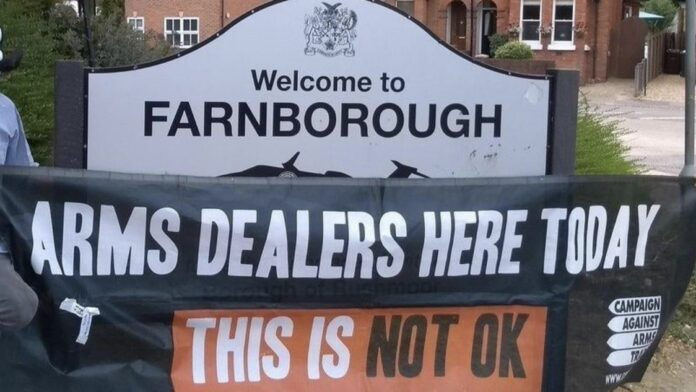
We questioned the extent of help offered to arms companies in a previous post. The Farnborough show featured a range of such companies including Elbit Systems deeply implicated in the appalling death toll in Gaza. We noted the vast sums – around £3 trillion – of tax payers money underpinning the industry when they are not paid. We drew attention to the infamous ‘revolving door’ where senior military, civil service and government ministers sidle off into lucrative directorships or consultancies with arms firms when they retire using their contacts to secure yet more funding. A system so steeped in corruption it is amazing it is still allowed.

So we now have a new leader of the Labour party who was quick to say on July 9, that Labour “didn’t get it right” on Gaza. His video message also included a pledge to bar arms sales to Israel wherever weapons could be deployed in Gaza or the West Bank. Sounds good. So what happened?

The second time we saw our PM’s face on a video message discussing arms was a mere 11 days later. Beamed onto the big screen at Farnborough Air Show, he gleefully emboldened the arms industry, placing them as a core pillar of his ambition to re-industrialise’ the nation by working together with brilliant businesses, like those at Farnborough’ – Farnborough being an international arms fair hosting over 1,000 exhibitors, including the likes of BAE Systems, Lockheed Martin, Elbit Systems, Rafael, Israel Aerospace Industries and Boeing.

Shortly after, his Defence Secretary, Wes Streeting, took to the stage and announced a £708 million government contract with BAE. He remarked at ‘what an opportunity we have with this Prime Minister’ and ‘the enormous contribution that Defence [defense] can make to the Prime Minister’s vision for this country.”

It’s getting worse

Campaign Against the Arms Trade have analysed the current situation and if anything the situation is worse than previous administrations. A key element is Wes Streeting’s desire for speed in commissioning and delivering new systems. He is aware of the prolonged time scales, endless delays and cost overruns involved in arms procurement. He is against unnecessary red tape and bureaucracy. Part of that bureaucracy is assessing risk and potential damage to human rights for those at the end of the arms sales. Putting speed above these assessments carries obvious risks.

He is also keen on joint ventures which makes it difficult for the UK to extract itself from sales where weapons are used by regimes bent on oppression or killing people. The F35 is a classic example which is being used by Israel to bomb Gaza, Iran and Lebanon. We cannot ban components made in the UK (around 15%) because they go off to the States.

Streeting ended his speech with a glowing rhetorical flourish: ‘It is not yet clear whether the 21st century will be defined by tyranny or freedom. But we need not let others define the answer to that question…. We know which side we are on.’ As CAAT argues ‘others’ does rather leave the door open to alternative interpretations. Streeting and Burnham were both members of governments who have engaged the UK in Afghanistan, Iraq and Palestine involving the deaths of a million people. Iraq led to instability and the creation of ISIS; Afghanistan has left the country in the hands of the Taliban with its draconian controls of women and a flourishing heroin trade, and Palestine has seen the wasting of Gaza and the death of 20,000 children.

Have they learned nothing?

You would think that they might have learned a thing or two about violence. Yet here they are, lauding the firms who make the weapons and hell bent on making things worse. Over and over we have argued that making and selling weapons with their ability to create jobs is put above moral or human rights considerations. Claims of a ‘robust policy’ on sales is no longer credible. Does ‘re-industrialising’ the nation have to involve selling weapons to awful regimes? Is that really what Andy Burnham and his new team really want?

We are grateful to CAAT for use of some of their text. No AI has been used.


Britain’s support for the arms trade


The UK hosts a major international arms fair

July 2026

UPDATE: Journalists attending the Fair from Declassified and Byline Times faced threats from the personnel on the Elbit Stand and other Israeli weapons stands. We are grateful for Salisbury Concern for Israel Palestine for bringing this link to our attention.

The UK is an enthusiastic supporter of the arms trade, organising a fair at Farnborough ever other year in Hampshire. A thousand firms will attend and the ‘strategic sponsor’ is Barclays. It is curious to note in passing that the bank was founded by two Quakers and their early history was supporting Quaker businesses in the New World. Now they are supporting weapons firms. One of their values is ‘[being] passionate about leaving things better than we found them‘. One wonders what someone who has had a weapon dropped on them or a limb blown off feels about this value?

The firms themselves supply weapons to a range of conflicts around the world including the genocide in Gaza, Yemen, Lebanon and Syria. Some of UK weapons find their way to Sudan via the UAE one of our largest customers. Our old friends Elbit Systems are in evidence as well as Rafael, Israel’s largest missile maker.

Government support

The fair depends crucially on British government support which includes a dedicated arms sales unit in government, organisation of the fair, providing insurance cover in case firms do not get paid and finally, ready access to ministers and civil servants through what is called the ‘revolving door’. This is the highly dubious process by which ex ministers, former civil servants and ex military officers secure lucrative consultancy work or directorships with the firms to help lobby for their activities.

The insurance is provided by Exports Credit Guarantees and the amount may surprise readers. A total of 20 countries have defaulted on payments: some you might expect like Iraq, Cuba and Serbia because of conflicts, but others include Pakistan, Egypt and Argentina. The total is just under £3 trillion which is added to the national debt. It is worth pondering this for a moment because one of the hotly disputed political debates at present is over the welfare bill and some politicians and pundits are arguing for it to be cut to enable tax cuts. The quite staggering level of funding support for arms companies is never mentioned by these same politicians. Three trillion is £3,000,000,000,000. This figure may be an underestimate because the report makes clear some data has been lost.

Establishing facts difficult

Discovering quite what is being exported is not easy. The government likes to claim it has a robust arms sales policy but the facts seem to suggest otherwise. One has only to look at the countries to which we sell to see that ‘robust’ is not a word one would use. It issues what are called Standard Individual Export Licences [SIEL] of which there were 10,400 in 2025. The problem is approximately half of sales are under ‘open license’ making the reporting unreliable.

Ministers cannot always be trusted. David Lammy MP said in parliament that sales to Israel were being reduced once the destruction of Gaza became too great to ignore. Later analysis of Israel’s import data showed sales by the UK had in fact increased.

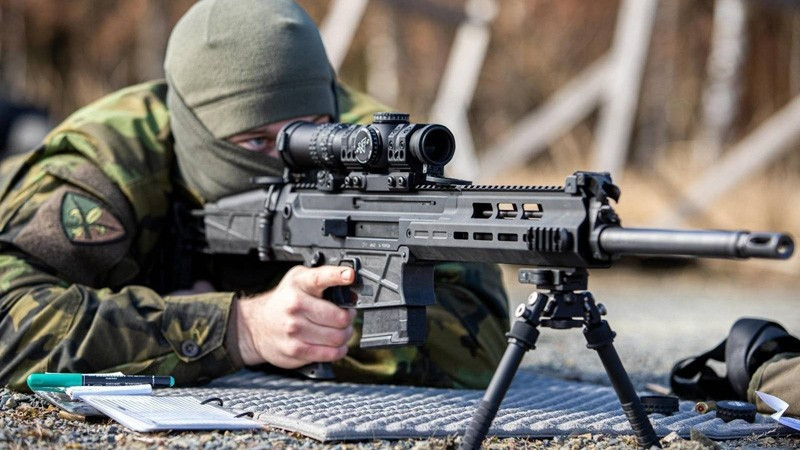
When we speak of arms sales, the photographs often show fighter jets, missile systems and other items of large scale military kit. We must not overlook that it is the millions of small weapons such as rifles, machine guns, grenades and so forth which cause so much damage to ordinary people. It is these weapons which kill and maim especially women and children.

Our continued support for the likes of Elbit Systems who make the drones which have killed many and made the lives of the people of Gaza such a misery, is shaming. Huge efforts have been made to stamp down on protests and hundreds of protestors have been arrested and gaoled.

There will be much glad-handing at Farnborough and no doubt a minister will speak about the contribution to our economy and jobs created. But we cannot escape the plain fact that this is an industry who’s products are designed to kill people. It could be argued that we need to defend ourselves and our partners in NATO for example. While that may be true, firms are busy supplying weapons to unstable, undemocratic and often brutal regimes who are using them to inflict misery on millions of people. Few questions are asked and the notion of a ‘robust regime’ is for the birds. The revolving door is alive and well – a process so steeped in corruption it is astonishing it has survived so long.

Sources: CAAT, SIPRI (Sweden), MoD, Barclays Bank, Salisbury CND

Picture: Dorset Eye


Government deceit concerning arms exports


Research reveals arms sold to Israel for re-export never were

April 2026

Selling arms carries with it the risk that they will be used not for legitimate purposes of defence but for illegal or offensive actions and the killing of innocent people. They can contribute to the tens of millions of displaced people and refugees who flee persecution or civil wars. As a member of the Security Council and a major exporter of arms, the UK has a particular responsibility to ensure arms go to where they are intended and do not end up in the hands of countries or parties engaged in civil wars or insurrection.

The UK is seriously falling down in this duty and arguably, knows it to be the case. It seems more concerned with boosting exports and less interested in where or with whom the weapons end up. In a previous post we commented on the weak controls on arms sales to the UAE which evidence strongly suggest end up in the hands of Sudanese rebels, the RSF. in this post we discuss evidence of arms sales to Israel being used on the Golan Heights illegally occupied by Israel since 1967.

Both are aspects of the same problem: weapons supposedly going to a friendly power being sent on to one which isn’t or are being misused. The evidence seems to suggest a lack of control or curiosity by government and civil servants. In both cases the weapons have caused a huge number of deaths and injury.

Re-export loophole

The Campaign Against the Arms Trade and Declassified UK have unearthed some shady practice concerning weapons sales to Israel. A £120 million transaction involving components was concluded for arms to go to Israel for onward export to Romania. Only they didn’t. The licences were for Watchkeeper drone (pictured) components by Elbit Systems, the Israeli arms company with plants in the UK. Elbit then quietly, they suggest, repeatedly issued a force majeure clause thus preventing the component leaving Israel. [The Declassified report also discusses the issue of waste which is outside our human rights brief].

CAAT and Declassified wrote to the Business and Trade sub-Committee on Economic Security and Export Controls asking for an investigation. Their work has revealed that the UK has zero ‘end-use monitoring’ allowing arms companies to divert weapons with near impunity. The government still claims it has ‘robust monitoring’ in place which seems utterly absurd and at variance with the evidence.

Following these investigations, Romania has threatened to cancel a $400m contract with Elbit Systems whereupon Elbit says it will begin delivery. Can they be trusted?

It seems clear that UK controls on sales are lax or almost non-existent. The lack of end-user monitoring and issuing open licences means arms end up almost anywhere. The desire to sustain arms sales and the UK’s arms industry seems to trump issues of humanity and the death and destruction that these weapons cause. Claims of robust controls are absurd and dishonest.


Mass death in Sudan


Terrible events continue to unfold in Sudan. Britain’s role in the supply of weapons

April 2026

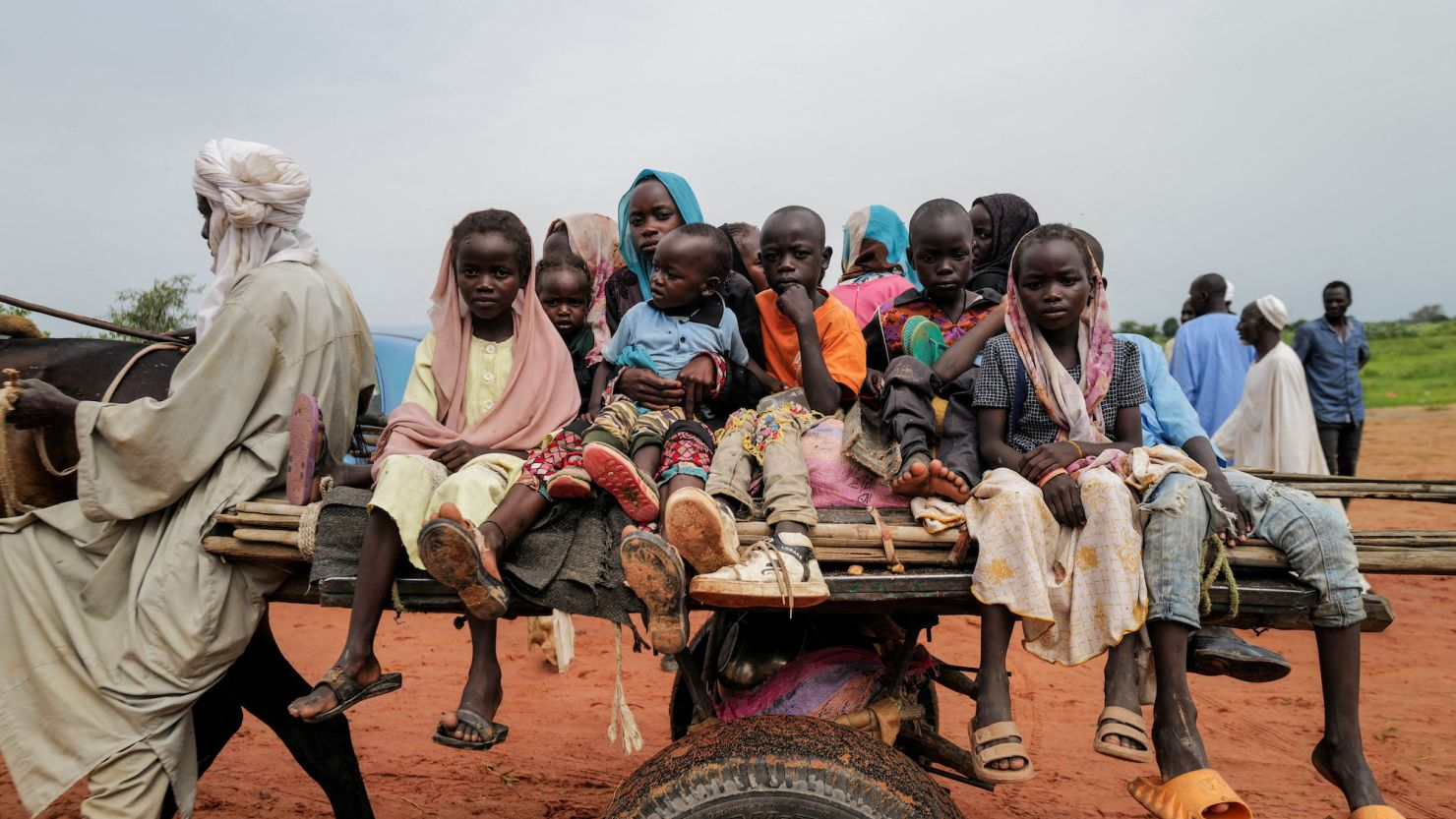
While the world is transfixed by the events in the Middle East following the bombing campaign initiated by the US and Israel, terrible misery is inflicted on millions caught up in a long-running war in Sudan. The numbers are huge: tens of thousands killed with mounds of bodies reported in some locations, 8 million displaced in a country with little infrastructure to cope, and an almost uncountable number of women and girts raped. Tens of millions are in need of humanitarian assistance.

The UN reports a tripling of gender based violence much of it unreported because of the stigma and shame attached to the victims. This disaster follows a 2 year siege of Al Fasher by Rapid Support Forces, a rebel group who are successors to the Janjaweed. There are many reports of men executed on the spot by RSF men.

Weapons

The question is how are the RSF getting these weapons to enable them to take on the Sudanese Armed Forces? The story is complex but considerable evidence points to the key supply hub of the UAE being the principle source. Weapons are then filtered through other countries and states including Libya and Uganda. The weapons themselves come from Russia, China, Yemen, Serbia and Türkiye. The supply route is described as ‘unimpeded’ by some observers.

The UK? As is usual with these conflicts, the UK is busy supplying weapons to the UAE despite knowing that some are destined for the RSF to be used for slaughter in the Sudan. CAAT reports that £825m was supplied in the period 2020 – 2024. £421m was suppled since the Sudan war began. They report that the UK government were well aware of the diversions taking place. The British government has been urged to suspend further arms sales to the UAE. This follows a report in the Telegraph.

A Channel 4 report supplies further details – or such details as can be found as the industry is shrouded in secrecy – and they do note that weapons sales to the UAE have diminished. The report ends with the familiar refrain from ministers:

“The UK government told us it has a very strong arms export licensing system in place, and it takes any allegations of diversion of exported weapons to another country very seriously. It said it had reviewed a large number of export licences, and found no evidence of diverted items being linked to existing licences.

“Speaking to Channel 4 News today [25 November 2025], Foreign Secretary Yvette Cooper said: “I have deliberately made the issues around Sudan one of the top priorities here in the Foreign Office because this is the worst humanitarian crisis of the twenty-first century.””

Open licences

The problem with Foreign Office statements is the issue of open licences. A rather less sanguine view of the question is provided in a Daily Telegraph article. The FCO is accused of failing to check the onward movement of weapons once they have landed in the UAE: a kind of out of sight out of mind.

The situation in Sudan is dreadful and there is a flow of refugees from the country some of whom end up at Calais. The UK is urged to limit arms sales to UAE and to ensure that such arms as are sold do not find their way to the RSF.

Sources: Amnesty, Guardian, Telegraph, Middle East Eye, CAAT, The Parliament Politics, Channel 4.


Recent posts:

Photo CNN

Latest arms trade news


Latest CAAT newsletter reveals UK role in killing around the world

January 2026

The Winter 2025 edition of the Campaign Against the Arms Trade (CAAT) news discusses the many issues to do with the supply of arms by the UK and others internationally. The government frequently claims to employ ‘robust’ measures to control the trade which has much potential to cause misery around the world, but the facts seem to suggest otherwise: CAAT reveals the top two purchasers of weapons are two nations which have abysmal human rights records. In the period 2020 – 2025, the top country for our weapons was Saudi Arabia at £6.4bn and second was Qatar at £4.1bn. Further down the list, is UAE at £825m.

All these countries do not permit opposition to exist, torture is widely practised, human rights lawyers and activists are routinely arrested, and women are not equal citizens. Foreign workers are treated dreadfully and the gleaming towers which feature in their promotional videos involve the deaths of many hundreds of indentured labourers.

Needless to say, Israel features and the UK governments continued support for arms sales despite the genocide taking place there. Interestingly, they report that Spain has ceased all arms sales and Germany likewise. It had been reported that the German Chancellor has reduced sales but CAAT report that no new exports have been approved.

The claim by the UK government that it has ‘robust’ controls is contradicted by the use of the secretive Open General Export Licences (OGEL). Looking at the list of restricted destinations [accessed 23 January] one finds that Israel is not listed. CAAT say that around half our exports to Israel are by this method.

Revolving door

The scandal of the revolving door continues. This concerns senior individuals in government or the forces taking up roles for arms companies following their retirement. There is a set of rules, which are largely sidestepped, to prevent abuse by people using their contacts to further the interests of the arms companies. These are set to be abolished this year and a new system introduced following a long list of scandals. We await to see how effective the new system will be. CAAT reveals the names of two new entrants to this hall of shame: Sir Simon Bollom, Head of the MOD’s Defence Equipment and Support, and Sir Mark Poffley formerly Deputy Chief of the Defence Staff. They will be joining Elbit Systems the Israeli arms firm which has facilities in the UK. They can use their influence to promote the interests of Elbit Systems. CAAT say there is no suggestion of impropriety.

A lengthy Private Eye report on this corruption, lists many names of politicians and others involved.

RAF flights over Gaza

The RAF continues to overfly GAZA and there are reports that the information gathered is being used to assist the Israeli IDF. The Ministry of Defence maintains that these flights were “solely to locate hostages,” yet the scale, timing and persistence of the flights raises questions as to how much they aided Israel’s military operations despite being conducted under the banner of humanitarian intent. It is not clear that any hostages were identified by the RAF.

The CAAT newsletter, together with previous newsletters and reports, paints a picture of the UK government which is more interested in supporting sales of weapons as part of its growth policy, than in the humanitarian effects these weapons have on the millions who suffer from their use. The high use of open licences means few meaningful controls are in place. They also proudly promote and support the Defence and Security Equipment International (DSEI) each year in London with the innocent sounding claim that it ‘promotes the UK’s defence ethos, agenda and leadership while encouraging opportunity and cooperation with our global allies‘. ​(Source, DSEI 2027 Home page).

The sums involved are large and defence (defense) firms are a key part in some local economies. Controls based on a sense of moral purpose and a proper exercise of end user certificates would curtail their activities and hence employment. It is a tail wagging a somewhat compliant dog.

Previous posts

Large crowd attends 100th vigil


Around 90 attend the 100th vigil

November 2025

It is astonishing to report that around 90 people attended the silent vigil in Salisbury’s market place. There have been a few occasions over the past 2 years when we have considered stopping, usually after a ceasefire or peace initiative when some might have believed that the killing was over. The recent ceasefire was no exception with a huge amount of fanfare from President Trump supported by a degree of pressure on Israel to stop. Well, it hasn’t lasted with over 100 killed on Tuesday and the creation of a semi-permanent line being established taking yet more territory from Gaza. Hamas have returned the remaining live hostages and Israel has released 250 prisoners and 1,700 ‘detainees’.

There are arguments about the remaining dead hostages with Hamas claiming that they are finding it difficult to locate them in the rubble. As Israel will not allow foreign journalists into Gaza, truth is hard to determine but it would seem probable that Hamas’s account is likely.

We put detainees in inverted commas because the hostages taken by Hamas on their violent raid on October 7th two years ago received, rightly, considerable coverage and few will be unaware of the numbers killed or taken. Media coverage has consistently used the word ‘hostage’ for those taken by Hamas. Those taken by Israel – in considerably larger numbers and who were subject to horrific treatment and torture – are referred to as ‘detainees’. British media has continued with this fiction since the conflict began.

The death toll in Gaza is nearly 69,000.

That such large numbers turn out on a Saturday evening is a testimony to the strongly held convictions about many aspects of the conflict. Whilst acknowledging the brutal nature of Hamas and the horrific attack on October 7th, the destruction of Gaza, the imposition of a food and medicine blockade and the wanton killing of women and children has profoundly shocked many. The British government’s continued support for Israel – directly and covertly – has also produced great anger.

UK arms sales reached a record level in June and the notion that the UK has ‘robust’ measures to control such sales is in tatters according to Campaign Against the Arms Trade. Exact details are impossible to determine as the licensing is vague and because of secrecy. The plain fact is that we continue to supply arms and overfly Gaza despite the appalling carnage that has taken place there.


One hundred vigils and no sign of the local MP Mr John Glen at any of them nor any mention in his weekly piece in the Salisbury Journal. Mr Glen is thought to be a member of Conservative Friends of Israel.

A short video is available here thanks to Peter Gloyns. We shall be back (sadly) on November 8th.

Palestinian state recognised


UK recognises the state of Palestine

September 2025

Today, 21 September, the UK government announces that it is to recognise the state of Palestine. It has joined the majority of countries around the world and joins Canada and Australia who did the same today. The decision has come after months of hesitation and was delayed until after the visit to the UK by President Trump who does not agree with it. To an extent, the government’s hand was forced. The disproportionate response to the horrific attack by Hamas on October 7th with the destruction of huge parts of Gaza, a death toll now over 65,000 many or whom are women and children and the deliberate introduction of siege conditions leading to more deaths by starvation, has left the government little option but to take action. Public opinion has also been a factor and the images of emaciated children have horrified many.

Britain’s decision is more than symbolic since the 1917 Balfour Declaration was instrumental in the creation of the state of Israel. The declaration was vague however since although it recognised that Arabs and Palestinians already lived there and said ‘nothing shall be done which may prejudice the civil and religious rights of existing non-Jewish communities in Palestine‘ it made no provision for protecting their claims or rights.

Some argue this is symbolic since with American support and ever increasing violence by settlers in the West Bank, the prospects of an actual state on the ground are receding. Some suggest that this means the conditions for statehood as set out in the 1933 Montevideo convention are not achievable. The Israeli government has rejected the decision saying ‘it categorically rejects the one-sided declaration of a Palestinian state by the UK and some other countries.’ It claims the decision does not promote peace. A spokesman for the British Board of Deputies interviewed on the BBC was critical of the decision and said it would cause deep dismay across the Jewish community in the UK. It says it is a reward for Hamas violence.

Implications

What are the implications? It will take some while for the implications to percolate through the claims and counter claims of the various political interests. It will enable the Palestinians to open an Embassy in the UK which will improve their status. It will enjoy diplomatic rights which will be significant. Up until recently, the Israelis have enjoyed almost uncritical support from governments but its continued violence in the West Bank and Gaza is seeing that support melt away.

It is unlikely to bring a peace deal any closer. Wars end because a kind of exhaustion sets in and the population goes weary of war-time restrictions and the loss of soldiers. This shows no sign of applying in Israel. Seemingly limitless weapons supplies from America and a huge military advantage in weapons and materiel mean any exhaustion is a long way off. IDF deaths are modest 464 [Jewish News Syndicate, 18 September]. The far right members of the Knesset such as Bezalel Smotrich see Gaza as a ‘property bonanza’ and claim the ‘demolition phase is over’.

Recognition will make it harder for the UK government to continue its support of Israel – open and covert – with RAF overflights for example, and ignore the plight of the Palestinians. It may even see some more robust reporting from the BBC whose lamentable performance has slowly begun to change.

Amnesty has said it is a ‘hollow gesture’ and without meaningful action to end the genocide, end violence in the West Bank and ending the Apartheid system against the Palestinian people. Real action needs to be taken to end arms sales and divest from companies which continue to sell arms to Israel. A report by CAAT sets out the details of arms export to Israel.

Arms trade news


Grim reading in Campaign Against the Arms Trade’s latest newsletter

May 2025

The CAAT Newsletter (Spring 2025, Issue 272) has details of what’s happening in the world of arms sales a world in which the UK is a big player. Our previous post discussed the continuing sale of arms to Israel which is subject to an Appeal Court hearing starting on 13th. Also we mentioned the role of the RAF in carrying out hundreds of flights over Gaza and quite what is being done with the information gleaned is not revealed.

Arms sales are important for several reasons. Weapons have an enormous capacity to do great harm in the wrong hands. Governments need to exert great control over licensing to ensure that arms do not fall into such hands. British governments are frequently to be heard claiming it exercises ‘robust’ controls. It is doubtful that this is the case and CAAT have often noted the considerable use of open licences which means little effective control exists.

The current Labour government has a policy of growth which seems to dominate thinking. As the court case will reveal, and papers have already revealed, this seems to trump considerations of human rights. CAAT News has the following examples:

  • The Defence Secretary has held meetings with counterparts in Saudi Arabia and Turkey to discuss opportunities for expanding military cooperation which is likely to involve arms sales. Both countries have woeful human rights records. Saudi has a full array of violations including public executions, use of torture, restrictions on women’s rights and repression of any opposition or free speech. Turkey has carried out baseless prosecutions against journalists, human rights defenders and opposition leaders, thousands of whom are in gaol.
  • Eurofighter sales – which the UK co-produces – are planned for Qatar and Turkey. The latter is involved in bombing Kurdish groups in its own country and Iraq. Qatar is another repressive Gulf state and is highly corrupt.
  • We have noted before the question of the Revolving Door where politicians, ministers, senior civil servants and military personnel leave their posts and head off for lucrative appointments/directorships/consultancies with arms firms. It is an open invitation for corruption and the ACOBA system seems powerless to stop it. The Aerospace, Defence and Security Group, (ADS) the trade body for the defence industry representing all of the major arms makers, holds an annual dinner at the Grosvenor House Hotel in which, in the words of CAAT ‘The dinner’s purpose is to introduce them to one another and allow them to schmooze and entertain their powerful friends from Parliament and the Civil Service‘ … These kinds of dinners are where relationships are formed and built and where the next round of arms deals are made, over fine food and wines.’
  • And it doesn’t end there. The Defence and Security Equipment International (DSEI) resumes in September at the ExCel Centre in London. This may be the largest such exhibition in the world. It is popular because the UK government invites representatives from a wide range of countries including those with appalling human rights records, some even on its own watch list. The thousands of attendees will be met by ‘a cast of compliant senior civil servants and politicians on hand to make sure things run smoothly’ (CAAT).
  • … or even there because the Farnborough International Exhibition and Conference Centre is to host Security and Policing run by the Home Office. Again, a range of countries with dreadful human rights are cordially invited to view the latest in surveillance, tear gas and ammunition. Journalists are banned. Britain seems happy to be host to regimes who use this equipment to repress and intimidate oppositions, journalists or human rights people.
Growth or rights?

The government seems keen to actively support these activities and to do all it can to promote arms and surveillance equipment to repressive regimes. It does this while piously claiming that:

This Government is fully committed to the protection of human rights both at home and abroad. We are committed to the international human rights framework and the important role that multilateral organisations like the Council of Europe play in upholding it. (Ministry of Justice, November 2024, ref: CP 1192)

It is hard to square the multi-level activities to promote arms sales and in the process currying favour with some of the world’s worst regimes, with their stated desire to be upholders of human rights and the wellbeing of those at the end of it all. While politicians, civil servants, military brass and ministers ‘schmooze’ with the arms manufacturers in expensive London hotels, it may be hard for them to empathise with those who have been bombed, starved, driven from their homes or incarcerated, tortured or executed for no reason. All facilitated by the weapons and equipment they so admire whilst quaffing the Bollinger. Is it growth above all else?

Sources include: CAAT, The Canary, Amnesty

High Court to decide on arms to Israel


The appeal is to be heard on May 13

May 2025

UPDATE: 8 May. The Foreign Secretary, David Lammy was interviewed on the PM programme yesterday evening [BBC Radio 4] and made the claim, twice, that he had decided to suspend arms sales to Israel. This was not true and regrettably, he was not challenged on either occasion by the interviewer, Evan Davies. Mr Lammy should be thankful that he had such an unchallenging interview, not just on this falsehood but on a range of other matters as well.

The appeal against the government’s decision to continue to supplying Israel with arms – and in particular, components for the F-35 – will be heard in the High Court starting on May 13th. The government is in something of a bind. The actions by Israel in Gaza are widely deplored and many contend amount to a war crime and genocide. But to offend the Americans by curtailing supplies of components for the F-35 used in Gaza is almost unthinkable for the government desperate as it is to curry favour with the Americans.

The action is being brought by Al Haq a human rights organisation based in Ramallah, and Global Legal Action Network consisting of lawyers and investigators which identifies and pursues legal actions against those involved in human rights violations. They have been joined by Amnesty, Oxfam GB and Human Rights Watch.

The latest edition of Campaign Against the Arms Trade (Issue 272, Spring 2025) discusses the issue of continuing military aid to Israel. It notes that ‘even our government has been forced to admit that is assesses Israel is not committed to complying with International Humanitarian Law‘. The case will be the biggest legal test of UK exports to Israel to date. They highlight an article in the Guardian by a former Foreign Office diplomat who described continued attempts by ministers to stonewall or play down evidence of what is happening in Gaza.

Over 52,000 have now been killed in the conflict. There are now reports of 57 deaths due to malnutrition mainly of children, the sick or the elderly. No aid is allowed in including food and necessary medical supplies. This has been the case now for over 60 days. Aid agencies stocks are depleted. A gloomy picture is painted on the situation in Haaretz.

We will follow the court case with great interest.

In addition to the supply of arms, there is the question of involvement of the RAF which has carried out over 250 overflights of Gaza (Declassified says 500). The chief of defence staff, Sir Tony Radakin was asked by a reporter from Declassified whether the RAF’s activities meant they were participating in Israel’s operations in Gaza? Answer came there none. They are not alone and the article reports that backbench MPs have sought answers without success. It is disturbing that the RAF are seemingly deeply involved in what is happening.

Blog at WordPress.com.

Up ↑