The latest death penalty report covering four weeks to mid August is attached thanks to group member Lesley for compiling it. Please remember China  remains the world’s biggest executioner but details are a state secret.
Death penalty report

Amnesty in Salisbury & South Wiltshire
Promoting human rights from Salisbury UK
The latest death penalty report covering four weeks to mid August is attached thanks to group member Lesley for compiling it. Please remember China remains the world’s biggest executioner but details are a state secret.
Only a few days ago, we highlighted the case of fourteen men who face imminent execution. Today we publish a further urgent action as Saudi is about to execute another 15 individuals. The families of the accused have just discovered that the higher court has upheld the lower court’s ruling without the prisoners themselves or their lawyers knowing about it.
They were accused of high treason together with other unrecognisable offences including ‘supporting protests’ and ‘spreading the Shi’a faith.’ They were held incommunicado for nearly three months and denied access to lawyers. Their families were threatened with arrest if they did not sign confessions.
The system in Saudi is contrary to all international norms and shows no sign of improvement. Yet despite this we continue to supply the country with arms on a huge scale.
The Foreign and Colonial Office has just published its 2o16 report on human rights and on Saudi it says the following (extract)
… We also remain deeply concerned about the application of the death penalty. Amnesty International reported that 153 people had been executed in 2016, compared to 158 people in 2015. This included the simultaneous execution of 47 people on 2 January 2016. On 5 January, the then FCO Minister for the Middle East and Africa, Tobias Ellwood, made a statement to Parliament reiterating our clear position on the death penalty. As the principle of the death penalty is enshrined in Saudi Arabia’s Sharia law, total abolition in the near future is unlikely. We continued to ensure that the Saudi authorities are aware of our strong opposition to the death penalty at the most senior levels.
… In 2017, we will continue to work to limit the application of the death penalty; and to ensure that, if it is applied, it is carried out in line with international minimum standards. We will continue to monitor closely cases which relate to freedom of expression and of religion or belief. We will also look for opportunities to promote greater participation by civil society and by women in Saudi public life. (p 49)
Fine words but somewhat undermined by continuing high level contact, visits by members of the Royal Family and government ministers keen to promote the continued sale of weapons.
If you do get time to write that would be appreciated. Alternatively, if you go to our Twitter page on this and click ‘like’ or ‘retweet’ that would help.
If you live in the Salisbury area and would like to join then the simplest thing is to come to one of our events and make yourself known. These can be found here, on our Twitter or Facebook pages – salisburyai.
July 2017
Hella Hultin is a Swedish surgeon who is working for MSF in Yemen. In the current issue, she writes of her experiences of working in Khameeer in northern Yemen.
We were about to do an appendectomy on a girl, but my Yemeni colleague thought I might be tired after the long journey. So I sat in the operating room to watch. Suddenly both our phones rang. The voice on the other end was stressed asking me to come straight to the emergency room.
“Help! How do I get there?” I thought, while I quickly put on a white coat and hurried out, so fast the cats outside scattered in all directions. “Emergency?” I asked the attendant outside, and was pointed in the right direction.
When I arrived, the Emergency room was full of people, both patients and relatives. Many patients were being rolled in on stretchers from the ambulance entrance. I was told there had been an airstrike and more injured would be arriving soon. The injured were all covered in dust and dirt, and almost all had wounds from shrapnel. Several had fractures of the arms or legs, and some had burns on their face and hands.
A desperate husband was running around the room screaming. When I managed to get the interpreter to translate what he was saying, it turned out he was missing two of his children who had been caught up in the strike. It’s not hard to imagine his anxiety.
We got to work and ended up operating all night. We transferred two of the most seriously injured to a larger hospital for specialist treatment that we were unable to provide.
Hours later I made it to bed. As I lay down, it felt like I’d been there for weeks.
We do not know from this account the nature of the airstrike but there is no suggestion that those injured are military personnel. Accounts from people working inside Yemen are scarce as the Saudi’s have blockaded the country. Only a few journalists have managed to get in and there was a radio report last week of BBC’s Radio 4 news (limited time podcast).
We cannot tie this account to a strike using British weapons but we are a major supplier of materiel to the regime. The High Court recently absolved the UK government in a case brought by the Campaign Against the Arms Trade.
Follow us on Twitter or Facebook, salisburyai. If you live in the Salisbury area and would like to join us you would be very welcome. Just keep and eye on this site or Facebook or twitter and come along to an event and make yourself known. It is free to join the local group.
The families of the men discovered that these men are at risk of execution a few days ago as a result of the secretive nature of the Saudi justice system. Due to the lack of information surrounding the judicial process in Saudi Arabia, it is only when the families of some of the men finally managed to get through to the Specialized Criminal Court (SCC), on 23 July by phone, that they learned the sentences of their relatives had been upheld. This means that the 14 men could be executed as soon as the King ratifies the sentences. The ratification process is secretive and could happen at any time. On 15 July, the 14 men were transferred to the capital Riyadh without prior notice.
As is quite common in that country, torture may have been used to extract confessions.
Full details are below and we hope readers will find time to write or email to the Saudi authorities.
In previous posts we have drawn attention to the British government’s role in supporting this regime despite its horrific human rights record and its activities in bombing and blockading the Yemen.
Follow us on Twitter and Facebook, salisburyai

When we turn to our sports pages, we expect to read about who is beating Britain at cricket, the latest in the long-running saga of the English football team or Andy Murray’s latest exploits on the tennis courts. We do not expect to read about human rights or to see quotes from organisations like Human Rights Watch or this one – Amnesty. They are to be found on the news pages surely.
But on Tuesday 18 July, the Guardian in the UK devoted nearly two whole pages in its sports section to the sponsorship by Bahrain of a range of sporting activities and sportsmen in an effort to create a more favourable image for itself.
And it needs to. The country has a quite appalling record of human rights abuses. These include torture, in particular beatings and the use of electric shocks. Freedom of assembly has been severely restricted and peaceful protests have been violently put down. Nabeel Rajaab – a human rights defender is in prison.
Alan Hogarth, head of policy and government affairs for Amnesty said:
It seems pretty clear that the Bahraini authorities have stepped up efforts to associate the country with major sporting events as glitzy cover for an ever-worsening human rights crackdown. For the most part, Bahrain’s harnessing of the glamour and prestige of sport has helped deflect attention from the arrests of peaceful critics, reports of tortured detainees, unfair trials and death sentences.
But you would not know this from the sports pages where all is glamour and excitement. Pictured is the Olympic gold winner

Alistair Brownlee – featured in the Guardian article – promoting a Bahrain sponsored event. Other sports include F1 motor racing, football with FIFA siting its conference in the country and cycling. Spokesmen for the various organisations involved in laundering Bahrain’s image claim that they are not competent authorities to assess the human rights violations taking place there. There are also claims that the sporting activities will help overcome the problems. This might have a grain of truth if during coverage, human rights issued were raised by commentators. Of that there has been no sign.

Their promotional activities are not limited to sport as members of the UK’s Royal family have been pressed into service. Her majesty the Queen herself welcomed King Hamad to the Royal Windsor horse show and there are pictures of Prince Charles and Prince Andrew with various members of the Bahraini royal family.
We do not have to look far for reasons for this rolling out of the red carpet for members of this royal family as it is our old friend arms sales which are behind it. It led Theresa May to visit the country last year. As CAAT reports we are keen to foster arms sales there including Typhoon jets and we have established a naval base at Mina Salman. Defence clearly trumps human rights considerations.
At present, the sportsmen and women can collect their fees and promotional monies free in the knowledge that the majority of those reading of their sporting achievements probably do not concern themselves too much with goes on in the countries like Bahrain and how they treat their own citizens. And only rarely do the stories touch on these matters since sport seems to exist in a kind of box as far the rest of coverage is concerned. Sport, money and politics are now closely entwined. Sports stars enjoy huge acclaim and some have a large fan base. They have huge influence over the young who spend large sums on their merchandise. This is a big responsibility.
But is it too much to ask that sporting people should have a conscience and should be concerned that their names and images are being used to hide serious abuses taking place? Where a regime such as Bahrain is using sport to whitewash its reputation then sporting people should be aware of the role they are playing and the harm they are doing. Should they not be concerned that they are being used by these regimes?
An Amnesty post on this topic
Follow us on Twitter and Facebook – @amnestyai
If you live in the Salisbury area and are interested in joining us we would be pleased to see you. The best thing is to keep an eye on our events which are listed at the end of our minutes and make yourself known at one of them. Or keep an eye on Twitter or Facebook.


The trial of Reggie Clemons in Missouri has been delayed yet again until January. This has come about because the defense has claimed that Reggie’s phone calls and visitor logs have been accessed by the Attorney General’s office since March 2016. They claim that at least three of these calls to his lawyers and may have revealed names of expert witnesses to called to testify at his trial. The Attorney General office deny these claims and said that Clemons had waived his attorney client privilege.
He has been in prison now for 22 years and the trial had been set for August.
The group sent a card to Reggie in anticipation of the trial taking place in August.
Here is a factsheet produced by Amnesty USA giving background to this disturbing case.
Sources: St Louis Dispatch and Amnesty USA

It is perhaps a sign of the times that Theresa May, the UK prime minister, should find herself quoted in the opening paragraph of a speech by the UN Commissioner Zeid Ra’ad Al Hussein. Not in a flattering way but quoting her remarks that human rights should be overturned if the ‘got in the way’ of the fight against terrorism. These remarks were made during the election campaign which did not go the way intended by Mrs May. They followed a terrorist attack in London.
Whatever the background, Al Hussein thinks the remarks were ‘highly regrettable’ and are a gift to the many authoritarian

governments around the world. It seems that any idea that the UK is some kind of a beacon for civilised behaviour in an increasingly troubled world has all but gone. The desire to promote arms now matters more than the victims of their use for example in Yemen. Despite the appalling behaviour of the Chinese government, most recently with the death of Liu Xiaobo, our response is the minimum necessary: we are more interested in trade than decent behaviour.
It is disappointing to see the prime minister of the UK being mentioned in this way because whatever her faults, there is no comparison between the behaviour of her government and that say, of Russia, where journalists and opposition politicians are gunned down and which has been described as a mafia state. The activities of governments in the Gulf also leave a great deal to be desired. There are many other countries in the world where autocratic regimes mistreat their citizens, use torture routinely, violently put down peaceful protests and deny freedom of expression.
The remarks were perhaps made more in sorrow reflecting the fact that it was the UK government after the war which was one of those who were active in promoting the role of international law and human rights. Today, Al Hussein notes in his speech, for some politicians see human rights as an ‘irritating check on expediency.’ Some are indifferent to the effects of austerity on their own citizens.
A question he asks are ‘what rights does the prime minister mean?’ a question we asked of our Salisbury MP Mr Glen. It is seldom if ever clear what it is they want to see done away with. This might arise because they are responding to tabloid media pressure which maintains an unceasing campaign against the European Court, the European Convention of Human Rights and the Human Rights Act. A recent example is from the Daily Mail claiming that the Act does help terrorists. Other newspapers run similar stories presenting a drip, drip of negative material against the act. Throw in a hatred of anything European and it is small wonder politicians follow the line. As Al Hussein expresses it:
So why did Prime Minister May said this? At least part of the answer may lie in market conditions. Human Rights law has long been ridiculed by an influential tabloid press here in the UK, feeding with relish on what it paints as the absurd findings of the European Court of Human Rights in Strasbourg. This viewpoint has some resonance with a slice of the public unaware of the importance of international human rights law – often seen by far too many people as too removed from everyday life, very continental, too lawyerly, too activist, ultimately too weird. How can the Court consider prisoners’ voting rights, and other supposedly frivolous claims, when set against the suffering of victims? The bastards deserve punishment, full stop! This may be understandable, at some emotional level. However, one should also acknowledge that British ink, reflecting an enormously rich legal tradition, is found throughout the European Convention on Human Rights.
Although some members of the government seek to reduce the influence of human rights in our society, not all do and the organisation Bright Blue, which describes itself as an independent think tank and pressure group for liberal conservatism, has recently published a report arguing that the Conservatives should make Britain the ‘home of human rights.’ Clearly some fundamental attitudes will have to change if that ambition is to be realised. This report is also well worth a read.
Unless countries like Britain and the USA are willing to provide moral leadership then a further deterioration in human rights around the world is to be expected.

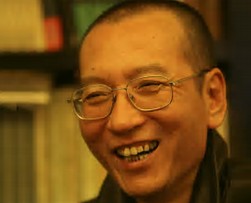
On Thursday, the Chinese dissident, Liu Xiaobo died of liver cancer. He had been in prison since 2008 mainly because he argued for greater democracy in China and was convicted of ‘inciting subversion’. He was awarded the Nobel Peace Prize in 2010 which infuriated the Chinese government and he was not permitted to go to Norway to receive it. He was only the second laureate to have been in prison at the time of the award. Once the cancer was diagnosed he was released to a hospital where he was still under heavy guard. According to Human Rights Watch, even as his illness worsened the Chinese government continued to isolate him and denied him freely choosing his medical treatment.
On Saturday he was hastily cremated and his ashes scattered at sea almost certainly to prevent a grave on land becoming a centre for protest. Activists were reported by the South China Morning Post to be ‘outraged at the humiliating arrangements’. His second wife, Liu Xia, is under house arrest.
Liu was a supporter of Charter 08 which argued for a fundamental change in the one party state, a whole series of reforms that would result in a separation of powers, a new constitution and legislative democracy. It was suppressed by the Chinese government.
A spokesman for Amnesty International said:
This is a sad day for human rights, but Liu Xiaobo leaves behind a powerful legacy to inspire others to continue the struggle for human rights in China and around the world
Boris Johnson, the Foreign Secretary, made the following lukewarm statement:
I am deeply saddened to hear that Liu Xiaobo has passed away. He was a Nobel Peace Prize Laureate and a lifelong campaigner for democracy, human rights and peace. His death is a huge loss and our hearts go out to his wife Liu Xia, his family, and his many friends and supporters.
Liu Xiaobo should have been allowed to choose his own medical treatment overseas, which the Chinese authorities repeatedly denied him. This was wrong and I now urge them to lift all restrictions on his widow, Liu Xia. 13 July 2017
This from a man not afraid to be outspoken at any given moment. Focusing on the restricted nature of his medical treatment is the least of the crimes the Chinese government has committed. ‘Has passed away’ gives the impression of a natural death not one hastened by harsh prison conditions, poor medical treatment and confining him right to the last. This is but the latest example of our government failing to stand up to breaches of human rights internationally. This is only set to get worse as the need to augment reduced European markets in the post Brexit world.
Under China’s president, Xi Jinping, there has been a major crackdown on any form of dissent. Restrictions on press freedom are well known and access to the internet is tightly restricted. Booksellers in Hong Kong stocking books detailing the corruption of the Politburo elite have been abducted. Details of this corruption among what are called the ‘Princelings’ has been revealed in the Panama Papers*. President Xi’s brother in law is implicated, along with other senior party people, in squirreling away billions in tax havens using the services of the Panamanian law firm Mossack Fonseca.
Any discussion of democracy is taboo in China as it is contrary to one of the Four Cardinal Principles one of which is to ‘uphold the people’s democratic dictatorship.’ One can see straight away that ideas of freedom of the press and ideas of running the country on more democratic lines are not going to get far with the government.
The future
China has pursued a policy of economic growth which so far has been successful and has led to the country being second only to the USA. It is expanding militarily most notably in creating false islands in the South China Sea. It is present all around the world where natural resources are to be found. The trick has been to maintain economic growth in return for maintaining its hold on political power. How long this growth can be maintained is open to question.
On the other hand, China wants to be more of key player in the world and is to be seen at G7 and G20 meetings as well as having a seat on the UN Security Council. As it grows in economic and military power, it seeks political recognition as well. This is difficult to achieve if at home it denies basic freedoms and human rights to its citizens; executes more than all the other countries in the world put together; locks up its dissidents; denies access to the internet and treats the people of Tibet appallingly. Using its power it is able to suppress criticism – cancelling contracts with Norway for example after Liu was awarded the Nobel prize – and tells other countries not to interfere in its internal affairs.
Fundamentally Chinese social policy is not progressing indeed, under Xi Jinping, it has regressed. So long as they can maintain their tight grip on power and the levers of power, the CPC will continue. But the lesson of history is that when a crack appears, as with a sheet of ice, it spreads rapidly and unpredictably.
*The Panama Papers, 2017, Bastian Obermayer and Frederik Obermaier, Oneworld, London (3rd edition). Details tax evasion by criminals, dictators and politicians – not just the Chinese – as revealed by a release of papers from Mossack Fonseca
Sources: Human Rights Watch; New York times; The Guardian; Amnesty International; South China Morning Post
July 2017
Minutes of our July meeting are available thanks to group member Lesley for compiling them. We discussed the death penalty report (see the full version here); North Korea; the forthcoming film evening; the summer BBQ and plans for a Celebration of Human Rights event in 2018 in partnership with the Cathedral. This has come about because of the governments desire to take us out of the European Court of Justice and abolish the Human Rights Act. Although it is doubtful if either will actually come about, it does reveal a mindset in the government which is very worrying for the future of human rights in the UK. It also goes hand in hand with our increasing deals with dubious regimes abroad who are serial human rights offenders such as Saudi Arabia.
If you live in the Salisbury area and would like to join us, then the best thing is to come to one of our events and make yourself known. At the end of the minutes you will see a list of planned events or you can keep an eye on Twitter and Facebook.
The latest death penalty report for June/July is available thanks to group member Lesley for the hard work in compiling it.
If you would like to join the local group – because for example you have strong convictions against the use of the death penalty – you would be most welcome. Or you can just write using one of the urgent actions in the report above.
China is the world’s leading executioner.
Follow us on Twitter and Facebook: salisburyai


