Ice and Fire performed the Asylum Monologues at Sarum College in the Close on Monday starting at 7:30. This was a FREE event. A report of the event is on a later blog.
Death penalty report
September 2017
Latest death penalty report available
The latest report is now available thanks to group member Lesley for compiling it. Note that China remains the world’s largest execution but details are a state secret.
Arms exhibition starts today

The DSEI arms fair starts in London
This bi-annual event held in London receives a considerable amount of opposition and is a place for protest against the arms trade. The  description of the event by the organisers is blandness itself:
World leading event that brings together the global defence and security sectors to innovate and share knowledge.
It paints a picture of people coming together in some kind of seminar format to discuss defence issues as though it is a think-tank. The reality is a little different as it is a place where all kinds of weapons manufacturers can display and secure deals to a wide range of countries who come to visit. If it is as benign as the description implies one has to ask why organisations like Amnesty are denied access? The purpose is to sell arms and to quote the organising company:
It’s a model that works well in the Middle East…There’s a lot of money being spent here in the UAE on homeland security technology, so it’s a good market in which to roll out our brand
Among the invitees are countries with highly dubious and questionable human rights records. These include according to the guest list: Brunei, Egypt, Bahrain, Saudi Arabia and UAE. If we look at Bahrain in particular, a recent Amnesty report on the country published earlier this year concluded, inter alia:
Since June 2016, the Bahraini authorities have dramatically stepped up their crackdown on dissent. As a result, by June 2017, Bahrain’s formerly thriving civil society had found itself reduced to a few lone voices brave enough to speak out. The majority of peaceful critics, whether they are human rights defenders or political activists, now feel the risk of doing so has become too high. Over the course of a year, the authorities increasingly resorted to a wide range of repressive tactics including arrest, harassment, threats, prosecution and imprisonment to silence peaceful critics. Amnesty International’s research concludes that the security forces have even resorted to torturing or otherwise ill-treating human rights defenders, both men and women, a practice that has not been prevalent in Bahrain since the height of the crackdown that followed the 2011 uprising.
The report went onto to describe how Bahrain has backtracked on reform and noted that in the period June 2016 to June 2017, 169 critics or relatives have been arrested, summonsed, interrogated, prosecuted, imprisoned, banned from travel or threatened. Freedom of expression is increasingly criminalised and the opposition party has in effect been dismantled. The report was compiled after a large number of interviews were carried out including with 52 victims, 58 journalists, lawyers and others, and the investigation of 210 cases.
The British government has worked hard to promote our interests with Bahrain and a Daily Mail article in 2016 detailed the many links from the Queen down through the rest of the Royal Family. Theresa May visited recently.
As far as the Arms fair DSEI itself is concerned, Andrew Smith of the Campaign Against the Arms Trade which is helping to coordinate protests said:
DSEI will bring many of the world’s most appalling regimes together with the biggest arms companies. Right now UK fighter jets and bombs are playing a central role in the destruction of Yemen; what will be the next atrocity they are used in? War, repression and injustice are fuelled by events like DSEI. It’s time to shut it down for good
 DSEI was formerly part of the UK Trade and Industry Department but has now been moved to the newly formed Department for International Trade the minister of which is Liam Fox.
In an interview on the BBC today (11 September) Jeremy Corbyn, the leader of the opposition, said “[the UK] sells too many arms to countries which abuse human rights.”
The guest list shows several firms with a Salisbury link who are exhibiting at this fair. They include Babcock, Chemring’s, QinetiQ and Cubic.
The government has got itself into something of a fix over the question of arms sales. Whilst claiming to have a strict code and robust procedures, the sale of arms to questionable regimes has increased. Thousands of jobs now depend on this industry and with future problems likely to arise connected with our withdrawal from the EU, from an economic viewpoint we can ill afford to reduce sales of weapons. It is thus on a treadmill requiring it to support the sale of weapons to a range of unsavoury regimes who in turn use these weapons to intimidate their own people or to cause suffering of neighbouring countries such as the bombing of Yemen by the Saudis. It is also important to bear in mind that it is not just weapons that are involved but also security equipment. Autocratic regimes are keen to keep tabs on their citizens and need all the techniques of surveillance to do so. This kind of equipment, although not lethal of itself, does enable individuals to be monitored, watched and harassed.
The position is indefensible and some of the arguments echo those used by the slave trade in the nineteenth century where large numbers of jobs were involved in its continuation.
If you are keen to join us then come to the next event we are holding on 18 September and make yourself known.
Burma
Fall from grace
The events in Burma have been particularly shocking and the plight of the Rohingya people particularly dire. Thousands have fled their homes into neighbouring Bangladesh and many thousands have been shot, drowned, tortured, raped or burned alive in their homes as the Burmese army seems to be conducting a programme of what amounts to a crime against humanity. The violence appears to be indiscriminate and has been condemned by the UN and human rights agencies. Amnesty has published details giving background to the conflict.
Rakhine state is on the precipice of a humanitarian disaster. Nothing can justify denying life-saving aid to desperate people. By blocking access for humanitarian organisations, Myanmar’s authorities have put tens of thousands of people at risk and shown a callous disregard for human life. Tirana Hassan, Amnesty International’s Director for Crisis Response.
A representative from Crisis Response said:
The Myanmar authorities are obliged under international law to treat all those living in Rakhine State, including the Rohingya, without discrimination. Instead they have chosen to treat a whole population as an enemy which may be attacked, killed, deprived of homes and uprooted indiscriminately. The Daily Star (5 September)
Of particular sadness is the role of the Nobel Peace laureate Aung San Suu Kyi who has been silent up to now while these appalling events have taken place and is now claiming that there is a ‘huge iceberg of misinformation’ and that the army are responding to terrorist attacks. There have been some attacks but the scale and ferocity of the army response is far beyond what is reasonable.
Many of us remember the years we followed the imprisonment and house arrest of Aung San Suu Kyi and were cheered when she was released. Her peace prize was well merited but there are calls now that it should be withdrawn. Many Amnesty members would have written letters urging her release. It is heartbreaking to see her at the head of the government making unsupported claims about what is going on in Rakhine State and not speaking out about the terrible actions against the Rohingya.
As ever the British government seems less than energetic in its approach to this crisis in a former colony.
For far too long, British policy toward Burma has deferred heavily to the views of its de facto leader, Aung San Suu Kyi. UK Foreign Secretary Boris Johnson was at it again at the weekend, suggesting she use her “remarkable qualities” to unite her country and stop the violence in Burma’s western Rakhine State, which, he said, afflicts “both Muslims and other communities.” This after a fortnight in which hundreds of Rohingya Muslims have been reported killed, their homes burnt to the ground, and more than 120,000 desperate people have fled for their lives to neighbouring Bangladesh to escape the vicious brutality of the Burmese security forces. This followed a coordinated attack by Rohingya militants on two dozen police and border posts in late August. Security force operations in response to the attacks last year were described by the United Nations as very likely crimes against humanity. Human Rights Watch (6 September)
The British government could do a lot more including pressing the Burmese to make the Rohingya citizens of the country. They should also press them to allow aid agencies unrestricted access. Religious freedom should be allowed.
The Burmese government is hoping to persuade the Russians and Chinese to frustrate any sanctions by the UN and Aung San Suu Kyi was quoted to be in conversation with President Erdogan of Turkey – hardly an exemplar of good behaviour.
If you live in the Salisbury area and would like to join us then a good time would be on Monday 18th at Sarum College where Ice and Fire are performing free.
Urgent Action: Iran

Urgent action concerning a man about to be executed in Iran
A man, Mohammad ali Taheri has been sentenced to death for ‘spreading corruption on earth’. This is the second time he

has been so convicted having been cleared of the offence by a previous court. This is in breach of the double jeopardy rules which Iran has signed up to. Iran is one of the worlds major executioners of its citizens after China.
If you can find time to write or email that would be appreciated.
Read our latest monthly death penalty report.
This Evil Thing

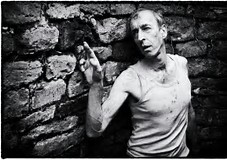
Play about conscientious objectors at the Playhouse
This Evil Thing is the title of a play by Michael Mears (pictured) which will be performed at Salisbury Playhouse between 18th – 21st October. The play received four star reviews at the Edinburgh Festival. Amnesty International judges described it as ‘Magnificent storytelling’ and longlisted it for their Freedom of Expression award at the Festival. The play tells the story of conscientious objectors during the First World War. The Link magazine said:
Mears himself is exhilarating to watch. He hares across the stage, convincingly being about four different men at once. And the play is rooted in Mears’ own life. Photos of his father and grandfather are on the sideboard, both of whom served in the World Wars. This is a rich and personal modernisation of a lesser-told tale.
Performances will be from Wednesday 18th to Saturday 21st at 7:30 with a matinee at 2:45 on Thursday. There will be a talkback after the performances.
Booking details are at the Salisbury Playhouse website.
If you are interested in human rights issues and would like to join us you would be very welcome. The best thing is to keep an eye on this site or on Twitter or Facebook (salisburyai) and make yourself known to one of us. It is free to join the local group.
Yemen
Article in the Guardian today (2 September) on Yemen. Unfortunately, the newspaper closed the comments section almost as soon as it was published.
https://www.theguardian.com/commentisfree/2017/sep/01/disaster-texas-america-britain-yemen
Asylum Monologues
Ice and Fire to perform in Salisbury
The performing group Ice and Fire are to perform in Salisbury at Sarum College on 18 September starting at 7:30. The performance will consist of readings from testimonies of refugees, human rights lawyers and home office workers, to show how the system of asylum seeking and acquiring refugee status works in reality in the UK. It forms part of Amnesty’s continuing campaign to highlight the plight of refugees and how they are treated here.
There is considerable hostility to refugees and asylum seekers with many stories in our tabloid newspapers of such people abusing the system. People are led to believe that hoards are arriving here and living in hotels by the seaside and costing the country huge sums of money. The reality is the UK has only 1% of the world’s refugees and has received around 3% of asylum claims made in the EU.
The event is FREE but there will be a parting collection.
A review by The Cambridge Student of an earlier performance.
If you live in the Salisbury area and are interested in joining us you would be very welcome. If you can come to this event, several group members will be about so just make yourself known. It is free to join the local group. Details of other activities will be on this site and on Facebook and Twitter – salisburyai.
National Crime Agency breaks law
NCA admits not seeking Ministerial consent before supplying information to the Thai police
In 2014 there two British backpackers, Hannah Witheridge and David Miller, were murdered on a beach in Thailand and for days the press was full of the story. It was reported at the time that the Thai police were extremely slow to react and allowed crucial evidence to be lost and for likely suspects to escape. It was further alleged that the Thai authorities were reluctant to take the matter sufficiently seriously because of the possible damage to their tourist trade.
Three years later the case has again hit the headlines as it now appears that the National Crime Agency has been accused of supplying information to the Thai Police. The significance is that two Burmese individuals, Zaw Lin and Wai Pho have been convicted of the murders and are likely to face execution by lethal injection. The High Court in the UK found against the NCA for providing information which contributed to the likelihood of execution. The UK government opposes capital punishment and there are strict rules governing the provision of information in these cases. Ministerial authority is needed and in this case the NCA did not get this.
Doubts have been raised about the convictions as there is evidence of corruption, incompetence and the use of fabricated evidence used to secure a conviction. The use of torture is also alleged.
A spokesman for Reprieve said:
It is bad enough that the National Crime Agency secretly handed over evidence to help secure death sentences in a country known for unfair trials and torture. But they now admit they did this illegally, without any proper thought that their actions could contribute to a grave miscarriage of justice with two men now facing execution. UK cooperation with foreign police and security forces should be open and transparent. Government agencies shouldn’t have to be dragged through the courts for the public to know what is being done with their money.
Sources: The News; Reprieve; The Guardian; Press Association
If you live in the Salisbury area and are interested in campaigning on human rights issues we would be glad to welcome. It is free to join the local group. Keep and eye on this site, on Twitter or Facebook for events and come along and make yourself known.
Amnesty success

650 prisoners released last year
It sometimes seems like a forlorn battle being an Amnesty supporter. The tide of executions, arrests for peacefully protesting, torture and other state crimes seems inexorable. Despite countries signing solemn pledges in the UN, persecution by states of their own people and minorities continues on a grand scale around the world.
But a light sometimes does shine and in a recent report, Amnesty claims that 650 prisoners were released last year due in part to our

campaigning. Albert Woodfox was released from 44 years in solitary confinement in Louisiana, USA and he said:
Even when it feels like you are not going to win, when you grow disillusioned with politics which put geed before people’s human rights. when you don’t think you can make a difference – please remember that if you had not taken a stand and joined hundreds of thousands of activist around the world, I may not have been able to write this to you today.


