#FCO #armssales and #humanrights


UPDATE: 8 September

Letter in today’s Guardian (8 September):

The government would do much better to raid the export credit guarantee scheme [rather than the overseas aid budget] and other subsidies to the arms trade. This would raise funds for refugee provision and reduce arms sales to Middle Eastern states, impacting directly on the latter’s ability to wage war on their and other populations in the region.

Benjamin Selwyn, Director, Centre for Global Political Economy, University of Sussex

Saudi Arabia

Last month, we wrote to John Glen MP asking that his government take a more robust line with the Saudi Arabian government in view of the large increase in executions and floggings, many of which are carried out in public.ย  We noted that the French president Francois Holland had spoken publicly against the practice despite large arms sales in the offing.ย  The British government has said it prefers to lobby in private and to pursue a policy of quiet diplomacy.ย  By contrast, the Swedish government has ended arms exports to the country.ย  As policies go, it is one which is conspicuous by its failure to achieve anything at all and in other contexts would be declared ‘not fit for purpose’.

No to the death penaltyA recently published report by Amnesty shows that Saudi Arabia is one the top three world executioners after China (which executes thousands but the statistics are a state secret) and Iran.ย  Between January 1985 and June 2015, 2,208 were put to death.ย  102 have been executed in the first 6 months of 2015.ย  Crimes include ‘witchcraft,’ ‘sorcery’ and ‘apostasy’.ย ย  In some cases relatives are often not notified of the execution.

The FCO’s July in-year update on Saudi says:

We remain concerned about the continued use of the death penalty in Saudi Arabia, including the fact that trials and executions do not meet the minimum standards which the EU advocates in countries where the death penalty is applied. We regularly raise the issue with the Saudi authorities, bilaterally and through the EU, and will continue to do so. There has been a significant rise in the number of executions this year. While no official figures are published, according to statistics reported by NGOs over 100 people have been executed since 1 January. NGOs report that the majority of executions were for murder and drug-related offences

In response to our letter to Mr Glen, we received aย letter from a FCO minister, Mr Tobias Ellwood, which assured us that the Foreign Office was doing all it could to end the practice and that ‘the abolition of the death penalty is a human rights priority for the UK’.ย  The HMG Strategy for Abolition of the Death Penalty (2010 – 2015) states:

Promoting human rights and democracy is a priority for the UK.ย  It is a long standing policy of the UK to oppose the death penalty in all circumstances as a matter of principle (p2)

Within days of receiving this letter however, we discovered thatย it is no longer an explicit FCO policy.ย  The new policy has dropped any reference toย abolishing the death penalty. ย We also noted that Private Eye had a piece on the very same Mr Ellwood who had been a guest of the Saudi Governmentย on a ยฃ6,000 fact-finding visit sponsored by a defence forum.

It’s hard not to come to the conclusion that defence sales matter far more than the dreadful human rights situation in countries like Saudi Arabia which –ย apart from public floggings and beheadings –ย tortures its citizens and has severe restrictions on the lives of its women.ย  Saudi Arabia is the leading destination for UK arms sales amounting to ยฃ1.6bn in 2014.

Nicholas Gilby of the Campaign Against the Arms Trade (CAAT) reported on the high level of corruption in this industry:

This paper examines the Government’s approach to corruption within the UK arms industry and shows it has very dirty hands …

… civil servants told to ‘look the other way’ and not ask awkward questions.

Chemring, which has one of its factories just outside Salisbury, had sales to Saudi Arabia of ยฃ47.8m last year and ยฃ97.6m in 2013 (source: annual report).

UK governments have invested a lot into the arms trade.ย  Support includes marketing support via DESO (Defence Exports Services Organisation); export credit guarantees; around ยฃ26m in R&D costs and something called ‘launch customer support’ which is buying weapons from a UK supplier even thoughย overseas suppliers are cheaper.ย ย There are also missions by ministers and members of the Royal family to foreign countries like Saudi.

Could it be thatย the Foreign Office wasย embarrassed by such an explicit policy in the face of aย rising tide of executions in countries such as Saudi Arabia; Pakistan andย India,ย all countries whereย arms sales are important?

Successive governments have claimed a devotion to human rights and a commitment to end the death penalty.ย  The reality it seems is that arms sales trump this commitment andย in dropping the express statement of policy,ย the FCO is at least being honest.

Following the change ofย wording by the FCO which seemed to be in contradiction to the assurances given to us by the minister and Mr Glen, we wrote again asking why the policy had changed.ย  Weย await a reply…

CAAT report

Scrapping the Human Rights Act HRA


The government is proposing to issue a public consultation on scrapping the Human Rights Act sometime in the autumn.

abolish hra

RightsInfo extends its range


rightsinfo-logoRights Info has only been going four months but has already begun to establish itself in the human rights world.ย  It is dedicated to providing accurate information on the subject of human rights. This is extremely importantย now because the present government would like to repeal the Human Rights Act (HRA) and replace it with their own Human Rightsย and Responsibilities act (or whatever it may be called).ย  This has been promised for several years and we await detailsย in due course.

The government is egged on by a media which regularly produces inaccurateย or exaggerated stories of the workings of theย act, often tyingย it into the European Convention on Human Rights, presenting it as an unwarranted intrusionย into our legal processes.ย  Theย fact that it was British and French lawyers who prepared the ECHR –ย at Churchill’s behest –ย based on basic principles of justice established over many years, seems to have been forgotten.ย  As we have noted before, the act is of great benefit to ordinary citizens in the UK who use it to secure justice from authorities.

Rights Info has been providing a source of information to counter the tide of misinformation from newspapers and some politicians. They have just launchedย a similar exercise to provide information about the European Court which also gets a bad press.ย  It is called The European Court of Human Rights Uncovered.ย  One of the examples it gives concerns the total number of applications and judgements.ย  There have been 22,781 applications against the UK.ย  Number of judgements is just 513 of which the court found at least one violation to be 301.ย  301 over 22,781 is 1.32%.ย  The Sun newspaper reports this as ‘UK loses 60% of cases’.

Terrorism cases get a lot of publicity with the impression given that they are winning cases all over the place.ย  In 40 years (1975 – 2015) out of 297 cases, just 14 were terrorists.ย  203 were ‘other people’ that is ordinary citizens in their fights against authorities of one kind or another.

Over the coming months we are likely to see an increase in bad news stories about the HRA and the European Court as the government seeks to soften up the public ahead of its plans to abolish it.ย  It is useful to know that there is a source of accurate information to go to.

#Deathpenalty report for August


No to the death penaltyBelow is the death penalty report for August thanks to Lesley for its preparation.ย  It links in part to other items on this blog and in particular the decision by the UK’s Foreign Office to drop explicit reference to the abolition of the death penalty from its list of policies.

Report (pdf)

#Iran urgent action: juvenile offender to be executed


No to the death penaltyWe attach an urgent action concerning Iran, which along with Pakistan, China and Saudi Arabia are the world’s leading executioners of its citizens.ย  This concerns a juvenile who was 15 at the time of the alleged crime.ย  He was charged with the murder of a friend but was denied access to a lawyer at the investigation stage and he alleges he was tortured in custody.

His execution has been delayed to 10 August so this case is urgent.ย  It is believed that an astonishing 72 juveniles have been executed between 2005 and 2014 and around 160 are currently on death row.

Please write if you have time.

Urgent Action: Iran

Foreign Office drops reference to the abolition of the death penalty


In a previous post (20 July) we reported on the correspondence we had with Mr Glen MP concerning the government’s policy towards Saudi Arabia.ย  This was prompted by the increasing number of executions and public floggingsย taking place in that country.ย  Both are at high levels andย are greater thanย the previous year.ย  We noted that the president of France had made public statements condemning this practice.ย  We might also have noted that Sweden has suspended arms sales to Saudi Arabia.

Mr Glen forwarded a letter from a FCO minister Mr Tobias Ellwood saying that these matters were raised with the Saudi authorities and that it was a ‘human rights priority for the UK government’.ย  Because it was part of Sharia law they did not anticipate change in the near future however.

There the matter might have rested.ย  But on 3 August itย was reported widely in the press that the FCO has dropped any explicit reference to the abolition of the death penalty.ย  In response to the cuts, they are relabelling its six global thematic priorities of which the abolition of the death penalty world wide was one.ย  There are now to be three, relating to human rights; democratic values and the rule of law.ย Reference to the death penalty has gone.ย The ‘human rights countries of priority’ย is to be replaced with the moreย anodyne ‘human rights priority countries’.

We noted at the end of the last blog that the reason for the lack of open criticism by the government was almost certainly connected with arms sales to Saudi.

Then, in the current issue of Private Eye (6 August No 1397)ย they reportย that Tobias Ellwood had accepted Saudi hospitality to a attend a ยฃ6,000 a head fact-finding visit organised by the arms industry lobby group UK Defence Forum.ย ย  This took place in 2013 when there were bribery allegations concerning Saudi defence deals and the defence giant EADS.ย  The Private Eyeย  pieceย wasย in connection with Mr Tobias’s complaint at having to ‘watch the pennies’ on his MP and ministerial salary.

So in just over a week after sending us the letter, the FCO seems to have downgraded its policy on the death penalty.ย  This is deeply disappointing and it seems strange that Mr. Ellwood appeared unaware that the policy was to change only days after sending his reply to us.ย  We shall be raising these matters with Mr. Glen.

July #minutes are now available


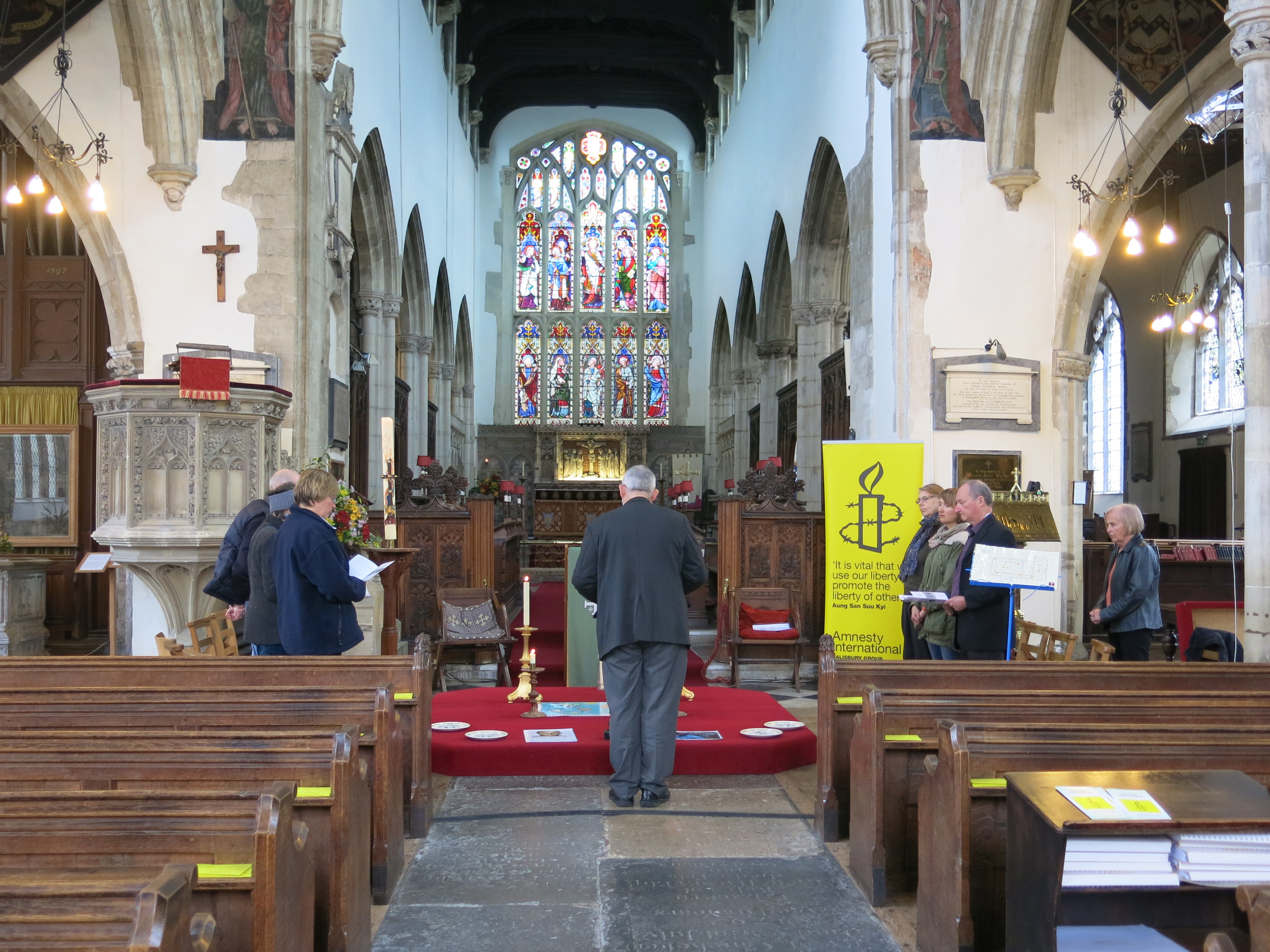
The #minutes of the #July meeting are now available thanks to Andrew for preparing them.ย  The item on the death penalty can be found elsewhere on this blog.ย  The next meeting is in September.ย  The picture shows Amnesty’s director Kate Allen speaking at the Cathedral sixth form conference as part of Magna Carta.

July minutes (pdf)

Robust reponse to Saudi Arabia rejected by FCO


UPDATE: 3 August

At the end of this blog we wrote ‘it seems therefore that nothing will change’.ย  How wrong can you be as it has just been announced that the FCO will no longer be specifically campaigning for the abolition of the death penalty.ย  The FCO message to us was dated 6 July and Mr Glen’s covering letter dated 14 July.ย  So in the space of a few weeksย abolishing the death penalty world wideย has gone from ‘a human rights priority for the UK’ to being no longer a policy.ย  The group plans to write to Mr Glen again to seek clarification.


July 2015

No to the death penalty

The Salisbury Group wrote to the local MP, Mr John Glen to ask for a more robust response by our government to the barbaric activities of the Saudi government in particular the increasing number of executions which are taking place.  In our letter we said:

[we are writing] to you in connection with the increasing level of executions currently taking place in Saudi Arabia.  (Over the course of the first five months of this year, the number of executions has equalled that of the whole of 2014).

You will no doubt be aware that on his recent visit to the country, President Francois Hollande made a public statement to the effect that all executions, not just those of his own nationals, should be banned, and called for the abolition of the death penalty in Saudi Arabia.

M. Hollande was prepared to do this, despite the fact that France – as does the United Kingdom – has significant financial interests in the its dealings with Saudi Arabia. The British government, however, has never seen fit to raise the issue in public, preferring to pursue a policy of ‘quiet diplomacy’.  This policy has manifestly had no effect.  Numbers continue to rise, and the Saudi Government have now advertised for eight additional executioners – ‘no particular skills required.’

As a group, we are asking that your government should take a much more robust line over the issue with the Saudi government.

Whereas the government – including the Prime Minister – has been vocal in its criticisms of the Islamic State for its appalling behaviour and of Russia for its activities in Ukraine, they seem strangely silent when it comes to Saudi Arabia.  This contrasts with France which has openly criticised them and Sweden which has decided no longer to sell them arms.

Mr Glen replied, enclosing a letter from the FCO minister, and said:

“I enclose correspondence from the FCO minister Tobius Ellwood in reply to your recent letter about the UK’s apparent reticence when it comes to condemning the use of the death penalty in Saudi Arabia.

“As you can see, the approach taken by the government is not in any way indicative of an equivocal view on this practice, which is as barbaric as it is ineffective.

“However, the government recognises that its abolition is not a matter of mere legal reform but would require a seismic societal shift.ย  It has therefore taken an approach which it feels is most constructive – engaging behind the scenes rather than inflaming the situation and triggering a backlash through outspoken public critique”.

The letter from the Foreign and Colonial Office is as follows:

“[…] The abolition of the death penalty is a human rights priority for the UK.ย  The UK opposes the death penalty around the world because we believe it undermines human dignity and there is no evidence that it works as a deterrent.

“Saudi Arabia remains a country of concern on human rights, because of its use of the death penalty as well as the restricted access to justice, women’s rights, and the restrictions of the freedom of expression, freedom of assembly and freedom of religion or belief.

“Ministers, our Ambassador, and the Embassy team in Riyadh frequently raise the issue of the death penalty with the Saudi authorities, bilaterally and through the European Union.ย  As it is part of Sharia Law, we must recognise that total abolition of the death penalty is unlikely in Saudi Arabia in the near future.ย  For now, our focus is on the introduction of EU minimum standards for the death penalty as a first step, and supporting access to justice and the rule of law.

“The British Government’s position on human rights is a matter of public record.ย  We regularly make our views well known including the UN Universal Periodic Review process and the Foreign and Colonial Office’sย  annual Human Rights and Democracy Report.ย  We also raise our human rights concerns with Saudi Arabian authorities at the highest level.ย  But we have to recognise that the human rights situation in Saudi Arabia reflects widely held conservative social values and that our human rights concerns are best raised in private rather than in public”.

It seems therefore that nothing will change.  It is important to recognise that behind the scenes lobbying can be constructive.  However, the policy of raising matters ‘in private rather than in public’ does not appear to be working.  Successive governments have courted the regime and Saudis are free to invest in London and elsewhere in the UK.

Eurofighter of the type sold to Saudi Arabia

It would be naรฏve not to recognise the reality behind this reluctance to criticise the Saudis and the importance to the government of the sale of arms and the supply of oil.  Saudi Arabia is a key market for the UK and much effort is put into promoting sales including by members of the royal family – see the Guardian article:  Human rights are of secondary concern.

As long as these interests are paramount, it is difficult to see how the toll of executions can be checked in the near future.


Human Rights Act under threat


Leading or following?

The Human Rights Act HRA remains under threat from the Conservative Government who promised in theirย manifesto to abolish it.ย  There is speculation that it was put in the manifesto to appeal to Ukip supporters and those for whom anything with ‘Europe’ attached to it is bad news.ย  They wereย expecting to be in a coalition again – so the theory goes – and the LibDems would not have allowed it to go ahead.ย  In other words it was a promise unlikely to be put into effect but sounded good in the manifesto.

Now that they are in power on their own they are faced with a problem.ย  Abolition will prove extremely difficult for all sorts of reasons.ย  Reform is difficult if you have nailed your colours to the abolition mast.ย  The Scots will not countenance it and theย recent proposal to allow huntingย with dogs to be re-introduced was effectively ended by the Scot Natsย who demonstrated their influence in Parliament.ย  It also underpins the Good Friday agreement in Northern Ireland.ย  It may also mean us withdrawing from the European Council.ย  It will send a very negative message to those countries, such as Russia, who are being pressed to improve their human rights records, a point made by Dominic Grieve QC MP when he came, at our invitation, to speak in the Cathedral.

Just over a yearย ago our local MP John Glen (Con) wrote to the Salisbury Journal to say he was keen on abolition.ย  Our group wrote to Mr Glen and after an exchange of letters, a meeting was arranged in June 2014.ย  At that meeting, the many unreported benefits of the act were explained and that these benefits were likely to apply to a number of his constituents.ย  The battle that individuals have with authorities of all kinds to get a fair deal is made that bit easier by the Human Rights Act.

Unfortunately, the act gets a near universal bad press certainly from the tabloid end of the market.ย  An incessant series of articles claiming that all kinds of evil people escape justice because they can claim the right to a ‘family life’ or it’s their ‘human right’, inevitably infuriates people reading it.ย  Frequently, it isn’t the HRA at all but some other piece of legislation involved.ย  No matter.ย  Some of the stories are hugely exaggerated or just plain wrong.ย  But the benefits to ordinary people seldom gets a mention.

In the latestย edition of Valley Newsย (a free sheet in the Salisbury area, July 2015) Mr Glen writes:

[…] This month also marked the 800th anniversary of Magna Carta.ย  In addition to some spectacular celebrations, this has re-opened the debate about human rights here in the UK.

Too often I hear from constituents who are fed up with some of the decisions made in our courts and in the EU, about human rights laws.

While these cases represent only a small minority, I do not believe we should simply turn a blind eye to them.ย  A recent opinion poll suggested three quarters of the UK felt that human rights laws were being applied too widely.

It is far from healthy in our democracy to accept this status quo: human rights should be celebrated, and I hope we seize the opportunity of the Magna Carta anniversary to restore some confidence in them at home.

We do not know how many constituents have written to Mr Glen or the topics they are concerned about.ย  He makes no mention of benefits to ordinary people and to some of his constituents.ย ย But ifย his correspondentsย have readย tendentious stories in our media, it is hardly surprising they write to their local MP. For example a Daily Mail journalist spoke of the HRA ‘[which] blights every aspect of our life.’

Maybe one of the reasons these papers do not like the act is because there is the right to privacy within it.ย  There is no mention of benefits to ordinary people.ย  Since many newspapers have depended on intrusion – using both legal and often illegal means – to get their stories, this represents quite a threat to their business model.

Human rights should indeed be celebrated as Mr Glen says and we hope he can do some celebrating.ย  But it does need politicians of courage to stand up and defend the act and the many beneficial effects it has on the lives of ordinary –ย or should we say ‘ordinary hard-working’ –ย people’s lives.ย At our meeting with Mr Glen he wasย asked if he was just repeatingย stories from the Daily Mail.ย  Heย said he did not but that he did have to read it to understand whatย his constituents were writing to him about.ย  We can only hope that ‘to restore some confidence in [human rights]’ means explaining the benefits, countering the myths and criticising the many misleading stories.ย  In short, putting the case for the act.


A new web site established with the sole purpose of countering the misinformation and disinformation about human rights is www.rightsinfo.org which is well worth putting in your favourites.

#deathpenalty report for June now available


No to the death penaltyThe monthly report on the state of the death penalty around the worldย is attached –ย thanks to Lesley.

July death penalty report (pdf)

Blog at WordPress.com.

Up ↑