78th anniversary of the Nakba


Terrible events of 1948 which continue to have an effect today

May 2026

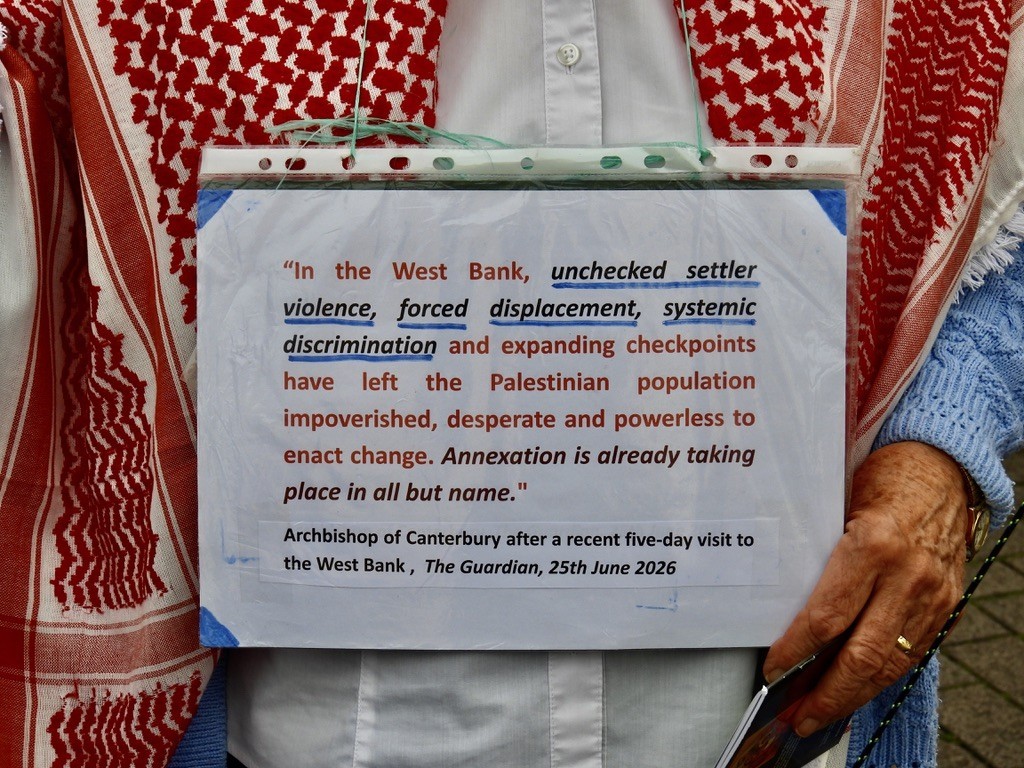
The Nakba took place in 1948/49 and resulted in vast number of Palestinians and Arabs being displaced from their homes or murdered by soldiers of the newly created Israeli state. Numbers vary but 750,000 is the approximate figure. Those who survived lived in camps in Jordan, Gaza and Lebanon. Survivors within the new borders of Israel were subject to manifold restrictions which are recognised as apartheid. The catastrophe has left lasting pain and hatreds which means the prospects for peace and reconciliation are remote. Palestinians living in the West Bank are subject to increasing levels of violence and destruction of their property.

There is a march in London tomorrow which no doubt elements of our media and some politicians will demonise calling it a ‘hate march’ or other accusations. Reporting will focus on any violence and very little on the causes. The Jewish Chronicle, quoting Labour Friends of Israel MPs, is calling for a ban.

Reporting

On the question of reporting and the bias of large parts of our media, our attention has been drawn to a piece Prince Harry wrote condemning anti-Semitic and anti-Muslim hatred in the New Statesman. Within days, nearly all the media removed the anti-Muslim element. It is an astonishing read and involves supposedly trusted outlets including the BBC; the Guardian, Sky News, CNN and others. The reasoning or the motives are not clear. It is recommended that you read the evidence provided in this link. Many find claims of media bias hard to accept and this is a clear cut example of altering the news to suit an agenda.

Some background is here concerning the Nakba. A report by Amnesty International on the right of Palestinians to return. Middle East News provide further stories.

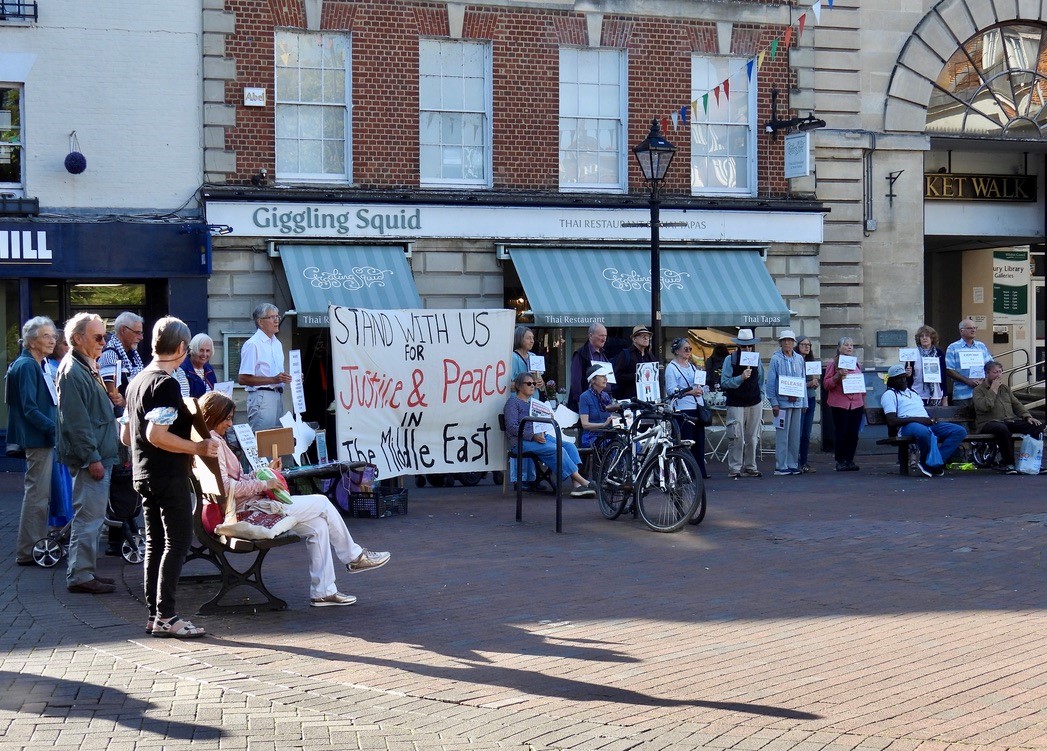
We shall be holding our vigil – with others – tomorrow, Saturday 16th as usual. In the market place, Salisbury starting at 5pm for half an hour.


Risks to our rights steadily increasing


Our monthly report on trends in the UK is worrying

May 2026

Government appeal against Palestine Action ban

Good Law Project warns that if the Home Secretary Shabana Mahmoud wins her appeal against the lifting of the ban on Palestine Action th the combination of the Online Safety Act 2023 and the Terrorism Act 2000 could be used to silence support for anti-genocide campaigners.

The problem lies in the very broadly drafted offences which even the police have found hard to apply. Online platforms might share this difficulty and fear heavy fines if they don’t remove references to action for Palestine. The Online Safety Act obliges platforms to remove “priority illegal content” from the internet in the UK. At the top of this list is “terrorism content” which includes posts that relate to section 12 of the Terrorism Act, such as “inviting support” for a terrorist organisation or “expressing an opinion or belief that is supportive of a proscribed organisation” while being “reckless as to whether a person to whom the expression is directed will be encouraged to support a proscribed organisation”. See also a previous post on this site pointing out the risks inherent in using this firm.

Palantir Data Privacy Concerns continue

The Good Law Project is supporting Democracy for Sale to raise a challenge about the information commissioner’s decision to keep secret documents sent to Wes Streeting Health Secretary and Health and Social Care Minister Karin Smyth that will reveal truths about the risks of Palantir’s data platform. The British Medical Association has expressed concern about handing sensitive health data to the company which has ties with the Israeli Military and ICE. See our previous post about the threats to our rights from this firm. Statements by the firm’s chief executive are illuminating.

Equality and Human Rights Commission

Following the Good Law challenge in the Supreme Court, the Equality and Human Rights Commission (EHRC) has been obliged by Education Secretary Bridget Phillipson to revise its guidance on the application of the Sex definition in order to provide ‘legally accurate, practical guidance’ and ensure ‘all service users are treated with dignity and respect’. Parliamentary approval will be sought in May. Recent testimonies from trans patients suggest that their health concerns are sidelined by some doctors.

Democratic decline

Amnesty International warns the UK is increasingly reflecting, rather than resisting, global trends towards weakening of democratic norms. The 2026 report can be accessed here and download the full report which is divided into countries.

In 2025 – 2026 the UK has:

– used counterterrorism powers to restrict peaceful protest

– overseen the mass arrest of peaceful protesters, with courts ruling aspects unlawful

– intensified hostile policies towards migrants and people seeking asylum

– increased surveillance and policing powers

– continued arms transfers to Israel despite clear risks of use in serious violations of international law

– cut international aid amid escalating global humanitarian need

– defended the use of national security vetoes in legacy Troubles cases, undermining truth, accountability and justice for victims and families

– pursued economic and social policies that risk pushing more people into poverty, weakening protections for economic and social rights.

As we have noted on several occasions before, successive governments have got themselves ensnared with various unpleasant regimes because of their desire to maintain arms exports. We continue to arm UAE despite their support for the rebels in Sudan and other destabilising actions in Libya and Yemen for example, and as noted, we continue to arm and support Israel despite the genocide in Gaza.


Global Trends in Refugees and Asylum Seekers 2024


Refugees and asylum seekers still generate a lot of political heat

May 2026

The International Organisation for Migration has produced its latest World Migration Report, covering 2024/5.  It assesses the number of internally displaced people worldwide at 83 million, mostly due to environmental disaster, but about 20 million due to conflict.  In 2025 there were 94 million migrants in Europe (i.e. people living in a different country from their starting residence).  Of course, these figures include people who move for reasons of work or family, as well as refugees and asylum seekers.  

At the end of 2024, there were 36.9 million refugees globally, with 31 million under the UNHCR mandate, and 5.9 million refugees registered by the United Nations Relief and Works Agency for Palestine Refugees (UNRWA).  A further 5.9 million other people in need of international protection – largely from Venezuela – were reported at the end of 2024.  The number of refugees under the UNHCR mandate has decreased slightly since 2023, when it stood at 31.6 million.

Increase in asylum claims

There were also approximately 8.4 million people seeking asylum status.  This is a 22 per cent increase from the end of 2023.  Despite partial reporting from the United States (only until mid-2024), the country still had – by far – the largest number of pending asylum claims (3.2 million) by end of 2024.  Other countries with large asylum applications included Egypt (631,100), Peru (540,000), Germany (348,900) and Canada (292,100).

In 2024 alone, 3.1 million new individual asylum applications were registered globally, with half of these received in only four countries: the United States (729,100), Egypt (433,900), Germany (229,800) and Canada (174,000). Nationals of the Sudan, Venezuela, Syria, Colombia and Afghanistan comprised most new individual asylum applications in 2024.  Obviously the situation will be somewhat different post-2024, particularly with regard to the USA.

At the end of 2024, children (that is, people under 18 years of age) made up around 41 per cent of refugees, people in a refugee-like situation and other people in need of international protection.

The (American) Migration Policy Institute have researched the question of anti-immigrant borders.  They reckon that in 1989 there were 12 border walls, and there are now 74.  The EU has increased its fenced length between 2014 and 2022 from 315km to 2,048 km.  One of the results of this sort of growth has been the number of drownings at the US/Mexico border, up by 3,200% between 2020 and 2023.  It was observed that tougher border policy has resulted in more seasonal migrants deciding to stay. Picture shows the wall between the US and Mexico.

UK situation

In the UK, the amount of legislation on immigration has now seen 6000 changes to the rules since 2010.  The latest areas of conflict concern the 1 in 1 out arrangements with France, the prevention of family reunion, and the replacement of hotel accommodation for asylum seekers by use of military establishments.  On the latter, the Institute for Public Policy Research has reported on the relations between claimants and the local community, and concludes that the main problem is the lack of transparency from government bodies, the absence of consultation and the lack of any obvious benefit from the newcomers’ arrival to the community.  The IPPR support a community-based long-term social housing project that would be of benefit to all groups.

The Refugee Council has a briefing on how to respond to the government consultation on asylum support and family returns, which runs out on 28th May.

Other unhappy organisations include the Law Society (the new independent appeals body is not satisfactory) and 150 children’s’ social and legal organisations, who believe the latest changes in immigration rules amount to an attack on children’s rights.

The government is withdrawing travel support for Afghans seeking to come to the UK, of which there are believed to be about 9,000.  They will now have to make their own way vie third countries.  The Home Secretary (pictured) has made a new agreement with France worth £662 million to provide more enforcement on the Channel coast beaches and better intelligence.  The Home office say that 480 people smugglers were arrested in 2025.  The Telegraph have quoted Ms Mahmood with saying that the crackdown on irregular migrants will give her room to allow more legitimate routes, but there is no detail on this as yet.

Reform’s claims

Other proposals in the air include Reform UK’s intention to deport migrants who have settled status if they arrived by non-legal means.  This would amount to some 400,000 (and they claim would save £14.3 billion through 2029-34 (when they would presumably be in power).  The (Reform) Lancashire County Council are withdrawing from the government’s resettlement scheme for accepted asylum seekers.

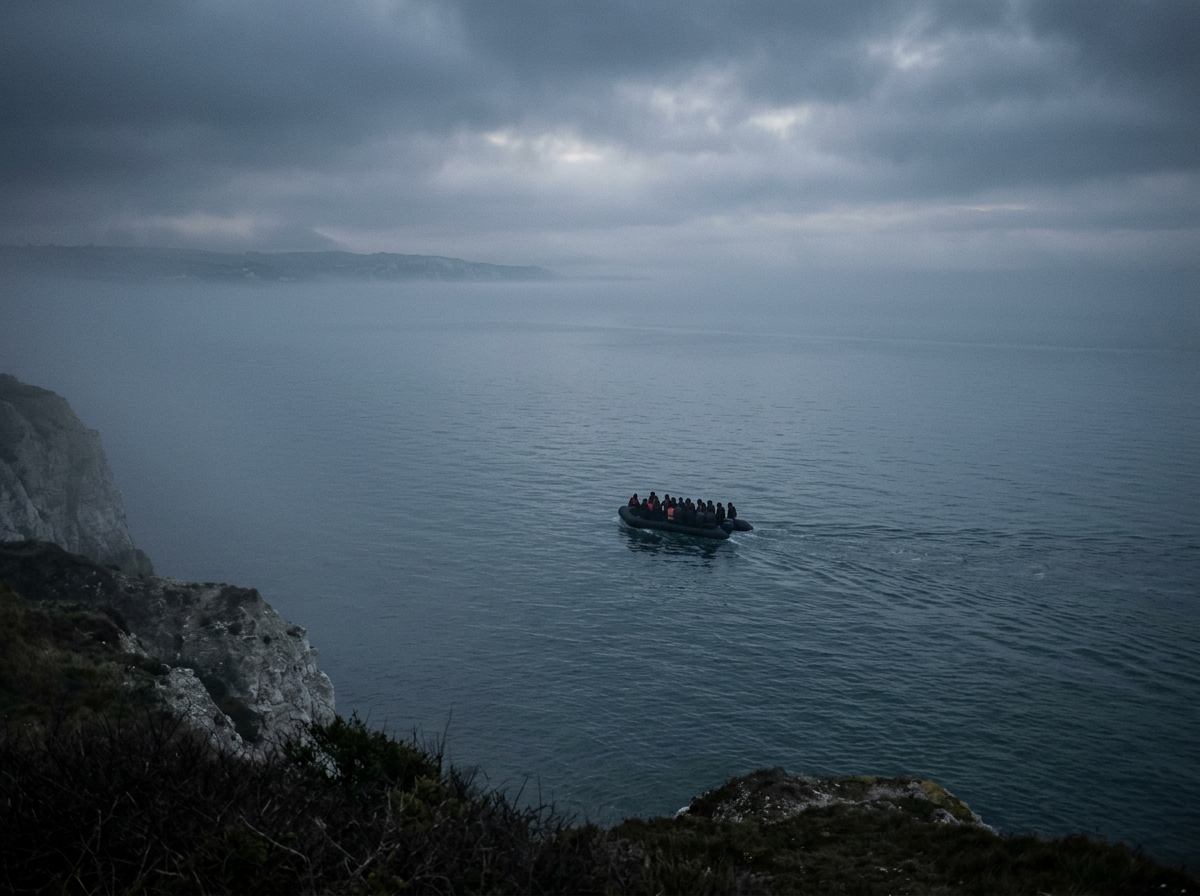
Nevertheless, the numbers of arrivals are down this year (by a third in the first quarter); the number of small boat arrivals in April 2025 was 11,000 against 7,000 this April.  The net inflow (of all types of immigration) over the last three years has gone from 900,000 in 2023 to 400,000 in 2024 to 200,000 in 2025; obviously much of this is due to restrictions of work and student visas, but it remains striking.  Next stats available 21st May

The Council of Europe are meeting on Friday in Moldova to discuss the issue of return hubs for refused asylum seekers.  Various European countries have made bilateral arrangements and up to 12 countries have been named as possible recipients.  The COE is the governing body for the European Convention of Human Rights, and possible changes to the ECHR will also be discussed.

The people behind Refugee Week (15th -21st June) are urging us to carry out a million acts of hope between 13th and 20th May.  Details at A Million Acts of Hope – Together With Refugees

Clothing and the abuse of rights


We will be at the People in the Park event this Saturday to highlight this issue

Past event – report soon 16/05

At this event in Salisbury on Saturday 16th May, we shall be focusing on the human rights abuses involved in the manufacture of a pair of jeans. An everyday item of clothing, no less than 5 billion pairs are made every year mostly in factories in Far East countries. From the production of the cotton to the manufacture of the jeans themselves, millions of – mostly women – are subject to massive levels of abuse. Amnesty has produced a report called Stitched Up which provides background to this industry.

The numbers involved are quite staggering. There are something like 100 million garment workers worldwide the vast majority of whom suffer various kinds of abuse to enable us to buy cheap clothes (not just jeans).

The abuses

The abuses take place at every stage in the manufacture:

  • Around a quarter of the cotton comes from the Xinjiang region of China where the abuse of the Uyghurs is a massive issue. The treatment by the Chinese of these people is a story of itself and involves mass arbitrary detention and so-called ‘re-education’, unjust imprisonment, intrusive surveillance and forced labour. The treatment of the Uyghurs has been described as genocide.
  • To produce the faded look a dangerous process is used and the workers are in danger of contracting silicosis. Numbers die of this each year.
  • Low wages and levels below even minimum wage levels in their own country. This is linked to ‘wage theft‘. Workers are allegedly paid the minimum wage but do not if fact receive them. So inspectors carrying out cursory checks for the retailers see appropriate wages being paid.
  • Overwork. Overtime is compulsory if a big order arrives and workers may work very long shifts with no choice.
  • No collective bargaining and trade unions largely banned. It can involve working 99 hour weeks. Only 5 unions exist among Marks and Spencer’s 172 suppliers for example.
  • Abuses, physical and sexual, is widespread. With a mostly female workforce this is a serious problem.
The brands

The major brands on our high streets and on line are complicit in these abuses. It is important to stress the massive scale of the abuse involving millions of people. Virtually all the major brands are complicit in whole or in part, in these abuses largely due to inaction. If you read the Amnesty Stitched Up report linked above, you will see nearly all the familiar high street names mentioned. The supply chains are long so factories may be largely invisible to any inspection activity.

This post is to raise your awareness. It is almost certain that among the clothes you are wearing are garments produced which are the product of abuse, violence, forced labour about which the retailer you bought them from has likely done little to tackle. Cheap clothing comes at a cost. It is not costless because making clothes in the UK is extremely difficult if retailers are freely able to source from countries where regulations are ignored, wages are not always paid in full and there are no trade unions.

Previous year’s stall. Photo Salisbury Amnesty


Latest posts:

Latest Death Penalty report


May 2026

We are pleased to attach the latest report for mid-April to mid-May thanks to group member Lesley for the work in compiling it. It contains details of the penalty around the world including a massive number of executions in Iran and how Saudi has executed large numbers in recent years. Singapore is mentioned with its policy of executing individuals involved in the drugs trade. Florida continues to feature with the Governor signing warrants for executions.

Israel’s proposals to re-introduce the penalty and to hold public trials for those held following the 7th October massacre is discussed and the responses to the change from countries around the world. Israel seems to be sliding ever backwards with its genocide, apartheid, violence and now the reintroduction of the death penalty last used on Adolph Eichmann.

As ever, we have to note that China is thought to be the world’s largest executioner but details are a state secret. There is a disturbing report from Australia however with some details but there is a warning about its content.

Salisbury vigil #127 well attended


Good turnout for the latest vigil. High level of recognition from passers-by

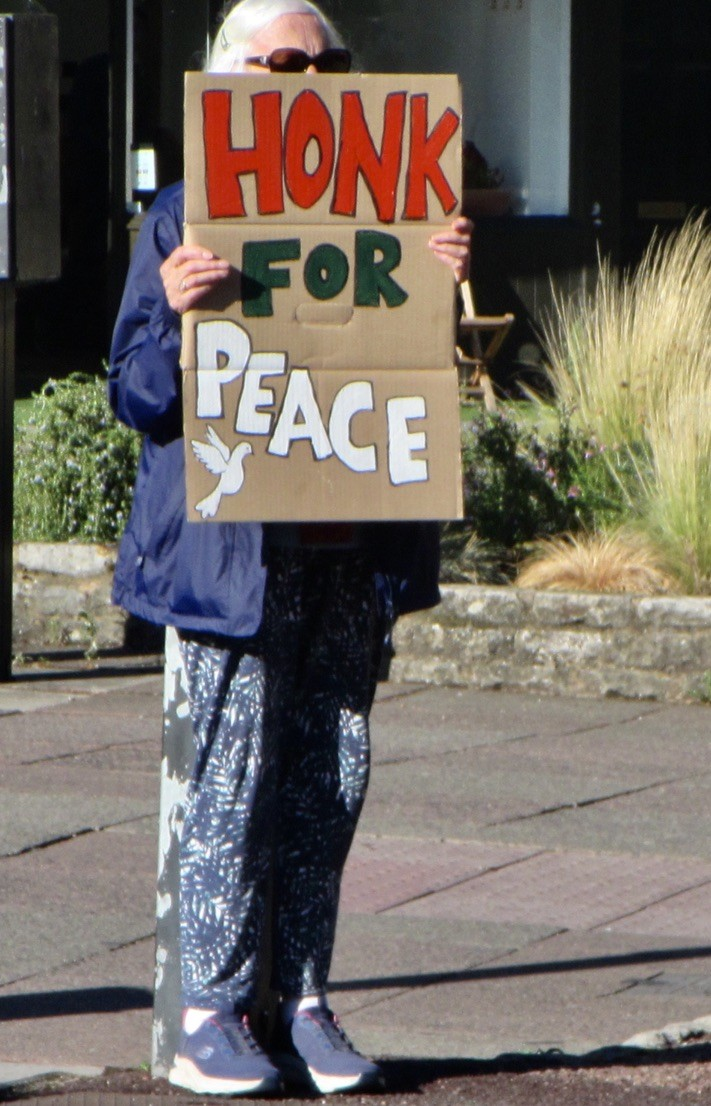
Excellent turnout to today’s vigil with around 35 coming. There was also a fairly steady flow of car horns from passing motorists. A larger number than usual of people stopped to take note – nearly a hundred – which is encouraging. In a few days it is Nakba Day, which commemorates the expulsion and death of at least 700,000 Arabs and Palestinians following the establishing of Jewish state in 1948 at the end of the British mandate. Prior to that event and the violence which took place in 1948/49, Jews and Palestinians lived side by side in the area together with other communities.

It is important to remember the events of 1948 which cast a shadow over what is happening today. In the photo below you’ll notice a key which has symbolic importance. When people were evicted from their homes by Israeli forces or the Hagana, they kept their keys in the hope of returning one day. It never happened as most of the settlements were destroyed. Much of our media focus on the terrible events of October 7th and ignore the considerably more massive events of an earlier era.

Nakba event

There will be an event run by the Palestine Solidarity Campaign in London on 16 May, see the Salisbury CND site for further details and background. Following the terrible events and attacks in Golders Green, there have been calls for a ban on marches such as this.

Being able to protest is an important right we have and governments of all persuasions have been keen to limit or control them. Labour has introduced further legislation and controls and left to their own devices would probably cancel this one. They are aided by some elements of the media labelling them ‘hate’ or ‘terror’ marches.

Once again we must note the absence of the local MP Mr John Glen at this or any of the previous 126 vigils. In a letter to the Salisbury Journal, which provides him with a column each week, he said he was a ‘proud member’ of the Conservative Friends of Israel lobby organisation in Westminster. Labour and LibDem MPs are also members of their respective friends groups making it the largest such lobby organisation.

A video of the vigil can be seen here, courtesy of Peter Gloyns (and the photo).


We shall be at People in the Park next Saturday 16th, so if you are interested in joining us or saying ‘hello’ that would be a good opportunity to do so.

Previous posts:

Violence, politicians, marches


Violence against Jews in UK has generated a lot of anger, fear and anxiety

May 2026

The 126th peace vigil in Salisbury took place on Saturday 2 May with around 30 present. It passed without incident. A video of the event is available here courtesy of Peter Gloyns. It took place at the end of a week in which a man attacked two Jewish men in Golders Green* and has been charged with attempted murder. Jews living in the area are reported to be fearful and places like synagogues are surrounded by security fences to protect them against attack. It follows other attacks against people and property and has resulted in the threat level being raised to ‘severe’.

The attacks have generated a huge amount of comment. It is perhaps unfortunate that the attack took place only days away from local elections which has led politicians to jostle with one another to make statements and promises some of which are regrettable.

We should not need reminding that article 18 of the Universal Declaration of Human Rights, and article 9 of the Human Rights Act both of which say that everyone has freedom of thought, conscience and religion. In passing we might want to reflect on the fact that several of these self-same politicians are keen for us to leave the European Convention on Human Rights and modify or repeal the Human Rights Act. All of which legislation protects the rights of minorities, like Jews and Muslims, to live their lives free from violence, intimidation and attacks.

These events cannot be detached from what is happening in the Middle East. One of the problems is the conflation between criticism of Israel, anti-Semitism and Zionism. The Israeli government has been keen to label any and all criticism of their actions in Gaza, south Lebanon, and the violent actions of their settlers in the West Bank, as anti-Semitic. This policy appears to have been successful in curtailing comment and criticism by some media organisations most notably the BBC. The accusation has been misused and has begun to lose much of its potency. It’s overuse paradoxically, weakens the claim when something truly is anti-Semitic.

Ban on marches

Another response to the attacks in Golders Green is to call for a ban on marches. This was the argument of the Chief Rabbi, Ephraim Mirvis. Labelled by some as ‘hate marches’ they have for the most part been peaceful and are held to promote the idea of a Palestinian state. The forthcoming march on May 16th being organised by the Stop the War Coalition is to go ahead as planned unless government or police action intervenes. It has to be recognised that marches of this kind are upsetting for some. They are noisy and although the great majority attending are reasonable people who want to draw attention to their cause, there is always a minority who want to cause trouble, who shout or display anti-Semitic statements and sometimes engage in violent actions.

Protest is part of our national culture and article 20 of the UDHR protects freedom of assembly. Governments have sought to whittle away this right with a series of laws curtailing or restricting them. Jonathan Reith of the Stop the War Coalition was interviewed on the BBC radio programme the World at One arguing that they are infrequent with the forthcoming one being only the second this year. Wes Streeting, the Secretary of State for Health, was interviewed after Reith and described his interview as ‘nauseating’ for unexplained reasons. He is a member of Labour Friends of Israel.

An interesting event took place on the BBC Any Answers? programme on Saturday 2nd where members of the public can phone in and express their views following Any Questions? Two Jewish men phoned in. One said you cannot understand what we are seeing in this country away from the terrible events going on in the Middle East. The other said a problem was the conflation of Israel, anti-Semitism and Zionism. Too long one said the Israel government has claimed that any criticism of them was ‘anti-Semitic’. Many Jews were deeply upset by what’s happening in the Middle East.

Another event took place during the week on Thursday 30 April. This was the interdiction on the high seas of the flotilla attempting to take aid to Gaza. The boats were seized near Crete. Called the Global Sumad Flotilla, Israeli forces seized the vessels and destroyed the engines and communications equipment in what was almost certainly a criminal act. The action was supported by the US. We can find no condemnation of what happened from the UK government.

*Golders Green is a suburb of London with a high concentration of Jewish residents.


We shall have a stall at the forthcoming People in the Park event and would welcome enquiries. For anyone thinking of joining the local group it would be a good time to make contact.

Troubling Double Down News film about the role of the BBC and other media in distorting how we view Israel.

Previous posts:

125 and counting …


The vigils continue while terrible events take place in the Middle East

April 2026

Over 30 attended our 125th vigil – an activity which we started with no intention of it lasting so long. But the violence continues, homes are being systematically destroyed in southern Lebanon, much of Gaza has been destroyed and the killings and starvation continue. So there is no let up and people need to be reminded of the terrible events which are taking place in the region and the suffering which is happening. The British government tries to play a double game of saying the right things and condemning the violence, but quietly continues to offer support and weapons to Israel.

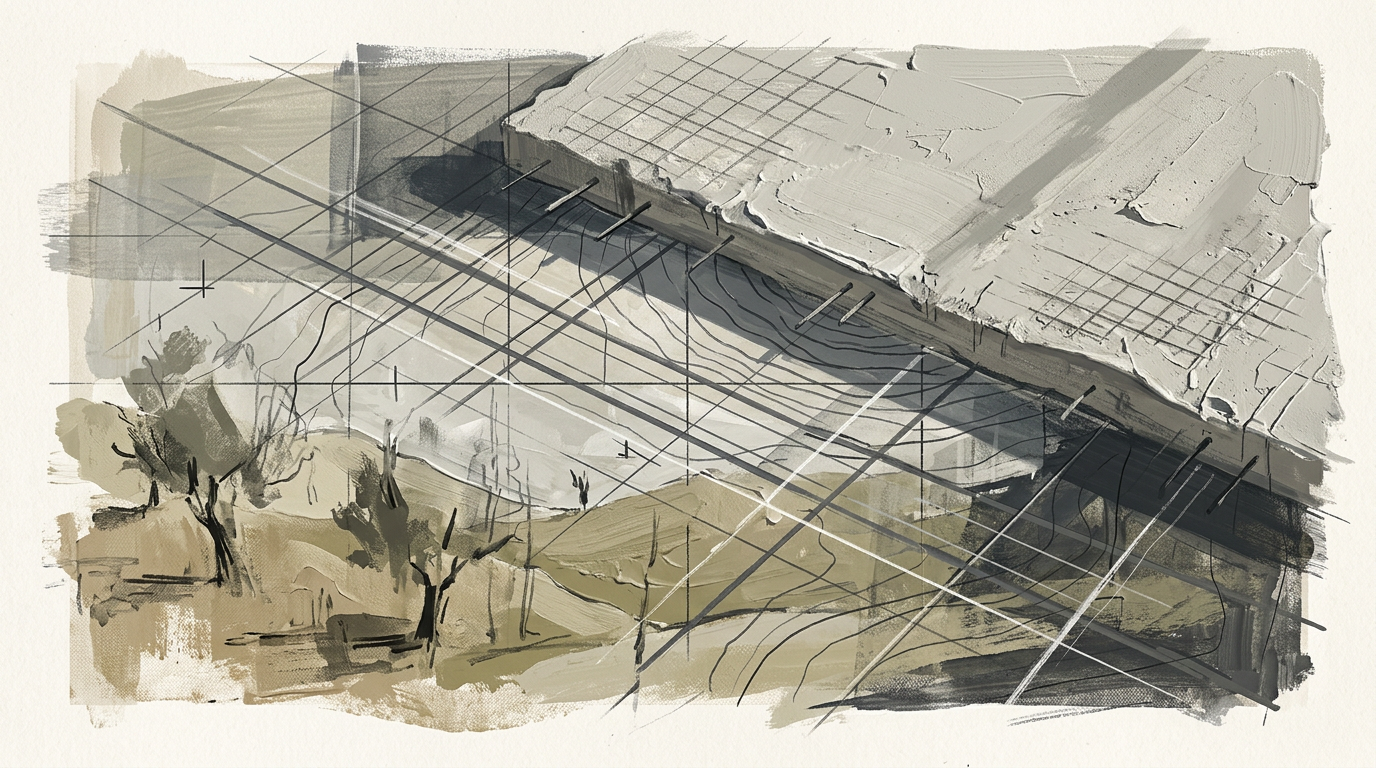
Of interest is an article in the Observer newspaper concerning Forensic Architecture which forensically analyses and documents using architectural techniques, human rights abuses around the world. It was founded by a Jewish man Eyal Weizman who has just written a book Ungrounding: The Architecture of Genocide (Fern Press, pub. available on May 7th).  

He has devoted time to the genocide taking place in Gaza and his forensic methods enable a high degree of certainty to the crimes they describe. As usual with those pointing to these crimes, he has suffered de-platforming and the familiar accusations of anti-Semitism. This is especially inappropriate as not only is he a Jew but lost people ‘connected to my family’ as he put it, on October 7th massacre.

It is a long article but a particularly moving passages are:

“FA has also worked at a larger scale, mapping the pattern of expulsions driven by Israeli forces. On 13 October 2023, thousands of leaflets fell on Gaza City, telling residents to move out of what was now a “battlefield”.

“People were given 24 hours to evacuate. For some pro-Israeli commentators, this was a sign of humanity; that the IDF gave people the chance to avoid obliteration. Weizman calls the leaflets “some of the most lethal things to have fallen on Gaza”.

“They were the beginning of a pattern whereby people would be forced into hazardous journeys east and south towards the most barren parts of the [Gaza] strip, to the dunes where they would struggle to survive. Some would be attacked en route.

“Undergrounding tells how Israeli forces also attacked hospitals, schools, universities, mosques and churches. They destroyed orchards, farms, greenhouses, fishing boats, water desalination plants and wells. They polluted the land and the sea. They killed almost all the cattle, sheep, goats and poultry, blocked aid and attacked people who tried to receive it.

“According to Weizman “they engineered famine”. […]

He discusses the defence that Hamas are hiding in these facilities and therefore the destruction is justified. However, he argues that the scale of destruction show an intent that can only be called genocidal.

NGO Monitor the Jerusalem based organisation, says FA “through slick graphic presentations, [it] creates a façade of credibility to mask analyses that are consistently misleading, blatantly biased and based on unverifiable ‘evidence’,” (Israel does not allow independent journalists into Gaza).


May we draw your attention to the local CND website which has a number of posts of interest. Of particular note is the piece Murder Most Foul concerning the death of another journalist Amil Khalil and the practice of ‘double tapping’ that is after a bombing or missile attack waiting for medical staff to appear and mounting a second attack. In this case medical help was denied. The story was covered on Channel 4. At least 226 journalists have been killed in Gaza since October 7th making it the deadliest conflict in history.

72,344 have died in Gaza and over 172,000 injured, many of whom are children.

No sign of the local MP, Mr John Glen, who is a member of the well-funded Conservative Friends of Israel group and indeed, told the readers of the Salisbury Journal that he was a ‘proud member’ of the group.

Previous posts:

Photo: courtesy of Peter Gloyns

Opposition to Death Penalty: UK Government’s Position


Government response to the petition

April 2026

The government has responded to the thousands who signed a petition concerning the Israeli government’s bill to enable the use of the death penalty against Palestinians with no chance of appeal. The response:

The UK opposes the death penalty in all circumstances. The Government has raised concerns with the Government of Israel and will continue to do so. The Death Penalty for Terrorists bill introduces a mandatory death sentence for terrorism-related murders, with no right of appeal. The powers would in practice apply almost exclusively to military courts trying Palestinians in the West Bank. 

The UK has expressed our deep concern about the bill, as it would significantly expand the possibilities to impose the death penalty in Israel. We have been clear, publicly and privately, that we oppose the death penalty in all circumstances. The death penalty has not been used in Israel for over 60 years, and this legislation risks being a regressive step enabling its use. Following its passage at second and third readings in the Knesset the bill is now law subject to legal challenge via Israel’s independent judicial system.

The Foreign Secretary spoke to the Israeli Foreign Minister and called for further plans to introduce this bill to be abandoned. On 29 March, the UK issued a joint statement with Foreign Ministers of Australia, Germany, France, Italy and New Zealand urging the Government of Israel to abandon plans for the death penalty bill. The statement can be found here: Joint statement on Israel’s Death Penalty Bill: 29 March 2026 –
GOV.UK (https://www.gov.uk/government/news/joint-statement-on-israels-death-penalty-bill-29-march-2026).

As set out in the statement, the UK and other signatories oppose the death penalty, reflecting a long-standing and shared commitment to abolition. The UK Government believes that the death penalty’s use undermines human dignity, that there is no conclusive evidence of its deterrent value, and that any miscarriage of justice leading to its imposition is irreversible and irreparable.

We particularly deplore any failure to observe the relevant international standards, defined by the International Covenant on Civil and Political Rights.More broadly, the UK Government continues to call on the Government of Israel to uphold international law and human rights. This includes respecting the fundamental rights of detainees and prisoners, ensuring due process, and refraining from actions that risk further exacerbating tensions or inflaming an already fragile situation.

The UK continues to support international efforts to reduce violence, protect civilians, and promote respect for the rule of law. We firmly believe that lasting security for Israelis and Palestinians can only be achieved through progress on the Gaza ceasefire and the 20-point plan, an end to the annexation threats and settler violence in the West Bank, and a realistic political horizon for the two-state solution. We will continue to work closely with international partners, including the United Nations and civil society, to promote human rights, accountability, and oppose the death penalty worldwide. We will keep developments under close review and continue to raise our concerns where legislation or policy risks undermining international legal norms.

The Government is grateful to those who have engaged through the petitions process. Public engagement on issues of human rights helps inform and strengthen the UK’s foreign policy, and we remain committed to advancing these values internationally.

Foreign, Commonwealth & Development Office 

Amnesty is opposed to the penalty in all circumstances and publishes a report on its use each month.


Foreign Office to close monitoring unit


Unit responsible for collecting information on conflict incidents is to close

April 2026

The news is variously described as ‘unbelievable’ or ‘incredible’ but is reported to be true: the Labour government is to close the Conflict and Security Monitoring Unit which collects, verifies and analyses human rights incidents in Israel and in the occupied territories. It hardly needs saying that the necessity for such a unit is essential at the present time with significant human rights violations taking place in Gaza, the West Bank and now in south Lebanon.

But it is to close. One of the Unit’s functions was to advise on the supply of arms to Israel so one wonders where that advice is to come from in future. The decision is reported to have been taken by Sir Oliver Robbins who was sacked by the prime minister last week over the Peter Mandelson affair.

Only on 9th of this month, the Foreign Secretary was delivering a speech in the Mansion House extolling her and her government’s belief in the rule of law and human rights. Part of her speech is:

“But for a Labour government it is a fundamental part of our moral purpose to stand up against global disease and hunger, and help those trapped in crises caused by conflict or climate breakdown. We know that supporting development is not just about our party’s values but about our national interests: tackling insecurity and building partnerships abroad helps our security and economy back home.

“The role that rules-based frameworks play is vital, and respect for the rule of law is a core British value that supports our national interest, underpins our economic stability, makes us a reliable place for international investment, while the whole world spins around us and underpins our security and prosperity.” (our italics)

Pious words. Yvette Copper is another MP who is a member of Labour Friends of Israel.

It is vital that the FCDO has accurate information both for any future war crimes and to advise on the sale of arms to the IDF. The decision has been criticised by Human Rights Watch and by the Campaign Against the Arms Trade. Katie Fallon, the advocacy manager at CAAT said:

“Closing the IHL cell would protect ministers and senior Foreign Office officials “who know that they have been manipulating the data on potential violations of International Human Rights Law, beyond any logical interpretation, to obscure unimaginable violations and crimes committed against the most vulnerable people in conflict and sustain arms sales at any cost.

“The timing of this closure is notable. As Olly Robbins explained to a parliamentary committee this week, the civil service is under pressure to give the government the answers that they want. Nowhere is this more clear than on ensuring arms sales to ‘allies’ continue, despite the risks of war crimes.”

Sources: Guardian, Middle East Eye, Human Rights Watch, FCDO, Wales Herald


Blog at WordPress.com.

Up ↑