Human Rights Concerns in UK Protest Laws


Concerns about latest bill and affects on right to protest

January 2026

Liberty and other human rights organisations argue that proposals in this bill, currently going through the Lords, will block countless people from exercising their fundamental right to protest, risk criminalising marginalised communities, and prevent meaningful change.

Repeat Protests 

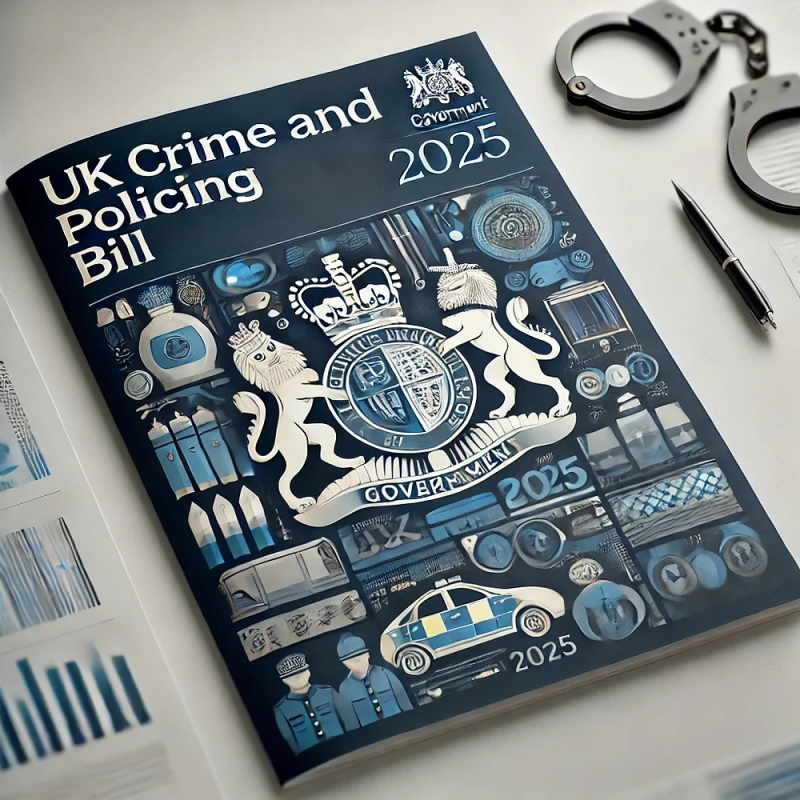
Clause 372 of the Crime and Policing Bill would give police the power ban repeat demonstrations in a designated area. If this is voted into law, senior police officers must consider the “cumulative disruption” caused by previous – or even future – protests in the area as a reason to ban a demonstration, regardless of whether they were organised by the same people or focused on the same issues. They would also decide what area is restricted, with no clear rules on its size. This means there could be borough or city-wide bans on protests, simply because a different demonstration took place the week before. This won’t just impact frequent large-scale marches; it could restrict emergency demonstrations on issues of grave importance, or the right to organise counter protests.

Since change is rarely achieved by a one-off demonstration outside Parliament (votes for women took nearly a century to achieve, as did a two-day weekend) this clause is viewed as inhibiting persistent lawful protest.

Face coverings at protests

Sections 118-120 of the Crime and Policing Bill will make it a criminal offence to wear a face covering at designated protests, and police will have the power to arrest or fine anyone breaching this condition. The lack of adequate safeguards in the Bill will particularly impact anyone who has to wear a face covering for health, religious, or privacy reasons. This could result in Muslim women, disabled people, and political dissidents being criminalised for attending protests with face coverings. Police already have the ability to require people to remove items if they believe they’re being used to hide their identity.

Demos polling shows that 86% of people believe everyone has the right to voice their opinion and raise awareness of issues. The Crime and Policing Bill will strip this right away from those who can only protest safely with a face covering.

Protests outside places of worship 

Section 124 of the Bill also proposes giving the police powers to restrict protests ‘in the vicinity’ of places of worship. Police already have the power to restrict protests based on their intention; this prevents genuine harm or disruption to religious communities. This new clause would instead ban protests based on the fact there is a place of worship nearby, regardless of intention, with the only criteria being that these protests could be considered ‘intimidating’.

This very low threshold could capture almost any protest in towns or cities across the country. Regular demonstrations outside Parliament could now be restricted due to the numerous places of worship nearby, with no requirement to prove they are being targeted by protests.

Other amendments 382 A-D would make it harder to organise processions quickly in response to current events, and remove the vital “reasonable excuse” safeguard that helps prevent the criminalisation of peaceful protest.

CITIZENSHIP RIGHTS

The British Egyptian activist Alaa Abd el-Fattah will not be stripped of his citizenship as, according to the Home Secretary Shabana Mahmoud. His ‘abhorrent’ social media posts of a decade ago do not meet the legal bar for revocation. The necessary criteria would include fraudulent acquiring of citizenship or terrorism charges or links with serious organised crime.

The British government helped secure the activist’s release from years in an Egyptian jail but after his arrival in London from Egypt on Boxing Day, opposition parties called for him to be deported and his citizenship revoked, citing tweets in which he called for Zionists to be killed. El-Fattah who was granted British citizenship while in prison in 2021 through his mother’s birth in the UK, has apologised for past social media posts.

Government sources said the bar on removing citizenship was set high to provide the necessary safeguards. There is a right of appeal against the decision to revoke citizenship. Shamima Begum’s appeal was rejected by the former home secretary Sajid Javid in 2019.

PROTESTS ON BEHALF OF HUNGER STRIKERS

A 500-strong protest was held outside Pentonville prison to express urgent concern at the government’s continued inaction in the face of the imminent death of three remaining hunger strikers of the so-called Filton 24. They have now been on strike for over 45, 59 and 66 days respectively (8 January). 800 medical personnel have signed a letter criticising the government’s handling of the hunger strikers.

Campaigners have called their treatment ‘punishment by process’ since none has yet been charged with a terrorist offence, only with burglary, criminal damage and violent disorder, relating to their entry into a factory run by Elbit Systems, the Israeli arms manufacturer.

While the CPS sets a maximum of six months on remand, the hunger strikers have already been imprisoned without trial since November 2024. Their actions took place before the banning of their pro-Gaza protest group, Palestine Action, a banning which is currently being investigated after an appeal supported by Liberty and Amnesty.

Previous posts:


On 21st January, we are hosting a talk by the author and journalist Peter Oborne about his new book ‘Complicit’. For details see the post about Britain’s role above. It is free with a parting collection.

Review of 2025


… and things do not look much better for 2026

December 2025

We have published 192 posts so far this year on a wide variety of subjects concerned with human rights. A key feature of the year has been the continuation of our vigils. We have held over 109 since the current conflict started and although there is some kind of cessation of hostilities, peaceful reconciliation between Israel and the Palestinians seems a far away dream. Some food aid is getting in but Israel has seized almost all the cultivable land leaving those in Gaza hemmed into an even smaller part of their territory. We have commented on the poor reporting of events there and the unsatisfactory nature of so many interviews.

Arms sales

A feature of this conflict and other conflicts around the world is the role of the arms trade. It appears that this trade seems to determine British policy: truly the tail wagging the dog. The government frequently trots out that it has a ‘robust policy’ whilst granting licences – and in particular open licenses – to almost all who come. The effects on people at the receiving end of these weapons sales does not seem to worry the Foreign Office or government ministers. Recent government’s policies have focused on growth and if growth means selling arms to Israel and to the UAE so be it. There is considerable evidence that the latter are supplying the RSF in Sudan who are alleged to commit many atrocities.

At the height of the Yemen war we highlighted the role of British arms firms and their weapons sales to the Saudis. RAF personnel were involved just short of being labelled ‘mercenaries’.

Sport

Sport has featured in several of our posts and the ever increasing use by states with abysmal human rights records to use sport to burnish their images. Virtually all sports are involved, but especially football, boxing, motor sport, golf, tennis and cycling. The driver is money. China and the Gulf states are among those with almost unlimited resources to pour into sporting events with seemingly no difficulty in attracting sportsmen and women to compete in their countries with no moral qualms. They also invest in our football clubs again with no concerns about how tainted the money is.

It has become so part of the furniture now that it engenders little comment. Whereas some years ago a nation which executes significant numbers of its citizens – often after confessions extracted under torture – which imprisons or ‘disappears’ human rights defenders and journalists and treats its women as second class citizens denying them many rights, would raise eyebrows when seeking to sponsor or host a sporting event. Not today.

Refugees

And it is not just sport where issues of human rights have seemed to take a back seat. People entering this country by various means have generated a massive amount of political controversy here in the UK. It is probably true to say that immigration in one form or another is one of the dominant political forces at work. It is deciding elections. A number of politicians are using the ‘crisis’ to their political advantage (they hope). Egged on by sections of our media, they have created the impression that there is a crisis particularly around the numbers arriving in small boats across the Channel. Any concern for those in the boats and why they are risking their lives to get here does not seem to feature. The impression is sometimes created that if we could deport the migrants (however defined) our problems would be over. The connection between our arms sales and the instability of the countries they have fled from does not seem to enter their thinking.

The contribution by immigrants (again however defined) is scarcely recognised. That large sections of our economy (horticulture and the food industry for example), the health service, hospitality and transport, would cease to function without them seldom seems to enter the consciousness of our senior politicians. We have commented on the strange fact that many of our senior politicians, including Rishi Sunak, Suella Braverman, Priti Patel, Shabana Mahmood, Kwasi Kwarteng and Danny Kruger are all descended from recent immigrants but are among the most aggressive about deporting those coming after them. We can offer no explanation.

Rights at home

Which brings us to another theme concerning the government and its own attachment to UK human rights. It was once hoped that the arrival of Sir Keir Starmer – an ex human rights lawyer and past Director of Public Prosecutions – would see an improvement in the human rights climate. Sadly, it has not come to pass. Laws against protests introduced by the Conservatives to clamp down on protestors, have not been modified or repealed and have even been added to. A more humane policy towards immigrants and refugees has not happened. Arrests have continued and as this is being written, those arrested on pro-Palestine marches are close to death on hunger strike. His continuing support for Israel has been shaming. He has issued critical comments but they have not been backed up by action, cutting arms supplies for example. No believable explanation for the hundreds of RAF flights over Gaza has been forthcoming. His most disgraceful comment that ‘Israel was right to withhold power and water from Gaza’ was widely condemned.

This year we have introduced a new regular feature reviewing the human right situation in the UK itself. This is probably something we would never have contemplated doing say, twenty years ago but a combination of poor leadership, aggressive home secretaries and many MPs with little interest in protecting human rights, has led to this move. Both Danny Kruger (MP for East Wiltshire) and John Glen (MP for Salisbury) are listed on They Work For You as generally voting against human rights is another factor. Mr Glen, who is listed as a member of the well-funded lobby group Conservative Friends of Israel has never once visited the Saturday peace vigil nor mentioned it in his weekly column in the Salisbury Journal.

Ukraine, Sudan, China, Palestine …

The world situation does not seem to get any better. The situation in Ukraine is critical and not just for the Ukrainians. We have one member of the Security Council, Russia gratuitously attacking an independent nation while another member, the US seems indifferent to their plight. The warm greeting by President Trump of President Putin on the tarmac in Alaska must be one of the more grizzly images of the past year. European nations have become almost powerless, in part because of their collective failure to invest in defence (defense) but also because they have become kind of vassal states to the US.

We must not forget that human rights in Russia are poor. There is no opposition and a leader who was a threat to Putin, Navalny, was probably murdered in Siberia. Others have been arrested or murdered along with many journalists. Children have been abducted from Ukraine. Ukrainian prisoners have been tortured.

We could devote a whole page to China. A million Uyghurs are persecuted and are forced to work while their culture is systematically destroyed by the Communist Party. Some call it genocide. Tibet has had a similar treatment and its culture largely eliminated. They are believed to execute more of its citizens than all the rest of the world combined. Freedom has been snuffed out in Hong Kong. Chinese nationals are intimidated overseas.

The future

The future is unpromising. The ‘New World Order’ created after the war is well and truly dead. Powerful interests act at will. Despotic leaders act in their own interests not in the interests of ordinary people. Europe is too feeble to act. It looks as though things will continue as they are. There is no hint that the current conflicts will end equitably but based on the whims of a handful of profoundly flawed men.

A large number of MPs of all parties are members of the Friends of Israel group and many also receive money from them. How can they be expected to act honestly, with integrity and in the best interests of the country (to be clear, the UK whose residents voted them in not a foreign state) if they are members of a powerful and well funded lobby group? Arms companies continue to sell their wares with few controls so desperate is the government for growth. The BBC has been cowed into silence on important topics.

In June of last year, the Institute for Government, recognising the serious loss of trust in the government, published its 7 steps to restore trust. One was the publication of an independent ministerial code. Another was to ensure lobbying was built on a clear coherent and transparent system. It has not happened. There is no rigorous or proper system of controlling the ‘revolving door’ which is a passport for corruption by ministers, ex-civil servants and military people retiring into lucrative appointments with arms companies.

Hope

The weekly vigils and the many hundreds of protests around the country for an end to the killing and genocide in Gaza is a heartening sign. It shows a significant number of people who care about what is happening, care that is not reflected by the government nor by chunks of the media. Despite their numbers, reporting is thin with a media all too keen gleefully to report flag waving disturbances outside hotels or army camps. If hope is to be found it lies with ordinary people who simply say ‘this isn’t right, this is not what I believe in’. Rutger Bregman in his Reith Lectures (2025) argues just this: that small committed groups can make a difference. However, whether they can achieve this at the international level is debatable. We can cite climate which will be having harmful effects on more and more of the world’s population and where progress if anything is going backwards.

We shall continue to campaign and we always welcome new members to the team.


Best wishes for the New Year to our small band of readers!

UK Human Rights Report: Current Threats and Government Actions


Monthly report on human rights in the UK

December 2025

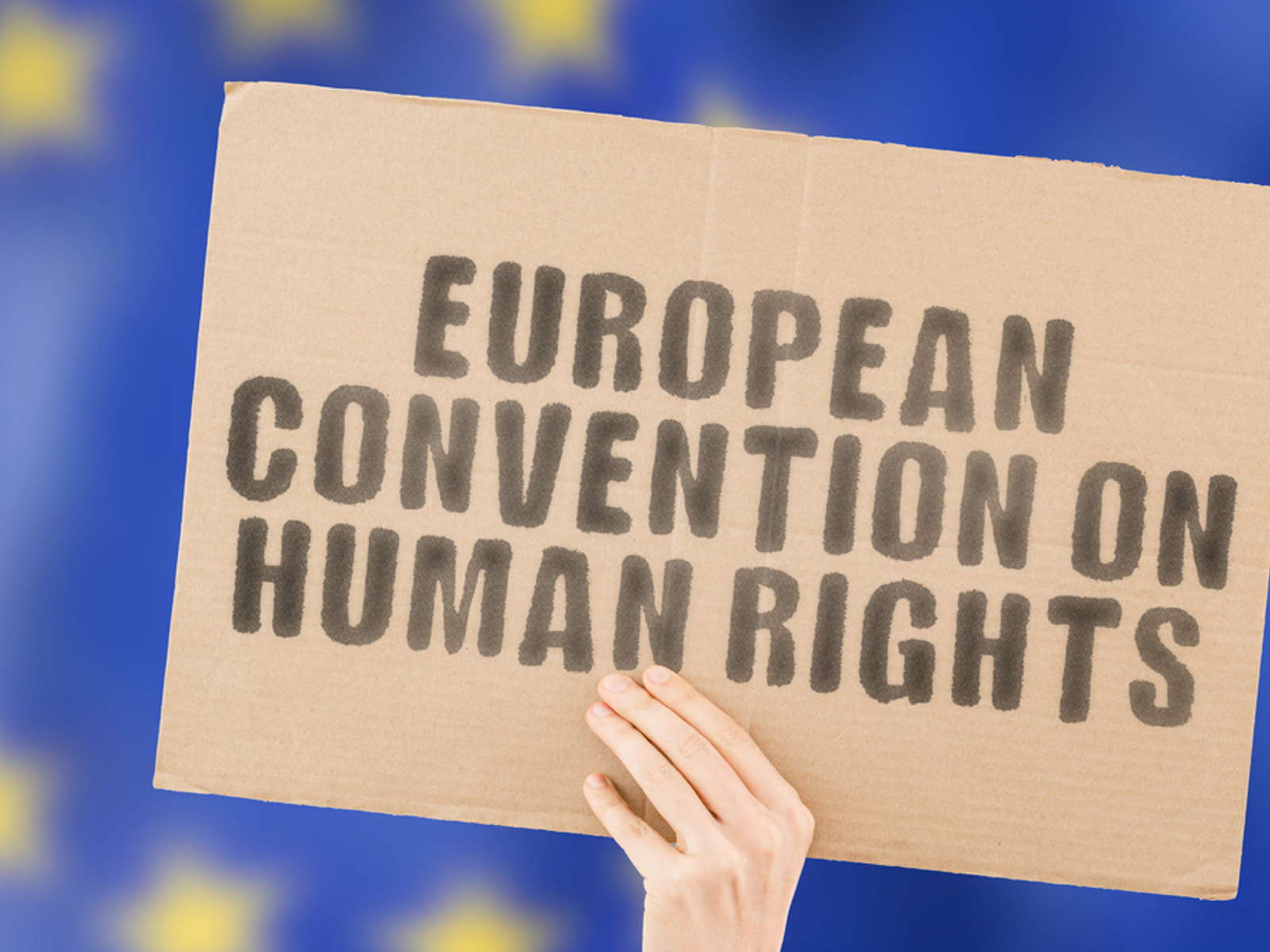
Amnesty has for many years, focused its efforts on human rights issues overseas. Recent actions by governments of both persuasions have meant a greater focus on the threats to rights here in the UK. Only this very week, the prime minister and other ministers are in Europe trying to seek agreement to a ‘modernisation’ of the ECHR arguing it is necessary to tackle the immigration ‘crisis’. In this post, we review aspects of our rights which are current or under threat.

Freedom of Expression

The outcome of November’s High Court hearing of the legal challenge mounted by Liberty and Amnesty to the ban on Palestine Action is still pending.  Amnesty’s Director of Communications claims that ‘the Government’s ban is a disproportionate misuse of the UK’s terrorism powers and breaches articles 10 and 11 of the European Convention on Human Rights – which protect freedom of expression and freedom of assembly and association.

We have seen the chilling consequences of this decision across the country – with thousands of arrests in recent months.  These mass arrests, and the silencing that organisations and individuals have felt, is a clear and frightening example of how the UK is misusing overly-broad terrorism laws to suppress free speech. Terrorism powers have never been used against what was previously direct-action protest and if this precedent is allowed to stand, it opens up a bleak future for protest rights in the UK.” 

Amnesty is seriously concerned at reports of the worsening condition of members of the Filton 24 who are on hunger strike after the damage to two aircraft at Brize Norton last year as protest against the Israeli Elbit Systems’ involvement in Gaza. None of the prisoners have been charged under the Terrorism Act but prosecutors have said both offences had a “terrorism connection”.  Amnesty has consistently opposed the use of anti-terrorism powers in these cases claiming they have been used to justify excessively lengthy pre-trial detention and draconian prison conditions.   

Arrest of Britons overseas

Amnesty International is urging the UK Government to develop a clear and consistent approach to the unjust imprisonment of British people overseas, including a new strategy that should include as a minimum:

  • the Government calling for an arbitrarily-detained person’s immediate release (including publicity where requested by the family)
  • pressing for access to a lawyer, a fair trial and medical care where relevant
  • demanding consular access insisting that UK officials be able to attend trials
  • regularly meeting with family members to outline the Government’s overall approach in the case.

The UK Government’s failures on this issue, highlighted in a recent BBC drama and documentary on the case of Nazanin Zaghari Ratcliffe, continue today.  British nationals, including Ahmed al-Doush, are not receiving the level of diplomatic support required to secure their release.  Ahmed was arrested while on a family holiday in Saudi Arabia in 2024 for social media posts.  The Manchester-based father of four was convicted under terrorism legislation and sentenced to 10 years in prison, later reduced to eight.

The UK Government has failed to advocate for Ahmed, not taking a position on his case, despite being provided by information indicating that his detention is a freedom of expression case.  Amnesty International continue to campaign so that Ahmed can be reunited with his family and urges the UK Government to advocate for his release if he is being held solely for exercising his right to freedom of expression.

Use of Facial Recognition by police

A Government consultation into police use of facial recognition is set to launch imminently.

Liberty has been calling on the Government to follow the example of other countries which have introduced laws around police use of facial recognition technology – and has urged Ministers and police forces to stop expanding its use until those laws are in place.  Alarm has been raised at the finding that faces of children are included on the records of some police forces.

Liberty wants the inclusion of the following safeguards:

  • The independent sign off before facial recognition is used
  • Police to only use facial recognition technology to search for missing persons or victims of abduction, human trafficking and sexual exploitation; to prevent an imminent threat to life or people’s safety; to search for people suspected of committing a serious criminal offence;
  • Watchlists to contain only images strictly relevant to the purposes above;
  • However, Amnesty International wants a global ban on this technology on the grounds that it violates the human right to privacy, it inaccurately targets minorities, especially people of colour and women; it intimidates people from free expression of views;
  • It cites racist bias in examples of the use of mass surveillance technology by US policing of black communities, and also Israeli policing of Palestinians.

Change declared to European Convention on Human Rights

After the UK recently joined Denmark and Italy in pressing for a rethink of aspects of the European Convention on Human Rights (ECHR), especially in relation to migration law, the Council have now taken the first steps to reshape how European courts interpret human rights.  Amid fierce debate over the balance between ECHR and national migration controls, ministers made a joint declaration which will now task 46 foreign ministers with drafting a political declaration to be adopted at the next meeting in May 2026.

The Council oversees the ECHR while its court enforces those rights across 46 member states including all 27 EC countries.  Greater national flexibility is demanded in response to human smuggling, border security and the expulsion of offenders.

Sir Keir Starmer and other heads of state have restated that, while wishing to see some ‘modernisation’ of the Convention, there is no intention of abolishing it.  The move is seen as a response to protest from far-right groups across Europe and ‘uncontrolled’ immigration and the perception that the right to family life inhibits states from deporting convicted foreign criminals.

Human rights groups are raising concerns at the dilution of the original Declaration of Human Rights as non-negotiable, universal and inclusive of all minorities. 

Write for Rights


Cathedral signing this Sunday

November 2025

The group will be hosting a signing in the Cathedral cloister on Sunday 30 between 12 noon and 3 pm. We aim to do this every year and it is an opportunity for people visiting the Cathedral – for a service or other reason – to stop for a few moments to sign. There are many, many people who are imprisoned or under house arrest for their beliefs or because they are human rights defenders.

November 2025 Human Rights Newsletter Highlights


November 2025

We are pleased to attach the minutes and newsletter for November thanks to group member Lesley for compiling them. They contain reports from other group members and are of general interest to followers of human rights issues. There is a report on immigration for example a topic which continues to make political waves in the UK. It makes the point that whereas the main focus of political ire and furious editorials and commentary is the number of arrivals on boats, the actual number is relatively tiny in proportion to the total number of immigrants.

There is also a report on human rights issues in the UK a matter of increasing concern. Both the Conservative and Labour governments do not like protests and have – or are planning to – introduce more and more legislation to hamper, ban or severely restrict protests and demonstrations.

There is a list of forthcoming activities which would provide an opportunity for anyone interested in joining to make themselves known.

Recent posts:

Other Amnesty groups are free to use content.

The Chilling Impact of UK Policing on Civil Liberties


Update on current issues in the UK

September 2025

Much of our coverage of human rights issues on this site features overseas countries and indeed there is a lot to write about. The latest edition of the Amnesty magazine (Autumn 2025, Issue 226) has a feature on the rise and arguably increasing number of authoritarian leaders for whom human rights are things to be suppressed by all means possible. The list includes Javier Milei of Argentina; Narendra Modi with his draconian anti-terrorism law used to target activists, journalists, students, protesters and others.

Vladimir Putin needs no introduction nor does Xi Jinping who enacts repressive laws, persecutes Uyghurs and the repression of Tibetan culture continue unabated. Others include Mohammed bin Salman in Saudi who is busy wooing anyone who’ll listen while engaged in suppression of any dissent and who has executed record numbers in 2024. Victor Orban who has increasingly targeted civil society while remaining a member of the EU. Netanyahu in Israel is well known and presiding over genocide in Gaza and intensifying violence and apartheid in the West Bank. He bans foreign journalists and the UN from entering Gaza.

Chilling effect’

But there are worries in the UK with more and more laws being passed to inhibit protests and empower the police to arrest or interdict such protests and those attending them. Palestine Action has been much in the news and the organisation was declared a terrorist group by the previous Home Secretary, Yvette Cooper. A high court judge has ruled that the co-founder of PA can bring an unprecedented legal challenge to the Home Secretary’s decision. Mr Justice Chamberlain said the proscription order against the group risked ‘considerable harm to the public interest’ because of the ‘chilling effect’ on legitimate political speech.

At the recent rally on 6th September in London organised by Defend our Juries, police arrested nearly 900 people many of whom were carrying Palestine Action placards. A 3 day hearing starts in November and it will be the first time an appeal is allowed against a ‘terrorist’ organisation. The court has given permission for both Amnesty and Liberty to intervene in the hearing.

Human Rights Watch: World Report

HRW’s World Report amplifies the above comments in its section on the UK. Laws criminalising protest undermine democratic rights they note. They remain on the statute book and the Labour government shows no sign of repealing them. The 2023 Public Order Act, the 2020 Police Crime Sentencing and Courts Act also remain on the statute book both of which increased police powers and act to limit free speech.

There are comments about the increasing disparity in wealth in the UK. On immigration and asylum it notes the failure to provide safe routes and how politicians and some media outlets have contributed to a hostile environment towards ethnic and racial minorities.

Policing

Since 2002, the police have had an increasing presence in schools under the Safer Schools Partnership programme. Liberty has found no evidence that this police presence has made them safer and that there is no reliable evidence that such presence reduces crime or violence. One problem is that police are mandated to report crime in schools even it may be inappropriate in the circumstances. Lack of funding for mental health leads police to step into roles unrelated to policing it notes One of their recommendations is that police a more supportive roles in PSHE activities. See the report for more details.

It cannot be argued that the UK is anywhere near the situation in some of the countries briefly mentioned above. Journalists are not murdered as in Russia, opposition politicians are not imprisoned for no reason which happens in Saudi, there are no second class citizens as in Israel. However, the slow drip of legislation and increasing police powers, widening use of facial recognition even in peaceful protests, a legal system largely the preserve of the very rich and elements of our media all too happy to laud clampdowns and arrests of those they don’t like are matters of increasing concern. We shall continue to highlight these issues in our posts.

Previous posts:

Why not become a subscriber?

Forthcoming meetings etc


September 2025

This is a short list of things we have planned for the coming months. If you were thinking of joining us, one of these would be a good opportunity to come and make yourself known. Joining the group is free.

  • World Day Against the Death Penalty is on 10 October. The group has focused on Oklahoma this year as part of Amnesty’s campaign of asking groups to focus on a particular state in the Union. There will be a separate post about this shortly. For anyone who wants to be involved with stopping the use of this penalty which is the ultimate cruel punishment and where mistakes cannot be rectified, let us know.
  • Our annual carol singing takes place on 23 December.
  • The next group meeting is on 9th October at 2pm in Victoria Road.
  • We have a coffee morning booked for February next year in St Thomas’s church, Salisbury. Details nearer the time.
  • Members of the group attend the weekly vigil for peace in the Middle East outside the Library each Saturday starting at 5pm for half an hour.

Keep an eye out here or on Facebook or Bluesky for updates @salisburyai.

Coffee morning


Group holding a coffee morning

June 2025

PAST EVENT

We held our coffee morning in St Thomas’s Church in Salisbury this Saturday 5th July

This is a fund raising do but it is an opportunity to meet the group if you are thinking of joining us. The issue of human rights is ever present with mass violations around the world some of which we have featured in previous posts. But it is also a rising issue in the UK with the legislation passed by the previous Conservative government curtailing various freedoms and increasing police powers to limit demonstrations, which are still on the statute book. The Labour government shows not sign of repealing them. The threat by the Home Secretary to prohibit Palestine Action is also of concern.

We look forward to seeing you.

1751706000

  days

  hours  minutes  seconds

until

Coffee morning

Why Labour Leaders Are Pushing for ECHR Revisions: A Political Analysis


Alarming stories that Labour leaders are wanting to reform the European Convention

June 2025

Alarming reports have emerged over the past few days that the current government is considering some kind of revision to the European Convention of Human Rights (ECHR). Figures such as the prime minister Sir Keir Starmer, the Justice Secretary Shabana Mahmood and the Attorney General Lord Hermer have made speeches suggesting disquiet concerning aspects of the Convention. In particular it is article 3: No one shall be subjected to torture or to inhuman or degrading treatment or punishment and article 8: Everyone has the right to respect for his private and family life, his home and his correspondence.

This story has history and the statements by politicians are more than usually disingenuous. To understand the story and the reasons for this recent slew of statements it is necessary to look at causes and why there is a clamour among politicians, some of the public and the media for change.

Stage 1the media

Much of the pressure has come from sections of the media so it is necessary to look at what is going on there. Newspaper readership has declined precipitately. Between 2000 and 2010, the decline was 65% and in the following decade up to 2020 a further 55%. Add in rising costs and declining advertising, and there is something of a crisis in the newsrooms. In this climate, it is cheaper to break into the emails, phones, bank accounts and even houses of the rich and famous, politicians and footballers to achieve a juicy front page, than to carry on the normal business of journalism.

Then came the hacking exposures and the Leveson enquiry which exposed the depth and extent of the hacking and criminal activity. It included senior police officers in the Metropolitan police in particular who sold information to the newspapers. This changed the dynamic of the industry and the notion of privacy was an anathema to their business models.

Over the last two decades there have been hundreds of stories alleging that criminals were not getting their just deserts because of their human rights either because of the ECHR or the domestic Human Rights Act. It was a ‘criminal’s charter’ they alleged. Photos of wanted criminals could not be circulated because of their human rights (they can), police could not evict an armed man until they provided him with a McDonalds hamburger because of his human rights (they could but it was normal practice to accede to requests to cool the situation). Abu Qatada was seriously misreported in the tussle over his deportation to Jordan.

Sadly, positive stories about the acts were almost entirely missing. The Daily Mail used the act to defend its journalist’s rights to protects their sources but strangely forgot to mention this to its readers.

Stage 2the politicians

Then the politicians began to join in perhaps sensing from the newspaper coverage that they were onto a popular winner. After all, if the voters were reading a never ending litany of stories about the evils of the human rights laws and Europe meddling in our affairs, it was a gift. It soon became part of the Conservative manifestos to abolish the act or later reform it. It became tangled up with the Brexit crusade and it is possible that many thought that coming out of Europe would mean that the ECHR would also be history. There was the famous cat story by Theresa May which was almost complete nonsense.

There was meant to be a Leveson part II to look at the unlawful conduct between the media and police but there were allegations that in return for a softer ride from the press, Keir Starmer agreed not to set it up. These allegations are denied. There are no plans for a part II.

Stage 3 – the boat people

As the means to arrive into the UK as a refugee or an asylum seeker diminished so the numbers who took to the boats to cross the Channel rose. This became a matter of massive political importance and the Reform party made huge progress with its promises to stop it. Media stories of asylum seekers being installed in hotels are constant. Despite boat crossings being only a small part of those coming to the UK, they loom large in the public imagination and politicians on the right have taken note of this.

The problem is that the government has obligations under the ECHR and other agreements, to treat asylum seekers in a proper way. Demands to simply ‘send them back’ are difficult to do particularly as ‘back’ can mean a county riven by war or where they can face dire consequences. But in simplistic terms human rights are standing in the way, as Mahmood says: ‘voters say international law stop them achieving the changes they want to see.

Stage 4 – the Reform party

Along came Reform and quickly began to made inroads into the political landscape. The overturning of a massive Labour majority of 14,700 in Runcorn and Helsby by Reform has shaken them badly. Reform has simple answers to matters like immigration which appeal to many and which has defeated both the Conservatives and now Labour. They would pick up boats in the Channel and return them to France. Asylum seekers would be processed off shore. These and other policies quick fix policies appeal to many and saying that they are difficult or impossible to do because of our international obligations carry little weight with many voters. They are even inflammatory particularly with those who have a deep distaste for anything European.

Stage 5 – today

So the Labour government is feeling under pressure. It has not ‘solved’ the Channel crossings problem. It has lost popularity for a variety of reasons quite apart from the discussion here. Reform is making great strides and even ahead in some polls with suggestions that Nigel Farage becoming a future prime minister was not the joke it might once have been. The Home Office remains dysfunctional and would take years to reform even under competent leadership. The party is becoming desperate to be able to counter the tide of dissatisfaction present in large parts of the kingdom particularly in the red wall seats.

So this brings into where we started and speeches about trying to reform elements of ECHR. The sadness is that they cannot. It would take years to carry through any reform in Strasbourg with little likelihood of success. If the government were to resile from either or both articles 3 and 8 would it solve its problems? Again sadly, no. The opposition to human rights laws and agreements have little to do with the people at the bottom of society so to speak. Almost no part of their speeches are about the victims of injustice which human rights are about.

As we have argued, it is sections of the media who have over decades created myths and disinformation about the workings of the laws. It is their business models which are under threat not the fate of asylum seekers. Why else would the Murdoch press spend over £1 billion in keeping the facts of its intrusion and criminality out of the courts? It is an irony – almost a supreme irony – that the much prized sovereignty that people apparently so desperately want is not in fact available to them. The Judiciary are all too happy to allow these hugely expensive legal actions to go ahead and thus subvert justice and free speech. There is no justice in any meaningful sense of the word. The rich and powerful can ‘buy’ silence by paying large sums into court that no one can afford to match.

These speeches appear to be preparing the ground at present in an attempt to match the rhetoric of Reform politicians. Instead of a proper concern for justice, establishing a Leveson II enquiry into the criminality of some of the media and their friends in the police, or tackling the rampant injustice of the defamation laws which serve to protect the rich from proper enquiry, our politicians seek to curry favour and favourable headlines in those very media outlets which have distorted the public’s attitudes to the laws which in truth protect them. The sadness is that the three politicians saying this stuff are experienced human rights lawyers who know it to be a distortion of the truth. A truly bizarre state of affairs.

Group minutes, June


June 2025

We have pleasure in enclosing the minutes of our last meeting held on 12th June with thanks to group member Fiona for preparing them.

Blog at WordPress.com.

Up ↑