RightsInfo extends its range


rightsinfo-logoRights Info has only been going four months but has already begun to establish itself in the human rights world.  It is dedicated to providing accurate information on the subject of human rights. This is extremely important now because the present government would like to repeal the Human Rights Act (HRA) and replace it with their own Human Rights and Responsibilities act (or whatever it may be called).  This has been promised for several years and we await details in due course.

The government is egged on by a media which regularly produces inaccurate or exaggerated stories of the workings of the act, often tying it into the European Convention on Human Rights, presenting it as an unwarranted intrusion into our legal processes.  The fact that it was British and French lawyers who prepared the ECHR – at Churchill’s behest – based on basic principles of justice established over many years, seems to have been forgotten.  As we have noted before, the act is of great benefit to ordinary citizens in the UK who use it to secure justice from authorities.

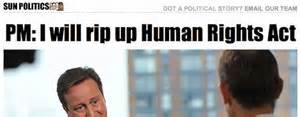
Rights Info has been providing a source of information to counter the tide of misinformation from newspapers and some politicians. They have just launched a similar exercise to provide information about the European Court which also gets a bad press.  It is called The European Court of Human Rights Uncovered.  One of the examples it gives concerns the total number of applications and judgements.  There have been 22,781 applications against the UK.  Number of judgements is just 513 of which the court found at least one violation to be 301.  301 over 22,781 is 1.32%.  The Sun newspaper reports this as ‘UK loses 60% of cases’.

Terrorism cases get a lot of publicity with the impression given that they are winning cases all over the place.  In 40 years (1975 – 2015) out of 297 cases, just 14 were terrorists.  203 were ‘other people’ that is ordinary citizens in their fights against authorities of one kind or another.

Over the coming months we are likely to see an increase in bad news stories about the HRA and the European Court as the government seeks to soften up the public ahead of its plans to abolish it.  It is useful to know that there is a source of accurate information to go to.

Human Rights Act under threat


Leading or following?

The Human Rights Act HRA remains under threat from the Conservative Government who promised in their manifesto to abolish it.  There is speculation that it was put in the manifesto to appeal to Ukip supporters and those for whom anything with ‘Europe’ attached to it is bad news.  They were expecting to be in a coalition again – so the theory goes – and the LibDems would not have allowed it to go ahead.  In other words it was a promise unlikely to be put into effect but sounded good in the manifesto.

Now that they are in power on their own they are faced with a problem.  Abolition will prove extremely difficult for all sorts of reasons.  Reform is difficult if you have nailed your colours to the abolition mast.  The Scots will not countenance it and the recent proposal to allow hunting with dogs to be re-introduced was effectively ended by the Scot Nats who demonstrated their influence in Parliament.  It also underpins the Good Friday agreement in Northern Ireland.  It may also mean us withdrawing from the European Council.  It will send a very negative message to those countries, such as Russia, who are being pressed to improve their human rights records, a point made by Dominic Grieve QC MP when he came, at our invitation, to speak in the Cathedral.

Just over a year ago our local MP John Glen (Con) wrote to the Salisbury Journal to say he was keen on abolition.  Our group wrote to Mr Glen and after an exchange of letters, a meeting was arranged in June 2014.  At that meeting, the many unreported benefits of the act were explained and that these benefits were likely to apply to a number of his constituents.  The battle that individuals have with authorities of all kinds to get a fair deal is made that bit easier by the Human Rights Act.

Unfortunately, the act gets a near universal bad press certainly from the tabloid end of the market.  An incessant series of articles claiming that all kinds of evil people escape justice because they can claim the right to a ‘family life’ or it’s their ‘human right’, inevitably infuriates people reading it.  Frequently, it isn’t the HRA at all but some other piece of legislation involved.  No matter.  Some of the stories are hugely exaggerated or just plain wrong.  But the benefits to ordinary people seldom gets a mention.

In the latest edition of Valley News (a free sheet in the Salisbury area, July 2015) Mr Glen writes:

[…] This month also marked the 800th anniversary of Magna Carta.  In addition to some spectacular celebrations, this has re-opened the debate about human rights here in the UK.

Too often I hear from constituents who are fed up with some of the decisions made in our courts and in the EU, about human rights laws.

While these cases represent only a small minority, I do not believe we should simply turn a blind eye to them.  A recent opinion poll suggested three quarters of the UK felt that human rights laws were being applied too widely.

It is far from healthy in our democracy to accept this status quo: human rights should be celebrated, and I hope we seize the opportunity of the Magna Carta anniversary to restore some confidence in them at home.

We do not know how many constituents have written to Mr Glen or the topics they are concerned about.  He makes no mention of benefits to ordinary people and to some of his constituents.  But if his correspondents have read tendentious stories in our media, it is hardly surprising they write to their local MP. For example a Daily Mail journalist spoke of the HRA ‘[which] blights every aspect of our life.’

Maybe one of the reasons these papers do not like the act is because there is the right to privacy within it.  There is no mention of benefits to ordinary people.  Since many newspapers have depended on intrusion – using both legal and often illegal means – to get their stories, this represents quite a threat to their business model.

Human rights should indeed be celebrated as Mr Glen says and we hope he can do some celebrating.  But it does need politicians of courage to stand up and defend the act and the many beneficial effects it has on the lives of ordinary – or should we say ‘ordinary hard-working’ – people’s lives. At our meeting with Mr Glen he was asked if he was just repeating stories from the Daily Mail.  He said he did not but that he did have to read it to understand what his constituents were writing to him about.  We can only hope that ‘to restore some confidence in [human rights]’ means explaining the benefits, countering the myths and criticising the many misleading stories.  In short, putting the case for the act.


A new web site established with the sole purpose of countering the misinformation and disinformation about human rights is www.rightsinfo.org which is well worth putting in your favourites.

Magna Carta Now – panel discusssion with readings by Edward Fox OBE


A PANEL DISCUSSION WITH READINGS BY EDWARD FOX, OBE

MAIN HOUSE

Monday 15 June at 2pm

MAGNA CARTA

Magna Carta’s importance meant that it was traditionally read out at the opening sessions of Parliament and in English cathedrals. This panel discussion about its relevance today will include Kate Allen, Director of Amnesty International UK, Professor Guy Standing, author of The Precariat: The Dangerous New Class and Ben Rawlence, formerly of Human Rights Watch. Excerpts from the charter will be read by one of our most celebrated actors, Edward Fox OBE.

Chaired by Peter Curbishley.

Presented in partnership with the Playhouse and Amnesty International.  Tickets from Salisbury Playhouse http://www.salisburyplayhouse.com or 01722 320333

Repeal of the Human Rights Act HRA and a new Communication Bill both put pressure on human rights in the UK


Great was the joy among those who want to see an end to the ‘hated’ Human Rights Act when it was announced that Michael Gove is the new Justice Secretary and Theresa May – no longer hampered by Lib Dems – will be able to introduce a new Communication Bill commonly called the ‘snoopers’ charter’.

Details will be in the Queen’s Speech at the end of the month and the act might be gone by Christmas.  We look forward to seeing the British Bill of Rights when it is finally published and there is press comment that it has gone through eight drafts in an attempt to sort out the complexities.

There will be many who will be delighted by these moves such has been the press campaign waged against it.  We have noted in a previous blog that a web site called Rights Info has been launched to try and counter the avalanche of negative reporting.  As the debate goes by it would be worthwhile catching up with this site which seeks to set out the true story in each case.  Few will read it unfortunately.  The case of Abu Qatada has become to epitomise the (alleged) failings of the act and the fact that Jordan used torture was conveniently overlooked.

In common with almost any act of parliament you care to mention, the Human Rights Act is capable of improvement or reform and few would argue with that.  For years the problem was individuals who had a problem had to make their way to Strasbourg to seek justice.  The HRA was passed with a lot of cross party support to enable these sorts of cases to be heard in the UK.  Such has been the hysteria and miss-reporting that a calm look at the act does not seem to be possible and in any event the die has now been cast.  The benefits that many ordinary people derive from the act rarely get a mention.

We shall follow events with interest.

UPDATE: 16 May Message from Kate Allen

Over the last few months we have been calling on all our political leaders to keep the Human Rights Act. Tens of thousands of you have taken action, held hustings, and discussed human right issues directly with your prospective parliamentary candidates. 
With the election results now in it is likely that the Human Rights Act is will be under threat like never before.

Over the next few days and weeks we will be carefully analysing the results and planning our next steps. Together we face a huge challenge and you have a vital role to play in the next phase of our campaign if we are to be successful. We will be in touch with more information about the campaign and how you can get involved soon.

Thank you,

Kate Allen
Director, Amnesty International UK 

Magna Carta event at the #playhouse with #EdwardFox reading


Playhouse event

UPDATE: Piece in the Salisbury Journal

On Monday, June 15, celebrated actor Edward Fox will read extracts from Magna Carta at Salisbury Playhouse as part of a panel discussion investigating the relevance of the historic document today.

We are pleased to announce an event at Salisbury Playhouse called Magna Carta Now on 15 June at

Edward Fox
Edward Fox

2pm.  It will involve Edward Fox OBE who will read parts of the Magna Carta and there will be a panel discussion on the relevance of these readings in the politics today.

The event is particularly relevant in view of the announcement by the new government of their plans to scrap the Human Rights Act (or the ‘hated’ Human Rights Act as some would say), details of which are expected in the forthcoming Queen’s Speech on 27th.  We have waited several years now for the promised British Bill of Rights which we understand from press comment has gone through at least 8 drafts but has still not been published.

The panel is a distinguished one:

  • Kate Allen, Director of Amnesty UK
  • Prof Guy Standing, author of among other writings The Precariat and A Precariat Charter
  • Ben Rawlence, from Salisbury, who has been a country representative for Human Rights Watch and is author of Radio Congo

Tickets are available from Salisbury Playhouse www.salisburyplayhouse.com (24 hours) or phone 01722 320333 or at the Playhouse itself.

We hope local Amnesty supporters and others will come along to what promises to be an interesting event.  We should add that there will be an opportunity for audience participation at the end of the event.

Human rights myths explained HRA


For British readers of this site, the constant tide of misinformation and one-sided commentary on the Human Rights Act will be familiar.  It forms part of the anti-European opinions of the majority of our media owners who do not like the idea of a ‘right to privacy’ for the citizens of the UK.   A new web site which seeks to counter the myths is very welcome therefore.  Produced by the newly launched Rights Info, you can access the site from the bottom of this page.

Each of the 14 examples gives the headline story as featured in one or more of our newspapers such as the Daily Mail or the Sun, then an explanation of the facts including the legal judgement in some cases.

Display goes up today in the Cathedral


We today erected the display in the cloister at Salisbury Cathedral to celebrate the signing of Magna Carta and to illustrate the #StopTorture campaign.

Display in the cloister

It will remain in place for many weeks.  There is also a panel on the Human Rights Act.

Keep the Human Rights Act


UPDATE: 28 APRIL

Human rights myths  Thanks to http://www.RightsInfo.org – see link at the bottom of this site.

As we pointed out in our previous blog, the Conservatives, if they form an administration after the election, want to abolish the Human Rights Act #HRA.  Amnesty has launched a campaign with a link to KeeptheAct spelling out the benefits of the act for everyone in the UK.  For example:

  • An elderly couple faced separation after 65 years of marriage – until their local authority finally allowed the wife to move in into her husband’s care home to be with him.  Thanks to the HRA
  • When a woman had to flee a violent husband, social services said she’d made herself ‘intentionally homeless’, refused to house her and tried to put her children into foster care.  But she was able to keep her family together – thanks to the Human Rights Act
  • Families of British soldiers killed in Iraq were able to call the government to account for failing to protect them properly – thanks to the human rights Act
  • A woman with multiple sclerosis got her local council to increase the amount of care she receives – thanks to, well you know the story.

These are some of the day to day stories of the HRA and how it helps ordinary people in their daily lives.  But it is a story a lot of our newspapers do not tell, preferring to peddle disinformation and myths.  The act protects ordinary people and means that public bodies like the police and local authorities must respect our basic human rights. abolish hraIt does seem strange that we are celebrating 800 years since the signing of Magna Carta with politicians waxing lyrical over that document whereas its modern version is derided and is under threat, often for quite spurious reasons.  Go to KeeptheAct and add your voice.

Conservatives plan to scrap the Human Rights Act


UPDATE: 5 May  … still no sign of a draft of what the British Bill of Rights will contain.  People go to the polls in a couple of days time without knowing what is planned.  Since the election campaign has been based largely on the deficit and who is going to spend the most on the NHS, oh and being run by Scotland: what is, or is not, in the BBoR may seem trivial.  But it touches on all our rights and on our relationship with Europe so it is important. 

The #Conservative party #manifesto was published today 14 April and as promised, there is a plan to scrap the Human rights Act #HRA.  The manifesto says on p73:

We will scrap Labour’s Human Rights Act and introduce a British Bill of Rights which will restore common sense to the application of human rights in the UK.  The Bill will remain faithful to the basic principles of human rights, which we signed up to in the original European Convention on Human Rights.  It will protect basic rights, like the right to a fair trial, and the right to life, which are an essential part of a modern democratic society.  But it will reverse the mission creep that has meant human rights law being used for more and more purposes, and often with little regard for the rights of a wider society.  Among other things the Bill will stop terrorists and other serious criminals who pose a threat to our society from using spurious human rights arguments to prevent deportation.

This will have profound implications in our relations with Europe and we still do not know what the new bill will look like even after many years of discussion about the abolition of the HRA.  Incidentally, although the Act was introduced under the Labour administration, it was voted for by many Conservatives as well.

A draft of the BBoR has been a long time a coming and the latest we heard was that it was to be published before Christmas.  One assumes a draft will now appear before polling so that voters can see in more detail how it differs from the existing HRA.

The Conservatives seem to have got themselves into something of a bind with this Act.  They were happy to go along with the anti-European sentiment expressed by most of our newspapers and were obviously spooked by the Ukip surge over the last few years.  There has been a torrent of misinformation and disinformation about the workings of the HRA which, apart from the honourable exception of Dominic Grieve MP, they have made little or no attempt to counter with facts.

What got them steamed up most of all – and got our tabloids into a fearsome lather – was the case of Abu Qatada or the ‘preacher of hate’ as he was called.  Many attempts were made to deport him but the problem was not just the HRA but the fact that he might be tortured when he was returned to Jordan, or the Jordanians would convict him using evidence obtained from torturing others.  Is this an example of ‘spurious human rights arguments’?  Since, quite apart from the ECHR, we are signatories to treaties banning the use of torture, there was a problem in getting him out of the country in any event.  We might note in passing that the Jordanians had to clean up their judicial act as part of the agreement to send him back.

A puzzle though is that the other area which gets politicians steamed up is the issue of a right to life yet this is quoted as being ‘an essential part of a modern democratic society.’  Something about a cat.

The fact remains that many ordinary people are beneficiaries of the Act.  Lawyers can use it in their day to day work with individuals and their dealings with authorities of one kind or another.  Little of this gets published in the media and most are unaware of it unless by chance they know of someone who has benefited.

As far as the Strasbourg court is concerned, the UK are the ‘good guys’ since we still have a largely uncorrupted police and judiciary and people can appeal decisions in cases of injustice.  Our police operate under PACE and suspects have a right to a lawyer.  Very few of the cases which go to Strasbourg get overturned – we believe there were only eight last year.

As one of the original countries, along with France, who prepared the ECHR after the war at the behest of Winston Churchill – a Conservative – if we leave the Convention it will have significant repercussions in places like Belarus, Turkey and Russia.  Belarus is the last country in Europe with the death penalty and human rights are largely ignored.

It will be interesting to see how our local Conservative candidate John Glen reacts to this.  When he came to see the local group to discuss this topic he did agree to be more balanced in his comments which we welcomed.  This followed an article in the Salisbury Journal saying he wanted it abolished.  But now it is part of the manifesto for his party we shall have to see…

Magna Carta and Human Rights Today


Around 160 people attended the Cathedral this evening to hear Dominic Grieve QC MP give a brilliantly lucid lecture in support of the Human Rights Act.  He traced some of the key clauses of the Magna Carta and showed how they had continuing relevance today.  We hope to include a transcript of his lecture soon.  His lecture followed the annual Amnesty evensong which also was very well attended with around 120 people.

Blog at WordPress.com.

Up ↑