The death penalty in Saudi Arabia: Salisbury group action
Thursday 10th October 2019 will be the 17th World Day Against the Death Penalty so we are writing to invite you to take part in our Group Action.
This year we are focusing on the practice of the death penalty in Saudi Arabia. A report by Baroness Kennedy, presented to the 42nd session of the UN Human Rights Council, has highlighted the ‘alarming’ rise in state executions, including crucifixions. It states that more than 134 people have been executed this year, with at least 24 more prisoners at imminent risk, including three children.
We are asking supporters to write to John Glen MP on 10th October, drawing his attention to the report, and calling on him to make representations to the Government to support its recommendations and to condemn Saudi Arabia’s use of the death penalty.
I have attached a copy of a suggested letter to Mr Glen (the member of parliament for Salisbury), which you are welcome to use, or to adapt into your own words. The letter contains a link to Baroness Kennedy’s report.
We have a number of events being planned and this is a brief summary for members and supporters.
I Welcome
At the Methodist Church in Salisbury we have part of the series of photographs taken by Magnum photographers on display. These show the life of refugees in camps around the world. On until early February. Please check opening times on their website
Refugees
still on the subject of refugees, there will be a coffee/mint tea morning at the Methodist Church on Saturday 2 February 10:30 till noon in support of Salisbury Syrian refugee families. You will be able to do both these events at the same time
Refugee vigil
being organised for March/April. Keep an eye on this site or Facebook for details
Cathedral Evensong – date TBC
Arts Centre Film
This will be a screening of The Breadwinner on 8th March 2019. This film is set in Taliban controlled Afghanistan and concerns a girl dressing as a boy so she can feed her family. Further details nearer the time or from the Arts Centre
Market Stall – 8th June 2019
Refugee Week – 17th-23rd June 2019
Joining. If you live in the Salisbury/Amesbury/Wilton area you would be welcome to join us. Human rights are under threat as never before and the situation in the UK is not fully assured. Some want to abolish the Human Rights Act. The best thing is to make yourself known at one of our events. It is free to join us locally but if you want to join AIUK there is a membership fee.
We held our stall on Saturday and it was extremely successful. Since the move from the side of the Guildhall, we have found the new location to be less than satisfactory but Saturday was different. It started almost as soon as we arrived and we continued on until noon with a few stragglers still buying as we packed up.
Thanks to all members who volunteered for the morning.
Hugely successful morning and we were kept busy from before 8 until we closed. Many thanks to members who came and did a stint on the stall – Andrew; Fiona; Diana; Ria; Tony; Lesley and Peter. Helped by having a good range of stock including plants. Despite a refill of stuff mid morning – we did not have much left at the end of the day.
Photos from this morning will be posted within 24 hours.
Stock and volunteers needed!
On Saturday 23rd June we shall be having our annual stall in the market place and we would welcome items for sale. Popular are clothes, bric-a-brac, good quality books only, CDs and plants. No electrical items please. We shall be setting up at 7:45 so if you do have something, you can bring it along any time after that although earlier the better as people congregate early.
If you can spare an hour to volunteer that would be appreciated.
We have reluctantly decided to cancel an event – planned for June this year – which was designed to highlight the positive aspects of the Human Rights Act and the benefits we all receive from human rights legislation generally. It was to consist of a week of talks and other events in Salisbury with the overall theme of emphasizing how human rights have improved the lot of citizens in the UK. It was arranged during the anniversary week of Magna Carta.
The idea for the event was spurred by the negative press this legislation receives and the drubbing that European institutions get from our media. It is connected loosely to the Brexit debate where one of the guiding principles of those who wish to leave the EU is to be free of what they perceive as interference in our justice system by the European Courts.
In planning the event we had assumed that legal firms in Salisbury would be willing to support it and it was something of a surprise that none would. Indeed, the majority did not reply to our requests. One firm even hosts a human rights organisation but still did not reply. We did eventually secure some financial support (from Poole) but it arrived probably too late for us to be able to do the planning.
So it will not now take place which is a pity. Salisbury has recently become associated with the poisoning issue and allegations that Russia was to blame: highly likely in view of their previous behaviour and the nature of the attack. At base is the issue of human rights. Russia – if it is them – is a state in which lawlessness is now the norm. There is no free press and corruption is the order of the day. ‘Dirty’ money is looted by the Putin regime and much of it finds its way into the City of London. Journalists are murdered and anyone looking like they might be a threat is prevented from standing in elections.
In the UK, despite many unsatisfactory aspects in our political process and the revolving door corruption, we are still able to vote them out – a luxury the Russians do not enjoy. Ordinary people have more rights as a result of the Human Rights Act than previously yet they are constantly told that the act is a menace and needs to be got rid of. It is sad that we were unable to celebrate this fact.
The minutes of the July meeting are available here thanks to group member Lesley for preparing them. A full meeting in which we discussed the death penalty report; the results of the stall; the film at the Arts Centre; social media statistics; the meeting at the Cathedral and the BBQ in August. We also discussed the letter sent to John Glen about the Maldives (reply awaited).
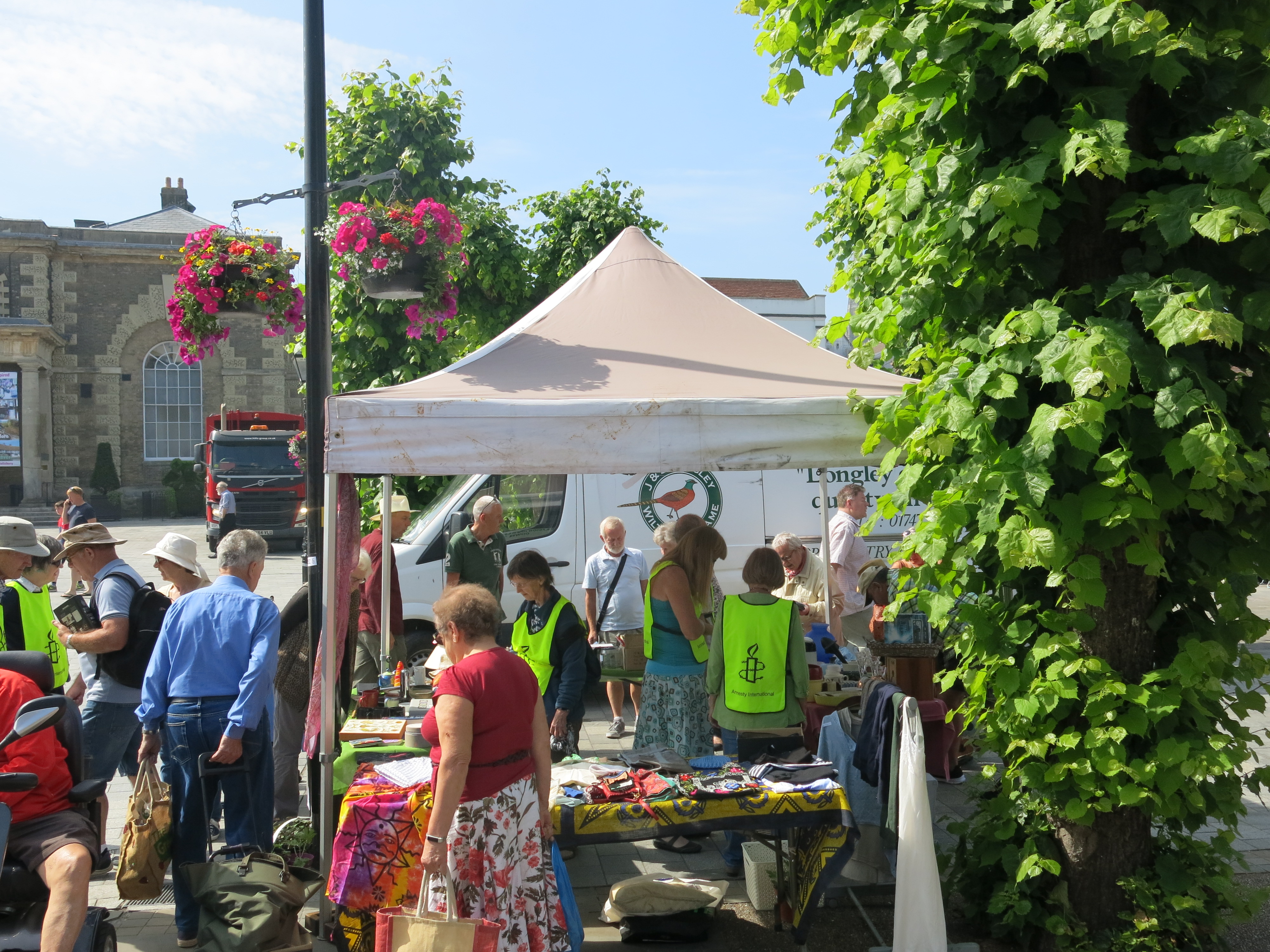
At its meeting on Thursday evening, the group decided that the profits from the stall which will take place in the market square in Salisbury tomorrow – Saturday – will go to this month’s Amnesty Urgent Action. In the event we took £234 so over £460 will go the the African state. Thanks to all those who helped on the stall and who bought things from us.
Picture of the stall in Blue Boar Row, Salisbury
This action concerns the treatment of women in Burkina Faso and in neighbouring Sierra Leone. They are subject to forced marriages often to men who are up to 50 years older than them. Some can be married as young as 10. They have no choice over these marriages nor when nor whether to get pregnant. Some have babies at such a young age that their lives can be threatened or they experience lasting medical complications including incontinence. Female Genital Mutilation is also common.
Report sent to the Salisbury Journal and was published 23 June can be read here:
The funds raised by the Salisbury group of Amnesty International at their stall last Saturday are to be sent to Burkina Faso in Africa as part of a programme to help girls and women in those countries.
The group managed to raise over £234 and this will be doubled by the Department for International Development to make £468. In Burkina Faso, whether you are a girl or a woman, you are prevented from making crucial decisions about marriage and whether or when to get pregnant. Some girls as young as 10 are married and their partners can be as much as fifty years their senior. Physical and sexual violence against women and girls is common and a particular concern is the large number of pregnancy complications and death among girls who bodies are not yet ready to bear children.
Amnesty in Burkina Faso is working with 5 of the shelters which house girls who have been subject to early forced marriage or female genital mutilation.
Andrew Hemming, the chair of the local group said “we are delighted to have contributed to this scheme and for the funds to go to such a good purpose. The doubling of the monies raised by DfID makes it extremely worthwhile.” Further details can be found on the group website
The death penalty summary for the last month is published below with thanks to group member Lesley for compiling it. It contains some good news with four more abolitionist countries and modest progress in USA. Set against that is the dire situation in Saudi, Iran and Pakistan. China is the worlds leader in executions but the figures are a state secret.
Many of the items in the summary are covered in greater detail elsewhere on this blog.
Independent judge-led inquiry into UK complicity in torture needed
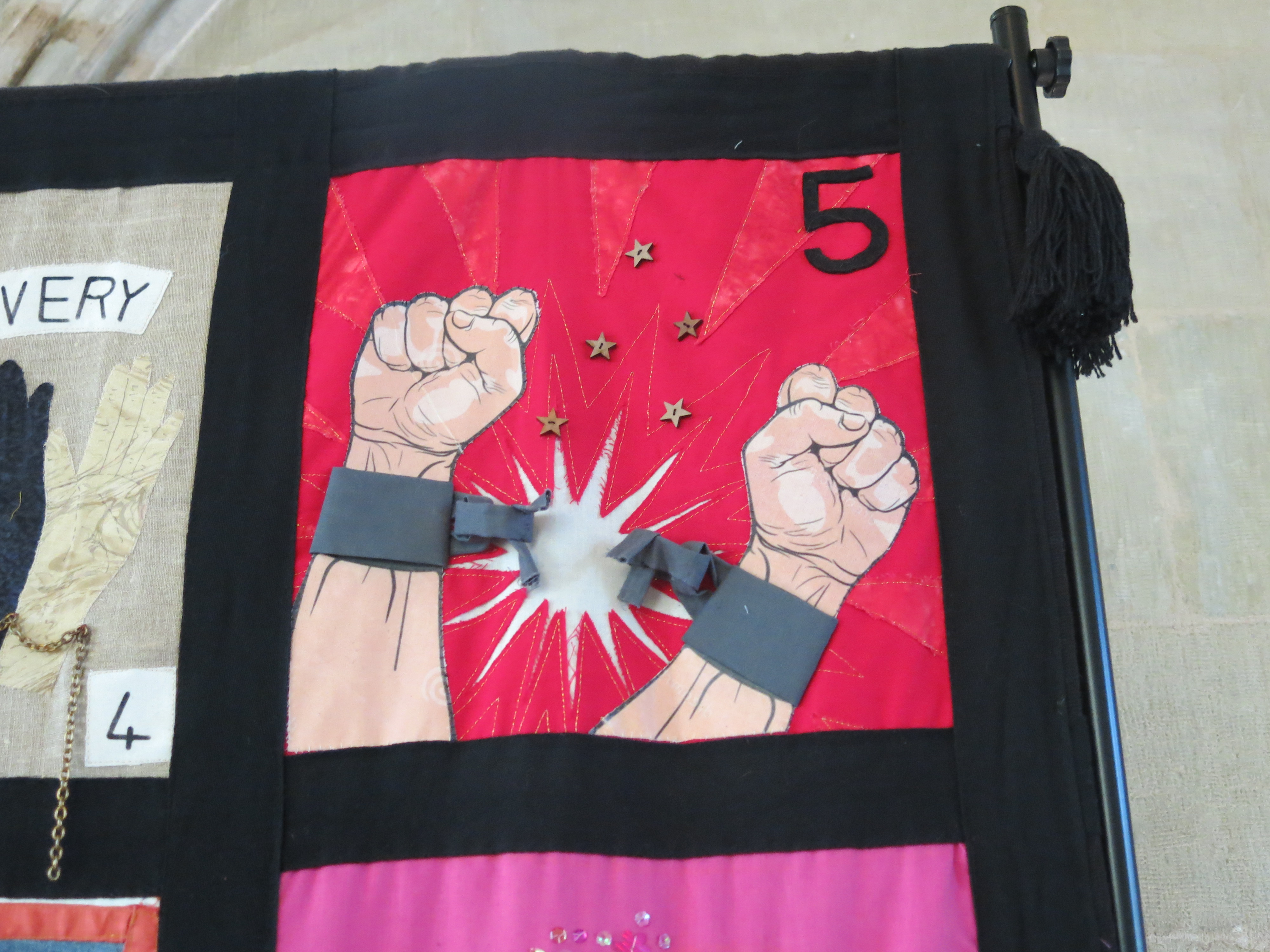
Article 5: No one should be subject to torture. Image from the tapestry
Amnesty International believes that there is credible evidence that the UK has been involved in grave human rights violations perpetrated against people held overseas by other authorities since the attacks in the USA on 11 September 2001.
The UN Convention Against Torture states that ‘no exceptional circumstances whatsoever, whether a state of war or a threat of war, internal political instability or any other public emergency, may be invoked as a justification of torture’. It also states there should be a prompt and impartial investigation wherever there is reasonable ground to believe an act of torture has been committed.
The Human Rights Act 1998 also prohibits torture under any circumstances, and that obligation implicitly requires a prompt independent investigation of credible allegations – the more so when there appears to be a ‘systemic’ problem. The existence of evidence requires the establishment of an independent, impartial and thorough judge-led inquiry, now. Credible allegations implicate the UK in torture or other ill-treatment, unlawful detentions and renditions. Over the years, Amnesty International and others have documented cases of the UK’s involvement in these abuses, including:
UK personnel were present at interrogations of detainees held unlawfully overseas in circumstances in which the UK knew, or ought to have known, that the detainees concerned had been or were at risk of being tortured and/or whose detention was unlawful and even that they participated in such interrogations
UK personnel provided information (e.g. telegrams sent by UK intelligence personnel to intelligence services of other countries) that led the USA and other countries to apprehend and detain individuals when the UK knew or ought to have known that these people would then be at risk of torture and/or unlawful detention
The UK was involved in the US-led programme of renditions and secret detentions through, for example, the use of UK territory (e.g. Diego Garcia) and/or airspace
UK personnel forwarded questions to be put to individuals detained by other countries in circumstances in which the UK knew or ought to have known that the detainees concerned had been or were at risk of being tortured and/or whose detention was unlawful
The UK systematically received information extracted from people detained overseas in circumstances in which it knew or ought to have known that the detainees concerned had been or were at risk of torture and/or whose detention was unlawful.
Testimony
A number of individuals – including former Guantánamo Bay detainees – have spoken publicly about UK involvement in their mistreatment. Shaker Aamer, who was released from Guantánamo in October 2015, after nearly 14 years without charge or trial, has said for example that a UK official was in the room when his head was beaten against a wall.
Binyam Mohamed
In 2008 the High Court confirmed that the UK, through its security service MI5, had facilitated the interrogation of Binyam Mohamed in the knowledge that his initial detention in Pakistan was unlawful. Then, during a two-year period, the UK continued to facilitate interviews conducted on behalf of the US authorities when it must have realised that Binyam Mohamed was being held unlawfully by a third country and knew or ought to have known that there was a real risk that he was being tortured.
Proper investigation needed
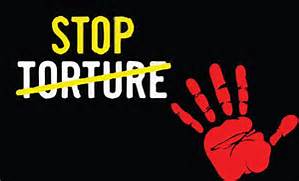
Image: Amnesty Paris
The Intelligence and Security Committee (ISC) has now been given the task of investigating allegations of UK complicity in torture, but Amnesty International, along with many other anti-torture organisations including the UN, believes that the ISC is wholly unsuited to the task in hand. The structural limitations of the ISC, particularly its lack of power and independence from government, means that any investigation the ISC conducts is unlikely to get to the truth, and cannot satisfy the UK’s human rights obligations. The ISC is not a traditional Parliamentary committee, even though it is made up of parliamentarians. Ministers ultimately decide what evidence the Committee can see, with the Prime Minister controlling what it can publish and even who can be a member. Crucially, the government retains the right to withhold information considered to be “sensitive” or on grounds of national security from the ISC. The definition of what constitutes sensitive information is extremely broad and notably includes information provided by a foreign intelligence agency which can object to further disclosure of that information. Any Secretary of State can determine material is sensitive and in the interests of national security should not be disclosed to the ISC.
Poor record
The ISC has a poor record in holding the intelligence services to account. In 2007, three years after the rendition of the Libyan families, the ISC produced a report which said that there was “no evidence that the UK Agencies were complicit in any “Extraordinary Rendition” operations.”
Historical context
In July 2010, the Prime Minister promised to establish an independent inquiry into allegations of UK involvement in torture and other human rights violations with respect to individuals detained abroad in the context of counter-terrorism operations. At the time, David Cameron specifically ruled out the possibility of the ISC carrying out the investigation, recognising that an inquiry led by a judge who is “fully independent of Parliament, party and Government” was required “to get to the bottom of the case”.
In 2011 the Detainee Inquiry was established, led by the retired judge Sir Peter Gibson. Amnesty International and a number of other organisations felt that the Detainee Inquiry fell short of the UK’s international human rights obligations and domestic obligations under the Human Rights Act to fully and independently investigate allegations of UK involvement in torture and other ill-treatment. Of most concern was that the government retained final say on what material could be disclosed to the public and that the protocol did not provide for an independent mechanism to decide on disclosure of national security material.
In January 2012 the Detainee Inquiry was suspended, after Scotland Yard announced a criminal investigation into joint UK/Libyan operations which had resulted in the rendition of Libyan opposition figures. Those investigations are ongoing.
In December 2013 the Detainee Inquiry interim report was published. It highlighted that the evidence it had received indicated that UK agents were aware of abuse of some detainees by other governments and that the UK government may have been involved in rendition. It outlined 27 separate issues that should be subjected to further investigation. Amnesty and others expected this to be followed by a proper full judge led inquiry.
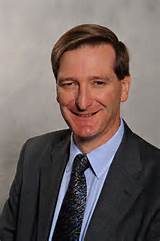
Dominic Grieve QC MP
Instead, on 19 December 2013, it was announced that the ISC had been tasked with examining allegations of UK complicity in torture and other ill-treatment of detainees held overseas, which had previously been the subject of the Detainee Inquiry. In September 2015 Dominic Grieve was appointed as the new Chair of the ISC. There is as yet no news on its work in this area.





 Follow us on




 Amnesty in Salisbury & South Wiltshire