Mass Saudi executions


The news today that Saudi Arabia has carried out a mass execution of 47 people has caused international outrage and speculation about the future of the ‘House of Saud’ itself.  In our review of 2015 we noted the continuing dire human rights situation in Saudi was a backdrop for the year.  In particular, we noted the closeness of our government to the regime, whatever they did on the human rights front, and how we continued to sell them arms which were used to attack Yemen.  This new outrage raises the bar and the scale of international reactions may indeed have a dramatic effect on the future of the country.


Yemen: UK’s role in this hidden war


British weapons being used to bomb civilians

This week we have been treated to speeches in Parliament and a great deal of press interest on the question of bombing Isis.  The political temperature rose after the terrible events in Paris and the indiscriminate killing of people sitting in cafés and at a pop concert.

The government would now like the UK to join in the bombing campaign against Isis positions and David Cameron gave a lengthy speech in Parliament setting out his justifications for that course of action.

Meanwhile, in Yemen, another terrible conflict is in progress and yet this receives almost no coverage in the press.  Thousands have died (one estimate is 5,700) including an estimated 400 children, and airstrikes by Saudi Arabian forces are bombing the country on a daily basis.  Schools and hospitals are bombed and cluster bombs are being used in contravention of international treaties.

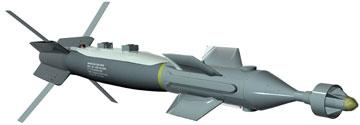
Paveway missile sold to the Saudis

The difference is that Saudi Arabia is a big buyer of our weapons – indeed an estimated half of all weapons sales by the UK go there – so they are an important customer.  Little is said to criticise them and readers of this blog will be aware of our attempts to get our government to take a more robust line in view of their multiple human rights abuses.

Amnesty and HRW have criticised the US government for agreeing to sell an unbelievable $1.3bn (£860m) of further ordinance to replenish stocks used in the campaign.  This is in breach of the Arms Trade Treaty since the weapons are being used against civilians.  Médecins sans Frontières report:

… ordinary people are bearing the brunt of an increasingly brutal conflict.  Severe water shortages combined with airstrikes, sniper attacks and a fuel blockade have rapidly turned this conflict into a humaniitarian crisis, with over one million people displaced from their homes.  The need for food, water, shelter, sanitation and medical care is growing daily.

Many clinics and hospitals have been destroyed, and those that are still functioning are in urgent need of more medical supplies.  Yemen: A country under siege

AI and Human Rights Watch are in no doubt that UK and US supplied munitions are being used to cause this mayhem in Yemen.  Up until now we have received nothing but bland assurances from the Foreign and Commonwealth Office and from our MP.  But recent events including changes to the Ministerial code and a downgrading of human rights in policy matters, seems to indicate that it is profit before humanity which is the key factor.

This might change because now that British made weaponry is turning up in Yemen thus causing some concern in the FCO.  They are beginning to question the wisdom of supplying the Saudis who then use the stuff to kill ordinary civilians.  We could just be indicted for war crimes.  They are also worried that we are helping create the conditions for an Isis type organisation to establish themselves in Yemen.

So while speeches are made about bombing Isis, we are busy supplying the weaponry to create another catastrophe on the Saudi peninsular…

Sources:

MSF;  The Independent;  Belfast Telegraph;  Business News;  HRW


Urgent Action: Saudi Arabia


Two Saudi Arabian Shi’a activists, arrested when they were under 18 years old, risk being executed as soon as the King ratifies their death sentences.  They were moved to solitary confinement on 5 October and have been held incommunicado since then.  

We attach this month’s urgent action which highlights the case of two men (boys) arrested when they were under the age of 18, tortured into signing a confession and now risk execution.

If you are new to Amnesty urgent actions, they highlight injustices around the world.  You are invited to read the case notes below and write to the addresses provided.  Even if you only write to one, it can help.

Does it work?  Sometimes it does and we have recently celebrated the release of another young man held in Nigeria for the alleged theft of three mobile phones, tortured and was due to be executed.  So it can work …

Urgent action: Saudi Arabia

Saudi arms sales and human rights


An about turn

Over the last three months we have been in correspondence with our local MP Mr John Glen over the issue of arms sales to Saudi Arabia.  This arose because the French President spoke out publicly against the increased use of the death penalty in Saudi and the barbaric way in which they are carried out.  We also expressed concerns about human rights generally, the use of torture and the dreadful treatment of women.

Mr Glen replied and arranged for a Foreign Office minister to reply as well.  The burden of their replies was that the government took the issue of human rights very seriously and raised the issue of human rights with the Saudis at every available opportunity.  It began to unwind because it was revealed that the Foreign Office had removed the abolition of the death penalty as one of its objectives.  This was only a matter of days following assurances to the contrary from one if its junior ministers in his letter to us.  Earlier this month Sir Simon McDonald, head of the FCO, told the Foreign Affairs Select Committee that:

economic prosperity was further up his list of priorities than human rights.

Following the news that a Saudi had been elected to the UN’s human rights council – an astonishing fact in itself – it was discovered shortly afterwards that our own government had facilitated this.  The British government had used its influence to secure the position of someone, patently against human rights, onto the human rights council.  This was a quid pro quo arrangement apparently but since no one was objecting to our application, why it should be necessary was never explained.

We noted that George Osborne had pleased and apparently surprised his Chinese hosts by not mentioning human rights on his recent visit there.  China executes more than any other country in the world and has been arresting and detaining large numbers of people involved in human rights in a major crackdown.  We are shortly to play host to the President of China, Xi-Jinping, who has expressed a wish that human rights are not mentioned during his visit.  Despite their lamentable human rights record he will get the red carpet treatment nevertheless.

Then came the news that a Briton, Karl Andree, was to receive 360 lashes for alcohol offences for which he has already served a prison term.  It might be thought that the Saudi administration would be sensitive to how this might play in the UK.  With the UK government falling over themselves to sell them arms and the Kingdom in an increasingly rocky state financially because of low oil prices, to flog a British national in public is not exactly good PR.

The government responded by cancelling a £9.5m contract to train prison staff.  Again, one might ask what on earth are we doing helping a regime which tortures its prisoners more or less as a matter of routine.  And it has to be noted that this is not an arms contract so its effect is unlikely to be keenly felt.  So it seems that where a Briton is involved the government is willing to react reportedly after a huge ministerial row.  Otherwise, it is business as usual.

On the BBC’s Profile programme (18 October) it was concluded that the deal is that Saudi provides oil and security information in exchange for legitimacy and keeping quiet on human rights abuses.

The statement ‘the government will continue to work towards the complete abolition of the death penalty using all the tools at its disposal’ is unconvincing in the light of these actions.

UK support for Saudi on human rights council


October 2015

We have already commented on the revelation that the UK helped secure a seat for a Saudi onto the UN’s human rights council and in a further development, Philip Hammond the Foreign Secretary has declined to deny the story.  Mr Trad, the man who will fill the role, has denounced UN attempts to get the death penalty ended internationally

This is further light on the claim that everything is being done to further human rights internationally.  Mr Glen MP told us a few days ago:

I can assure you that the change of wording is not an indication of a change in policy: the UK government will continue to work towards a complete abolition of the death penalty, using all the tools at its disposal.

What is the Foreign Office’s policy on human rights?


Contradiction at the heart of government’s human rights policy

October 2015

There seems to be a fundamental contradiction at the heart of the government’s policy as it relates to matters such as human rights and the death penalty.  Readers of this blog will be aware that we wrote to our local MP, John Glen, on 8 June to point out that France was speaking out publicly concerning the rise in the number of executions taking place in Saudi Arabia and that Sweden had reportedly stopped selling arms there.  We noted that in the first 5 months of this year, the number of executions has equalled that for the whole of 2014.

We received a response from a FCO minister Tobias Ellwood who assured us that Saudi Arabia ‘remains a country of concern on human rights, because of its use of the death penalty as well as restricted access to justice, women’s rights, and restrictions on freedom of expression, freedom of assembly and freedom of religion or belief.’

Within days of receiving this letter from Mr Ellwood with a covering letter from John Glen, it was reported that the Foreign Office had both dropped any explicit reference to death penalty and had also dropped the very phrase used by Mr Ellwood namely: ‘a country of concern’ and replaced it with the more anodyne ‘human rights priority countries’.

We wrote pointing this out to Mr Glen on 5 August and, not receiving a reply, wrote again a month later on 14 September.

Then, on 20 September came the astonishing news that a Saudi representative was to become a member of the UN’s human rights council (The Independent).  Human rights organisations were aghast that a country such as Saudi with its record of torture, floggings, executions and so on and so on, should be elected to such a body.  No sooner had we digested this piece of news when The Australian newspaper revealed on 30 September that this election had not happened by chance but that diplomatic cables released by WikiLeaks showed that the UK government had allegedly initiated the secret negotiations to enable the Saudis to get elected.  The cable apparently read:

The delegation is honoured to send to the ministry the enclosed memorandum, which the delegation has received from the permanent mission of the United Kingdom asking it for the support and backing of the candidacy or their country to the membership of the human rights council (HRC) for the period 2014 – 2016, in the elections that will take place in 2013 in the city of New York.

The ministry might find it an opportunity to exchange support with the United Kingdom, where the Kingdom of Saudi Arabia would support the candidacy of the United Kingdom to the membership of the council for the period 2014 – 2015 in exchange for the support of the United Kingdom to the Kingdom of Saudi Arabia.

In simple terms: we will support you if you support us.  Why the UK should need the support of such a country is a puzzle in its own right but for the UK to be supporting the Saudi government for a human rights council is beyond belief.

UN Watch commented:

[we] find it troubling that the UK refused to deny the London – Riyadh vote trade as contemplated in the Saudi cable, nor even to reassure the public that their voting complies with the core reform of the UNHRC’s founding resolution, which provides that candidates be chosen based on their human rights record, and that members be those who uphold the highest standards of human rights.

On 18 September, Mr Glen replies to our second letter.  He claims the change in wording came about on the basis of feedback from diplomats who ‘reportedly had difficulty relating our long list of human rights priorities with the issues they faced in real life – from the chaos of failing states to the corridors of Geneva.’  Adopting more thematic categories makes it easier to apply pressure it is argued depending on the circumstances of the country concerned.

Rather than being ‘vague and obfuscating’ (as has been claimed) the ‘categories are sufficiently broad that diplomats can tailor them appropriately to local circumstances.’  He argues that the change of wording is ‘essentially about semantics’.   FCO ministers have been very clear, even since the change of wording, that their stance on the abolition of the death penalty remains the same, he says.   He quotes Rt Hon David Lidington, Minister for Europe:

The Government calls on all states to adopt an immediate moratorium on [the] use of the death penalty in accordance with the relevant UN General Assembly resolution, and views this as part of the process towards complete abolition.  The Foreign and Commonwealth Office will continue to use its diplomatic and programmatic tools to work towards the goal of global abortion.

Finally, he says ‘I can assure you that the change of wording is not an indication of a change in policy: the UK government will continue to work towards a complete abolition of the death penalty, using all the tools at its disposal.’

So where is the truth?

On the one hand, solemn assurances are given that government ministers are committed to the cause of global human rights, whatever the wording of their policies, which are purely a matter or semantics it is claimed.  On the other hand, a ‘trade’ was undertaken between London and Riyadh to get the latter elected onto a UN human rights body.  Assurances that ‘all the tools at its disposal’ are being used in pursuit of global abolition must be set against George Osborne’s visit to China this month where the nationalist State-run Chinese newspaper The Global Times, lauded the 44-year-old Chancellor for his ‘pragmatism’ in concentrating on business matters and not drawing attention to human rights like some other visiting western leaders.  China leads the world in executions the numbers being a state secret.  It is a serial offender on the human rights front.

On the basis of this evidence it would appear that the claimed commitment to human rights is for domestic consumption only and that the reality, when it comes to actual dealings with foreign governments, is that they seldom feature.

Sources:

Human Rights Watch; The Australian; The Global Times (China); The Observer; The Guardian; The Daily Telegraph; International Business News
Saudi man given key human rights role


Yes, you read that right.  A Saudi by the name of Faisel Trad, who is the kingdom’s ambassador to the UN in Geneva, was elected chair of an independent panel of experts on the UN’s human rights council.

This blog – and many, many others – has highlighted the appallingsaudi flogging human rights situation in Saudi Arabia.  The big increase in the use of the death penalty, often in public, floggings including that of Raif Badawi and most recently, the proposal to crucify a man.  Along with a lack of free speech, and that women are denied basic rights and cannot drive for example, means that the country ranks as among the worst in the world.

UN Watch Director Hillel Neuer said according to the Independent (20 September):

Saudi Arabia has arguably the worst record in the world when it comes to religious rights and women’s rights and continues to imprison the innocent blogger Raif Badawi.

It’s bad enough that Saudi Arabia is a member of the council, but for the UN to go and name the regime as chair of a key panel only pours salt in the wounds for dissidents languishing ins Saudi prisons.

A UN Watch representative also said “This UN appointment is like making a pyromaniac into the town fire chief”.  It gives Mr Trad power over the appointments of key UN human rights representatives.


We have been engaged in correspondence with our local MP to persuade the government to do more and we await a reply to our letter to him.  This was sparked by the FCO’s decision to drop the abolition of the death penalty as a specific policy.

Death by crucifixion in Saudi Arabia


A man, Ali Mohammed al-Nimr, who was convicted when he was 17 is to face death by crucifixion after his appeal was turned down.  The appeal was heard in secret and he was not present.  He was accused of participating in illegal protests and of firearms offences.  As is usual in Saudi, he was denied access to a lawyer and is likely to have been tortured and forced to sign a confession.  See International Business Times for the full story.

No to the death penaltyAmnesty believes that Saudi has one of the highest rates of executions in the world and is exceeded only by China (details of which are a state secret) and Iran.

We are engaged in correspondence with our local MP John Glen about the government’s policy towards the kingdom and we were initially assured both by Mr Glen and a FCO minister Mr Tobias Ellwood, that the abolition of the death penalty was an important policy for the government.  These matters were raised at the highest level with the Saudis we were told.  Within days of these assurances, it was announced that the abolition of the death penalty was no longer an explicit policy of the government.  We have written to Mr Glen on this and a reminder was sent this week.  A reply is awaited …

See our death penalty report.

#FCO #armssales and #humanrights


UPDATE: 8 September

Letter in today’s Guardian (8 September):

The government would do much better to raid the export credit guarantee scheme [rather than the overseas aid budget] and other subsidies to the arms trade. This would raise funds for refugee provision and reduce arms sales to Middle Eastern states, impacting directly on the latter’s ability to wage war on their and other populations in the region.

Benjamin Selwyn, Director, Centre for Global Political Economy, University of Sussex

Saudi Arabia

Last month, we wrote to John Glen MP asking that his government take a more robust line with the Saudi Arabian government in view of the large increase in executions and floggings, many of which are carried out in public.  We noted that the French president Francois Holland had spoken publicly against the practice despite large arms sales in the offing.  The British government has said it prefers to lobby in private and to pursue a policy of quiet diplomacy.  By contrast, the Swedish government has ended arms exports to the country.  As policies go, it is one which is conspicuous by its failure to achieve anything at all and in other contexts would be declared ‘not fit for purpose’.

No to the death penaltyA recently published report by Amnesty shows that Saudi Arabia is one the top three world executioners after China (which executes thousands but the statistics are a state secret) and Iran.  Between January 1985 and June 2015, 2,208 were put to death.  102 have been executed in the first 6 months of 2015.  Crimes include ‘witchcraft,’ ‘sorcery’ and ‘apostasy’.   In some cases relatives are often not notified of the execution.

The FCO’s July in-year update on Saudi says:

We remain concerned about the continued use of the death penalty in Saudi Arabia, including the fact that trials and executions do not meet the minimum standards which the EU advocates in countries where the death penalty is applied. We regularly raise the issue with the Saudi authorities, bilaterally and through the EU, and will continue to do so. There has been a significant rise in the number of executions this year. While no official figures are published, according to statistics reported by NGOs over 100 people have been executed since 1 January. NGOs report that the majority of executions were for murder and drug-related offences

In response to our letter to Mr Glen, we received a letter from a FCO minister, Mr Tobias Ellwood, which assured us that the Foreign Office was doing all it could to end the practice and that ‘the abolition of the death penalty is a human rights priority for the UK’.  The HMG Strategy for Abolition of the Death Penalty (2010 – 2015) states:

Promoting human rights and democracy is a priority for the UK.  It is a long standing policy of the UK to oppose the death penalty in all circumstances as a matter of principle (p2)

Within days of receiving this letter however, we discovered that it is no longer an explicit FCO policy.  The new policy has dropped any reference to abolishing the death penalty.  We also noted that Private Eye had a piece on the very same Mr Ellwood who had been a guest of the Saudi Government on a £6,000 fact-finding visit sponsored by a defence forum.

It’s hard not to come to the conclusion that defence sales matter far more than the dreadful human rights situation in countries like Saudi Arabia which – apart from public floggings and beheadings – tortures its citizens and has severe restrictions on the lives of its women.  Saudi Arabia is the leading destination for UK arms sales amounting to £1.6bn in 2014.

Nicholas Gilby of the Campaign Against the Arms Trade (CAAT) reported on the high level of corruption in this industry:

This paper examines the Government’s approach to corruption within the UK arms industry and shows it has very dirty hands …

… civil servants told to ‘look the other way’ and not ask awkward questions.

Chemring, which has one of its factories just outside Salisbury, had sales to Saudi Arabia of £47.8m last year and £97.6m in 2013 (source: annual report).

UK governments have invested a lot into the arms trade.  Support includes marketing support via DESO (Defence Exports Services Organisation); export credit guarantees; around £26m in R&D costs and something called ‘launch customer support’ which is buying weapons from a UK supplier even though overseas suppliers are cheaper.  There are also missions by ministers and members of the Royal family to foreign countries like Saudi.

Could it be that the Foreign Office was embarrassed by such an explicit policy in the face of a rising tide of executions in countries such as Saudi Arabia; Pakistan and India, all countries where arms sales are important?

Successive governments have claimed a devotion to human rights and a commitment to end the death penalty.  The reality it seems is that arms sales trump this commitment and in dropping the express statement of policy, the FCO is at least being honest.

Following the change of wording by the FCO which seemed to be in contradiction to the assurances given to us by the minister and Mr Glen, we wrote again asking why the policy had changed.  We await a reply…

CAAT report

Robust reponse to Saudi Arabia rejected by FCO


UPDATE: 3 August

At the end of this blog we wrote ‘it seems therefore that nothing will change’.  How wrong can you be as it has just been announced that the FCO will no longer be specifically campaigning for the abolition of the death penalty.  The FCO message to us was dated 6 July and Mr Glen’s covering letter dated 14 July.  So in the space of a few weeks abolishing the death penalty world wide has gone from ‘a human rights priority for the UK’ to being no longer a policy.  The group plans to write to Mr Glen again to seek clarification.


July 2015

No to the death penalty

The Salisbury Group wrote to the local MP, Mr John Glen to ask for a more robust response by our government to the barbaric activities of the Saudi government in particular the increasing number of executions which are taking place.  In our letter we said:

[we are writing] to you in connection with the increasing level of executions currently taking place in Saudi Arabia.  (Over the course of the first five months of this year, the number of executions has equalled that of the whole of 2014).

You will no doubt be aware that on his recent visit to the country, President Francois Hollande made a public statement to the effect that all executions, not just those of his own nationals, should be banned, and called for the abolition of the death penalty in Saudi Arabia.

M. Hollande was prepared to do this, despite the fact that France – as does the United Kingdom – has significant financial interests in the its dealings with Saudi Arabia. The British government, however, has never seen fit to raise the issue in public, preferring to pursue a policy of ‘quiet diplomacy’.  This policy has manifestly had no effect.  Numbers continue to rise, and the Saudi Government have now advertised for eight additional executioners – ‘no particular skills required.’

As a group, we are asking that your government should take a much more robust line over the issue with the Saudi government.

Whereas the government – including the Prime Minister – has been vocal in its criticisms of the Islamic State for its appalling behaviour and of Russia for its activities in Ukraine, they seem strangely silent when it comes to Saudi Arabia.  This contrasts with France which has openly criticised them and Sweden which has decided no longer to sell them arms.

Mr Glen replied, enclosing a letter from the FCO minister, and said:

“I enclose correspondence from the FCO minister Tobius Ellwood in reply to your recent letter about the UK’s apparent reticence when it comes to condemning the use of the death penalty in Saudi Arabia.

“As you can see, the approach taken by the government is not in any way indicative of an equivocal view on this practice, which is as barbaric as it is ineffective.

“However, the government recognises that its abolition is not a matter of mere legal reform but would require a seismic societal shift.  It has therefore taken an approach which it feels is most constructive – engaging behind the scenes rather than inflaming the situation and triggering a backlash through outspoken public critique”.

The letter from the Foreign and Colonial Office is as follows:

“[…] The abolition of the death penalty is a human rights priority for the UK.  The UK opposes the death penalty around the world because we believe it undermines human dignity and there is no evidence that it works as a deterrent.

“Saudi Arabia remains a country of concern on human rights, because of its use of the death penalty as well as the restricted access to justice, women’s rights, and the restrictions of the freedom of expression, freedom of assembly and freedom of religion or belief.

“Ministers, our Ambassador, and the Embassy team in Riyadh frequently raise the issue of the death penalty with the Saudi authorities, bilaterally and through the European Union.  As it is part of Sharia Law, we must recognise that total abolition of the death penalty is unlikely in Saudi Arabia in the near future.  For now, our focus is on the introduction of EU minimum standards for the death penalty as a first step, and supporting access to justice and the rule of law.

“The British Government’s position on human rights is a matter of public record.  We regularly make our views well known including the UN Universal Periodic Review process and the Foreign and Colonial Office’s  annual Human Rights and Democracy Report.  We also raise our human rights concerns with Saudi Arabian authorities at the highest level.  But we have to recognise that the human rights situation in Saudi Arabia reflects widely held conservative social values and that our human rights concerns are best raised in private rather than in public”.

It seems therefore that nothing will change.  It is important to recognise that behind the scenes lobbying can be constructive.  However, the policy of raising matters ‘in private rather than in public’ does not appear to be working.  Successive governments have courted the regime and Saudis are free to invest in London and elsewhere in the UK.

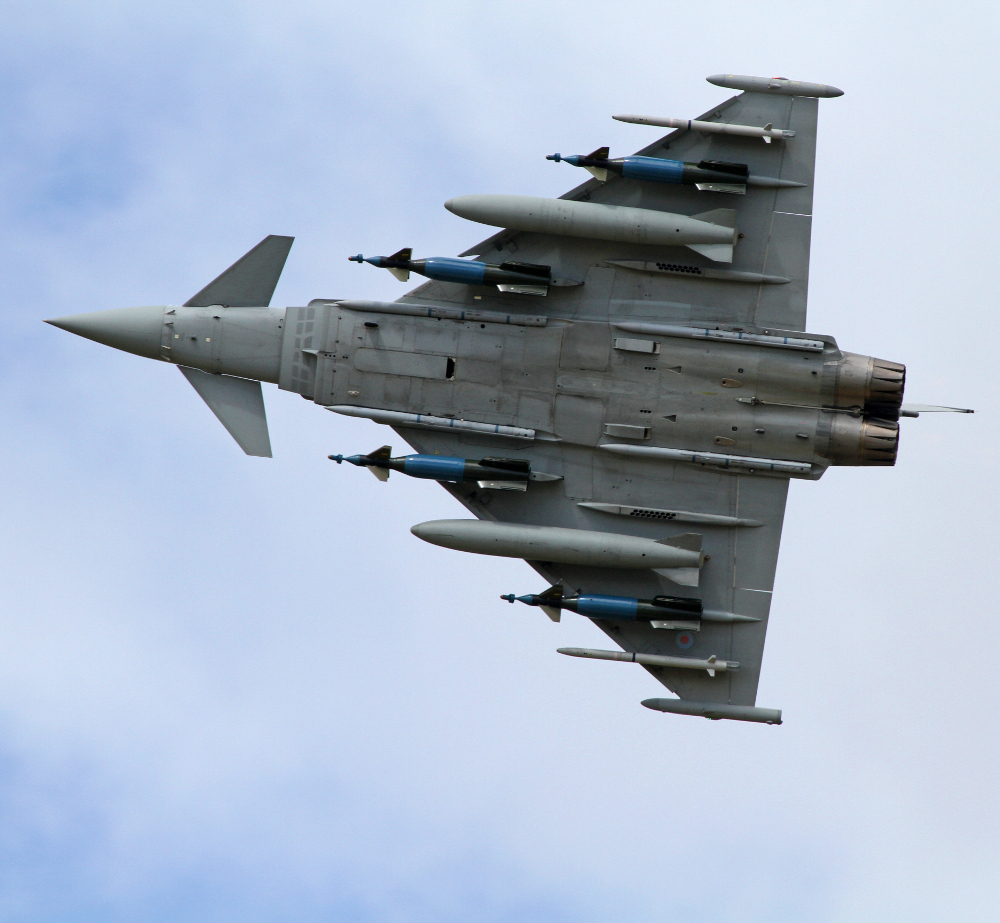
Eurofighter of the type sold to Saudi Arabia

It would be naïve not to recognise the reality behind this reluctance to criticise the Saudis and the importance to the government of the sale of arms and the supply of oil.  Saudi Arabia is a key market for the UK and much effort is put into promoting sales including by members of the royal family – see the Guardian article:  Human rights are of secondary concern.

As long as these interests are paramount, it is difficult to see how the toll of executions can be checked in the near future.


Blog at WordPress.com.

Up ↑