Outpouring of protest about #Indonesia #executions


The media has devoted considerable space to the of five people in .  It has been on No to the death penaltythe main news and in all of the main papers in the UK to a greater or lesser extent.  There is a general sense of outrage that the execution and the manner of its doing – that is by firing squad – are barbaric.  One would be forgiven for thinking that Indonesia is the only place where people are being executed.

It isn’t.   We must not forget that China continues to execute more than the rest of the world put together although the precise number is not known because it is a state secret.  Executions continue at a faster rate than previously in Iran.  Public beheadings still continue in Saudi Arabia.  And in the southern states of USA, many are executed after spending years and years on death row.  Pakistan has been busy too.  The list is a long one.

Amnesty is opposed to the death penalty in all cases.  We should be outraged wherever it happens not just in one country such as Indonesia.  If you feel outraged at the use of this penalty, why don’t you join us and write letters or send emails?  Follow this site or the Amnesty site for urgent actions.

Latest death penalty report

Unreliable hair evidence used in #deathpenalty trials


It has been revealed in the last week or so that FBI analysis of hair samples is seriously flawed and that astexas execution many as 32 people have been sentenced to death based on this evidence, of whom 14 have been executed or have died in prison .  The problem has arisen because of sloppy work by FBI examiners who have made claims about the ability to identify people from hair samples that are scientifically unsound.  It is, according to the Washington Post, possibly the largest forensic science scandal in America’s history.  Another 1,200 cases remain to be investigated.

Our view of the American justice system is strongly influenced by programmes like CSI and NCIS where clean cut, young, handsome and amazingly certain forensic examiners solve cases by clever scientific means.  Stories often centre (or should we say ‘center’ for our American readers) around one of them poring over a crime scene and finding a tiny piece of evidence.  Then back to the lab where they announce that said tiny piece of evidence is crucial in identifying the killer.  Forensic scientist and police officers dash about the place and sure enough, find the killer who has a matching piece of evidence tying him to the scene.  There seldom seems to be any doubt in what they say and we are left at the end of the episode with the right man or woman ‘going down’.

The problem is that not all science is like that.  There is not always that degree of certainty, merely probabilities.  When it comes to condemning a person to death – the ultimate penalty from which there is no retreat – then it is necessary to be certain.  The problem is made worse because defendants who are poor are not able to employ lawyers able to challenge the evidence properly.  Some lawyers may be doing their first capital trial and have little relevant experience.

You might think that having admitted a major flaw in the evidence given by FBI experts, speedy reviews would be underway to put matters right.  Well no, not in every state there isn’t.  Appeal courts often refuse to look at newly discovered evidence because claims of actual innocence are never grounds for habeas corpus relief.

The USA is the only country in the Americas with the death penalty and the southern states are the keenest users of it.  As we have commented before, it may seem unfair that we frequently highlight the use of the death penalty in the States:  China is the worlds biggest user of the death penalty, the precise number is unknown because it is a state secret, but it runs into thousands.  Iran is close behind.  The difference is that the States is the de facto leader of the free world.  But there is a point here that China is a closed society which severely limits access to the internet and curtails a free press.  America by contrast is a more open society and newspapers like the Washington Post are able to publish this information.  So we can read about it and comment on what we see.
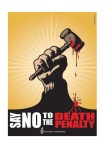
No to the death penaltyAmnesty is opposed to the use of the death penalty in all circumstances.  It is the ultimate cruel and degrading punishment.  It is not a deterrent and there is plenty of evidence to show that it acts against the poor and those least able to defend themselves.  That one of the main methods of condemning people is flawed is yet another plank in the argument to end the use of this penalty in the USA.

Sources:

Washington Post: 18 April

Guardian: 23 April

Wikipedia

Social Science Research Network The Shifted Paradigm: Forensic Science’s Overdue Evolution from Magic to LawWilliam Tucker Carrington, University of Mississippi and M Chis Fabricant, Innocence Project Inc.

Death penalty report: April


This is the monthly report on the state of death penalty around the world, thanks to Lesley for compiling it.

No to the death penaltyThe news that Ray Hilton has been released after 28 years on death row is both heartening and shocking.  That the state of Alabama should have so badly conducted his trial and then refused to allow the fresh ballistic evidence to be heard, which was the only evidence against him, is particularly shocking.  There can be few better examples of the dangers of this penalty than a case such as this.

Death penalty report APRIL 2015

Death penalty report


texas executionThis month’s #deathpenalty report is attached thanks to Lesley.  It makes depressing reading especially concerning countries in South East Asia and .

Report

February minutes


The February minutes are below thanks to Karen.  A full agenda as you see with a lot going on.

February minutes

#Deathpenalty update


No to the death penaltyThis is the monthly report on the use of the death penalty around the world thanks to Lesley for compiling it.  A particularly grim month and of course there are no statistics for China which stills leads the world in the use of the penalty.

Death penalty report

#Texas


Texas

UPDATE; 4 February.  We regret to report Robert Ladd was executed.

Once again we are back with an urgent action against the use of the #deathpenalty in Texas.  This time it is Robert Charles Ladd who was sentenced to death in 1997.  He was ineffectively represented at his trial and his lawyer did not seek evidence about his mental capacity.  He has an IQ of less than 70.  A Supreme Court ruling says that such individuals cannot be executed.

Greg Abbott, the new governor, says on his Facebook page ‘Texas in the lone star state for a reason.  It stand separate.  It stands alone … as a model for the rest of the nation.’  One sincerely hopes the rest of the nation isn’t listening.

Below is the urgent action on behalf of Robert Ladd and we would be grateful if you could write or email.  There are only a few days to go.

Robert Ladd

Death penalty report


This is the monthly #deathpenalty report with thanks to Lesley for compiling it.  One interesting fact is thatNo to the death penalty Indonesia has suspended an execution following the airline crash which has meant the eyes of the world’s media is upon them.

December Death Penalty report

We have added the Death Penalty Information site to list of links at the bottom of the home page

CIA torture #stoptorture


The world was shocked – briefly – last week with the publication of Dianna Feinstein’s report into the use of torture by the CIA around the world in its ‘war against terror.’  The report examines in great detail the methods and effectiveness of those methods and also the effects it will have on the United States’ reputation around the world.  In her words:

‘[It has done] immeasurable damage to the United States’ public standing, as well as the United States’ longstanding global leadership on human rights in general and the prevention of torture in particular.’  (p16)

When we have campaigned in the street against the use of torture most people hurry on by, after all we don’t use torture in the UK do we?  Some find the subject distasteful and even those who stop to sign a card will often decline to take a fact sheet with the details of what is happening to someone described on it.  The fact remains that it is still widely used around the world despite the great majority of countries having signed UN pledges otherwise.

It has to be said in the United States’ defence that they are one of the few countries which could enable an investigation take place and then publish the results, despite redactions, for all to see.  The United Kingdom who, along with other countries around the world, aided and abetted the CIA in its activities has gone to great lengths to frustrate, delay and otherwise prevent details of its involvement becoming known.  It is to be hoped that over the coming months and years details will emerge to show our complicity in this sordid activity.

The report goes into great detail of the use and effectiveness of the methods used.  The world was especially shocked to learn of ‘rectal feeding’.  Precious little evidence is provided of any effectiveness.  It notes that a lot of useful information was provided before suspects were then tortured and that many of the claims about counter-terrorism successes were ‘wrong on fundamental aspects’ (p2).

So how has this come about?  Torture is of course as old as the hills.  But there are several aspects which keep it alive in the modern state.  Firstly a belief in its effectiveness despite evidence to the contrary.  Part of the blame is a kind of Hollywood view of terrorism.  The report quotes the TV series ’24’ the first of which showed a man being fearsomely tortured to reveal the vital secret which our hero then spends the next 24 hours dashing about trying to frustrate.  Buried within this is the assumption that an individual has a key piece of information and once sufficient pain has been inflicted, he (or she) gives it up.  But how does anyone know?  The problem being that people will say anything to get it to stop so just because a piece of information is finally revealed, how does anyone know how accurate it is?  This kind of thinking is demonstrated in the familiar question ‘if you knew someone had a key piece of information which could save hundreds of lives but he won’t tell you, wouldn’t you torture him to get hold of it?’  But how do you know it is key?  The report notes that seven of the 39 detainees they looked at produced no information at all despite relentless beatings, waterboarding, starvation and sleep deprivation.

Another familiar Hollywood feature of crime series like CSI and NCIS for example, is the copious amounts of information that the officers seem to have at the press of a button.  A screen suddenly appears on a wall with flashing dots to show where the culprit is and they all dash off to apprehend him.  It is part of the technological view of crime detection.  This engenders a belief that simply getting the information will enable the law enforcement agencies to close in on a terrorist cell.  The problem was that the record keeping by the CIA was so poor combined with their lack of cooperation with other agencies such as the FBI, meant that little of value was derived from the activity.  (p13)  The reality of what actually happens on the ground is miles away from the fantasy world of TV series.

This Hollywood inspired view of the world goes someway to explain the public’s attitude to the revelations.  It is seen as a regrettable necessity when a war is being fought against a terrorist enemy.  If it keeps us safe, then what does it matter if someone is deprived of sleep for a few days to get them to talk?  The end of saving hundreds of lives justifies the means of bad treatment of a handful of detainees.  We cannot afford to be too squeamish when dealing with fanatics after all.

But the activity has corrupted the governing process.  It was ineffective so lies were told about valuable information being gained when next to none was.  People like Secretary of State Colin Powell were kept out of the loop.  The media was deceived into believing that terrorism plots were being interdicted when in reality few if any were.  The White House was lied to and up and down the CIA deception was practised.  When some detainees died as a result of their torture no one was brought to account.  Foreign governments were dragged into the process to provide locations known as ‘black sites’ where individuals were taken to be tortured.  Foreign governments such as the UK government lied about ‘rendition’ flights through the UK, in particular Prestwick.  The use of Diego Garcia which the USA leases from the UK, is a story which may slowly unravel over time.

Torture is widely practised around the world.  It is routinely used to coerce people and to inhibit  opposition parties.  If the world’s leading nation – the United States – does it then the moral force they might apply to the nations who routinely use it is dissipated.  Let us hope the Feinstein Report results in an end to the practice in the States.

Urgent action – #Florida


It may be the sunshine state but it is also a bloodthirsty one.  This will be the 21st execution under the Governorship of Rick No to the death penaltyScott.  In 2012, a quarter of all executions in the USA were in Florida.  This year, there have been 33 executions, 8 of which have been in Florida.  The USA is the only country in the Americas still to use the death penalty.

Urgent action: Florida USA

If you are able to write, that would be appreciated.

Blog at WordPress.com.

Up ↑