Privacy Concerns: Government Access to Personal Data in the UK


Latest in our reports on the human rights situation in the UK

September 2026

For some months we have been reporting on the progress of rights in the UK particularly as successive governments have passed more and more legislation to try and reduce their effect. Only in the past few days have we seen groups of people, dressed in black with balaclavas or face coverings, massing by the docks in Portsmouth and Dover yet no arrests were made. This contrasts with the hundreds of arrests made of people – without face masks or behaving in a threatening manner – who have been arrested on terrorist charges. They were promoting the cause of Palestinians which was embarrassing for the government in view, until this week, of its support for the Israeli government.

Family life

This right, protected by Article 8 of the Human Rights Act, helps safeguard our relationships and family connections. However the Immigration and Asylum Bill, passed in the Commons and now in the committee stage, seeks to narrow how peopleโ€™s family life is recognised in immigration and asylum cases, wanting to limit it to a “core cohabiting family”. Other family relationships would have to demonstrate dependency beyond normal emotional ties. Factors such as financial dependence, emotional support, or concern for a relative living in a country affected by war would not individually be enough to establish dependency.

These changes could have serious consequences for people seeking asylum, migrants and their families including those already resident in the UK. They also raise a wider concern for all of us, since human rights protections are universal safeguards. They do not become conditional when issues are complex or politically contested.

Privacy
The government is reportedly again seeking access to highly encrypted personal data belonging to British users of Apple, having backed down last year in the face of political pressure from the US. Liberty and Privacy International are challenging the governmentโ€™s power to use secretive โ€˜technical capability noticesโ€™ (TCNs) to unlock encrypted data of individuals.

The Investigatory Powers Tribunal (IPT) has confirmed it will hear Liberty, Privacy International and two individualsโ€™ challenge to the legality of the Home Secretaryโ€™s decision to use her powers to secretly force Apple to allegedly give the UK Government access to usersโ€™ secured data stored on iCloud. The challenge will also cover the legality of the Government issuing these types of notices at all.

Palantir

On the subject of privacy and the security of our information, there is growing concern at the inroads another American company. Palantir, is making into our political and social life. They have contracts with the NHS, the military and the police and the concerns are about how safe is the data they are collecting.

There will be an International Day of Action on October 1st and locally, will take place between 12:00 and 14:00 in Southampton at Frobisher House which is right by the station. Participants will include NHS workers and patients, in protest against the wide ranging contracts Palantir has succeeded in obtaining in the health services as well as the military. The resistance is planned across the Americas, Europe and Britain. The software company is connected to Trumpsโ€™s discredited ICE and to Israeli surveillance and aggression in Gaza and is considered an unsafe repository for UK citizens data and government information. (See June report.)

It is part of a general increase in concern about more and more American companies controlling nearly all aspects of our social life with almost no controls over their activities.

Privacy and racial bias

The tragic case of the Cambridge professor Jason Arday, whose suicide followed prolonged harassment by the press and fellow academics about his academic credentials, is being cited as evidence that black public figures are subject to greater scrutiny than their white peers. An enquiry is being called for.

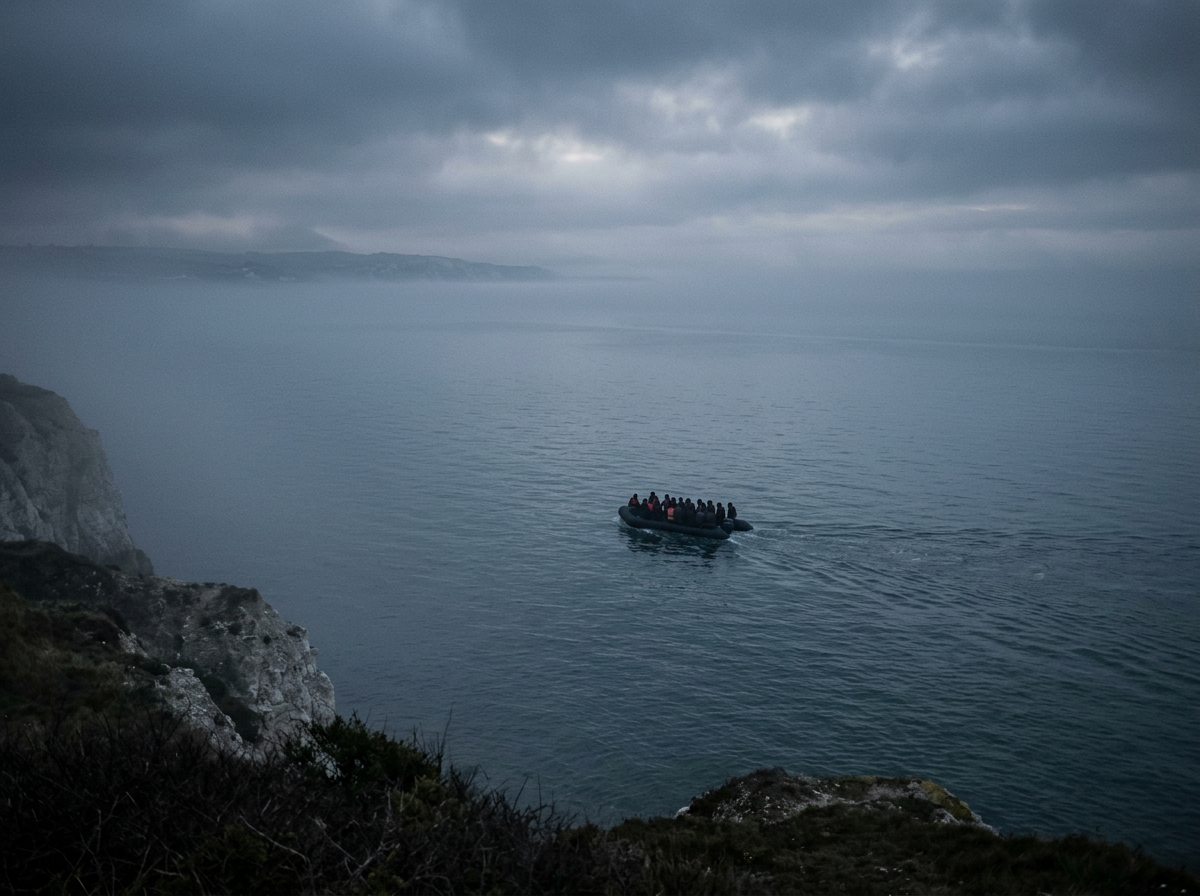
As we have mentioned above, a convergence last weekend (3rd, 4th) of 400 far right anti-immigration protesters in balaclavas in Dover followed the next day by 200 in Portsmouth, who gridlocked roads, used violence against police officers and threats against volunteers of the RNLI who had just escorted a boat full of immigrants arriving in uncontrolled crossings. It has raised questions about police unpreparedness for organised protest, about the level of anti-immigrant violence but also about the wearing of face masks.

The controversial Crime and Policing Bill of 2026 criminalises the act of wearing or otherwise using an item (for instance a face covering) that conceals a personโ€™s identity when in an area that the police have designated. โ€œA โ€˜designationโ€™ can only be made in relation to an area when the police reasonably believe that a protest may or is taking place in that area, the protest is likely to involve or has involved the commission of offences and that a designation would prevent or control the commission of offences.โ€

Charities such as Amnesty and Liberty have previously argued that the measure in the Crime and Policing Bill would prejudice those who need to mask for justifiable health, religious or political safety reasons while engaging in peaceful protest. Masking in order to conceal criminal identity is clearly a different motive but it is possible that these deliberately intimidating demonstrations may make it harder for police to apply discrimination in cases of peaceful and legitimate masked protesters.

Responding to the road block and disruption at the Port of Dover by the group ‘Patriot Platform‘, Kerry Moscogiuri, CEO at Amnesty International UK said:

“The images from the port of Dover today are truly shocking. We are seeing a sickening increase in racist violence, threats and intimidation targeting communities and stopping families going about their day to day lives. The overwhelming majority of us detest violence and racism, and we need to see political leaders show clear moral leadership, challenge racist narratives and stand firmly alongside those who are being targeted.”

Today (10th) a group of men assembled outside a hotel in Southampton (Cosham) having seen a coach arrive thinking (it is thought) they were asylum seekers. They were in fact members of the Pakistan cricket team. The tone of the reporting was that there was no problem and the police made no arrests. But it demonstrated that rumours spread by social media led to an assembly of mostly men at least one of whom entered the hotel. What if they had been asylum seekers … ? [Source: BBC]

Authoritarianism

Whether the recent and very welcome reset of the Labour governmentโ€™s attitude to Israelโ€™s illegal settlements will have any mitigating effect on the thousands of protesters awaiting trial on terrorism charges remains to be seen.

The determination of a terrorist connection has been made recently and solely in Palestine Action cases where for instance Just Stop Oil and Extinction Rebellion protesters were simply charged with criminal damage. The Counter-Terrorism Act, extended in 2021, allows a judge alone to decide the nature of the sentence with no consideration by the jury during the trial. Even Rajiv Menon KC, the defence barrister of one of the Filton Four, was charged with contempt of court for reminding the jury that they had the right to acquit on conscience, making him the first defence attorney in Britain to be prosecuted over statements in a closing speech.

Amnestyโ€™s Human Rights in the Collective (August Snapshot) looks at the inconsistency of charges of a โ€˜terrorism connectionโ€™ in several instances of protest where damage to property has occurred. It concludes that it is not hard to relate the UK governmentโ€™s prosecution of Palestine Action (July 2025) to personal pressure from Trump on Starmer following the damage done by protesters spraying โ€˜Gaza is not for saleโ€™ across his Scottish golf course (March 2025). The group is now designated as global terrorists by the US Government.


Recent posts:

Thought of subscribing?
UK Asylum Seekers: Current Trends and Challenges


Refugees and asylum seekers still consuming political capital

September 2026

With the return of Parliament this month, the Immigration and Asylum Bill is back in action. ย The Bill has passed its second reading and is now in committee stage. ย The most contentious parts are the refusal of family reunions, the extended time frame for residence, and the modern slavery definitions. ย An August meeting of the Regulatory Policy Committee of the House considered the Home Officeโ€™s impact assessment to be โ€œnot fit for purposeโ€, and Article 8 on modern slavery to be โ€œinadequateโ€.

Boat crossings

On the small boats front, numbers remain down (102 vessels between June and August, the lowest since 2019, but they are now much bigger boats, taking up to 230 people. Whereas in 2018, 7 was the average load, it is now 65). ย In 2026, 17,000 migrants have crossed the Channel so far. ย The backlog of pending cases continues to fall, down to 40,000, the lowest since June 2019, but the grant rate is falling as well, down to 38% acceptances (it had been up to 77%). ย 

With the resultant increase in appeals, the 24-week target for hearing appeals may be hard to achieve. ย Concern has been widely expressed that the new Independent Immigration Appeals Authority will be free to use non-qualified legal staff to adjudicate the appeals.

40,000 migrants were returned in the year to June, three quarters of them were โ€œvoluntaryโ€, mainly to Albania, Brazil, India and Poland.  The fine weather over the summer did not materially affect the numbers of crossings, which remain lower than recent years.  Other factors include more collaborative action with the French authorities, and seizure of 1100 boats, according to the National Crime Agency.

Migrants and asylum seekers who are already here continue to be the focus of interest.  By the end of June only 16,021 claimants were in hotels, but the 69,000 were in other temporary accommodation.

Beyond the statistics, public attitudes in the UK may not be reflected in the mainstream media.  A recent YouGov poll indicated that 75% of the public would distinguish between migrants and refugees and 59% thought that too much attention was paid to how migrants came rather than why.  Nevertheless, another poll revealed that 40% believed that more small boats were arriving this year than last, and only 22% (correctly) believing there were fewer.

Immigrants and crime

The OECD has observed that there has been little evidence of change in crime figures despite the amount of immigration. ย In the UK, convictions among non-UK citizens come out at about 12%, the same level as for the adult UK population. ย Higher levels of lawbreaking were observed among Afghansย (sexual offences) and Albanians (drugs) but not substantially. ย The Governmentโ€™s advisory guide for asylum seekers on British culture has not had any significant effect thus far. A feature of recent unrest at Portsmouth and Dover has been claims of high crime rates by immigrants.

Across Europe a similar trend is noticeable.  Despite the furore in Ceuta, numbers in the first quarter were down by 46% on 2025, but there were more deaths than previously.  Member countries of the EU nevertheless continue to be much engaged on the issue.  The European Parliament in June approved an overhaul of migration policy, expressly to speed up deportations.  EU interior ministers from 22 countries agreed to take โ€œany necessary measures to safeguard public order and address risks arising from secondary movementsโ€ (by which they mean migrants moving on from their first country of arrival).  The Schengen Agreement has already been suspended in certain places (notably in the spat between liberal Spain and hard-line Italy).  

The other big issue for the EU is the search for โ€œhubsโ€ outside the Union for removal of rejected migrants.  Five EU countries have agreed to sign deals. Rwanda and Uganda are said to be compliant, but the question remains as to who has the responsibility for such deportees.  The European Court of Human Rights is expected to adjudicate against the governments; the Council of Europe has already observed that the changes in policy pose โ€œconsiderable human rights risks.โ€

Climate

Finally, with ongoing climate change and a possible exceptional El Niรฑo, there has been much discussion of โ€œclimate mobilityโ€.  The UN Refugee Convention has nothing on the topic, and there is no legal category of โ€œclimate refugeeโ€, but the International Court of Justice has given advisory opinion recognising the issue.

AH


Recent posts:

Latest Death Penalty report


September 2026

We are pleased to attach the latest report thanks to group member Lesley for the work in putting it together. Few items of good news this month and Iran continues with its atrocious level of executions. To note as usual that China is thought to execute more of its citizens than the rest of the world combined but details are state secret.


Is the UK government going to take action?


The signs of a more robust stance are promising

September 2026

But as ever with government, words are not always matched by deeds. The Foreign Secretary’s statement and his subsequent remarks in a video expressing shock at being told medicines are being withheld from Gaza has drawn a series of rebukes and threats from a variety of sources.

In parliament he said that the proposal to build settlement E1 as it’s known “crosses a red line and cuts through the heart of the West Bank and risks making a Palestinian state unviable”. This is indeed the stated intention of some Israeli politicians. During the debate some MPs referred to ‘settler terrorism’.

His additional remarks made in a video have inflamed the situation further. “Frankly, it was horrific, what is unfolding,โ€ Mr Miliband said. โ€œThe stories that people were telling me of medicines being blocked [and] children dying while waiting for vital life-saving treatment.โ€ The Israelis have denied that there are any restrictions despite considerable evidence they have from charities like Physicians for Human Rights and Global Human Rights Clinic as well as a host of other NGOs and charities.

The US Ambassador to Israel Mike Huckabee has accused the Labour government of ‘Jew hate’ and that “they know no boundaries and and know no facts”. Strong stuff. A difficult claim to make as the Foreign Secretary is Jewish. The Times of Israel called his remarks ‘political positioning’ among other criticisms.

These are the familiar responses to any kind of criticism of Israel despite the mass of evidence of violence in the West Bank and Gaza.

Vigil

The 144th vigil took place yesterday (5th September) with around 25 in attendance. Filming has started of our video ‘Because …’ where we ask some participants why are they here. We will be continuing over the next few weeks running up to our 150th vigil.

The local MP, Mr John Glen has still not put in an appearance. We learned that one participant has written over 40 times to him yet has never received a reply. Mr Glen is a member the Conservative Friends of Israel lobby organisation. He has never mentioned the vigils in his weekly column courtesy of the Salisbury Journal. An MP is elected to represent all his or her constituents not just those who agree with them.

Double standards?

An enormous fuss was made last week over a Channel 4 film showing Reform party aids soliciting foreign donations which are illegal under electoral law. The undercover filming appeared to show the two of them seeking to conceal the source of foreign donations to make them appear as though they were from the UK. Two have been relieved of their posts. Yet there is no equivalent fuss of the huge amount of money the Israeli government has poured into its lobbying and the effect it has had on the attitudes of MPs towards the conflict. Background to James Orr can be seen here.

Around ยฃ1.5 million has been spent by the Israeli government on its parliamentary lobbying and it is thought that 180 MPs are members of the various party’s friends groups. This raises the obvious question ‘who are they representing?’ How can a member of parliament be such a friend and claim to be an impartial judge of both British interests and what is right in the Middle East and for Israel? Where do their loyalties lie?

Picture: courtesy of Peter Gloyns.

The next vigil is on 12th September at 5pm.

Sources: Times of Israel, Independent, MSN, Ha’aretz.


UK government signals change re: Israel


New Foreign Secretary indicates tougher approach to new settlements

September 2026

Ed Miliband, the Foreign Secretary has stated in the Commons that the government is prepared to adopt a tougher approach to the proposed new E1 settlement on the West Bank. This highly contentious development is particularly important because it splits the area into two parts thus making any prospect of a viable Palestinian state near impossible.

Israel has just issued tenders for the development of part of the project consisting of around 1,200 homes covering some 4.5 sq miles. Miliband joins a number of other states criticising Israel including Germany which has up to now, been a firm supporter. The UK has joined around 20 other countries and the European Union claiming the development to be unacceptable.

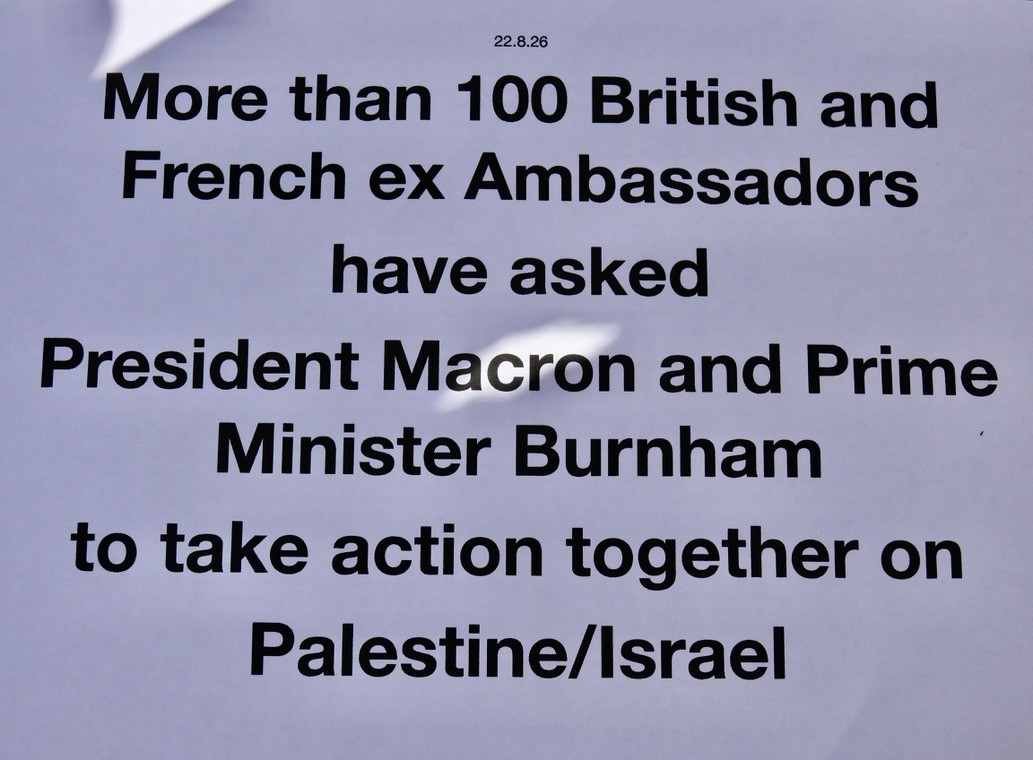
Government ministers have been under increasing pressure to take a firmer stance in relation to Israel. Andy Burnham has apologised for the previous stance of the Labour government. The ever increasing settler violence as well as the destruction of great swathes of Gaza is becoming harder to ignore politically. The encroachment is increasing all the time with over 60% of the land under Israeli control. There are now 2 million Palestinians living in an area of 150 sq km. This is approximately the same area as Havant in Hampshire which has a population of 127,000.

The Israeli embassy has referred to previous comments by the Ambassador saying ‘If Britain acts against the state of Israel, the state of Israel will act against Britain. We have the tools.” The Jewish Chronicle repeated this warning.

Erasure

Amira Hass, writing in the Ha’aretz newspaper (September 1st) quoting the opposition leader Gadi Eisenkot says:

“Erasure is the nightmare solution being written into reality every day. Knesset laws, politicians’ declarations, military orders, school textbooks and the holy real estate battalions operating in Gaza, the West Bank and the Negev all work, together and separately, to advance this “solution” diligently and without fear of international condemnation.”

Some argue that genocide, and the elimination of all Palestinians from Israel, has always been the policy of the government. As the Jewish writer Omar Bartov writes:

” […] for the past two years Israel has engaged in a genocidal operation in Gaza and all the indications are this was part of an intentional policy consistent with political and military rhetoric meant to “encourage” Palestinians to leave the Strip altogether (p 190)” [1]

The theme of the elimination of all Palestinians is amply described in the Jewish academic Ilan Pappe’s book The Ethnic Cleansing of Palestine [2]. He notes that right from the start, Ben-Gurion led the Zionist movement to achieve ‘absolute Jewish domination’ of Palestine (p23 ff).

The grim toll of death continues in Gaza with the death toll now put at over 73,000, including 12,500 women, over 20,000 children and 174,500 injured.

The change in stance by the UK government is welcome. As the Ha’aretz article notes, the overwhelming military power possessed by Israel courtesy of the USA, has led it to pursue violent and military solutions. We are rapidly approaching the horrific October 7th massacre with no end of hostilities in sight.

Vigil

Vigils will continue in Salisbury and the next is this Saturday 5th September at 5pm for half an hour. The local MP Mr John Glen has never attended or acknowledged the vigils and is a proud member of the Conservative Friends of Israel group.

[1] Israel: What Went Wrong, Omar Bartov, 2026, Fern Press

[2] The Ethnic Cleansing of Palestine, Ilan Pappe, 2006 (first published), One World

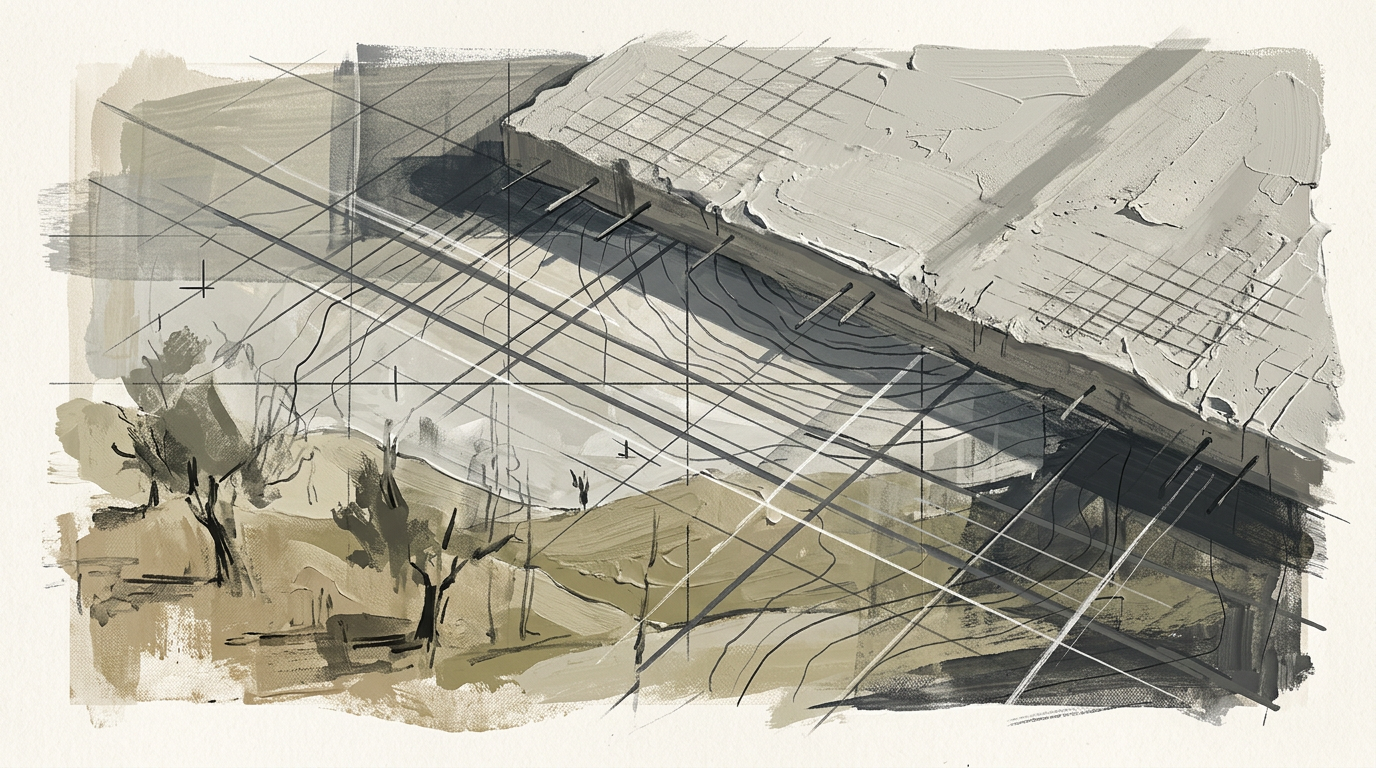
Sources: Guardian, Middle East Eye, Ha’aretz, Jewish Chronicle. Image created by AI.


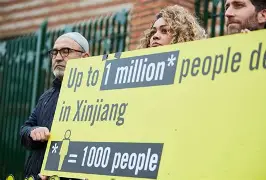
Uyghur campaign: last day (for now)


Today is our last post for now on this successful campaign

August 2026

This is our last post in our current campaign although we will be featuring the plight of the Uyghurs in future posts. The campaign has had some successes and the organiser reports:

“It has been a huge success by almost all metrics – we have received news coverage in Uyghur, Mandarin, French [and] Turkish languages, we have received well over 100,000 views on Instagram, we’ve exhibited at SOAS University Library, we’ve received a wide range of thanks from Uyghu community members… we will be sharing more thanks in our final newsletter, but for now, I am so proud and grateful [the] incredible achievements [of local groups].

Chinese arrest and imprison protestors

Today, we highlight Nagyz Atajurt, a Kazakhstan-based human rights organization that documents the detention and persecution of ethnic Kazakhs and other Muslim minorities in the Uyghur region.

The curator of the Xinjiang Victims Database at shahit.biz, Gene Bunin, talks in this video about how Atajurt were instrumental in campaigning on behalf of the Uyghur region: https://www.youtube.com/watch?v=Ao1keGNxl1w. After a peaceful protest in November 2025, held over human rights abuses in the Uyghur region, 19 members of Atajurt have been convicted and sentenced this April 2026 – 11 were handed five year prison sentences, and 8 were sentenced to “restrictions of freedom” sentences.

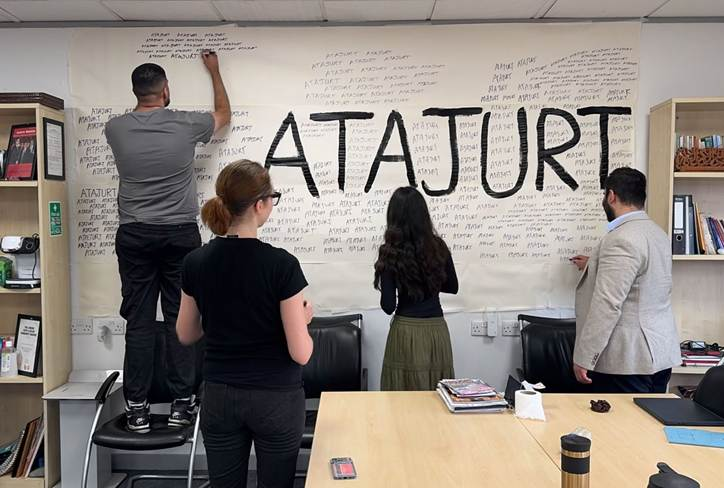
At the Afghanistan and Central Asia Association (ACAA), an organisation focusing on rights of refugees in the UK and rights defenders across the Central Asia region, volunteers worked with us to create a temporary wall mural for Atajurt in their main meeting space –  writing for Atajurt in the simplest way we knew how, remembering how Atajurt wrote for Uyghurs.

Report

We shall be reporting on the results of the Salisbury group’s small part in this campaign but the main thing we shall be highlighting is the extremely high level of views from within China itself and Hong Kong. Because of the firewall, the number of views from there in the past has been tiny. As we have seen in the reporting of the devastating floods in Nepal, the Chinese have released few details and reporters are not allowed into the region, all part of the secrecy and restrictions imposed by the CCP on its citizens and on the world.

The oppression of the Uyghurs and other minorities in the area is massive. One of the main things we have highlighted is that, although a long way away, some of the clothes you wear and the solar panels on your roof contain elements of the forced labour that is taking place there. We are all truly involved…

Photo: Amnesty campaign team. Most of the text of this post is by the campaign team.


Recent posts:

Thought of subscribing?

Good response to our 143rd vigil


We still turn out each week as the need is still there
Proposal to make a film
August 2026

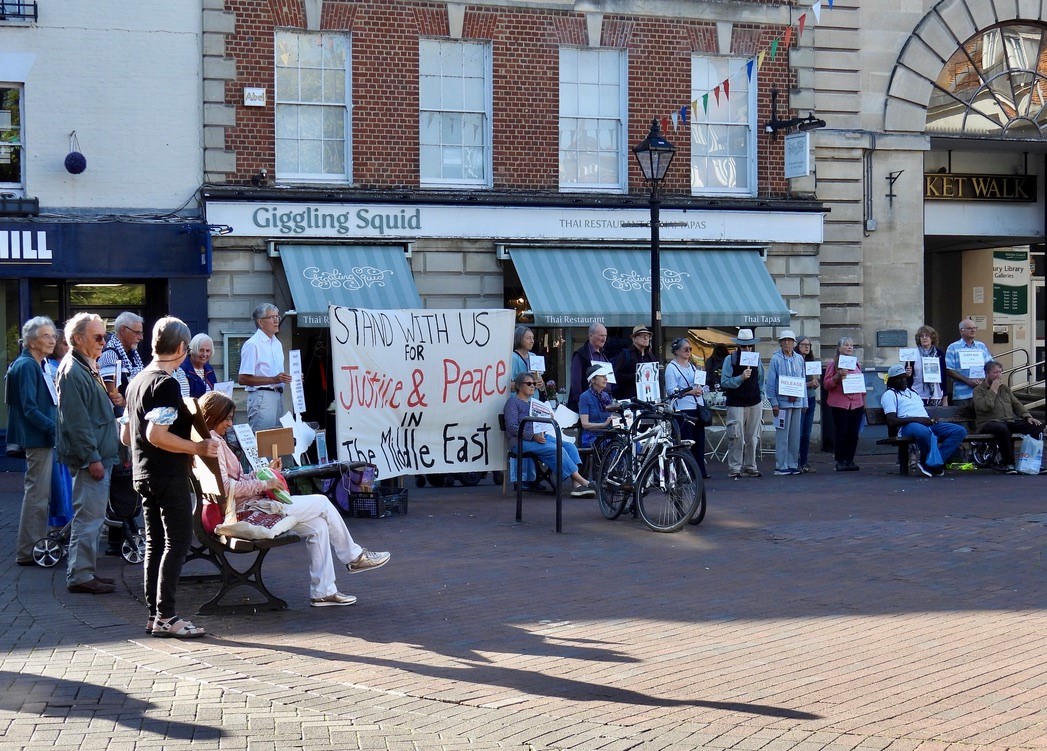
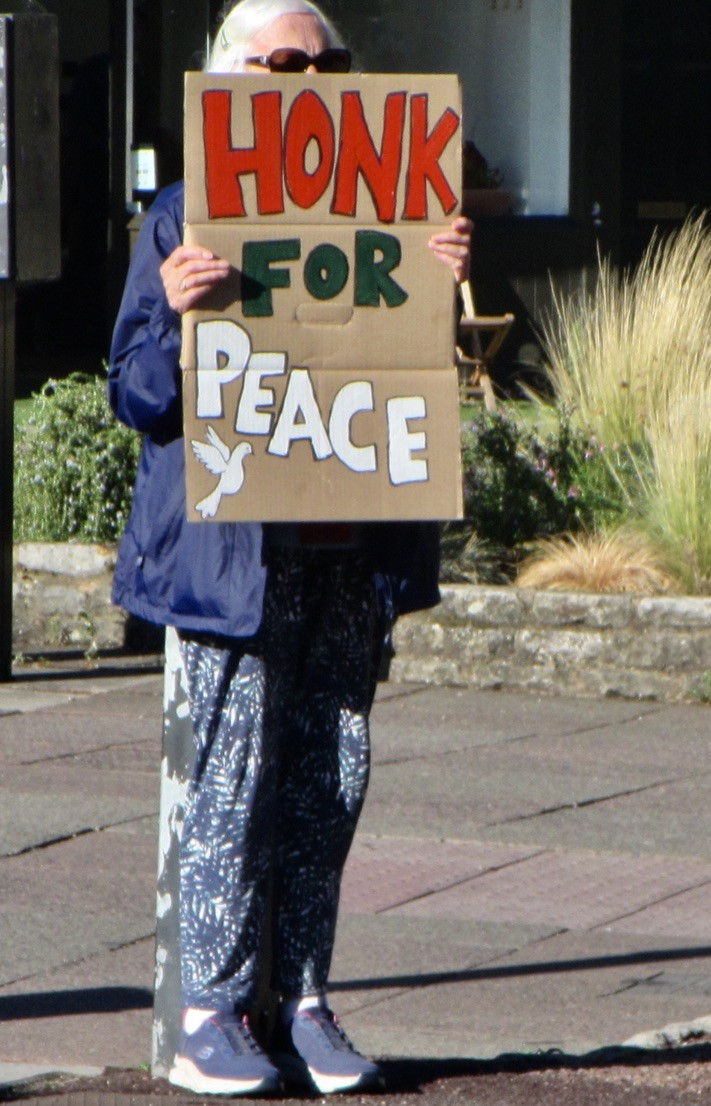
One hundred and forty three vigils for peace in the Middle East supported by around 30 people yesterday (29 August). The photo shows one of our number standing on the traffic island and there were around 35 ‘honks’.

There has been some coverage of the situation in Gaza last week with reports on the yellow line which is slowly creeping across the territory forcing the Palestinians into a smaller and smaller area. According to the LA Times it is now 64% of Gaza. Nearly all the cultivable land has now been seized. According to recent estimates, the death toll is now over 73,000 and continuing despite the ceasefire. 174,000 have been injured. Around 1,300 have been killed since the ‘ceasefire’ and 4,361 injured. Settler violence has intensified in the West Bank.

We still await government action concerning our relations with Israel following the election of Andy Burnham as prime minister who apologised for the government’s stance in July. Although this apology was welcomed, few in the media noted that Burnham is a member of Labour Friends of Israel. On the web site Track Israel Lobbying Mr Burnham heads the page Hall of Shame as having received over ยฃ200,000.

The total received by MPs from Israeli organisations is a massive ยฃ1,574,262 (updated this month). It is reasonable to ask how independent are our members of parliament and to what extent are they representing the interests of those people whom they purport to represent when they are in receipt of such largesse?

Film

We are considering making a short film to be called ‘Because …’ which will have brief interviews with some of those who attend these vigils. We will be carrying out the interviews over the next few Saturdays. Anyone reading this who attends is willing to volunteer. The aim is for people to say they come to the vigils because … and to give their reasons.

We note once again that there has been no sign of the local MP Mr John Glen who is a member of the Conservative Friends of Israel group (see above) and has never mentioned them in his weekly column in the Salisbury Journal.

Photo: courtesy of Peter Gloyns.


Recent posts:

Exeter University in the spotlight


Serious doubts raised over their deal with Saudi Arabia

August 2026

Any organisation preparing to engage in a commercial transaction with a state like Saudi Arabia, needs to ask itself some serious questions. Exeter University is reported in the Guardian newspaper (29th August) to have agreed to offer a MA course ‘applied security and strategy’ with a Saudi University. Whether the university asked itself those questions is unknown but having agreed to offer it they seemed keen to keep it quiet.

The University was in the news earlier in the year when it announced that it was axing 150 jobs in the humanities and social sciences departments and along with other universities, is struggling financially. The main reason is the drop in the number of overseas students due to government restrictions which ended a lucrative income stream. They need to work hard to ward off more serious financial problems.

Little positive to say about Saudi Arabia

What can we say about Saudi, their proposed partner? Firstly, there is no realistic free speech in the country and those who displease the authorities are arrested and imprisoned for long periods. It executes large numbers of people and 2025 was a record at 347 (although it is likely to be more) which was just ahead of 2024’s total of 345. Charges are vague and confessions are often acquired using torture. Apostasy is still a crime. Few have any legal defence. Executions are carried out in public and the most frequent method is beheading with a sword.

Women’s rights are dismal and the ‘guardianship’ system is still in place. This law formally enshrines male guardianship over women, requiring them to obtain a male guardianโ€™s consent for marriage and giving husbands significant authority over wives, including financial support contingent on โ€œobedienceโ€ and marital cohabitation.

Migrants have few rights

They have wreaked terrible destruction in Yemen with a war against the Houthis backed by Iran.

If the university considered these issues they would had to have weighed up organising a masters programme against the dire human rights situation in Saudi. They may have drawn comfort from the UK’s relaxed attitude allowing arms sales and other commercial deals to take place making them one of our largest countries for our weaponry. Selling arms and helping Saudi with their assault on Yemen is surely worse than running a teaching course in Exeter they might reason.

The issue comes down to integrity and morals. How much do you, as a university, take into account the large number of executions, torture, lack of human rights, lack of an opposition and women treated as vassals, against a lucrative income training some people from the National Defense University in Riyadh?

The University’s college union, UCU, is not impressed and has said ‘they (the university) is more interested in flogging military training to despotic regimes than in defending world class humanities and social sciences teaching.’ It looks as though the university chose money over morals.

Sources: Guardian; Death Penalty Information Center; Human Rights Watch; Amnesty; Exeter University.

Image generated by AI.


It’s not just cotton from Xinjiang …


The Uyghurs are exploited across several different sectors

August 2026

We have focused on cotton in previous posts with estimates of around 20% of the cotton clothes we wear has been produced using forced labour. But it’s not only cotton, a large amount of raw materials, and products, are manufactured in Xinjiang also using Uyghur forced labour. This production includesย 35% of polysilicon – the raw material used to make solar panels – is created in Xinjiang, along with 10% of global PVC production.ย 

Although the UK is trying to combat modern slavery through the Modern Slavery Act 2015, this act has no enforceable legislation to prevent those products from entering the UK. As the EU and the US have stronger legislation in place, the UK risks being the dumping ground for products issued from Uyghur forced labour. 

One way to tackle this issue is to contact your local council to urge them to adopt more stringent practices in their procurement contract to ensure the goods and services used by public bodies are not a result of Uyghur forced labour. 

To shine some light on this issue, we are encouraging you to submit a question to Wiltshire Council to ask about processes and safeguards currently in place to prevent public bodies from procuring goods or services that are issued from forced labour. Some local councils have already adopted measures to address Uyghur forced labour, but you can still ask what is done practically to ensure the motion is respected.ย  The address is:

Wiltshire Council, Bythesea Road, TROWBRIDGE, BA14 8JN. We could find no general point of contact and searches of their site revealed no relevant policies.

Some local councils give the chance to submit questions to be addressed by the mayor and councillors during meetings. For other councils, you may need to ask them directly how to submit a question, or contact a local councillor directly to engage with them. 

Image: Amnesty USA


Vigil No. 142


Nearly 30 attend the latest vigil in Salisbury

August 2026

The vigils continue and the 142nd was held yesterday in the Market Place, Salisbury. Recognition was good with around 100 or so seeming to take some kind of note of our presence. It’s quite a while now since we have had any serious criticism of our action.

There may be signs that things are changing on the political front. The new prime minister seems aware of the damage done by Sir Keir Starmer’s almost blinkered approach to Israel. Starmer was determined he said to ‘root out anti-Semitism from the party’ and claimed he had done so in his final PMQ. ‘Rooting it out’ was a fine objective but giving Israel almost unqualified support despite their atrocious actions in Gaza, and now the West Bank, quite another. The violence has increased markedly in the last few months with the IDF or Israeli police doing very little to stop it. Leaders of the party are fully behind the actions. Thirteen new settlements have been approved and they are designed to make any hope of a coherent Palestinian state impossible.

Andy Burnham is facing demands at next month’s party conference to declare Israel’s actions in Gaza to be genocide which he is reported to be reluctant to do. At his inauguration it appeared he understood the immense harm done by the government’s one-sided support. We shall have to see if words are turned in action.

Blog at WordPress.com.

Up ↑