Yemen bombing


140 killed in air raid on a funeral
Funeral bombing, Yemen. Picture: hang the bankers.com

At long last, the war in Yemen is beginning to attract the attention it deserves.  Most news bulletins still lead on the atrocities in Syria but the horrific events in Yemen where the Saudis bombed a funeral killing 140 and wounding around 500 has at last brought the conflict onto the TV screens.  The bombing, combined with the blockade, is causing untold misery to ordinary Yemenis.  The wounded will struggle to get proper medical treatment because the hospitals are also being bombed and the blockade means medical supplies cannot get through.

We first started drawing attention to the war there over a year ago and raised the matter with our local MP.  A bland letter was received from the Foreign Office minister Tobias Ellwood.  Subsequent revelations have shown that the actions the FCO were claiming to have done were somewhat wide of the truth.

The core issue is the use of our arms (and those of the US, the principal weapons suppliers to the Saudis) are being used in the conflict.  It was also revealed (inadvertently, and no doubt embarrassingly by the Saudis) that British service people were advising the Saudis.  Quite what their role is there is disputed.

This particular attack has been condemned by the UN, the EU and the US.  The Foreign Office still claims there is no need to revoke licences as there is no serious breach of humanitarian law.  The UN Secretary General Ban Ki-Moon said:

The air strikes on a funeral ceremony was a “heartless attack on civilians and an outrageous violation of international humanitarian law.”  He said an independent body to probe rights violations in Yemen must be set up.  There must be accountability for the appalling conduct of this entire war.  Mail on line [accessed 11 October 2016] 

The Saudis are not alone in committing these atrocities and the Houthi rebels are likewise accused.

The Saudis can carry on with their attacks because we supply them with the weapons and we also give the regime a degree of diplomatic cover.  The huge sale of weapons – over £3bn a year – is clearly a factor influencing government policy.  This latest episode is making it harder for the government to ignore what is going on there and our role in helping them.  The mantra about the control of arms sales is still alive and well however:

On the point of UK arms sales to Saudi Arabia, a Government spokesperson told The Independent the UK “takes its arms export responsibilities very seriously”

The key test … for our continued licensing of arms exports to Saudi Arabia is whether there is a clear risk that those exports might be used in the commission of a serious violation of international humanitarian law,” she said. “The situation is kept under careful and continual review.”  Independent [accessed 11 October 2016]

But recent TV filmed reports showing the carnage going on there, hospitals full of emaciated children and widespread starvation caused by the conflict and the blockade will begin to make it harder for the government to keep up the pretence of ‘taking its arms export responsibilities seriously’.


The Salisbury group campaigns on a range of issues and we welcome new members.  Follow us on Twitter or Facebook to find out when we have an action in the City and come along.


World Day Against the Death Penalty


World Day Against the Death Penalty

The World Day Against the Death Penalty was created in Rome on 13th May 2002, with 10th October No to the death penaltyestablished as the date for its annual commemoration in 2003.  The World Coalition against the Death Penalty has 158 member organisations, made up of NGO’s, Bar Associations, local bodies and Unions.

Amnesty International is a member of the Coalition.  It has been working to end executions since 1977, when only 15 countries had abolished the death penalty in law or in practice.  That number has now risen to 140.

Since that date –

  • By the end of 2015, 102 Countries had completely abolished the death penalty.
  • 1,634 executions were carried out in 2015 (excluding China – figures unknown) – an increase of 54% over 2014
  • 89% of executions in the course of the year took place in three countries – China, Iran and Iraq – often after unfair trial

The United Nations Moratorium on the Death Penalty calls for States maintaining the death penalty to establish a moratorium on its use, with a view to abolition, and in the meantime to restrict the number of offences punishable by execution, and to respects the rights of those on death row.  It also calls on States that have abolished the death penalty not to reinstate it.  (Note: UN resolutions are not binding).

Amnesty International is calling for:

  • Countries that still use the death penalty to halt all executions immediately
  • Countries that have stopped executing prisoners to remove the death penalty from their legal books, for all crimes, permanently
  • All death sentences to be commuted to terms of imprisonment

The Salisbury Group have included the abolition of the death penalty in its campaigns from the

Members of the group at the NWR conference

beginning.  It is currently focusing on the sentencing to death and execution of juveniles, in particular in Iran and Saudi Arabia.

For this year’s World Day, Amnesty are highlighting the case of the Japanese prisoner, Matsumoto Kenji.  The Salisbury Group manned a stall at the NWR Conference on Saturday, (see photo) in the course of which they collected 50 signatures on cards calling on the Minister of Justice to halt the execution, to end the use of solitary confinement for death row prisoners and to end the use of the death penalty in Japan.

Matsumoto Kenji factsheet (pdf)


Sources:        World Coalition Against the Death Penalty, Wikipedia,  Amnesty International

Groups meet


Groups meet in Salisbury

Members of the Salisbury; Mid Glos and Ringwood groups met on Sunday 17 April to view the tapestry in the Cathedral and to take part in a video being put together by the Salisbury group, further details of which can be found in the minutes.  The group is grateful for the two groups taking the time to come all the way to Salisbury for this.

In front of the tapestry

Group 5
Queen Elizabeth Gardens


Unpublished letter


Text of letter sent to Salisbury Journal

The following letter was sent to the Journal in Salisbury but regrettably for space or other reasons it was not published (14th April).  We do not know at present what the current situation is with the promised bill to abolish the Human rights Act and replace it with a British Bill of Rights (or whatever it is to be called).  It is a manifesto promise and a draft was to be published in the Autumn but has not yet appeared.  It is possible that the arrival of Michael Gove into the Justice Dept. had something to do with it.

Now that we are in full swing with the debate about leaving the European Union, it is possible that this has been shelved for the moment.  Mr Gove is a leading proponent for the Brexit camp who – if current polls are to be believed – are doing well at the moment.  The calculation may therefore be that if they win then the scene is set to dump the HRA as well.

On the other hand, there will be a heavy workload in managing our exit and carrying out the negotiations to secure access to the European market once we leave, so there will be limited civil service and parliamentary time to spend on a new Bill of Rights.

But back to the letter and our local MP John Glen is keen to abolish the HRA and it would be a pity if he is given space in the Journal again to put forward his views and the opportunity is not given to those who disagree with him.  The unpublished letter:

Britain has had a proud history of leading the charge on human rights progress from the aftermath of the Second World War when we were key drafters of the European Convention of Human Rights, to the suffragette movement, to gay rights and other equality legislation. We have often been champions of progress.
What a shame, then, that this year the UK was singled out for criticism in Amnesty International’s annual report on the state of the world’s human rights.  Amnesty is warning that the government’s plan to tear up the Human Rights Act is a gift to dictators all over the world.  Russia recently drafted legislation which allows it to ignore human rights rulings it doesn’t agree with. Far from being able to condemn that action and call on Putin to uphold basic human rights, the UK is actually talking about following suit.  Music to the Kremlin’s ears, no doubt.
Here in Salisbury, the local Amnesty group is campaigning to save the Human Rights Act.  Britain should be a world leader on human rights.  The Human Rights Act protects ordinary people – from the elderly to hospital patients, to domestic violence victims – and we want to see those protections spoken about with pride by our politicians.  We should be redoubling our commitment to enduring human rights principles in these troubling times, not undermining them.
Let’s hope next year’s annual report on the UK reads: “much improved”.

Follow us on Twitter and Facebook

UK government soft-pedalling over the death penalty


Amnesty sets out facts of government’s reluctance to press for an end to the death penalty in some countries

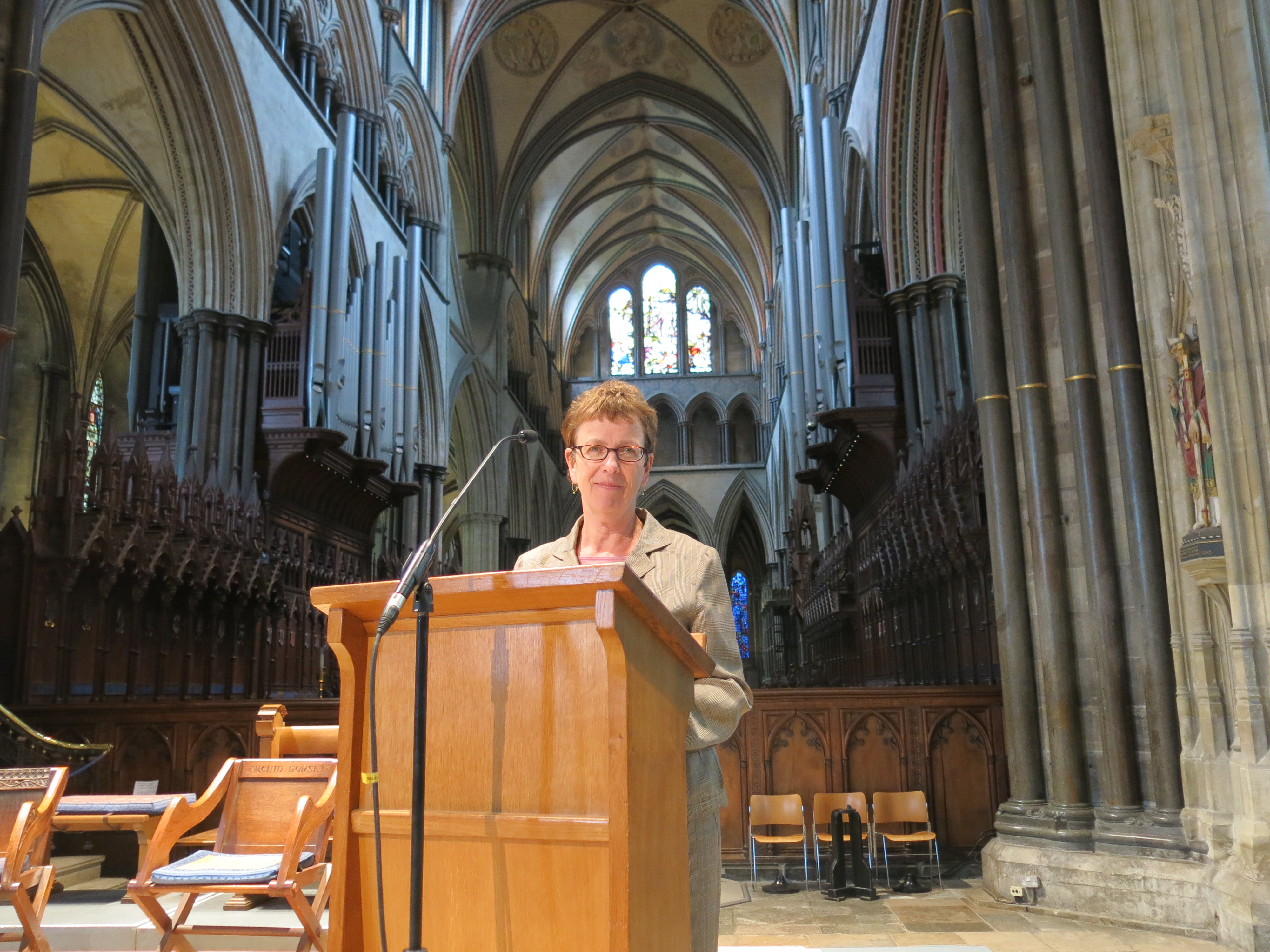
The Government has been accused of “soft-pedalling” over the death penalty and seeming to make trade more important than human rights.  The charge by Amnesty International UK’s director Kate Allen (pictured in Salisbury Cathedral last year) comes as the human rights organisation released figures showing that at least 1,634 people were executed in 2015, a rise of 54% on the year before.  Despite being the highest number Amnesty has recorded since 1989, this total does not include China, where thousands were likely to have been executed but where the death penalty is a state secret.

The figures – contained in the report Death Sentences and Executions in 2015 – show that the top five executioners in the world in 2015 were China, Iran, Pakistan, Saudi Arabia and the USA.

This “profoundly disturbing” surge in executions was largely fuelled by big increases in Iran, Pakistan and Saudi Arabia, Amnesty International reported.  Amnesty International’s fears have been raised just hours after MPs on the Commons Foreign Affairs Select Committee said there is “plainly a perception” the Government is prioritising trade and security with China, Saudi Arabia and Bahrain above human rights.

Ms Allen said:

Like the Foreign Affairs Committee yesterday, we’re worried that the Government has started soft-pedalling over foreign countries’ use of the death penalty, preferring to prioritise trade with countries like China, Saudi Arabia or Pakistan.

Until recently the UK’s policy of seeking global abolition of capital punishment had a clear focus and strategy.  Now the death penalty’s been thrown into the pot with other concerns and it’s much harder to tell whether the Government is prioritising this life-and-death matter.

If governments in Beijing, Tehran, Islamabad and Riyadh aren’t hearing about our outrage at executions after torture and unfair trials, then the executioners are going to think they’ve got a green light to carry on killing.

We want to see the Foreign Office publishing a clear strategy for its anti-death penalty work at the earliest opportunity.”

Amnesty International’s secretary general Salil Shetty said: “Iran, Pakistan and Saudi Arabia have all put people to death at unprecedented levels, often after grossly unfair trials.”

Last year, the Foreign and Commonweatth Office’s most senior civil servant made a frank admission to MPs that human rights “is not one of our top priorities” and that the “prosperity agenda is further up the list”.

Ministers deny the issue has been downgraded but a string of trade-focused, red carpet visits to the UK by the leaders of countries with some of the worst records of rights abuses has reinforced the perception of a shift of diplomatic emphasis.  Readers of this blog will know we have been following the twists and turns of this story for some months.  We wrote to our local MP Mr John Glen last year on Saudi Arabia and the rising toll of executions by beheading or crucifixion and we received a bland reply from the FCO minister Tobias Ellwood.  Since that time more evidence has emerged of policy changes designed it seems to scale down the human rights aspects.  We noted that when George Osborne visited China to the surprise of his hosts he failed to raise the question of human rights and executions at all.  Tobias Ellwood was reported by local media as congratulating the Saudis on the progress they were making with human rights.

Human rights minister Baroness Anelay said:

I am deeply troubled by the increase in the number of reported executions in 2015, which was driven by concerning increases in Pakistan, Iran and Saudi Arabia.

The UK opposes the death penalty in all circumstances and we make our opposition well known at the highest levels to countries which continue to apply it. Our message to them is clear, the death penalty is unjust, outdated and ineffective. It also risks fuelling extremism.

Despite these concerning figures there has been progress in many countries.  It is welcome that in 2015 Fiji, the Republic of Congo, Madagascar and Suriname all abolished the death penalty.

The Foreign Office will continue to use its diplomatic network to push for progress towards the global abolition of the death penalty.

Maya Foa, of Reprieve, described the rise in executions as “extremely troubling” adding: “It is all the more disturbing, therefore, to see what the Foreign Affairs Select Committee this week described as an ‘apparent deprioritisation’ of human rights by the UK government.

Now more than ever, Britain needs to be speaking out against the grave abuses – including mass trials, torture and death sentences handed down to juveniles and political protesters – being committed by its allies.

It is hard not to come to the conclusion that the primary aim of the government is trade and business with human rights coming a poor second if at all.  This overlooks the nature of ‘soft power’ and the fact that as a nation, we could be influential in humanising world affairs.  Instead, we chose to push out the red carpet for the most frightful regimes and, as the Panama papers are revealing, allow dubious individuals to buy up large parts of London using off shore tax havens.

Follow us on Twitter and Facebook

Cluster weapons used in Yemen


Yemen: New evidence challenges coalition’s denial it used cluster munitions in recent attack
Cluster bombs used in Yemen

Evidence gathered by Amnesty International appears to confirm reports that the Saudi Arabia-led coalition forces dropped US-manufactured cluster munitions on the Yemeni capital, Sana’a, on 6 January 2016.  The attack killed a 16-year-old boy and wounded at least six other civilians, and scattered sub munitions in at least four different residential neighbourhoods.  Amnesty International is calling on the coalition to immediately stop using cluster munitions, which are inherently indiscriminate weapons and are internationally banned.

By Amnesty International, 15 January 2016, Index number: MDE 31/3208/2016

Group minutes for January


The group met for a business meeting yesterday and the Minutes are now completed.

Arms sales and human rights


Arms sales dictating policy in Saudi Arabia

Readers of this blog will be familiar with our argument that oil and arms sales dictate our policy to the kingdom of Saudi Arabia.  The execution of 47 people last week has caused an international outrage but not, predictably from our government.  Philip Luther of Amnesty said:

It is a bloody day when the Saudi Arabian authorities execute 47 people, some of whom were clearly sentenced to death after grossly unfair trials. Carrying out a death sentence when there are serious questions about the fairness of the trial is a monstrous and irreversible injustice. The Saudi Arabian authorities must heed the growing chorus of international criticism and put an end to their execution spree

A policy document published by the Foreign and Commonwealth Office in 2011 curiously omits mention of Saudi Arabia in its list of countries where diplomats will be seeking to ‘positively drive forward’ the government’s ultimate goal of abolishing the death penalty.  Countries such as China, the US, Iran and Belarus are among those listed, but not Saudi Arabia.

Philip Hammond the Defence Secretary said HMG was ‘disappointed’ in the actions of the Saudi authorities.  Disappointment seems to be a rather limp response to make to such an appalling act.  It was Mr Ellwood who responded to our message to John Glen MP last year in which we asked for a more robust response to the Saudi government.  Both he and Mr Glen assured us that these matters were being pursued but as the revelations keep appearing – altering the Ministerial code; dropping the death penalty abolition as a specific policy, and now the omission of Saudi from the list of countries to be targeted – we see that it is devoid of real intent.

Many human rights organisations have criticised the executions and the craven stance taken by the UK government.  Maya Foa of Reprieve said:

Saudi Arabia has consistently ranked in the world’s top five executioners, and a large proportion of beheadings carried out in the country have been for non-violent offences, including protest.

It is shocking that the Kingdom was absent from the counties targeted by the UK’s death penalty strategy over the past five years, when every other major executioner in the world – China, Iran, Iraq, the US and Pakistan – was included.

Amnesty said the omission was ‘astonishing’.

Does it matter?

Why does this matter?  Firstly, the middle east is fraught with much violence and tension.  Ministers – including the Prime minister – fulminate about the terrible events in the area controlled by IS but are noticeably reticent oven similar violence in Saudi.  Imagine the Prime Minister commenting on the latest gruesome execution IS video and saying it was ‘disappointing’.  By continuing to supply arms we are both helping to support the violence in the area and also aiding the bombing of neighbouring Yemen where women and children are dying.  Our policy should primarily be about seeking peaceful resolutions to problems not trying to sell yet more arms.

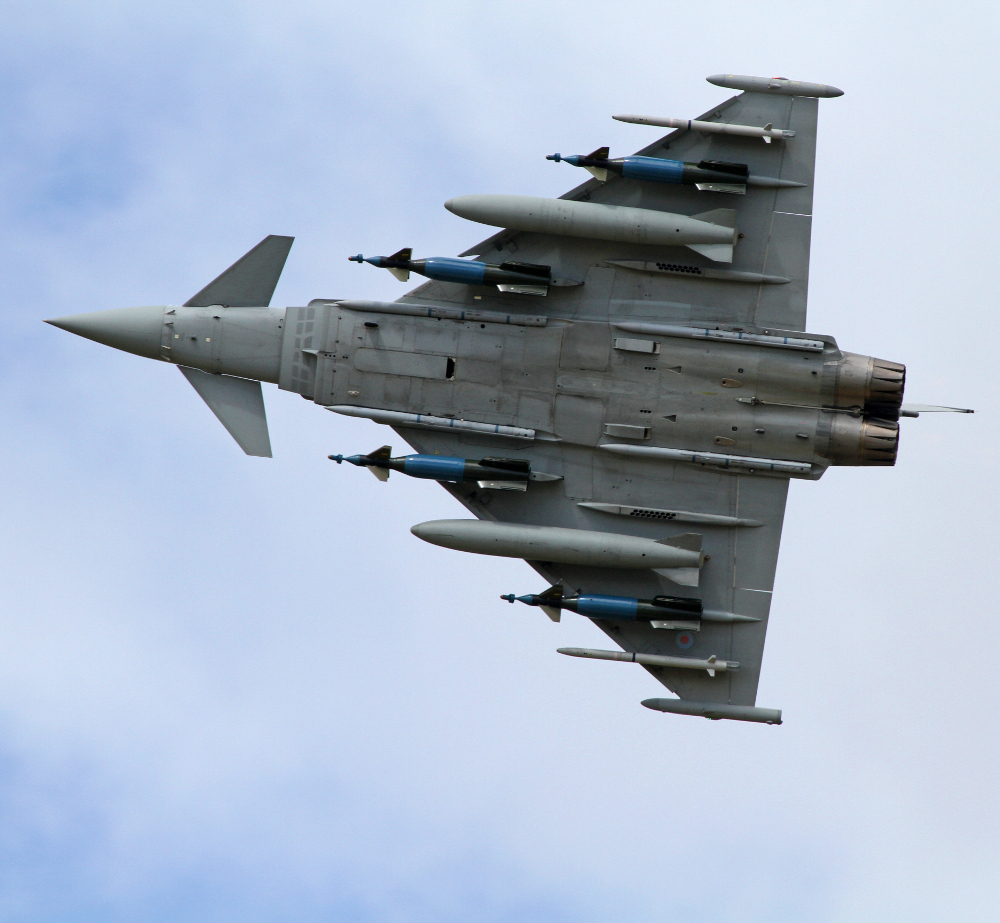
Eurofighter of the type sold to Saudi ArabiaSecondly, by being so dependent on arms sales, this becomes the main driver of our policy.  Not what is best for the region, or the people of the Saudi regime, or human rights, but what effect will it have on the bottom line of BAE Systems.  Our actions also lend them credibility.  Instead of applying pressure to encourage a more civilised approach to the Shia minority, to the rights of women and to foreign workers, we arrange for a Saudi to be elected onto the UN’s Human Rights Council and express ‘disappointment’ at mass executions.

We also lay ourselves open to charges of hypocrisy.  In seeking to promote civilised conduct around the world, to end the death penalty and stamp out torture, our approach to Saudi is both inconsistent and craven.  It weakens our international voice.

Malcolm Rifkind was interviewed on the radio and his argument was that the Saudis provide us with valuable intelligence.  Is the argument that we tolerate shocking behaviour so that – it is claimed – we get some intelligence?  This seems rather thin since no doubt the Saudis receive comparable intelligence from us.

The arms sales tail seems to wag the policy dog and by our actions we are not helping the Kingdom to adapt to the modern world.

Continue reading “Arms sales and human rights”

Tapestry: detailed pictures, final set


The last set of pictures of the panels on the tapestry currently in the entrance to the Chapter House at Salisbury Cathedral.  Each panel represents an article from the Universal Declaration of Human RightsVideo

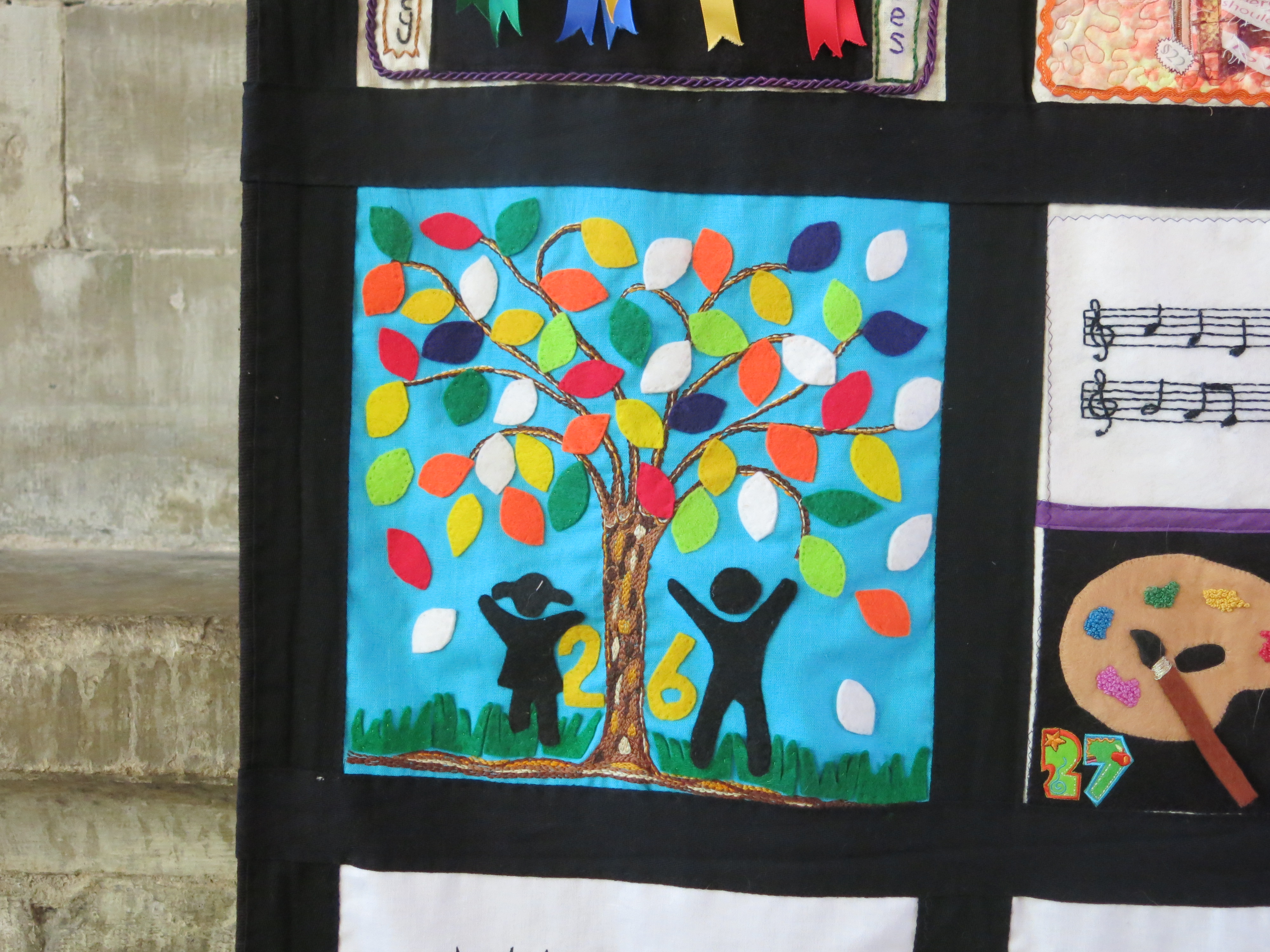
Art 26

Article 26: Everyone has the right to an education, elementary schools should be free and compulsory.  Contributed from the Southampton City group.


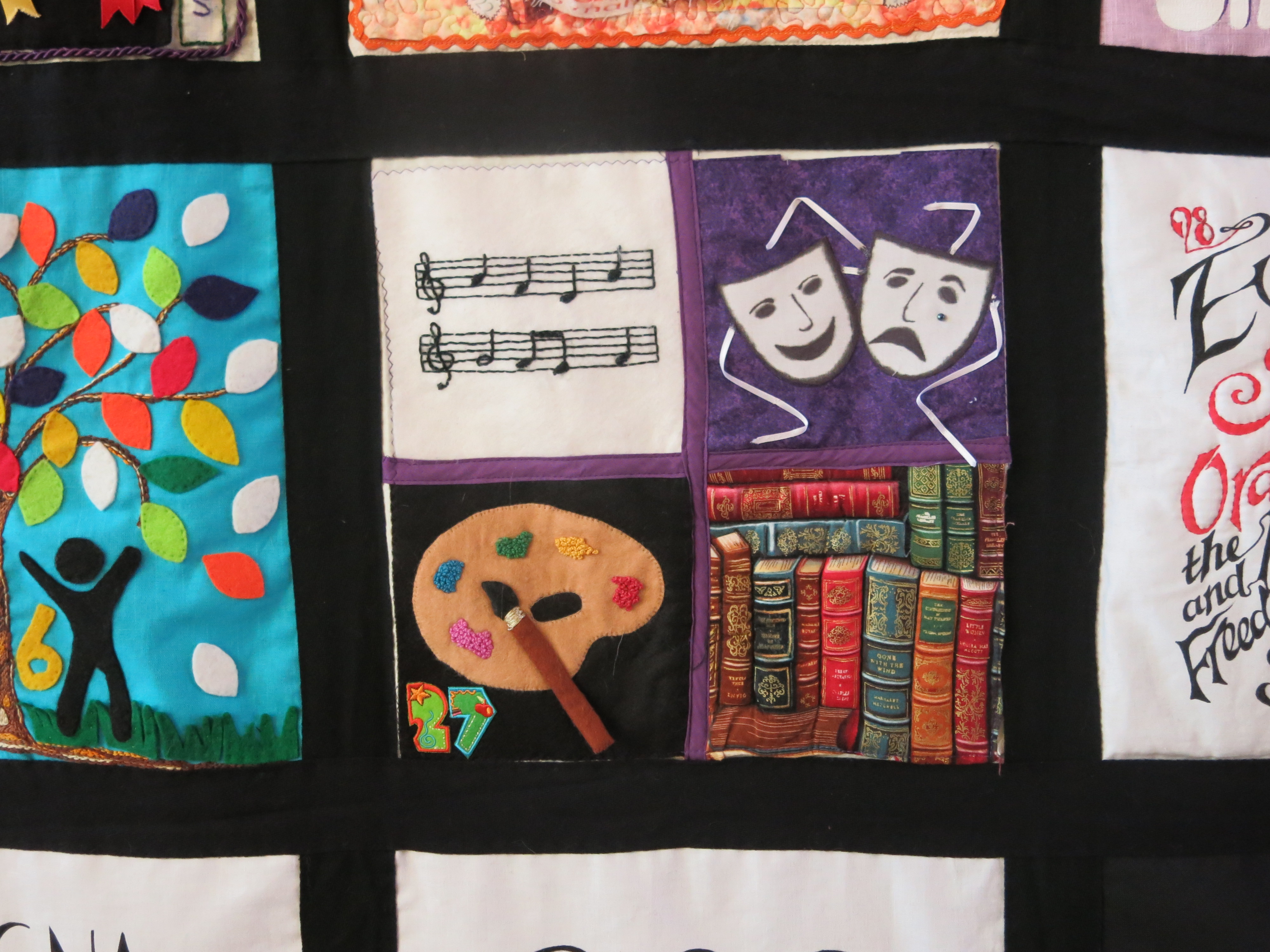
Art 27Article 27: Everyone has the right to freely participate in the cultural life of the community.  Team effort this by Fay, Janet, Sharon, Sue and Gretel, members of the Romsey group.


Art 28Article 28Everyone is entitled to a social and international order in which the rights and freedoms set out here can be fully respected.  The third panel by our Regional Representative, Caroline Butler.


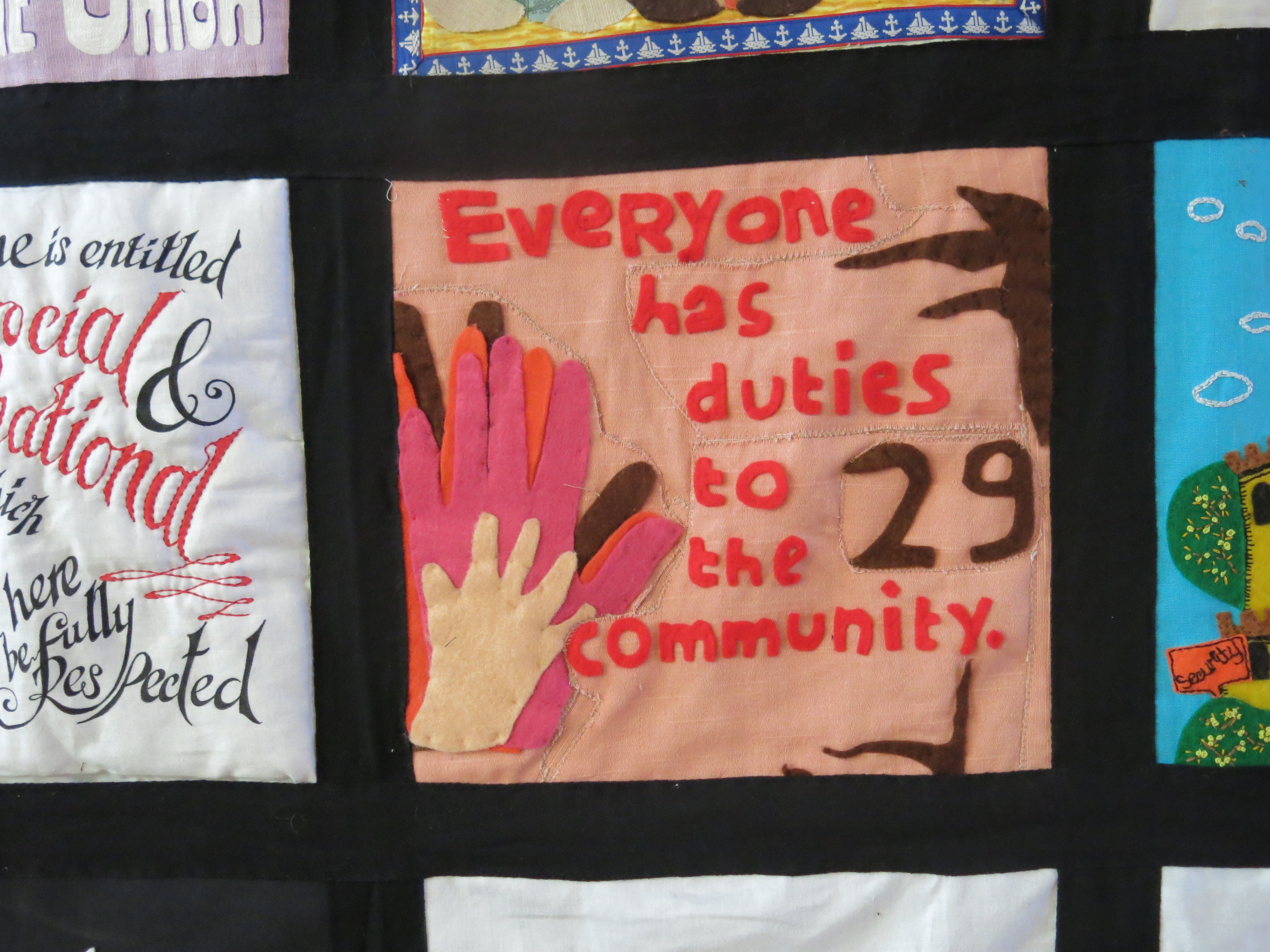
Art 29Article 29: Everyone has duties to the community.  This is the second panel in the tapestry contributed by a refugee group, this time GARAS, the Gloucester Action for Refugees and Asylum Seekers.  GARAS offers support to those seeking asylum in Gloucestershire; welcoming them when they arrive; advocating for them in their daily struggles; supporting them if they face being sent back, as well as helping them adjust to their long term future if they are recognised as refugees.


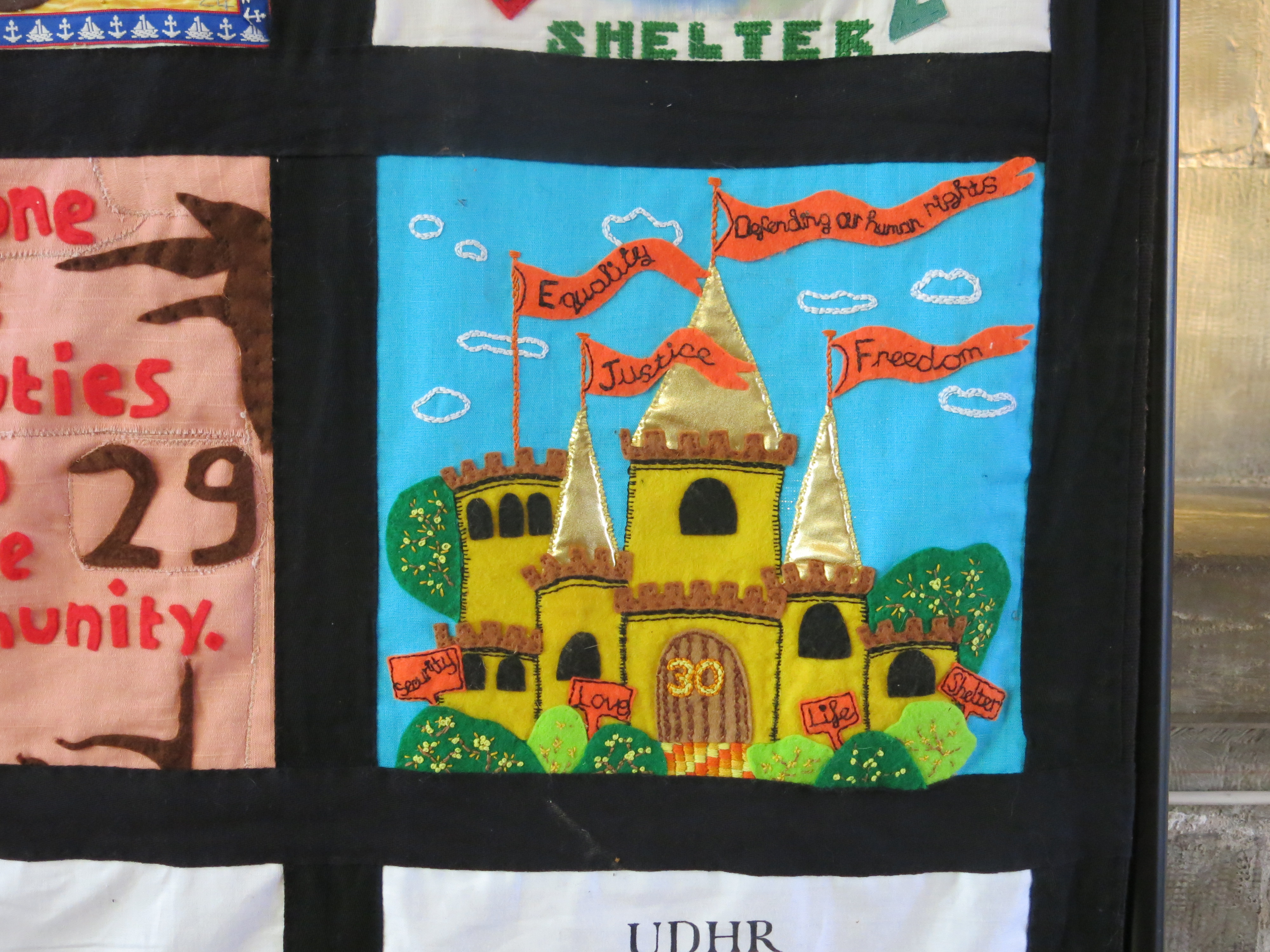
Art 30Article 30: No one has the right to act in such a way as to destroy the rights and freedoms set in in this declaration.  The fourth panel from the Southampton City group.


End


Tapestry: detailed pictures 4


This is the fourth batch of pictures of the tapestry which is in the entrance lobby to the Chapter House in Salisbury Cathedral.

Art 16Article 16: Men and women have the right to marry and found a family.  No on should be forced to marry.  This panel by Carol Corke on behalf of the Isle of Wight group.


Art 17Article 17: Everyone has the right to own property.  This panel is also by the Isle of Wight group, this time made by Sue Logan.


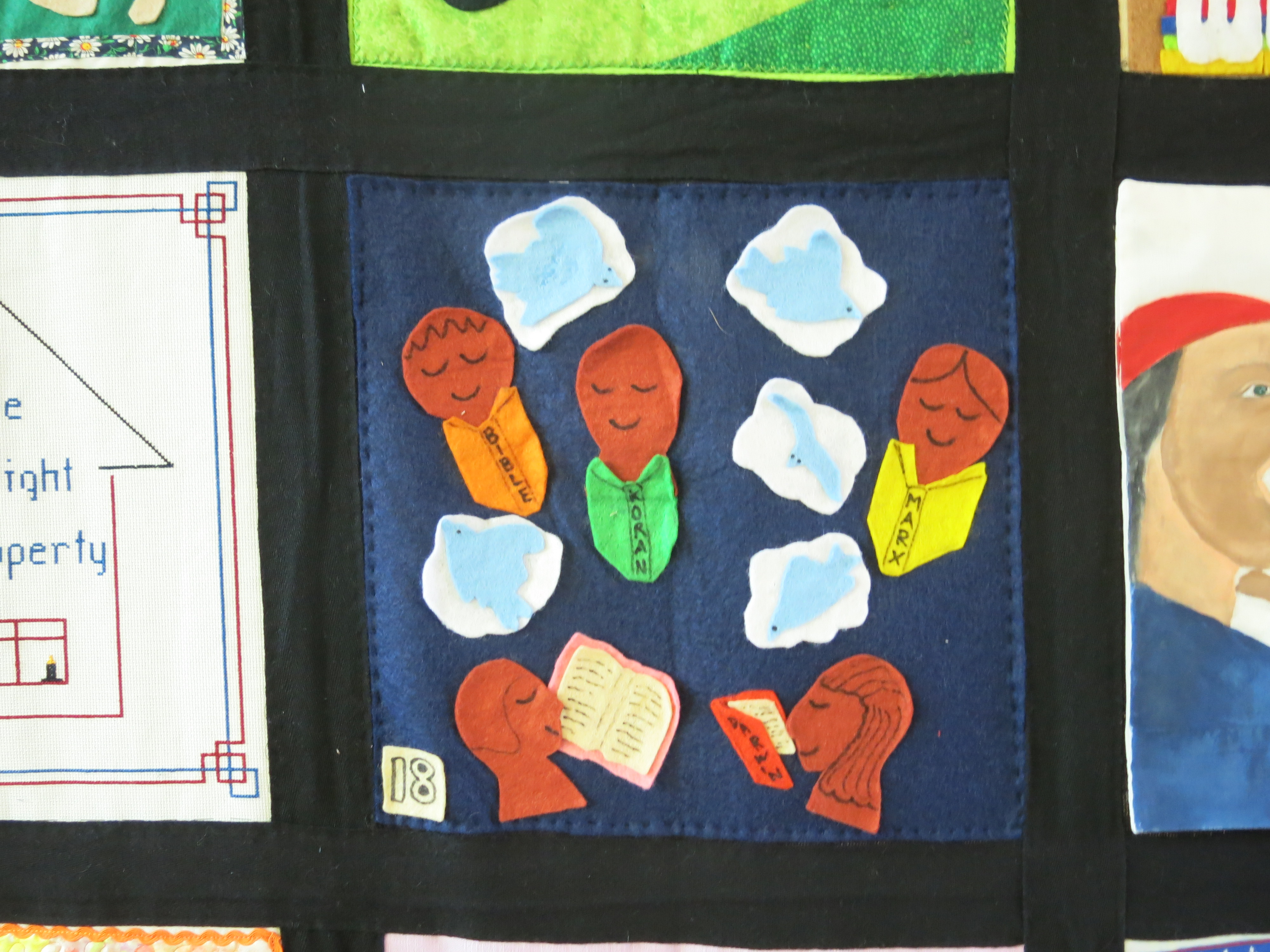
Art 18Article 18: Everyone has the right to freedom of thought, conscience and religion.  And this panel is from our very own Salisbury group made by Fiona Donovan.


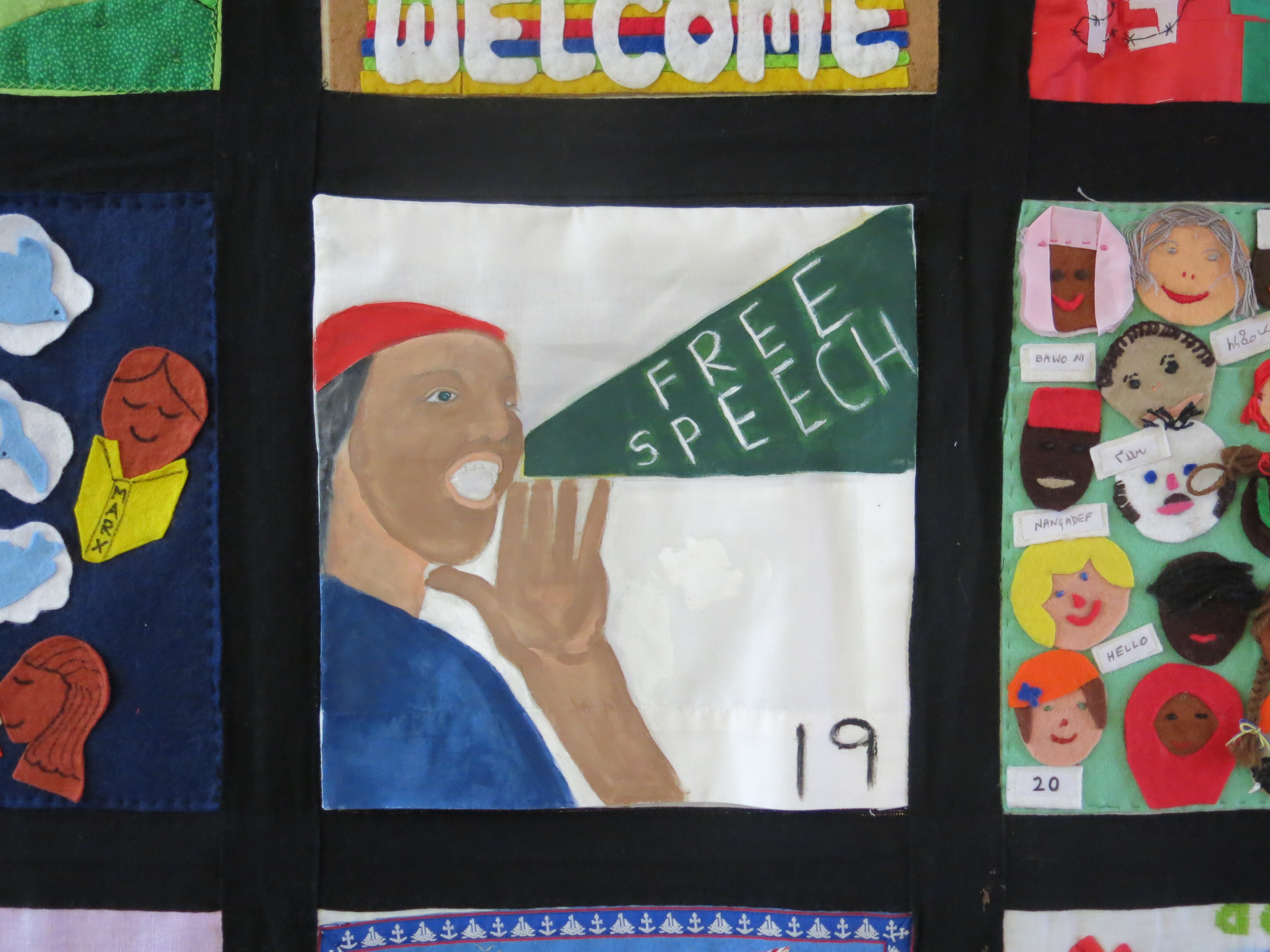
Art 19Article 19: Everyone has the right to freedom of opinion and expression.  This includes sharing ideas with people from other countries.  Another panel from the Mid Gloucester group, this time by June Styles.


Art 20Article 20: Everyone has the right to freedom of peaceful assembly and association.  This panel was made not by an Amnesty group but by the Harbour Project in Swindon.

The Harbour Project welcomes and supports refugees and asylum seekers in Swindon.  To those who’ve risked their lives, families and homes fleeing war and persecution, they provide friendship and hope for a future.   They have been working tirelessly since the Kosovo crisis in 2000.  Today, they are aiding people from across the world.

Blog at WordPress.com.

Up ↑