Over the past few weeks, we have been drawing attention to the situation in Yemen and in particular, the involvement of our government in supplying arms and personnel to the Saudis who are bombing that country. There is now a petition by Amnesty International asking people to send a message to the UK government asking them to put a stop to this. It is easy to sign and you can send a text message from your mobile phone to 70505 and the message is HALT1.
British military advisors involved in bombing in Yemen
News has emerged over the past few days that British and American advisors and service personnel have been involved in advising the Saudi Arabians in their attacks on Yemen. Our involvement might not have come to light had it not been for the Saudis themselves and a briefing by their foreign minister Adel al-Jubeir. The Minister of Defence, Michael Fallon, issued a statement to the House of Commons on 17 December which simply referred to 94 personnel embedded with ‘Coalition HQ’s’ without being at all specific about what that meant. It now appears our people are actively involved in targeting strikes. MoD say that our personnel are “not directly involved in Saudi-led Coalition operations” but the Saudi briefing confirms that we are in the command centre.
The problem is that a range of non-military targets are being hit including schools and medical facilities. A total of around 3,000 have been killed since hostilities began. Médécins san Frontières have reported missile hits on one of their medical facilities although they are uncertain of the origin of the weapons concerned.
Campaign Against the Arms Trade are stepping up their legal campaign and have issued a ‘letter before action’ for judicial review, challenging decisions to continue to export arms to Saudi Arabia despite increasing evidence that they are violating international humanitarian law. (11 January 2016)
Amnesty have pointed out that provisions of the Arms Trade Treaty – which the UK is party to – prohibit us from exporting arms transfers if they have knowledge that the arms would be used to commit attacks against civilians, civilian objects or other violations of international humanitarian law. It said there was “a pattern of appalling disregard for civilian lives displayed by the Saudi Arabia-led military coalition”. There is also a risk of famine because of the blockade on Yemeni ports.
That our government and service personnel are somehow involved in this is shocking.
Sources: Daily Telegraph; Daily Mail; the Guardian; CAAT; Reprieve; Amnesty International
Why not follow us on Twitter or on Facebook? If you would like to join us look at the ‘join’ tab at the top of the page for details.
Readers of this blog will be familiar with our argument that oil and arms sales dictate our policy to the kingdom of Saudi Arabia. The execution of 47 people last week has caused an international outrage but not, predictably from our government. Philip Luther of Amnesty said:
It is a bloody day when the Saudi Arabian authorities execute 47 people, some of whom were clearly sentenced to death after grossly unfair trials. Carrying out a death sentence when there are serious questions about the fairness of the trial is a monstrous and irreversible injustice. The Saudi Arabian authorities must heed the growing chorus of international criticism and put an end to their execution spree
A policy document published by the Foreign and Commonwealth Office in 2011 curiously omits mention of Saudi Arabia in its list of countries where diplomats will be seeking to ‘positively drive forward’ the government’s ultimate goal of abolishing the death penalty. Countries such as China, the US, Iran and Belarus are among those listed, but not Saudi Arabia.
Philip Hammond the Defence Secretary said HMG was ‘disappointed’ in the actions of the Saudi authorities. Disappointment seems to be a rather limp response to make to such an appalling act. It was Mr Ellwood who responded to our message to John Glen MP last year in which we asked for a more robust response to the Saudi government. Both he and Mr Glen assured us that these matters were being pursued but as the revelations keep appearing – altering the Ministerial code; dropping the death penalty abolition as a specific policy, and now the omission of Saudi from the list of countries to be targeted – we see that it is devoid of real intent.
Many human rights organisations have criticised the executions and the craven stance taken by the UK government. Maya Foa of Reprieve said:
Saudi Arabia has consistently ranked in the world’s top five executioners, and a large proportion of beheadings carried out in the country have been for non-violent offences, including protest.
It is shocking that the Kingdom was absent from the counties targeted by the UK’s death penalty strategy over the past five years, when every other major executioner in the world – China, Iran, Iraq, the US and Pakistan – was included.
Amnesty said the omission was ‘astonishing’.
Does it matter?
Why does this matter? Firstly, the middle east is fraught with much violence and tension. Ministers – including the Prime minister – fulminate about the terrible events in the area controlled by IS but are noticeably reticent oven similar violence in Saudi. Imagine the Prime Minister commenting on the latest gruesome execution IS video and saying it was ‘disappointing’. By continuing to supply arms we are both helping to support the violence in the area and also aiding the bombing of neighbouring Yemen where women and children are dying. Our policy should primarily be about seeking peaceful resolutions to problems not trying to sell yet more arms.
Secondly, by being so dependent on arms sales, this becomes the main driver of our policy. Not what is best for the region, or the people of the Saudi regime, or human rights, but what effect will it have on the bottom line of BAE Systems. Our actions also lend them credibility. Instead of applying pressure to encourage a more civilised approach to the Shia minority, to the rights of women and to foreign workers, we arrange for a Saudi to be elected onto the UN’s Human Rights Council and express ‘disappointment’ at mass executions.
We also lay ourselves open to charges of hypocrisy. In seeking to promote civilised conduct around the world, to end the death penalty and stamp out torture, our approach to Saudi is both inconsistent and craven. It weakens our international voice.
Malcolm Rifkind was interviewed on the radio and his argument was that the Saudis provide us with valuable intelligence. Is the argument that we tolerate shocking behaviour so that – it is claimed – we get some intelligence? This seems rather thin since no doubt the Saudis receive comparable intelligence from us.
The arms sales tail seems to wag the policy dog and by our actions we are not helping the Kingdom to adapt to the modern world.
This has been a busy year for the group. A prevailing theme has been the Magna Carta celebrations and we enjoyed a fruitful relationship with the Cathedral where one of the extant copies of the charter is displayed. We organised a talk in the Cathedral by Dominic Grieve – the former Attorney General – and 160 attended to hear him speak in favour of the Human Rights Act. Kate Allen, Director of Amnesty, spoke at the Sixth Form Conference also at the Cathedral. We mounted a display in the cloisters and we ended the year by displaying the tapestry, assembled by members of Amnesty groups in the south region, with two contributions from refugee groups. Another event was at the Playhouse where we hosted a discussion with Kate Allen; Prof Guy Standing and Ben Rawlence – a first for us. The Playhouse agreed to display the tapestry ahead of it moving to the Cathedral.
Films
For several years we have held a film night at the Arts Centre and this year we managed two, the first being the documentary Bastards. Set in Morocco, this moving film showed an illiterate woman’s struggles with her family and the justice system on behalf of her illegitimate son. We were delighted to welcome the director of the film, Deborah Perkin, to introduce it. After the showing, we asked people to sign cards for Ali Aarrass who was returned to Morocco from Spain, held incommunicado, denied access to a lawyer and tortured for 12 days. An enquiry into his allegations was promised but has not happened. He still seeks justice and has recently ended a prolonged hunger strike. Campaigning for Prisoners of Conscience like Ali are a core aspect of Amnesty’s work.
The second film was Timbuktu which was timely in view of the problems with terrorism and Islamic extremism. We are grateful for the continuing support of the Salisbury Arts Centre in this enterprise and to the many people stopped after the showings to sign cards.
Saudi Arabia and arms sales
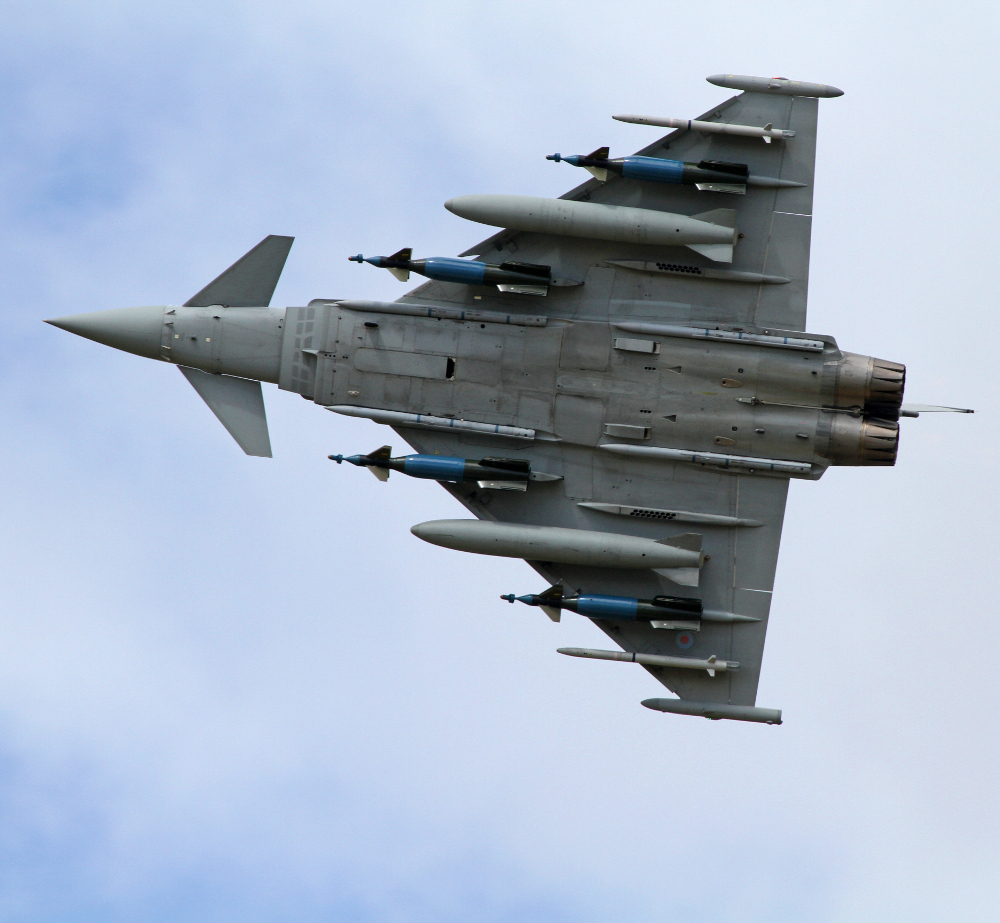
Paveway missile sold to the Saudis
Saudi Arabia formed a backdrop during the year with their continuing and increasing use of the death penalty and a host of human rights violations. In July, we wrote to our local MP, Mr John Glen, to urge his government to take a more robust line with the Saudis. We received a reply from him and a minister in the Foreign and Commonwealth Office assuring us that diplomacy was proceeding behind the scenes. We had not long received the letter when it was revealed that the FCO had just removed references to the abolition of the death penalty from its policy. It was also revealed that the requirement to adhere to international law and treaty obligations had been removed from the ministerial code. We then discovered the astonishing news that the UK government had been active in securing a seat for a Saudi man on the UN’s Human Rights Council. Together with the continuing support the government offers to sellers of arms to Saudi Arabia, this shows that claims to be interested in better human rights in countries like Saudi was a sham. It was depressing to note the new college in Salisbury being supported by a range of arms companies.
Economic prosperity was further up my list of priorities than human rights
Sir Simon Mc Donald, head of the Foreign and Colonial Office in evidence to the Foreign Affairs sub-Committee
Our all too close relationship with the Saudi government was exposed at the end of the year when the Independent revealed details of the secret security pact signed between the two governments. Human rights groups, the Independent reported, expressed alarm at the secretive nature of the deal with a regime which has been condemned for its human rights record. Kate Allen, Amnesty’s Director, called it a ‘murky deal’.
Yemen
Later in the year there was a great deal of interest in Syria and the decision to bomb ISIS. A major debate was held in Parliament with impassioned speeches on both sides. We noted that no such passion was evident in the case of Yemen where British arms supplied to Saudi are being used to bomb civilians and kill children. The government remains to keen to sell arms to whoever seemingly unconcerned where they end up. They support the annual arms fair in London and, no doubt mindful of previous revelations about the sale of torture equipment, banned a representative from Amnesty attending.
It is extraordinary that so much heat and righteous indignation is engendered by the barbaric activities carried out by ISIS, but beheadings, crucifixions, floggings and torture carried out on an increasing scale in Saudi Arabia result not in condemnation, but visits by ministers and by members of the royal family.
Good news
Moses Akatugba
But is was not all bad news. The Salisbury group, in common with others around the world, campaigned for the Nigerian man Moses Akatugba who was brutally tortured by the Nigerian police and forced to sign a confession to murder. We are pleased to note that many Salisbury people signed our petitions and cards with the result (with world wide campaigning as well) that Moses was released after 10 years on death row. This was a notable success. Over 34,000 people around the world signed petitions. Amnesty have received a letter of thanks from Moses describing his feelings on learning of his imminent release and describing Amnesty activists as his ‘heroes’.
Another success was the decision by the state authorities in Missouri to give Reggie Clemons a retrial. After a long wait for a decision from the Court following the report of the Special Judge, Reggie’s conviction and sentence for first degree murder were ‘vacated’. The Court had upheld his right to a fair trial which was all that he had sought from the beginning. This is a campaign which the local group has been pursuing actively for many years and again we are pleased to record our thanks to many hundreds of Salisbury people who signed cards and petitions.
Locally, the group undertook two Citizenship talks, one at South Wilts and one at the Shaftesbury School. These are popular with young people and well attended.
Death penalty
Campaigning against the Death Penalty has continued to be a major focus for the Salisbury Group. Regrettably, there has been no national campaign coordinated by Amnesty International in London. We hope this might change in 2016 as we have taken part in a Survey currently being carried out by HQ confirming that we would like this important aspect of Amnesty’s work to be taken up again – particularly in the light of the recent changes in the priorities of the Foreign and Colonial Office.
In the meantime, we have identified particular issues around the Death Penalty on which we have campaigned. Throughout the year we have responded to all the Urgent Actions received in respect of individuals under threat of execution – 31 in total. The majority of these have been for prisoners in Saudi Arabia, Iran and the USA. We have worked on the cases of individuals sentenced to death within Amnesty’s Campaign against torture – most notably Moses Akatugba and Saman Naseem (see below), including them in letter writing, card signings and petitions, and have also continued to campaign on behalf of Reggie Clemons (see above). In partnership with St Thomas’s Church, we held a Vigil as part of the World Day Against the Death Penalty. This was our first such venture, and it has to be said that public support was disappointing, but the Group felt it had been very worthwhile.
One of our concerns are the numbers of being sentenced to death and executed for alleged crimes committed when children. Countries with the worst records for this are Saudi Arabia, Iran and Pakistan. This issue was taken up by the Salisbury group and it was the focus of the Vigil for this year’s World Day Against the Death Penalty. We highlighted the case of Saman Naseem, a Kurd, arrested aged 17, tortured and sentenced to death for being a member of a banned organisation.
The group continues to publish a monthly death penalty report which collects information from around the world on the use of this barbaric and ineffective practice. At the bottom of this blog you will find other sites which provide information. While countries like the USA, Saudi and Iran feature frequentlyy in these reports, it has to be recognised that China executes more than the rest of the world put together but keeps the statistics a state secret.
A full report on the death penalty is on a later blog.
China
This year saw the state visit by the Chinese president to these shores. There was considerable discussion about human rights in China – or the lack of them – including the denial of free speech, the use of torture, thousands executed after brief trials and continued suppression in Tibet. It was revealed by the Chinese media that George Osborne – who is keen to replace David Cameron as Prime Minister – on his visit to China, failed to mention human rights at all to the surprise of his hosts. What was said to the president on his visit here, if anything, is unknown. Protestors in London were mysteriously kept well away by armies of Chinese. This was a clear demonstration that the current government is almost exclusively concerned with economic matters and not about human rights.
North Korea
Group campaign event, Saturday 8 November
During the year we continued to highlight where we can, the continuing state of human rights abuses in North Korea. The situation there remains dire and the role of the Chinese is crucial. People fleeing the country are frequently handed back to face a terrible future in a forced labour camp the condition of which are unimaginable. They also try and obstruct efforts by the UN. Their fear is that instability in North Korea could be the trigger for unrest in China itself. There is now greater awareness of what is going on the country and the story has moved away from border skirmishes to the appalling human rights situation: progress of sorts. Clip from the video made in 2014 available on YouTube. The message reads ‘Close the Camps’
Stop torture
We have campaigned throughout the year on behalf of individuals who have been subjected to torture. This abhorrent practice is still very common around the world with an estimated 141 countries still practising it. This is despite signing various UN protocols to the contrary.
Human Rights Act
We have reported on many occasions the desire by the government to do away with, scrap or abolish the HRA. Our local MP, Mr John Glen is on record as wanting this. Part of the reason – perhaps the major part – is the continuing dislike of things European. ‘Brussels’ has become shorthand for anything bad and for interference in our affairs and the HRA is caught up in that. It doesn’t help that the majority of newspapers publish seemingly endless stories of dubious decisions which are the result – it is claimed – of the workings the act. Stories about benefits for ordinary people almost never make it onto a tabloid page.
A second reason (we have speculated) is that much press activity nowadays involves the intrusion into the private lives of celebrities and politicians using hacking, buying information from the Police and other sometimes illegal means. Article 8 of the HRA includes a right to privacy which would seriously curtail this activity. We are currently awaiting the review of the act (promised in the Autumn) and how the government proposes to change it. Perhaps we can be encouraged by the appointment of Michael Gove MP as Justice Minister, who has shown himself willing to overturn some of the worst excesses of his predecessor such as iniquitous court fees and banning books from prisons.
During the year we were pleased to welcome the formation of Rights Info which was established to counter the misinformation regularly pumped out by our media. It analyses the various cases and stories which make the news and presents the facts.
Snoopers’ charter
The investigatory powers bill is currently in the report stage. It proposes giving increased powers to the security services to intercept private messages, phone calls, Skype, emails and social media. People are rightly concerned and fearful of terrorist activity and mostly take the view that as I’ve got nothing to hide, losing a bit of liberty is a price I’m willing to pay for greater security. There is a trade off here: we give up some liberty and the right to our privacy to enable the security services to invade emails and the like in their hunt for terrorists, drug smugglers and people traffickers. But we expect our politicians to exert oversight and to ensure the security services are properly accountable. The revelations by Edward Snowden exploded that and showed that the relevant parliamentary committee had little or no idea of what was happening. We have also noted the strange dichotomy between the publics’ distrust of politicians on the one hand and trusting them when it comes to intruding into our private lives on the other.
Peter Wright’s book Spycatcher (Viking Penguin) first revealed the inside story of the MI5 which he alleged had burgled its way around London. More recent books such as Seamus Milne’s The Enemy Within (Verso) revealed the underside of the security services and their (successful) attempts to undermine the miners’ strike and Nick Davies’s Hack Attack (Chatto and Windus) which told the story of the media’s involvement with politicians, senior Metropolitan Police officers and the security services. All these books, and others, show the importance of strong independent control of what these services are up to. Unfortunately, the unholy link between some newspaper groups, politicians and the police makes achieving this very difficult.
So although we do not mind the security services penetrating terrorist cells, we might mind them listening in to solicitors discussing their client’s cases, journalists’ phone calls and bugging human rights groups, all things they have been shown to do. Liberty is a precious thing and we need to be ever vigilant that their activities are closely monitored and are appropriate. With the politicians we have today we cannot be sure of this. One of the few exceptions is David Davis MP (seen here third from left at the Sixth Form Conference at the Cathedral, next to Kate Allen) who has regularly highlighted the dangers of this bill and of the creeping nature of intrusion being planned by the Home Office.
Conclusions
This has been a busy year for us with many achievements. However, we look forward to next year with some forboding. The desire to promote economic interests almost at any cost and the near abandonment of overseas human rights issues is a worry. We want to go on selling arms to highly unstable regimes like the Saudis, seemingly with no concern with how or where they use them. Claims of ‘quiet diplomacy’ are a sham when you are promoting one of their number onto the UN’s Human Rights Council. At home, the combination of the ‘snoopers’ charter,’ a desire to end or abolish the Human Rights Act and to curtail the Freedom of Information Act are all steps in the wrong direction.
This has been an exceptionally busy year, as the report notes. We have succeeded in holding major headlining events, around the Magna Carta celebrations, while still carrying on our usual campaigning, and keeping awareness of Amnesty high in the city, all with a relatively small activist base. Our visits to schools have been valuable in this respect too, and thanks are due to all who have helped over the last year to keep us in the public eye and assisted in the success of the achievements noted here. I would conclude by wishing our readers an supporters a happy New Year, and hopes for freedom for those we are supporting.
Andrew Hemming, Chair of the Salisbury group
We continue to be heartened by the warm support we get at signings from people in the Salisbury area. The support of the Cathedral in this Magna Carta anniversary year has also been particularly valued.
This week we have been treated to speeches in Parliament and a great deal of press interest on the question of bombing Isis. The political temperature rose after the terrible events in Paris and the indiscriminate killing of people sitting in cafés and at a pop concert.
The government would now like the UK to join in the bombing campaign against Isis positions and David Cameron gave a lengthy speech in Parliament setting out his justifications for that course of action.
Meanwhile, in Yemen, another terrible conflict is in progress and yet this receives almost no coverage in the press. Thousands have died (one estimate is 5,700) including an estimated 400 children, and airstrikes by Saudi Arabian forces are bombing the country on a daily basis. Schools and hospitals are bombed and cluster bombs are being used in contravention of international treaties.
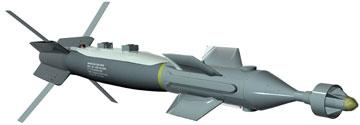
Paveway missile sold to the Saudis
The difference is that Saudi Arabia is a big buyer of our weapons – indeed an estimated half of all weapons sales by the UK go there – so they are an important customer. Little is said to criticise them and readers of this blog will be aware of our attempts to get our government to take a more robust line in view of their multiple human rights abuses.
Amnesty and HRW have criticised the US government for agreeing to sell an unbelievable $1.3bn (£860m) of further ordinance to replenish stocks used in the campaign. This is in breach of the Arms Trade Treaty since the weapons are being used against civilians. Médecins sans Frontières report:
… ordinary people are bearing the brunt of an increasingly brutal conflict. Severe water shortages combined with airstrikes, sniper attacks and a fuel blockade have rapidly turned this conflict into a humaniitarian crisis, with over one million people displaced from their homes. The need for food, water, shelter, sanitation and medical care is growing daily.
Many clinics and hospitals have been destroyed, and those that are still functioning are in urgent need of more medical supplies. Yemen: A country under siege
AI and Human Rights Watch are in no doubt that UK and US supplied munitions are being used to cause this mayhem in Yemen. Up until now we have received nothing but bland assurances from the Foreign and Commonwealth Office and from our MP. But recent events including changes to the Ministerial code and a downgrading of human rights in policy matters, seems to indicate that it is profit before humanity which is the key factor.
This might change because now that British made weaponry is turning up in Yemen thus causing some concern in the FCO. They are beginning to question the wisdom of supplying the Saudis who then use the stuff to kill ordinary civilians. We could just be indicted for war crimes. They are also worried that we are helping create the conditions for an Isis type organisation to establish themselves in Yemen.
So while speeches are made about bombing Isis, we are busy supplying the weaponry to create another catastrophe on the Saudi peninsular…
Sources:
MSF; The Independent; Belfast Telegraph; Business News; HRW
Lobbying and business influence in government at a high level. MPs receive millions for lobbying
We have frequently drawn attention to the issue of corporate influence on our political process and in particular, the role of oil and arms companies. We have recently seen three leaders from China, Egypt and India, visit the UK and be given the red carpet treatment. Each has – to put it mildly – a poor human rights record.
In the case of China it includes the use of torture, shutting down the freedom of speech and more executions than the rest of the world put together. Egypt has been involved in mass arrests and torture and President Modi of India has a dubious record in terms of the treatment of Muslims.
It seems as though the ‘prosperity agenda’ is eclipsing all else and the only thing that matters seemingly, is the pursuit of business and contracts. No one is arguing for boycotts but that the issue of human rights be brought up in discussion with these leaders.
A factor in this is the role of lobbyists and a recent analysis by Transparency International is worrying and should receive wider coverage.
Analysing the new UK Register of Lobbyists and data from Parliamentary registers of interests, their new research has found:
Less than 4% of lobbyists are covered by the Government’s new lobbying register – almost all lobbyists are completely unaccountable.
8/10 of the most frequent lobbyists are from FTSE 100 companies – lobbying is dominated by the corporate world.
£3.4 million paid to 73 MP’s last year for external advisory roles – a significant risk of conflicts of interest.
Payments for Parliamentary advice is still allowed in the House of Commons, but prohibited in the House of Lords, Scotland and Wales – a major loophole in the rules (TI’s emphasis)
The findings come after detailed analysis of research across Westminster, Scotland, Wales and Northern Ireland. The report can be read on their web site or can be accessed here. [There is also a permanent link to their site at the bottom of our page under ‘Links‘]
With such a high level of corporate lobbying and with the substantial level of fees MPs are earning, it is perhaps not surprising that business interests get such a high profile and human rights issues so low.
It appears from the report that the situation has got worse under the new government. There were some publications of meetings with lobbyists concerning the previous year but that now seems to have stopped. Most of the lobbying it seems is around domestic matters for example, firms trying to get a slice of the health service.
Business is important and of course companies should be free to lobby. But it should be transparent and registered. More importantly, business interests should not trump all else. The government is not after all some kind of selling operation for FTSE 100 companies.
UPDATE: 16 NOVEMBER
It’s not about human rights but as if to illustrate the point, it’s just been reported the ex Health Minister, Lord Lansley, is to take up posts with firms hoping to profit from the NHS.
Over the last three months we have been in correspondence with our local MP Mr John Glen over the issue of arms sales to Saudi Arabia. This arose because the French President spoke out publicly against the increased use of the death penalty in Saudi and the barbaric way in which they are carried out. We also expressed concerns about human rights generally, the use of torture and the dreadful treatment of women.
Mr Glen replied and arranged for a Foreign Office minister to reply as well. The burden of their replies was that the government took the issue of human rights very seriously and raised the issue of human rights with the Saudis at every available opportunity. It began to unwind because it was revealed that the Foreign Office had removed the abolition of the death penalty as one of its objectives. This was only a matter of days following assurances to the contrary from one if its junior ministers in his letter to us. Earlier this month Sir Simon McDonald, head of the FCO, told the Foreign Affairs Select Committee that:
economic prosperity was further up his list of priorities than human rights.
Following the news that a Saudi had been elected to the UN’s human rights council – an astonishing fact in itself – it was discovered shortly afterwards that our own government had facilitated this. The British government had used its influence to secure the position of someone, patently against human rights, onto the human rights council. This was a quid pro quo arrangement apparently but since no one was objecting to our application, why it should be necessary was never explained.
We noted that George Osborne had pleased and apparently surprised his Chinese hosts by not mentioning human rights on his recent visit there. China executes more than any other country in the world and has been arresting and detaining large numbers of people involved in human rights in a major crackdown. We are shortly to play host to the President of China, Xi-Jinping, who has expressed a wish that human rights are not mentioned during his visit. Despite their lamentable human rights record he will get the red carpet treatment nevertheless.
Then came the news that a Briton, Karl Andree, was to receive 360 lashes for alcohol offences for which he has already served a prison term. It might be thought that the Saudi administration would be sensitive to how this might play in the UK. With the UK government falling over themselves to sell them arms and the Kingdom in an increasingly rocky state financially because of low oil prices, to flog a British national in public is not exactly good PR.
The government responded by cancelling a £9.5m contract to train prison staff. Again, one might ask what on earth are we doing helping a regime which tortures its prisoners more or less as a matter of routine. And it has to be noted that this is not an arms contract so its effect is unlikely to be keenly felt. So it seems that where a Briton is involved the government is willing to react reportedly after a huge ministerial row. Otherwise, it is business as usual.
On the BBC’s Profile programme (18 October) it was concluded that the deal is that Saudi provides oil and security information in exchange for legitimacy and keeping quiet on human rights abuses.
The statement ‘the government will continue to work towards the complete abolition of the death penalty using all the tools at its disposal’ is unconvincing in the light of these actions.
Will torture equipment be on display this week in London?
The London Arms fair, DSEI, opens on 15th September at the ExCel centre at which – in addition to the range of arms large and small – torture equipment has been displayed in past years. No doubt drones will be on display which enable executions to be carried out from thousands of miles away. The exhibition runs under conditions of great security and in the past, the comedian Mark Thomas was able to set up a fake stall and interest various passing visitors with his torture equipment.
The four day exhibition is supported by the government and is an exclusive expo of deadly weapons and arms with a history of companies advertising illegal torture equipment. Britain has sold arms to 19 of the 23 countries listed by the UN for grave violations against children.
There is a kind of irony that two weeks ago the country was shaken by the death of Aylan Kurdi which prompted a volte face by our government and has seen Mr Cameron in the Lebanon visiting the camps. The Chancellor, George Osborne spoke of the need to tackle the refugee crisis at source yet we host an event which supplies deadly equipment to countries like Saudi Arabia; Turkmenistan; Pakistan; Libya and Colombia where respect for human rights is almost non-existent.
We want to see the government to stop illegal torture equipment being advertised in the UK.
The government would do much better to raid the export credit guarantee scheme [rather than the overseas aid budget] and other subsidies to the arms trade. This would raise funds for refugee provision and reduce arms sales to Middle Eastern states, impacting directly on the latter’s ability to wage war on their and other populations in the region.
Last month, we wrote to John Glen MP asking that his government take a more robust line with the Saudi Arabian government in view of the large increase in executions and floggings, many of which are carried out in public. We noted that the French president Francois Holland had spoken publicly against the practice despite large arms sales in the offing. The British government has said it prefers to lobby in private and to pursue a policy of quiet diplomacy. By contrast, the Swedish government has ended arms exports to the country. As policies go, it is one which is conspicuous by its failure to achieve anything at all and in other contexts would be declared ‘not fit for purpose’.
A recently published report by Amnesty shows that Saudi Arabia is one the top three world executioners after China (which executes thousands but the statistics are a state secret) and Iran. Between January 1985 and June 2015, 2,208 were put to death. 102 have been executed in the first 6 months of 2015. Crimes include ‘witchcraft,’ ‘sorcery’ and ‘apostasy’. In some cases relatives are often not notified of the execution.
The FCO’s July in-year update on Saudi says:
We remain concerned about the continued use of the death penalty in Saudi Arabia, including the fact that trials and executions do not meet the minimum standards which the EU advocates in countries where the death penalty is applied. We regularly raise the issue with the Saudi authorities, bilaterally and through the EU, and will continue to do so. There has been a significant rise in the number of executions this year. While no official figures are published, according to statistics reported by NGOs over 100 people have been executed since 1 January. NGOs report that the majority of executions were for murder and drug-related offences
In response to our letter to Mr Glen, we received a letter from a FCO minister, Mr Tobias Ellwood, which assured us that the Foreign Office was doing all it could to end the practice and that ‘the abolition of the death penalty is a human rights priority for the UK’. The HMG Strategy for Abolition of the Death Penalty (2010 – 2015) states:
Promoting human rights and democracy is a priority for the UK. It is a long standing policy of the UK to oppose the death penalty in all circumstances as a matter of principle (p2)
Within days of receiving this letter however, we discovered that it is no longer an explicit FCO policy. The new policy has dropped any reference to abolishing the death penalty. We also noted that Private Eye had a piece on the very same Mr Ellwood who had been a guest of the Saudi Government on a £6,000 fact-finding visit sponsored by a defence forum.
It’s hard not to come to the conclusion that defence sales matter far more than the dreadful human rights situation in countries like Saudi Arabia which – apart from public floggings and beheadings – tortures its citizens and has severe restrictions on the lives of its women. Saudi Arabia is the leading destination for UK arms sales amounting to £1.6bn in 2014.
Nicholas Gilby of the Campaign Against the Arms Trade (CAAT) reported on the high level of corruption in this industry:
This paper examines the Government’s approach to corruption within the UK arms industry and shows it has very dirty hands …
… civil servants told to ‘look the other way’ and not ask awkward questions.
Chemring, which has one of its factories just outside Salisbury, had sales to Saudi Arabia of £47.8m last year and £97.6m in 2013 (source: annual report).
UK governments have invested a lot into the arms trade. Support includes marketing support via DESO (Defence Exports Services Organisation); export credit guarantees; around £26m in R&D costs and something called ‘launch customer support’ which is buying weapons from a UK supplier even though overseas suppliers are cheaper. There are also missions by ministers and members of the Royal family to foreign countries like Saudi.
Could it be that the Foreign Office was embarrassed by such an explicit policy in the face of a rising tide of executions in countries such as Saudi Arabia; Pakistan and India, all countries where arms sales are important?
Successive governments have claimed a devotion to human rights and a commitment to end the death penalty. The reality it seems is that arms sales trump this commitment and in dropping the express statement of policy, the FCO is at least being honest.
Following the change of wording by the FCO which seemed to be in contradiction to the assurances given to us by the minister and Mr Glen, we wrote again asking why the policy had changed. We await a reply…

 Follow us on Twitter and Facebook. If you would like to become more involved, read the ‘Joining’ tab.











 Amnesty in Salisbury & South Wiltshire